In the Coop | What Breeds?

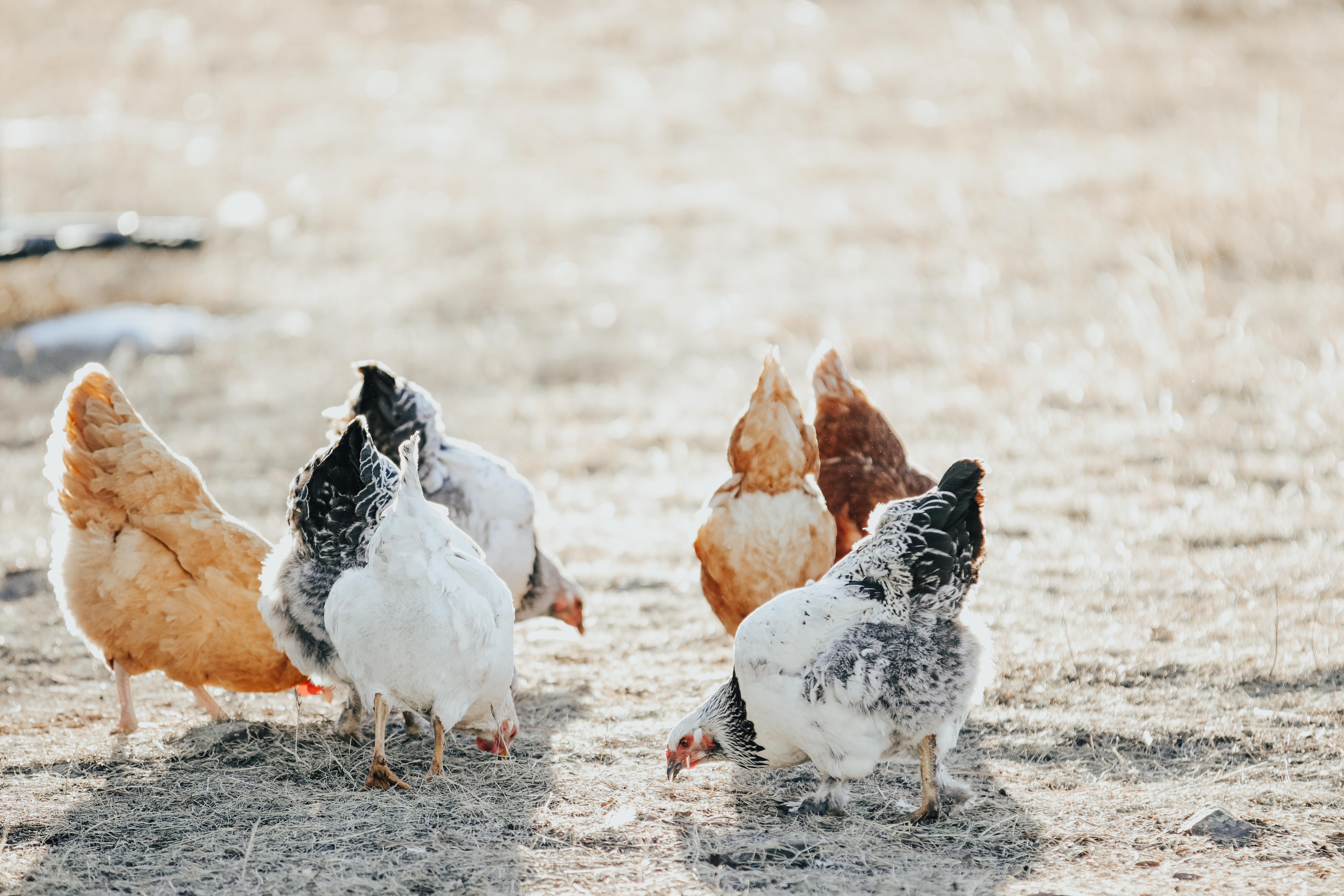
If you’re just getting started with your chicken keeping endeavors, it can be daunting to know where to start when it comes to breeds of chickens. There are a TON of different ones. How in the world do you pick?

Before we jump into the different breeds and classifications, ask yourself what your goal is with your chicken keeping. How many birds do you want? And why do you want them? Some people want the biggest bang for their buck with the highest producing layers intending to sell eggs. Some just want enough for eggs for their family. Others are into the showier, fancy breeds for the novelty factor, and aren’t as concerned about high egg production. Some are chasing that “rainbow dozen” and want a colorful egg basket each day. Whatever your interest, whatever your goal, there’s a way to do it!

Goal: Egg Production

If you goal at the end of the day is high production, then you want to look at “production breeds.” Examples of these are the sex-link, hybrids developed to have different colored chick plumage for pullets and roosters, making them identifiable as soon as they hatch. Different hatcheries sometimes come up with their own sex-link hybrids, but some common ones are ISA Brown, Red Star, Amber Star, Amberlink, and Black Sex Link. These are the BEST of the egg-layers, able to produce upwards of 300 large eggs per year, which is insanely impressive. Another favorite of the production breeds is the White Leghorn, which lays white eggs, also in the upwards of 300 eggs per year range. There are also many heritage breeds that are good layers, but oftentimes they are heavier birds requiring more feed, so that can drive up the cost of egg production. They, however, may have more longevity in their laying career.

Goal: The Rainbow Dozen

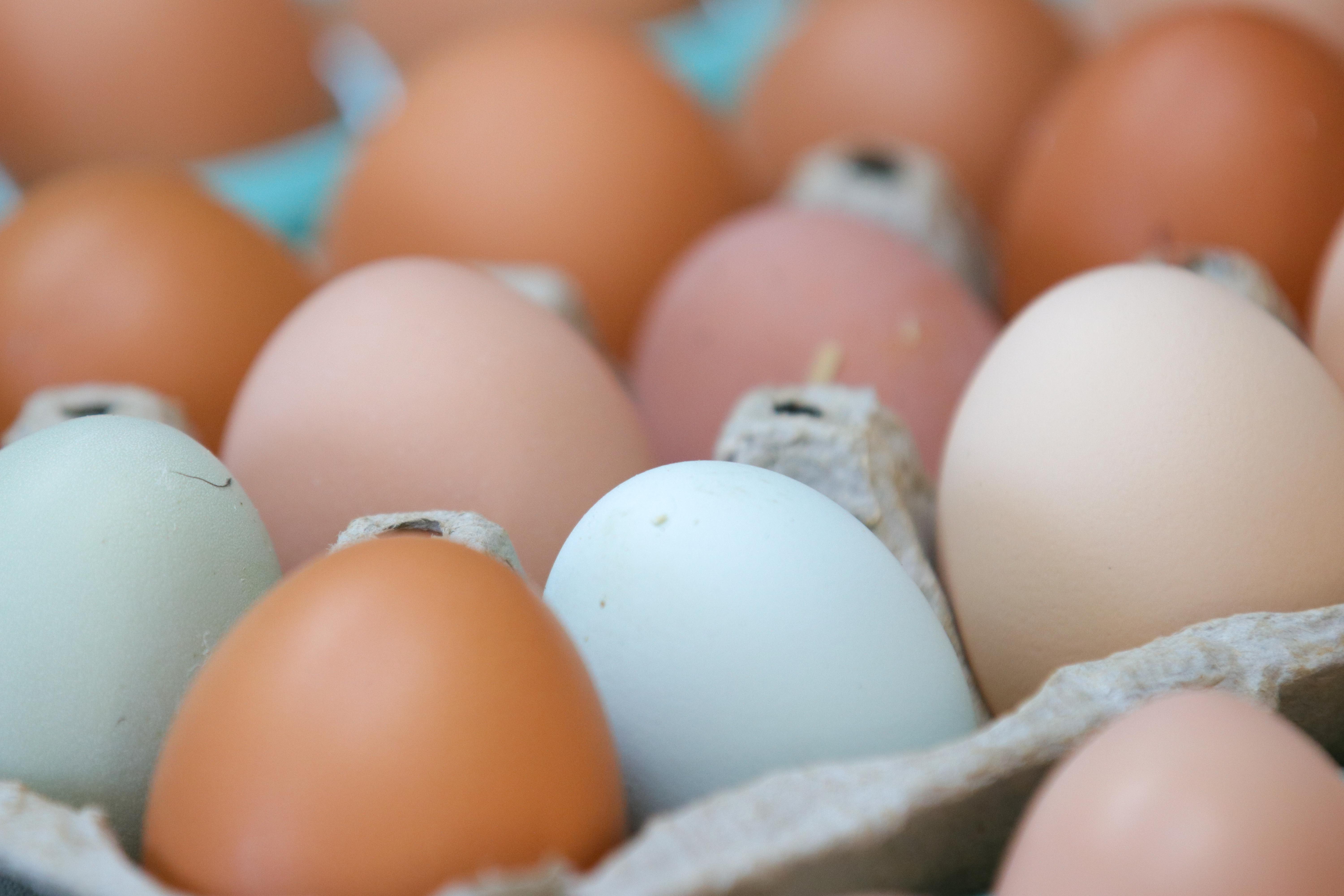
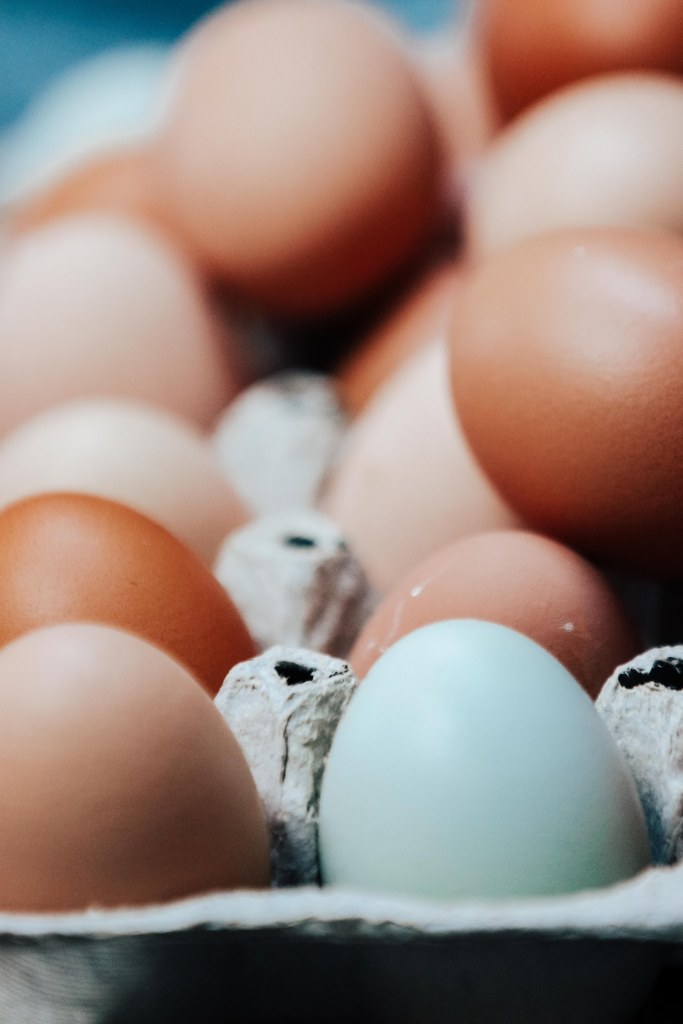
Who doesn’t love the look of a beautiful, colorful egg basket? Shades of rosy brown and light tan, dark brown, blue, sage green, all make for a beautiful presentation. If you’re not sure where to look for some of the unique colors, here are some suggestions. Ameraucanas will give you beautiful light blue or green eggs, and will lay lots of them. Cream Crested Legbars are another blue-laying variety. “Easter Eggers” will lay just about any colored egg. Americanas (notice the spelling difference) are a hybrid and not a true breed, and are essentially an Easter Egger that isn’t an Easter Egger (which also is a hybrid and not a true breed). There is a lot of ambiguity surrounding the Ameraucana/Americana/Easter Egger conversation! The hybridization is pretty extensive as breeders have developed hybrids for consistent shell colors. Hoover Hatchery’s Prairie Bluebell Egger is bred for blue eggs, while their Starlight Green Egger is bred for green eggs. You’ll hear other names like Olive Egger, Cherry Egger, etc. If you want those super dark, chocolate-brown eggs, look for Marans (any variety) and Welsummers. Red Stars also lay a rich brown egg, not as dark as Marans, but they are the darkest in my egg basket! Buff Orpingtons give a nice peachy tan egg.
Goal: Eggs and Meat

Some birds are considered dual purpose, and can be raised for egg production as well as meat. Examples of these dual purpose breeds are Buff Orpingtons, Sussex, New Hamshires, Partridge Rocks, and Wyandottes. These will be good layers as well as big enough to raise for meat. They’re heavier birds, so they will require more food.

Goal: Meat

If you aren’t looking to get eggs but instead want breeds for butchering, you’ll be looking at the broiler varieties. Keep in mind that these birds are time-sensitive. Some of them are bred so that they are ready to butcher in as little as a few months, and their quality of life significantly decreases when they get past that point, as their bodies get too big for their legs and they lose the ability to move. These would be your “broiler” and “roaster” varieties, such as the Delaware Broiler, Ginger Broiler, etc.

Goal: Funny Pets that Lay Eggs

Maybe you really want to build a flock of sweet, friendly birds that will be more or less pets. Some breeds have better dispositions than others. Others are flightier. The friendliest chickens I have had are Buff Orpingtons (basically the golden retriever of the chicken world), Red Stars, and Ameraucanas. I had one Prairie Bluebell hen and she was excellent. Or maybe you would like the novelty of the Polish chickens, also known as the “dance hall girls,” or the adorable frizzle and silky bantam breeds.
Goal: Breeding

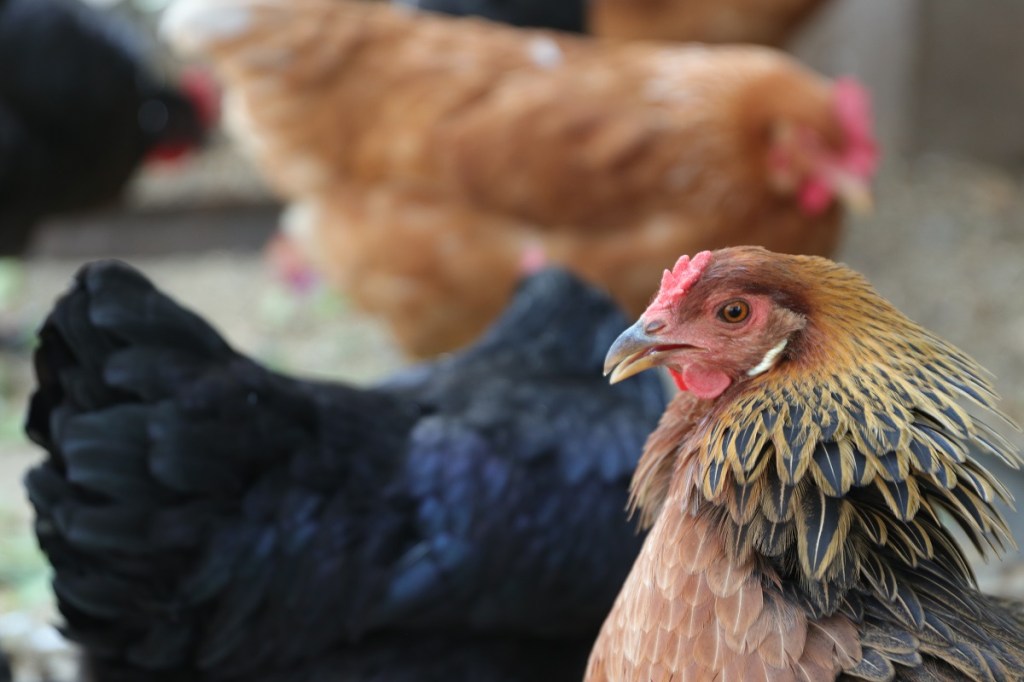
If you hope to eventually hatch your own chicks and want to have at least a vague idea of what you’ll get, you might want to steer towards heritage breeds and away from hybrids. Hybrid chickens do not breed true, meaning even if you bred, for instance, a Red Star cockerel with a Red Star hen you wouldn’t get a Red Star chick. Obviously, if you don’t isolate breeds, you’ll end up with hybrids, but if you breed with heritage breeds, theoretically you’ll know what your hybrids are! If you just want the experience of hatching chicks and don’t care how hybridized your “barnyard mix” is, anything goes! Examples of heritage breeds are Buff Orpington, Black Australorp, Brahma, Wyandotte, and many others. If you want to try to breed for shell color in pullets, there are plenty of resources online for knowing what roosters to breed with what hens. For instance, a blue-egg rooster (such as an Ameraucana) bred with a brown-egg hen (such as a Maran) will give you birds with the green-egg-laying gene.

Finally, a reputable breeder will have breed characteristics listed for each chicken, including heat and cold tolerance, ability to free-range well, likeliness to be broody, and temperament in general, as well as a lot more details about the breed.

So these are just some things to consider if you’re wanting to get into chicken raising and don’t know how to pick a breed or where to start!

What are your favorite chicken breeds? Leave a picture in the comments!

.

In the Coop | Simple Brooder Setup

It is that time of year, when you walk into a feed store and hear the telltale cheeping from those bins of day-old chicks. Happy days for those of us happy chicken keepers! That also means spring is coming, which means everyone should be happy when they hear chicks cheeping!

As people are getting into the mode of chick season, I wanted to share a simple DIY brooder box setup that I have found to work really well. It is easy to maintain, easy to clean and access, and is cheap, which is a plus. There is a lot of info out there and a lot of ways to overcomplicate a brooder box setup or make it more expensive than it needs to be. I wanted to give my nuts-and-bolts, budget-conscious setup.

Let’s break it down!

The Box

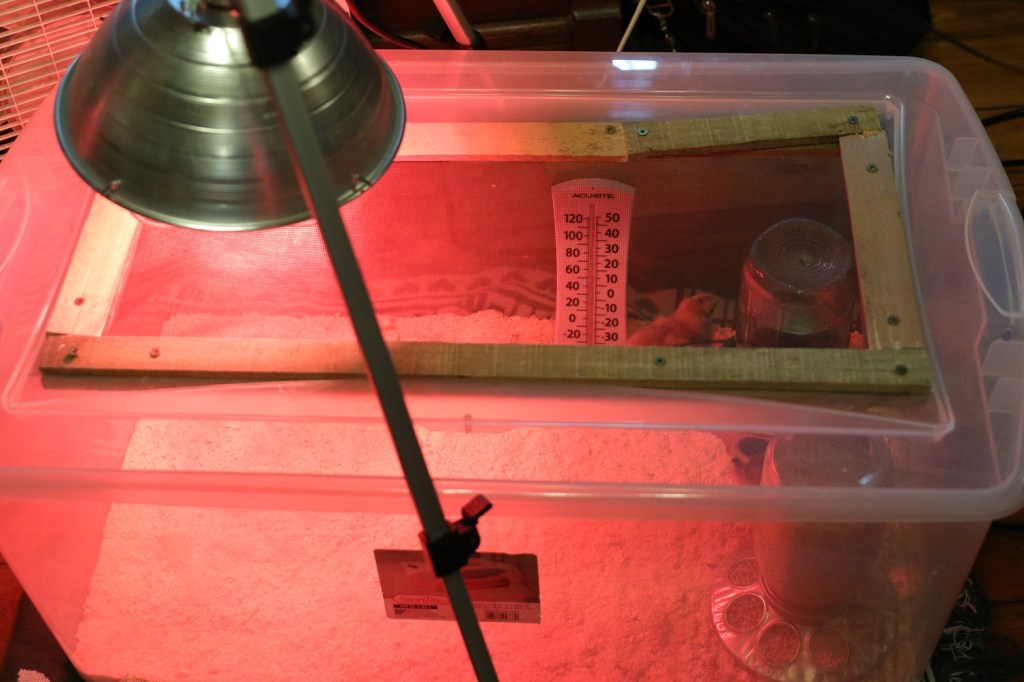
The simplest form of a brooder box is just a container and a heat source. That’s all you need! No fancy galvanized steel bin or brooder panels are necessary, but of course you can go that route if you so choose. The main requirement is that the box have solid sides, to retain heat. The number of chicks will dictate the amount of space needed, obviously. A large Rubbermaid bin, the 66 quart kind with a locking lid that you can get at Walmart for $10, works really well. I have two bins, and have found that each one can comfortably house about 10 chicks for roughly two weeks. As the chicks grow they’ll quickly outgrow whatever setup you have! The taller the bin, the longer it will take for them to escape.

Even if you are starting with just a few chicks, I’d recommend having two brooder boxes. If you end up with a sick chick or one is getting picked on, or the chicks just plain old take up more space than you expected, then you have a fallback. When I got my August chicks from McMurray Hatchery, I had one chick that needed a little extra care and was glad to be able to almost immediately divide my chicks into two groups so the smaller ones didn’t get pushed around.

The Cover

The cover needs to allow good circulation of heat and humidity in and out of the brooder. For the first few days, a cover is really only needed to keep curious critters out of the brooder box, but after a week tops, the chicks will be actively looking for escape. For a super simple cover, just cut a large opening in the plastic lid with a reciprocating saw and cover with window screen, tacking the edges down with gorilla tape. We made one cover this way, and another using lath and screws to fasten the window screen to the plastic, which does look pretty spiffy. I honestly prefer the gorilla tape method for its simplicity and how light the cover ends up being. It isn’t as pretty but it is so ridiculously simple. If you wanted something a little sturdier, you can easily construct a lightweight wooden frame just larger than the dimensions of the top of the brooder box and cover it with chicken wire. For my indoor setup, window screen is perfectly sufficient.

The Heat Source

This is where brooder setups can become a little controversial, and for good reason. It can also become way overcomplicated, in my opinion. Basically there are two methods of heating the brooder. Either a heat lamp (the old fashioned way), or a brooder heat place, similar to this one by the brand RentACoop or this one by Brinsea Products. Both are effective, but the controversy is over fire safety. There is always a risk of fire when using heat lamps, but there is a substantial price-point difference, so make your best judgement. Plenty of people still use heat lamps. The fire risk does make me a little nervous, though, and I would like to try heat plates at some point.

A brooder plate is a radiant heat-emitting panel that is height-adjustable for your growing chicks. Pretty simple and self-explanatory. Don’t opt for a cheap one, since the reviews are pretty telling, with plates either getting too hot (and ironically being a fire hazard) or not providing enough heat.

If you go with a heat lamp, you need some way to suspend the light above the brooder. I prefer it to hang straight down as opposed to pointing in at an angle, and make use of one of my many camera tripods, sometimes getting away with one heat lamp for both brooders, centering the tripod over the two boxes. Figure out what works for you. With it hanging straight down, there is plenty of heat right under the lamp, but there is room for the chicks to spread out into cooler parts of the brooder as well.

Get a cheap thermometer to monitor the temp, at least until you have a good idea of what sort of heat your chosen heating method is putting out. People can get really specific about the optimal temps for chicks, with charts related to how warm they need to be for each of the first 8 weeks of their lives and how to lower the temp so much each week, etc. Chicks do need it warm – in that 90-95 degree for the first week. But they’re also pretty resilient little things. I have had it well over 100 degrees (probably closer to 115) directly under the heat lamp and they find the spot in the brooder where they are most comfortable. If the entire brooder is too hot or too cold, make adjustments. Too cold? Lower the heat lamp. Too hot? Raise it up. Pretty simple. Depending on how cool it is in your house, you may find it handy to add a second heat lamp for a few days just to keep that temperature high enough.

Heat lamp bulbs can either be red or clear, and make sure they are splatter resistant for safety purposes. The red bulb is supposed to not mess with the chicks’ natural cycle and make them less prone to picking at each other.

So that’s my simple brooder setup! Not much to it. I’ll talk bedding, feeders, waterers, and other chick keeping tips in future articles.

Leave pictures of your DIY and frugal chick keeping setups in the comments for others to see! Happy chick days!

Snow Day

Oh, I love a snow day. A coffee-drinking, chili-eating, pile-burning day. Heavy skies, whirling snow, wading through knee-deep drifts and retracing steps a short time later only to find the tracks already blown in.

Everything is harder, everything takes longer, your toes and fingers freeze, and your face, the only part of you showing, gets nipped hard by the cold. Sneaky little trickles of snow find the impossible gaps between scarf and hood. Negative windchills require a delicate balance of enough layers to keep you warm in the gale-force winds and flying snow while not causing extra exertion and resulting perspiration. Bundle up enough to be warm and you’re suddenly wearing so many layers you’re sweating your way down a hill.

But truly, I love a snow day.

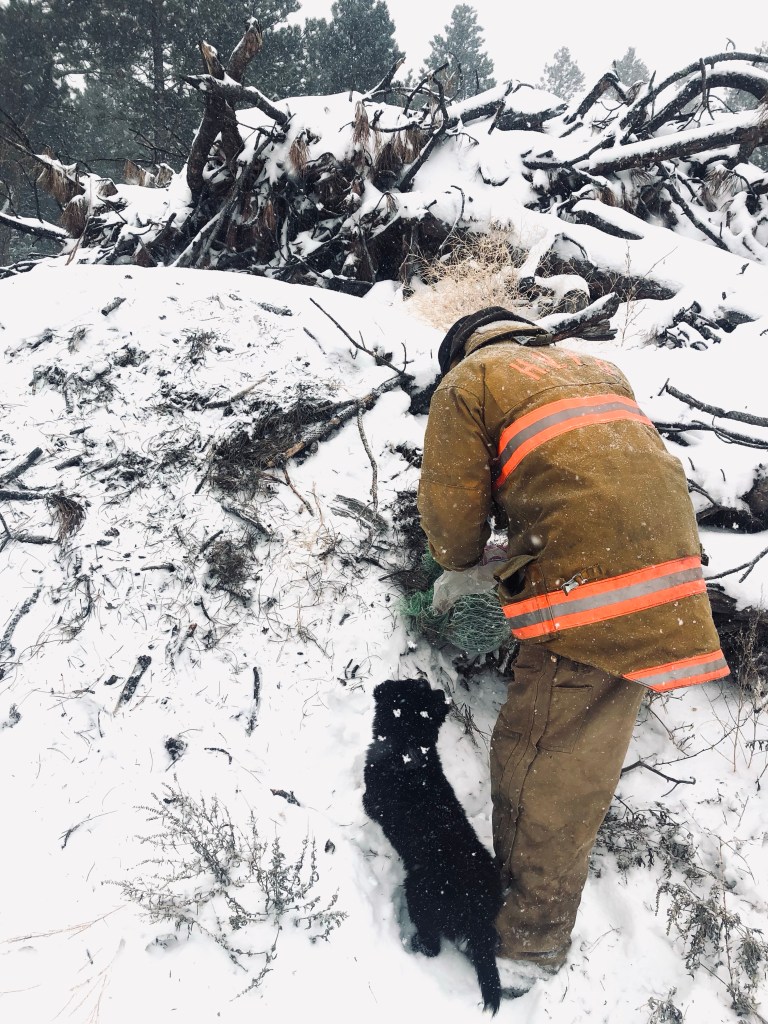
We went out first thing and lit off half a dozen piles, a jolly way to spend a frigid morning. I’ve always loved a good pile burning day! We had been anticipating a snow storm for months, hoping to get some of the slash piles burned up that are sprinkled all over in the timber, and Brad got excited when he saw not just the snow but the stretch of cold temps in the forecast. So out we went, armed like arsonists with gasoline and matches and old bale net wrap. The pups all came with us, a desperate attempt on our part to start wearing them out. It took approximately 4 hours of cold weather yesterday for them to get stir crazy and last night they were impossible. So we hauled them out in the single digits and they got a grand 5 minutes of running around before the silly things were shivering. They didn’t ask to get out of the truck after that. Every time we got out to light a pile, they spread out over all the seats, and every time we got back in they were less inclined to move out of the way, preferring for us to half sit on them instead.

The piles lit beautifully. I realized after pile four that I involuntarily released a sound, something like “Hah!,” every time the lit match hit the gasoline-soaked net wrap and whooshed into flame. But it is just so satisfying! I could watch the fire for hours, flames licking up ravenously into the snow-heavy air, creating up drafts that suck the smoke back into the pile in a volatile whirlwind. Mesmerizing. The bulls also found it satisfying, apparently, since they cozily warmed their little backsides, eventually wandering away and giving a musical shake to the icicles hanging all along their ribs.

Not much activity outside the chicken coop today. Not much, as in none. The chickens flatly refused to leave the coop and laid their eggs in creative places, like inside the feed hopper and while sitting on their roost. However, between Brad checking them on his way up from checking heifers and my own dashes down to the coop, not a single egg froze and the chickens laid a baker’s dozen, not too shabby for a day with highs of 1 degree. One glorious degree.

A lot of time was spent either trying to stay warm or trying to get warm again, getting as much done outside as we could yet trying to do as little as possible in the frigid temps. I rolled a whole bunch of seed starting pots while listening to a podcast, and worked on seed starting plans, figuring out what to start when. Peppers and some greens will be some of the first things to get planted, first thing next week when my seed germination mats get here! Someone likes to keep this house super cold in the winter. My chick order is ready to go next time I stop in to the ag supply store, hopefully tomorrow if the roads are good enough to run to town to teach.

Something about cold and snow make a person dream of springtime. But one glance at the thermometer or the drifted world outside is a keen reminder that winter isn’t over yet and the cold and the mud and the snow are here for awhile yet.

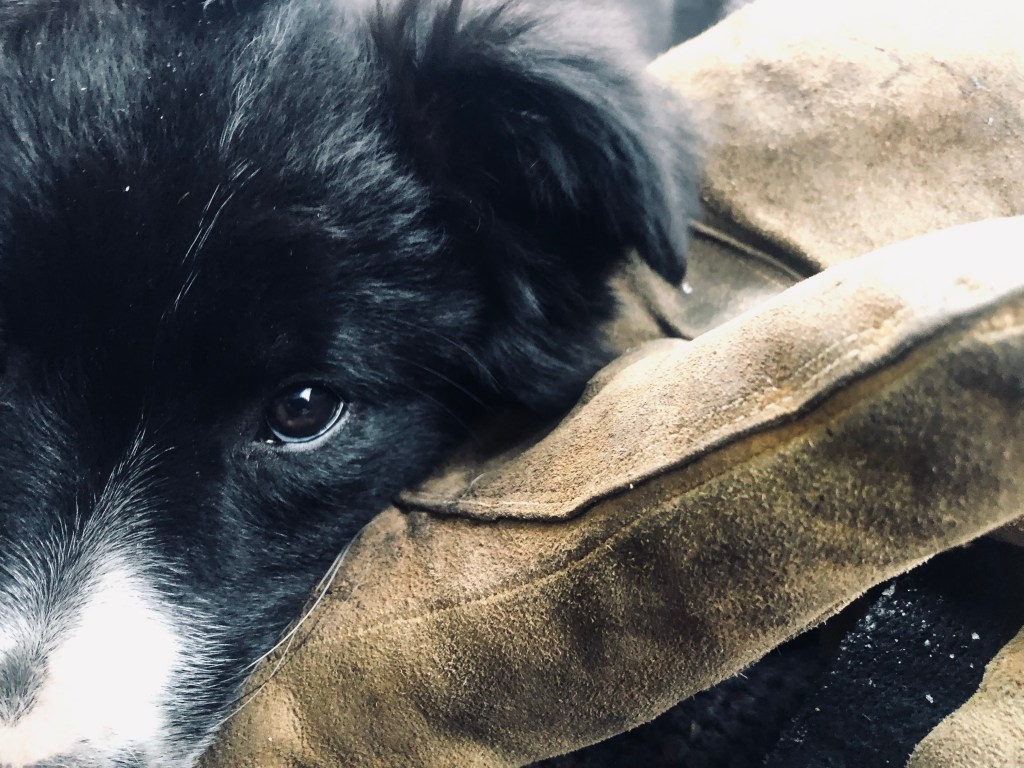
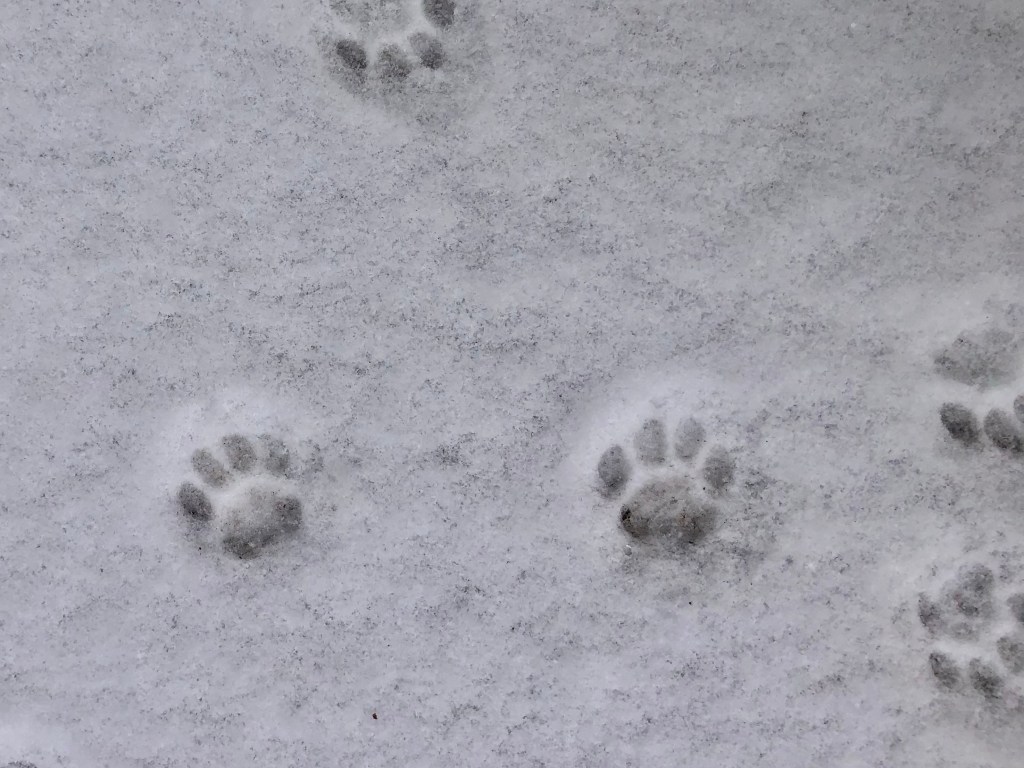
Muddy pawprints smear the linoleum in the kitchen (thank goodness for linoleum), which I have resigned to enjoying clean for half an hour at a time, the intervals between growing longer and longer. The mud room looks like it was ransacked, littered with so many pairs of muck boots and coveralls and coats that it looks like half a dozen people live here, and random gloves because the puppies squirreled their mates away. You can’t even cross the six feet of mudroom floor without stepping on something – Boots, hats, mud puddles, scarves that got away from us, dog toys, a puppy or three, maybe a cat, and I tripped or something as I opened the door and managed to nail myself right in the forehead, leaving a beautiful goose egg. The whole house smells vaguely of smoke from smoky (and perhaps slightly scorched) articles of clothing drying here and there. The pups are finally sleeping and haven’t made a peep in quite awhile. The afternoon walk up the hill in -4 degrees must have convinced them that we were serious.

Oh yes. I love a snow day!

So it Begins

The winter storm is blowing in! What a change from this morning. I stomped out in bibs first thing and immediately overheated, it was so balmy out.

We spent the morning shuffling cows and yearlings up north, corralling the yearlings for the storm and moving the cows about 2 miles into the calving pasture. It was beautiful weather, only starting to get chilly when we got close to wrapping up. The sky grew unsettled and it was as if everything, not just us, was anticipating something. Everything, that is, except the pups. Bess was busy learning how to be a cowpuppy with Brad, while Josie took advantage of the gentle lilting (no, it isn’t) motion of the fourwheeler to take a nap on my lap. She only fell off once.

We buzzed back up home, got a quick bite to eat, and headed out once more to get the cows on our end moved closer for the storm, and even moving the bulls into a more sheltered pasture. When we headed out after lunch, a little moisture was starting to blow in, quickly turning to sleet that stung like needles as we flew around on ATVs getting the shuffling done. The bulls were a little extra feisty with the weather change and gave us a quick and underappreciated rodeo.

The stinging sleet was accompanied by settling fog, obscuring the tops of the trees as we moved the last bunch of cows. As we got back up to the yard and put the fourwheelers away, the biting sleet turned suddenly to whirling snow, the distance disappearing from sight behind a whiteout.

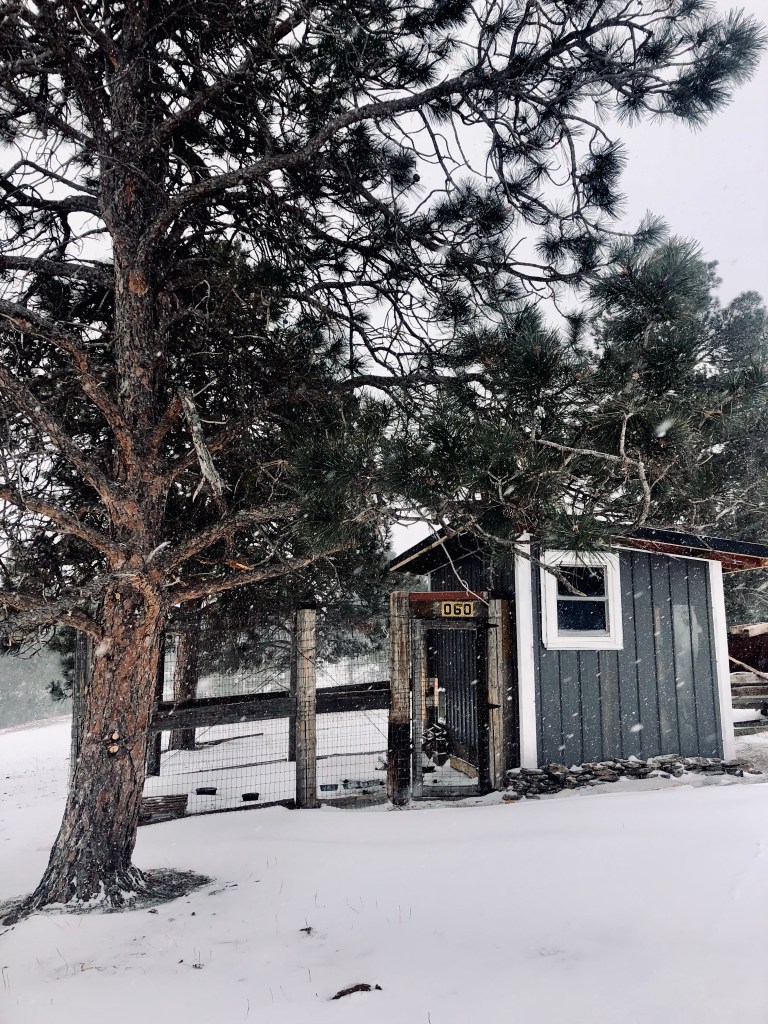
The chickens are tucked in for the cold snap, with a fresh layer of sawdust to keep them dry. I moved their feed hoppers inside their snug coop to make feeding easier on them. It really feels like walking into a concrete bunker, as silent as it is when the door closes behind me! Lucky chickens.

Everything is coated with fresh white. I’m watching the snow whip this way and that outside the picture windows in the living room, listening to the wind whistle comfortably around the eaves, and ordering the last of my garden seeds. Maybe I’ll roll some newspaper seed pots and brainstorm my flower garden. The cozy aroma of bread baking is wafting through the house and the pups are playing hard and sleeping hard by turns in the mud room. Brad is doing some final chaining up of tires down in the shop. We have water for drinking and oil in the lanterns, the generators are ready to go and livestock have all been fed. The temps are dropping, and are a good thirty degrees colder than they were at lunchtime. We’ll keep praying for moisture and bracing for the cold, thankful for a warm home and a snow storm.

So it begins.

When Winter and Spring Collide

What a time of year in what a wonderful part of the country. I know a lot of people in a lot of places say this, but truly, if you don’t like the weather around here, just wait a week. Or a few hours. It’ll change.

We’re halfway through February, and we’ve enjoyed some seasonal weather, chilly but not brutal, intermingled with days so warm you can smell the sap in the trees and the warming soil. There’s an extra something in the air. The promise of coming spring. But right now we’re watching for the winter storm that’s forecasted to start tomorrow.

A snow squall this morning was followed by blue sky this afternoon, teasing us with what’s forecasted, while we pray and hope for some of the moisture we so desperately need. While the meteorologists woefully and apologetically predict snow, ranchers are welcoming it for the moisture but prepping for what could turn into a challenging week. Once again we’re battening down, with forecasts of up to 18 inches of snow, heavy winds, and frigid temperatures. The three surprise calves that were born last month really were fortunate, and are healthy and strong going into this cold.

And what a teasing, taunting, beautiful winter it has been. It is as if winter and spring keep bumping into one another. One day I’m getting into my garden, stripped down to a tank top, the next I’m bundled up in heavy bibs stumbling around trying to keep animals watered and fed. One day Brad and I are splitting wood in a balmy 50-feels-like-60 degrees, the next we’re watching snow flurries and breaking ice on all the water. One day my laundry is hanging on the line to dry, the next I think I’m wearing everything in my closet. One day the chickens are happily free ranging in the springlike temps, the next day they glare at me as I let in a blast of cold air opening their door.

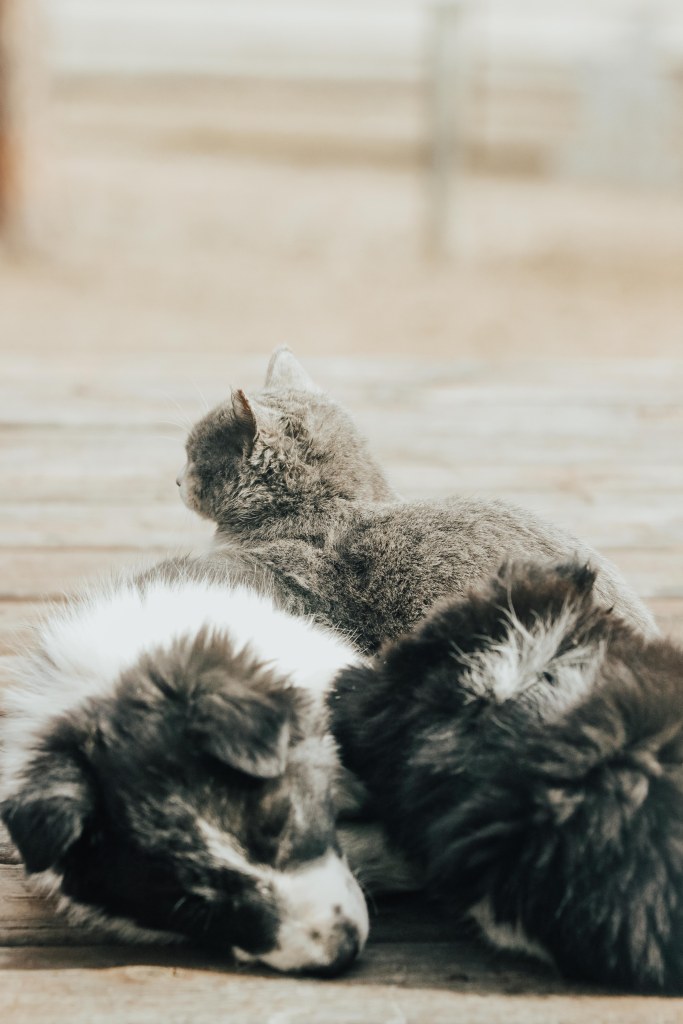
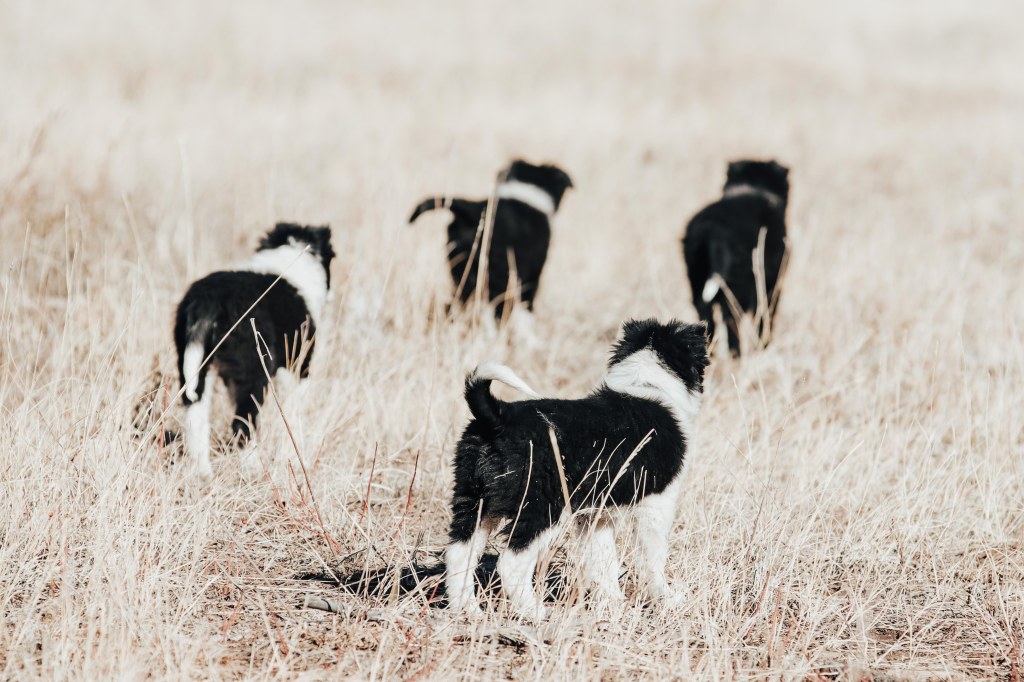
The one thing that is a constant is the pups – Snow or shine, they love it outside! I love looking out and seeing them romp, or finding a pile of kittens and puppies on the deck soaking up the sunshine. Josie got to experience her first few times riding the ATV, and she and Bess have come with us on some of our project afternoons.

The warm days we’ve filled with as much outdoor work as possible, reveling in the winter warmup – In Brad’s free time he has felled and chunked a number of dead trees, as well as pulling useable firewood out of the machine piles from when some logging was done several years ago. We hauled the splitter and a dump trailer up the hill to one of the piles and filled it full, and it turned into something of a late Christmas present for the folks. There’s nothing like wood heat on a cold day! And the girls were great help.

We’ve done some odds and ends of wintertime and spring-prep cow work, bringing the first calf heifers into the hayfield so they can be checked easier when they start calving. Brad is getting the calving shed set up and we’re just hoping the heifers wait until after this snow storm to start! We’ll be moving the rest of the cow herd tomorrow, bringing them from the north of the ranch into the center of the ranch for calving.

I’ve gotten into my garden, cleaning it up and adding compost, turning it under, wetting it down, and getting it ready for spring planting. So exciting! Every few weeks when there has been a warm up, I’ve watered the trees we planted, including the oak and ash sapling transplants, and have also doused my perennial garden a few times. Green is already starting to show! I bent a couple of twigs and even the transplants have survived. When I was churning up my vegetable garden, I uprooted this strange mess of roots, so fine I first thought it was fungus, only to realize it was my chives. Oops. Fortunately some plants are pretty forgiving.

The chickens are really picking up their egg laying, with a record breaking 17 eggs yesterday, and 16 the two previous days! I love being able to meet my customer demands, and sold three 18-packs and two 12-packs this weekend, and five 18-packs at the beginning of last week. I’ve been getting my plan in place for purchasing chicks soon, which is extremely fun to anticipate.

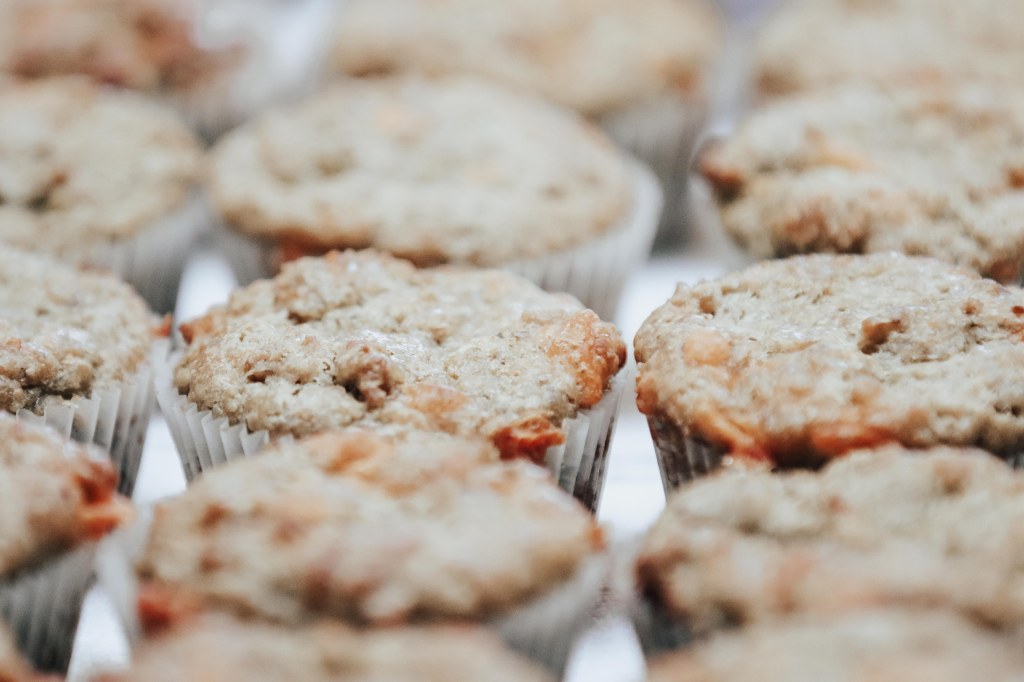
On the cold days I’ve baked bread and sourdough muffins, gotten some writing done, canned the rest of my cranberries, brainstormed chickens and chicks, planned my garden, and cleaned, cleaned, cleaned, the result of puppies and mud and the blurry line between winter and spring.

I went through all my seeds today and am pretty well set for my garden, except for one or two more varieties of tomatoes and some pumpkins. I’ll be getting some greens started in the house soon, a little indoor “salad garden,” since I’m hankering to be growing something. Maybe it will become a permanent off-season thing. To my rancher husband’s chagrin, I eat a lot of lettuce and greens. He says I’ll eat him out of business.

What beautiful days these are, when winter and spring collide.