Ranch Wife Musings | Life, Liberty, Happiness

Originally printed in the Custer County Chronicle on July 15, 2026

I didn’t see a single firework this year. Is that crazy? Our country celebrates her 250th birthday and I don’t see a single firework? But we are in a season of family life where naps and bedtime are pretty important, and bedtime is well before sunset. Hence, no fireworks. We did, however, enjoy some excellent smoked beef brisket and cheesecake and in our own way fully reveled in patriotic festivity. After all, it is good to live in a country so great that even the people who hate her refuse to leave.

“We hold these truths to be self-evident,” the Declaration of Independence reads, “that all men are created equal, and that they are endowed by their Creator with certain unalienable rights, that among these are life, liberty, and the pursuit of happiness.”

The pursuit of happiness. I wonder, can we even define happiness? Is it possible to define something that is so personal? What makes me happy might not make you happy. Yet, in spite of the difficulty in definition, happiness (and not just the pursuit of it) has become more or less the pinnacle right focused on in our oh-so-wise modern day, the key metric used to determine the rightness of something. Whether it is a single decision or an entire lifestyle choice, we look at it through the lens of our own self-gratification, our own comfort. Will it make me happy? If someone or something spoils my happiness, that someone or something is trampling all over my pinnacle right.

One’s definition of happiness is very much dependent on what one believes to be valuable at a core level. If you value ease, you will not value things that are hard. If you value convenience, you will not value things that are inconvenient. If you value maximizing your potential, you will not value things that stand in the way of upward progress. If you value pleasure, you will not value things that require self-denial. If you believe that that which is valuable doesn’t extend beyond the grave, you will live in a way that reflects that. If you believe that there is meaning and purpose in eternity, you will live in a way that reflects that.

On the one hand, we have those whose values propel them to get married and be faithful spouses, to have children, work hard, live within their means and be productive members of their communities. On the other hand, we have those whose values propel them to move through serial relationships without commitment, to avoid children at any and all costs, to follow any and all sexual proclivities, and to live wildly lavish lifestyles disconnected from the good of those around them. We have those whose values propel them to live generously with the long-term good of others in view, and those whose values propel them to live greedily with only their gain in view. All in the name of happiness. It shouldn’t be controversial to state that those value sets aren’t inherently equal, but alas, we live in confusing times.

If our cultural obsession with recreation, entertainment, and convenience is any indicator of the extent to which we pursue happiness, we should be seeing incredible degrees of resulting happiness. Yet loneliness is epidemic, drug use is rampant, marriages fall apart at record rates, many Americans suffer with anxiety and depression, and multiple millions plan or attempt suicide each year. Is our pursuit of happiness working? 

It seems to me that perhaps our cultural definition of happiness is toxic. Because maybe, just maybe, that’s what happens when we cherry pick parts of our founding documents and leave out the inconvenient and politically incorrect parts. We don’t have the rights of life, liberty, and the pursuit of happiness randomly and by chance, or without context. We have been given them by our Creator, and that Creator has laws which compel, constrain, inform and shape society and individual morality and virtue, a broad topic with which our Founders were very concerned.

They recognized that for a nation to truly enjoy life, liberty, and happiness, private virtue had to exist within individuals. John Adams famously wrote: “We have no government armed with power capable of contending with human passions unbridled by morality and religion….Our constitution was made only for a moral and religious people.” Try saying that in the public sphere today without getting tarred and feathered.

So many of the societal milestones of the last 20 to 50 years have been precisely the throwing off of the bondage of morality and religion. In some of the key moments in our history, the culture-changers really were seeing and reacting to real problems in our society that were, ironically, the result of the degradation of virtue. But rather than promote virtue, the solution was to try to remove all consequences. That’s rather backwards.  

According to our cultural definition of happiness, I should be feeling very sorry for myself right now. I set aside an exciting career to be “just a wife,” and currently spend my days in a repetitive haze of changing diapers, sweeping floors, doing dishes, and folding laundry. Some days, all I have to show for my efforts is that the baby is still alive, and the house didn’t burn down. My needs and desires, whether it is eating or showering or sleeping or social in nature, come after the needs of a tiny person who is very needy and has very specific desires. My pursuits have taken a back seat, my comfort is challenged. My. My. My. And that is the problem with so much of our cultural perspective on happiness. I am the problem. You are the problem. We are unable to see beyond ourselves.

Happiness, true happiness, cannot be separated from the “Laws of Nature and of Nature’s God,” who gave us the capacity to experience happiness in the first place, and then by rights put boundaries in place by which we are to live and which are to shape our desires and pursuits. Rather than asking, “Will this make me happy?”, the question becomes, “Will this be for my eternal good and the glory of God? Will this make me more like Jesus?”

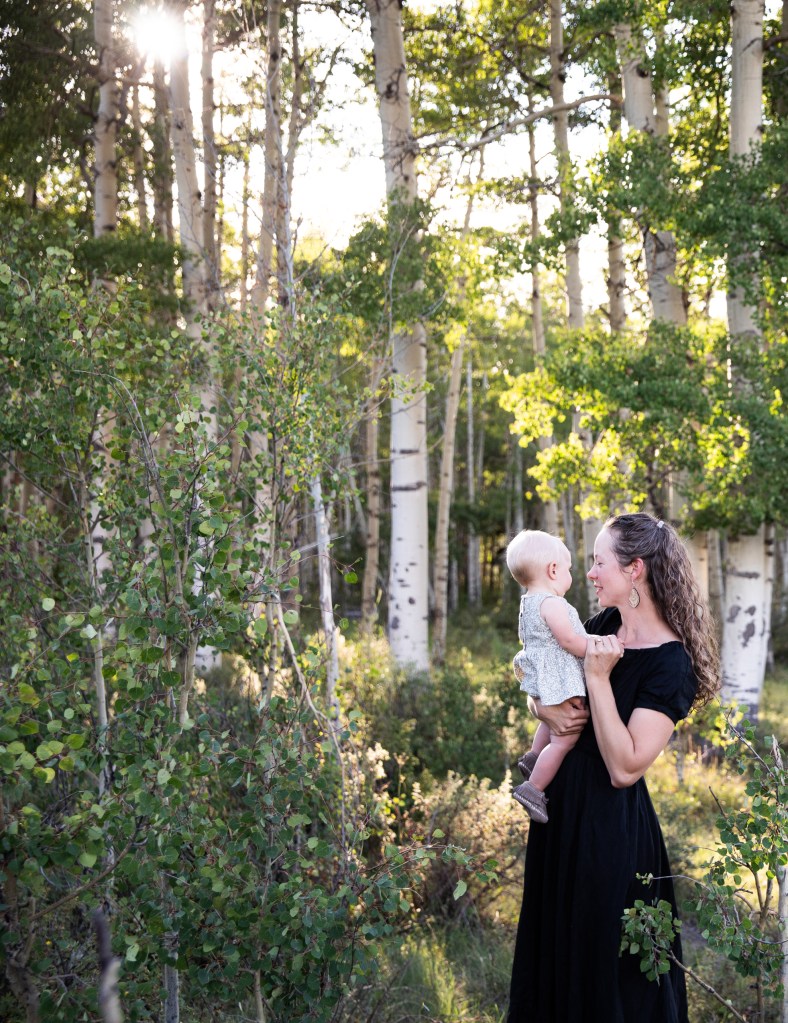
img_2592

After long nights that are anything but restful, when I find myself wondering if I’ll ever sleep again, I open my eyes to sunlight streaming in the window and my baby’s big blue eyes and round, rosy cheeks, and she plants sloppy kisses all over my face. In a moment of heart-melting sweetness and heavenly clarity that makes me a better woman and a better human and a stronger Christian with a more deeply-felt purpose, I realize that this is life. This is liberty. This is happiness.

Roots Deep

Originally printed in the July/August 2026 issue of Down Country Roads Magazine

Summer is here. On the ranch, summer sort of slips into existence, as if it is the quiet end result of getting the spring work finished. Summer comes specifically because the spring work is done. As the spring work wraps up, the last of the calves born and the brandings and getting bulls put out and the cows out to pasture, suddenly it is summer.

Some years, summer comes as a reprieve. Busy, but with an easygoing kind of bustle: fixing some fence, putting up some hay, checking cows, watering and tending the garden, doctoring an animal or two when the need arises, watering the fruit trees, things of that nature. Plenty to do, but without the urgency of the springtime months, and with long days, long enough to accommodate the to-do lists.

But this year, a somber haze hangs drearily over the horizon, not unlike the somber haze in everyone’s thinking right now. What do you do when there is no grass? What do you do when the rain doesn’t come? The moisture-bringing storms of early June were hopeful, but it didn’t take long for the ground to crack again, and the brilliant green of the spring pastures has faded to a greyish tint in the days and days of hot, dry wind. The pines are taking on a sickly, yellowish hue, losing their emerald depth, and the fragrance of flowing sap has long since dried up. The sky looks flat and white and dingy, and the dust devils in the hayfield and the water lots are disconcerting. Dust devils, this early? One becomes very conscious of ignition sources, and fire risk.

On a good or even just a normal year, the hills and prairies would be covered over with wildflowers right now, a flower-hunter’s paradise, but this is just a different sort of year. Even the hardy perennials, like yarrow and coneflower, even noxious thistle, are struggling to do more than a couple of inches of growth, and many of those friendly little flowers like columbine and dame’s rocket and shooting star haven’t shown their faces at all.

Pastureland holds up much better than cultivated ground, in a year like this. The roots of the perennial flowers and grasses are what hold moisture and prevent erosion and give structure. Topsoil, dry and hard, is held together by those wonderful perennial root systems delving deep underground, sometimes yards down, able to tap into hints of moisture the fast-growing, fast-fading annuals can’t access, but also able to sit in dormancy. Without them, the ground would turn to sand, and easily, too. Each windy day would carry away precious topsoil. The life is in their roots. And their roots go deep.

It is years like this one that highlight both the fragility of our way of life and the resilience needed in order to survive. We can’t control the skies. We can’t make it rain. But we can steward what we have. The drought will break. Eventually, it will rain again. We pray that it would be sooner rather than later. We pray for renewal and refreshing and a good, long rain. An then we trust in a God-given design that we witness daily, but perhaps take for granted, the resilience of an ecosystem that is stewarded and then allowed to adapt as needed.

Because years like this also highlight the fragility of the world around us, not just our fragility, and how dependent it is on weather patterns and precipitation and temperature, yet is so incredibly resilient. The drought will break, and good years will come again. We’ll see the grass grow tall, sweeping our boots as we ride horseback to move cows. We’ll see the hillsides studded with wildflowers like jewels. We’ll see the tangle of wild roses along every trail and the chaos of spiderworts, all shades of purple and pink and everything in between. The coneflowers and yellow sweetclover will bloom again.

The roots are deep. The drought will break.

Ranch Wife Musings | Ranching for Profit

Originally printed in the Custer County Chronicle on June 17, 2026

At this point, I’m guessing everyone has heard enough about the lack of rain, but pretty much none of us can stop talking about it, so here I am, talking about it some more. You’re welcome in advance. In case you need your monthly update, all your friendly neighborhood ranchers are selling cows and buying hay and making it obvious why seminars titled “Ranching for Profit” exist. That’s a real seminar, by the way. You’d think it would be a given, but it isn’t.

Turns out there’s a whole Ranching for Profit school. The curriculum includes discussing “the five grazing principles that work in any environment” and “developing a business structure that works with nature’s cycles.” Nature’s cycles…as in, we average something like 4 inches of rain each year and periodically go three-quarters of a year without measurable precipitation? And I challenge anyone to come up with a failproof grazing strategy that works when at any moment you can be obliterated with tennis ball sized hail, grasshoppers the size of small rodents, raging wildfires, or the occasional “isolated tornado,” as I’ve seen forecasted a few times lately. Thank goodness it was just an isolated tornado and not a whole flock of them. Not to mention, the random hurricane-force, straight-line winds vicious enough to drive your cows all the way to Nebraska, where they aren’t faring any better and this year are actually faring considerably worse.  

I have to say, I’ve definitely wondered who first had the bright idea to ranch out here anyway. It must have been one heck of a good year to convince him.

Anyway, we have a neighbor – I’ll call him “Denys” – who could have been teaching his own Ranching for Profit classes on diversification of income if he hadn’t turned down the opportunity of a lifetime in recent years. Cows are needy animals, after all, and one of the unfortunate realities of drought is having to haul water when your dams dry up.

Well, as near as I can remember, “Denys” was offered this camel – yes, a camel – by some landowners he leased from. They were going to give it to him. Give. As in, all he had to do was transport it wheresoever he desired. Now, I’m sure if “Denys” had asked his wife, she could have figured out some way to transport said camel. Ranch wives are good at figuring out how to move odd, homeless animals closer to home, and I’m sure she would have delivered. But apparently “Denys” just turned this camel down cold. Ranchers say things like, “What would I do with a camel?” Their wives say, “Poor thing,” and home it comes.

Come to find out camels really are a novelty, and some other enterprising individual hauled the camel to the nearest sale barn and brought home somewhere in the neighborhood of $20,000 dollars.

I’d like to just sit with that for a minute.

We’re in the middle of this drought, possibly the worst drought since the Dirty Thirties, we’re hauling water and feeding hay like our lives depend on it, because they kind of do, and while everyone else is tightening their belts and shipping cows away and spending a fortune on hay, or selling down their herd, “Denys” could be sitting pretty with a herd of animals that can go 2 weeks without drinking water and giving camel rides to tourists, and selling the occasional critter at the sale barn. I mean, shucks, an adorable little bottle baby camel went for $21,000 at a sale barn in Nebraska last year. Talk about diversifying one’s streams of income.

Agriculture is an interesting way of life. Even in parts of the country where the land isn’t trying to die every two to four years, even in places where the environment is more temperate, or wetter, or the growing season is longer, agriculture as a way of life relies on factors that are entirely outside of one’s control. It is humbling. We don’t drive prices and we can’t control the cost of feed, and we for certain can’t control the weather. There are some means of predicting and planning for slips in prices or increased cost of feeding, but there is no way to accurately predict the weather, much less to control it.

It puts those of us who live and work in ag in a unique position of facing head-on the truth of Whom it is that we actually rely on. Now, it is really easy to squander the opportunity, with a woe-is-me attitude, anger or bitterness, or just general pessimism. But the American mindset of self-determination and pulling oneself up by the bootstraps starts to fall apart on years like this, when all that is left to do is pray. Which, if you believe in Someone eternal who has revealed Himself to us in His Word, is more than enough. Prayer doesn’t always bring about the material result requested, but it is a means of bringing our hearts into greater agreement with God. He is not primarily concerned with our physical, temporal destiny but with our spiritual, eternal destiny, and saints aren’t made in a trouble-free life.

Ranching may not always be profitable, in a numbers and dollar signs kind of a way. And sometimes the least profitable ranching years just might be the ones with the greatest potential for a different kind of profit, the kind of profit that Jesus talked about when He taught His followers to store up treasures in Heaven, where moth and rust (and drought and fire) can’t destroy. So, this year might be one of those where income and expenses are uncomfortably close together. But it just might be that this year the ranch will turn a different kind of profit. The kind of profit that last a lot longer.  

Ranch Wife Musings | Bearing Burdens

Originally printed in the Custer County Chronicle on May 20, 2026

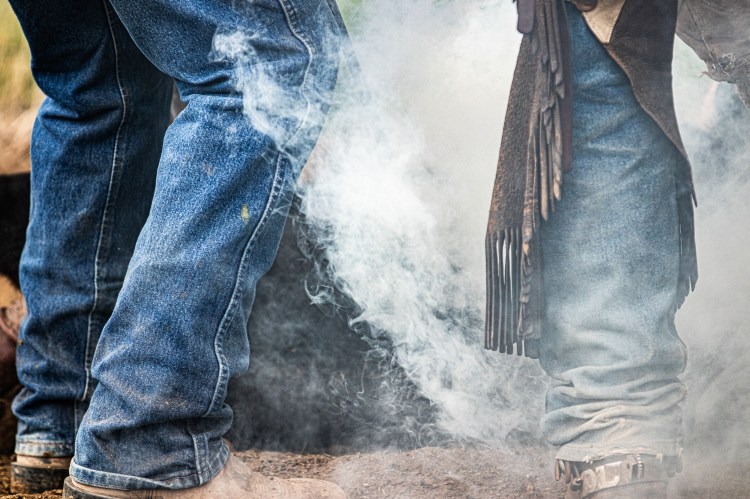
Branding season is that yearly reminder of how thankful I am for the community we are blessed to live in. A lot of prep work goes into a branding, from sorting, vaccinating, and moving all the pairs to the branding pasture ahead of time, to gathering up the irons and stoves and more vaccine, to rounding up a crew of our friends and neighbors, cooking for a small army, and more. We start early and work hard, running like clockwork to get several hundred pairs gathered, sorted, and the calves vaccinated, branded, and cut, swapping stories and laughs in passing. Shoulder-to-shoulder with our neighbors we accomplish a massive task.

This year, there was a different tone, a little heavier than usual, as dry as it is, as little grass as there is, and as many cow-calf pairs are already moving. If you see cattle pots on the road, they’re loaded, and sale barns are full. It is a tough spring, record-breaking in the worst of ways. Conversation returned, again and again – how could it not? – to the drought, the lack of rain, the storms missing us, the beaten down pastures, the price of hay, the price of trucking, what to sell and when. Again and again, there was the shrug and the weary smile, and the understood “we’ll figure it out, one way or another.”  

I don’t think it is a coincidence that as we have gotten more efficient as a society, we have also gotten lonelier. As we have replaced one another with machines, we’ve suffered for fellowship. As we’ve enabled ourselves to travel further for work and church and daily life, we’ve gotten less connected with the people in our immediate vicinity. We connect with hundreds of people superficially and fail to connect meaningfully with anyone. When you remove need, connection suffers. When connection is a luxury, it tends to fall to the wayside.

There are more efficient ways to do things. Some ranches have gone to utilizing a calf table to brand, instead of ropers and wrestlers, which cuts the needed manpower substantially. Ranches in this region are still largely rope-and-drag outfits, included ours, and for that I’m thankful. And a year like this brings that into focus.

It is years like this where we need each other more, not less. In some ways, that’s counterintuitive. We branded fewer calves, and there will likely be less work to do this summer and fall, and fewer cattle to work or preg test. But when you’re facing uncertainty, it really does help to face it with other people who are also facing similar uncertainty. Knowing that you’re not the only one really does help. Knowing that other people are just as stumped over what to do next alleviates some of the stress of having to figure it all out.

We truly do need each other.

The Bible is full of commands that my former pastor called the “one anothers.” In case it isn’t painfully obvious, the “one anothers” only work if you are with one another. They are hard to accomplish in solitude.

Love one another. Serve one another. Pray for one another. Be kind to one another. Forgive one another. Submit to one another. Encourage one another. Build one another up. Seek to do good to one another. Show hospitality to one another. Can any of those commands truly be obeyed without relationships, in solitude?

And one of my favorites: Bear one another’s burdens.

The mental image is that of taking a heavy load from someone else’s shoulders so they can have reprieve, or shouldering their load with them and then carrying it together. Shoulder to shoulder, both can stand a little straighter and walk longer and carry it further.

Bear one another’s burdens. Burdens of work. Burdens of uncertainty. Burdens of care. Burdens of sorrow. Burdens of worry. Burdens of fear.

Burdens like the task of branding hundreds of calves. Burdens like wondering when and how to continue ranching when the weather seems set against it. Burdens like if and when and what to sell. Burdens like how to feed the animals you keep, and whether to try to hold out for a weather change.

Bear one another’s burdens.

This whole season is one long opportunity for burden-bearing. Ranch after ranch brands their calves, starting in late April or early May, trusting in their friends and neighbors to help bear the burden of the branding itself, but this year there is more than usual of the other kinds of burdens, the burdens of uncertainty and worry and the rest. And I’m thankful for a community that can come together around a shared task, puzzle over a shared struggle, smile, shrug, and say, “We’ll figure it out, one way or another.”

Branding day this year brought that into focus.

Pasques and Pines

Originally printed in the May/June issue of Down Country Roads Magazine

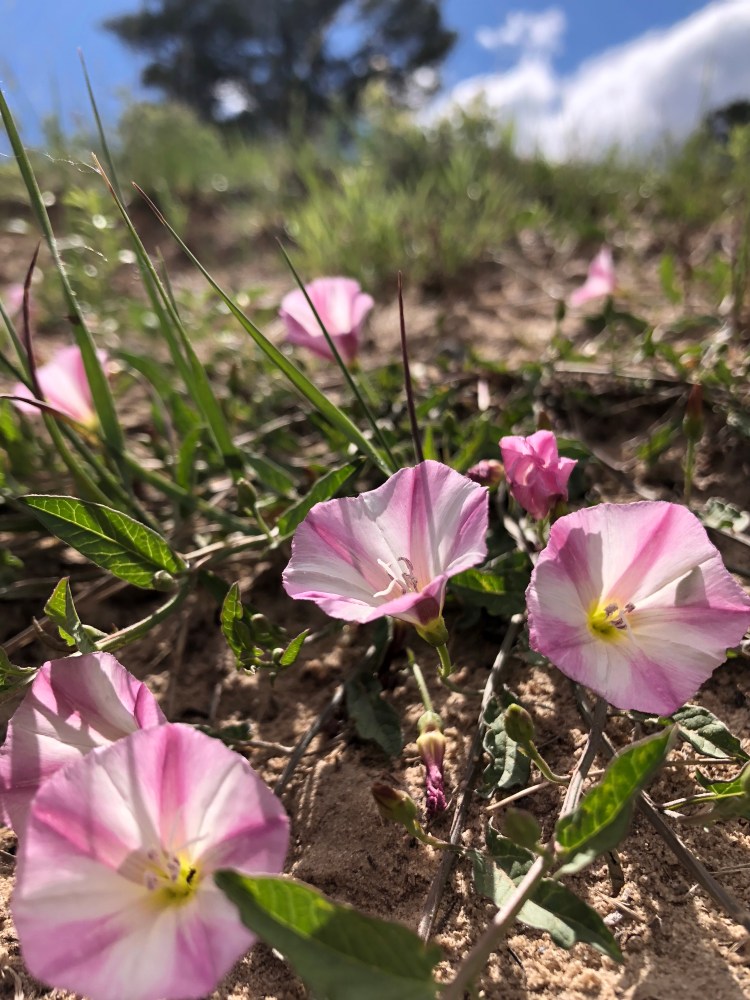
The pasqueflowers bloomed early this year. Perhaps they were tricked by the unseasonable weather, like the plums and the crabapples. Dandelions have tried to spring up, but haven’t been overly successful. But the pasques! How could they bloom with no moisture over the winter? So delicate-appearing, so insignificant visually, the first to bloom and the first to fade, but incredibly resilient. They thrive in disturbed areas, like recently logged terrain, and some of the best I’ve seen have been in old wildfire scars. The ones on our place bloom on the north slope of Potato Butte, a rather rugged and blighted prominence, and in the draws around it, where the wind blows the worst. They fight their way up through the rocky ground, rivalling yucca in toughness, spreading their little leaves and opening their petals in a tangle of old grass and bracken. They survive frosty days and wretched conditions no other wildflower is brave enough to face. When the sun is just right, they light up, their transparent petals like stained glass, and the silky hairs catching the sun. Little beacons of hope they become. They don’t bloom when and where it is easy. And they aren’t easy to cultivate. They thrive in adversity.

Fire is on our doorstep. From the burning of the Sandhills, to the fires that have lit the skies and eaten up pasture as near as two miles away, the drought is oppressive. Most have never seen it this bleak this early. There is no telling how the next weeks and months will play out, no telling how much harder things will get, or how beautifully they may turn around. They’ve done so before. The uncertainty makes us feel so very small. But a recent drive took me through an area burned by a devastating fire a few years back and my heart, heavy right now, lifted and soared. The entire forest floor was green. Not the green of grass, but the green of hundreds and thousands of seedling pines. So very small. Little beacons of hope. Thanks to the flames of the fire, the forest is reseeding itself. They thrive in hardship.

A few weeks ago, the sandhill cranes flew overhead like they do each spring, without fail. I love watching them fly together, wing to wing, and their wonderful wild call pierces the heart. “Fly on! Fly on!” they seem to cry, one to one another, in chorus.

Perhaps the bleakness isn’t so all-consuming after all.

The meadowlarks have returned, sitting on fence wires and the tops of fence posts, and they still have things to sing about, raising their melodious voices in solo song.

Perhaps we do, too.

The bluebirds are homemaking as always and the Eurasian collared doves are romancing in the pine trees, cooing lovingly together, laughing and trilling. A lusty little starling, drab and unimpressive, sat outside our window, somehow managing to whistle a glorious ditty around the blade of grass in her beak, singing while she built a nest for her family. What a delightful sound!

If the birds can go about their mundane tasks and their quiet little lives with a song in their hearts, perhaps we can, too. We can tend our homes, we can break bread with our families and neighbors, we can bear one another’s burdens, and hold our loved ones tight and tighter. We can find joy in a smile or a warm embrace, in the bubbling laugh and sloppy kisses of a baby.

And like the pasqueflowers, perhaps we, too, can thrive even in hard frosts and snowless winters and rainless springs. Perhaps we can thrive in churned up earth and on rocky, windblown hillsides, or in the ashy, deadened landscape after a rangeland fire. Like the pine woods, perhaps we can weather a fire and the heat that burns and clears and cleanses, and in its aftermath a whole new forest will grow.

The birds, the flowers, the forest – They were not made for ease. Are we so different?  

Ranch Wife Musings | Hard Times

Originally printed in the Custer County Chronicle on April 22, 2026

It is the same look on everyone’s faces, the same careworn expression. I would guess the same pit sits in everyone’s stomachs right about now. Mornings should smell damp and fresh. We should be wearing muck boots and watching mists and fog drift across pastures at first light. Those lacy spiderwebs that appear overnight should be studded with dewdrops. We should be seeing the start of green grass. But there is no grass.

The corrals and calving lot are 6 inches of dust, and the pastures are bone dry and chewed down. It hurts your heart to look at them. Every little movement of every living thing, every breath of wind, kicks up dust. And goodness knows we’ve had our share of wind.

Calving season should wrap up with the eager anticipation of what comes next, but right now the “next” is uncertain.

All winter long, we remind ourselves that December and January, and even February, tend to be dry here, and that’s fine and normal. We remind ourselves that there’s plenty of time for the needed moisture. Plenty of time. Then March rolls through bringing no snow and we look to April, saying to ourselves, “We’ve gotten great snowstorms in April.”

And then April passes by. “It always rains. Eventually,” we remind ourselves. And then when cynicism creeps in and you think, “Well, at least there’s nothing to burn,” a spark lights off a 5000-acre grassfire. Apparently, there was something to burn.

“Please, God, make it rain.”

The inner monologue changes as the situation worsens, and as optimism gives way to reality.

There is no grass. Dams are dry pits. We haven’t really had measurable precipitation since October. The greenest spot on the whole ranch is the patch of lush grass around the septic tank in the yard.

Tough questions are being asked. Questions regarding the best interest of the livestock and the best use of the land. At this point, any answer will be a tough answer, most likely.

What do we do now? That seems to be the question everyone is asking.

You can’t ranch without grass. You can only feed so much hay, and where does the hay come from? You can only truck it so far, with the price of fuel. And fundamentally, regardless of how the media and four-letter organizations like to characterize those in agriculture, ranchers want what is best for the livestock and the land.

It is times of uncertainty that force us to acknowledge God. It is hard times that drive us to our knees in prayer. They are a reminder that we don’t live in a perfect world. They remind us that we don’t in fact govern the weather. Generally, in agriculture, that’s a pretty easy fact to grasp, but bad years are an extra dose of reality, that the weather is not subject whatsoever to our whims or desires. Hard times invite us to revisit God’s Word, and to be comforted in His sovereignty, and His purposes, which are always greater than ours. Uncertainty invites us to be reminded of His promise in Genesis that, “While the earth remains, seedtime and harvest, cold and heat, summer and winter, day and night, shall not cease.” Hard times invite us to marvel at His created order. God built incredible resilience into this world.

There are so many extremes of thought when it comes to the environment. There is the extreme to one side that seems to think we are constantly teetering on the brink of total annihilation, with a fixed date of destruction that surreptitiously gets moved, again and again, when the annihilation doesn’t happen. Then there is the extreme of exploitation without concern for the future, a using up of resources without concern for the next five years, let alone the next generation. There is the incredible arrogance and short-sightedness of weather manipulation, as if we actually can, or have any business trying, and truly could without making a total mess of things. And then there is a whole host of varied viewpoints somewhere in the middle of the mess, who can at least agree to the overarching idea of stewardship, if not the fine points. Stewardship being a caretaking of nature and our natural resources, neither the abandonment demanded on one side or the exploitation of the other, neither harnessing nor manipulating, but a partnering with and stewarding of the world around us.

And stewardship as mandated and defined by the Bible leads us to acknowledge that God as Creator has put in place an incredible created order, that allows regions to suffer drought and heat and natural disasters, and somehow, beautifully, amazingly rebound. The fresh green grass in recent burn scars evidences this, as well as the wonderful biodiversity in places like Hell Canyon, in the area of the Jasper Fire. It is a kind of stewardship that recognizes our responsibility but also God’s control.

If not even a sparrow falls to the ground apart from the knowledge of God, then not a raindrop falls, or doesn’t, without God’s permission either. If He clothed the fields then, 2000 years ago when the Gospel writer recorded the words of Jesus, He who is the same today clothes the fields today.

Pray for a miracle. Please, do. Pray for the skies to open and for rain upon a dry, parched earth. Pray for fruitfulness and life and safety.  I know I am. But my greater prayer, the prayer growing in volume, is for faithfulness. That we would have eyes to see God’s faithfulness displayed, and that we would be faithful to Him.

Because God is not primarily about the business of our comfort. In fact, our comfort doesn’t even make the priority list of eternity. God is about the business of fitting saints for Heaven, and fitness for Heaven rarely is accomplished through comfort and ease. It is accomplished through difficulty, testing, trials.

When we reach a point of breaking and holy mending, or breaking and holy sustaining.

When our best-laid plans and our smug self-sufficiency wilt away like last season’s grasses, and we are forced to actually wait for the rain of God’s providence.

Oftentimes, God’s most poignant and lasting work in us is done in hard times when we are brought to the utter end of ourselves.