I read in an L.M. Montgomery book about a family that planted a tree for every member of the family, memorializing marriages and births, so that after a few decades there was a beautiful family orchard with a tree for every person. That seemed like such a nice idea when I read it and apparently it stuck with me. Sometime after Brad and I got engaged, when we were starting to build some dreams together, I mentioned that to him, and asked if we could plant a few trees when we got married.
And we did.
So many people were very generous to us for our wedding, and we decided to use some of what we were gifted to plant two plum trees, a dolgo crabapple (the kind with crabapples big enough to eat), and a beautiful little spruce tree. The start to our family orchard. It made for a fun date on Saturday to go to the greenhouse and pick out our trees, and I’ve loved our afternoon projects of getting them planted.
I can’t wait to see them grow over the next few years, or next ten or twenty years, and be reminded of that so-important day and God’s faithfulness to us. And that first plum cobbler or jar of crabapple jelly is going to be delightful.
Support Song Dog Journal and share to social media!
A well-tended perennial garden has a beauty all its own, and thejoy of it is amplified in that it keeps coming back, and keeps coming back, and keeps coming back! Perennials tend to get ignored in the springtime fury of planting, since most people fall for the immediate gratification of copiously-blooming annuals displayed at the greenhouse. Perennials tend to bloom later and don’t get the showcasing that annuals do….Not until the middle or end of the summer when the annuals have all had their hayday and perennials are still shining or just starting to!
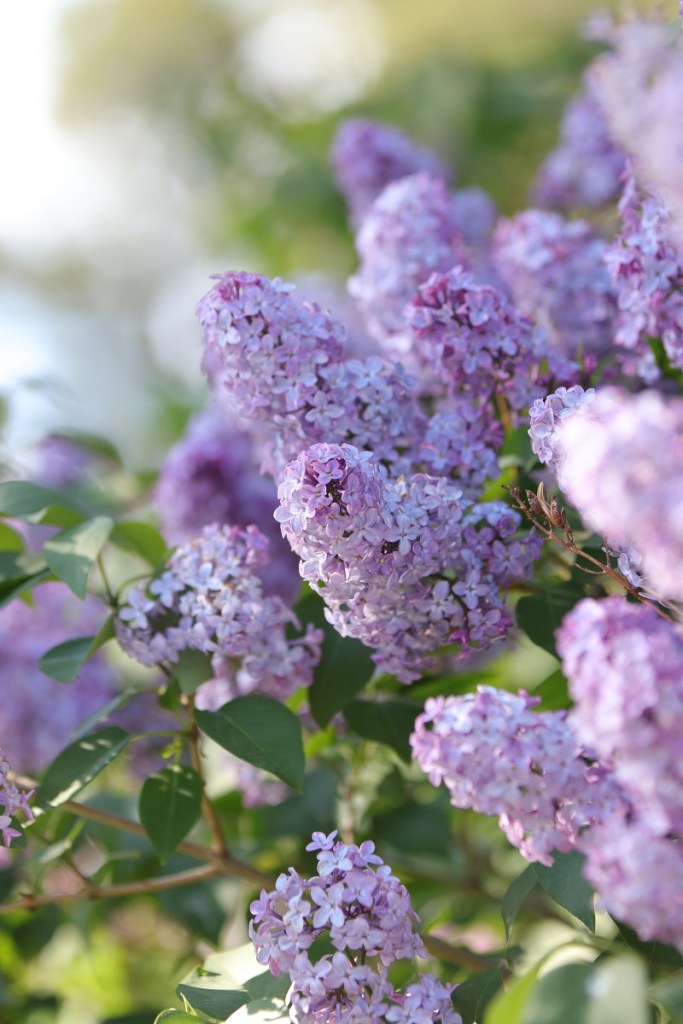
The ease and flexibility of planting annuals in a container is pretty appealing to a lot of folks, especially if they don’t already have a garden bed ready for plants but, if at all possible, perennials are the way to go and, tended well, will come back for years to come. It is really amazing to me that sometimes all that is left of a homestead from the late 1800s or early 1900s is a hedge of roses or a few lilac shrubs, still blooming joyfully 100 years later. In fact, the lilacs Brad and I have outside our house are transplants of some lilacs blooming about a mile and a half away on top of a hill. The lilacs and some irises are all that remain of someone’s life on that little piece of hill country.
I was able to get my perennials in the ground early this summer, shortly after Brad and I got married, and planted a few from seed later in the summer, but fall is actually a great time to plant perennials. So I thought I’d share a little bouquet of my favorites.
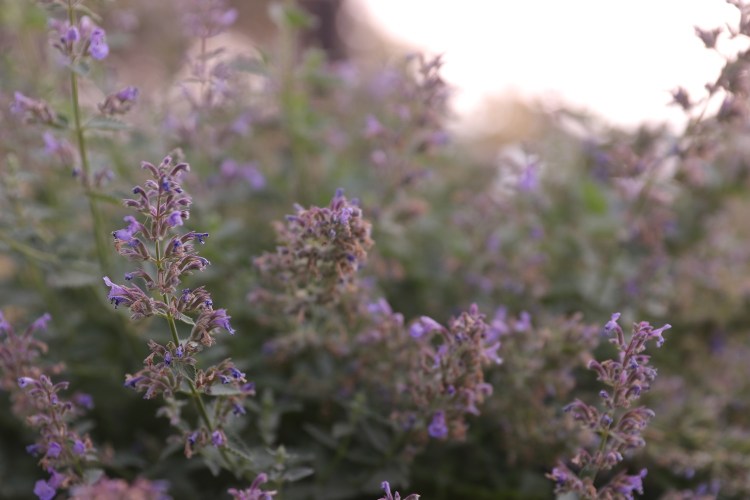
Catmint. Not to be confused with catnip, which is a completely different plant, this perennial is one of my favorites in the garden. It is hardy, basically grows without any effort, and is a wonderful filler! Unlike some perennials which bloom and then are done, catmint seems never to stop. It can also be sheared in the middle of the summer after its first bloom if it is starting to look scraggly, and will grow back fuller for a second round of blooming. I bought a few catmints in tiny 2 inch pots back in June and these plants are now generous 18 inch bushes. They tend to get wider than they do tall, so they kind of work just about anywhere in the garden, and as I said above they make a great filler. Absolutely beautiful. A bonus is that the pollinators love these flowers. Another bonus is that, due to their fragrance, deer generally don’t mess with them. (Deer proof plants are a myth. They don’t exist. But there is such a thing as generally deer resistant, and plants with a pungeant aroma are generally less likely to be munched on by deer.)
Salvia. This is another one I just love. The typical shade is kind of a violet blue, but lately growers have developed some really wonderful shades of pink. In general, I’m not a pink person at all, but some of the salvias are just delicious rich berry colors. This plant does best with regular deadheading. Each blossom spike can be snipped back when spent, down to the first pair of new leaves, and this will encourage reblooming. This is another drought-resistant and deer-resistant plant, but is less forgiving than catmint. Salvia doesn’t get hugely tall, so it works well somewhat offset from the edge of the garden, but not too far back.
Yarrow. This is an easily-recognizable flower, if you pay any attention to native wildflowers, and the domestic varities have been bred for some gorgeous colors. Wild yarrow is white with occasional pink, but I was excited to plant one variety that blooms red and fades to yellow, and another variety of more subtle shades of pink and white. This is yet another drought-resistant and hardy perennial, and it blooms forever in the later summer! It has some height to it, so it makes a great middle of the garden flower.
As much as I love the change of seasons, I’m bracing a little bit for that first killing frost we have, since I’m enjoying my garden so much this summer! But it will be just delightful to see how everything comes back in the spring. Gardening is possibly the epitome of hope and optimism!
Support Song Dog Journal and share to social media!
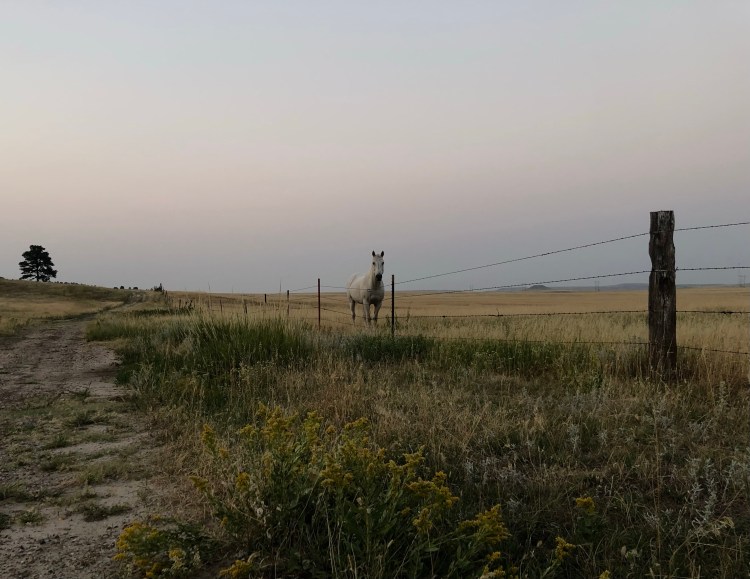
As I tidy up the kitchen as my last home task of the evening, I get a good view of my little flock of chickens down by their coop, chasing a few last bugs. Clearly they aren’t ready to be tucked in just yet. The horses are visible just on the other side of the barn, having been given their freedom for the night, and sometimes Charlie the Calf comes wandering into the barn yard for a drink of water or maybe thinking I’ll give her one more little scoop of calf creep.
The sky turns orange then pink then lavender as the shadow of our little ridge is cast further and further east, until the last little bit of sunlit prairie has been covered in the comfort of evening shadow.
What a peaceful sight.
I love my little jaunt down to the chicken coop to do the very last of my chores for the day. Pearl comes with me, since she takes her chicken chores very seriously, and usually one or more of the cats run down to the coop with me as well. With an actual pounding of little feet, Yellow Cat (who probably slept all day until five minutes ago) races by, then Grey Cat (who probably worked all day), tearing around, then stopping suddenly and staring at absolutely nothing in the uncanny way cats do.
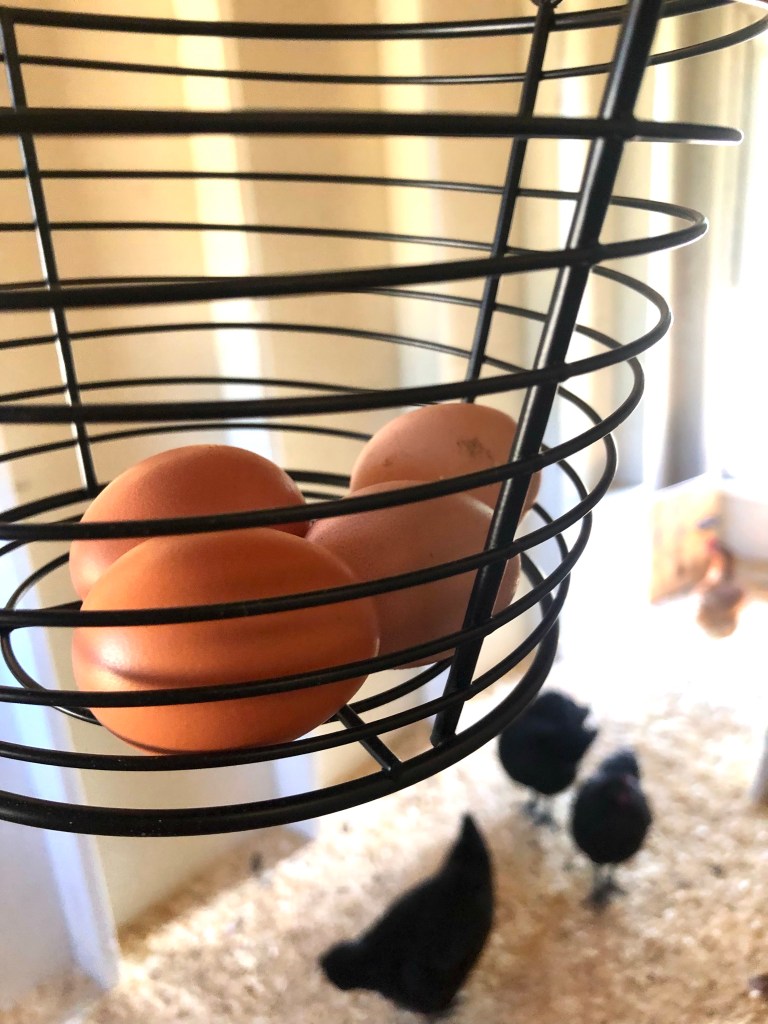
The chickens chatter contentedly amongst themselves and maybe greet me quietly when I come in to make sure everyone is accounted for. Yep, there’s Amelia, and Alice, and Audrey, and Goldie, and Little Red, Little Red, Little Red, and Little Red. And seven black chickens, including Henrietta, the only one who gets a name because she looks like a vulture. I close the coop windows or open them a crack, depending on the evening temps, and scratch one or two of the friendly birds on their backs before collecting my egg basket and closing the girls in for the night.
Pearl reluctantly joins me on the little walk back up to the house. The cats run and pounce on each other, occasionally scrapping and working out a few feminine feline differences. Rocket the Horse says something sarcastic to Jargon the Horse, or maybe that was Chip putting Rocket in his place.
And everything is still. I love an evening on the rim of the prairie. A distant coyote yelps. A nighthawk calls out high up and out of sight. Maybe there’s the soft roar of the nighthawk’s wings as he swoops and dives. The warmth of the last days of summer melts away and cool night breezes shift around gently, resiny, fresh, and sweet.
This is home.
Support Song Dog Journal and share to social media!
This hasn’t been an overwhelmingly productive summer, as far as the garden is concerned. Anyone who has gardened for any length of time knows that some years are wonderfully over abundant and other years are woefully under abundant. This has been somewhere in the middle of the two, on the lower end of the productivity spectrum.
The grasshoppers alone have been a menace and wiped out a whole garden I planted in squash, pumpkins, and tomatoes. My efforts in grasshopper management were fruitless there, as those vicious insects chewed through at times three layers of netting at once to get at the seedlings practically as soon as they emerged from the soil. Several attempts at replanting and pest eradication finally resulted in me throwing in the proverbial towel. Sometimes you just have to recognize a loss.
Add to that the excessive heat and the desperate drought and it just hasn’t been a great year for a great garden. And yet there have been some victories and the satisfaction of sitting down to a 100% homegrown meal, eating beef from our ranch and produce from the garden.
I took a loss on the one garden but doubled down on the other. My other garden, planted in and around two large stock tanks close to the house, has produced a wide variety of vegetables, though it had its share of grasshopper damage (they wiped out my green beans and jalapeños, and have intermittently wreaked havoc on various greens and herbs and my zucchini), but it was decently well established by the time the grasshoppers got too bad. I turned the chickens loose in it a couple of times, which definitely helped, although those silly birds are pretty indelicate and enjoy dirt bathing in very inconvenient locations. In spite of everything, that garden has been rewarding!
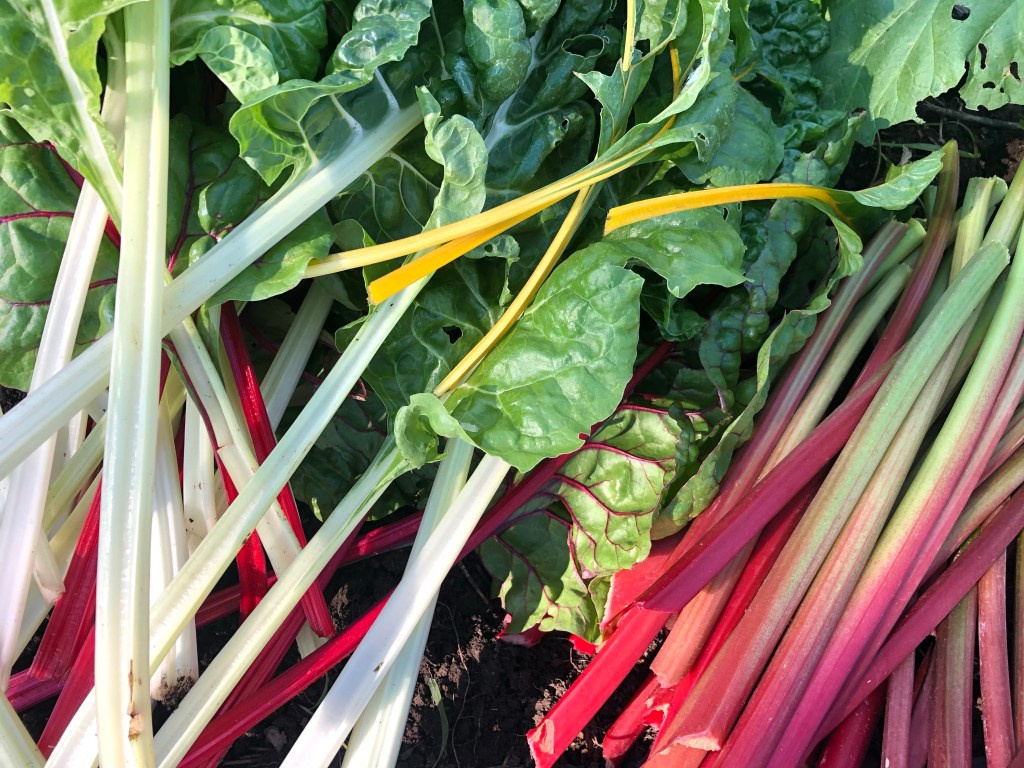
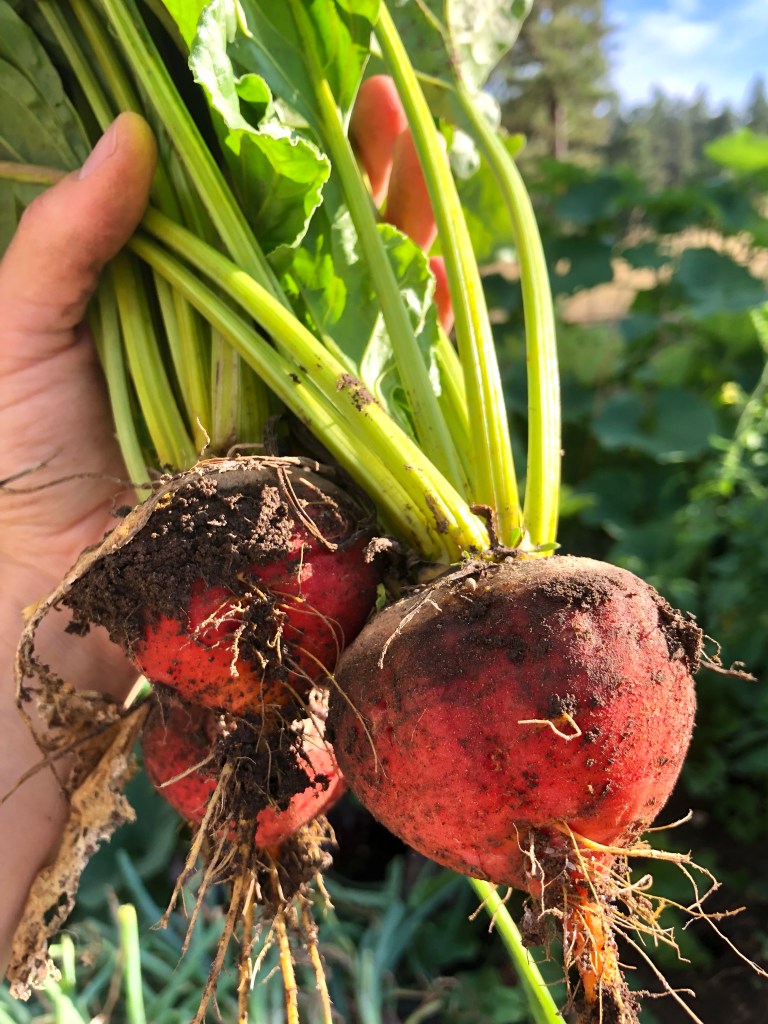
Last week, I harvested all the onions, replanting their area in carrots and turnips, and cut most of the rest of the rhubarb, putting up enough for a few pies for this fall. My Swiss chard has produced abundantly all summer and we enjoyed a supper of southern style greens last week. We have enjoyed fresh cucumber salads with the occasional tomato (that is another story for another time…) and plenty of dill and arugula, and the beets are finally getting big enough to harvest. I was a little behind the eight ball on getting those in, so the heat probably stunted their growth. Basil and mint were abundant and dehydrated nicely, and I have dill hanging in the yard shed for the seeds.
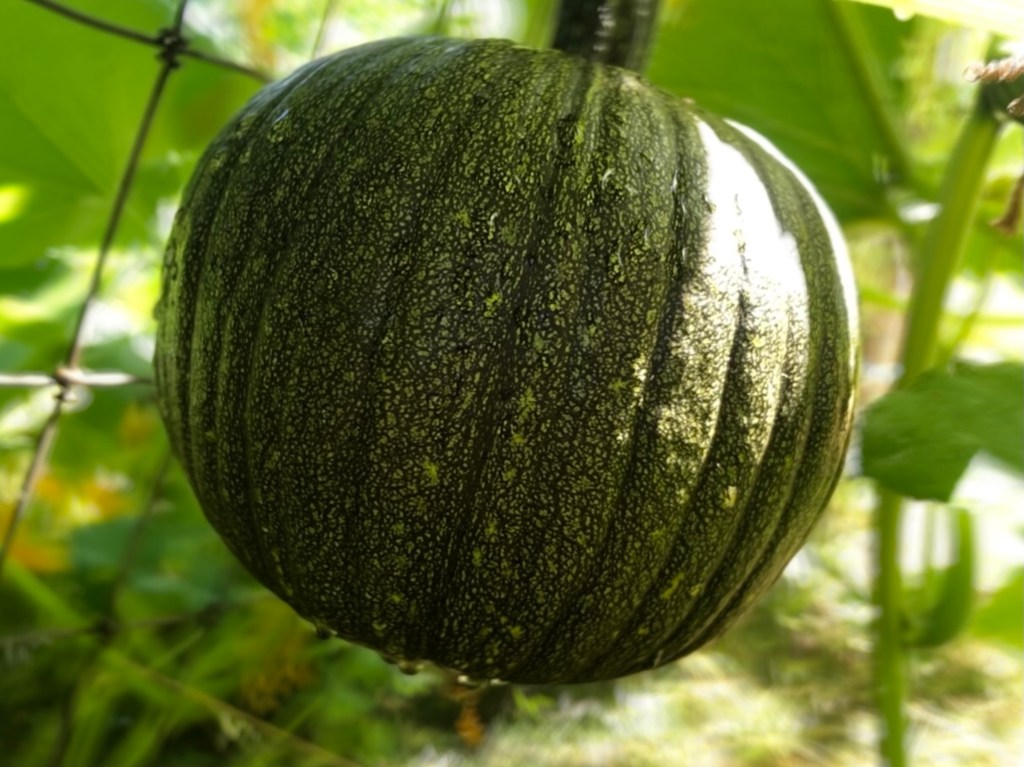
I have learned that Hubbard squash is delicious harvested young, and cooks up even more deliciously than zucchini. Which is a good thing, considering that my zucchini this year was a bust! The Hubbards are gaining a lot of size and the pumpkins are starting to pick up a tint of orange. It makes me excited for the fall! The sweet corn is tasseled and silked, so hopefully we’ll enjoy some of that in the next month as well.
In spite of the lack of abundance (enough for meals but not enough to put up), it really has been a productive year. I learned that wild predators are the best control for grasshoppers, and have found that hanging a few bird feeders and having water available around the garden are hugely beneficial. I see a noticeable uptick in grasshoppers when I get complacent and let the bird feed run out! I have also gained some knowledge on what grows best here, and what I can grow a lot of in a relatively small amount of space, and those mental notes will turn into a formal garden plan for next year.
So you learn what you can and enjoy the harvest, however small!
Support Song Dog Journal and share to social media!
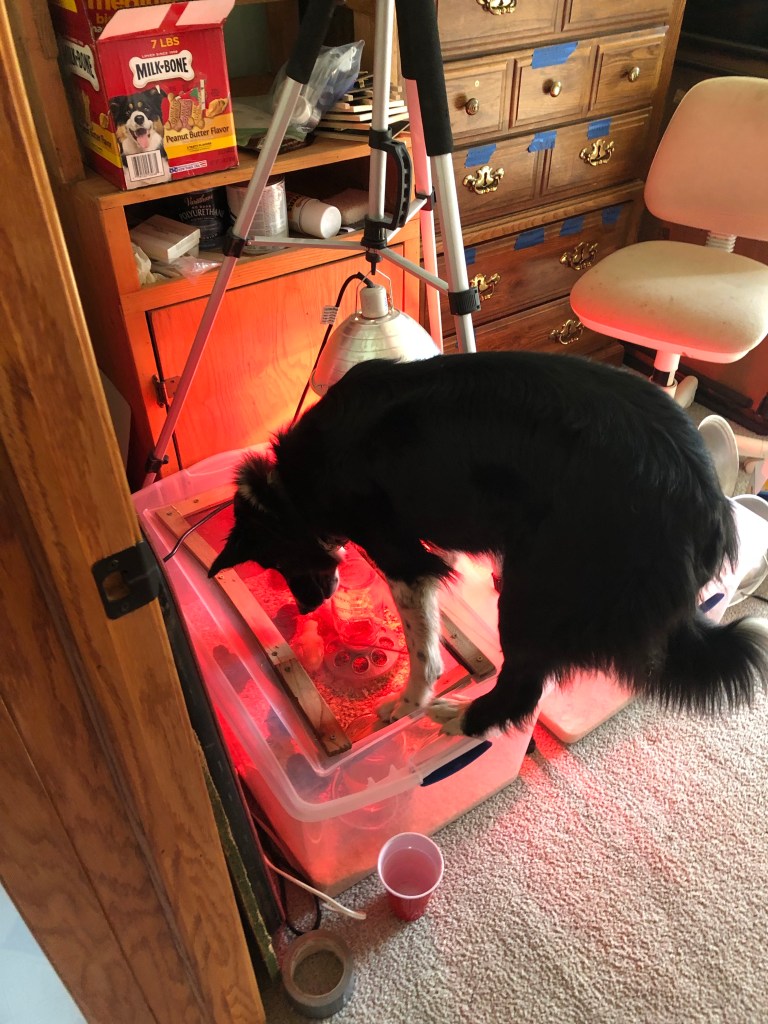
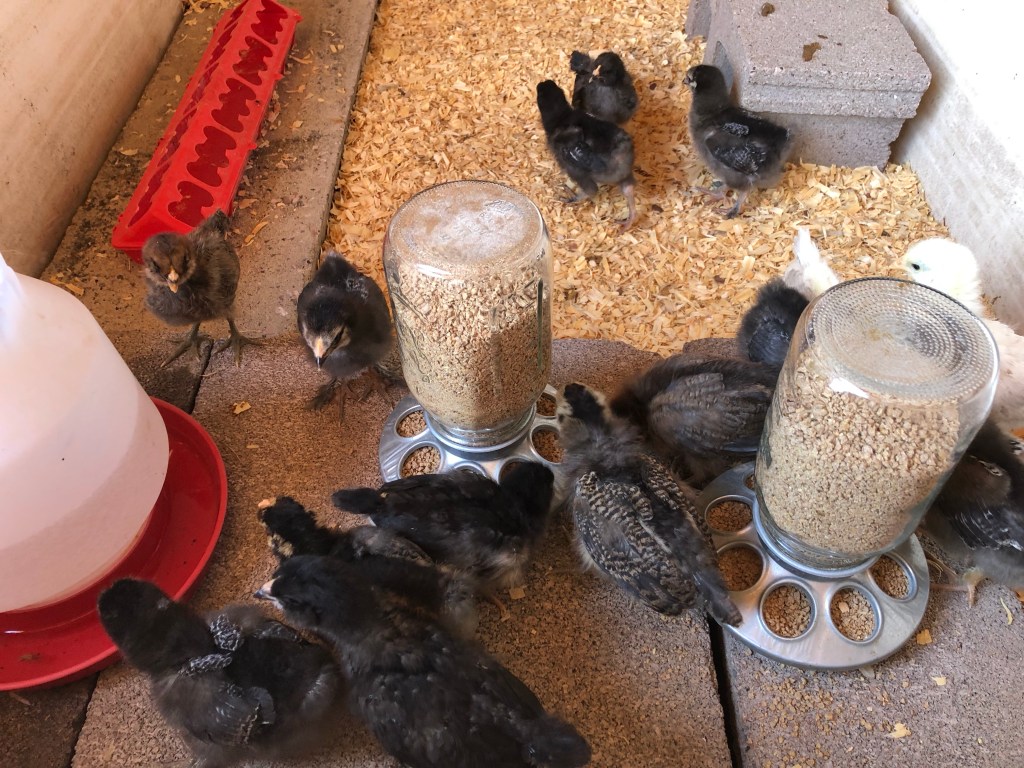
Somehow two chicken fatalities several weeks ago strongly suggested an immediate need for a whole new flock of chicks, so two weeks ago that exciting noisy box came to the post office and eighteen chicks took up residence in our spare bedroom. Much to my delight, and to Pearl’s, who was overwhelmedly thrilled to have baby chicks to stare at for hours at a time. We actually caught her perched on top of the brooders, absolutely fascinated by her chicks, and without any intent to injure them. My husband says she and I watch the chicks with the same expression on our faces.
I steered away from Buff Orpingtons due to their apparent lack of healthy fear (they were the two fatalities) and instead leaned heavily on Ameraucanas and Light Brahmas, and also added a few Delawares. McMurray Hatchery threw in three freebies for the total of eighteen chicks. What fun. I split the Brahmas and three Delawares off from the Ameraucanas after the first day or so, since the latter were all on the smaller size and I wanted to avoid picking. I used the same brooder setup as before, made from large Rubbermaid tubs with screen inserts in the lids, but was able to get by very easily with one heat lamp for the two brooders, rather than one lamp each.
The chicks have done really well over the last two weeks, without any losses. One chick, who has been named “Little Betsy,” or “Little Bee,” for short, one of the seven Ameraucanas, got some hand feeding for about five days due to her small size. She took readily to the egg yolk on a Q-tip and loved feeding time. She’s still petite and does have a slight cross beak, which doesn’t seem to be affecting her ability to eat, and gives her the funniest quizzical expression. She’s a gentle little bird.
Today was moving day and the chicks, just starting to reach their awkward adolescent stage with pin feathers and scruff, were graduated from the nursery brooders to their grade school brooder, made of an old Lumix feed tub, about 4×8 feet in size, with plenty of room for them to spread their little wing stubs. The two mini flocks had shown a little schoolyard hostility over the last few days, when one chick would manage to get into the other brooder, but they combined rather well this afternoon, without any issues. The warm summer weather will be to their advantage, only needing supplemental heat at night, and they will enjoy all the extra room. It really is amazing how fast chicks double and triple in size!
At least now Pearl can do her chicken chores without running back and forth from the house to the barn and back again. Maybe she’ll even take up her old hobby of bunny hunting. Meanwhile, I can try to figure out how it is that 18 chickens – 2 chickens = 34 chickens. Math never was my strength anyway.
Support Song Dog Journal and share to social media!
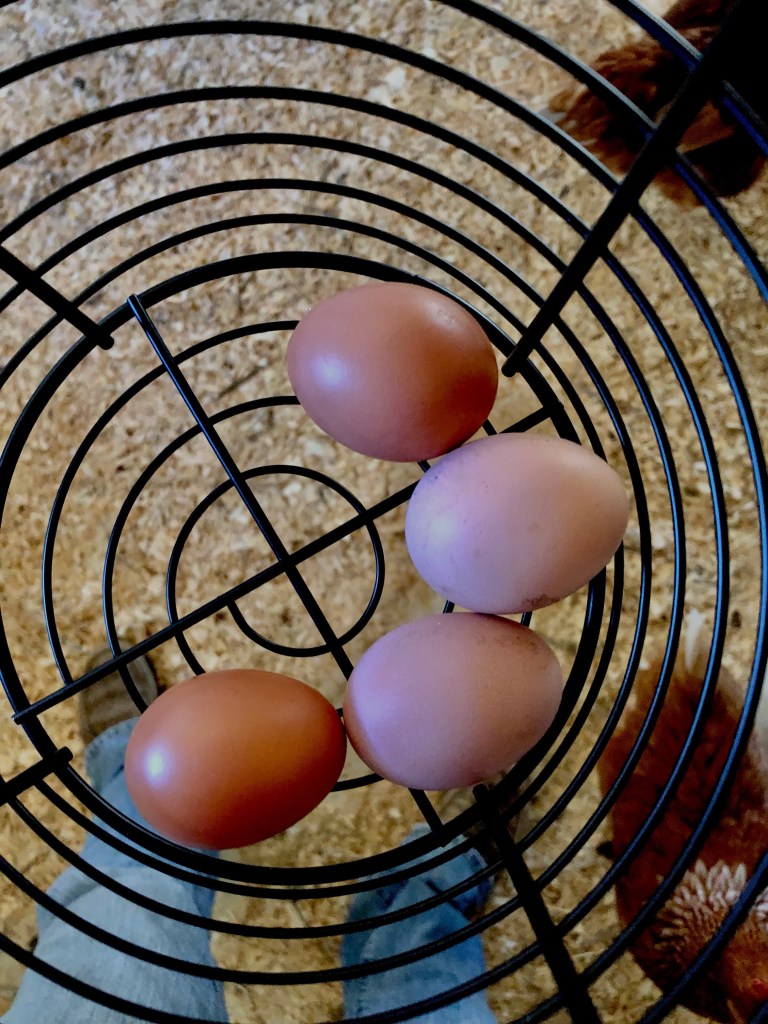
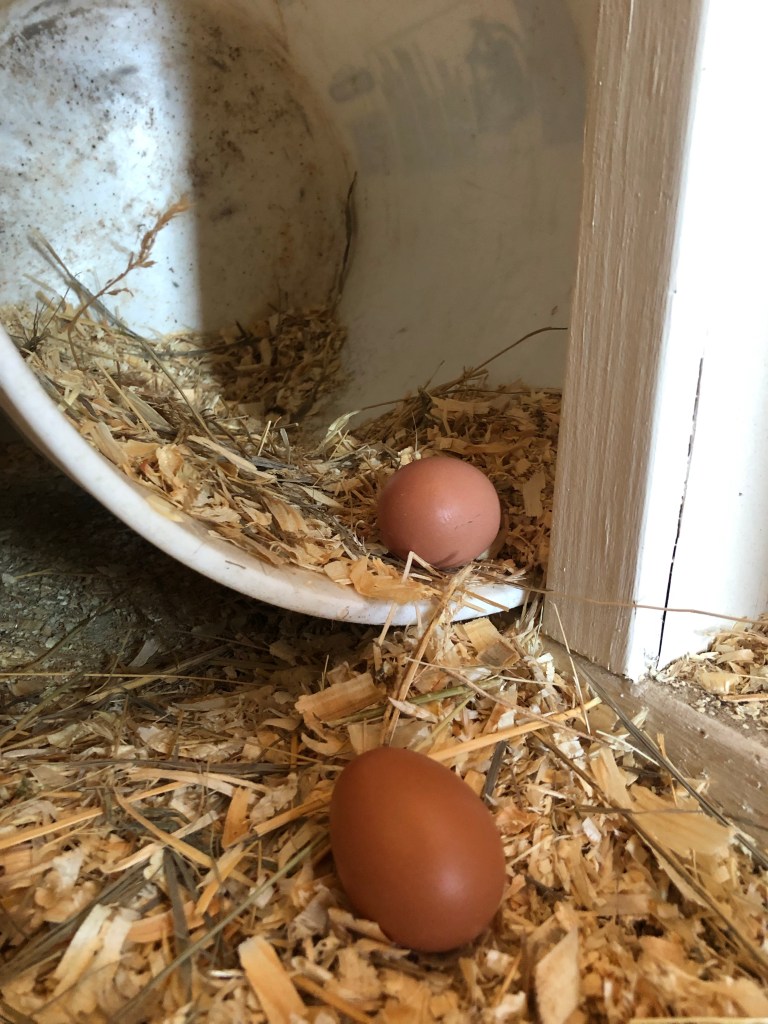
In spite of a beautiful set of heirloom nesting boxes, compliments of my husband’s grandma’s chicken coop, my chickens are determined to lay their eggs in a certain corner of their coop on the ledge of the floor sill, tucked behind the bin I store their feed in. A few days ago, I didn’t find any eggs and assumed they all just took a day, but the next morning I found a stash of four eggs in this choice corner, three of which were broken, with a chicken getting ready to deposit another in the same place.
I took away the feed sacks they were clumsily using as a sort of nest, tried to block the corner off, with the only end result that two chickens still managed to squeeze into that space and lay their eggs, one of which rolled off the floor sill and cracked. Foiled, by a critter with a brain the size of a lima bean.
Since they were insistent, I played along, if for no other reason than to keep the eggs from getting broken. I was also suspicious they were then eating the broken ones and was eager to nip that unsavory proclivity in the bud. So I made a makeshift nesting box with a 5-gallon bucket tipped on its side, and also did the golf balls in nesting box trick to try to con them into laying where I wanted them to lay. A few hens have seemingly caught on to the nesting boxes, with a little encouragement (i.e. actually placing them in the boxes and then babysitting them) and have used the nesting boxes without supervision since then, but there are apparently four hens that literally wait in line for that special corner, since all the eggs today were placed oh-so-nicely in the bucket, not in the nesting boxes.
I’ll keep working on getting them in the nesting boxes, but as long as they aren’t cannibalizing their own eggs, I honestly don’t really care where they feel compelled to put them. And if they’re patient enough to wait in line until their friend is done in that special corner, well, bless their little hearts.
Support Song Dog Journal and share to social media!










 Song Dog Journal