Eggs and Yogurt

Maybe two of the simplest foods. Eggs and yogurt. And it is amazing what we’ve grown accustomed to from the grocery store, and how incredibly delicious they are when homegrown.

One of the things I love about having chickens (and now a milk cow!) is being able to provide friends and family with fresh (fresh fresh!) eggs and milk. But of course I also love to be able to enjoy them at home, too!

I made yogurt for the first time with Posey’s milk, and tasted it this morning. Goodness gracious. There’s a night and day difference between store bought yogurt and homemade yogurt with store bought milk, but there’s an even bigger night and day difference when you use fresh, raw milk! Sweet, creamy, without any of the bitterness of store bought. You don’t even need to add anything to it, it is so good!

Simple pleasures.

In the Kitchen | Sourdough Biscuits

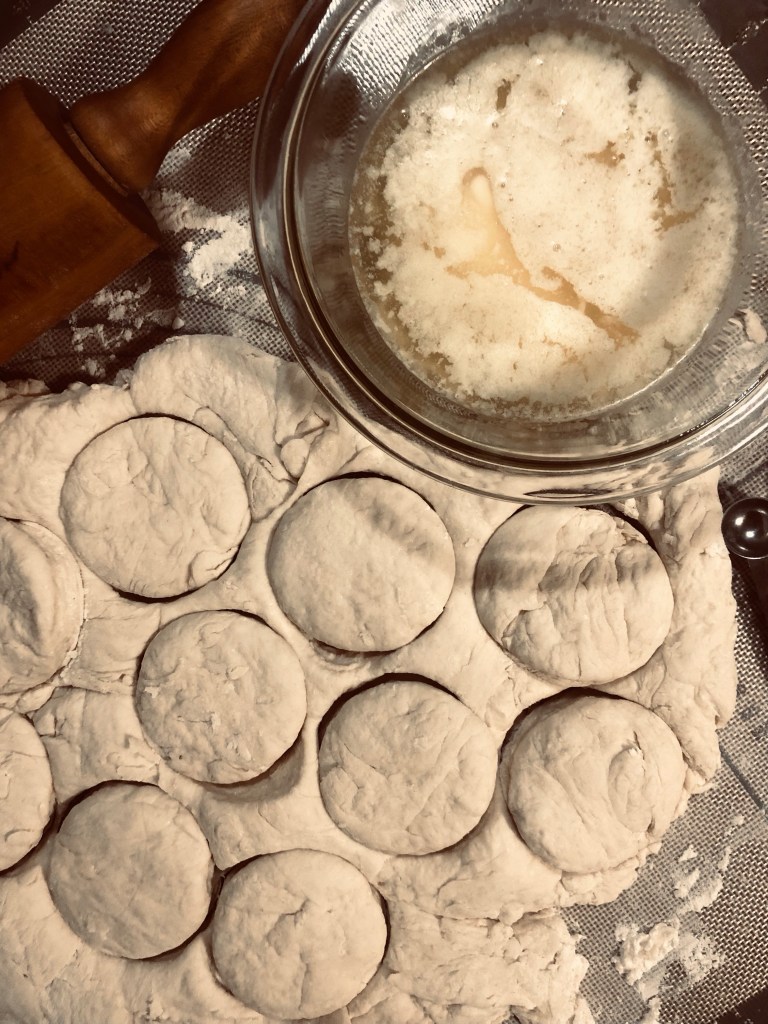
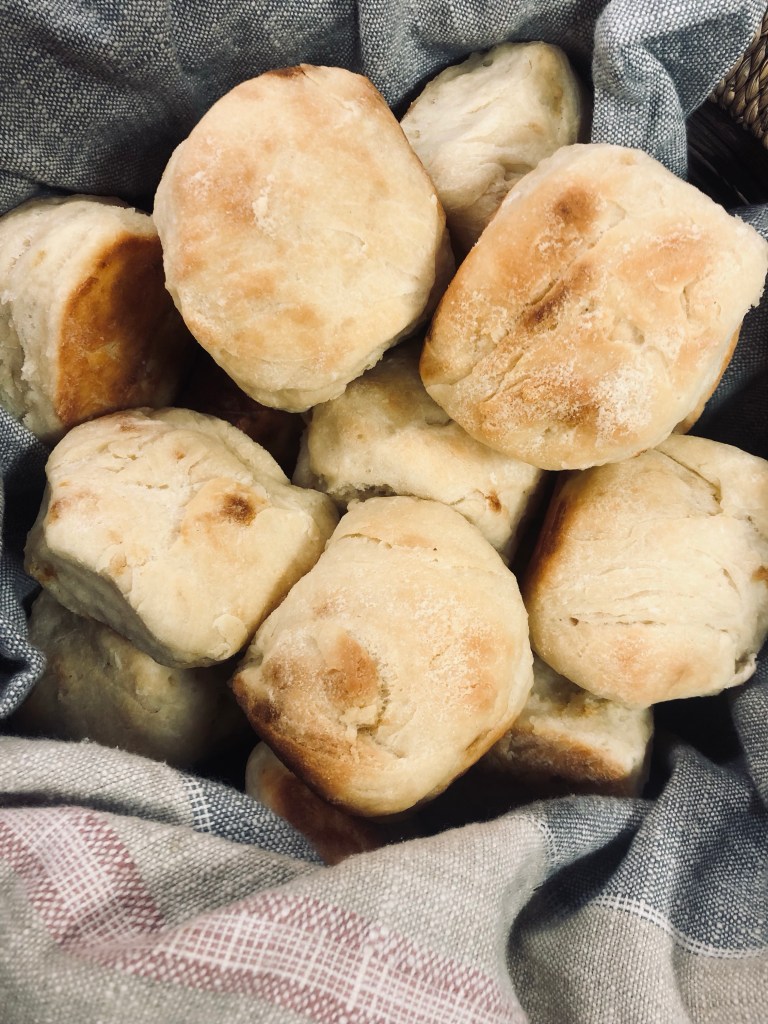
This delicious sourdough biscuit recipe is shared from the book Bacon and Beans: Ranch-Country Recipes, a Western Horseman book by Stella Hughes, published in 1990. It is a pretty foolproof recipe, comes together quickly, and with the addition of some baking soda you are just about guaranteed some fluffy biscuits!

Ingredients:

1/2 c. sourdough starter
1 c. milk
2 1/2 c. flour
3/4 tsp. salt
1 tbs. sugar
1 tsp. baking powder
1/2 tsp. baking soda
bacon grease or butter, melted

To Make:

Mix starter, milk, and 1 cup of flour in a large bowl and let sit for 8 hours or overnight. Cover with a towel and keep in a warm place. When ready to use, turn sourdough batter out onto clean surface with 1 cup of flour. Sprinkle salt, sugar, baking powder, and baking soda over the top of the batter, followed by the remaining 1/2 cup of flour. With hands or a spatula, mix dry ingredients into dough, kneading lightly. Handle as little as possible! Roll out approximately 1 inch thick and cut with biscuit cutter. Dip in melted bacon grease or butter, and place in a baking pan. Let them touch, but don’t overcrowd. Let rise in a warm place for about a half hour, and bake at 375 degrees for 30 minutes or until they are golden brown. Makes about a dozen biscuits.

Notes:

Handle the dough as little as possible to keep biscuits from getting tough. It can be difficult to get all the flour incorporated–Don’t worry about it! Instead of kneading, I try to stretch and fold to incorporate the dry ingredients into the dough, but don’t try to get the dry ingredients all moistened or evenly smooth, or you will over-knead and have tough biscuits.

I find that a single batch fills a 9×9 baking pan, with a couple biscuits leftover, which I tend to cook in a separate smaller dish. Depending on how thick they are cut, obviously, you could stretch the yield on this recipe. There is a considerable amount of oven spring with this biscuits–they will puff up in the oven! They are served best fresh out of the oven, and I love to serve these with homemade butter and homemade jam! They’re always a hit.

Enjoy!


Milking Time

The early part of my morning had already become a favorite part of my day. Catching the sunrise and maybe even the last stars, smelling the warm smell of cow and the sweet smell of warm milk, listening to the creamy streams singing into my bucket, and the low sounds of Posey munching grain.

We had an escalating battle of wills last week that resulted in a kicking battle, which I won, after a delightful time milking punctuated by dodging kicks and kicking Posey right back. The look of vague and unconcerned surprise on her face was deceptive, because the next morning she was a new animal. She has been an angel ever since.

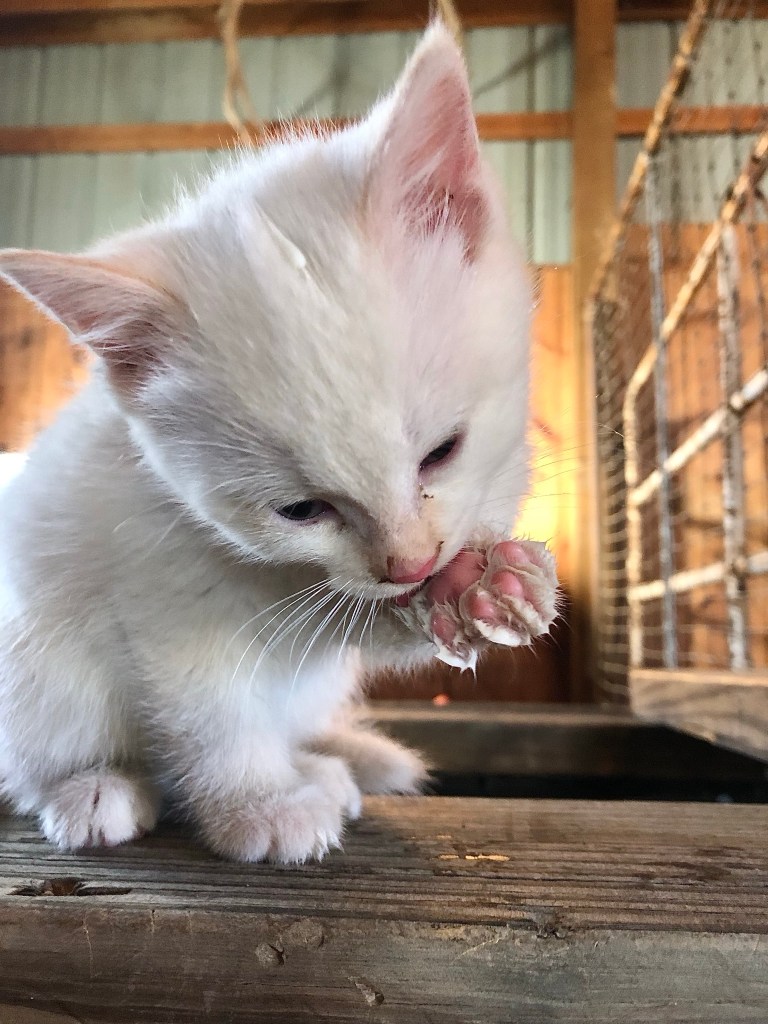
And the kittens have learned to recognize the milk pail. I’m not sure there’s anything sweeter than Little Elsa with milk all over her face and paws.

Little, mundane moments truly are what make life so beautiful and pleasant.

Advent 2023 | The Hope Candle

Adapted from my devotional article for last year’s Advent season.

On the first Sunday in Advent, Christians across the globe light the first of the five candles, the first of the five thematic reflections leading up to Christmas Day. The Hope Candle.

Hope.

What a beautiful word.

What a misunderstood word.

What a misused word, flung like a threat, or uttered timidly, with ironic hopelessness.

We all need hope.

I look around and see war, death, pain, suffering. I see a culture that has turned its back on God and His Law, I see rampant immorality and acceptance of things that would have been considered wrong even just a few years ago. I see illnesses that even the most elite scientists can’t figure out how to cure. I see the butchering of children in the womb, the desecrating of the beauty of marriage, the destruction of countless innocent lives for the greedy schemes of the very people who should be the protectors, the guardians. People running to drugs, alcohol, sex, pornography, anything that can numb the pain of meaninglessness. It is a world rife with hopelessness.

Because without Biblical hope…life truly is meaningless.

Over the years, I’ve heard pastors talk about how Biblical hope is so contrary to how we so often use the word. Biblical hope is not an “I hope so” sort of hope. It is a confident expectation.

Which immediately begs the question…a confident expectation in what? In whom? For what? Where does our hope come from and for what are we hoping?

Hope without something or Someone to hope in is meaningless, isn’t it?

The Psalms are full to bursting with verses reminding us of where our hope is found, and in Whom we can have that confident expectation.

Lamentations 3: 24-25 reads:

“The Lord is my portion,” says my soul,     “therefore I will hope in him.” The Lord is good to those who wait for him,     to the soul who seeks him.

And 1 Peter 1: 3-4 rejoices:

Blessed be the God and Father of our Lord Jesus Christ! According to his great mercy, he has caused us to be born again to a living hope though the resurrection of Jesus Christ from the dead, to an inheritance that is imperishable, undefiled, and unfading, kept in Heaven for you.

We hope in God. We confidently look to Jesus’s perfect life and death as the means to being forgiven, justified before God. We look forward to an eternal easing of suffering, we confidently wait for the day when the difficulties of this life will be comforted. We hope in our Savior, the God-Man Christ Jesus. The Jews waited for His coming, hoped in the promises of a faithful Heavenly Father, fulfilled two thousand years ago, and we remember that coming and now we wait for His Second Coming, when “[God] will wipe away every tear from their eyes, and death shall be no more, neither shall there be mourning, nor crying, nor pain anymore, for the former things have passed away.” (Revelation 21:4)

And it just gets better. Revelation 22 reads:

Then the angel showed me the river of the water of life, bright as crystal, flowing from the throne of God and of the Lamb through the middle of the street of the city; also, on either side of the river, the tree of life with its twelve kinds of fruit, yielding its fruit each month. The leaves of the tree were for the healing of the nations.  No longer will there be anything accursed, but the throne of God and of the Lamb will be in it, and his servants will worship him.  They will see his face, and his name will be on their foreheads.  And night will be no more. They will need no light of lamp or sun, for the Lord God will be their light, and they will reign forever and ever.

And he said to me, “These words are trustworthy and true. And the Lord, the God of the spirits of the prophets, has sent his angel to show his servants what must soon take place. And behold, I am coming soon.”

That, friends, is our hope. Jesus is coming soon. We enjoy this Advent seasons, reveling in God’s plan brought about in the person of Christ, born as a Baby in a manger in Bethlehem, but without the future hope, that living hope, that hope of something more, this season is meaningless. The Baby Jesus means nothing without the hope that comes from Jesus’s death and resurrection. And His death and resurrection mean nothing to us if there isn’t the hope of a future resurrection.

Hope. What a beautiful word.

Make Something

In a culture that wants fast and easy, cheap and replaceable, instant gratification and consumerism, convenience and mass-produced, it makes no sense to walk away to something totally different. It makes no sense to do for oneself. To take the long way around. To do it the slow way. To accept and embrace inconveniences.

If you had told me how satisfying it would be to eat eggs from my chickens, milk and cream and butter from my own milk cow, our own meat and vegetables and fresh baked bread, I would have believed you, but I wouldn’t have understood. Five years ago and ten years ago, my heart wanted that. But I had no idea.

No idea how satisfying it would be. How inconvenient and simple and hard and beautiful and growing it would be. How frustrating and elevating. It has moments of romance and sheer hilarity and humbling. And I wouldn’t want to change a thing.

Push back against a consumer mentality and become a producer. In small ways. Learn to make bread. Cook from scratch. Grow a few veggies on your deck. Keep an herb garden. Learn a few skills to do things yourself. Dust off your sewing machine. It doesn’t have to be complicated and baby steps are beautiful.

Because there is nothing like serving a home cooked meal, picking veggies from the garden, or pulling a loaf of fresh baked bread from the oven, or handing a neighbor a dozen fresh eggs, or a gallon of fresh milk. There’s nothing like knowing you made that. A factory in China didn’t make that. A computer didn’t execute that. You did that. You did the cultivating and the picking and the mixing and kneading and milking and stitching.

So go make something.

In the Kitchen | Pfeffernusse

As the Advent season rolls into Christmas, the tastes and smells of the season bring back so many memories. A handful of chicken-scratch recipe cards foster a connection with my heritage, and remind me of the many family Christmases crowded on hand-built benches around my grandparents’ long hand-built table. After supper was over and we all were stuffed, a tin of little round cookies would be passed around, tasting mildly of pepper and licorice. The adults always went for these more enthusiastically than the kids, but as I’ve gotten older this recipe has become very nostalgic for me, and I love to make these in bulk to gift at Christmastime!

Pfeffernusse are spicy, crunchy cookies that are a traditional German and ethnic Mennonite favorite, and translate to “pepper nuts” – they do contain black pepper, but add a little extra for a little extra kick! Molasses, black coffee, and anise extract add to the warmth of the flavors in this simply little cookie.

Ingredients

1 c. sugar
1 c. shortening (can be replaced with 1 c. butter)
1/2 c. dark syrup (can be replaced with 1/2 c. molasses)
1/2 c. molasses
1/2 c. cooled black coffee with 1 tsp. baking soda
3 T. anise seed extract
*can also add 1 tsp or more of ground anise seed for additional flavor

6 c. white flour (or half and half white and whole wheat)
1/2 tsp. salt
1/4 tsp. nutmeg (double this!)
1 tsp. cinnamon (double this!)
1/2 tsp. cloves
1/2 tsp. black pepper (double this! Or triple…or more! How spicy do you want it?)
1 tsp. allspice

To Make

Cream together the first 7 ingredients; add flour and spices. Chill for an hour or so to make the dough easier to work with. Roll in 1/2 inch rolls and chill (or freeze). Slice into quarter-inch thick discs, place on cookie sheets with not much space between them (they don’t spread too much), and then press your thumb gently into each cookie to flatten a little. Bake at 350 degrees for 8-10 minutes.

Notes

I noted most of my substitutions in the above recipe. I ALWAYS add extra anise. My uncle has actually used anise oil from NOW Foods, but I think it affects the crunch of the cookies. I just use plenty of anise extract. You can also add anise seed if you want a little extra bite, though I do recommend grinding them for better flavor, as well as better texture. Also, the quantity of the spices is on the mild side, so be brave and play with the quantities to get the bite you want! I don’t generally double the cloves, since cloves are such a distinct flavor and I don’t want to interfere with the anise, which is the star spice in this cookie. Grandma’s original recipe calls for shortening and corn syrup, as noted above, but I prefer to cook without those things, so I noted my substitutions. But sometimes faithfulness to Grandma’s recipe means something.

The dough should be chilled or frozen before slicing, as stated above, and I recommend freezing, since the dough is a lot easier to work with. This makes it incredibly easy to make a bunch of dough, roll into snakes, freeze, and then bake whenever you get a chance! They also freeze really well after they are baked. Brad and I have enjoyed pfeffernusse months after they were baked, which is great since the first time we made these together we had Covid and couldn’t taste anything.

And there really is something special about baking cookies that have been so traditional for my family. How about you? What are some favorite family recipes you grew up with, and are there any you continue to bake or cook for the holidays?