How in the world is it March already? Spring is just around the corner. As bittersweet as it is in the fall to put the garden to bed, there really only ends up being a couple of months before the feed stores are stocking their seeds, seed catalogs get eagerly leafed through, leftover seeds are sorted and organized, new seeds are purchased, and all the plans get made to make this coming garden season the best one yet. It really is fun. And it is hard to beat leafing through the seed catalogs on a wintery, blustery day!
Based on last year’s experiment (really, every year is its own experiment), I’ll focus on my salsa garden, cucumbers, and winter squashes. My salsa garden was a bit of a bust last year due to grasshoppers, the heat, and the fact that my husband unknowingly sprayed my tomato bed with Milestone three years ago. Needless to say, I’ll be planting tomatoes somewhere else and getting a jump start on them with some early planting indoors. Mortgage Lifter, Black Krim, and Romas will be the key features! I’m planning on growing them all in pots in my hoop house, to extend our growing season a bit.
I already got a start on peppers, which take awhile to germinate. Anaheim, poblano, Hungarian wax peppers, and bell peppers are all sown in paper pots and sitting on heat mats in the bathroom. There’s a good chance these will also be pot-grown in the hoop house. Somehow I forgot about jalapenos, so those will be added at a future date!
We acquired some old railroad ties from a horse corral my grandpa built 40 years ago, and have those slated for a few projects, including raised beds for flowers. As we have decent weather to work outdoors, the raised beds will get built and be ready to go for spring planting. Zinnias and cosmos as well as sunflowers will be some of the cutting flowers – it should be beautiful.
On warm days when the soil is soft, I’ll be continuing to prep my garden beds, cleaning out last year’s old plants, turning the soil, wetting it down, and eventually covering the beds with plastic to help kill off weed seeds and further break down the compost I’ve already churned in. The root veggies – carrots, beets, and turnips – will need good, soft soil to grow in, so working the soil ahead of time will help.
Even though we’re a ways from planting outdoors, there is a lot that can be done to beat those winter blues and keep spring coming! If you have any new varieties of veggie you’re excited to try, share in the comments!
Support Song Dog Journal and share to social media!
Although some people probably manage to get through their chicken keeping career without dealing with a coccidiosis outbreak, this is a really common flock sickness caused by a common parasite and it definitely pays to be able to recognize the symptoms before your entire flock is infected!
Before getting started on this article, I want to add a healthy disclaimer here: I am not a vet. All I want to do is share a little about coccidiosis and how I successfully treated it, and why I think it worked.
So, what is coccidiosis?
Coccidiosis is a relatively common infection that can affect all manner of livestock and wild animals, caused by a single-cell parasite in the GI tract. This parasite lives in the soil and is actively spread by wild animals. Symptoms in chickens include lethargy, not eating or drinking, watery/mucousy stools, and bloody stools.
Treating or preventing an outbreak
If you discover a case of coccidiosis in one chick or chicken, you need to treat the entire flock, regardless of symptoms. Treatment is super simple but it takes some time. Using liquid Corid (sold at feedstores and online), for 5-7 days, add 1 teaspoon of Corid to 1 gallon of water (for a moderate outbreak) OR 2 teaspoons of Corid to 1 gallon of water (for a severe outbreak). After the 5-7 day initial treatment, follow with another 5-7 days of 1/2 teaspoon per gallon of water. Don’t give any other water except this Corid-medicated water, and make it fresh daily.
Treating the Sick Bird
This part is important: if you have a single chick (or chicken) that is showing symptoms of acute coccidiosis, and is displaying the tell-tale lethargy, watery droppings, and not eating, the flock treatment method will not work by itself. By the time you notice your chick not eating and drinking, it is fruitless to add Corid to their water and expect any sort of improvement. They’re not eating or drinking so any medication administered free-choice isn’t going to be consumed.
Let’s be specific here: It is the dehydration and malnutrition caused by not eating and drinking that will kill the chick, not the parasite itself. So don’t just put Corid in the water and call it good. The chick needs nutrients and rehydration as well.
Late this past summer, I had a chick suddenly get sick with all the classic coccidiosis symptoms. I isolated the chick and took a common-sense approach to treatment. My thought process was that the chick needed rehydration and needed the medication, which it wasn’t getting from free-choice water. The sick chick got dropper feedings multiple times per day of a slurry of egg yolk, yogurt, molasses, sometimes thinned with Corid medicated water (using the dosage listed above), sometimes with a few drops of Nutri-drench, and was also given medicated water by dropper as well. The first couple of days I gave her a concentrated dose of Corid by syringe. I would draw up probably a quarter of a cc of Corid into a syringe, draw up a cc or so of water, and administer that to the sick chick. I don’t have a digital scale and Corid, by my understanding, is a pretty safe medication. The chick was in bad enough shape I was willing to risk overdoing it to get enough medication actually in her. My goal was something like 5 or 6 cc’s of this medicated slurry and fluids per day, kind of whatever I could get in her without too much trouble. Based on the size of the chick you’re treating, it might be more or less than this. Use common sense. Any amount is better than the chick sitting in the brooder and not eating anything.
Don’t take my word as expert by any means, but sometimes you have to think a little outside the box – in this case, it worked really well. Obviously treating a chick or chicken individually takes a time commitment (honestly, just a few minutes a few times per day), but if you’re wanting to try to save a coccidiosis-infected bird, that’s what it will take.
I’d love to hear any other tips or advice on treating coccidiosis! It is a pretty common infection but sometimes the information can be pretty confusing on how to treat it. Happy chicken keeping!
Support Song Dog Journal and share to social media!
If you’re a first-time chick keeper, you can find lists (and lists and lists) of recommendations online about what you absolutely need to have on hand for that first order of chicks. I don’t know about you, but that can feel a little daunting.
The five things I absolutely would have on hand are: Save-a-Chick probiotics and electrolytes, Nutridrench, Corid, and a 3cc syringe. With those things on hand, you can combat a lot of what might kill your chicks in the first few weeks of their lives.
Probiotics and Electrolytes. Add probiotics and electrolytes to their water for a little boost, to replenish and balance their electrolytes, and as preventative. When you first get your chicks, either mailorder or from a feed store, they will need a little pick-me-up. The mailorder chicks haven’t eaten or drunk anything since being out of the egg and will be ravenous and a little dehydrated. The feedstore chicks likely just got dumped in a sale bin with little attention given, so they could also use some TLC. The probiotics are a good idea because GI issues can quickly become fatal in baby chicks, since they are so small any dehydration is going to have a significant impact. Make sure you are changing this every day, if not multiple times, since it will grow stuff, especially with the heat lamp going! I mix up a pitcher of this and keep it in the fridge, and would give it to my chicks for a couple of days, then give them plain water.
Nutridrench. This is a kind of a first-line treatment to give to just about any chick that looks like it needs a little boost. It is a mix of vitamins, minerals, electrolytes, and sugar. I’ve only ever given this to sick chicks and mixed it in a slurry of egg yolk and/or molasses and/or yogurt.
Corid. This is the brand name for the medication amprolium. You could have chickens for years and never deal with coccidiosis, I would imagine, but this is something to keep on hand. As far as I know, Corid doesn’t really go bad and I would much rather have it on hand and not need it, than have coccidiosis run rampant through my flock, chicks or chickens. I will do another post on treating chicks with coccidiosis at a future date, but trust me on this one and keep it on hand! Don’t wait until you figure out that’s what’s making your chicks sick and then have to go find it or worse, order it online and wait for it to arrive. In a pinch, feed stores do carry it, but I just wouldn’t want to risk it being out of stock when I wanted it. It is pricey, but a little goes a long way.
3cc syringe. This is the easiest way to administer nutritional first aid or a medication like Corid to your chicks. It takes a little bit to figure out how to hold the chick and how to get her to open her little beak to take the syringe. I find that the easiest way is to cup the chick with my nondominant hand and press her back against my chest. Do not stick the syringe down her throat or into the center of her mouth, but instead press the tip of the syringe into the very corner of her beak until she opens up, and she will, even if just for a split second. It might take a few tries before you manage to slip the syringe just into the corner, and then kind of pull gently to the side to make the syringe sit securely in the pliable fold of the corner of her beak. Now you can administer the liquid, and it can be done pretty quickly if the syringe is placed correctly. Just don’t administer too much at once and choke the chick. If you have to doctor a chick for awhile, the corner of her beak is going to get a little red and irritated, but honestly that will make her more likely to open her beak.
This is hardly an exhaustive list, especially if you’ve done other reading and have seen the many, many things people will recommend to keep on hand for chicks. There is VetRx for respiratory issues, anti-pecking sprays and gels, wound care, and more. But what I listed above is what I would not choose to be without!
Please drop a comment below with your recommendations on those absolute must-haves for chick keeping! Happy chick days!
Support Song Dog Journal and share to social media!
Oh, I love a snow day. A coffee-drinking, chili-eating, pile-burning day. Heavy skies, whirling snow, wading through knee-deep drifts and retracing steps a short time later only to find the tracks already blown in.
Everything is harder, everything takes longer, your toes and fingers freeze, and your face, the only part of you showing, gets nipped hard by the cold. Sneaky little trickles of snow find the impossible gaps between scarf and hood. Negative windchills require a delicate balance of enough layers to keep you warm in the gale-force winds and flying snow while not causing extra exertion and resulting perspiration. Bundle up enough to be warm and you’re suddenly wearing so many layers you’re sweating your way down a hill.
But truly, I love a snow day.
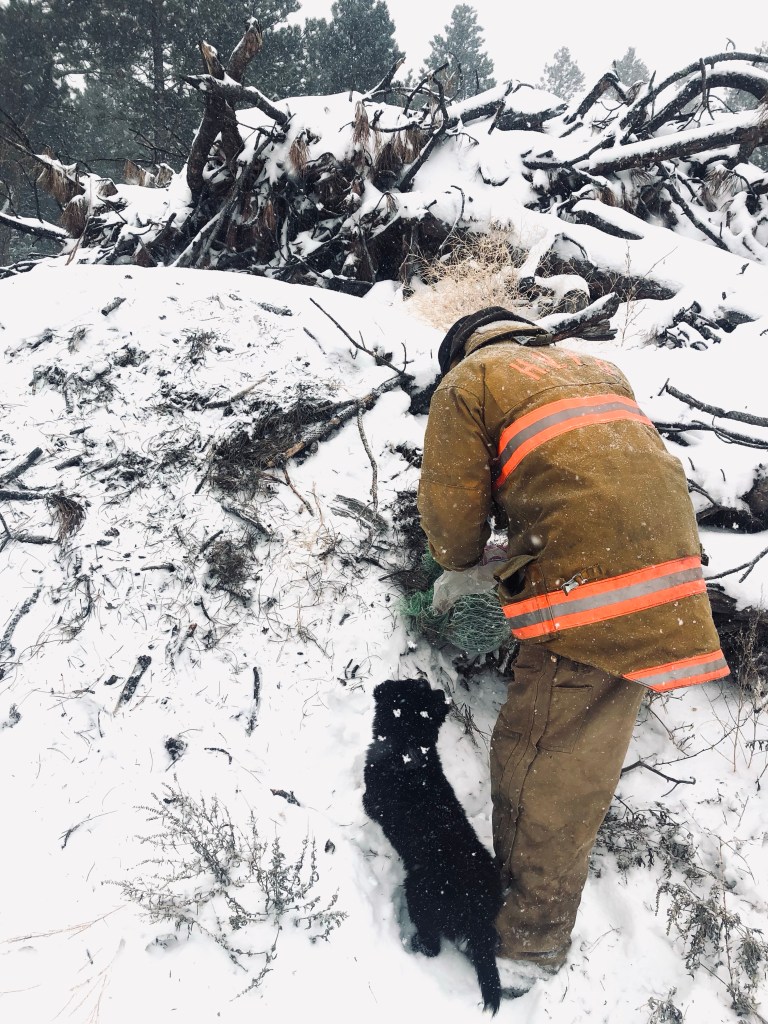
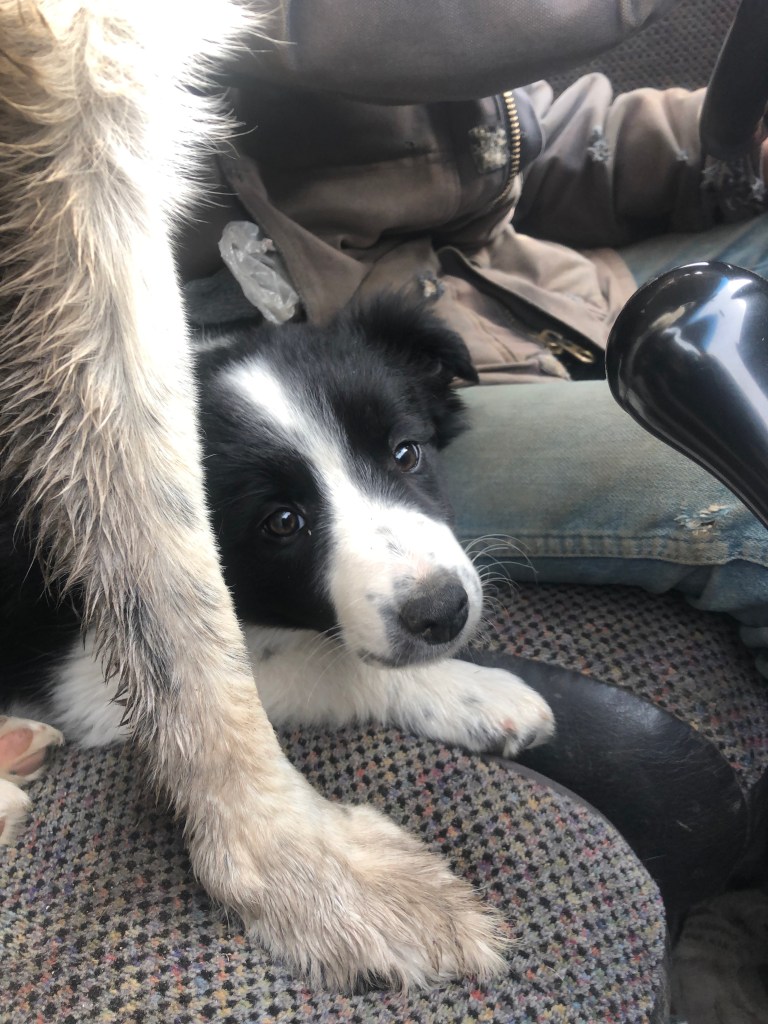
We went out first thing and lit off half a dozen piles, a jolly way to spend a frigid morning. I’ve always loved a good pile burning day! We had been anticipating a snow storm for months, hoping to get some of the slash piles burned up that are sprinkled all over in the timber, and Brad got excited when he saw not just the snow but the stretch of cold temps in the forecast. So out we went, armed like arsonists with gasoline and matches and old bale net wrap. The pups all came with us, a desperate attempt on our part to start wearing them out. It took approximately 4 hours of cold weather yesterday for them to get stir crazy and last night they were impossible. So we hauled them out in the single digits and they got a grand 5 minutes of running around before the silly things were shivering. They didn’t ask to get out of the truck after that. Every time we got out to light a pile, they spread out over all the seats, and every time we got back in they were less inclined to move out of the way, preferring for us to half sit on them instead.
The piles lit beautifully. I realized after pile four that I involuntarily released a sound, something like “Hah!,” every time the lit match hit the gasoline-soaked net wrap and whooshed into flame. But it is just so satisfying! I could watch the fire for hours, flames licking up ravenously into the snow-heavy air, creating up drafts that suck the smoke back into the pile in a volatile whirlwind. Mesmerizing. The bulls also found it satisfying, apparently, since they cozily warmed their little backsides, eventually wandering away and giving a musical shake to the icicles hanging all along their ribs.
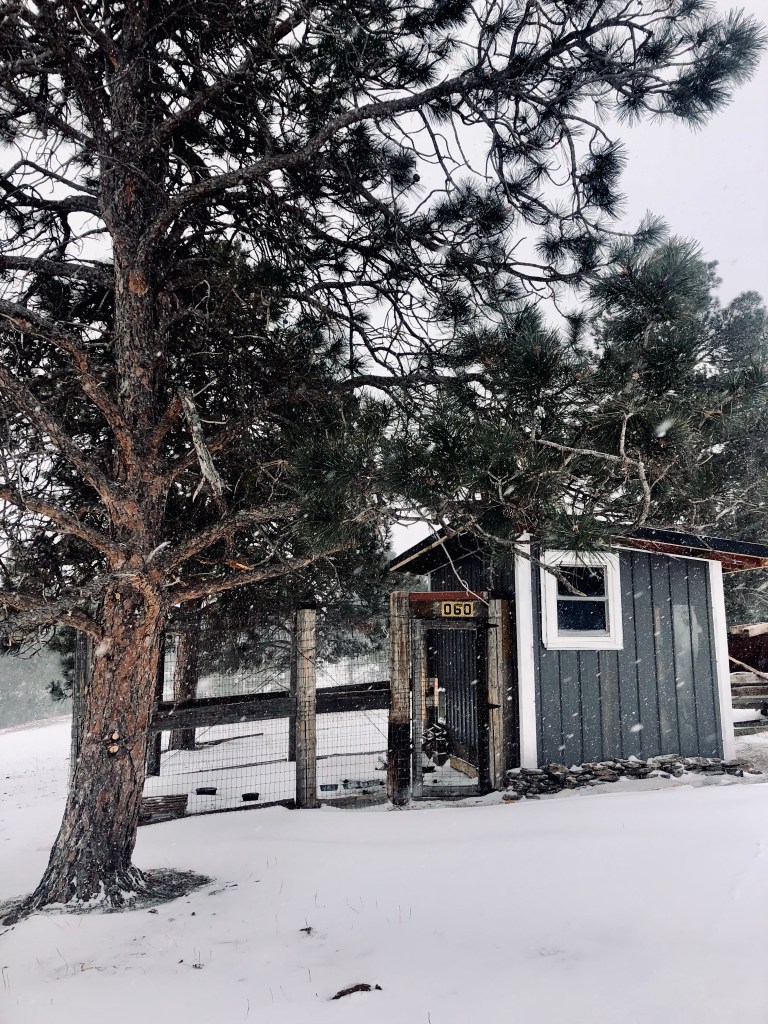
Not much activity outside the chicken coop today. Not much, as in none. The chickens flatly refused to leave the coop and laid their eggs in creative places, like inside the feed hopper and while sitting on their roost. However, between Brad checking them on his way up from checking heifers and my own dashes down to the coop, not a single egg froze and the chickens laid a baker’s dozen, not too shabby for a day with highs of 1 degree. One glorious degree.
A lot of time was spent either trying to stay warm or trying to get warm again, getting as much done outside as we could yet trying to do as little as possible in the frigid temps. I rolled a whole bunch of seed starting pots while listening to a podcast, and worked on seed starting plans, figuring out what to start when. Peppers and some greens will be some of the first things to get planted, first thing next week when my seed germination mats get here! Someone likes to keep this house super cold in the winter. My chick order is ready to go next time I stop in to the ag supply store, hopefully tomorrow if the roads are good enough to run to town to teach.
Something about cold and snow make a person dream of springtime. But one glance at the thermometer or the drifted world outside is a keen reminder that winter isn’t over yet and the cold and the mud and the snow are here for awhile yet.
Muddy pawprints smear the linoleum in the kitchen (thank goodness for linoleum), which I have resigned to enjoying clean for half an hour at a time, the intervals between growing longer and longer. The mud room looks like it was ransacked, littered with so many pairs of muck boots and coveralls and coats that it looks like half a dozen people live here, and random gloves because the puppies squirreled their mates away. You can’t even cross the six feet of mudroom floor without stepping on something – Boots, hats, mud puddles, scarves that got away from us, dog toys, a puppy or three, maybe a cat, and I tripped or something as I opened the door and managed to nail myself right in the forehead, leaving a beautiful goose egg. The whole house smells vaguely of smoke from smoky (and perhaps slightly scorched) articles of clothing drying here and there. The pups are finally sleeping and haven’t made a peep in quite awhile. The afternoon walk up the hill in -4 degrees must have convinced them that we were serious.
Oh yes. I love a snow day!
Support Song Dog Journal and share to social media!
What a time of year in what a wonderful part of the country. I know a lot of people in a lot of places say this, but truly, if you don’t like the weather around here, just wait a week. Or a few hours. It’ll change.
We’re halfway through February, and we’ve enjoyed some seasonal weather, chilly but not brutal, intermingled with days so warm you can smell the sap in the trees and the warming soil. There’s an extra something in the air. The promise of coming spring. But right now we’re watching for the winter storm that’s forecasted to start tomorrow.
A snow squall this morning was followed by blue sky this afternoon, teasing us with what’s forecasted, while we pray and hope for some of the moisture we so desperately need. While the meteorologists woefully and apologetically predict snow, ranchers are welcoming it for the moisture but prepping for what could turn into a challenging week. Once again we’re battening down, with forecasts of up to 18 inches of snow, heavy winds, and frigid temperatures. The three surprise calves that were born last month really were fortunate, and are healthy and strong going into this cold.
And what a teasing, taunting, beautiful winter it has been. It is as if winter and spring keep bumping into one another. One day I’m getting into my garden, stripped down to a tank top, the next I’m bundled up in heavy bibs stumbling around trying to keep animals watered and fed. One day Brad and I are splitting wood in a balmy 50-feels-like-60 degrees, the next we’re watching snow flurries and breaking ice on all the water. One day my laundry is hanging on the line to dry, the next I think I’m wearing everything in my closet. One day the chickens are happily free ranging in the springlike temps, the next day they glare at me as I let in a blast of cold air opening their door.
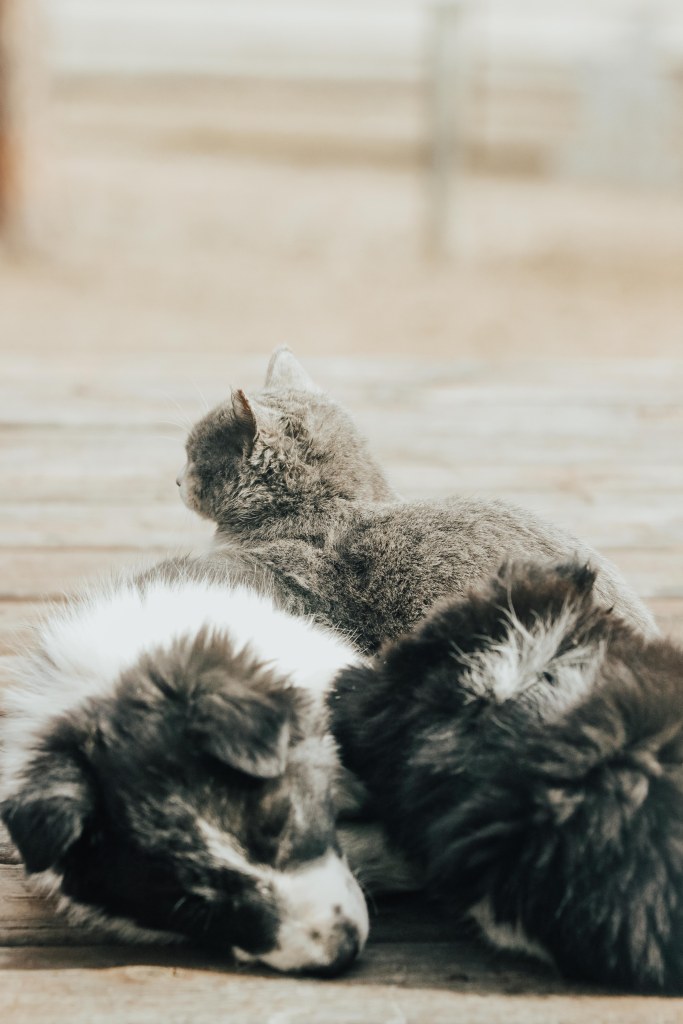
The one thing that is a constant is the pups – Snow or shine, they love it outside! I love looking out and seeing them romp, or finding a pile of kittens and puppies on the deck soaking up the sunshine. Josie got to experience her first few times riding the ATV, and she and Bess have come with us on some of our project afternoons.
The warm days we’ve filled with as much outdoor work as possible, reveling in the winter warmup – In Brad’s free time he has felled and chunked a number of dead trees, as well as pulling useable firewood out of the machine piles from when some logging was done several years ago. We hauled the splitter and a dump trailer up the hill to one of the piles and filled it full, and it turned into something of a late Christmas present for the folks. There’s nothing like wood heat on a cold day! And the girls were great help.
We’ve done some odds and ends of wintertime and spring-prep cow work, bringing the first calf heifers into the hayfield so they can be checked easier when they start calving. Brad is getting the calving shed set up and we’re just hoping the heifers wait until after this snow storm to start! We’ll be moving the rest of the cow herd tomorrow, bringing them from the north of the ranch into the center of the ranch for calving.
I’ve gotten into my garden, cleaning it up and adding compost, turning it under, wetting it down, and getting it ready for spring planting. So exciting! Every few weeks when there has been a warm up, I’ve watered the trees we planted, including the oak and ash sapling transplants, and have also doused my perennial garden a few times. Green is already starting to show! I bent a couple of twigs and even the transplants have survived. When I was churning up my vegetable garden, I uprooted this strange mess of roots, so fine I first thought it was fungus, only to realize it was my chives. Oops. Fortunately some plants are pretty forgiving.
The chickens are really picking up their egg laying, with a record breaking 17 eggs yesterday, and 16 the two previous days! I love being able to meet my customer demands, and sold three 18-packs and two 12-packs this weekend, and five 18-packs at the beginning of last week. I’ve been getting my plan in place for purchasing chicks soon, which is extremely fun to anticipate.
On the cold days I’ve baked bread and sourdough muffins, gotten some writing done, canned the rest of my cranberries, brainstormed chickens and chicks, planned my garden, and cleaned, cleaned, cleaned, the result of puppies and mud and the blurry line between winter and spring.
I went through all my seeds today and am pretty well set for my garden, except for one or two more varieties of tomatoes and some pumpkins. I’ll be getting some greens started in the house soon, a little indoor “salad garden,” since I’m hankering to be growing something. Maybe it will become a permanent off-season thing. To my rancher husband’s chagrin, I eat a lot of lettuce and greens. He says I’ll eat him out of business.
What beautiful days these are, when winter and spring collide.
Support Song Dog Journal and share to social media!
What an adventurous day it was. Bess accompanied me, Brad, and Pearl up to headquarters yesterday and got to experience all the excitement of a quick morning weighing heifers. She was enthralled, watching her mom, uncle, and grandma all show off their professional cowdog skills.
Her sister, Cooper, has permanently gone up north to join the crew up at headquarters and was following Dave around. Even just in the 24 hours Cooper was up at the north end, she adjusted really well to her new home! I’m impressed with how well these pups have all figured out their territory, sticking close to the house and barn.
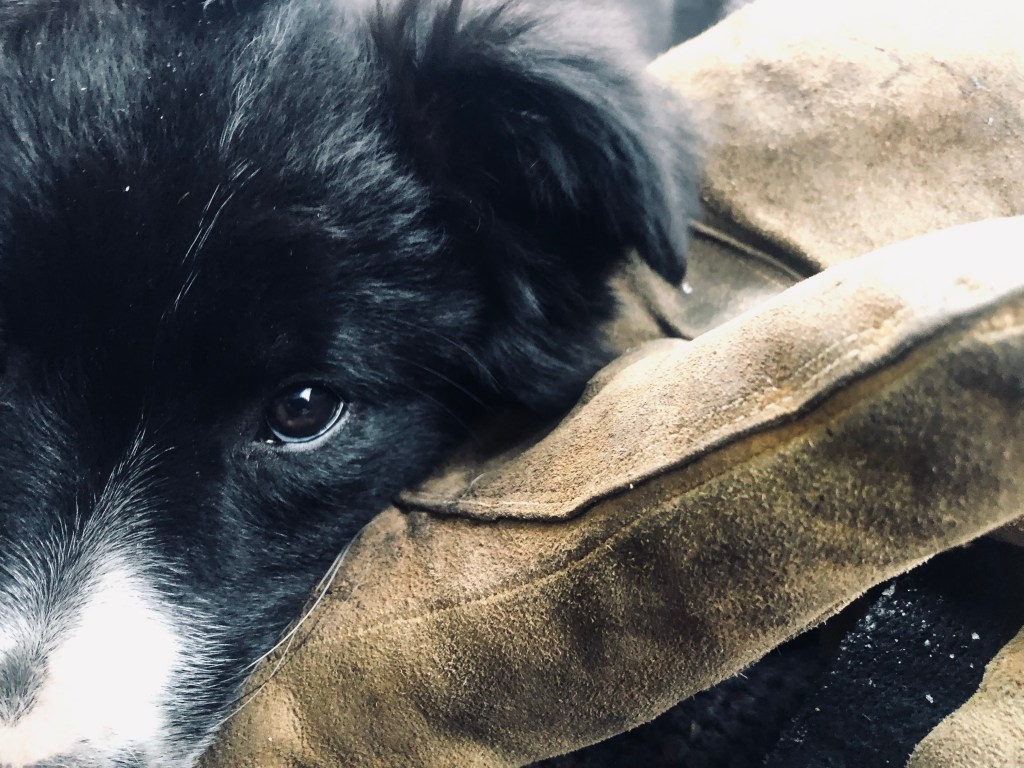
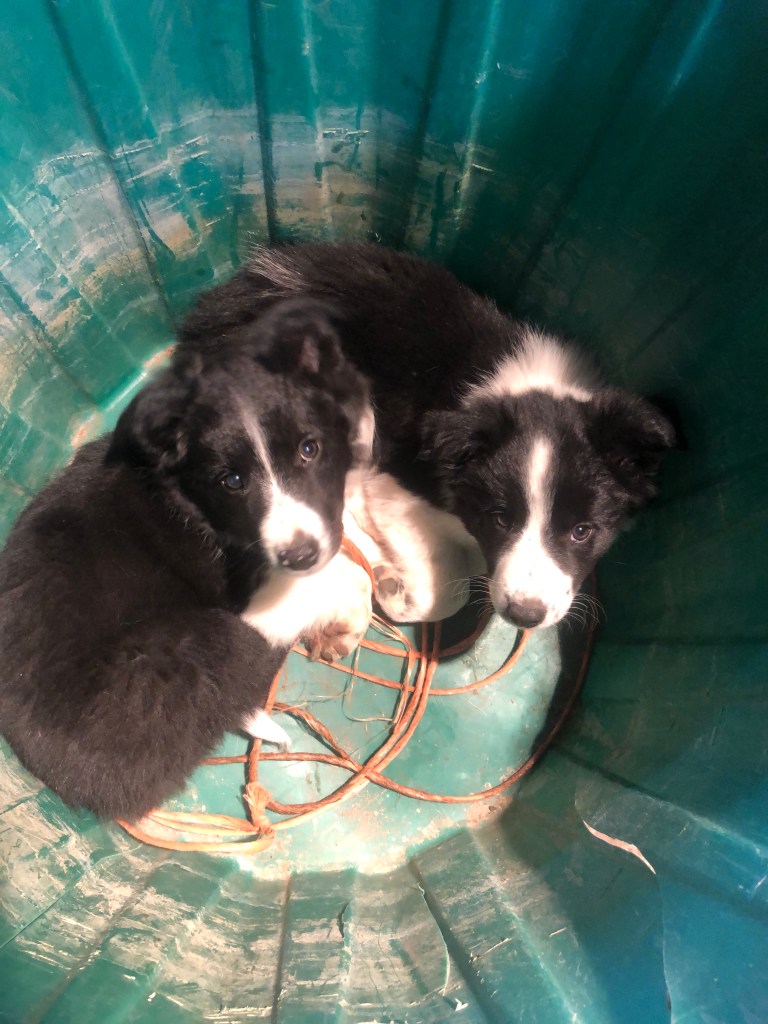
Bess and Cooper took a break in an old lick tub in the scale shed after awhile (when carrying them was no longer convenient), and watched the heifers get weighed. When that got boring they napped, hard. It’s hard work, being a cowpuppy.
These pups are out of two great dogs, so we are excited to see how our two (and all the rest, that are close enough for us to keep tabs on!) turn out. Their intelligence is a little unnerving at times, but they have such a desire to please. Bess and Josie are getting familiar with basic commands, and have been very responsive. We’re working on “sit” and “down” right now, and hot dog chunks are a fantastic motivator. However, I think they might be smart enough to realize that the longer they take to learn something, the more hot dog they can eat.
It is fun to see how much can be accomplished with the help of a good dog or three. Although they’re loved like pets, they really are an integral part of the crew and a vital element to the work that gets done around here.
It was a great first day on the job for Bess!
Support Song Dog Journal and share to social media!











 Song Dog Journal