This was a delightful find. I haven’t seen a sego lily in two years, I believe, and was thrilled a couple of afternoons ago to find that one of our meadows was scattered with them. I went back this afternoon to get pictures of these beautiful, strange flowers. Calochorus nuttallii, the sego lily, is one of two very similar species of lily, the other being the Gunnison’s mariposa lily, calochortus gunnissonii. 

 “And which of you by being anxious can add a single hour to his span of life? And why are you anxious about clothing? Consider the lilies of the field, how they grow: they neither toil nor spin, yet I tell you, even Solomon in all his glory was not arrayed like one of these.” Matthew 6:27-29

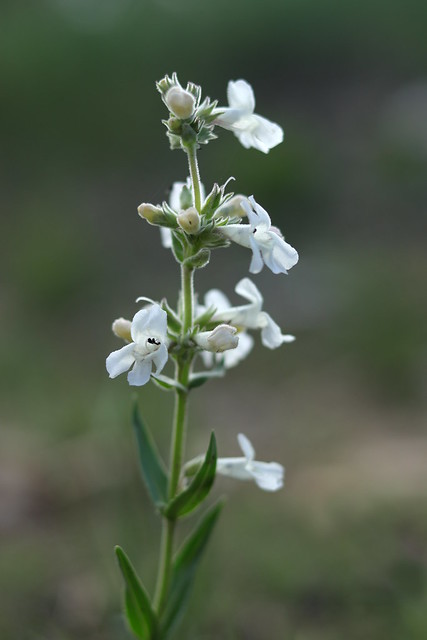
 I love seeing whole hillsides covered with this beauties! I’ve found these photograph best not in full sun, unlike a lot of other flowers, due (I think) to how fleshy their leaves and petals are. While other flowers take on what I like to call a “stained glass effect,” because shell-leaf penstemon has such thick petals, the light doesn’t shine through it well.
 Don’t confuse it with its relative, seneca snakeroot (polygala senega). For a year or so, I had seneca snakeroot identified as white milkwort, until I finally decided both couldn’t be milkwort and needed to just figure it out. Thanks to the book Plants of the Black Hills and Bear Lodge Mountains, the mystery was solved.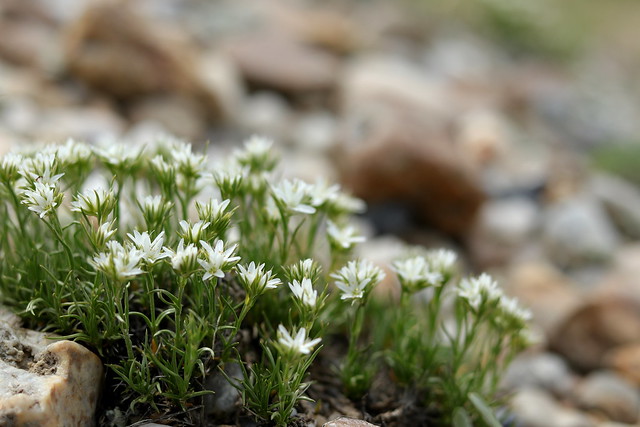

 Song Dog Journal