Old Trails

Sometimes it is the old trails that really are the best trails. There’s always something to keep them from seeming redundant. In the case of the Hole-in-the-Wall trail, part of my love of it is pure convenience – I can tumble out the door and be walking along the trail in 5 minutes, remote, away from anybody, in the quiet of the trees. Part of it is nostalgia, memories, and the sheer beauty of this region. The Hole-in-the-Wall road winds along through ravines and low places, often overlooking or crossing an old nameless, boulder-strewn creekbed that eventually joins up with Battle Creek. This has been a favorite trail since I was a kid – because Hole-in-the-Wall has always been a favorite destination. I’ve written about Hole-in-the-Wall a handful of times before, that it is the site of an old mining camp, that the miners diverted Battle Creek straight through a ridge, creating what we now know as Hole-in-the-Wall. Something about this place is comforting to me, and not long goes by before I get the hunger to hike to it, the same familiar trail, the same trees and rocks and sandy, rocky streambeds. Since I am leaving the country at the end of this week for a month, I wanted to hike to Hole-in-the-Wall again. Mom and Dad were the only ones home, and they agreed to tag along. Off we went, with both of the dogs tearing around, having the time of their lives.
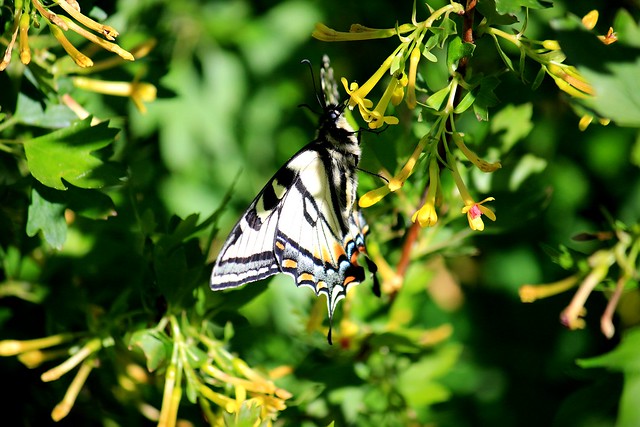
IMG_7859eWe were chatting, watching for fossils and flowers and critters, talking to the dogs casually. I had been down in the creekbed looking for fossils and had just come back onto the trail. Opal, in her play and curiosity, headed down the bank, underneath a still-flowering golden currant bush. We called to her and continued walking, and Mom mused, “I wonder if we’ll lose any dogs to snakebite this summer.” It is just something you think about when you live in rattlesnake country, and this is the time of year they start showing up. Talk about a well-timed comment. No sooner had those words left Mom’s lips, than that unmistakable sound burst from underneath the currant bush – a rattlesnake. The sound is one of those you never forget, unless, of course, you’re my Dad and you can’t hear the snake’s rattle, which is a little unnerving. Well, Opal came tearing up the bank around the other side of the currant bush, apparently unhurt (“Good,” I’m thinking. “How in the world would I have broken the news to Sarah?”). Both dogs were immediately captivated by the strange sound, and then immediately got yelled at.  Trixie, the silly thing, actually responded to verbal commands and getting swatted in the face with a ballcap, which surprised me, since I always assumed Trixie’s first rattlesnake would also be her last. In the next few chaotic seconds we got the dogs by the collars and suddenly felt a little calmer.
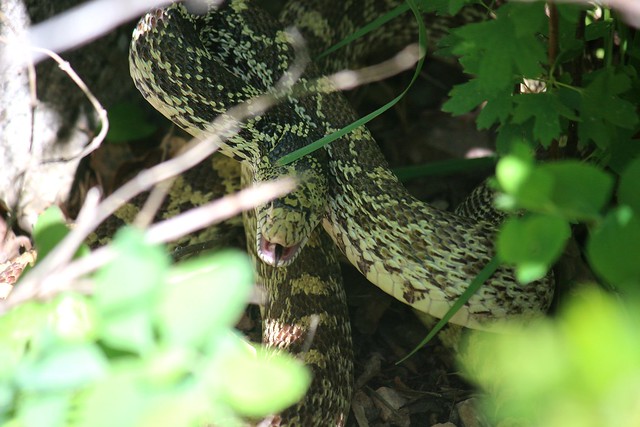
IMG_7763eIt’s no fun hearing the snake but not being able to see it. Once the dogs were under control, we got a good look at the rattler, and he was a big one, hunkered down beneath the currant bush in a shaded spot. I honestly have no idea how Opal didn’t get bitten, except to say that God didn’t let her get bitten. Where the snake was coiled was right where Opal had jumped. He was thick and angry-looking, and we watched him for a couple of minutes before continuing our hike, with the dogs leashed this time. Once you see one rattlesnake at such close quarters, suddenly you’re convinced there are snakes in every clump of tall grass, under every fallen log, and in every pile of rocks. A little irrational, but that’s just what happens. Just like when you find one tick, suddenly you’re crawling with imaginary ticks.
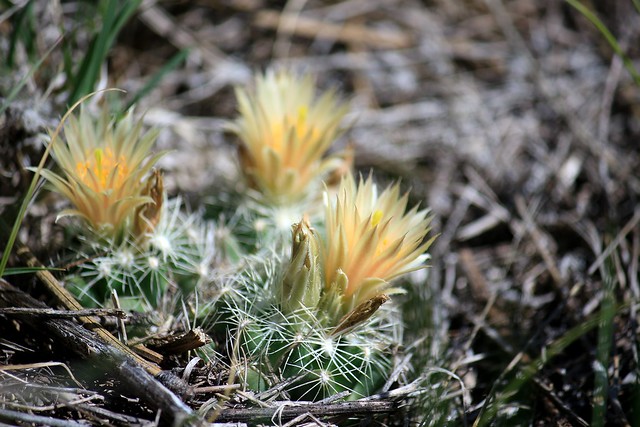
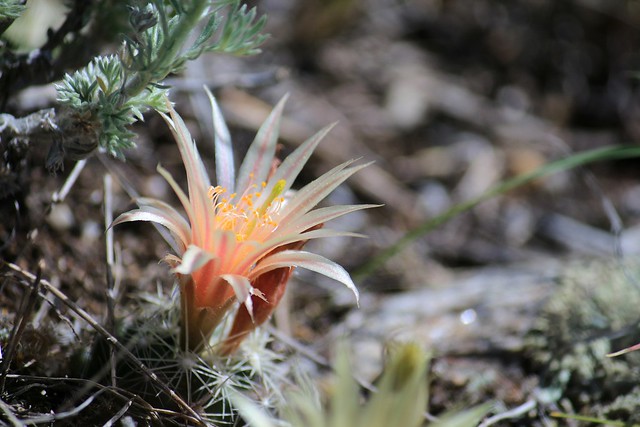
IMG_7783eIMG_7842eWe made it to Hole-in-the-Wall without meeting anymore snakes, and enjoyed the flora in the meadow  there. Particularly the Missouri pincushion cactus. We found a whole colony, with little families of cacti all growing in groups, and some beautiful solitary ones with picture-perfect blossoms. Shades of yellow to shades of peach, glimmering and gleaming in the sun. I had never seen so many.
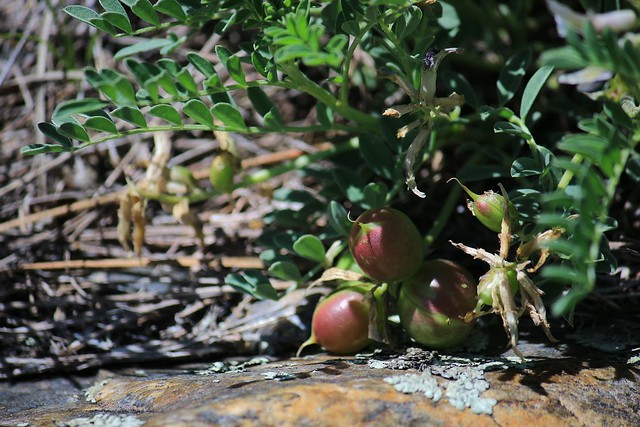
IMG_7797eThere was plenty of dame’s rocket, violet woodsorrel, larkspur and larkspur violets, and even a groundplum milkvetch with its cute little fruits. On the way back, we checked under that same golden currant bush for Mr. Rattlesnake. We tossed a few rocks down the bank into the bush to see if we could stir him up a little bit. He had moved on. Smart snake.

Sometimes it really is the old trails that are the best. Because they’re the ones with all the many, many memories. And I’m really glad we still have our dogs.

Hiking | The Meeker Ranch

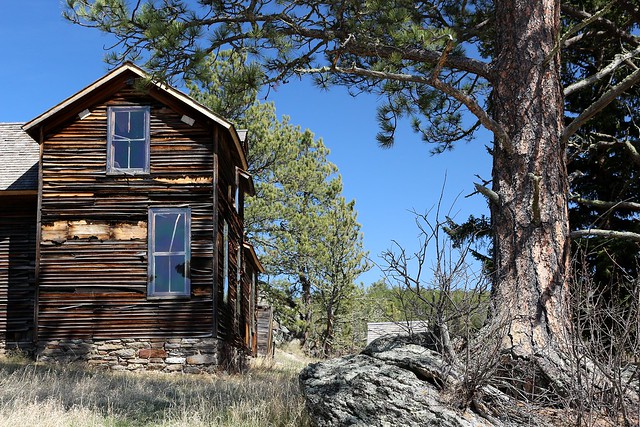
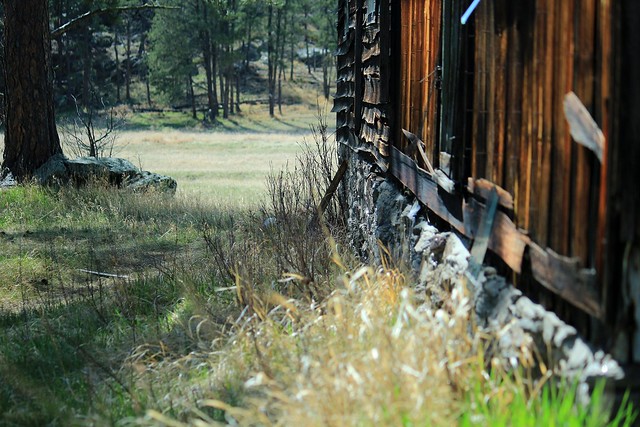
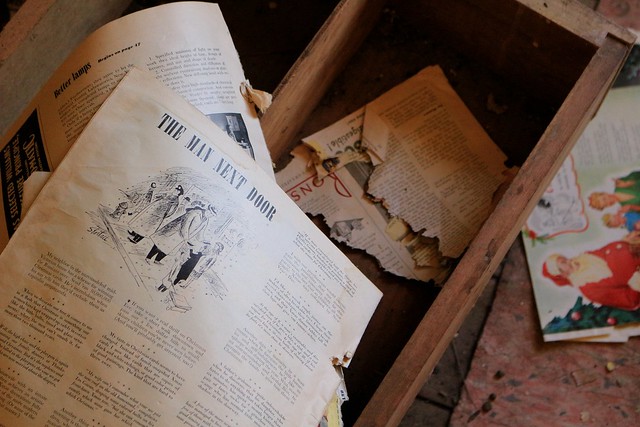
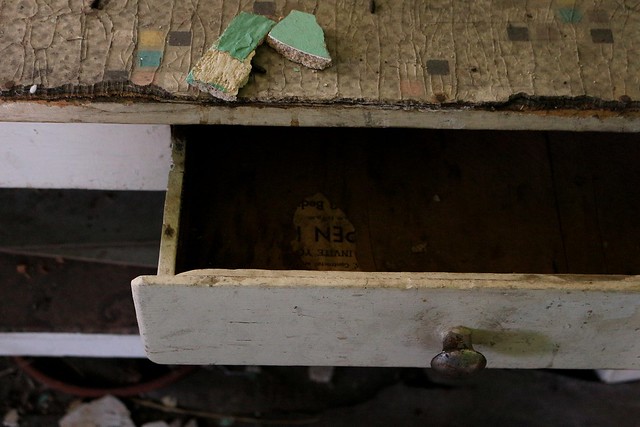
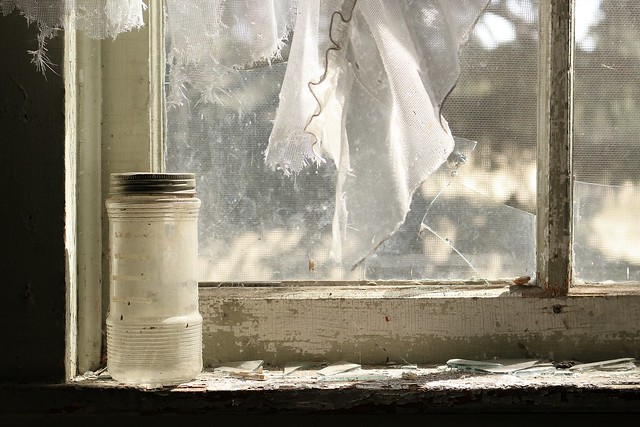
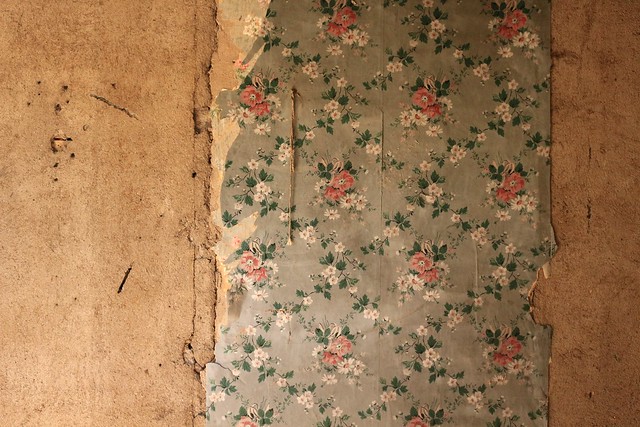
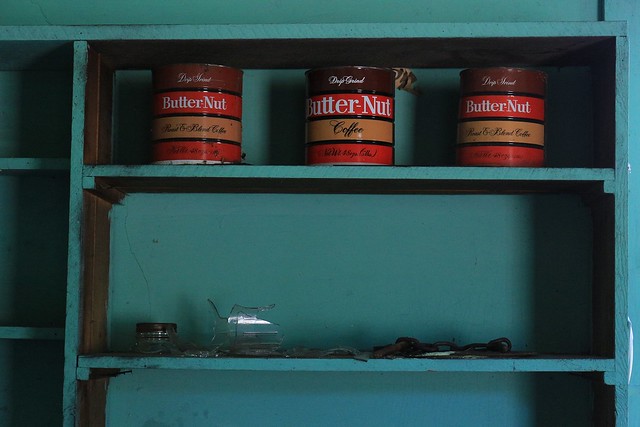
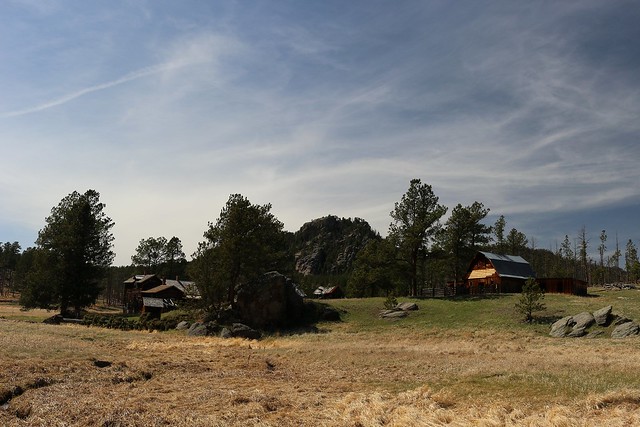
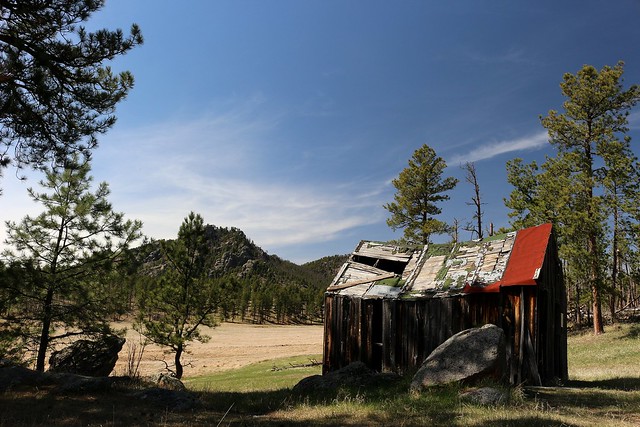
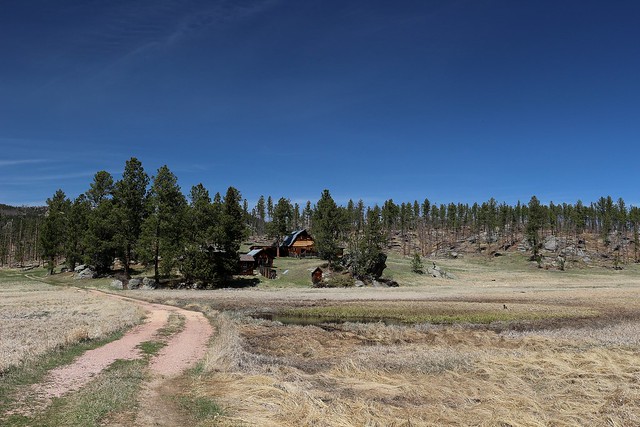
Once again we spent a Sunday afternoon haunting beautiful ruins in beautiful country. The Meeker Ranch is an historic site now owned by the Forest Service, east and north of Custer, SD. It dates back to the 1880s, and was built by Frank Cunningham Meeker, who, according to the Black Hills and Badlands website, was a member of the Pony Express, which ran for a couple of years along the Cheyenne-Deadwood Stage line. Frank Meeker named his idyllic 278-acre spread “Willow Creek.” The ranch passed through several ownerships over the years, finally coming into Forest Service possession in 2004. They undertook restoration and preservation of the ranch when acclaimed watercolor artist Jon Crane helped lobby against the slated demolition of the structures. This breathtaking historic site has been the target of some vandalism in the past, but overall is beautifully preserved.IMG_6640e Inside the main ranch house, there are still shreds of curtains, canisters of coffee (these people were obviously coffee-drinkers!), hangers in the closet, old newspapers and magazines, and wallpaper on the walls.  Glass sparkles in shards on the floor, whole jars littered among the wreckage. It must have been a lovely, fashionable home in its prime, and now just wisps of the memories cling here and there around the walls.IMG_6655eIMG_6844eIMG_6696eIMG_6733eIMG_6685eIMG_6693eIMG_6721eIMG_6740eIMG_6759eAround the homestead, perched on the hillside in among massive boulders and rock outcroppings, other structures cling tenaciously. The barn fittingly presides over the other structures, towering above them in wonderful condition, while the others have fallen into some level of decay. Buildings out here, scattered through the Hills, are so old and rugged that they seem to have sprung from the ground, rather than to have been built upon it. They belong where they are.
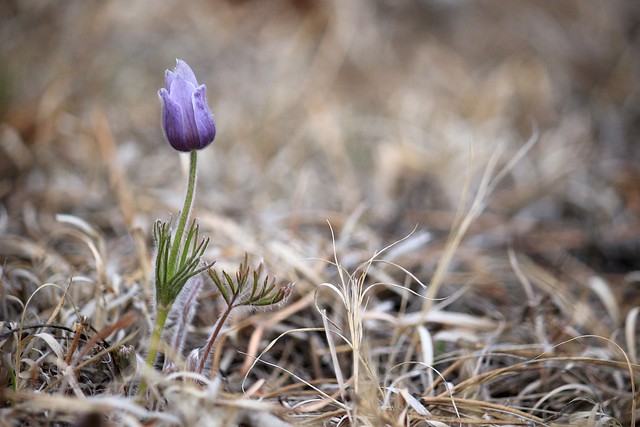
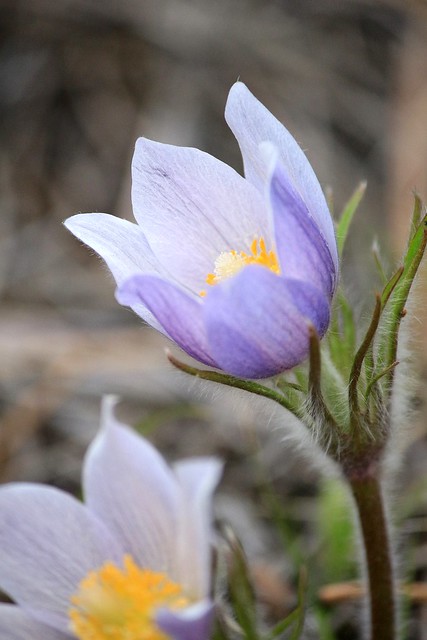
IMG_6794eIMG_6781eIMG_6855eFrogs were singing in the little marsh below the house, singing and trilling so loudly it was almost uncomfortable – What a beautiful summery sound! The scent of pine resin was heavy in places, another sign of summer-to-come. Every time I get a breath of resin in the warm sunlight, a wave of nostalgia breaks over my soul, wrapped up in the beautiful memories I’ve treasured since childhood, of this place I now get to call home. Wildflowers were blooming along the short trail, little goldenpeas and pussy toes and even a few long spur violets. Springtime is truly here! IMG_6873eTo get there, head north out of Custer on Sylvan Lake Road. Take a right on Willow Creek Road. After a couple of miles, the road will become considerably rougher and narrower, so don’t take a vehicle with low clearance. After about a half a mile on this stretch, there is a Forest Service gate and some parking space. The Forest Service access road continues beyond the gate, and is about a half mile hike to the ranch.

A stunning piece of history.


Hiking | Poet’s Table

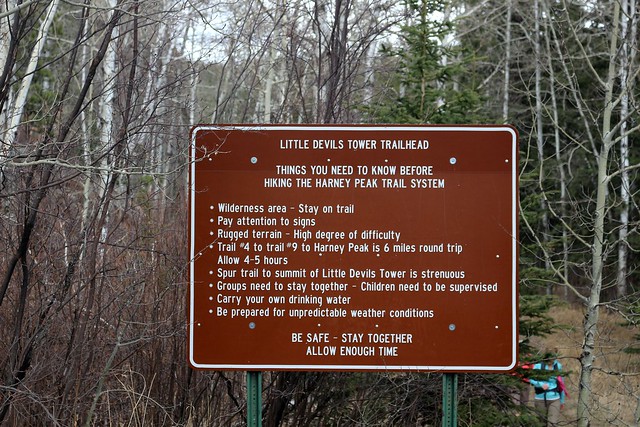
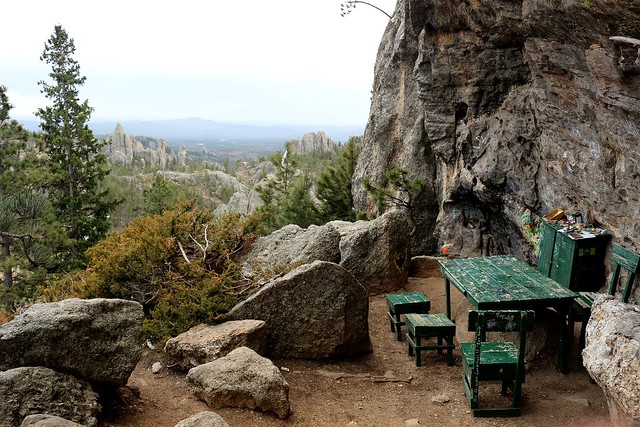
I always love a new hike. Yesterday, I hiked to a hidden gem of the Black Hills – The Poet’s Table. And since it is an unmarked trail, it is pretty easy to keep it somewhat secret. I went with people who had been there before, which really is the best way to go in the case of the hike like this one, since it would be pretty hard to find it without a guide, even with directions.  The hike is a good scramble in places, not an easy hike, in spite of the short distance. From the trailhead to the Table only takes about 20 minutes, but it involves climbing a crevasse or two and some steep inclines.IMG_5723eWe started at Little Devil’s Tower Trailhead, which would be the most direct route. Since Little Devil’s Tower Trail is part of the Harney Peak Trail System, and the Poet’s Table trail is a spur or loop off the main trail, one could easily incorporate Poet’s Table into a longer hike. If you decide to do this, do Poet’s Table at the beginning when you’re fresh. Not at the end when you’re already tired and footsore.
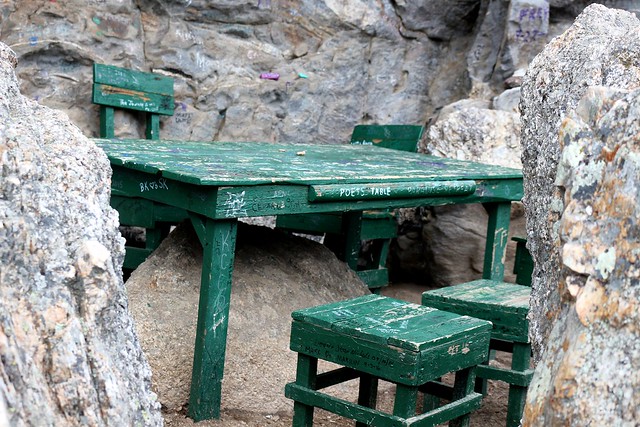
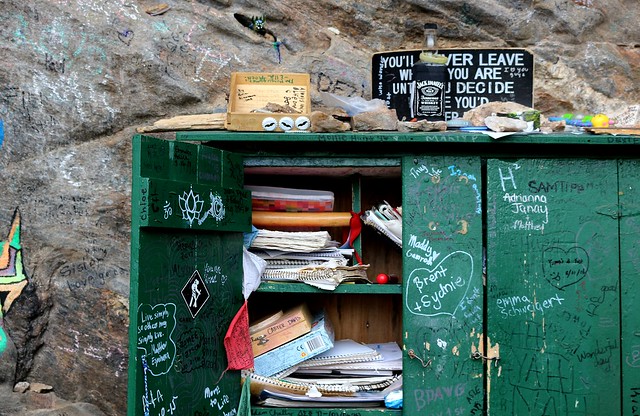
IMG_5689eIt really is a delightful location, well-hidden, sheltered, and quiet. People who argue that the Black Hills aren’t mountains haven’t seen places like this. Soaring rock spires conceal this spot, and mountains fall away in the distance. A table and chairs and a cabinet filled with notebooks furnish the nook. People have signed their names on the walls, painted pictures, written poetry in the notebooks, and someone even left a bottle of Jack Daniels. There were remnants of an old campfire, and other odds and ends of trinkets and oddities left by previous passers-by. IMG_5672e We meant to eat a camping lunch up there, since I had missed out on the camping trip due to being sick, but a thunder storm rolled through just south of us, barely touching where we were. We could hear the thunder, so we debated for roughly twenty minutes about whether or not it was foolhardy to be sitting up on rocky cliffs with a thunder storm going on (the answer being “yes”, of course), until the storm basically blew by. By then, we weren’t really hungry and dinner was getting close anyway. IMG_5697ePack a picnic lunch. And enjoy the hike and the accompanying pristine views. The Black Hills at their best.


The Pringle Place

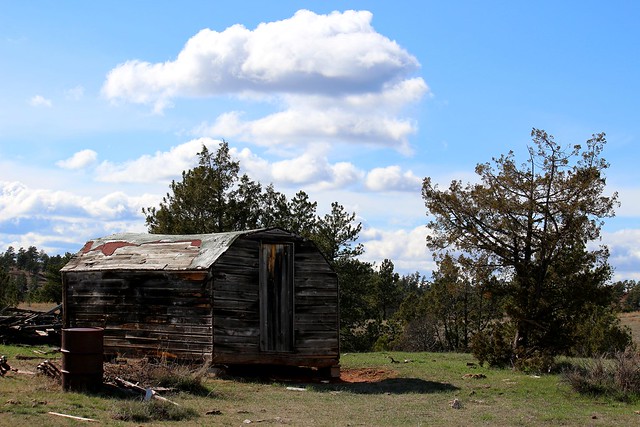
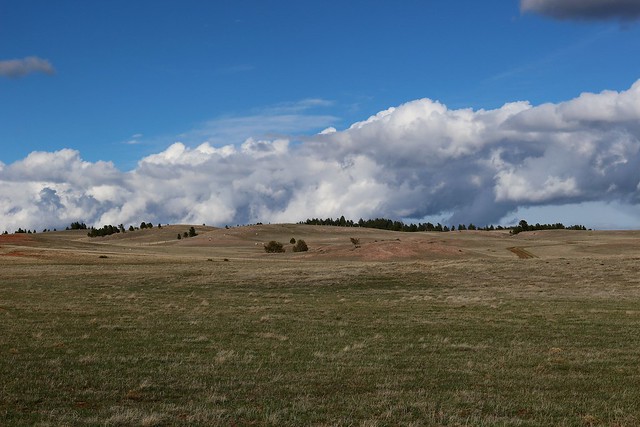
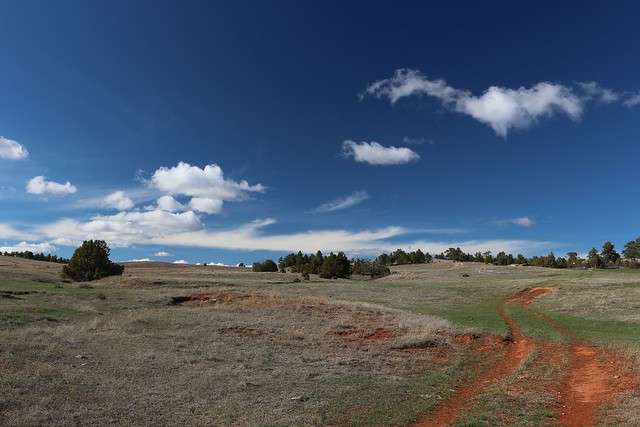
Our family property in Pringle is generally referred to as “the Pringle Place.” It has a couple of other names, including “Spring-on-Hill,” referring, of course, to the stage stop by that name that crossed the property in the 1870s. But “the Pringle Place” just rolls off the tongue. Anyway, here are a few more shots from our adventure earlier this week. The terrain is so different from the Hills. If you look really hard, you can see the light colored spots on the far hill that were a herd of antelope. And it is hard to picture living in the little shack propped up on cinder blocks. The house, however, is situated in the most beautiful valley, a short drive away from the Pringle Place. I can readily picture living there…IMG_5486eIMG_5567eIMG_5611eThis place is so dear to my heart.

Ghost towns

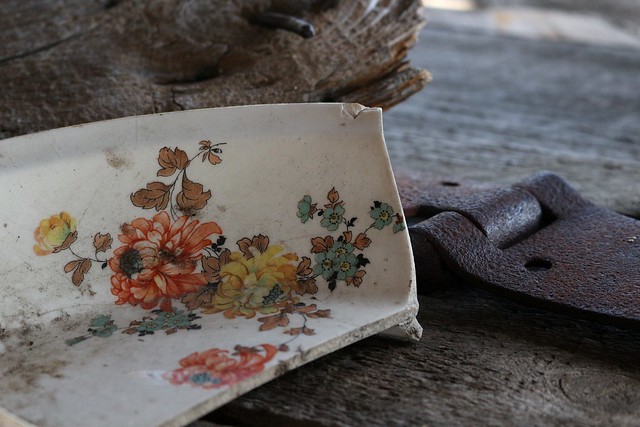
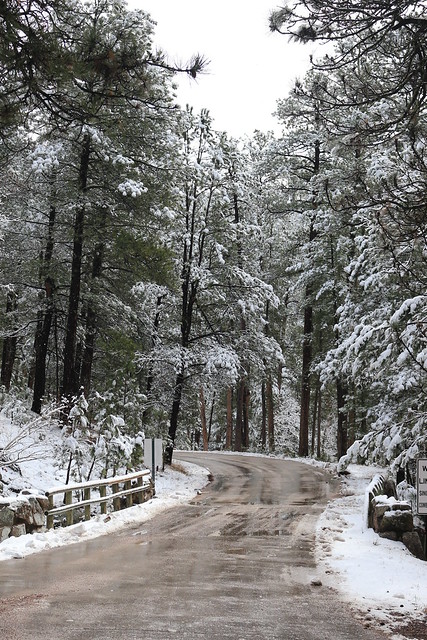
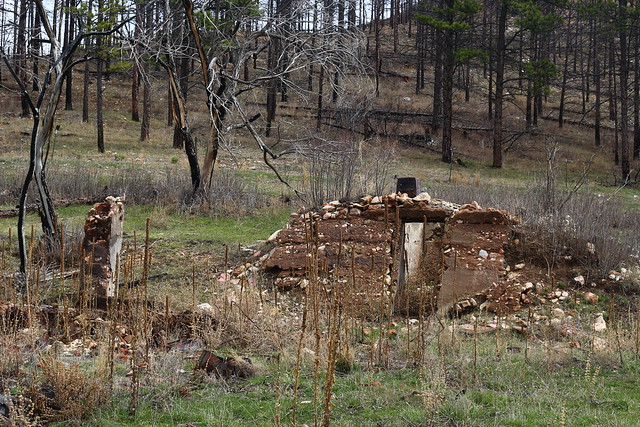
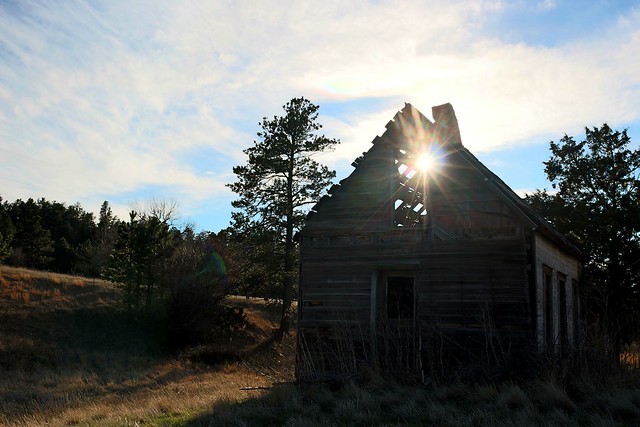
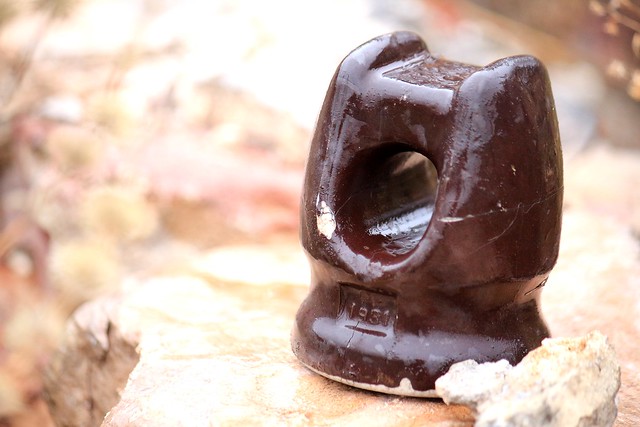
After our short trek to the unnamed ghost town or homestead site on Sunday, and having our visit shortened by rain, we knew we wanted to spend some more time looking around there. We picked Tuesday as the day of choice, little knowing that we would end up enjoying all the variety of Black Hills weather in one day! Not that that would have deterred us, of course! Living in the Hills, one really does get used to very rapid changes in weather, sometimes rapid changes in one area, other times rapid changes due to, for instance, driving over the mountains. IMG_5178Sarah and I took Playhouse Road into Custer, partly for the scenery, partly because it actually is quicker than going over Mt. Rushmore, and the higher the elevation, the snowier it got. Boy, were the trees lovely to see! We met up with a friend in Custer, and drove down towards Pringle, seemingly leaving the snow behind. We poked around in the ruins for an hour or so, turning up pieces of a child’s skate, the top deal of a hand-cranked ice cream maker, the lid of a pressure canner, and lots of blue glass insulators. As much as I would have loved to “collect” them, we dutifully left them behind. I love blue insulators. But a $20,000 fine is a pretty good deterrent. However, it is too bad that cows and elk and weather don’t leave the artifacts alone, evidenced by the shards of glass everywhere. In another ten years of cows, elk, and weather, the artifacts will be all but gone.IMG_5261eWe examined the root cellar more closely, and realized that glass jars and bottles were built into the walls. Some of the bottles were identical to ones I found in our junk piles. Not sure the purpose of building bottles into the walls, but that is something we want to learn about. IMG_5239eWhen rummaging in the remnants of long-gone ghost towns and homes, it can be easy to compartmentalize those locations as being purely “historical.” As if the historical artifacts just planted themselves there, and weren’t put there by a living person. It is so easy to forget that these were places that were bubbling with life. These were homes, busy homes, built by people who knew the meaning of the word “work.” Whether dating to the first gold rush or the homestead and mining years of the early to mid 1900s, these people were true pioneers and adventurers, in ways we can’t even comprehend now.
IMG_5213eWe stayed for about an hour, findings other odds and ends, guessing what the structures might have been, marveling at a giant spreading aspen, so wizened that the bark on the lower trunk looked like an oak or cottonwood. I wonder how much smaller that tree was, when the homestead was being lived on.  The trees down the valley turned grey with approaching snow, and the squall blew in. Rain on Sunday, snow on Tuesday.
IMG_5280eIMG_5282eAs we drove down to our family property south of Pringle, near Argyle, it was still snowing in quite a winterly fashion, but cleared up when we headed west to the property. How variable the weather can be, from place to place and hour to hour! The following two pictures were taken the same afternoon, the first on our hike in to the Box Canyon, and the second on the hike back out, just a couple hours apart.
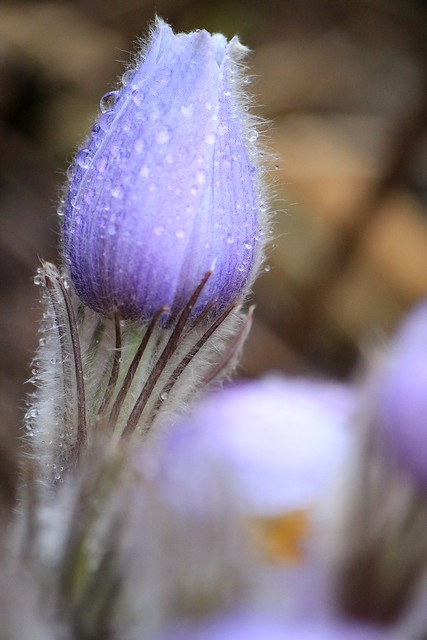
IMG_5313eIMG_5552eWe enjoyed the scenery, the history, the warm sun, the pasque flowers (well, I did, anyway), and Jake flew his drone over the Box Canyon and Spring-on-Hills Stage Stop. The stage stop dates back to the gold rush days, and was only in use for 2-3 years. IMG_5434eIMG_5336eThis stop would have fallen out of use as a regular stage stop when the entire route was re-routed west of Custer, due to dangerous conditions in this area. It probably continued to be used by immigrants and adventurers who chose to pass this way, but the stage itself was routed further west. All that is left are some foundations and a caving-in dugout. I remember the dugout being intact when I was a kid, but the heavy rain we had a couple of summers ago in particular brought the roof down. There are still old jars inside – Perhaps someone at sometime lived in the dugout, or maybe it was only ever used as a cellar. Who knows.
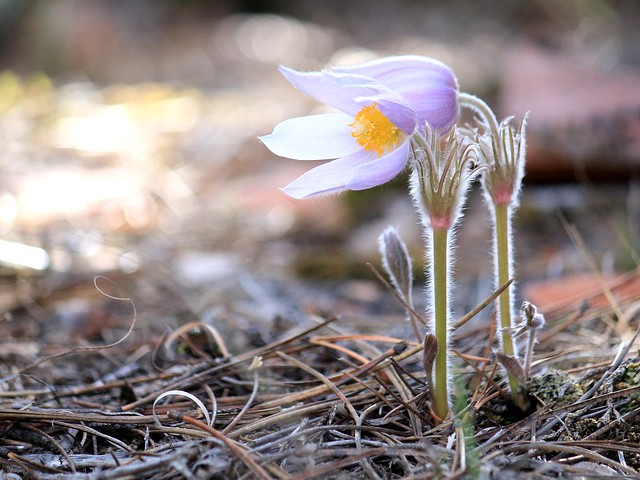
IMG_5334eThe clouds cleared off and the wind picked up a bit as well, making the drone flying some tricky business. On our hike back out, we saw a herd of antelope in the distance, which for me is always fun, since we don’t have antelope in the Hills. There was also a crazy coyote running around, and lots of bluebirds. I was also fortunate enough to find a patch of Easter daisies, one of the flowers I was hoping to see, since now is their time of year!
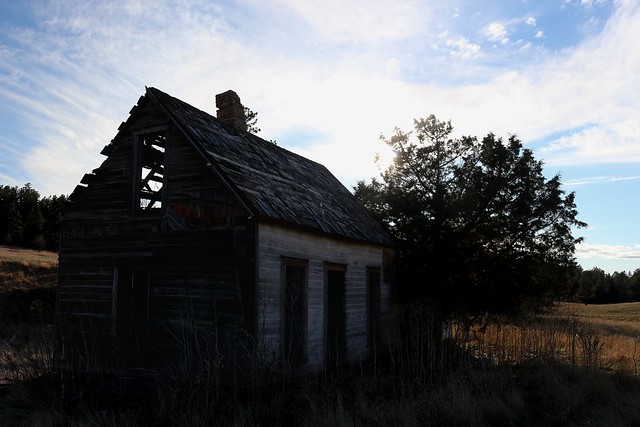
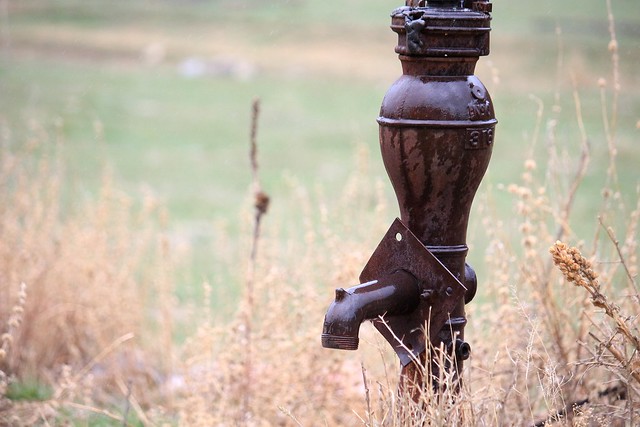
IMG_5518eIMG_5573eWe made one last stop on our way back to Custer, to explore some old cabins near the side of the road. We hit the valley right as the sun was getting low in the sky. Furniture and shoes still mouldered in the houses, and swallows had taken up residence. The pump still pumped water. Coat hooks still hung on the walls. A bedframe gleamed in the light from a window. How the past lingers, even as time marches on.
IMG_5595eIMG_5619eIt is rare that we are able to slate a whole day for hiking and exploration. Time marches on. But sometimes you just have to take a whole day to enjoy it.

Slow Rain and Relics

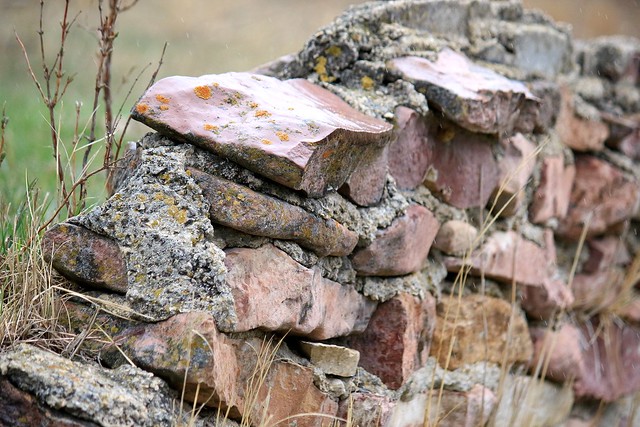
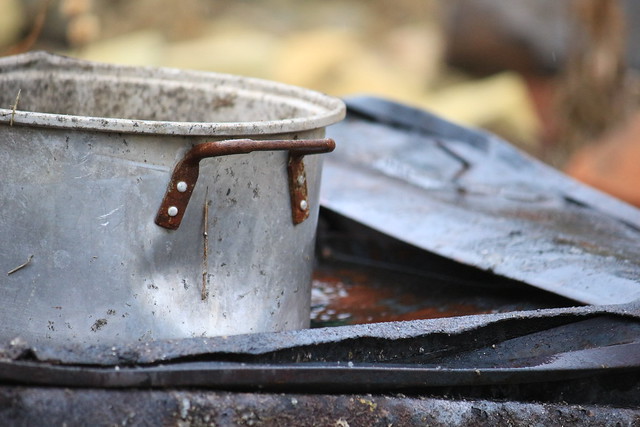
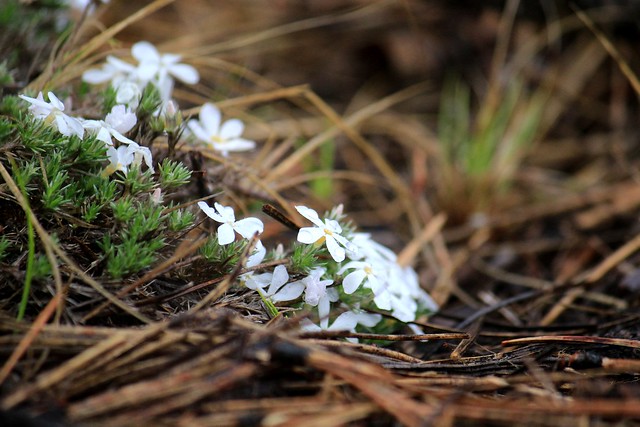
The sun and blue sky of Sunday morning had turned into lowering clouds. The sound of raindrops began to hush around us as we followed an old forest service road towards our destination. Before long at all, everyone else was far ahead and out of sight, while I was hunkered down in the wet grass and pine needles taking pictures of spring’s first flowers. What sweetness! We had temperatures in the 40s, and those of us who had properly layered were plenty warm, even with the gentle rain.IMG_5097eWe were hiking in an area of past burn, south and east of Pringle a couple of miles. Before the trail wove down into a valley, distant hilltops could be seen glowing gently under the grey sky, and even scattered blue sky could be seen off to the south east. We saw ample evidence of elk, but not a glimpse of the majestic creatures themselves. No deer, few birds – It was quiet out in the woods. But in amongst the fallen trees and blackened stumps, the purple of pasque flowers could be seen. Life from death. Beauty from ashes. In areas of previous devastating fire, new life springs up with determination.IMG_5059eThe trail took us to the historical remains we had hoped to find. Old foundations, remnants of walls and chimneys, a water pump, a tumbled-in root cellar, sparkling pieces of colored glass, shards of rusted metal, miscellaneous kitchen items, ancient stoves, door knobs, coffee cans – All relics of the homestead or town site that once stood there and the lives that had previously been lived there. We don’t know its name, or who lived there, or whom they knew, or what they did, or where they came from, but someone had a life in that beautiful little valley. What will I leave behind when I’m gone? It is an interesting thought.IMG_5113eIMG_5105eThe raindrops plinked and pattered on a heap of twisted metal, sounding like the rush of a distant, faraway stream. We poked around in the ruins, and could have spent a lot longer there. We only left reluctantly when we figured we should catch up with the rest of the group, who had already gone back to the truck to keep from getting wetter. IMG_5132eIMG_5129The rain picked up, but that hardly mattered. It is spring, and rain is expected! Sarah pointed out how vivid the colors are in the rain, and she is right. It’s as if the rain washes away a layer of dust, leaving everything clean and fresh with the color plainly seen.IMG_5146eIMG_5173eTime and again we extend our Sunday fellowship through the afternoon with hiking. And time and again, I think how perfect a way that is to end a Sunday. Spending time in God’s glorious creation is refreshing any day of the week, but there is something fitting about it on a Sunday – it seems to me that we are in a way extending the sanctuary of worship into the broader realm of His created handiwork. His handiwork and His attributes are proclaimed in the beauty of the landscape, the intricacies of flowers and plant and animal life, the perfect way this earth holds together and flourishes year after year and century after century. When we marvel at and revel in the natural world, we are marveling at and reveling in the works of God’s hands. What a privilege. IMG_5174eWe headed home in a slow drizzle and stopped at Three Forks to get coffee. Beautiful weather. A beautiful day.