There was something strangely beautiful about the scattered white headstones lost in the sea of prairie grasses, the rolling hills like rolling waves on an ocean of windswept, time-tarnished gold. It was hauntingly sad, so isolated and wild and completely alone. The date, June 25, 1876, is almost lost in time, but its memory lingers on at the Little Bighorn Battlefield National Monument.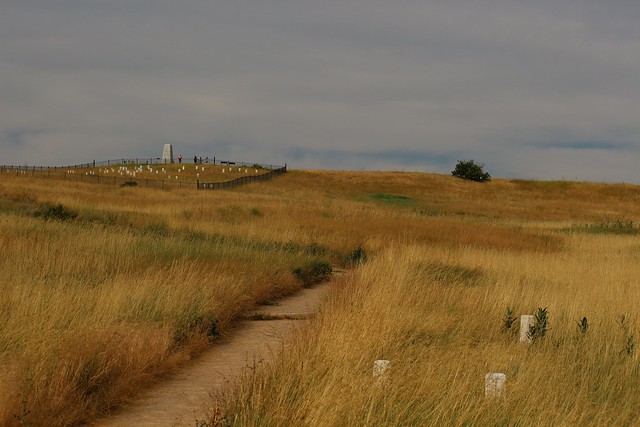
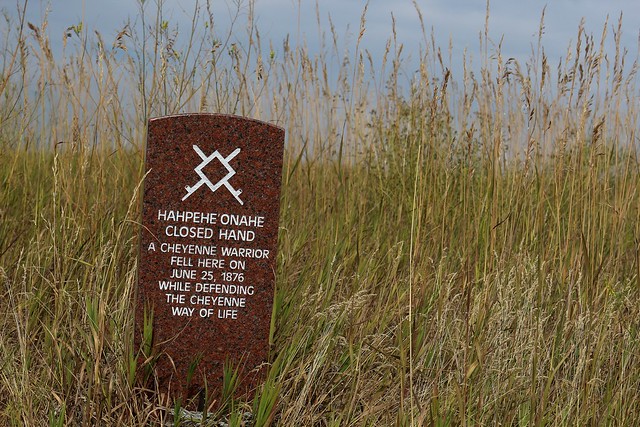
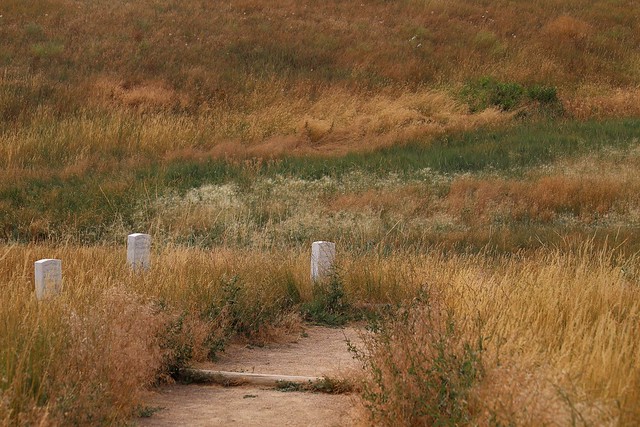 Although our nation has enjoyed periods of relative peace and relative prosperity, that peace and prosperity has not been the usual state of things. A glance back through our history reveals many events most people would rather not talk about, and if one begins to dig even more is unearthed. Time obscures many more event, both the good and the bad, than most of us will ever know about. But we can’t forget, we can’t selectively remember, we can’t pretend that the tragedies didn’t happen, and we can’t erase them. The past is immensely important, not to treasure our hatred and nurse our resentment, but to foster compassion. We need to remember our past, with forgiveness, compassion, and humility.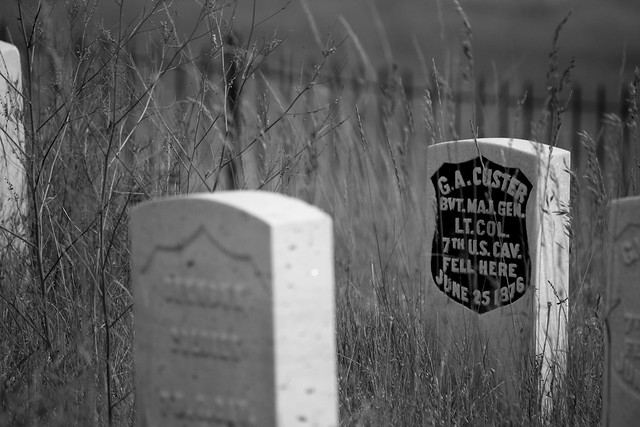
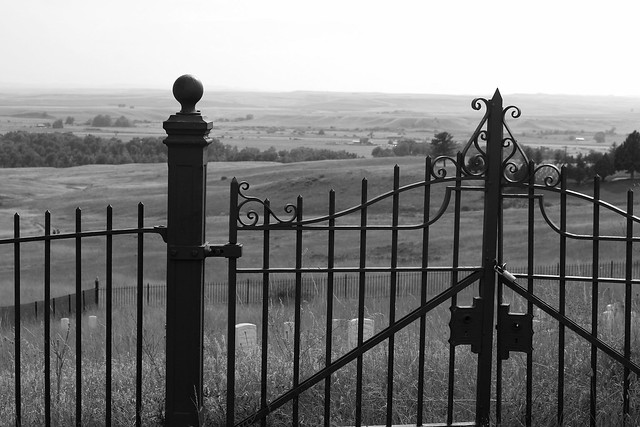
 The Battle of the Little Bighorn was a tragedy. The events surrounding it and the way the U.S. Government treated the Indians and cheated them out of land that was rightfully theirs and guaranteed to them is an ugly, disgraceful blot on our history. The crimes and atrocities committed on both sides are shameful and inhuman, and those who have proper perspective realize that and can acknowledge that. If we try to judge the past by the standards of the present, we’ll only succeed in cultivating and perpetuating hatred. We have to look at the past through the lens of the past, not through a lens of modern-day political correctness or 130-year hindsight. And the Monument succeeds in doing that. I was struck by the level of cross-cultural unity and the way in which all of the fallen were honored, not only the Army or only the Cheyenne and those who fought with them. It is a tribute to the heroism of all the warriors, and a love song to the lives that were lost.
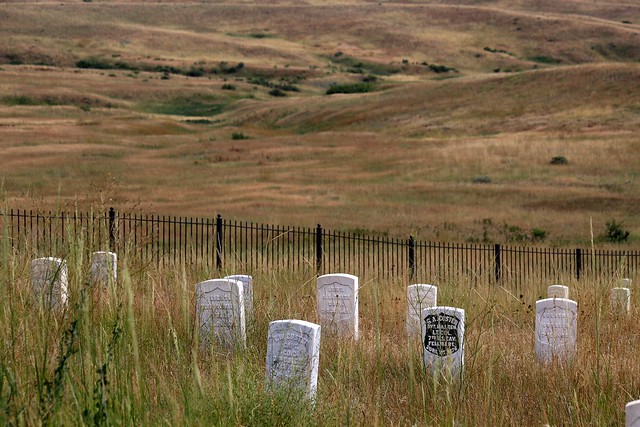
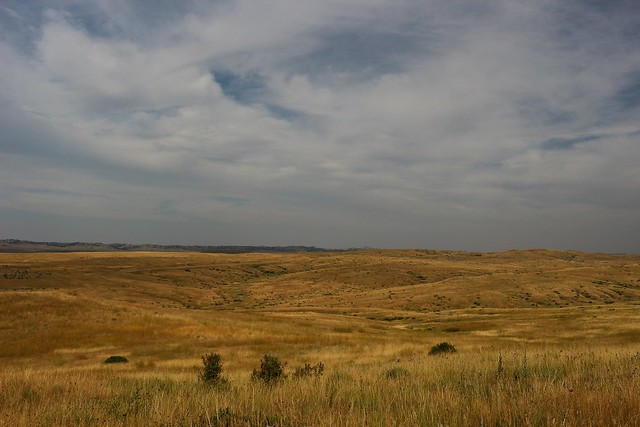 The men who died were warriors. It was their way of life to defend their way of life, whether we look back and judge their way of life as right or wrong. They fought bravely and according to their code of battle. The following quote inscribed on the Indian Memorial is striking:
“It was a terrible battle….a hard battle because both sides were brave warriors.” ~Red Feather, Lakota


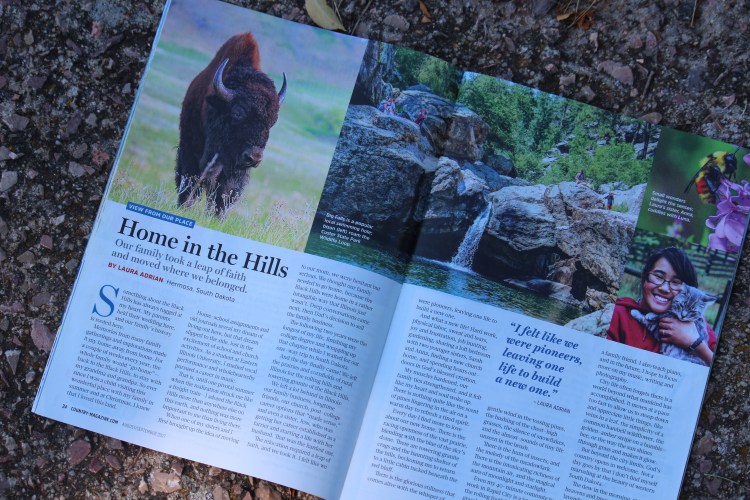 From the age of 12, I’ve had a love of writing and story crafting. Over the years, I’ve read a lot on the craft of writing, I’ve sat in on webinars, and I took a class on feature writing at the university (one of my favorite classes). One of the most consistent pieces of writing wisdom I come across is that writers write. So if you want to write, write. You can’t do anything until there are words on the page.
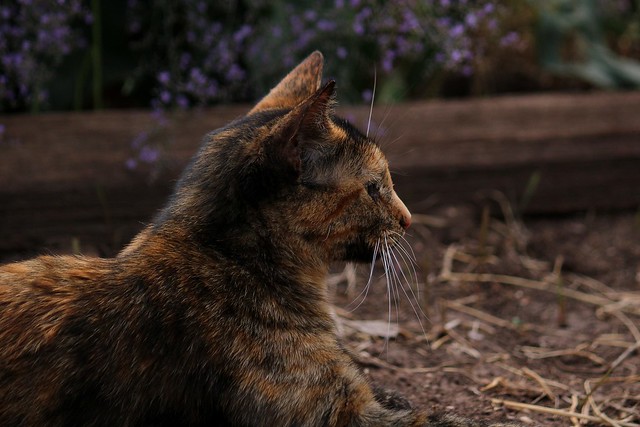
 But then…this is home. Where the hot summer air smells piney and golden. Where beebalm and chokecherries line the Hole-in-the-Wall Trail, where the stars are diamond bright, and the sun sets behind Harney Peak. Home is where my family is – my blood family and my church family. Home is where Trixie and our log cabin and the Miner’s Cabin wait in our little hollow underneath our red ridge. Where Ember comes running when I call her name, or sits yowling outside the window until I let her in. Home is where I have a bed underneath the eaves and can hear the raindrops pattering on the tin roof a foot away. Home is here.


 Song Dog Journal