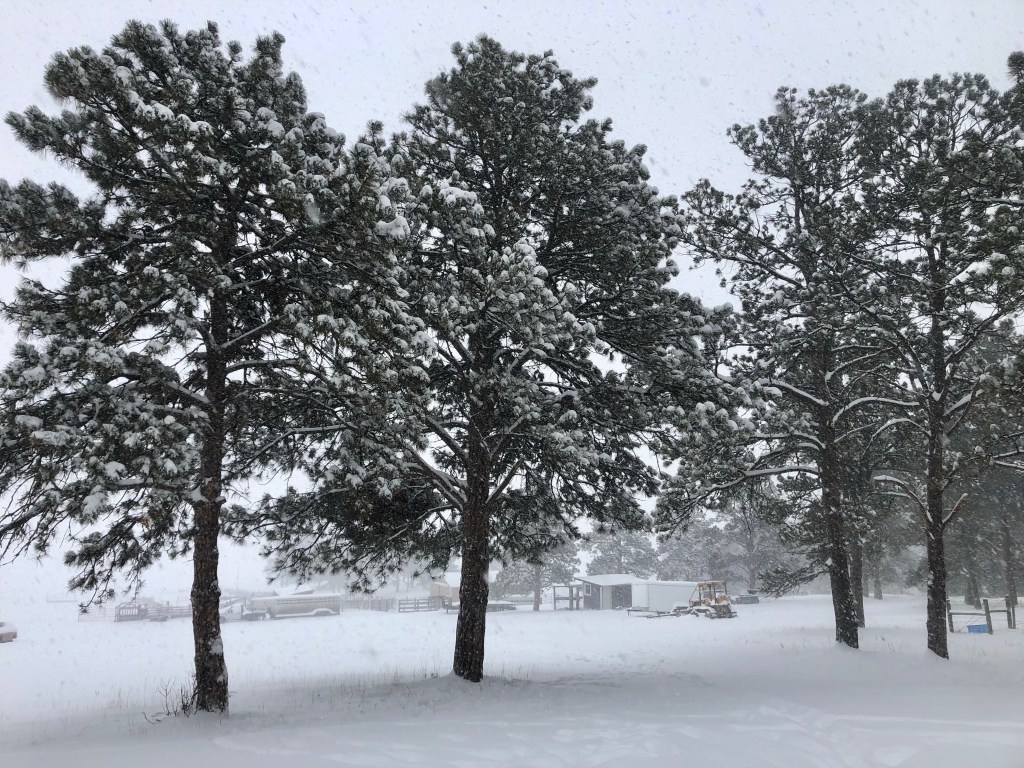
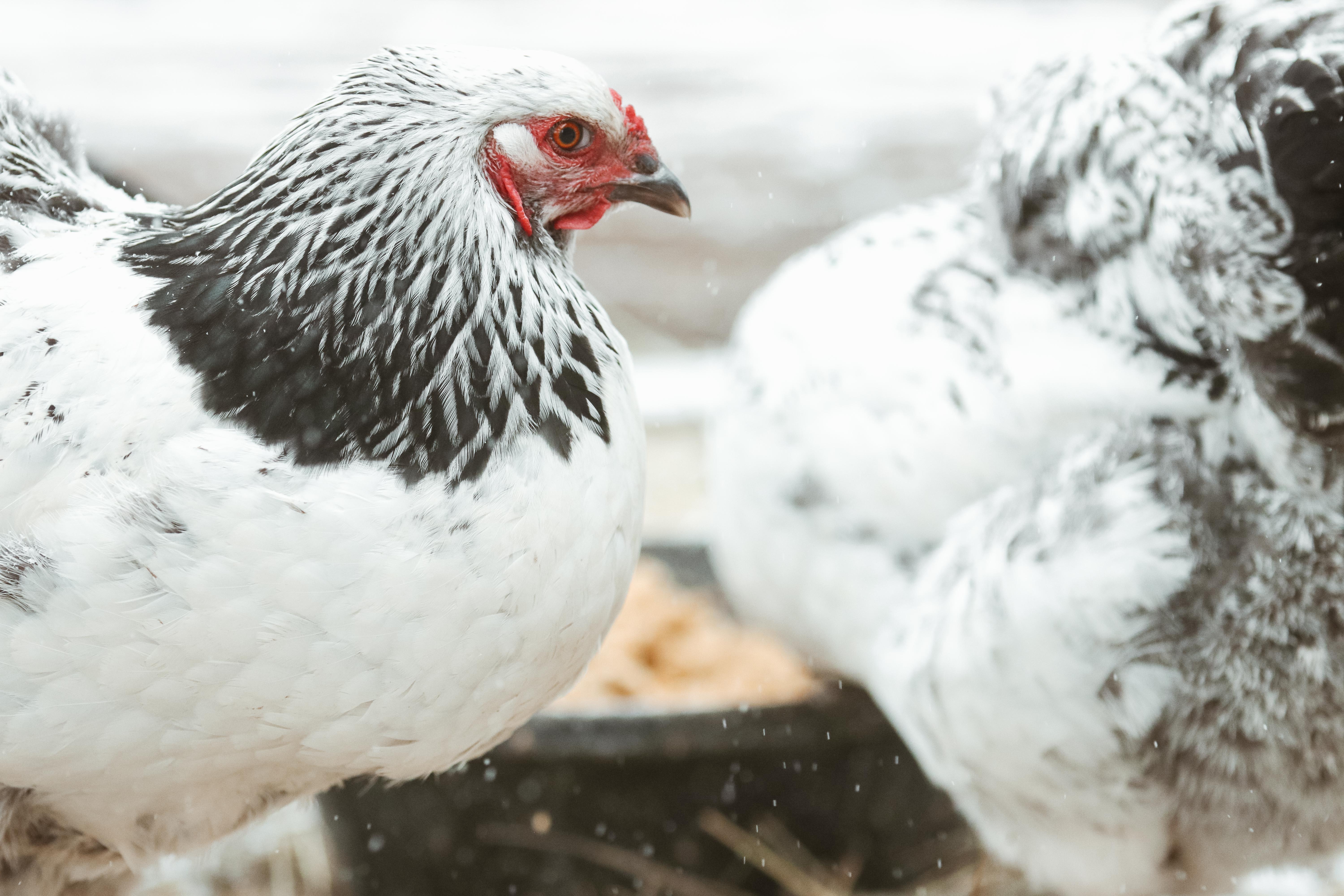
And just like that the snow is back and we’re under an honest-to-goodness winter storm warning. So far we have gotten about 8 inches of snow since midnight last night! It’s hard to gauge with the topography around here, but I’m measuring 8-10 inches in non-drift, level areas. 50-something degrees yesterday and now we’re back to winter.
We brought the calving cows into the corrals yesterday and let the pairs into the timber, preparations we are thankful for now! A little prep goes a long way for a spring storm. After we get the necessary chores and checks done today, we’ll be hunkering down to ride out the storm, so thankful for the moisture and anticipating more next week.
It has been a whirlwind of a March!
Support Song Dog Journal and share to social media!
It starts with the simplest of requests, made as we drink coffee and eat breakfast. “Do you have time to help me vaccinate calves in the hayfield?” Well, of course I do.
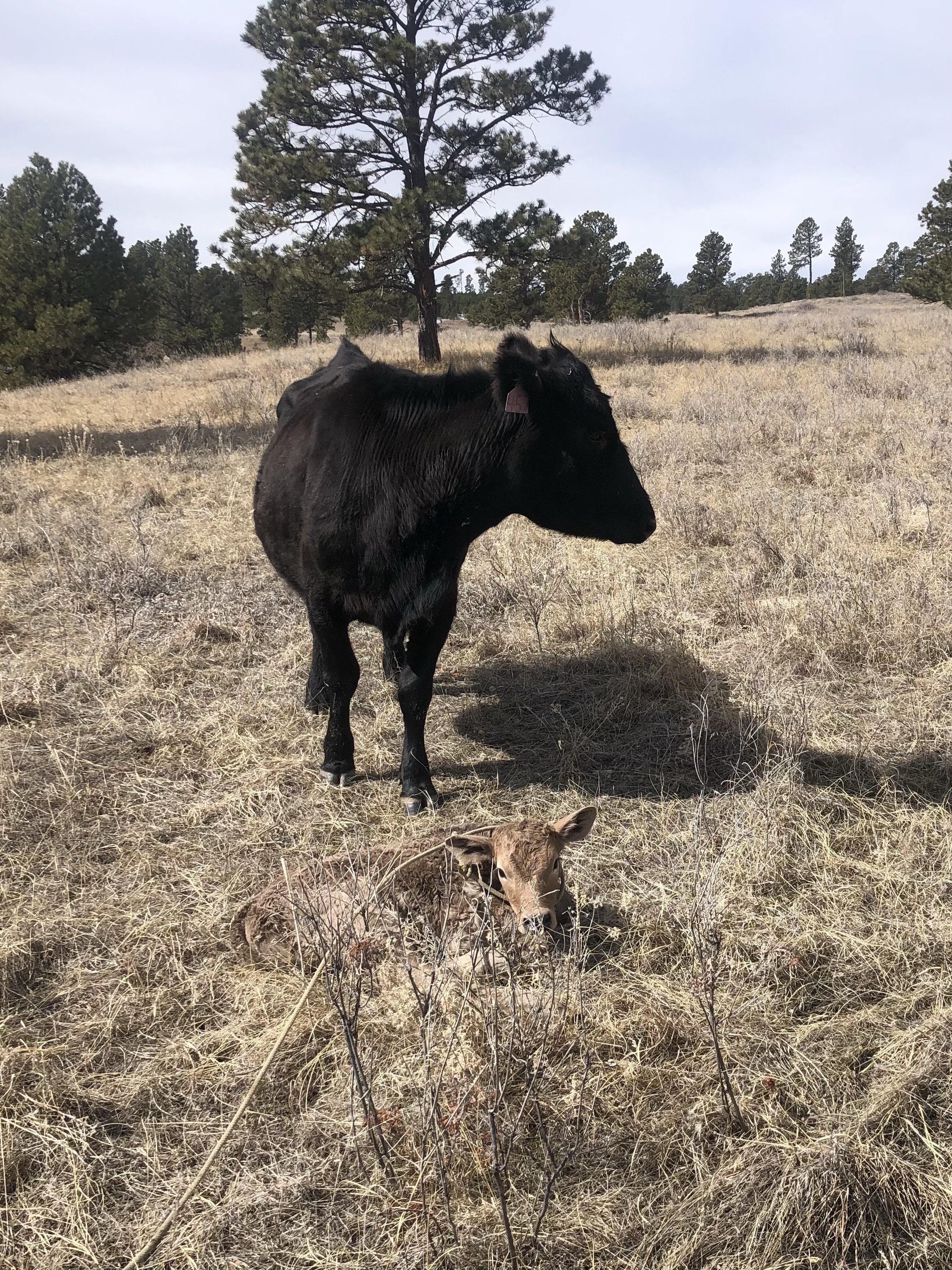
The exercise is simple. Nothing to it, really. We approach the agreeable new mama in a friendly manner and explain our task. We quietly lay the calf on its side and vaccinate it and give it an ear tag while the mother cow patiently chews her cud and looks on pleasantly, thankful that we are so diligent about the health of her calf.
Oh, please.
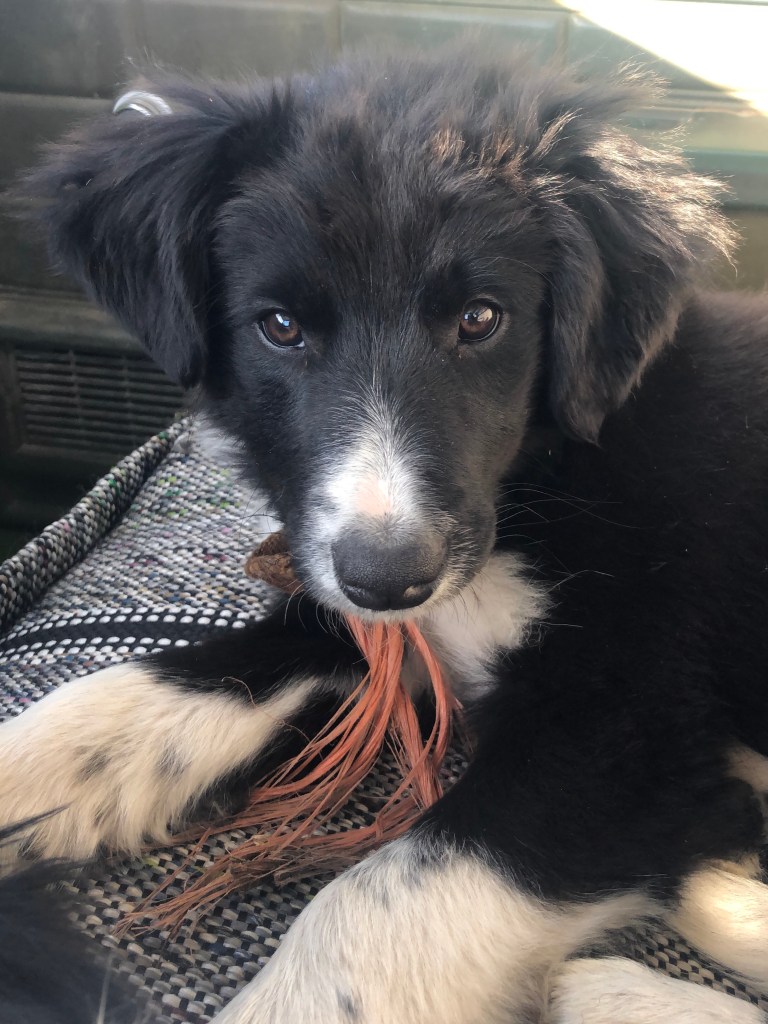
It has to be a comical sight. It’s cold out, so we’re bundled up like Arctic explorers (or at least I am), hardly able to bend over due to the spring load effect. We are armed to the teeth with ear tagger and notcher, vaccine gun holstered in my coat, and a lariat hanging from the left handlebar. Brad is driving standing on the left running board of the ATV, I’m perched precariously on the right side, sharing the back with Pearl and both pups as we whizz and bounce around the frozen hayfield looking for new calves. And then a snow squall blows in from who knows where.
The wind is biting and freezing our faces and hands, as we try to stealthily approach the mama cow without raising suspicion, but those cows know the sound of the ATV and what it means. A cow with a suspicious look might as well be plotting murder. We steal her calf, which promptly starts bawling and screeching, and all the threatening pounds of the annoyed mama comes barreling down on us with her head lowered and snot flying. Geez Louise. Well, at least now we can read her ear tag, and fish the correct tag out of the plastic bag. Gosh, I thought there were only 8 tags in here, not 800. Meanwhile, the dogs go tumbling off the four wheeler to hide, the vaccine gun gets stuck in my coat pocket, while the ear tag won’t go on the tagger because the plastic is stiff with cold and so are my fingers. Brad is hanging on to the roped calf and trying to talk down the mother cow, but his occasional choice words ruin the calming effect, while I’m trying to tell everyone, cow, calf, and pups, that “everything is going to be just fine.” Finally I get the tag on the tagger but the calf screeches again as Brad tags his ear, and mama cow starts bellowing, which scares the calf even more. The calf jumps and prances on the end of the rope and the ear tagger goes flying, and the mama races off ten or so paces, just enough time for Brad to flip the calf on its side and sit on it. I finally get the vaccine gun out of my coat and hand it to Brad as the cow comes barreling back over, raining snot, clumps of dirt and grass flinging up behind her. With a yell, Brad manages to simultaneously vaccinate the calf, release it, and jump behind the four wheeler, with agility that would put the best bull fighter to shame. With a parting snort, the cow gathers up her calf and moves off.
We rescue all our scattered items, load the pups back up from their various hiding places, and go on our merry little way.
Just like that. Nothing to it.
Support Song Dog Journal and share to social media!
It was a good week. We welcomed spring with several mini snowstorms, and little bits of warm and friendly weather, a rollercoaster weather week. Tagged lots of calves, shipped a load of yearlings, baked lots of bread, sold lots of eggs, trained pups, and in general enjoyed a brief slow down before things pick back up. Searched for pasqueflowers, but no luck there yet. I did, however, find a snow-roller on a walk with the dogs.
Life’s a whirlwind. Embrace the whirlwind!
Support Song Dog Journal and share to social media!
“The whole world is a series of miracles, but we’re so used to them we call them ordinary things.”
Hans Christian Andersen
We thank God before meals for the food that He provides…But I doubt that we always feel the full magnitude of what all we are thanking Him for. It isn’t just that He provides. It isn’t just that there is food on the table. It isn’t just the joy of being able to put nourishing, homemade food in front of family or friends, or to gift someone a loaf of bread. When was the last time I thanked God for the sense of taste? Of giving us the capacity to enjoy a meal, not just for the nourishment but for the pleasure of eating it? God didn’t have to create us with a sense of taste, with the ability to actually find wholesome pleasure in a meal, to be able to enjoy delicious food. But He did. He could have made the satisfaction of our basic needs boring and uninteresting, but He didn’t.
So I’m thankful for the ordinary joy of ordinary food, for the pleasure of a good meal, and for a God who is glorified when we enjoy what He created for our enjoyment!
Support Song Dog Journal and share to social media!
Over the past several years, I have grown to enjoy home fermentation projects, from yogurt to sourdough, and of course kombucha. Kombucha is one of those weird, hippie-esque beverages originating in Asia somewhere a few thousand years ago that gets really, really mixed reviews. It is pretty simple, honestly, just a fermented sweet tea with or without the addition of fruit or fruit juice. It is touted for many health benefits, boasting healthy probiotics similar to yogurt or other naturally fermented foods and beverages. Good kombucha is pleasantly effervescent and has an appeal reminiscent of wine, if it is a lighter kombucha, or even beer, if it is a stouter one. As a product of fermentation, there is alcohol in it, but very little. I specify “good kombucha,” because some of what you can purchase at stores has strange things added to it or has fermented too long and has turned vinegary, both of which can affect how palatable it might be.
I am far from being an expert on making kombucha. If you want expert advice, I suggest any number of books that exist on the subject, or websites or Facebook groups dedicated to “home brewing.” I have a very simple recipe that a friend gave my sister several years ago, and I’ve just tweaked it here and there to suit my preferences. All I’m sharing is a recipe and method that I have found to work reliably.
To make your own kombucha, you need the following:
A half gallon jar
A scoby (what? See below)
2 cups of mature kombucha
4 cups of brewed green tea (with 1/2 cup sugar dissolved)
First fermentation:
Brew tea, either green or black or a combination, though my preference is green tea – I like to do 4 green tea bags in 4 cups of hot water, add the 1/2 cup sugar while it is hot, and let it cool before removing the tea bags. This will take a few hours, so plan accordingly.
Place your scoby and the 2 cups of mature kombucha in your brewing jar, and gently pour the cooled sweet tea in with the scoby. The scoby may or may not float, which doesn’t matter. It will form a new layer on the top of the tea, regardless. Cover the jar with a coffee filter (or square of muslin or paper towel), secure with a rubber band, and place in a warmish location. And wait.
Depending on how warm your house is, your kombucha might brew as quickly as 1 week, or might take closer to two. If you’re doing this in the summer and your house is very warm, it might be done even quicker than a week! Taste it after five days or a week and see how the flavor is. If it is lightly carbonated and not too sweet, then proceed to the second fermentation (described below). If it is pretty flat and very sweet, let it sit another few days. Err on the side of checking too soon, since once it has gone to vinegar it isn’t very salvageable, except to save 2 cups back for a new batch.
Second fermentation:
If you like the taste of the kombucha after the first fermentation, you sure don’t need to proceed to a second! If you want a fizzier tea, proceed with the second fermentation.
Leaving 2 cups of kombucha and the scoby in the jar (to be used as the starter for a new batch just like above), pour off everything else into a smaller Mason jar or a bottle with a swing-top, such as these by the brand Otis. Add a half a cup or so of fruit juice (I use homemade cranberry juice), close the lid, and let it sit for two days or so. This is called the second fermentation. The remaining sugar or any added sugar from juice or fruit added at this phase feeds the scoby and the fermentation continues, but with the sealed lid, the carbon dioxide formed during fermentation is contained resulting in natural carbonation. This part of the process is probably the least predictable and takes some trial and error, and honestly I rarely get the perfect second fermentation. Too long of a first fermentation and not enough sugar remaining (and not enough added for the second ferment) and there isn’t enough sugar to get the carbonation. The temperature in your house will affect this as well, with how quickly the fermentations take place. If you get a good first fermentation, though, the kombucha is still delicious.
After a few days, taste the bottled kombucha and see if it is to your liking! If it is, congratulations! Keep in the fridge to prevent it over-fermenting and getting vinegary. It will continue to ferment a little in the fridge.
If it isn’t quite to your liking, seal it up for another few days, or even add a little more fruit juice for some sugar. Depending on how good the lids are on the jars or bottles you’re using, you might want to crack the lid after a couple of days to prevent the pressure from building with the carbonation and exploding the jar. I have heard reports of this happening, though I haven’t had it happen to me…yet. Some people put their bottles in cardboard boxes, or you could also wrap the bottles if you’re concerned about them exploding.
A couple of notes:
What in the world is a scoby? Actually, “scoby” should be spelled “SCOBY,” since it is an acronym for Symbiotic Colony of Bacteria and Yeast. Basically, it is a bacteria and yeast mushroom that grows on the top of the brewing kombucha, and is what metabolizes the sugar to produce the fermentation that makes kombucha so nutritious and delicious. It is also called “the mother.” With each successive fermentation, the scoby will add a new layer on the top and eventually you’ll be able to separate or divide the layers into separate “mothers.” People who have been brewing kombucha forever often keep scobies in “scoby hotels,” for future use. This is the easiest way to obtain a scoby, from a person with extra to share – just be sure to get 2 cups of mature kombucha from them as well. There are places online where you can purchase scobies, or you can make your own, which I will explain in a future article. Scobies are perfectly safe to handle, with a weird rubbery texture, just handle them with good hand hygiene since they are a colony of bacteria and we want to keep the scoby clean of bad bacteria.
Black or green tea: Generally kombucha recipes call for black tea. I prefer green. Most store-bought kombucha is a mix of the two. Take your pick! I think the green has a lighter, more delicate taste.
The amount and kind of sugar: My original recipe called for 1 cup of sugar to 4 cups of tea. After trial and error, I found that less sugar produced a better kombucha and I’ve settled on 1/2 cup of sugar. I tried 1/3 of a cup, but the kombucha wasn’t as fizzy. I have heard of people using other kinds of sugar, even coconut sugar, but I just use plain white sugar. I found coconut sugar to have a weird aftertaste.
Juice or fruit: As I stated in the recipe, I use homemade cranberry juice for the second ferment. There is no added sugar in this juice, which I like, especially since I actually want the kombucha to be low in sugar at the end of the process. You can use any juice, though, and if your first fermentation is giving you a low-sweetness tea, maybe you’d want to use juice with more sugar, to give a little punch to the second fermentation. You can also add pieces of fruit during this phase.
Bottles or jars: For the second fermentation, you can use anything that can seal. Just make sure you use a quality bottle that can hold up to the possibility of a lot of pressure building up. The Otis brand swing-top bottles get great reviews on Amazon for kombucha brewing and are what I’m just starting to use. Swing top lids are nice just because you can always unseal them, even if the pressure builds up, unlike with Mason jar lids where the lid can become difficult to get off. There are plastic lids with rubber seals that are made specifically for fermentation.
So there you have it! Again, this isn’t my expert recipe. This is my simple recipe that I use for kombucha that I thoroughly enjoy drinking! Maybe you will, too! Happy brewing!
Support Song Dog Journal and share to social media!
“The whole world is a series of miracles, but we’re so used to them we call them ordinary things.”
Hans Christian Andersen
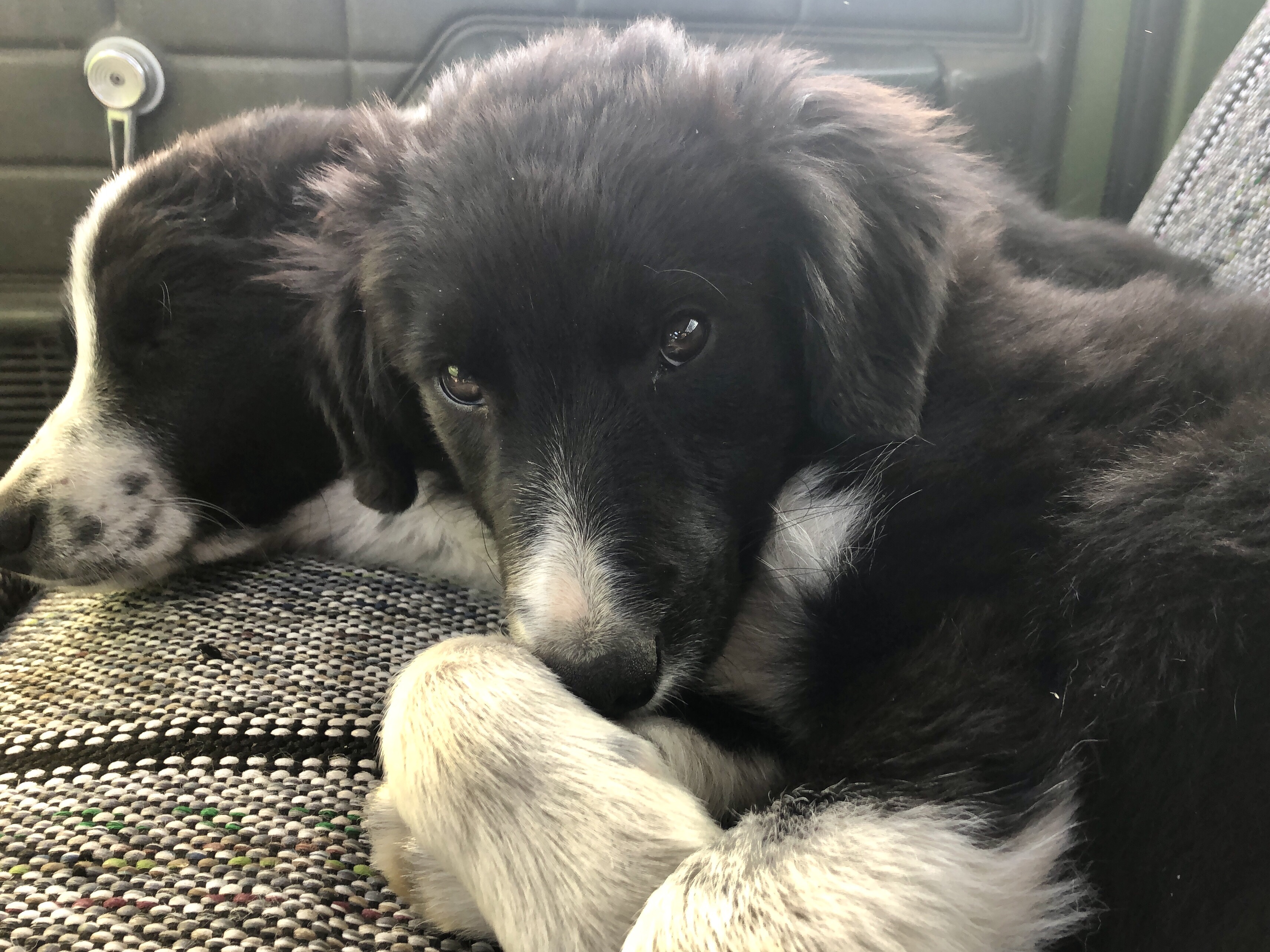
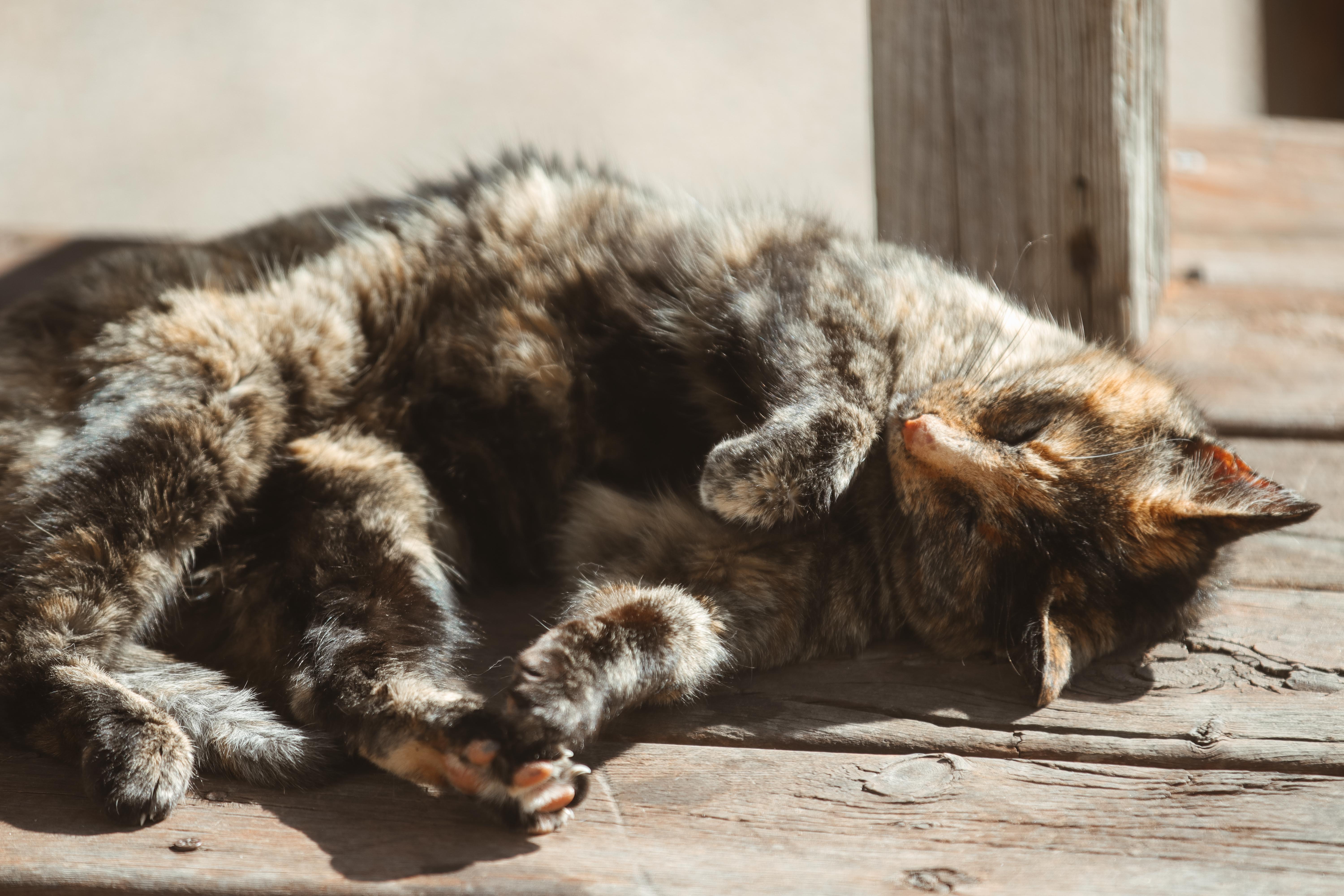
Romans 1:20 talks about how God’s divine attributes are clearly perceived in His creation design. If you want to see miracles, just look at the beauty of this earth! Creation just sings that there is a God who created all that we see and loves what He created! Few things convince me of this more than the joy God’s furred and feathered creatures bring to His humans, the deep love that can be shared between a human and an animal and yes, I believe it is reciprocal. I think animals have way more to their minds than we give them credit for, much more capacity for emotion and connection. It goes beyond instinct. And I believe that this intellect and intuition is something that brings glory to the Creator! God didn’t need to create any of what He created, and He sure didn’t need to create a human-animal connection that is so joy-giving. Yet what He created He looked at and “saw that it was good.” Isn’t it amazing that He did what He did? That He has created a world that can bring so much joy and goodness and pleasure? Because He didn’t need to.
The delight and peace I feel with my animals is one of those ordinary joys that really is anything but ordinary.
Support Song Dog Journal and share to social media!












 Song Dog Journal