Room for Peace

Originally printed in the Nov/Dec issue of Down Country Roads Magazine

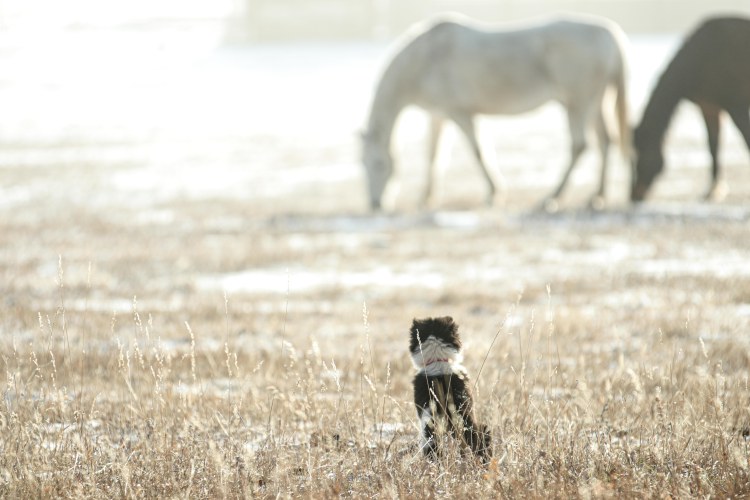
The coffee percolator perks to life in the sleeping house. A little ribbon of red streaks the eastern horizon, and a handful of scattered stars gleam coldly in the pale, colorless sky, above the leafless trees. There are gentle sounds of waking, throughout the house and from the yard. A horse whinnying as the geldings come in for their breakfast. The first call from the roosters down in the chickencoop. Distant yipping from a pack of coyotes, and sleepy howls from the black-and-whites, not quite ready to get up.

Fingers wrap tight around steaming cups of coffee while the waking sun, reluctant to rise, comes to grip with the morning at hand. We sip a little slower, savoring the slowness. And in that lingering a little longer over the ritual of coffee, waiting for first light and the day to begin, there is peace. Quiet. Tranquility. Watching as the sky gradually brightens and lightens and the day begins.

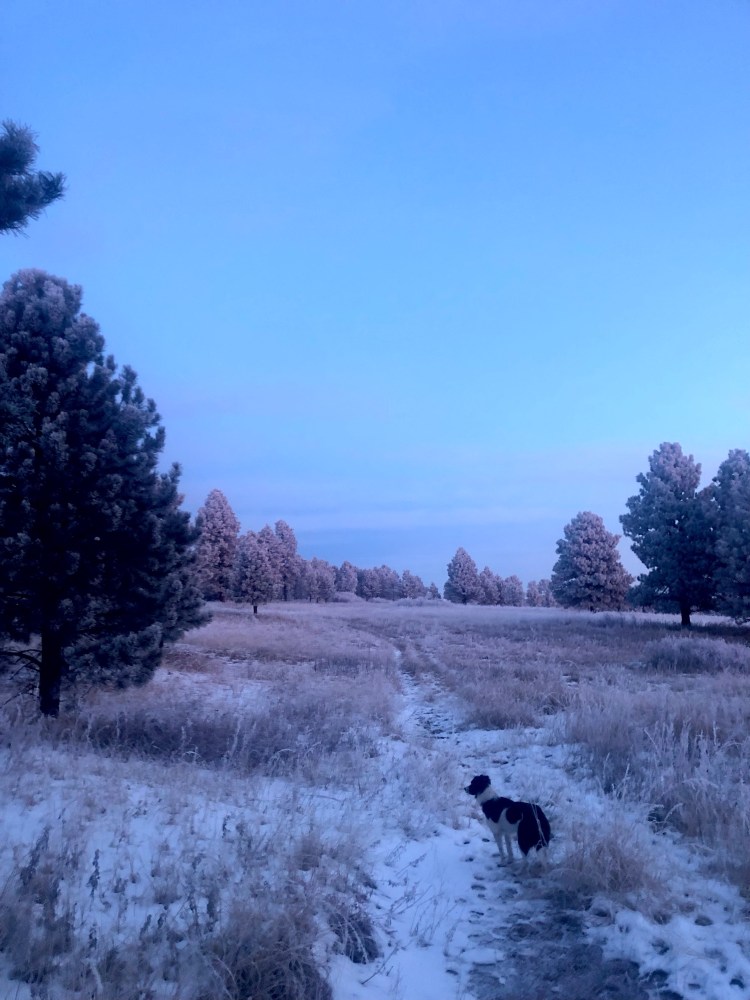
In those first frosty mornings of the early winter when every breath is a cloud of white, in those last showers of golden-brown leaves, late to fall and carpeting underfoot, in the first skim of ice on the watertanks, or the first snow, there is peace, a hush and a feeling of reverence and bursting joy, as those first warming rays of daylight stream across the silvered or snowed-over landscape. Winter is on its way. Winter is here.

With the happy chaos of autumn behind us, with the fall calf crop weaned and sold, with heavy cows out to pasture and the garden put to bed, there settles in another sort of peace, and I guard it jealously. It is the peace of belonging, of nostalgic remembrances, of the past colliding with the present. A different kind of peace. I guard it, in customs my husband and I have built, for the two of us and our growing family, in the simple Thanksgiving gatherings and the quiet search for the perfect Christmas tree, in the songs and carols, the Advent observances, and the handful of choice festivities that punctuate this season with rejoicing. I guard it, in the traditions passed down generation to generation, in the worn recipe cards and the tastes and smells of the season. We turn for sweet refuge to the familiar, cherishing the dear faces gathered close around the feast-day tables, family and friends dear as family, hearing the beloved voices mingle together in their tale-telling and laughter. There is peace. Sweet peace.

The setting sun, earlier and swifter, sinks below the ridge behind our house, sinking into the pines as the sky above flames red, lighting for one intense and rosy moment the Badlands and Sheep Mountain Table miles and miles away to the east. The settling chill, first harbinger of true winter, bites a little. The shorter days and the crisper evenings chase us inside sooner, and we flee to the warmth and golden light, to the peace of comfort, a hot meal, and love of family, and the pastimes that sweeten the long winter evenings. And as the day draws to a close, in peace we lay our heads down. 

A midnight wakeup and a gaze at the winter sky fills the mind with wonder – Crisp and cold, the inky sky above dazzles with a million stars, brighter than they ever are in the spring and summer, when the slightest haze dulls their brilliance. They are reflected back in glittering frost. What splendor, and only for those awake when everyone else is asleep. And in that awestruck gaze, there is room for peace, the peace of beholding brilliance and knowing to Whom the wonder is due, and from Whom the peace comes.

And in the hush of midnight, or the wee hours of snowy morning, there is the peace of safety and security, in the slow breathing of spouse nearby, the sleepy whimper of a dog dreaming a good dream, and soft infant sounds of needs met and sleep embraced.

In that hush, there is room for peace.

That Time of Year

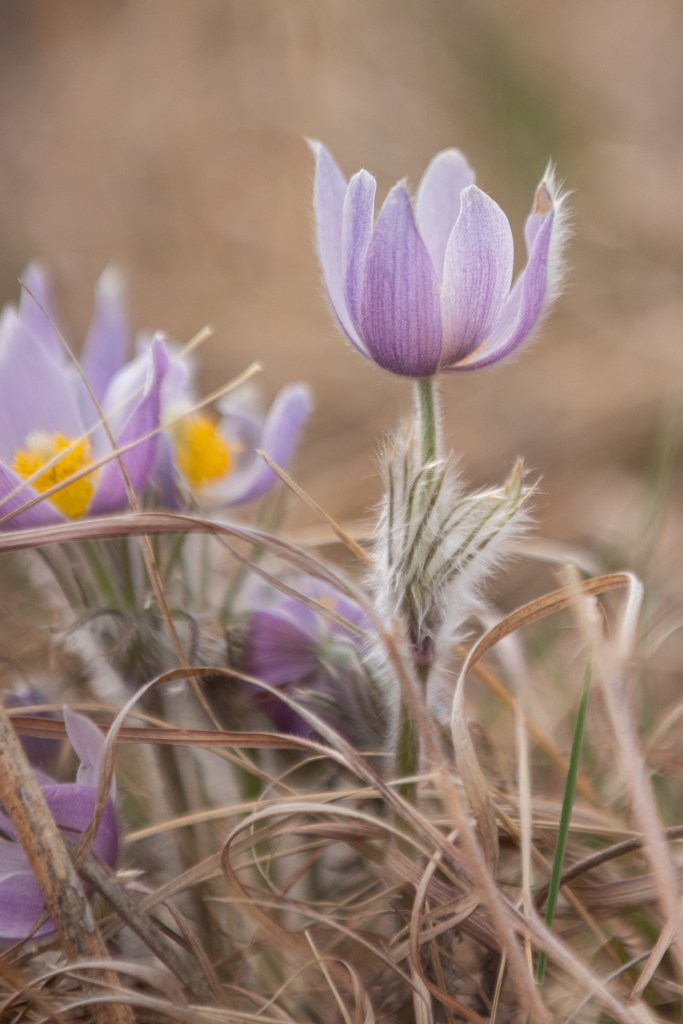
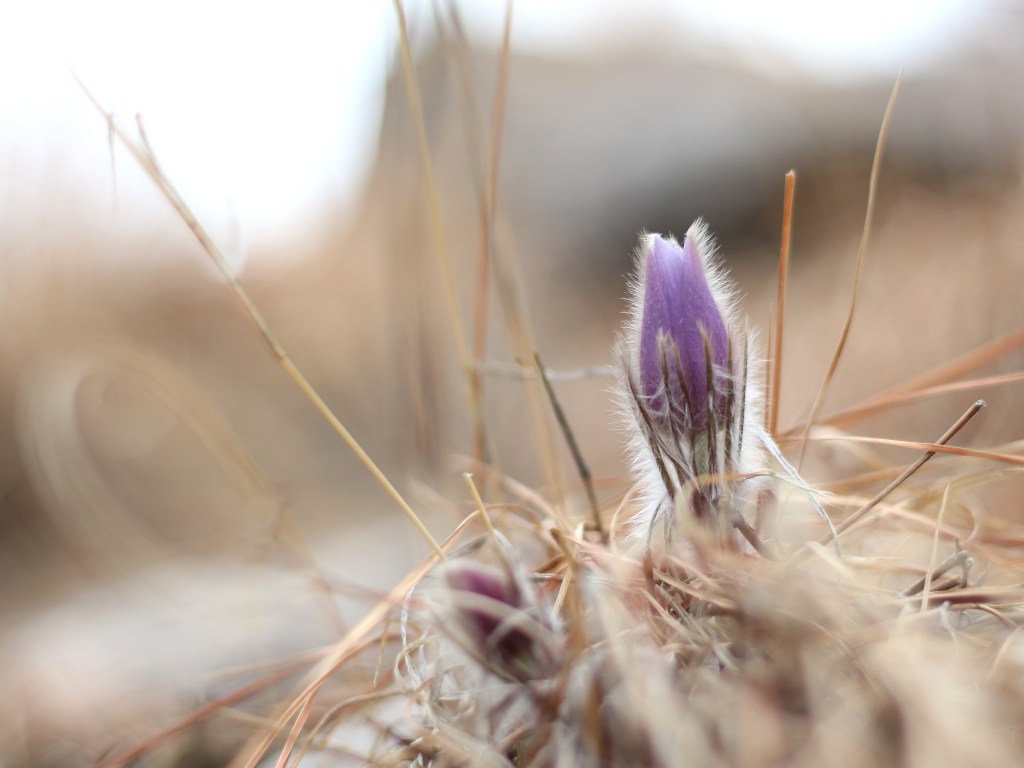
Once again, these early spring months fly by too fast for me to keep up! How is it already almost May? The sandhill cranes are already done migrating north, and the meadowlarks are home for the summer. Bluebirds are plentiful, another sure sign of spring. Finally the pasques are popping up on Potato Butte, the best place on the ranch to find them, and after getting frostbitten multiple times, they are finally gracing the greening slopes in the Calving Pasture. My perennials are coming up vigorously, in spite of multiple freezes and frosts, and I saw the first few asparagus spears yesterday!

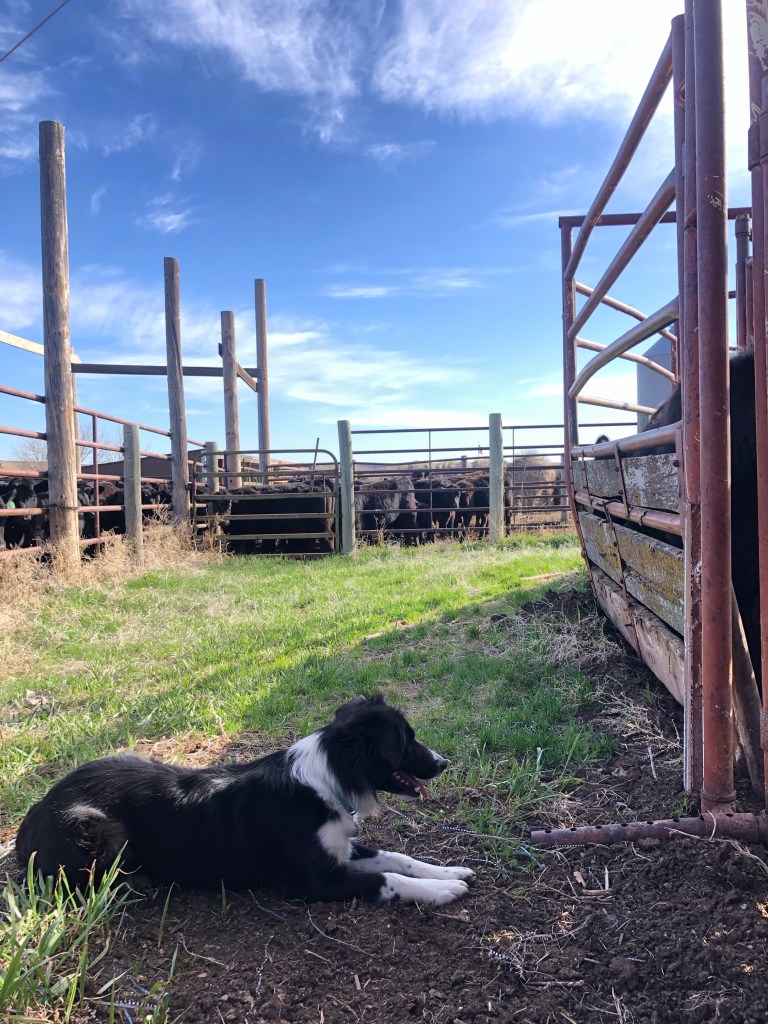
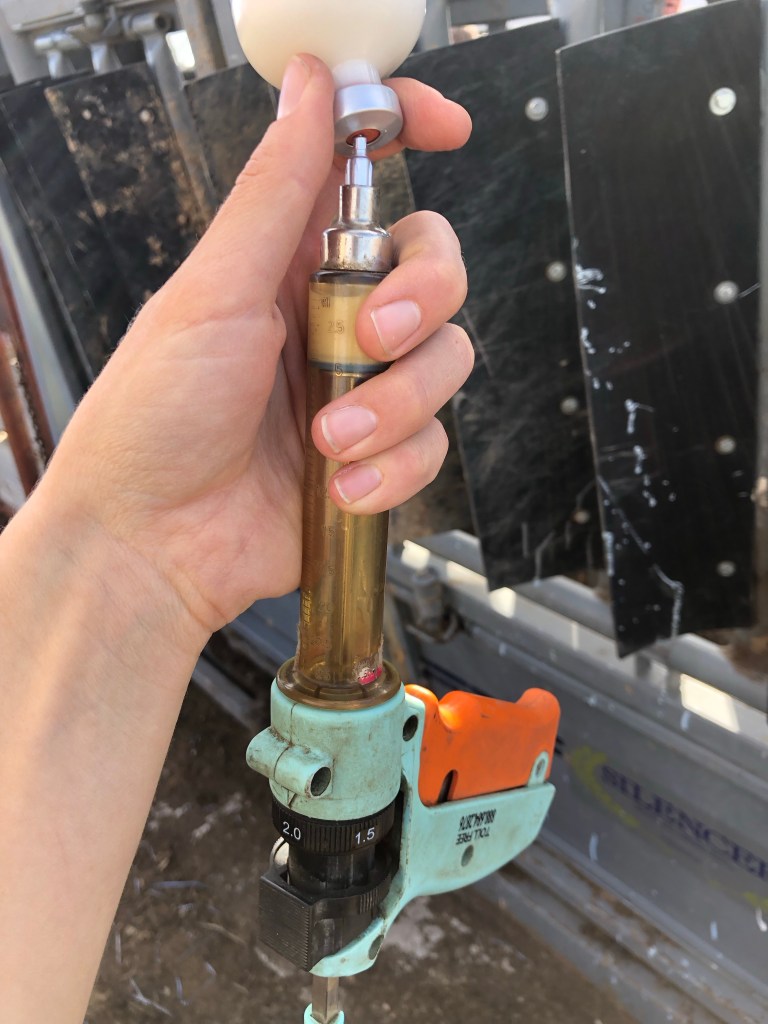
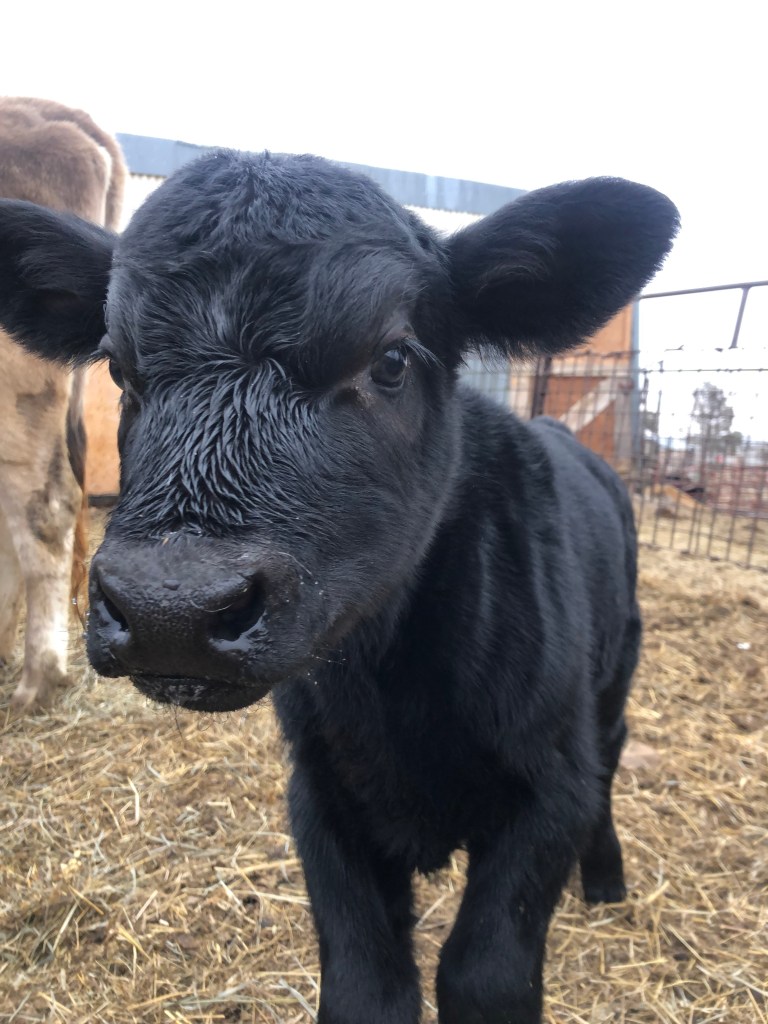
We have already done the first bit of our cow work for the year, vaccinating our replacement heifers, calving is wrapping up, and branding is just around the corner. The chicks from the beginning of March just got moved into their kindergarten coop today, adjacent to the big girls’ coop, and Posey had her calf last week. We have been shuffling cows around today, so we’ll be ready to work them through tomorrow and get everything vaccinated.

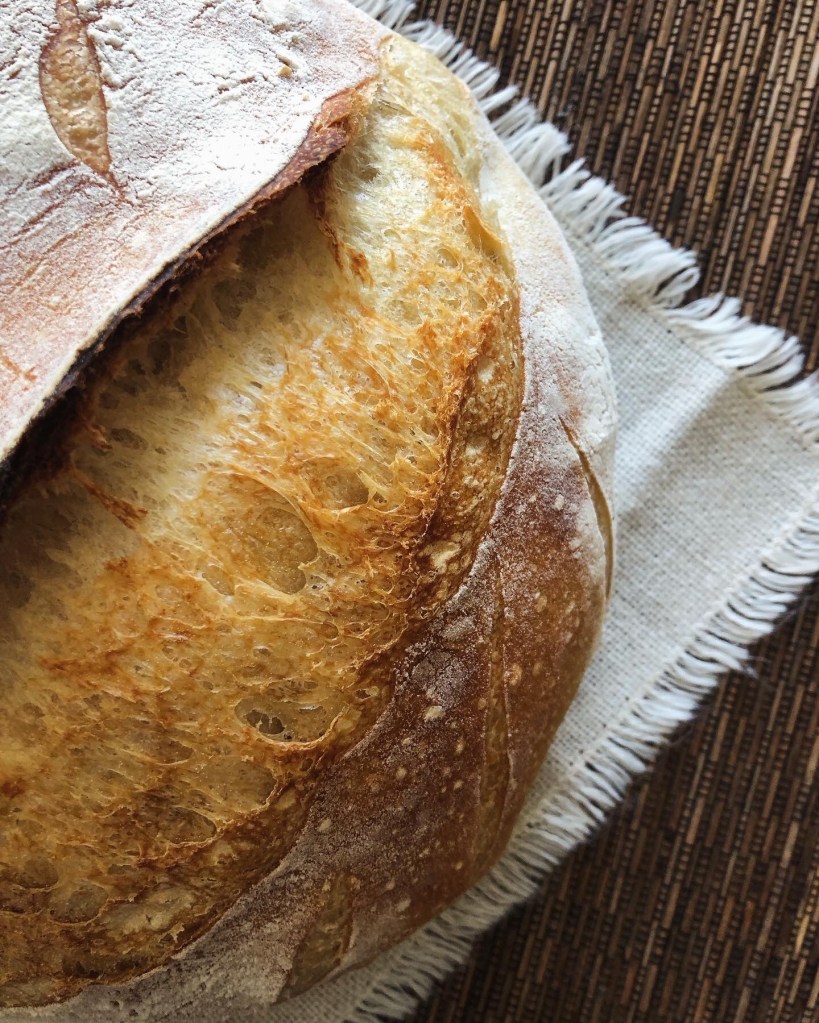
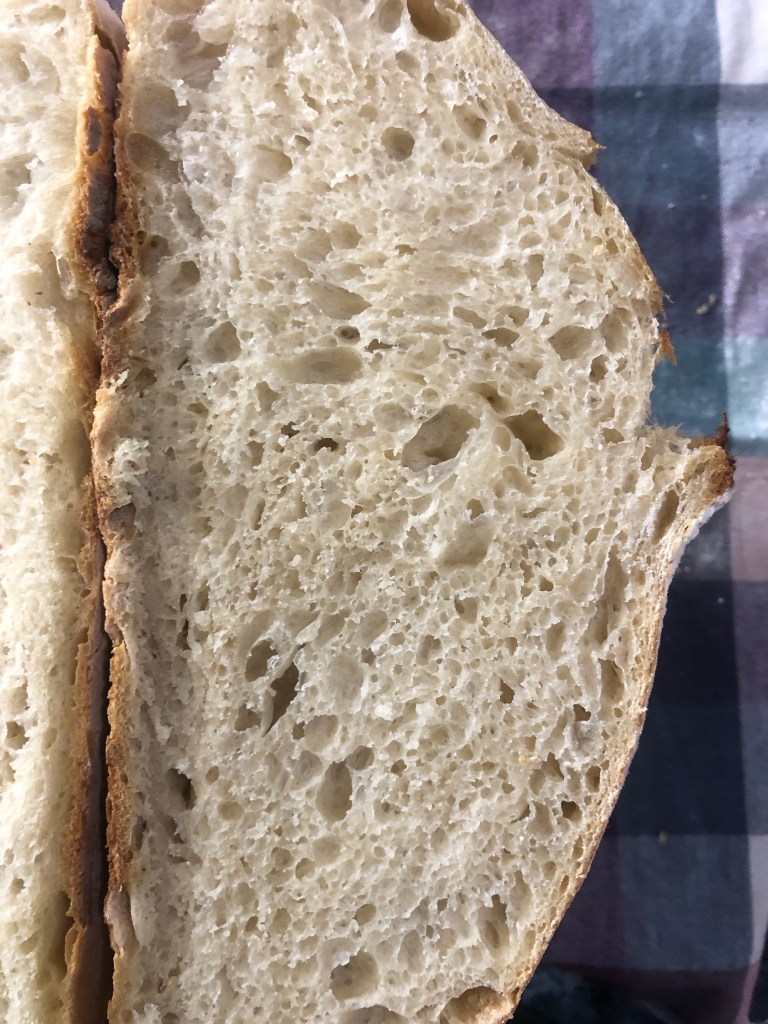
Between Posey being back in milk, the chickens picking up their egg-laying, and my new found love of baking bread, the kitchen is a busy place, and the simplest and best of things are plentiful.

Winter gets long. It just does. Spring can be slow to start, and calving season can either be an exciting and enjoyable time, or a heartbreaking time. This is one of those great years. And a great time of year.

Ranch Wife Musings | March Madness

So I really don’t know what March Madness is, other than it has something to do with sports, I think. But March is a crazy month. The winter sleepiness is shaken off and everything wakes up. All at the same time. The garden, the cows, the weather, the schedule, the chickens, everything.

There are babies everywhere, and I mean everywhere.

A little cold snap over this last weekend accentuated that, with little baby calves and their irritable mamas stuffed in every corner of the yard, with all available indoor space occupied by doubles and triples, and cows with slightly older calves getting shuffled into sheltered corners of the yard to keep them out of the wind and driving snow.

So far there have been two sets of twins, and both extra babies were shuffled successfully onto two cows who had lost calves–Good saves, on both counts, and the two lost calves were just part of the percentage of unavoidable losses, rather than the rather staggering losses of last spring, due to a collision of weather and luck of the draw. Posey got to try being a nurse cow for a week with one of the extra twins, until a mother needing a calf turned up. Posey was not impressed. Some nurse cow. We’ll see how she does when she calves, I guess.

Seedlings are going nuts in the brightest window in the house, around 120 tomato seedlings, some herbs and greens, and of course my elderberry cuttings. Bread baking and some jelly making and some sewing projects and some continuing ed for my paramedic license and a dive into spring cleaning have kept the days full. They seem to end as quickly as they start. And yes, that is a seed starting mat under that bowl of dough! Another use for those handy things, especially when you keep the temps low in the house!

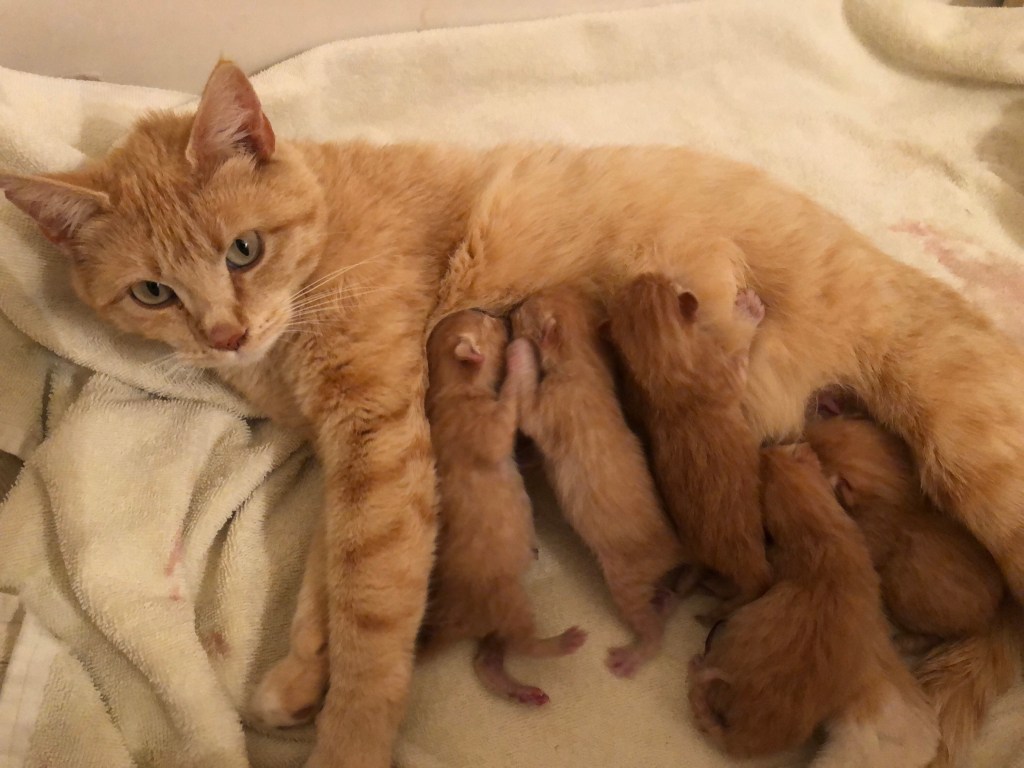
And then yesterday happened. Or rather, Yellow Cat happened yesterday. We knew she was ready to have kittens at any time, and I complacently assumed, this being her second litter, that she would be competent. Boy, was I wrong. I went down to do chores yesterday morning and found a pile of three kittens that appeared dead, in just about the worst place Yellow Cat could have had them. She was unconcerned. I honestly thought they were dead and rigored, and when I picked up the two that looked the most dead, they were unresponsive and stiff and cold to the touch. She didn’t appear to have really cleaned them, their fur was matted down, and I really mean it when I say they appeared dead, and I have seen plenty of dead animals to know what I’m talking about. This isn’t an “I’ve never had chicks before and one is stretched out luxuriously under the heat lamp and I think it is dead” situation. They looked dead. Very dead. One of the kittens, though, moved a little and made the tiniest sound. It looked pretty hopeless, but I can’t stand to walk away from something like that. I almost left the two most dead looking, but gathered all three up, stuffed them inside my vest and ran up to the house with them. In the back of my mind was the paramedic mantra, “They aren’t dead until they are warm and dead,” and after a mere few minutes under a heat lamp and on top of a (you guessed it) seed starting mat, they came alive.

Baby animals are incredibly resilient but also incredibly fragile, a strange dichotomy, and even as they warmed up I felt that it was probably futile, but I gave them a little milk replacer laced with corn syrup, enough to wet their dried mouths, and two of them did try sucking it off the cloth I was using. I finally rounded up Yellow Cat from down by the barn, who was sauntering around like she hadn’t a care in the world, and locked her up with them. Long story short, the three kittens all nursed, she had two more, and all five survived the night with their mother in the bathtub and are doing just fine. I am still pretty mad at that cat, though.

It is hard to believe that April is just around the corner. April, the first month of long days in the saddle pairing out the calving pasture, the first real month of springtime although snow is always a possibility. There is always something going on!

The Stirring

Originally printed in the March/April 2024 issue of Down Country Roads Magazine

Something new is stirring. It is the in-between, that elusive time when seasons collide and blend and bend and break. Not yet spring, but no longer truly winter. A few more storms may be all it takes for winter to wear herself out and peacefully subside, a few more days and nights of wild wind and heavy snow, waking to a transformed landscape.

We aren’t yet done with frosty mornings that nip the nose and fingers and rosy up the cheeks. We aren’t yet done with heavy coats and encumbered action. We haven’t seen the last of the delicate flowers that frost the windowpanes. We haven’t seen the last of the iced-over backs of the heavy cows, or broken the last ice on the dams. There may yet be a little more of that.

But we have tasted the springtime in the warming air; we have heard the sound of water running from rooftops, and have smelled the earthy perfume of a thaw. We have sunk into the softening earth, and felt it yield to our footsteps. We have felt those telltale warm breezes, and seen the first of the springlike clouds, even ones dropping hopeful rain, virga, somewhere higher than the earth. We have felt the sunlight later, and seen the sunrise earlier, and we know—we know—that springtime will come. Winter is long in the Hills. But she never lasts forever.

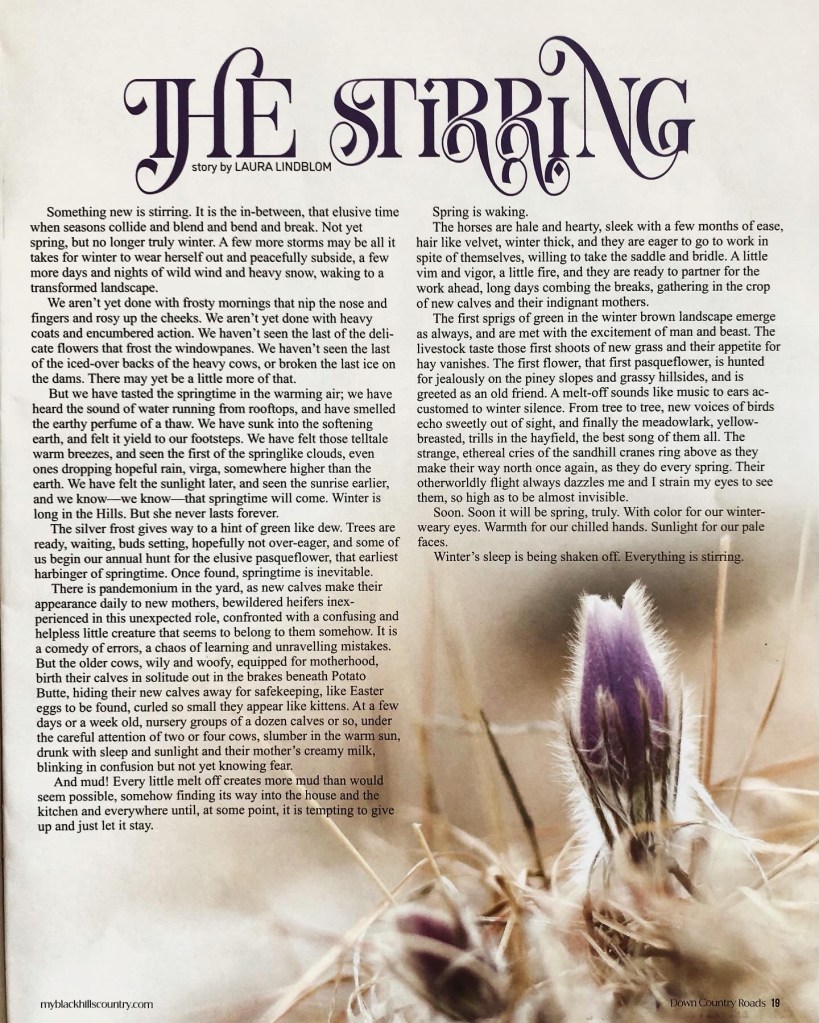
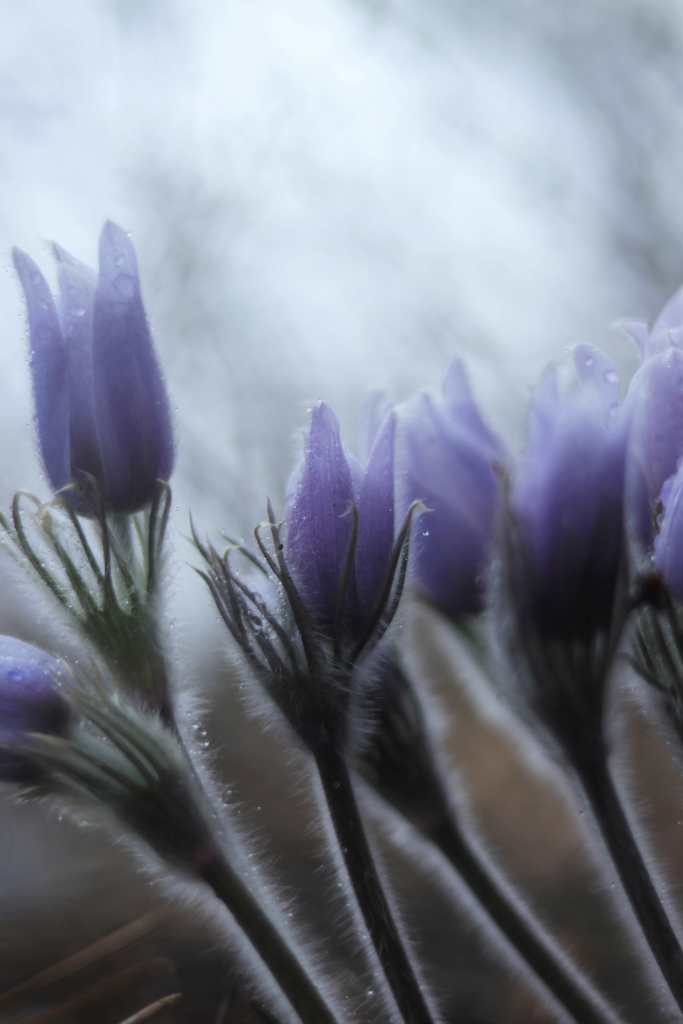
The silver frost gives way to a hint of green like dew. Trees are ready, waiting, buds setting, hopefully not over-eager, and some of us begin our annual hunt for the elusive pasqueflower, that earliest harbinger of springtime. Once found, springtime is inevitable.

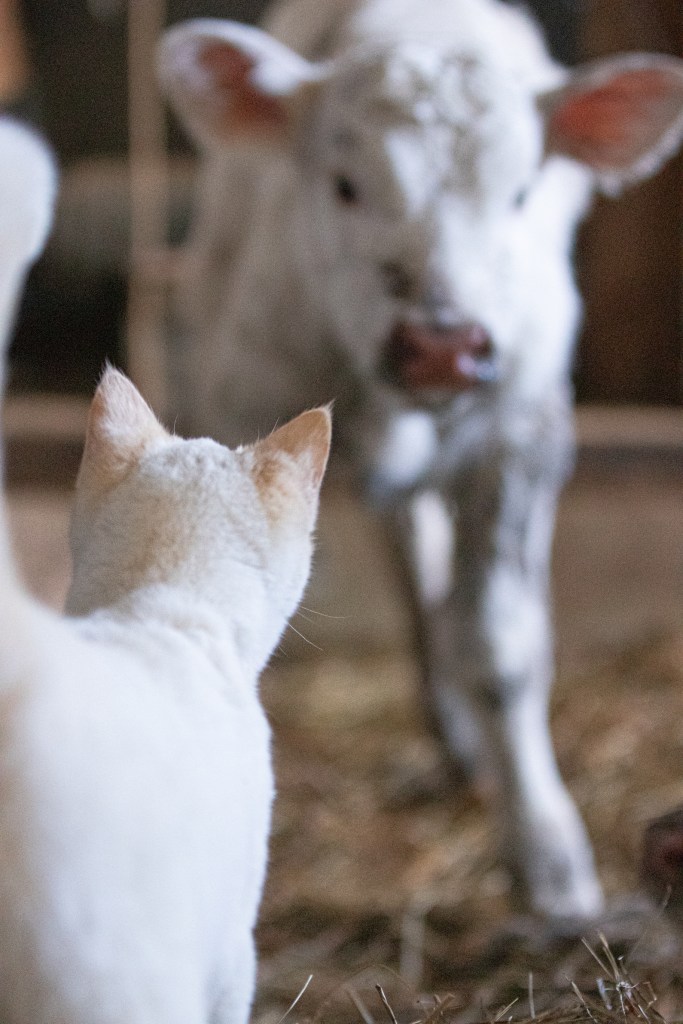
There is pandemonium in the yard, as new calves make their appearance daily to new mothers, bewildered heifers inexperienced in this unexpected role, confronted with a confusing and helpless little creature that seems to belong to them somehow. It is a comedy of errors, a chaos of learning and unravelling mistakes. But the older cows, wily and woofy, equipped for motherhood, birth their calves in solitude out in the brakes beneath Potato Butte, hiding their new calves away for safekeeping, like Easter eggs to be found, curled so small they appear like kittens. At a few days or a week old, nursery groups of a dozen calves or so, under the careful attention of two or four cows, slumber in the warm sun, drunk with sleep and sunlight and their mother’s creamy milk, blinking in confusion but not yet knowing fear.

And mud! Every little melt off creates more mud than would seem possible, somehow finding its way into the house and the kitchen and everywhere until, at some point, it is tempting to give up and just let it stay.

Spring is waking.

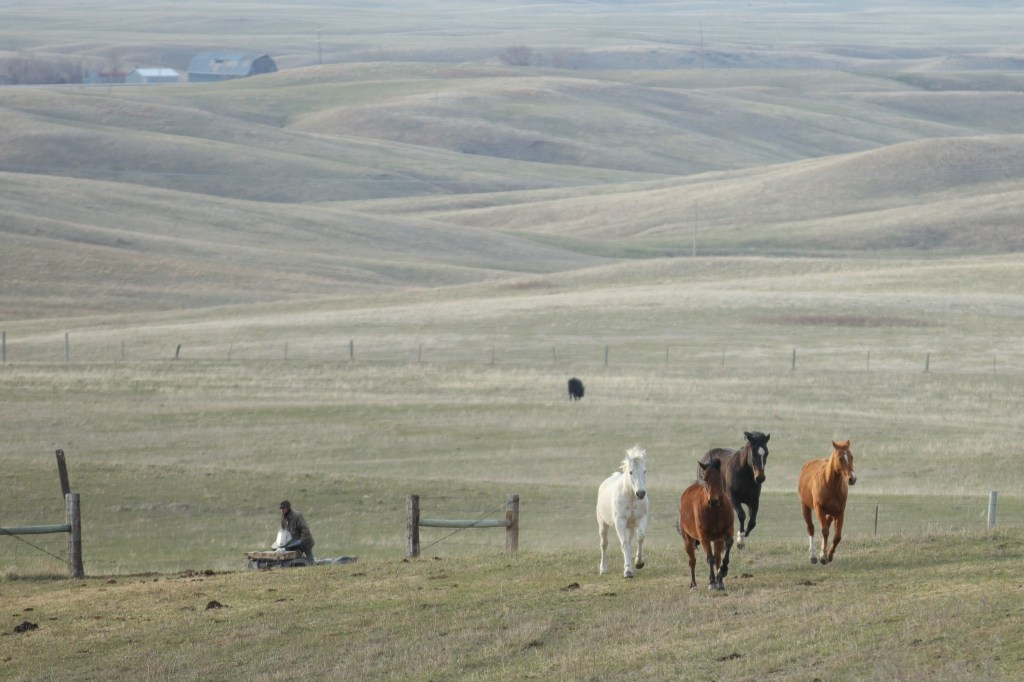
The horses are hale and hearty, sleek with a few months of ease, hair like velvet, winter thick, and they are eager to go to work in spite of themselves, willing to take the saddle and bridle. A little vim and vigor, a little fire, and they are ready to partner for the work ahead, long days combing the breaks, gathering in the crop of new calves and their indignant mothers.

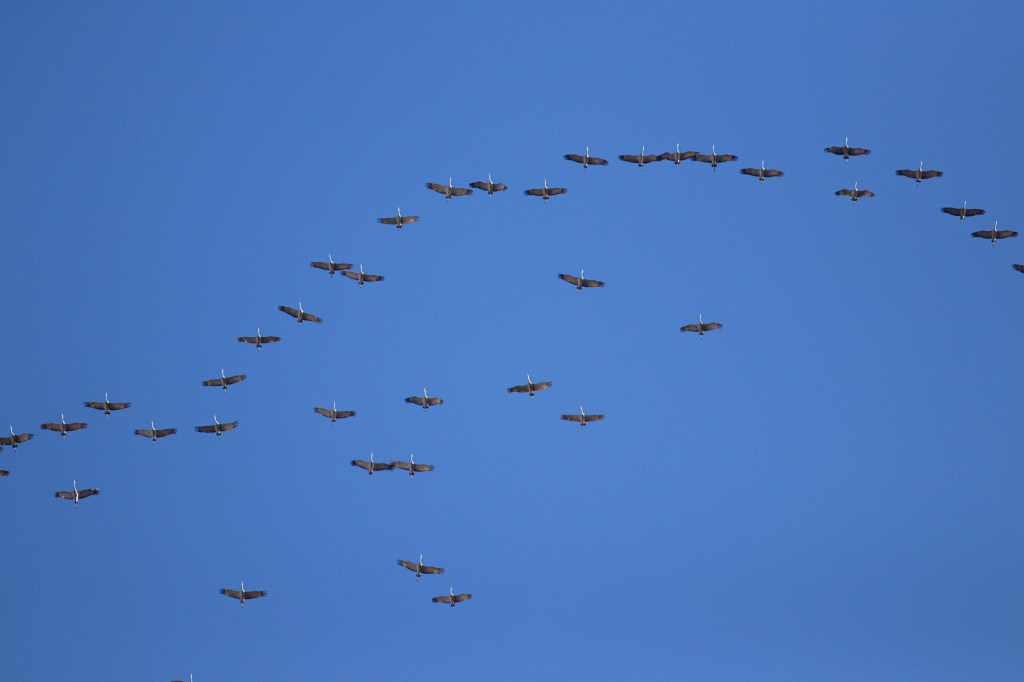
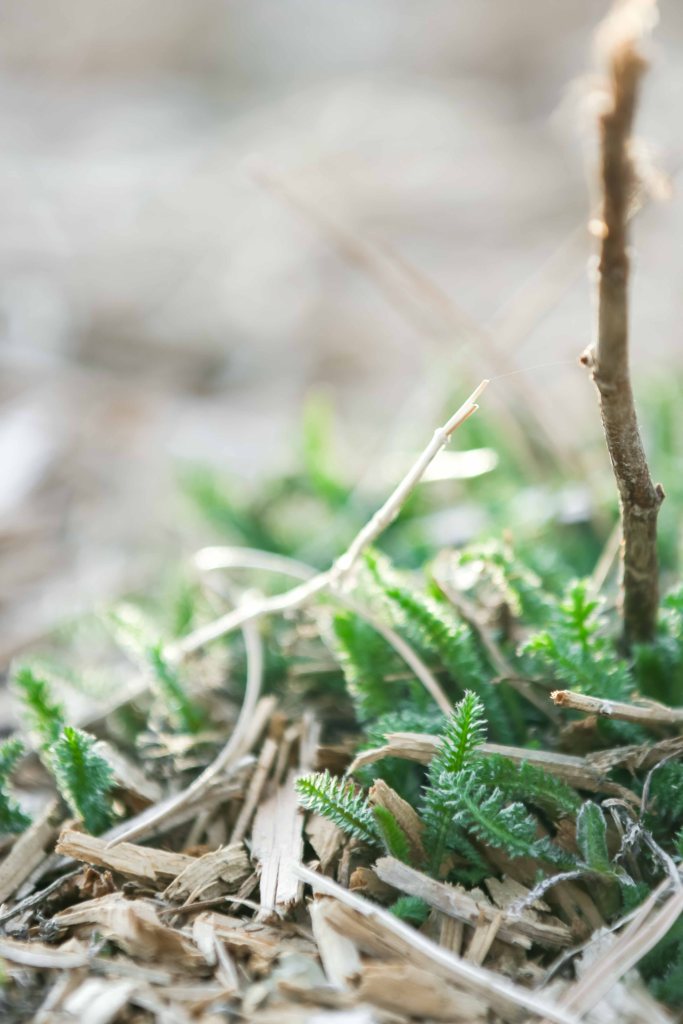
The first sprigs of green in the winter brown landscape emerge as always, and are met with the excitement of man and beast. The livestock taste those first shoots of new grass and their appetite for hay vanishes. The first flower, that first pasqueflower, is hunted for jealously on the piney slopes and grassy hillsides, and is greeted as an old friend. A melt-off sounds like music to ears accustomed to winter silence. From tree to tree, new voices of birds echo sweetly out of sight, and finally the meadowlark, yellow-breasted, trills in the hayfield, the best song of them all. The strange, ethereal cries of the sandhill cranes ring above as they make their way north once again, as they do every spring. Their otherworldly flight always dazzles me and I strain my eyes to see them, so high as to be almost invisible.

Soon. Soon it will be spring, truly. With color for our winter-weary eyes. Warmth for our chilled hands. Sunlight for our pale faces.

Winter’s sleep is being shaken off. Everything is stirring.

Ranch Wife Musings | Well Wintered

Originally printed in the Custer County Chronicle on March 6, 2024

The longest part of the year is officially over. And it flew by. Just yesterday it was October and the trees were losing their leaves, and then it was November and Thanksgiving and we were shipping calves. Now we are standing on the brink of springtime, watching the first calendar day of spring approaching from not even a calendar page away, and the first 50 calves are already skipping blissfully through their short first days of life. We are ready for springtime.

There’s a saying I heard from my father-in-law, that has stuck with me: “Well summered is half wintered.” In other words, livestock that have had been through the summer with plenty of good grass and good water have a healthy fat layer and ample energy stores and are well equipped to face the coming winter. Half the struggle of winter is already taken care of. If, however, cows struggle during the summer, with stricken pasture and bad water, they will continue to struggle and the hardest season will be even harder. They will be bags of bones halfway through January.

2022 was a rough summer, with too little rain and too many grasshoppers, resulting in incredibly poor winter pastures. We were not well summered. Cows looked rough and rougher still as the winter wore on, and the extraordinary cost of feeding hay to get the cows through the winter added up. Cattle prices in the fall just added insult to injury. This time last year, calving season was getting off to a not-so-great start, with a number of odd and unpredictable losses, with a cluster of birth malpresentations and birth defects compounding that. March came in like a lion, indeed, bringing much needed moisture but in the form of calf-killing storms. So, we looked ahead to the spring and the summer with a sense of foreboding. Another summer like 2022 would have been devastating. Springtime was anticipated with dread.

“Well summered.”

I have pondered that saying a lot, actually.

Because it really doesn’t have a lot to do with the hard seasons themselves, but has everything to do with what leads up to those hard seasons. It is so tempting to coast during the easy times, so that we are less than equipped when things get tough.

We do that in marriage, by failing to put in the work to build up our marriage when things are easy and then being taken completely by surprise when our marriage struggles hard when life gets hard.

We do that physically, taking our health for granted while we are healthy, neglecting it rather than working to preserve it, and then being surprised or devastated when our bodies give out.

We do that spiritually, starving our souls, failing to feed ourselves through God’s Word and fellowship and solid teaching when life is easy, and then being shocked when our faith falls apart when life falls apart.

And there are a million other examples. What we do in the good times matters, and it changes how we handle the bad times.

But there is also another facet of this illustration: Sometimes the anticipated rough seasons aren’t as rough as anticipated, or perhaps the preparation was sufficient to offset the challenges. Maybe both. That’s when things are just extra, especially good, and the future is anticipated eagerly.

What a difference a year can make. Going into this winter, we were incredibly well summered. In spite of some wild weather events, the pastures were green and lush leaving plenty of forage for winter, dams caught quite a bit of good water, we actually had a hay crop and full stackyards, and the cows were sleek and fat as winter approached. And they are still sleek and fat. They could have handled much worse of a winter than we experienced. But God was an extra measure of kind, and the winter we had was the sort of winter that would make South Dakota too expensive a place to live, if that was our normal fare. But it was still winter. We still had cold snaps that put stress on the livestock and their keepers, stretches of days that made us extra, especially thankful for being well summered, but also extra, especially thankful for the winter we were given.

And here we are, standing on the brink of springtime. Winter isn’t over yet, and we can get snow until June, but what is generally the hardest part of winter is behind us. There is a bit of green starting to show under the cured grasses of last year, and a few brave little things are poking up out of the soil in the garden. The calves are thriving in the gentle weather, their healthy and maternal mothers unusually capable for first-time mamas, and a new season is just ahead, just around the corner.

Springtime coming looks sweet.

We were not just well summered. We are well wintered. Well wintered, and ready for spring.

These Winter Days

Winter has been very good to us. Or more accurately, God has been very good to us in the winter He has given us. We were talking over lunch today about how different this winter is from last, how good – just good – things have been this year compared with last year, without the struggles and sense of futility of this time a year ago.

When cold snaps last for weeks, with water freezing over multiple times in a day, when snow comes and then doesn’t melt, it is hard on everything, human and animal alike. Calves struggle, cows struggle, we struggle. But when cold snaps hardly last long enough to fully unpack one’s collection of serious winter gear, when the snow comes and goes in the span of a few days, when storms are the punctuation rather than the paragraphs, everyone is happier. Chilly mornings warm to balmy afternoons, heavy jackets and gloves becoming unnecessary and getting cast aside. Critters of all sizes sack out in the sunlight, the black ones especially enjoying the ritual.

Calving has begun in earnest, without the weather-related losses we had a year ago. There is still time for calf-killing storms, but everything is better equipped to handle what weather we may get, having not been suffering in the cold for weeks on end. Cows are heavy with calf, fat with grass and hay, their summer stores still sleek on them, unlike last winter. And Posey, maternal thing that she is, is crazy for a calf, wanting to mother all the little calves that have come along so far. Just wait, little cow. You’ll have one soon enough!

The short-lived bursts of winter we have had have almost been a relief, in a strange way. Little bursts of cold and snow and seasonalness that spice things up, change the pace, bringing that fiery vigor that a good snowstorm brings, and followed closely by stretches of 40 and 50 degree days. Wonderful. Glorious, even.

And when things are well fed and fattened for winter, a little snow is hardly enough to matter. I love watching the critters, all of them, in the bit of snow we have had. Not cold enough to be miserable, not enough snow to be dangerous, and everything feels good. Nothing like a little bit of snow to get the cows and horses “feeling their oats.” The horses race around in a fiery, wintery fit, kicking up snow, sending it frothing and surging up from around their hooves. Cows, hairy backs covered with a glaze of ice, are plenty warm enough, their natural furnaces keeping up, fueled by plenty of good pasture and hay.

And the dogs – Oh, the dogs! Their antics keep us laughing. Enough said.

What a winter we have had!