Ranch Wife Musings | A baby milk cow named Marigold

Originally published in the Custer County Chronicle on March 26, 2025

“So, will your column be about a certain baby milk cow named Marigold?”

Brad has a way of poking fun through the most innocent of questions. And he knew the answer a week ago, when Marigold was born. Of course the column would feature the newest addition to Laura’s dairy operation. Silly question.

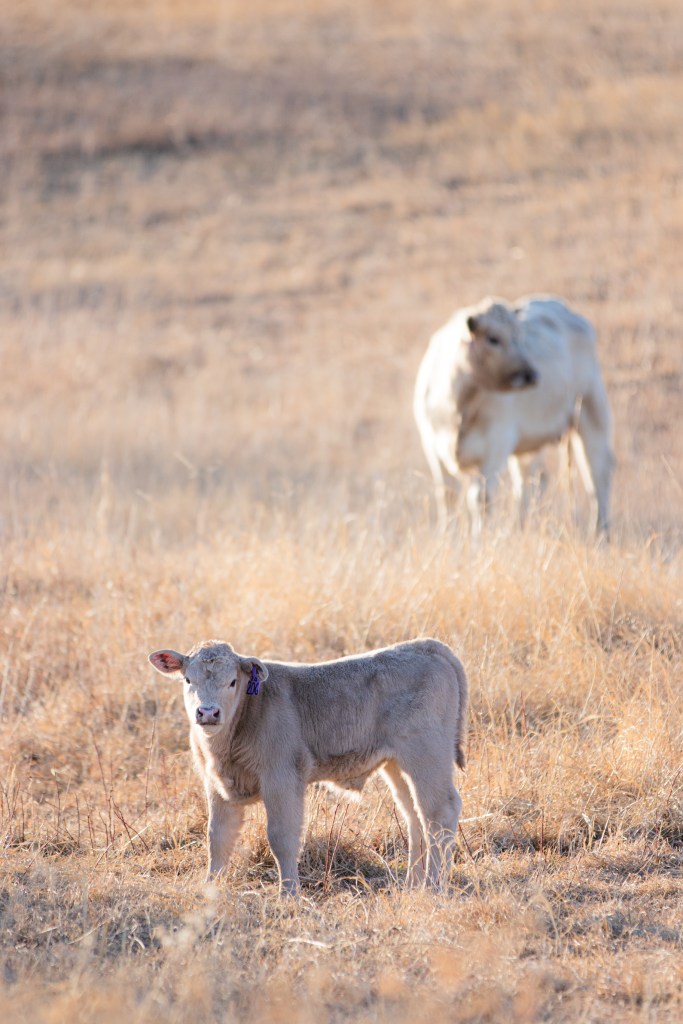
Posey calved last Wednesday, producing the prettiest little Jersey x Brown Swiss heifer, all golden brown, and rosy pink wherever her skin shows through parted hair, like along her back or the little spot on her nose. Some calves are sort of knock-kneed when they’re born, or their proportions are just a tick off. Not Marigold. She has the sweetest, brown-rimmed doe eyes, the curliest eyelashes, the floppiest ears all pink inside, and the straightest, slenderest white legs with dainty little deer-like hooves. And she’s happy! So happy. She comes literally skipping into the shed when I’m milking in the morning, prancing around merrily until she decides to nap, quite the contrast to Posey’s calf last year, a big bull calf, who just wandered around headbutting everything and knocking stuff over. This delicate critter is rather captivating.

I’ve spent a shameless amount of time sitting down on the stoop of the shed, soaking in all the springtime pleasantness and the satisfaction of seeing that beautiful little baby milk cow skip around the corrals or curl up in a puddle of sunshine. The last 9 months were spent hoping that the sexed Jersey semen would do its job, and I am basking in the exceptional outcome. And she is perfect. For me, any baby cow is cute, even the funny looking ones or the less proportionate ones. But you know a calf is particularly cute when a seasoned rancher is willing to say so. I felt very gratified and validated when it took no coaxing to get such an admission from my husband or my father-in-law.

But it isn’t just about Marigold, as much joy as she brings me. It is about community. Connection. It is about generational relationships that I feel so blessed and fortunate and humbled to have married into. And those complex topics are represented by the simple existence of this little baby milk cow.

Her mother, Posey, was a gift to me from Brad a year and a half ago, purchased from dear friends and neighbors that Brad practically grew up with. She was born on their ranch, and her mother was their long-time nurse cow, raising who knows how many bum calves. This same neighbor’s brother, the dad of one of Brad’s best childhood friends, AI’ed Posey for me last year as a belated wedding present. What a gift!

We are not islands unto ourselves, as the saying goes. Our modern, industrialized, efficient, corporatized society creates the sense of islands, isolated groups and individuals seemingly disconnected from their neighbors. We’ve created a society where we rely most heavily on people we never will know, where person is separated from person by space and perspective and interests in ways that only deepen the sense of isolation. And technology, as much benefit as it brings, as much potential for good as it has, in many ways has driven this divide, as we are no longer forced to rely on those closest to us.

But peer into the inner workings of the agricultural community and you’ll see something very different. I’m continually amazed and blessed by the interconnectedness, and it begins within the four walls of each home. I rely on Brad. He relies on me. We rely on our families. They rely on us. We all rely on our neighbors. They in turn rely on us. And on it goes.

It is especially apparent going into branding season, where the all-hands-on-deck, neighbor-helping-neighbor work is accomplished to the benefit of the whole community, as everyone sees to it that everyone’s work gets done, but it shows up more subtly as well. As the stories fly, the community gets wonderfully smaller. The excellent cattle dog that you find out was out of So-and-so’s dog. The roping horse you’re told was trained by this person. The truck bought from that person. The chaps made by this person. The saddle crafted by that person. The branding stove made by So-and-so. The barn built by So-and-so. Adventures, mishaps, and memories shared across generations, binding family to family and neighbor to neighbor.

So, I look at my rosy-golden little calf and her mama and I see a distilled-down representation of community. I see the gift of a husband to his wife in Posey. I see the connection of friend to friend, neighbor to neighbor, in Marigold herself. I see family integration and affection represented by a nurse cow who generates no pasture bill and who raises whatever calf needs a mama, regardless of its brand, in a small way benefitting everyone.

Lots of thoughts prompted by a critter so tiny.

So, I will continue to shamelessly sit and watch the sweet interactions of a mama cow and her baby, listening to the noisy nursing sounds, watching that little white-splotched tail whip back and forth, watching the bony little head thump the shapely udder, watching the merry creature skipping around in play. And be thankful for the community I get to call my own.
Ranch Wife Musings | When the Irons Cool

Originally printed in the Custer County Chronicle on May 29, 2024

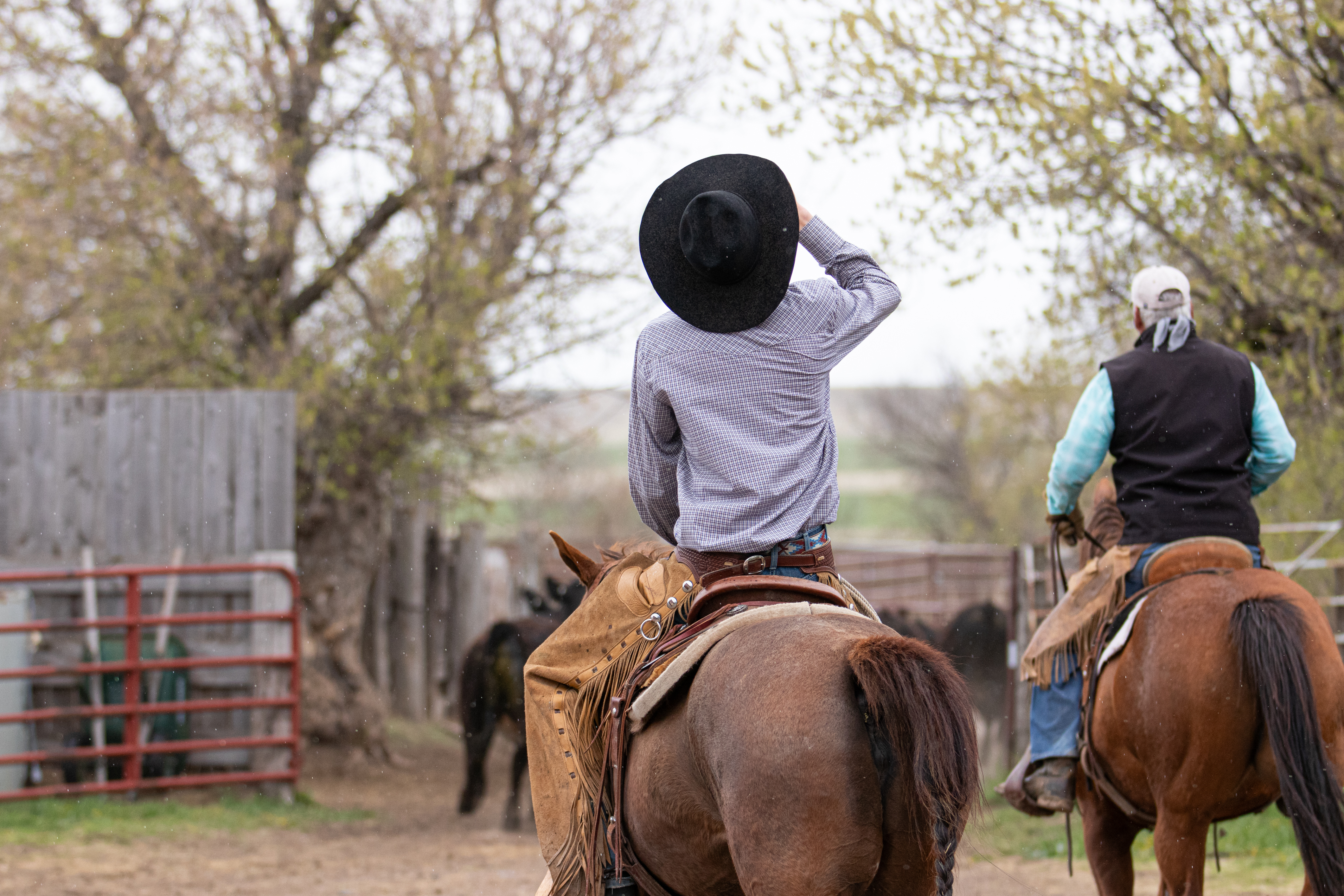
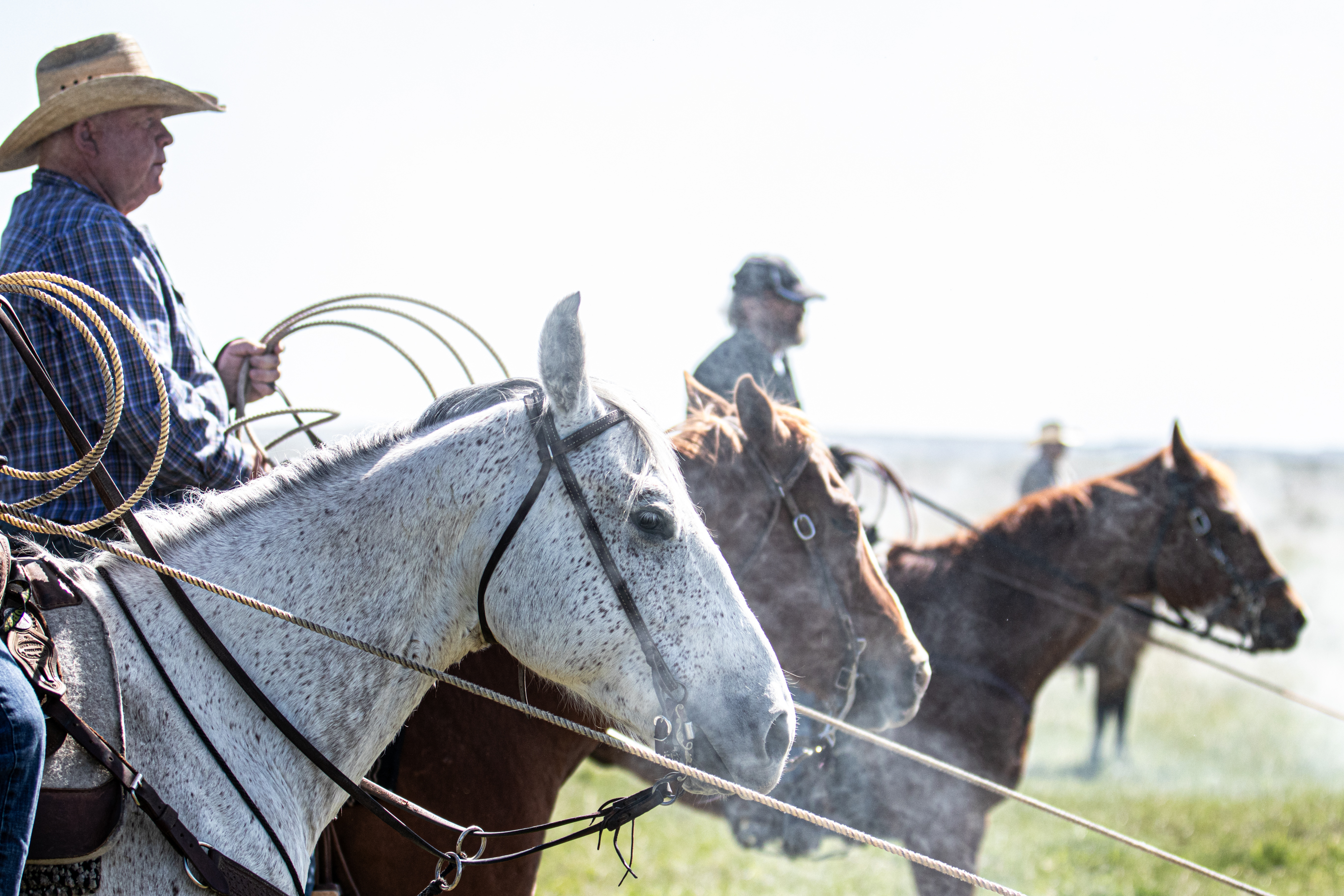
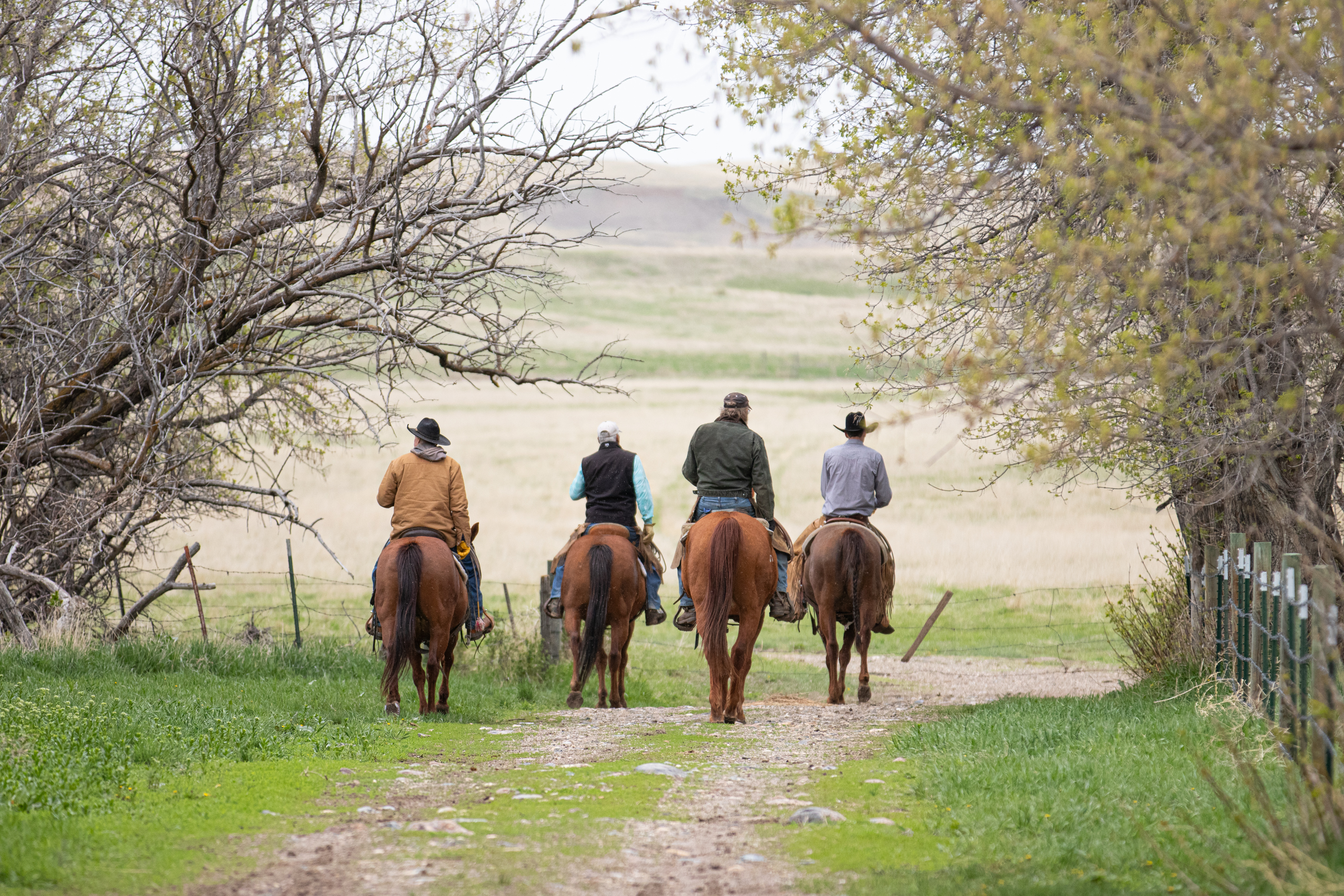
It is an exhilarating feeling, riding out in the cool of the morning with husband and family and neighbors, hearing a chorus familiar voices sing out gently in friendly conversation, the soft plodding of the horses’ hooves on soft earth, the occasional metallic ringing as a shod hoof strikes stone, watching the rolling hills fall away, the row of pickups and trailers get smaller behind us, seeing the cow herd stretched out over the entirety of a pasture. It is an exhilarating feeling, as we get further and further onto the prairie or into the breaks, and one by one, or two by two, riders are left behind until the herd is more or less encircled, and the gather begins.

It is an exhilarating feeling, to be behind a growing, moving, shifting bunch of cows, a bunch that gets joined to another, and another, until the whole herd is gathered, encircled by five or thirty horses and riders. The lowing of the cattle intensifies as they mill around, looking for their calves, and eventually the cattle trickle away from the pressure of the riders. The branding pens get nearer and nearer, and the net is pulled tighter and tighter. Instead of riders every 50 or 100 yards, it is riders every 50 or 100 feet, then every 5 or 10 feet, and then shoulder to shoulder for the last push to pen the herd.

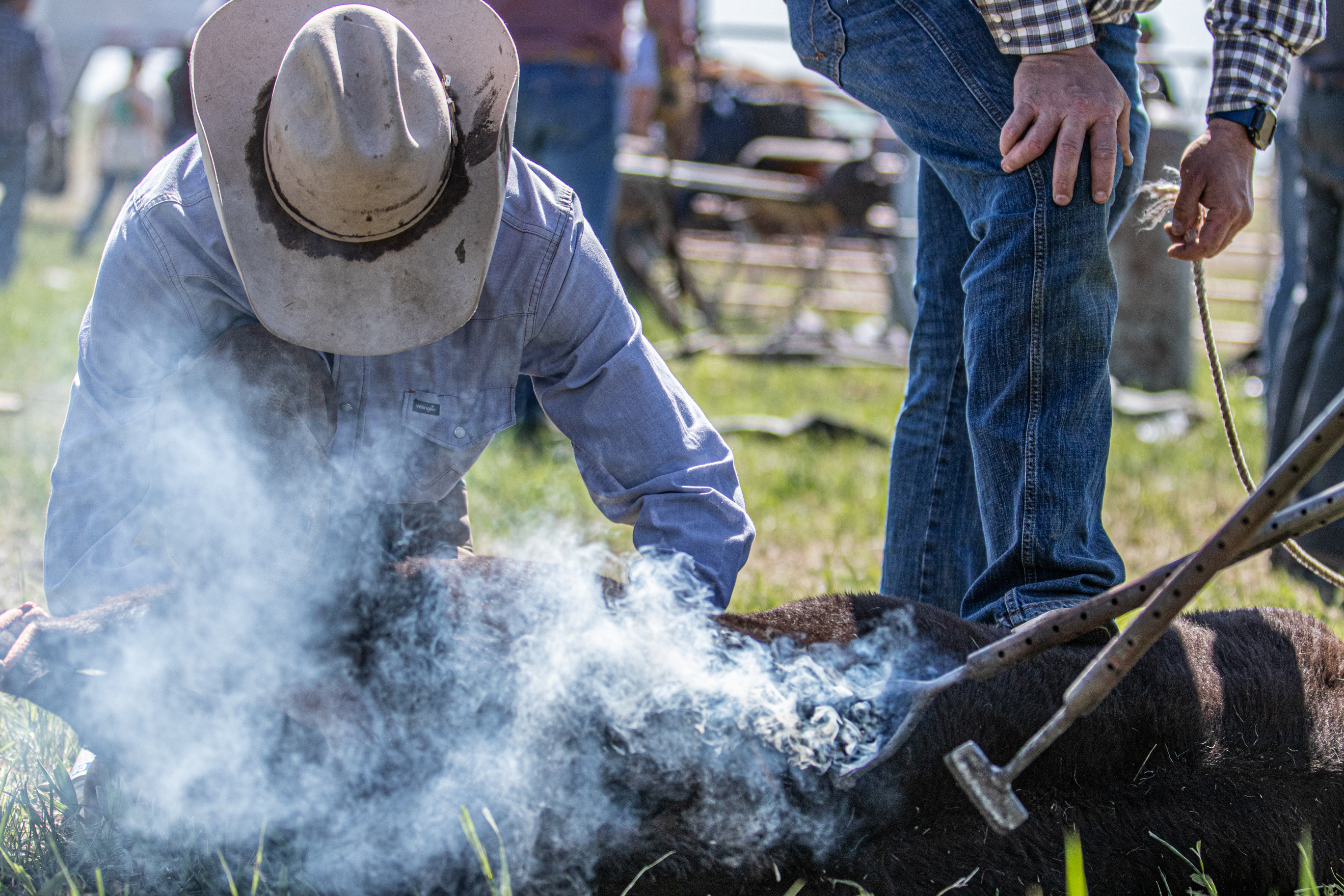
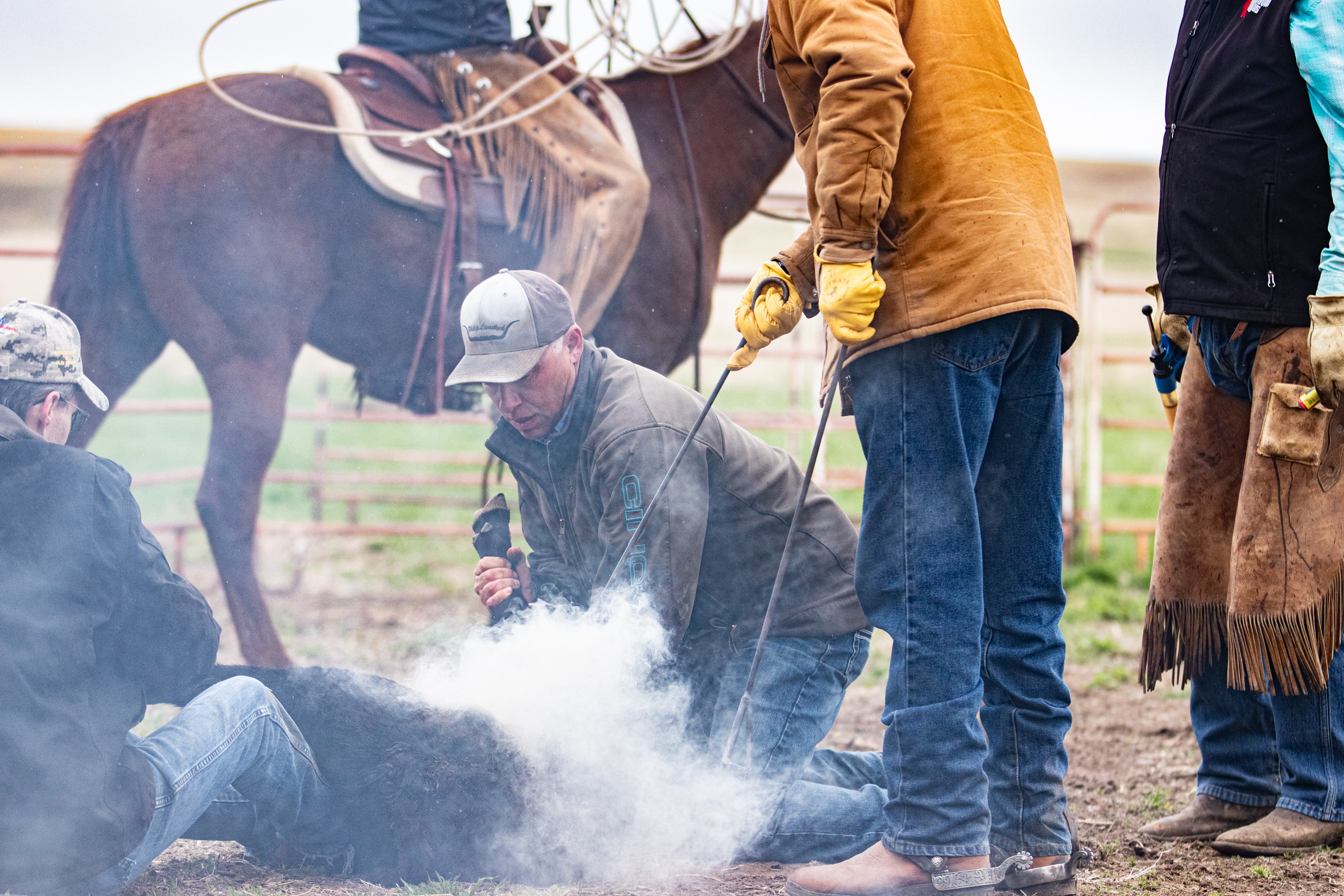
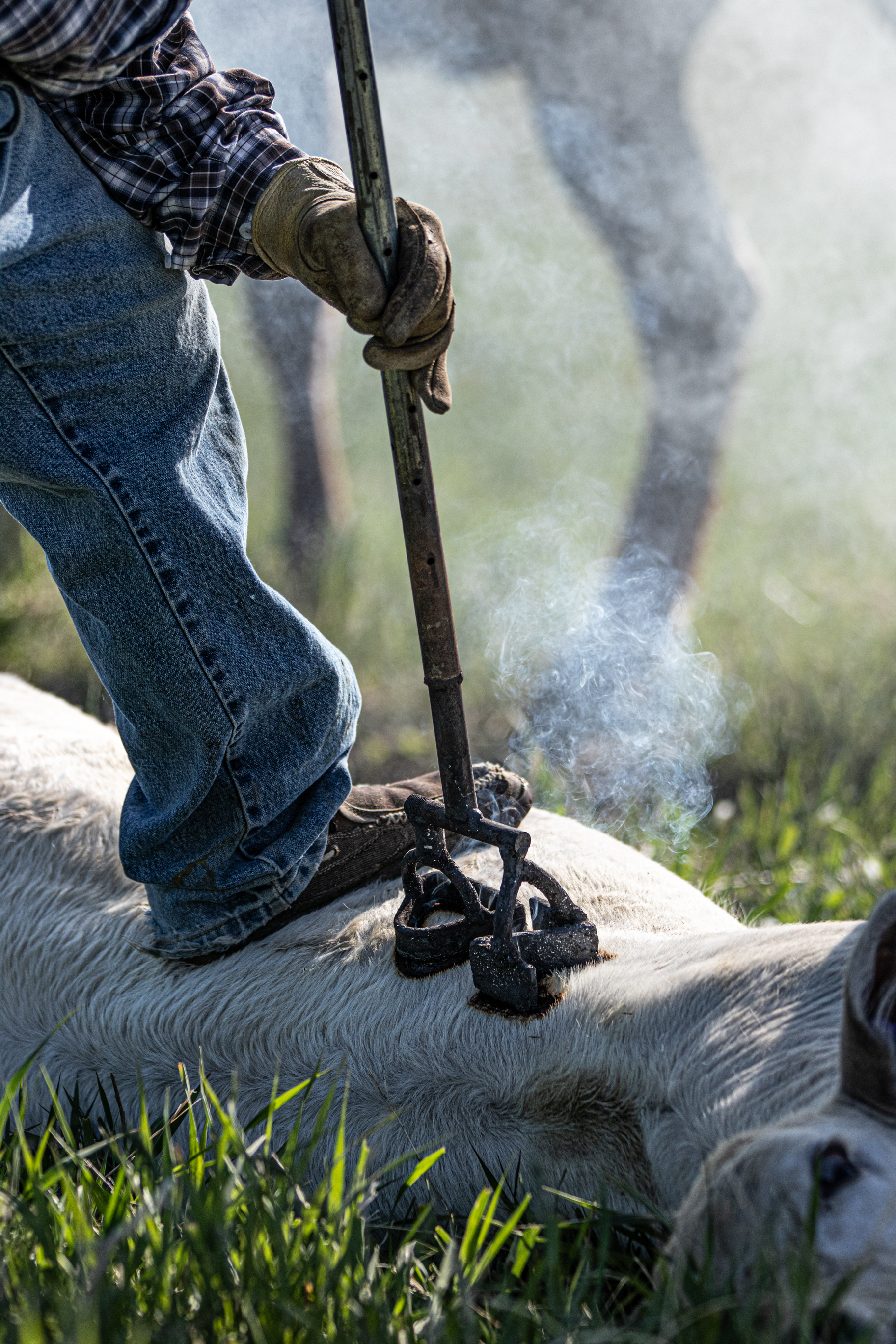
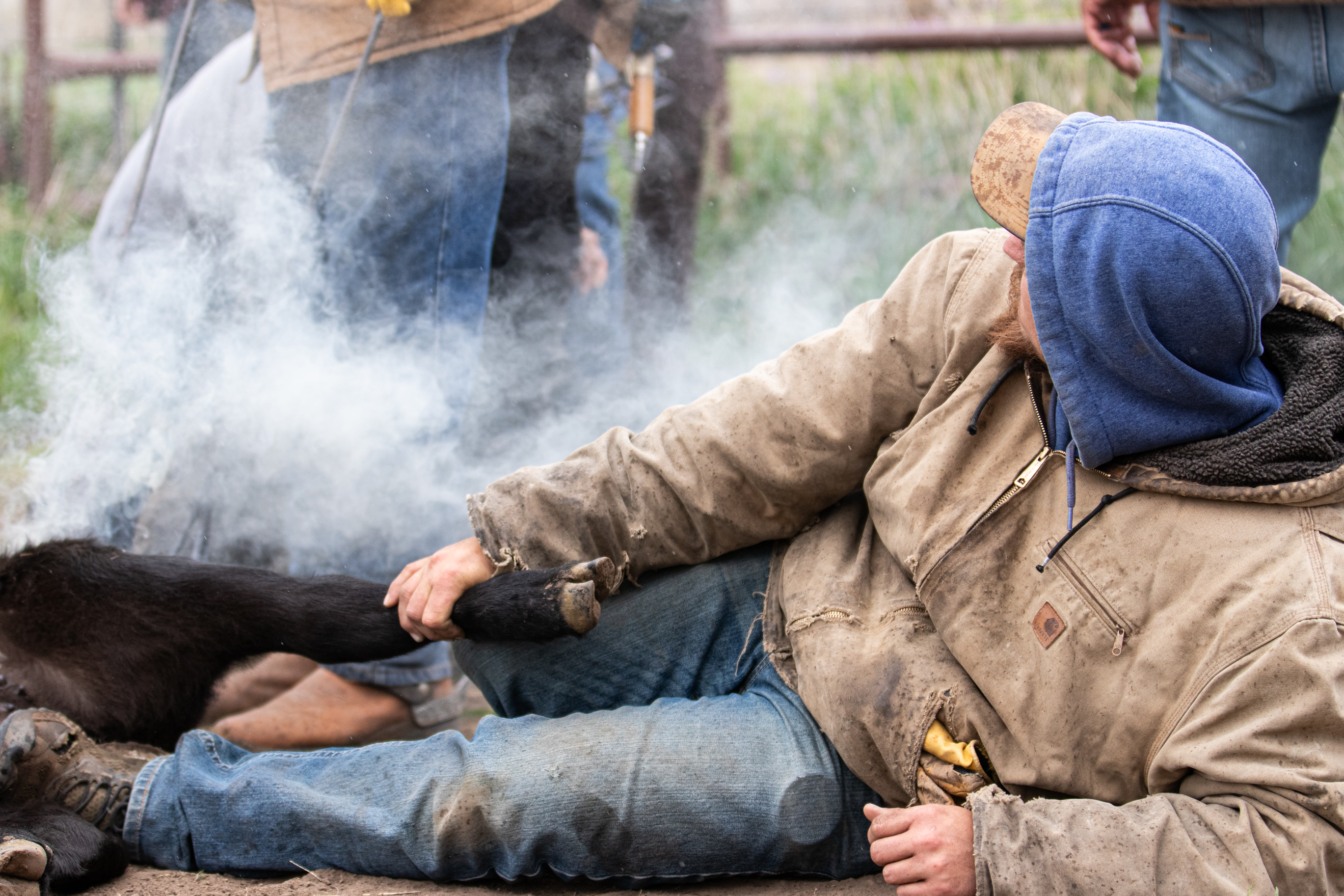
The cattle bawl at a fever pitch, like the deafening hum of a riled-up hornet nest, as mamas and babies are sorted and separated, the calves penned for branding, and cows released back to pasture. The perturbed mothers stand at the fence bawling for the calves, the calves bawl back, and the branding stove roars to life. Soon it is an ordered chaos of activity, as each member of a branding crew is assigned a role or finds a role, and the branding settles into a rhythm, like a well-oiled machine, a rhythm of ropers and wrestlers and branders, the soft hiss of ropes dancing, the smell of smoke and burnt hair, the clank as irons are drawn out of the fire, and the crackle of red-hot iron on hide. Glints and flickers of flame, clouds of shifting smoke, dust and flinging mud. Laughter and shouts and snippets of conversation punctuate the noise, and the steady rhythm is occasionally interrupted by the sudden leaping to action of half a dozen wrestlers when a calf puts up a stiff fight. And bit by bit, little by little, but faster than you’d think, the roping pens empty, the deafening bawling of the cows dies away as they head out briskly to pasture with their calves at their sides, without so much as a backward glance. With a suddenness of quiet that is jarring yet a relief, the branding stove is shut off. In the hours that follow the rush of the work, a meal is enjoyed and stories are shared and reminiscences are savored.

There is something bittersweet about the last big branding of the season, the last time the stove roars to life, the last time it cools. Ranching, for much of the year, is a pretty solitary profession. Families hunker down in the wintertime keeping animals fed and watered, and take to the pastures in the summertime with the odd jobs that are the summer routine. Fall work throws neighbors together in small groups here and there before calves are weaned and sold, but it is nothing like the community reunion of branding season. For a solid month, branding follows branding and neighbor helps neighbor, in a celebratory frenzy of work and camaraderie.

It is when the irons cool that there is really time to reflect on that, that partnership with one another for the grand and gritty task ahead, in partnerships that go back decades and generations. No one is keeping a score card, no one is counting hours helped here or there, but everyone is pitching in because there is work to do and that is what a true community does.

This is a foreign concept to many modern-day Americans. We no longer live where we work, or work where we live, to give a nod to the author Wendell Berry. We have separated work from life, and we have lost the vitality of community that results from living where we work in close proximity to others who also live where they work.

No matter how the American culture has shifted in favor of convenience and economy and minimizing human inputs and nickeling and diming every transaction, ranching is still done the old way. And the old way requires people. Flesh and blood people. People who are willing to show up with what skill they have or the willingness to learn a new one. To give of their time without keeping a record of how or whether it was returned to them, and with this spirit the work all somehow gets done.

We aren’t made to live in isolation. We are made to need one another and to be needed, and the ranching life gives a taste of this. Even in my relatively short time as a rancher’s wife, I look forward to seeing the familiar faces, working shoulder to shoulder with family and neighbors, each week of the season sprinkled with these all-hands-on-deck, all-day events. It is the one time of year when the community is reminded in a real and tangible way of how much we need each other. We aren’t doing this alone.  

The branding stove has been put away and the persistent smell of smoke and burnt hide no longer sticks to our clothing. It is a relief to have calving and branding over with for the season, and for summer work and rhythms to be settling into place. We’ll bump into neighbors over fences or at the county fair or other gatherings. But the energy and shared experiences of branding season will leave their impressions long after the irons have cooled.

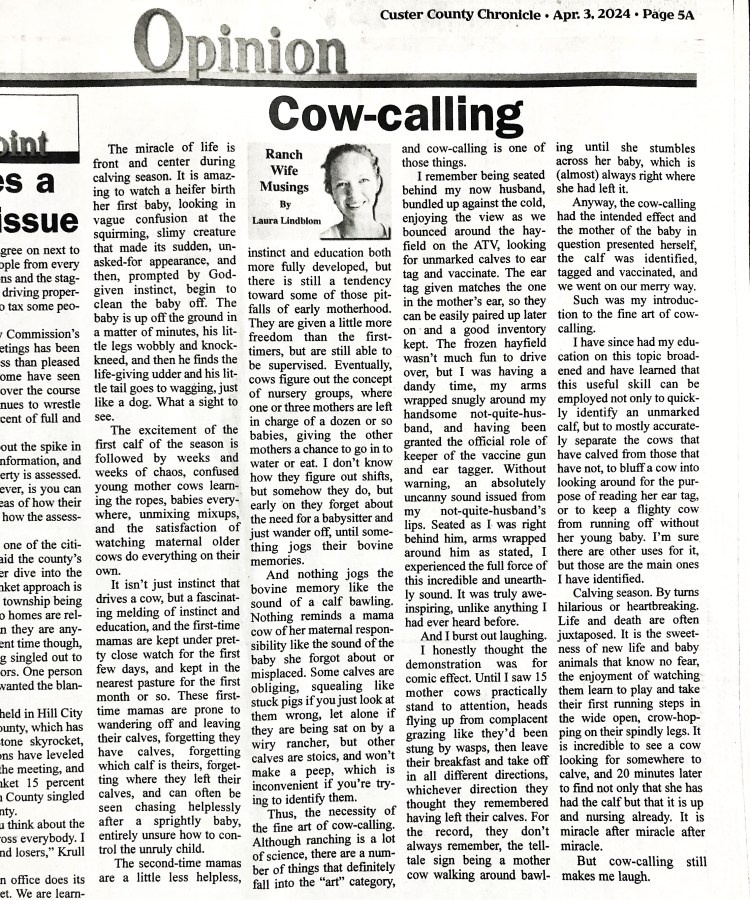
Ranch Wife Musings | Cow-Calling

Originally printed in the Custer County Chronicle on April 3, 2024

The miracle of life is front and center during calving season. It is amazing to watch a heifer birth her first baby, looking in vague confusion at the squirming, slimy creature that made its sudden, un-asked-for appearance, and then, prompted by God-given instinct, begin to clean the baby off. The baby is up off the ground in a matter of minutes, his little legs wobbly and knock-kneed, and then he finds the life-giving udder and his little tail goes to wagging, just like a dog. What a sight to see.

The excitement of the first calf of the season is followed by weeks and weeks of chaos, confused young mother cows learning the ropes, babies everywhere, unmixing mixups, and the satisfaction of watching maternal older cows do everything on their own.

It isn’t just instinct that drives a cow, but a fascinating melding of instinct and education, and the first-time mamas are kept under pretty close watch for the first few days, and kept in the nearest pasture for the first month or so. These first-time mamas are prone to wandering off and leaving their calves, forgetting they have calves, forgetting which calf is theirs, forgetting where they left their calves, and can often be seen chasing helplessly after a sprightly baby, entirely unsure how to control the unruly child.

The second-time mamas are a little less helpless, instinct and education both more fully developed, but there still is a tendency towards some of those pitfalls of early motherhood. They are given a little more freedom than the first-timers, but are still able to be supervised. Eventually, cows figure out the concept of nursery groups, where one or three mothers are left in charge of a dozen or so babies, giving the other mothers a chance to go in to water or eat. I don’t know how they figure out shifts, but somehow they do, but early on they forget about the need for a babysitter and just wander off, until something jogs their bovine memories.

And nothing jogs the bovine memory like the sound of a calf bawling. Nothing reminds a mama cow of her maternal responsibility like the sound of the baby she forgot about or misplaced. Some calves are obliging, squealing like stuck pigs if you just look at them wrong, let alone if they are being sat on by a wiry rancher, but other calves are stoics, and won’t make a peep, which is inconvenient if you’re trying to identify them.

Thus, the necessity of the fine art of cow-calling. Although ranching is a lot of science, there are a number of things that definitely fall into the “art” category, and cow-calling is one of those things.

I remember being seated behind my now husband, bundled up against the cold, enjoying the view as we bounced around the hayfield on the ATV, looking for unmarked calves to ear tag and vaccinate. The ear tag given matches the one in the mother’s ear, so they can be easily paired up later on and a good inventory kept. The frozen hayfield wasn’t much fun to drive over, but I was having a dandy time, my arms wrapped snugly around my handsome not-quite-husband, and having been granted the official role of keeper of the vaccine gun and ear tagger. Without warning, an absolutely uncanny sound issued from my not-quite-husband’s lips. Seated as I was right behind him, arms wrapped around him as stated, I experienced the full force of this incredible and unearthly sound. It was truly awe-inspiring, unlike anything I had ever heard before.

And I burst out laughing.

I honestly thought the demonstration was for comic effect. Until I saw fifteen mother cows practically stand to attention, heads flying up from complacent grazing like they’d been stung by wasps, then leave their breakfast and take off in all different directions, whichever direction they thought they remembered having left their calves. For the record, they don’t always remember, the telltale sign being a mother cow walking around bawling until she stumbles across her baby, which is (almost) always right where she had left it.

Anyway, the cow-calling had the intended effect and the mother of the baby in question presented herself, the calf was identified, tagged and vaccinated, and we went on our merry way.

Such was my introduction to the fine art of cow-calling.

I have since had my education on this topic broadened and have learned that this useful skill can be employed not only to quickly identify an unmarked calf, but to mostly accurately separate the cows that have calved from those that have not, to bluff a cow into looking around for the purpose of reading her ear tag, or to keep a flighty cow from running off without her young baby. I’m sure there are other uses for it, but those are the main ones I have identified.

Calving season. By turns hilarious or heartbreaking. Life and death are often juxtaposed. It is the sweetness of new life and baby animals that know no fear, the enjoyment of watching them learn to play and take their first running steps in the wide open, crow-hopping on their spindly legs. It is incredible to see a cow looking for somewhere to calve, and twenty minutes later to find not only that she has had the calf but that it is up and nursing already. It is miracle after miracle after miracle.

But cow-calling still makes me laugh.

Ranch Wife Musings | Well Wintered

Originally printed in the Custer County Chronicle on March 6, 2024

The longest part of the year is officially over. And it flew by. Just yesterday it was October and the trees were losing their leaves, and then it was November and Thanksgiving and we were shipping calves. Now we are standing on the brink of springtime, watching the first calendar day of spring approaching from not even a calendar page away, and the first 50 calves are already skipping blissfully through their short first days of life. We are ready for springtime.

There’s a saying I heard from my father-in-law, that has stuck with me: “Well summered is half wintered.” In other words, livestock that have had been through the summer with plenty of good grass and good water have a healthy fat layer and ample energy stores and are well equipped to face the coming winter. Half the struggle of winter is already taken care of. If, however, cows struggle during the summer, with stricken pasture and bad water, they will continue to struggle and the hardest season will be even harder. They will be bags of bones halfway through January.

2022 was a rough summer, with too little rain and too many grasshoppers, resulting in incredibly poor winter pastures. We were not well summered. Cows looked rough and rougher still as the winter wore on, and the extraordinary cost of feeding hay to get the cows through the winter added up. Cattle prices in the fall just added insult to injury. This time last year, calving season was getting off to a not-so-great start, with a number of odd and unpredictable losses, with a cluster of birth malpresentations and birth defects compounding that. March came in like a lion, indeed, bringing much needed moisture but in the form of calf-killing storms. So, we looked ahead to the spring and the summer with a sense of foreboding. Another summer like 2022 would have been devastating. Springtime was anticipated with dread.

“Well summered.”

I have pondered that saying a lot, actually.

Because it really doesn’t have a lot to do with the hard seasons themselves, but has everything to do with what leads up to those hard seasons. It is so tempting to coast during the easy times, so that we are less than equipped when things get tough.

We do that in marriage, by failing to put in the work to build up our marriage when things are easy and then being taken completely by surprise when our marriage struggles hard when life gets hard.

We do that physically, taking our health for granted while we are healthy, neglecting it rather than working to preserve it, and then being surprised or devastated when our bodies give out.

We do that spiritually, starving our souls, failing to feed ourselves through God’s Word and fellowship and solid teaching when life is easy, and then being shocked when our faith falls apart when life falls apart.

And there are a million other examples. What we do in the good times matters, and it changes how we handle the bad times.

But there is also another facet of this illustration: Sometimes the anticipated rough seasons aren’t as rough as anticipated, or perhaps the preparation was sufficient to offset the challenges. Maybe both. That’s when things are just extra, especially good, and the future is anticipated eagerly.

What a difference a year can make. Going into this winter, we were incredibly well summered. In spite of some wild weather events, the pastures were green and lush leaving plenty of forage for winter, dams caught quite a bit of good water, we actually had a hay crop and full stackyards, and the cows were sleek and fat as winter approached. And they are still sleek and fat. They could have handled much worse of a winter than we experienced. But God was an extra measure of kind, and the winter we had was the sort of winter that would make South Dakota too expensive a place to live, if that was our normal fare. But it was still winter. We still had cold snaps that put stress on the livestock and their keepers, stretches of days that made us extra, especially thankful for being well summered, but also extra, especially thankful for the winter we were given.

And here we are, standing on the brink of springtime. Winter isn’t over yet, and we can get snow until June, but what is generally the hardest part of winter is behind us. There is a bit of green starting to show under the cured grasses of last year, and a few brave little things are poking up out of the soil in the garden. The calves are thriving in the gentle weather, their healthy and maternal mothers unusually capable for first-time mamas, and a new season is just ahead, just around the corner.

Springtime coming looks sweet.

We were not just well summered. We are well wintered. Well wintered, and ready for spring.

Ranch Wife Musings | Distracting in Coveralls

Originally printed in the Custer County Chronicle on February 7, 2024

I still remember the look on my now father-in-law’s face when he rattled up in his blue ranch truck to the middle of the pasture we call Hidden City. His dogs piled out, then he climbed out, and then he just looked at me. Brad and I were scooping muck out of a stock tank, getting it ready to cement the bottom. Dave had brought the sacks of cement. And to my knowledge he had no idea I’d be out there helping. We had been dating for about six days. Maybe ten. You know, the time in a relationship when the guy is trying to impress the gal?

I was sunburnt, covered in mud, and grinning.

“Boy, I bet you’re impressed,” he said.

“I volunteered,” I replied.

And that dynamic characterized our whirlwind four months of dating, and our whirlwind six months of engagement, which spanned fall cow work, preg testing, shipping calves, calving, and branding. Whenever I wasn’t on shift at the fire department, I was out at the ranch, sometimes truly helping, sometimes there “just in case.”

Honestly, it was pretty handy. A lot of our dating was spent with me riding behind him on the ATV, a convenient place to be. Not only was the view nice, but it was a great excuse to have my arms wrapped around him for extended lengths of time. I’m not sure who invented the fabricated “date” as the best way to get to know someone, but give me an afternoon riding double on a four-wheeler or perched next to him in the tractor any day.

And it prepped us for life together. We learned to work together from the get-go. We learned what each of us was like at our best and at our worst, when having fun and when frustrated, when things went well and when things fell apart. Anyone can pull it all together to go out in public, anyone is on their best behavior when other eyes are observing, but it is the day-to-day that truly reveals a person’s character. We both learned how much better, sweeter life can be with a suitable companion, that 1+1 is way more than 2, and I learned that I truly loved to play the role of the helper. If all I did was make things a little easier, that was enough.

Valentines Day is approaching, with all the wildly unrealistic expectations set primarily, I believe, by women, aggravated by Hallmark and Hollywood and romance novels, of flowers and fine wine and fine dining, and with all the myriad opportunities for men to fail to meet these unrealistic expectations. How certain things became culturally accepted as the pinnacle of romance and the standard expressions of love, I sure don’t know, and I don’t know anything about those things either.

But what I do know is I wouldn’t trade reality for those things. I guess I see real romance as something altogether different.

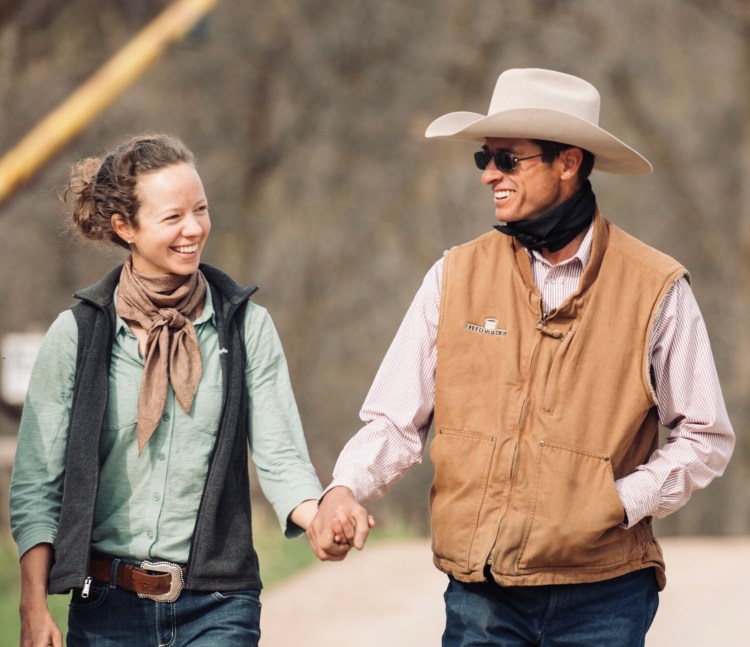
Real romance comes in the form of bouncing over frozen ground on an ATV to tag calves together during a snow squall. Real romance is gingerly kneeling down on the heaving flank of a 650-pound steer choked out on the ground when your husband looks at you and says sweetly, “Do you want to sit right here, honey?” and hands you the manure-crusted tail. Real romance is the satisfaction of a long day of working together. Real romance is a quick break over a cup of coffee before heading out into the cold again. Real romance is rattling along in the feeding pickup or the tractor, tagging along to be the gate-getter and net wrap cutter, encumbered by coveralls and heavy chore coat and drifts of snow. Real romance is having that strong shoulder to cry on when a cherished cat dies, or life just feels heavy. Real romance is time together over a home-cooked meal, or holding hands walking into the feed store. Real romance is hearing your husband’s voice next to you in church, even though he can’t hold a tune. Real romance is winning (almost) every single game of cribbage, even though he taught you how to play specifically because he thought you wouldn’t be any good at it (true story). Real romance is a disagreement followed by an exchange of apologies. Real romance is trust in your spouse’s faithfulness, and learning to understand someone else’s love language. Because how often is your spouse communicating love? All the time.

I love the shared experiences that are knitting our lives together into one. I love catching his eye over the backs of 200 cows, or pouring him a cup of hot coffee in the scale shed, or our exchanged smiles as we go our individual ways during chores. It doesn’t look like the movies. It sure isn’t always mushy and sweet. Life is life. It doesn’t look like the Hallmark version of a romance. A lot of the time we are covered in muck and sweat and don’t smell great. It might be routine, normal, and mundane.

But he still says I’m distracting in coveralls.

Ranch Wife Musings | Beginning Well

Originally printed in the Custer County Chronicle on January 3, 2024

And just like that, we are standing on the threshold of a new year.

For better or for worse, last year is gone, done, nothing to be added or subtracted, and a brand-new year is just beginning. For some, it is exciting to look ahead to the future, gleaming with possibilities, while for others it feels like more of the same, and maybe is discouraging to look ahead and see nothing changing. It is bittersweet to see the last year pass away, with all of the joys and sorrows, successes and failures, regret at what we didn’t accomplish and gladness at what we did. It is easy to fall to the negative in all those things, seeing the struggles much more clearly than we see the joys. It is easier somehow to remember everything that went wrong, and to forget all the things that went right. But here we are, standing on the threshold and peering ahead into an unsullied year. And many of us, maybe most of us, catch at least a little of a sense of excitement.

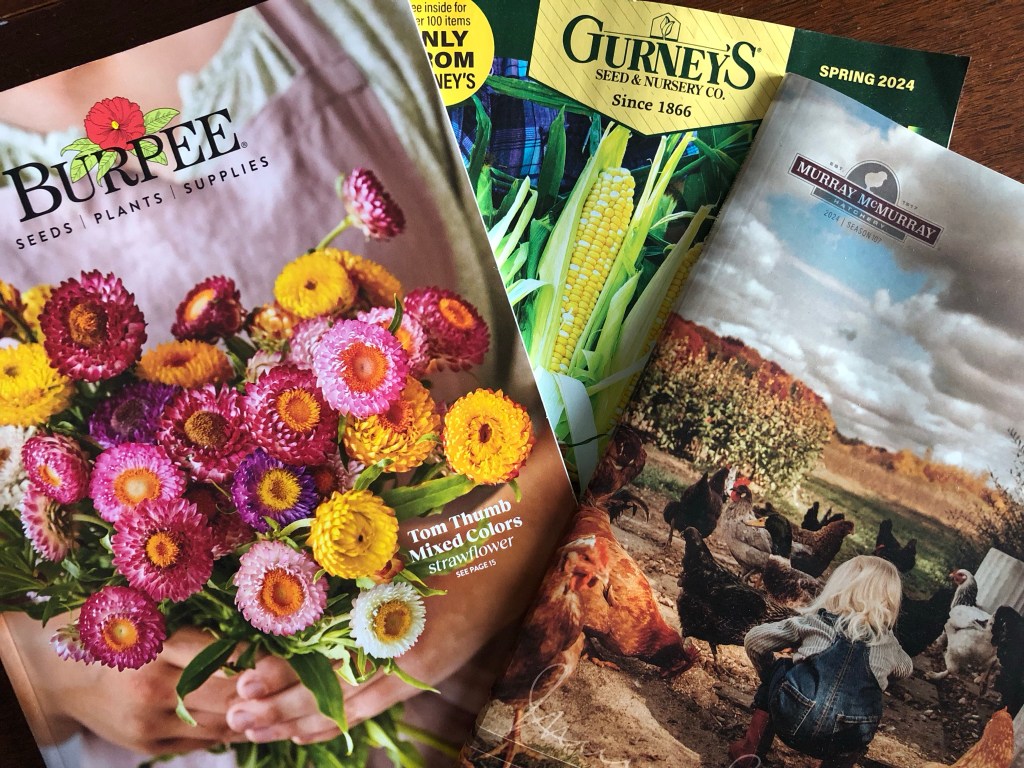
Seasonally, it is a refreshing time. A dusting of snow underfoot, brisk breezes to nip the face, glorious watercolor sunsets we only ever enjoy in the dead of winter, and trees reaching up their bare branches into the pale skies. By South Dakota standards, we are halfway through our winter season, and spring is on the horizon, or just over it. The days are getting longer again, releasing us little by little from the long, dark evenings. Seed catalogs, colorful reminders of the joy and work of summer, have been perused, and in no time the seed starting will begin in earnest. Chick orders are being placed, and heifers are looking heavy, starting to waddle in their pregnant-ness, and could calve in as little as six or eight weeks for us, imminently for others. The lull in the ranching calendar is truly short lived, and a lot of folks are gearing up for the impending rush that will launch us into a new cycle of work on the ranch.

I admit, I love the start of a new year. I love the process and the discipline of reflecting back on the last year, seeing the ways in which God provided, the joys that He brought, the ways I have changed and grown, skills I have learned, people I have met, opportunities that were presented. And there is a sense of relief in being able to identify things that I truly wish to change, and to look ahead with hope and optimism and with trust that God isn’t done working on me. We get so caught up in our routines and habits, it can be hard to think outside the box we have built for ourselves, to shake some cobwebs off our thinking and our dreams and get to work doing something better, something new.

The New Year provides just that opportunity, and the freshness of the year gives permission.

Some people scoff at the idea of setting New Year’s resolutions, probably because so often those resolutions fail within a week or three of the New Year. Some people see failed resolutions as training in failure, but I think that’s just an excuse, and I think there is benefit even in an uncompleted or imperfectly kept resolution.

I think a lot of resolutions fail because they are poorly thought out, poorly conceived of. Maybe they are arbitrary, just another thing to add to the to-do list, without any real reason behind it. Maybe they are overly specific, so that they are almost impossible to keep, or under specific, so we can easily talk ourselves out of them. I think a lot of resolutions fail because they aren’t really honest about what our struggles are, what our habits are, and we don’t solicit help from our family and friends, and we don’t invite accountability. I think resolutions fail mostly, though, because we are complacent in our comfortable habits.

Personally, I like to think of goals, rather than resolutions. I find the exercise to be a beautiful reminder that life is a process. We don’t get to skip the work and reap the benefits. Without being intentional in our personal, spiritual, physical, and relational development, growth will be inconsistent at best. Growth takes work, it takes sacrifice, and sometimes it takes some backsliding and incomplete successes and downright failures. And that’s okay.

Sometimes the very act of setting a goal in our sights is enough to at least keep us pointed in the right direction. We might get off, we might fail, but we can reorient towards that goal and get back on track. It is hard to make changes without specifics, without something concrete to be working towards.

So, I love to use this season as a time to write my lists and set my goals, and I take the time to evaluate, dream, and ask questions. What would a richer faith look like? What would greater trust in God look like? What would time better spent look like? What benefits would that reap? What would a sweeter marriage look like? How can I grow in love and forbearance and patience? What is something I want to learn? Something I want to do better? A way I want to grow?

New Year’s resolutions and goals don’t have to be complicated. Honestly, it is probably better that they aren’t. But having a vision and goals can help to infuse hope and optimism into the New Year, and help us to begin well.