Ranch Wife Musings | Hard Times

Originally printed in the Custer County Chronicle on April 22, 2026

It is the same look on everyone’s faces, the same careworn expression. I would guess the same pit sits in everyone’s stomachs right about now. Mornings should smell damp and fresh. We should be wearing muck boots and watching mists and fog drift across pastures at first light. Those lacy spiderwebs that appear overnight should be studded with dewdrops. We should be seeing the start of green grass. But there is no grass.

The corrals and calving lot are 6 inches of dust, and the pastures are bone dry and chewed down. It hurts your heart to look at them. Every little movement of every living thing, every breath of wind, kicks up dust. And goodness knows we’ve had our share of wind.
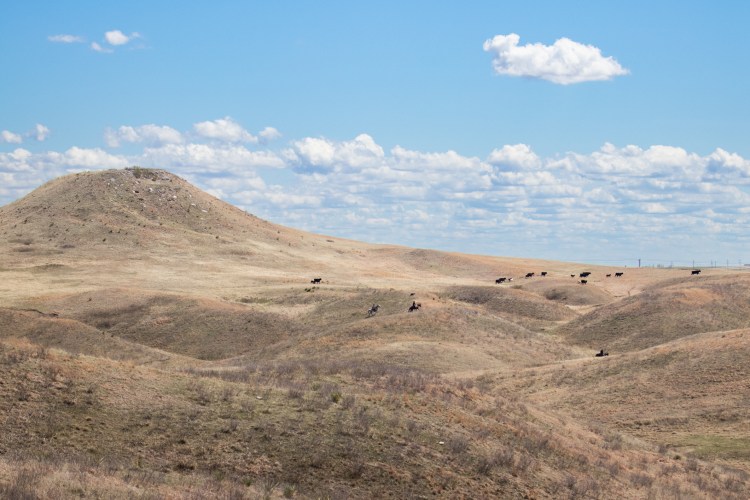
Calving season should wrap up with the eager anticipation of what comes next, but right now the “next” is uncertain.

All winter long, we remind ourselves that December and January, and even February, tend to be dry here, and that’s fine and normal. We remind ourselves that there’s plenty of time for the needed moisture. Plenty of time. Then March rolls through bringing no snow and we look to April, saying to ourselves, “We’ve gotten great snowstorms in April.”

And then April passes by. “It always rains. Eventually,” we remind ourselves. And then when cynicism creeps in and you think, “Well, at least there’s nothing to burn,” a spark lights off a 5000-acre grassfire. Apparently, there was something to burn.

“Please, God, make it rain.”

The inner monologue changes as the situation worsens, and as optimism gives way to reality.

There is no grass. Dams are dry pits. We haven’t really had measurable precipitation since October. The greenest spot on the whole ranch is the patch of lush grass around the septic tank in the yard.

Tough questions are being asked. Questions regarding the best interest of the livestock and the best use of the land. At this point, any answer will be a tough answer, most likely.

What do we do now? That seems to be the question everyone is asking.

You can’t ranch without grass. You can only feed so much hay, and where does the hay come from? You can only truck it so far, with the price of fuel. And fundamentally, regardless of how the media and four-letter organizations like to characterize those in agriculture, ranchers want what is best for the livestock and the land.

It is times of uncertainty that force us to acknowledge God. It is hard times that drive us to our knees in prayer. They are a reminder that we don’t live in a perfect world. They remind us that we don’t in fact govern the weather. Generally, in agriculture, that’s a pretty easy fact to grasp, but bad years are an extra dose of reality, that the weather is not subject whatsoever to our whims or desires. Hard times invite us to revisit God’s Word, and to be comforted in His sovereignty, and His purposes, which are always greater than ours. Uncertainty invites us to be reminded of His promise in Genesis that, “While the earth remains, seedtime and harvest, cold and heat, summer and winter, day and night, shall not cease.” Hard times invite us to marvel at His created order. God built incredible resilience into this world.

There are so many extremes of thought when it comes to the environment. There is the extreme to one side that seems to think we are constantly teetering on the brink of total annihilation, with a fixed date of destruction that surreptitiously gets moved, again and again, when the annihilation doesn’t happen. Then there is the extreme of exploitation without concern for the future, a using up of resources without concern for the next five years, let alone the next generation. There is the incredible arrogance and short-sightedness of weather manipulation, as if we actually can, or have any business trying, and truly could without making a total mess of things. And then there is a whole host of varied viewpoints somewhere in the middle of the mess, who can at least agree to the overarching idea of stewardship, if not the fine points. Stewardship being a caretaking of nature and our natural resources, neither the abandonment demanded on one side or the exploitation of the other, neither harnessing nor manipulating, but a partnering with and stewarding of the world around us.

And stewardship as mandated and defined by the Bible leads us to acknowledge that God as Creator has put in place an incredible created order, that allows regions to suffer drought and heat and natural disasters, and somehow, beautifully, amazingly rebound. The fresh green grass in recent burn scars evidences this, as well as the wonderful biodiversity in places like Hell Canyon, in the area of the Jasper Fire. It is a kind of stewardship that recognizes our responsibility but also God’s control.

If not even a sparrow falls to the ground apart from the knowledge of God, then not a raindrop falls, or doesn’t, without God’s permission either. If He clothed the fields then, 2000 years ago when the Gospel writer recorded the words of Jesus, He who is the same today clothes the fields today.

Pray for a miracle. Please, do. Pray for the skies to open and for rain upon a dry, parched earth. Pray for fruitfulness and life and safety.  I know I am. But my greater prayer, the prayer growing in volume, is for faithfulness. That we would have eyes to see God’s faithfulness displayed, and that we would be faithful to Him.

Because God is not primarily about the business of our comfort. In fact, our comfort doesn’t even make the priority list of eternity. God is about the business of fitting saints for Heaven, and fitness for Heaven rarely is accomplished through comfort and ease. It is accomplished through difficulty, testing, trials.

When we reach a point of breaking and holy mending, or breaking and holy sustaining.

When our best-laid plans and our smug self-sufficiency wilt away like last season’s grasses, and we are forced to actually wait for the rain of God’s providence.

Oftentimes, God’s most poignant and lasting work in us is done in hard times when we are brought to the utter end of ourselves.

Ranch Wife Musings | A baby milk cow named Marigold

Originally published in the Custer County Chronicle on March 26, 2025

“So, will your column be about a certain baby milk cow named Marigold?”

Brad has a way of poking fun through the most innocent of questions. And he knew the answer a week ago, when Marigold was born. Of course the column would feature the newest addition to Laura’s dairy operation. Silly question.

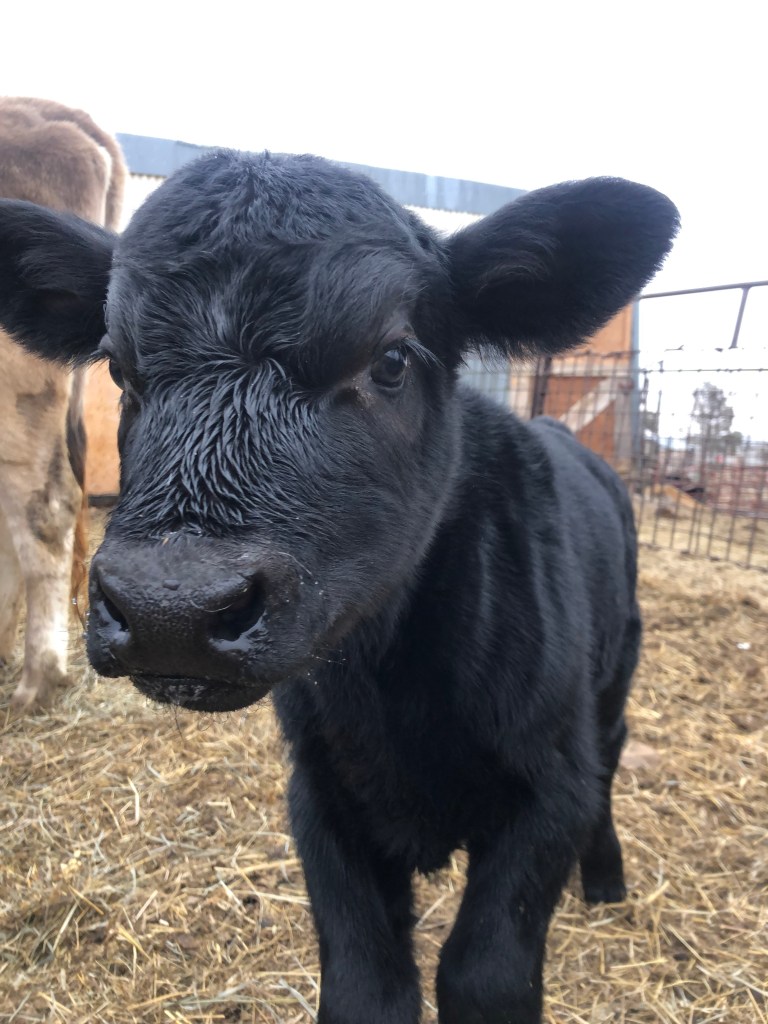
Posey calved last Wednesday, producing the prettiest little Jersey x Brown Swiss heifer, all golden brown, and rosy pink wherever her skin shows through parted hair, like along her back or the little spot on her nose. Some calves are sort of knock-kneed when they’re born, or their proportions are just a tick off. Not Marigold. She has the sweetest, brown-rimmed doe eyes, the curliest eyelashes, the floppiest ears all pink inside, and the straightest, slenderest white legs with dainty little deer-like hooves. And she’s happy! So happy. She comes literally skipping into the shed when I’m milking in the morning, prancing around merrily until she decides to nap, quite the contrast to Posey’s calf last year, a big bull calf, who just wandered around headbutting everything and knocking stuff over. This delicate critter is rather captivating.

I’ve spent a shameless amount of time sitting down on the stoop of the shed, soaking in all the springtime pleasantness and the satisfaction of seeing that beautiful little baby milk cow skip around the corrals or curl up in a puddle of sunshine. The last 9 months were spent hoping that the sexed Jersey semen would do its job, and I am basking in the exceptional outcome. And she is perfect. For me, any baby cow is cute, even the funny looking ones or the less proportionate ones. But you know a calf is particularly cute when a seasoned rancher is willing to say so. I felt very gratified and validated when it took no coaxing to get such an admission from my husband or my father-in-law.

But it isn’t just about Marigold, as much joy as she brings me. It is about community. Connection. It is about generational relationships that I feel so blessed and fortunate and humbled to have married into. And those complex topics are represented by the simple existence of this little baby milk cow.

Her mother, Posey, was a gift to me from Brad a year and a half ago, purchased from dear friends and neighbors that Brad practically grew up with. She was born on their ranch, and her mother was their long-time nurse cow, raising who knows how many bum calves. This same neighbor’s brother, the dad of one of Brad’s best childhood friends, AI’ed Posey for me last year as a belated wedding present. What a gift!

We are not islands unto ourselves, as the saying goes. Our modern, industrialized, efficient, corporatized society creates the sense of islands, isolated groups and individuals seemingly disconnected from their neighbors. We’ve created a society where we rely most heavily on people we never will know, where person is separated from person by space and perspective and interests in ways that only deepen the sense of isolation. And technology, as much benefit as it brings, as much potential for good as it has, in many ways has driven this divide, as we are no longer forced to rely on those closest to us.

But peer into the inner workings of the agricultural community and you’ll see something very different. I’m continually amazed and blessed by the interconnectedness, and it begins within the four walls of each home. I rely on Brad. He relies on me. We rely on our families. They rely on us. We all rely on our neighbors. They in turn rely on us. And on it goes.

It is especially apparent going into branding season, where the all-hands-on-deck, neighbor-helping-neighbor work is accomplished to the benefit of the whole community, as everyone sees to it that everyone’s work gets done, but it shows up more subtly as well. As the stories fly, the community gets wonderfully smaller. The excellent cattle dog that you find out was out of So-and-so’s dog. The roping horse you’re told was trained by this person. The truck bought from that person. The chaps made by this person. The saddle crafted by that person. The branding stove made by So-and-so. The barn built by So-and-so. Adventures, mishaps, and memories shared across generations, binding family to family and neighbor to neighbor.

So, I look at my rosy-golden little calf and her mama and I see a distilled-down representation of community. I see the gift of a husband to his wife in Posey. I see the connection of friend to friend, neighbor to neighbor, in Marigold herself. I see family integration and affection represented by a nurse cow who generates no pasture bill and who raises whatever calf needs a mama, regardless of its brand, in a small way benefitting everyone.

Lots of thoughts prompted by a critter so tiny.

So, I will continue to shamelessly sit and watch the sweet interactions of a mama cow and her baby, listening to the noisy nursing sounds, watching that little white-splotched tail whip back and forth, watching the bony little head thump the shapely udder, watching the merry creature skipping around in play. And be thankful for the community I get to call my own.

Ranch Wife Musings | Shepherd’s Lantern

Originally printed in the Custer County Chronicle on November 6, 2024

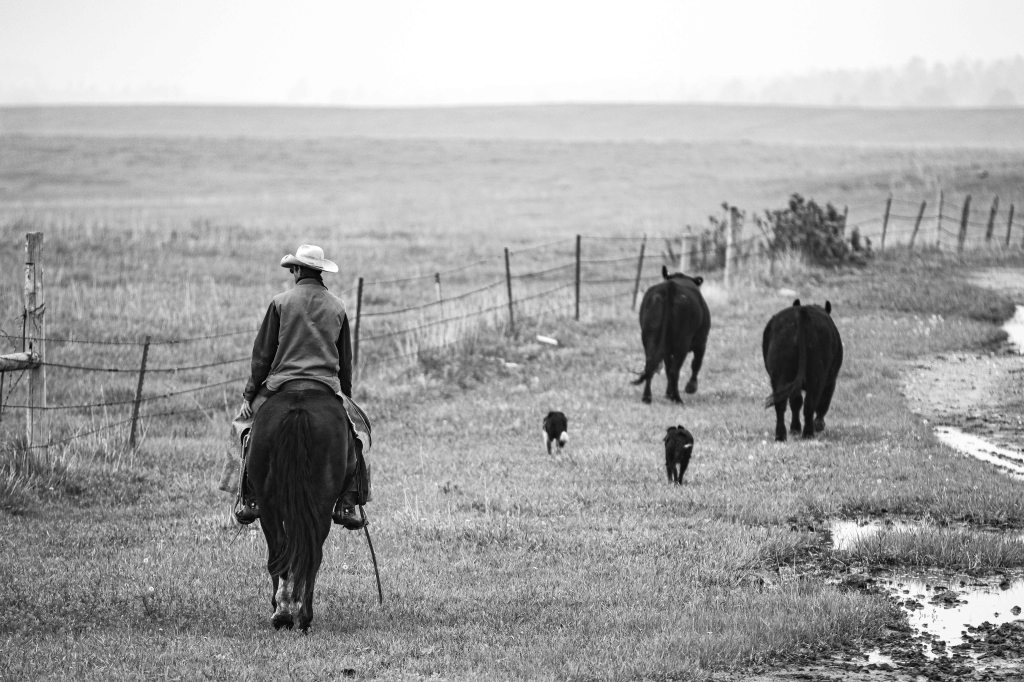
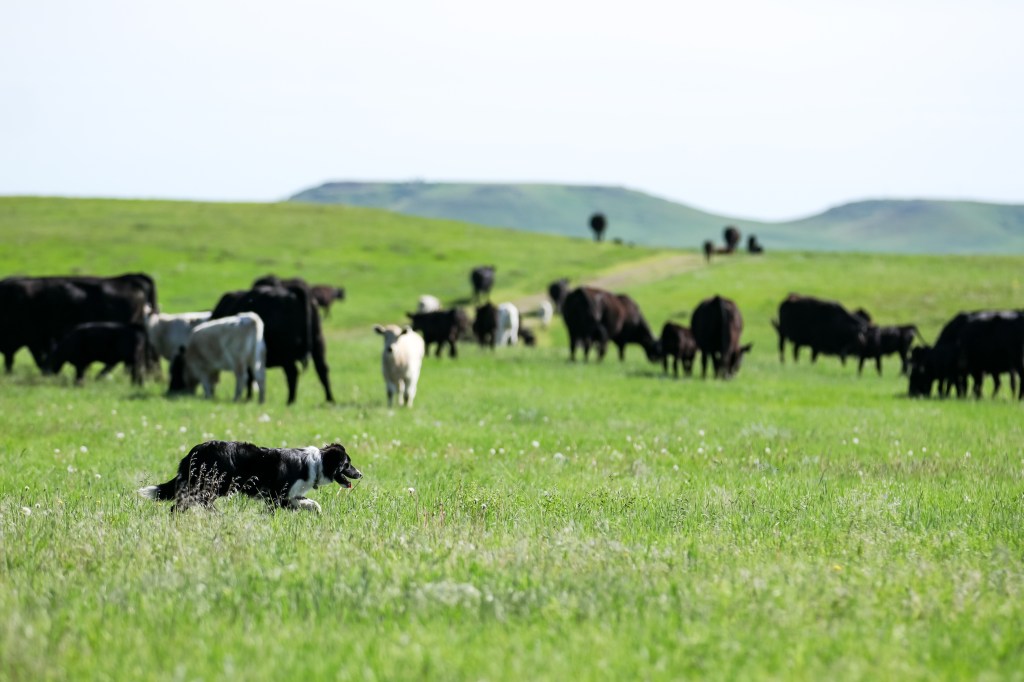
It is hard to do justice to the bond between a rancher and his cow dog. Until you’ve worked livestock with one, until you’ve seen the ease with which a 30- or 50-pound dog commands the respect of an ornery cow, until you’ve seen their agility traversing a slope that would be dicey on a horse and impossible on a four-wheeler, until you’ve witnessed how much they accomplish, pound-for-pound, it is hard to grasp their importance. Although there are some people who have a close bond with the horses they ride, for many ranchers horses are a valued tool, but fall short of partnership. But that’s what these dogs are: partners. Extensions of their people. Not all ranches utilize working dogs, but for those that do they are vital. But, just like the ranchers that utilize them, they are not without their quirks. Peculiarities. Idiosyncrasies.  

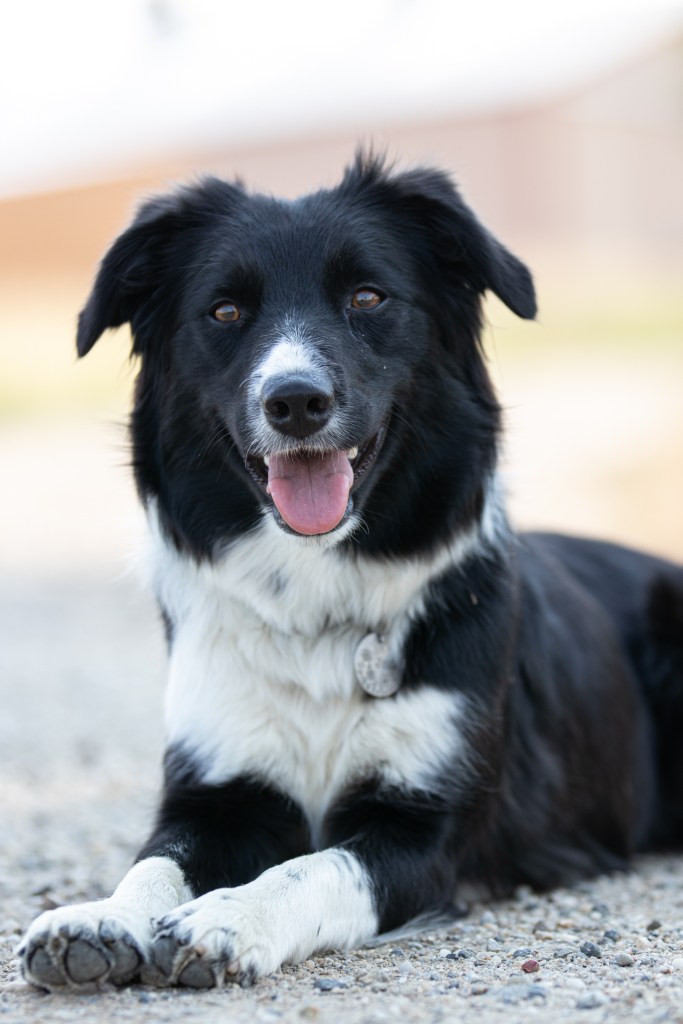
Our signature cow dog, by choice or happenstance, is the border collie ranch mutt sort, mostly border collie with a little bit extra to keep it interesting. We love their demeanor and their instincts, and there is just something about their glossy, jet-black fur and white markings, the blazes and collars and stockings and speckled feet, and, of course, the joyful white tip of their tails, their “shepherd’s lanterns,” as they are known. We have three border collies: a 6-year-old female, Pearl, and her almost-2-year-old daughters, Bess and Josie. Josie is my dog, very particularly so.

Her sister, Bess, as sweet as she is, and as capable as she is, isn’t quite the brightest bulb on the Christmas tree. Simple. That’s a good word. For example, Brad can’t let her hang out in the shop with him if he’s welding, since she’ll stare at the welding torch, mesmerized.

That’s Bess.

Josie, though, is a little different. She is smart – Maybe too smart? From roughly 4 weeks old and on, she has been extremely agile, very cowy, an escape-artist, rather melodramatic, and quite accident-prone. She could fall off the back of an ATV going downhill at a gentle 2 miles per hour. And for some reason she selected me to be her person. Brad likes to remind me that a dog reflects its owner, and I’m not sure how I feel about that. But then I remind him that it isn’t my dog who is fascinated by the welding torch.

The pups were 5 months old in the thick of our spring cow work, and we would lock them in the horse trailer while we worked, largely to prevent self-deployment. Those aluminum trailers, like oversized tin cans, have an inspirational echo, and the pups took full advantage, howling soulfully whenever they heard us “Hep!” the cows in the nearby pens. One morning, during coffee break, Josie was distinctly off. She was lethargic, slinking around, trembling, showed none of her usual interest in whatever I was eating, and honestly appeared acutely ill. I looked her over for snake bite marks or signs of injury. Maybe she’d been kicked, or got into something poisonous. She moaned a little when I felt her belly, and lay in my lap with her head bobbing pitifully. It was bizarre, and we were not too far from taking her to the vet. Thank goodness we didn’t. I finally put two and two together – She had gotten her feelings hurt when I locked her in the trailer. She was clearly thinking, “How COULD you?! I thought you LOVED me!”

That’s Josie.

Well, a couple of weeks ago, we had the black-and-white circus out on a walk and all three disappeared on a rabbit hunt. It isn’t entirely unusual, and they always catch up with us within a quarter hour. But this time, Josie didn’t come home. We took the ATVs out, calling and looking, walking ravines and then checking the house in case she’d made it back home. Occasionally I heard her bark, and would have sworn she was on the move. I heard coyotes in the same general area and my hopes plummeted. Something bad had to have happened. Finally, after hours and hours of looking for a little black dog on a black night, we had to call it quits. (Vaguely, I recollect sobbing to Brad, “How COULD she?! I thought she LOVED me!”) After waking up every hour to whistle for her or see if she had come home during the night, I went out as soon as it was light the next morning, fully expecting the worst. But I hadn’t been at it for long when I heard a single muffled bark, and wondered if my ears and the landscape were playing tricks on me. Eventually, I found myself in a deep little rock ravine, right next to the trail, carpeted with oak leaves and thick with twisted, young hardwoods. About 20 yards ahead, I saw a little flash of white.

It was Josie’s tail – her shepherd’s lantern – waving furiously when she heard my voice. She was entirely underneath a huge slab of rock halfway up the ravine wall, likely having chased a rabbit under it, with her paw wedged tight in a crevice. I don’t know how many times we had been back and forth mere yards from that spot, but all that was visible was her shepherd’s lantern. It didn’t take much to free her, but it took a good while to get her back to normal again after her incident. And I probably would say she milked it.

There’s just something about a cow dog. Quirks and all.

Ranch Wife Musings | Milk Cow Philosophizing

Originally printed in the Custer County Chronicle on July 24, 2024

The joke really was on me. I have dreamed of having a dairy animal for years, and to my credit I was up front with my now husband about this well before we got married. I knew he hated goats, for the two reasons (as near as I can tell) that his grandfather hated goats, and that they climb on cars. “I promise,” I said solemnly, multiple times, actually, “I promise you will never – never ­– come home and find a goat. I make no such promise about a milk cow.” And I very faithfully kept my word, even though on multiple occasions I regretted ever making that promise.

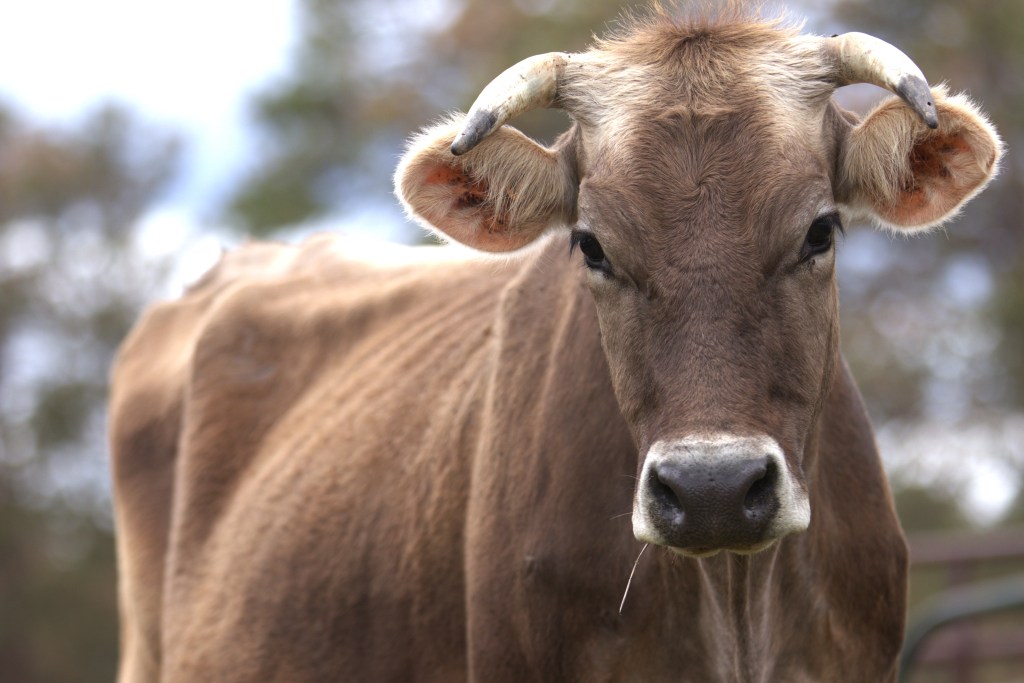
Well, one day, a year and a half into our marriage, I got home from to find Brad gone, his horse trailer gone, and all of the horses standing innocently in the corral. I knew where Brad was—He was preg testing a neighbor’s cows, the same neighbor that had offered to let me buy his nurse cow, Posey, who had never been hand milked. My suspicions were confirmed about two nerve-wracking hours later when Brad rattled up in his pickup and unloaded a peeved and horned Brown Swiss cow from the trailer. There she was, larger than life.

Like it or not, I was now the owner of a milk cow.

The learning curve was steep, and a comedy of errors. Have you ever wondered how they milk almonds to get almond milk? That’s what it felt like. Two fingers were all that could fit on her dainty little appendages, and do you want to know how much milks out in one squirt that way? Not very much. Like a half a teaspoon. If I did my math right (not necessarily something writers are inherently great at), there are 1,536 half-teaspoons in a gallon, which was about what she was giving at weaning time, when I acquired her. That’s a lot of squirts.

And to make matters worse, she wasn’t overly thrilled at the new arrangement. One morning, just when I thought things were settling into something of a routine and milking had definitely become easier, that darn cow lifted her tied-back leg in a mostly-failed kick, jarring me so half of the milk in my pail went all over me. This was early in my milking career and I had worked hard for that milk, let me tell you. I probably yelled at her, re-situated myself on the overturned bucket that serves as a milking stool, and started milking again. Then there was the telltale twitch and up came that hoof again. I was too slow for a good reaction, so instead I just tumbled right off the bucket into the dirty hay and jumped to my feet.

If I was a cussing person, I would have cussed, but I’m not, so I didn’t. With more irritation than authority, I yelled, “No!” And kicked her. Hard. Right on the back leg, the one she had kicked with. She looked mildly surprised, mostly just bored, and went back to munching her grain. I kicked her one more time for good measure, probably threatening to send her to the sale barn on the next shipment of culls, and sat back down.

Long story short, I learned she can mule-kick even with a leg tied back, and I learned how irritating it is when you kick a cow’s rear and she just looks at you in complete boredom, and she didn’t go to the sale barn. A reformed cow came to the milking barn the next morning and meekly submitted to our routine.

After this, though it hasn’t been entirely smooth sailing (what is, with livestock?), milking became one of my favorite parts of the day. It was quiet. Peaceful. Productive. The little milking machine that was so helpful at first eventually got sidelined in favor of the tactile task of hand-milking. The sound of the milk hissing and foaming into the bucket, the comfortable bovine smell, the cats expectantly waiting. I enjoyed watching her calf, who arrived in April, wander around the barn licking the walls and head butting the scoop shovel, stealing my gloves and tormenting the cats. It was just pleasant.

And besides, the payoff was singularly enjoyable: fresh milk and rich cream for my coffee, and the yellowest butter you ever did see. A lot of work, yes; a time commitment, yes, but so worth it. Posey is currently employed solely as a nurse cow, since we found a bum calf to put on her, but I look forward to fresh milk again in the fall when we wean. We all benefitted – Brad and I, the cats, the chickens, friends and neighbors and family. All from one cow.

I think about the cultural shift we have seen over the last 100 years, the industrialization, the urbanization, a shift away from the land, a shift away from family, a shift from self-sufficiency and community-sufficiency, towards a national and global model of economics. As individuals in a culture, we no longer raise our own meat, or grow our own vegetables, or sew our own clothes, or build our own homes. We are divorced from those processes. We have mechanized ourselves out of jobs, and mechanized ourselves out of a true appreciation for the food that we eat or the clothes that we wear.

Author Wendell Berry, in his book The Unsettling of America, talks about the societal effects of automating and mechanizing, specifically as it relates to agriculture, but with broader implications as well. When efficiency is the god of our society and a machine can accomplish a task with greater efficiency than a man, we then place more value on the machine than the man, and more value on efficiency than on the good of family and community. Automating doesn’t elevate the worker or the work, but ultimately degrades it. In our technology-driven, technology-ridden culture, it isn’t feasible or reasonable to want to de-automate everything, and convenience and efficiency do have their places. But what have we lost in the process?

I wonder.

Just a Golden Evening

We have had some stunning early summer weather this year, the kind that makes one loath to come inside at the end of the day. A few nights ago, the light was perfect so I took off with my camera and Josie, and who would follow but my three not-kittens-anymore, Elsa (the white one), Portia (the true yellow one), and Buttercup (the creamy looking one). They kept up on the whole walk. Just about all of my cats will accompany me on walks from time to time.

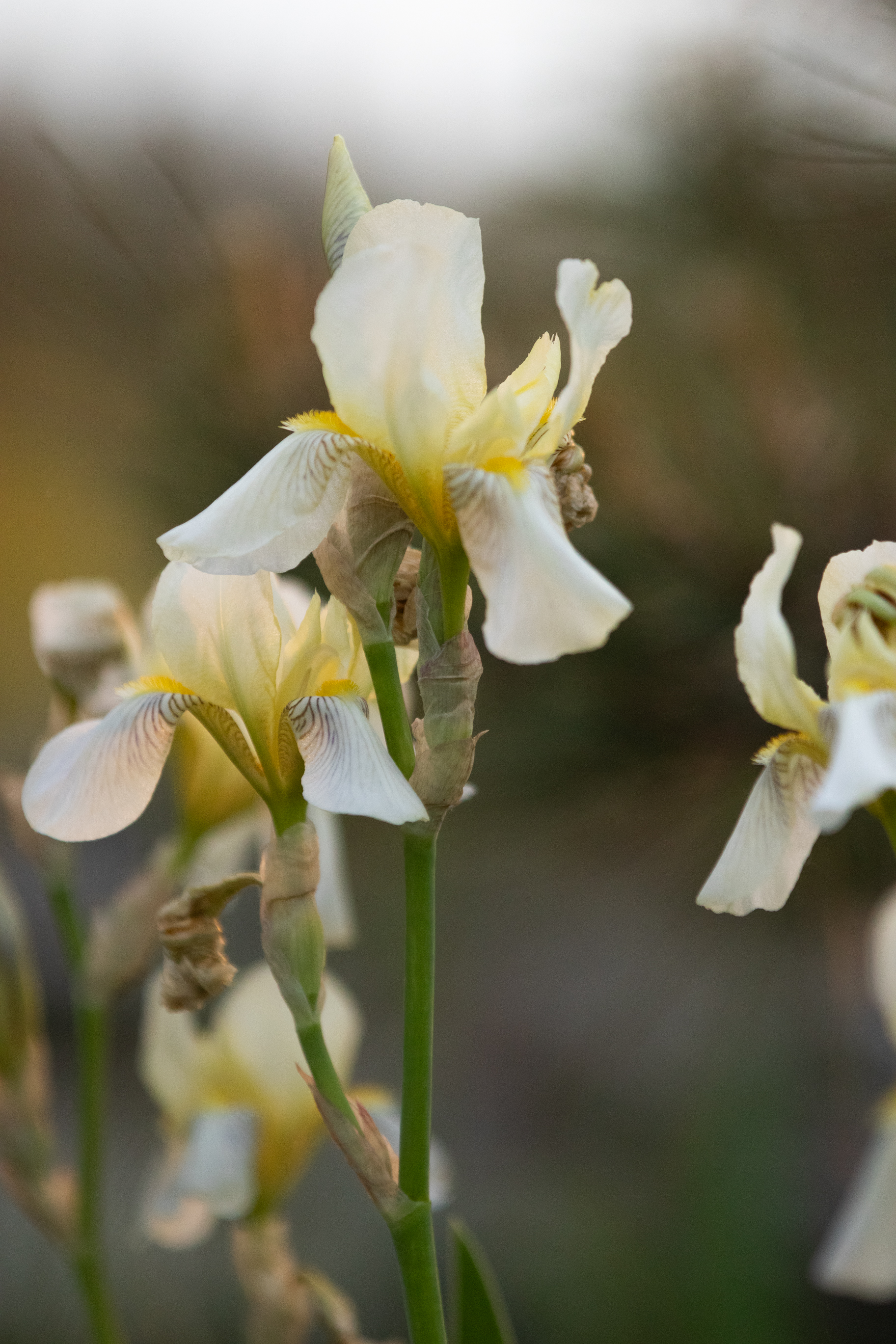
The shell-leafed penstemon was blooming everywhere, and I was tickled to discover a little patch of white irises. We don’t have wild white irises, so who knows how these got there, but they were lovely. Whether a bird planted them, or a homesteader’s wife years ago, who knows, but no one else knew about them when I asked Brad and my in-laws. It has been such a wonderfully wet spring, a lot of things that have bloomed that were somewhat dormant in previous years, so it may have been years since these white beauties bloomed.

Wonderful golden evening.

Ranch Wife Musings | March Madness

So I really don’t know what March Madness is, other than it has something to do with sports, I think. But March is a crazy month. The winter sleepiness is shaken off and everything wakes up. All at the same time. The garden, the cows, the weather, the schedule, the chickens, everything.

There are babies everywhere, and I mean everywhere.

A little cold snap over this last weekend accentuated that, with little baby calves and their irritable mamas stuffed in every corner of the yard, with all available indoor space occupied by doubles and triples, and cows with slightly older calves getting shuffled into sheltered corners of the yard to keep them out of the wind and driving snow.

So far there have been two sets of twins, and both extra babies were shuffled successfully onto two cows who had lost calves–Good saves, on both counts, and the two lost calves were just part of the percentage of unavoidable losses, rather than the rather staggering losses of last spring, due to a collision of weather and luck of the draw. Posey got to try being a nurse cow for a week with one of the extra twins, until a mother needing a calf turned up. Posey was not impressed. Some nurse cow. We’ll see how she does when she calves, I guess.

Seedlings are going nuts in the brightest window in the house, around 120 tomato seedlings, some herbs and greens, and of course my elderberry cuttings. Bread baking and some jelly making and some sewing projects and some continuing ed for my paramedic license and a dive into spring cleaning have kept the days full. They seem to end as quickly as they start. And yes, that is a seed starting mat under that bowl of dough! Another use for those handy things, especially when you keep the temps low in the house!

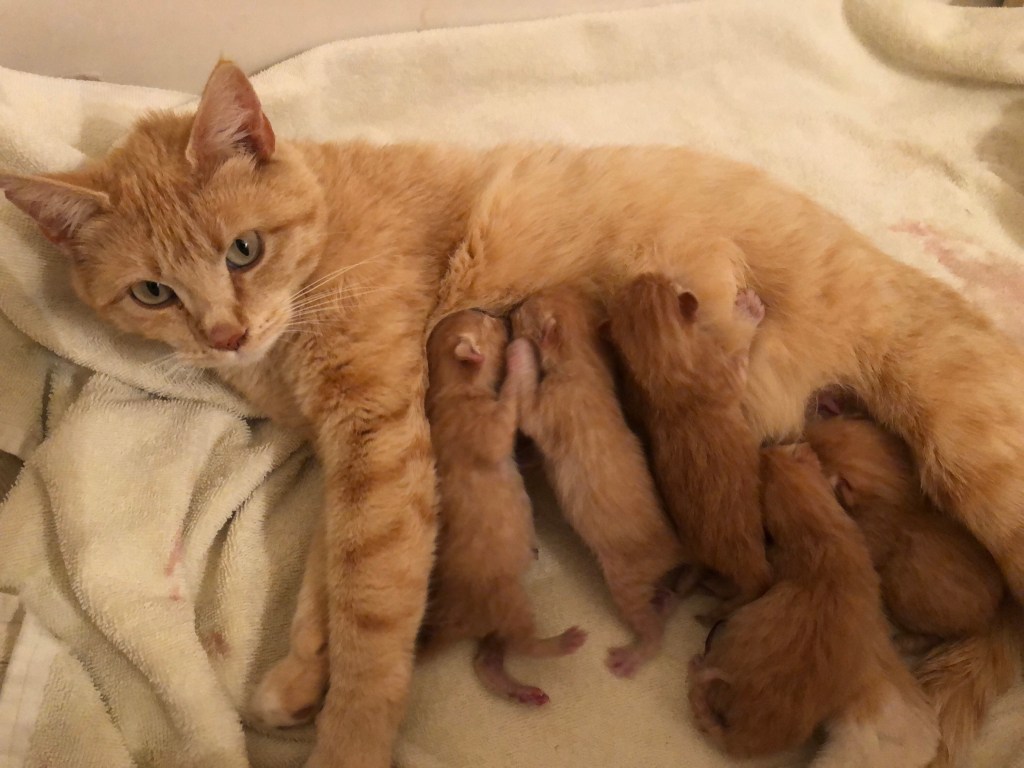
And then yesterday happened. Or rather, Yellow Cat happened yesterday. We knew she was ready to have kittens at any time, and I complacently assumed, this being her second litter, that she would be competent. Boy, was I wrong. I went down to do chores yesterday morning and found a pile of three kittens that appeared dead, in just about the worst place Yellow Cat could have had them. She was unconcerned. I honestly thought they were dead and rigored, and when I picked up the two that looked the most dead, they were unresponsive and stiff and cold to the touch. She didn’t appear to have really cleaned them, their fur was matted down, and I really mean it when I say they appeared dead, and I have seen plenty of dead animals to know what I’m talking about. This isn’t an “I’ve never had chicks before and one is stretched out luxuriously under the heat lamp and I think it is dead” situation. They looked dead. Very dead. One of the kittens, though, moved a little and made the tiniest sound. It looked pretty hopeless, but I can’t stand to walk away from something like that. I almost left the two most dead looking, but gathered all three up, stuffed them inside my vest and ran up to the house with them. In the back of my mind was the paramedic mantra, “They aren’t dead until they are warm and dead,” and after a mere few minutes under a heat lamp and on top of a (you guessed it) seed starting mat, they came alive.

Baby animals are incredibly resilient but also incredibly fragile, a strange dichotomy, and even as they warmed up I felt that it was probably futile, but I gave them a little milk replacer laced with corn syrup, enough to wet their dried mouths, and two of them did try sucking it off the cloth I was using. I finally rounded up Yellow Cat from down by the barn, who was sauntering around like she hadn’t a care in the world, and locked her up with them. Long story short, the three kittens all nursed, she had two more, and all five survived the night with their mother in the bathtub and are doing just fine. I am still pretty mad at that cat, though.

It is hard to believe that April is just around the corner. April, the first month of long days in the saddle pairing out the calving pasture, the first real month of springtime although snow is always a possibility. There is always something going on!