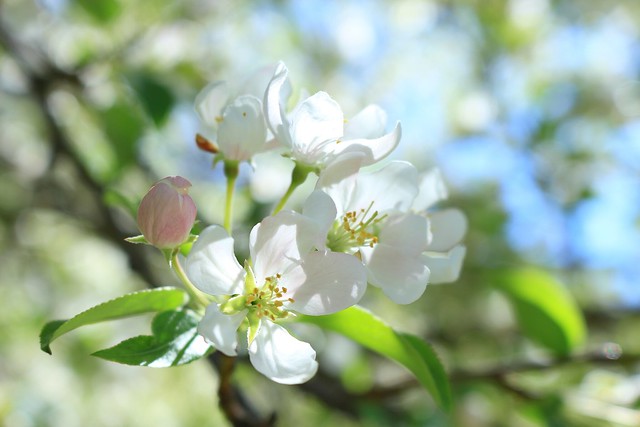
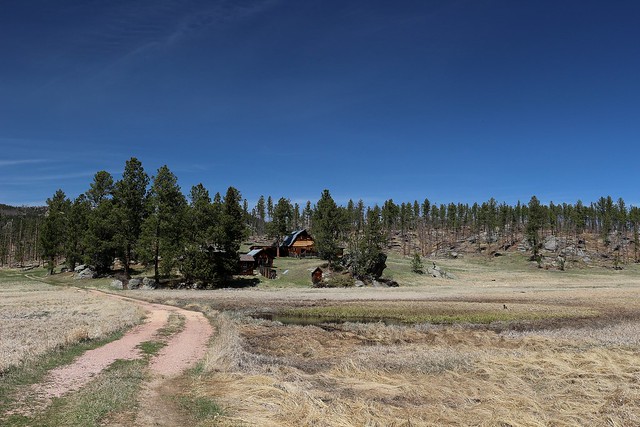
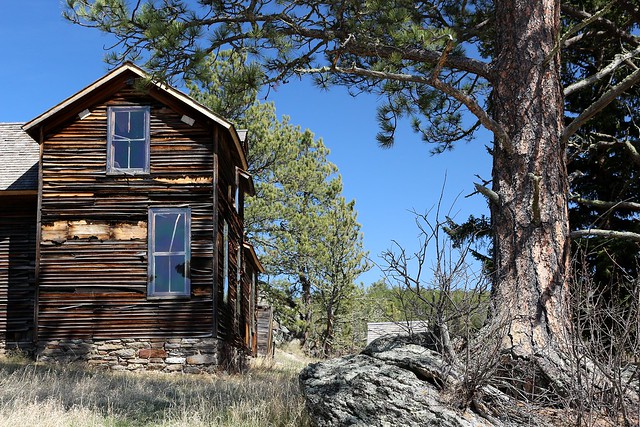
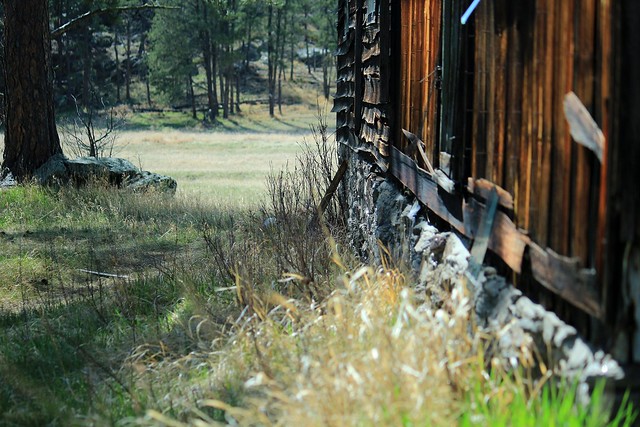
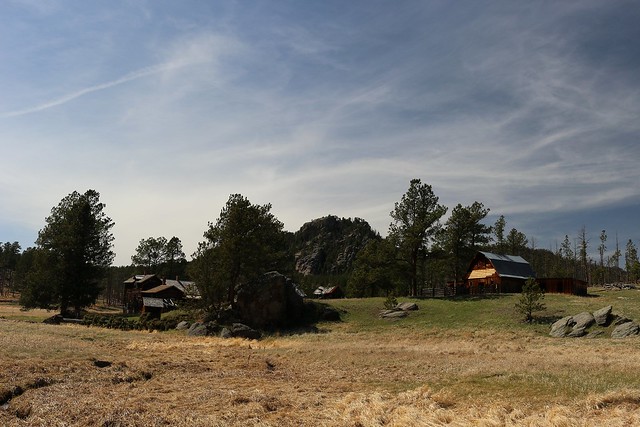
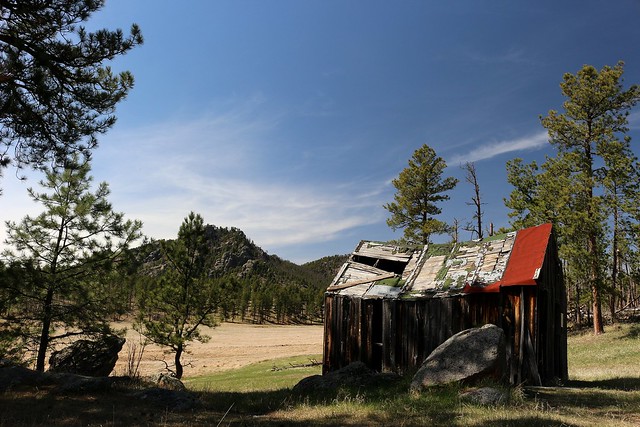
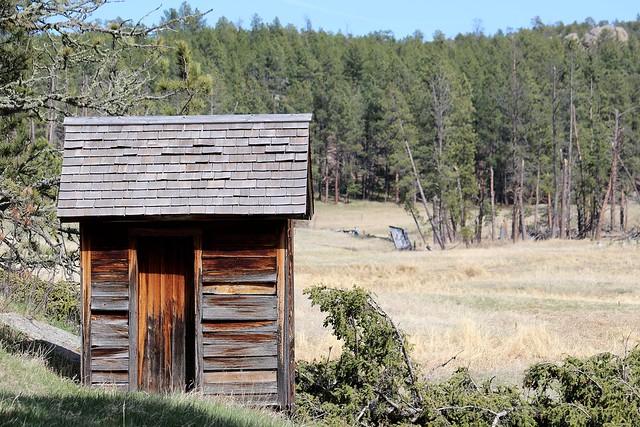
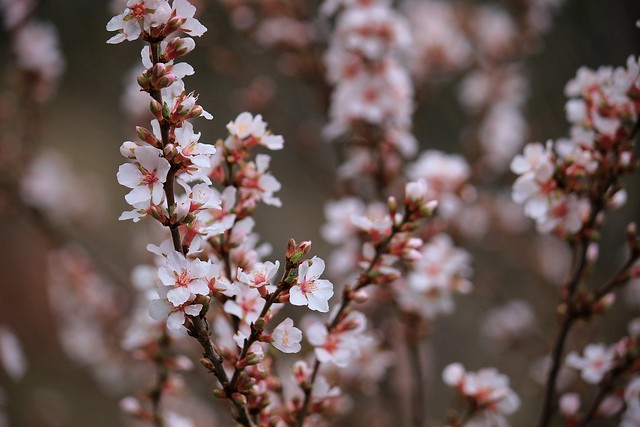
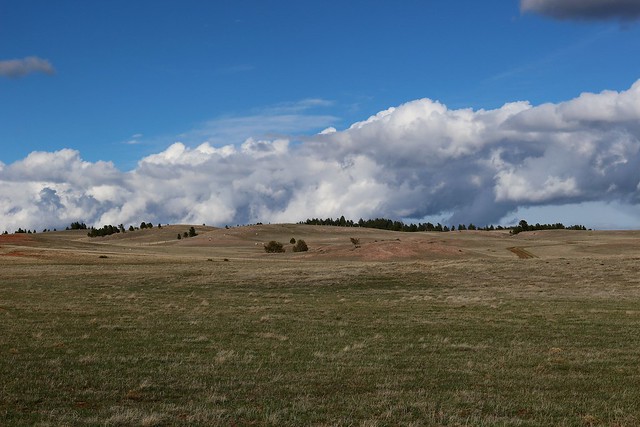
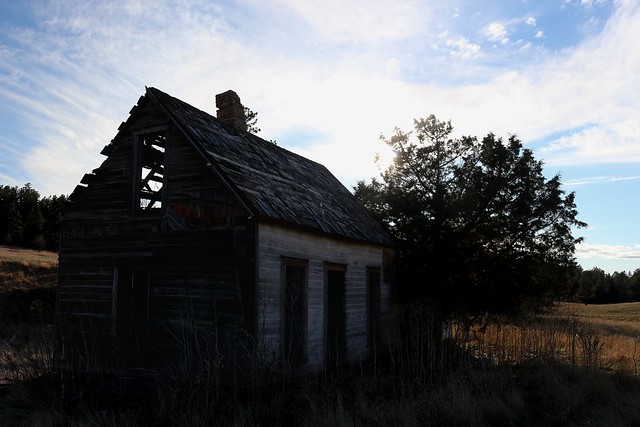
I walk the woods in the evening – my woods, I tell myself – the familiar trails, dear to me and near to my heart, winding through old creekbeds, beneath towering pines and wizened oaks, along hillsides sparkling with white chokecherry blossoms. Treading the same way again, my heart thrills. Each step is a delight. Each breath of the cool evening air tastes sweet. I want to pour the coolness over my head and drink of the freshness. It is familiar, so familiar, every step is one I’ve experienced before, each tree and flower and perfume of evening – but it is new, always new.
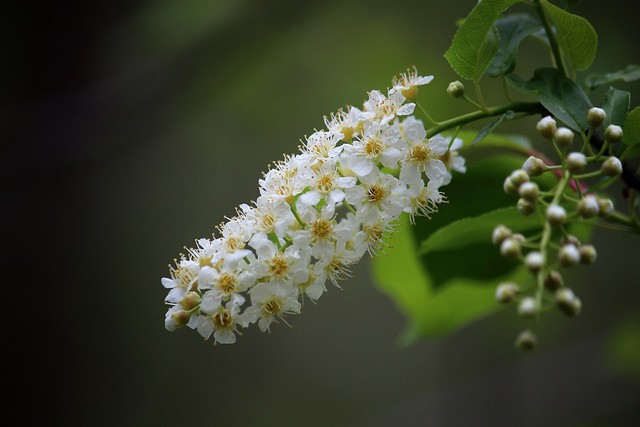 With the earth comforting beneath my feet, grasses growing tall to above knee-height, trees leafing out in their array of green, my heart is drawn upwards, Heavenwards. These woods are my sanctuary. I find that my time alone while hiking becomes my time alone with the LORD, since I can’t imagine walking these woods and not being struck to the heart by how good God must be to have created so much beauty for us to enjoy. He didn’t need to create beauty. God could have allowed sin to completely wipe out the beauty on this earth. But He didn’t. And it is wonderful. Even in this fallen state, His beauty is reflected in His Creation.
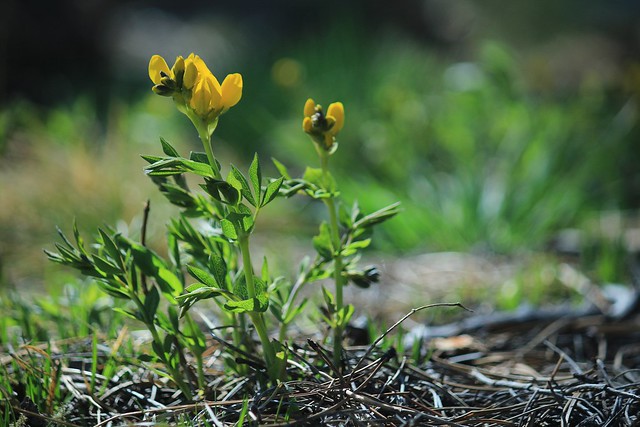
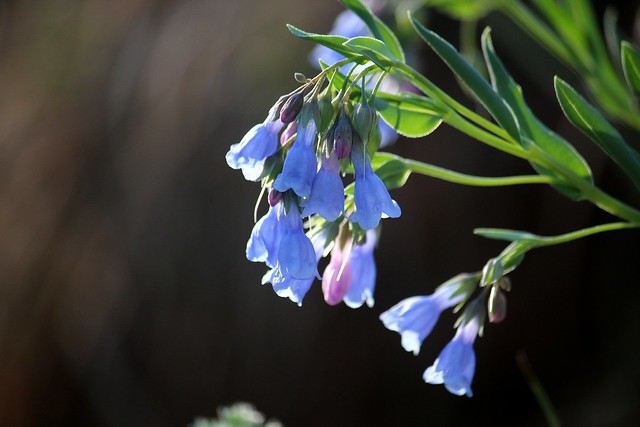 My heart breaks with joy. Have you ever felt that? My heart breaks and soars, and I murmur Oh, my! Again and again. Oh, my. My eye is drawn here and there – to a splash of color from a larkspur violet or a shooting star or a bluebell, to the wild white and lavender of crazyweed, to the little golden blossoms of wild currant or the coral of columbine or the dark blue-eyed grass, or the pale birch trees on a north-facing hillside of emerald moss. A gleam of sunlight through the trees on the next hilltop melts me, but I know my camera couldn’t do it justice, so I don’t even try. My heart breaks with joy – there is too much, too much, too much. How can a human creature take in so much beauty and goodness and majesty, and not be overwhelmed? And if I cannot understand Creation, how can I possibly understand its God?
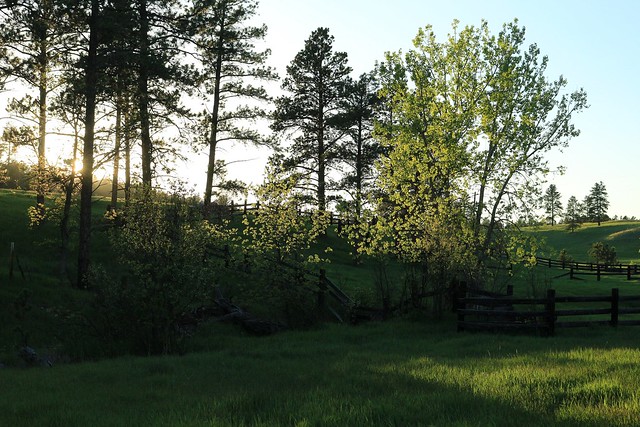 The too-familiar sights, the amber scents of pine resin and the fresh earthy perfume of green life or the sweet evening air, the lullaby of wind in the pines – so many memories and impressions left over, brought back by glimpses or tastes of the familiar, the familiar that never seems to change. I remember my childhood, our visits here, my heart’s longing for this place. I remember past joys, and revel in present joys. Then my heart breaks with grief. Because I know that one day this place won’t be here for me. One day it will be sold and divided into lots and developed, and I weep at that thought, dropping tears on the grassy path. How harsh it feels – to be brought to live in the place I love most in the world, but knowing that it may not be here, a mere few years from this time. This place may only be land, and I know that, but it holds and brings back so many wonderful memories. It is a place that is part of my childhood, part of my dearest memories.
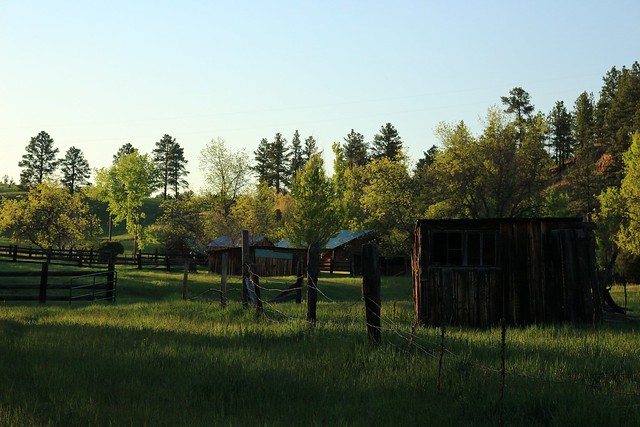 Then I repent. How could I have the audacity to challenge God’s goodness and His Providence by weeping over what He may someday in His sovereignty take away from me? If that day comes, I don’t believe tears will be wrong, but weeping now and letting even a moment of joy be spoiled by what God may in His love give to me or take from me – that is wrong. I pray for contentment and peace in my knowledge that God is good. I remind myself that God only does that which is for the good of His children and for His glory. I remind myself that He only gives good gifts, and He is a loving Father, not a cruel taskmaster. If a gift is good in the giving, it is also good when He in His sovereignty removes it. If He removes a blessing and strips me of something I sinfully think is necessary for my happiness, I know He does it for my good, not to punish. If He takes something from me that I love, He does it for my good, not out of malice. Whether or not I comprehend it, it is for my good. At the very least, pain allows me to experience the sweetness of God’s comfort. One day, I’ll understand. But for now I need to be content to not understand and to take comfort in the things I do understand – that God is a loving God, a generous God, a compassionate and comforting God – and He always provides. Not necessarily how I in my humanness want Him to provide, certainly, but if God is good, His Providence is as well, and I cannot challenge it. And so even in my tears, I thank Him. Even in my tears, this place draws me Heavenward. And then my heart lifts and I savor a soul-deep peace, content to enjoy however many days and years I have left to enjoy this. Few or many, they are a gift. How sad to spoil them with misplaced regret.
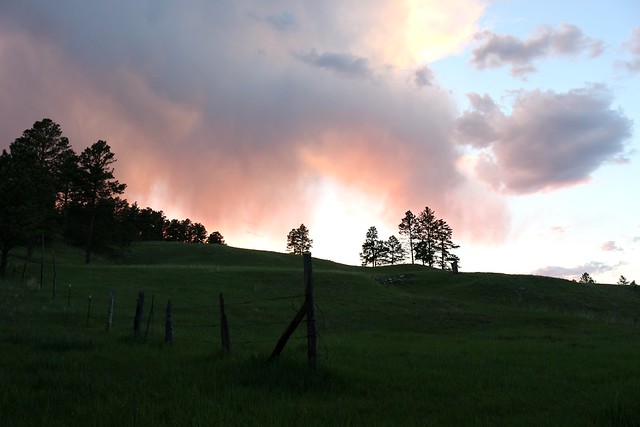 The low rumble of distant thunder tells of a coming storm, and the clouds are bright in the west, shining flame-like through the trees. The crimson and coral turn to slate and blue. The golden sunlight disappears beyond the horizon and banks of heavy clouds. The rain will come.
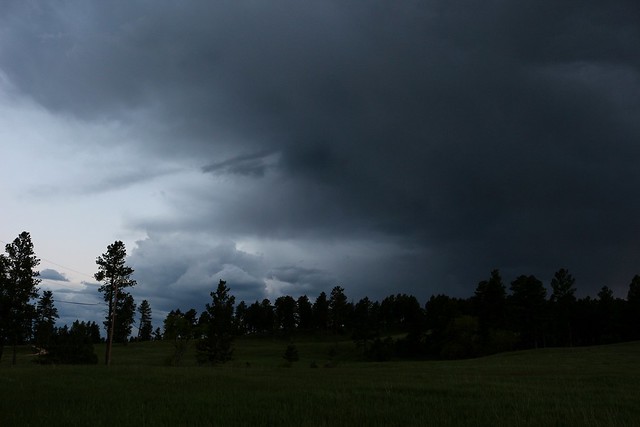 How can I not gaze Heavenward?