Ranch Wife Musings | What’s in Your Cup?

Originally printed in the Custer County Chronicle on 1-1-2026

As you sit and enjoy a hot cup of coffee on this first day of 2026, poring over the contents of this wonderful, small-town paper, your dog, whom you generally love, comes up next to you and sticks her nose under your elbow in a friendly bid for affection. Up goes her nose, up goes your elbow, and everywhere goes the scalding hot coffee. 

Why?
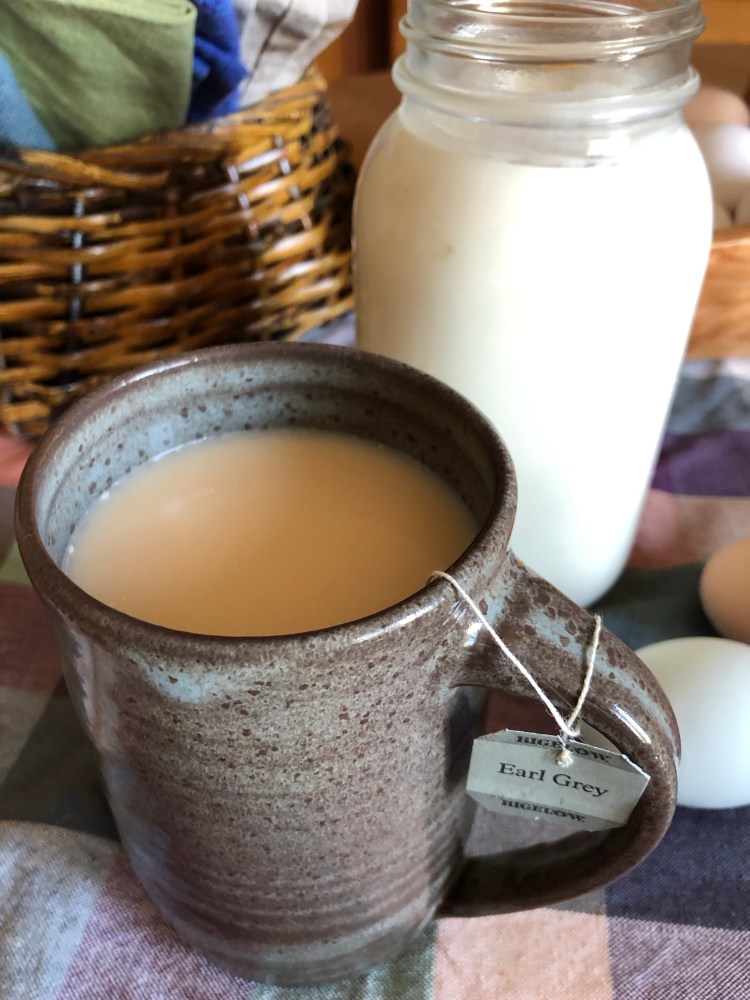
Our first instinct, of course, is to blame the jostle (or whoever or whatever caused it) for the coffee excitement. But the fundamental reason coffee came out of the cup is because coffee is what was in the cup. If you had been sticking to your New Year’s resolutions and drinking water first thing in the morning, water would have spilled out. Tea, and tea would have spilled out. Less coffee, and maybe nothing would have spilled or only a few drops.

The problem really isn’t the jostle. The problem is the contents of the cup.

Every time an old year fades away in the rearview and a New Year approaches, unfolding before us with all of its newness and freshness, life begs to be assessed, and although some scoff at New Year’s resolutions, I think we miss a wonderful opportunity for change if we fail to at least do some self-reflection, taking stock of the old year and making some goals for the new one.

We’re pretty good at a cursory, surface-level assessment, tending to zero in on things like a number on the scale or a dollar amount in a savings account, things that are pretty non-threatening, not overly challenging, and not overly crushing if we fail. We tend to focus on things that inflate our own egos, reinforce our sense of self-importance, and have no real lasting benefit for anyone.

So I’m going to assist us in this meaningful self-reflection by posing a question: What is in your cup? When you get jostled, what comes out?

Because the jostling doesn’t lie. Whether the jostle is someone who cuts you off in traffic, or hitting every red light on the way to church, getting stuck in the longest checkout line at the store, or clumsily dropping something and making a mess.

Oh, you don’t relate to any of those? How about your crying baby at midnight after three hours of walking the floor, or the spouse who fails to respond to you in just the right way, or the cow that cuts back and jumps over a fence and spoils the gather?

Still nothing? Okay, the boss that patronized you in front of your coworkers, the morning alarm that had the audacity to go off, the wrong man in political office, the toothpaste you got on your shirt as you’re running late to an appointment, the chair that stubbed your toe, or the dog that got into the garbage.

If somehow none of these ring a bell, I promise you’re not exempt. Use a little creativity and come up with a few jostles just for you.
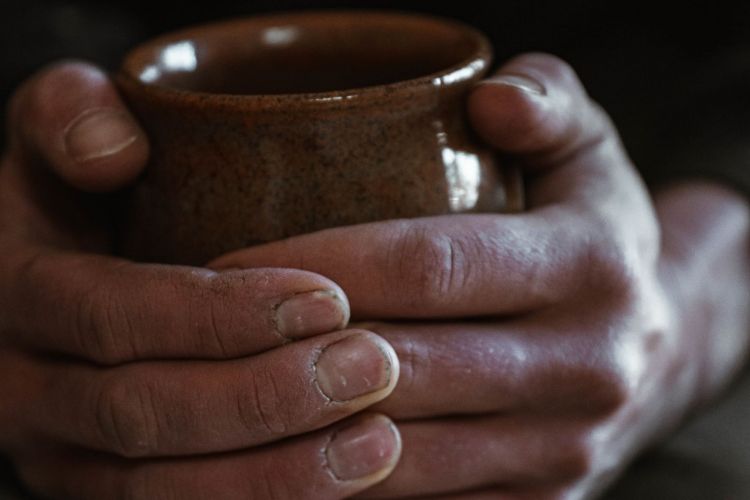
We call those jostles, those circumstances that provoke a response, “stressors.” Annoyances. Provocations. Some of them wouldn’t annoy everyone. Some are just sort of innately annoying or inconvenient. But it is the response that is key, not the stressor. If a stressor is applied and something ugly spills out, the issue isn’t the stressor. The issue is that something ugly was in there to be spilled out in the first place. All of us have those stressors, because ultimately all of us have ugliness in us that, given the right provocation, will spill out.

So I ask again, what is in your cup? When you get jostled, what comes out of you? Is it ugliness and spite? Or is it goodness and graciousness? Is it profanity and vulgarity? Or is it tempered words? Is it anger or gentleness? Is it bitterness or forgiveness? Is it hate or love? Is it stinginess or generosity?

In Paul’s letter to the Galatians, he gives them this list that he calls the Fruit of the Spirit: Love, joy, peace, patience, kindness, goodness, faithfulness, gentleness, and self-control. Self-control rounds out the list of virtues, reminding me that with all the virtues the precede it, there are still parts of us requiring restraint. There is still something there needing to be controlled. There is an ugliness needing to be rooted out.

So, when you get jostled, what comes out? When you get cut off in traffic, does your heartrate spike and you see a little red, and do you yell into your windshield? When a cow acts like a cow when you’re working cows, do you respond with anger and vulgarity, maybe even taking it out on those around you? When your spouse fails to respond just so, do you respond with bitterness and resentment? When you stub your toe, do you spew profanity? When your alarm goes off and you weren’t ready for the day, do you grumble and grouse as you leave the house? What comes out? If it came out, it is fundamentally because it was in there, not because you got jostled.

What would it look like if we all examined the contents of our cups, and then did something about those contents? The contents of our cups are often a direct reflection of what we are actively (or passively, without thinking) pouring into them, in the form of social media, entertainment, and the company we keep, for instance. Sometimes the contents reflect not so much what we’ve poured in, but what we’ve failed to root out.

What if we determined to change what we poured in? What if we poured in so much goodness that there wasn’t room for anything else? What if we were so bathed in the goodness of God and His Word, what if we were so filled with the Fruit of the Spirit, what if we so filled our minds and hearts with good words, kind words, true words, loving words, that when jostled that is what came out?

Would the end of 2026 look any different than the end of 2025 if you were to fill your cup differently? How would it change your relationships? The peace in your home? The dynamic in your family? The strength of your marriage? Your performance at work?

What’s in your cup?
Ranch Wife Musings | On Whose Shoulders We Stand

Originally printed in the Custer County Chronicle on June 18, 2025

Have you ever noticed the following contrast?

When Mother’s Day comes around, in sweeps the sappy sentimentality from all quarters, religious and secular alike. Church sermons laud the important role mothers play, encouraging mothers to embrace their God-given status and find joy in the motherhood journey. Ushers hand out $5 gift cards for ice cream or flowers to all the mothers. Mothers are showered with admiration and gifts, treated to lunch, and generally doted upon. All the wrongs mothers can commit are overlooked, and motherhood is suddenly elevated to frank heroism by a culture that at all other times actively discourages women from having children and decries motherhood as being demeaning and bowing to the patriarchy (but can’t even define “mother” anyway), while memes circulate social media saying that Mother’s Day isn’t just for mothers, but for anyone who wants to be considered a mother – cat moms, dog moms, anyone. I find it all very confusing.

Father’s Day rolls around, though, and it is a different dynamic altogether. Church services might give a tiny nod to the day itself, might offer a brief prayer of thanks for all the fathers in our lives, but any sermon that takes place is generally not a celebration of God’s gift of fathers but a warning to fathers that they had better shape up, and here’s how to do it. Fathers aren’t lavished with gifts, and social media takes no break from the campaign against toxic masculinity (which really is usually just a campaign against masculinity, period). Fathers are often the butt of sarcastic jokes, and many run-of-the-mill issues full-grown adults wrestle with are tacitly or explicitly blamed on fathers and mistakes that were made during childhood. 

The dichotomy is striking, if nothing else.

It seems to be a daily thing on the news, hearing about violent crimes, abuses, tyrannies, behind each of which is a man being dragged through the mud, sometimes justifiably, sometimes not. But for every single one of those events that dominate the news cycle, I would guess there are 10,000 men, invisible to all but their families, standing in the gap for their wives and children, for their communities, and for their faith. Men who rightly set the standard for manhood, for virtue and morality, for right and wrong, willing to hold the line against those who threaten the spiritual and physical wellbeing of those they love.

And we need that. We need those men. Desperately.

In a society where many social ills truly can be traced to fatherlessness and abuse by fathers, what we need is more strong, masculine figures, not fewer. More men who take the privilege of their strength seriously. And those men who are exemplary in their roles as husbands and fathers should never be in doubt about their value or importance.

We are who we are because of our fathers. Good fathers give us an example to follow. Poor fathers give a warning about what to avoid. But our fathers make us, and that trickles down through the generations, for better or for worse. Men learn how to treat their wives by watching how their fathers treat their mothers, for better or for worse. Women learn how they should be treated by watching how their fathers treat their mothers, for better or for worse. The importance of fatherhood – for better or for worse – absolutely cannot be overstated.

My dad set the standard of manhood for me. He was a steady, dependable, wise, Godly force in my life through all of my growing up years (and still is), and so much of the woman I became is a direct result of the example set by my own father. His living out of his masculinity gave so much context for my living out of my femininity. So much of what characterizes my faith and my thoughts and my loves and interests are because of my dad. How I view life, how I process information, decisions I’ve made – because of my dad. As an adult, he became the standard for what I ought to pray and look for in a husband, and his example of a loving and kind father and husband set the bar when I was dating. He demonstrated devotion to God, faithfulness to wife, love of children, gentle but firm in his expectations and corrections of us, and always pointing us back to Christ. He, with all of his imperfections and flaws notwithstanding, was my standard of masculinity and manhood.

Then there is my father-in-law, who has been a constant presence in my life for the last 7 years, as the first person on the volunteer fire department to take me under his wing and show me the ropes, and, more importantly, as the man who helped make my husband the man that he is. And I’m so thankful for that. I’m thankful for the honesty and integrity that my father-in-law has modeled to his son, for the instinct to generosity, the work ethic and ingenuity (it is amazing what can be done with wire and willpower), the commitment to family and community, the importance of being a capable and compassionate leader, and that there are more important things in life than the money in one’s bank account. I’m even thankful for the somewhat twisted sense of humor that I now have to suffer with on a daily basis.

And it isn’t too long before I get to watch husband step into his own role as father. Who we are because of our fathers will shape and mold the next generation.

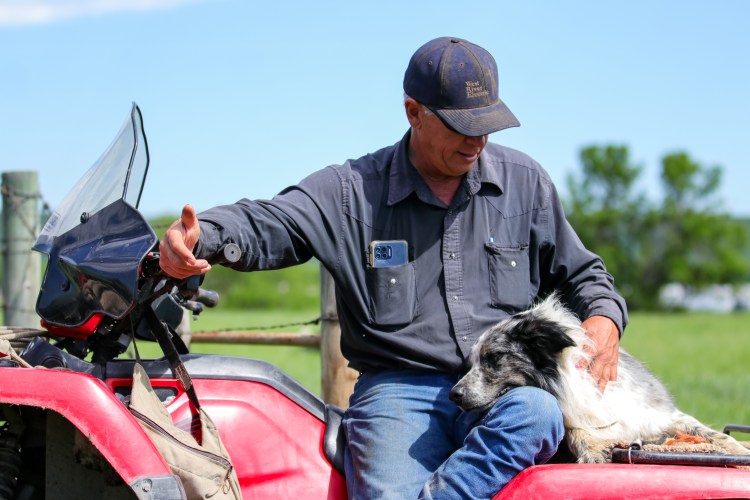
We stand on the shoulders of the men who made us.

Ranch Wife Musings | A baby milk cow named Marigold

Originally published in the Custer County Chronicle on March 26, 2025

“So, will your column be about a certain baby milk cow named Marigold?”

Brad has a way of poking fun through the most innocent of questions. And he knew the answer a week ago, when Marigold was born. Of course the column would feature the newest addition to Laura’s dairy operation. Silly question.

Posey calved last Wednesday, producing the prettiest little Jersey x Brown Swiss heifer, all golden brown, and rosy pink wherever her skin shows through parted hair, like along her back or the little spot on her nose. Some calves are sort of knock-kneed when they’re born, or their proportions are just a tick off. Not Marigold. She has the sweetest, brown-rimmed doe eyes, the curliest eyelashes, the floppiest ears all pink inside, and the straightest, slenderest white legs with dainty little deer-like hooves. And she’s happy! So happy. She comes literally skipping into the shed when I’m milking in the morning, prancing around merrily until she decides to nap, quite the contrast to Posey’s calf last year, a big bull calf, who just wandered around headbutting everything and knocking stuff over. This delicate critter is rather captivating.

I’ve spent a shameless amount of time sitting down on the stoop of the shed, soaking in all the springtime pleasantness and the satisfaction of seeing that beautiful little baby milk cow skip around the corrals or curl up in a puddle of sunshine. The last 9 months were spent hoping that the sexed Jersey semen would do its job, and I am basking in the exceptional outcome. And she is perfect. For me, any baby cow is cute, even the funny looking ones or the less proportionate ones. But you know a calf is particularly cute when a seasoned rancher is willing to say so. I felt very gratified and validated when it took no coaxing to get such an admission from my husband or my father-in-law.

But it isn’t just about Marigold, as much joy as she brings me. It is about community. Connection. It is about generational relationships that I feel so blessed and fortunate and humbled to have married into. And those complex topics are represented by the simple existence of this little baby milk cow.

Her mother, Posey, was a gift to me from Brad a year and a half ago, purchased from dear friends and neighbors that Brad practically grew up with. She was born on their ranch, and her mother was their long-time nurse cow, raising who knows how many bum calves. This same neighbor’s brother, the dad of one of Brad’s best childhood friends, AI’ed Posey for me last year as a belated wedding present. What a gift!

We are not islands unto ourselves, as the saying goes. Our modern, industrialized, efficient, corporatized society creates the sense of islands, isolated groups and individuals seemingly disconnected from their neighbors. We’ve created a society where we rely most heavily on people we never will know, where person is separated from person by space and perspective and interests in ways that only deepen the sense of isolation. And technology, as much benefit as it brings, as much potential for good as it has, in many ways has driven this divide, as we are no longer forced to rely on those closest to us.

But peer into the inner workings of the agricultural community and you’ll see something very different. I’m continually amazed and blessed by the interconnectedness, and it begins within the four walls of each home. I rely on Brad. He relies on me. We rely on our families. They rely on us. We all rely on our neighbors. They in turn rely on us. And on it goes.

It is especially apparent going into branding season, where the all-hands-on-deck, neighbor-helping-neighbor work is accomplished to the benefit of the whole community, as everyone sees to it that everyone’s work gets done, but it shows up more subtly as well. As the stories fly, the community gets wonderfully smaller. The excellent cattle dog that you find out was out of So-and-so’s dog. The roping horse you’re told was trained by this person. The truck bought from that person. The chaps made by this person. The saddle crafted by that person. The branding stove made by So-and-so. The barn built by So-and-so. Adventures, mishaps, and memories shared across generations, binding family to family and neighbor to neighbor.

So, I look at my rosy-golden little calf and her mama and I see a distilled-down representation of community. I see the gift of a husband to his wife in Posey. I see the connection of friend to friend, neighbor to neighbor, in Marigold herself. I see family integration and affection represented by a nurse cow who generates no pasture bill and who raises whatever calf needs a mama, regardless of its brand, in a small way benefitting everyone.

Lots of thoughts prompted by a critter so tiny.

So, I will continue to shamelessly sit and watch the sweet interactions of a mama cow and her baby, listening to the noisy nursing sounds, watching that little white-splotched tail whip back and forth, watching the bony little head thump the shapely udder, watching the merry creature skipping around in play. And be thankful for the community I get to call my own.

Ranch Wife Musings | Which One I’d Pick

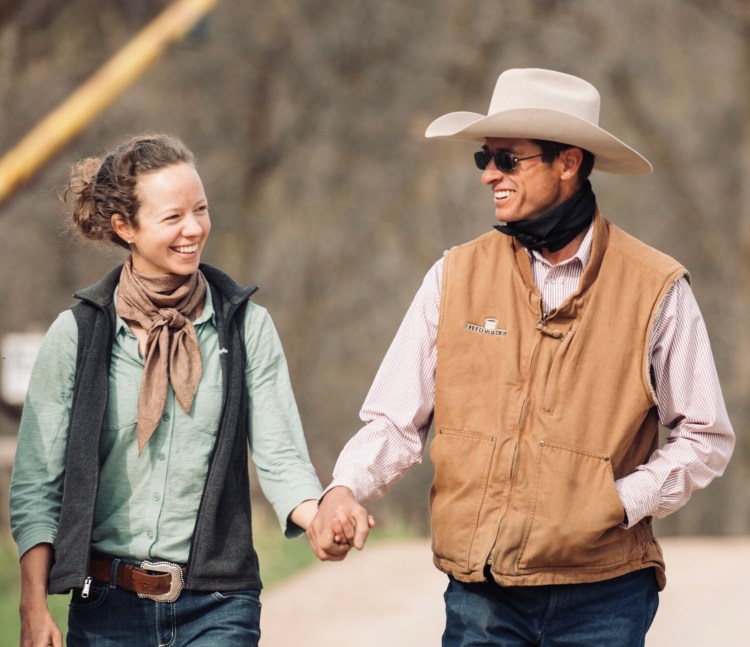
We really don’t go on dates. We didn’t when we were dating, and we don’t married. Maybe someday we can change that, since I really do think it is a good practice for married couples, but honestly our marriage reflects the simplicity of our “dating” life. We did life together. We worked together. We cooked meals together. Picked apples together. Worked cows. And these two photos? I took these just recently, but an awful lot of our dating and engagement was spent just so, and I would occasionally sneak photos of my favorite view when I was riding with Brad to check cows, or check the calving pasture, or check water, or whatever. I fell in love looking at this view.

And it made me think of something. This particular day, I had been busy with all sorts of things, we had vaccinated cows all morning, we were having a couple from church over the next day, and I had a house to clean, bread to bake, some writing and photo editing to do…So when Brad asked me if I wanted to go with him to check the calving pasture, I could have come up with a dozen excuses not to.

But here’s the thing: Those things can wait. They 100% can wait. But I will NEVER be disappointed for investing in my marriage and in my friendship with my husband, even if it means not getting the bread baked when I wanted to get it baked, or even if it means I have to do a bit of cramming to get my writing done, or to get housework done before guests get here, even if it means I don’t get the walk in that I wanted to take with the dogs, or whatever else.

Even now, while we don’t have children, time invested in marriage is priceless and precious. And, ladies, we can be way too prone to think our husbands aren’t romantic enough, or aren’t obvious enough in how they “pursue us.” We can complain, even if only in our ungrateful little hearts, that our husband isn’t doing this or that, and why can’t he just do X?

We have been fed a cultural diet of personality studies and love languages and other semi-worthless psychoanalytical drivel–“worthless drivel” because it is wielded as a weapon against those closest to us, rather than employed as a means of understanding our own quirks better so that we can moderate those quirks better, or understand our spouses better so that we can love them better. Those semi-worthless personality studies and the love languages garbage are used as a way to find fault with our spouses and families, rather than as a way to seek personal growth and maturing.

Have you ever heard someone say (or maybe you’ve said this yourself), “I know he’s trying, but it just isn’t my love language?” Talk about damaging. That way of thinking is poison.

So, when our husbands invite us to join them in their tasks? When they express enjoyment simply of having our company? That is showing love. That is investment. That is pursuit. And it is priceless. It might not look like a fancy restaurant and a bouquet of roses, but aren’t those things a little predictable and overrated? Be thankful for your husband, and look for the ways he loves you. And be willing to set your preconceived notions and prejudices and preferences aside to allow him to love you the way he knows best. It might come in the shape of a dozen roses, or it might come in the shape of riding double on the fourwheeler checking calves.

I know which one I’d pick.

Ranch Wife Musings | Distracting in Coveralls

Originally printed in the Custer County Chronicle on February 7, 2024

I still remember the look on my now father-in-law’s face when he rattled up in his blue ranch truck to the middle of the pasture we call Hidden City. His dogs piled out, then he climbed out, and then he just looked at me. Brad and I were scooping muck out of a stock tank, getting it ready to cement the bottom. Dave had brought the sacks of cement. And to my knowledge he had no idea I’d be out there helping. We had been dating for about six days. Maybe ten. You know, the time in a relationship when the guy is trying to impress the gal?

I was sunburnt, covered in mud, and grinning.

“Boy, I bet you’re impressed,” he said.

“I volunteered,” I replied.

And that dynamic characterized our whirlwind four months of dating, and our whirlwind six months of engagement, which spanned fall cow work, preg testing, shipping calves, calving, and branding. Whenever I wasn’t on shift at the fire department, I was out at the ranch, sometimes truly helping, sometimes there “just in case.”

Honestly, it was pretty handy. A lot of our dating was spent with me riding behind him on the ATV, a convenient place to be. Not only was the view nice, but it was a great excuse to have my arms wrapped around him for extended lengths of time. I’m not sure who invented the fabricated “date” as the best way to get to know someone, but give me an afternoon riding double on a four-wheeler or perched next to him in the tractor any day.

And it prepped us for life together. We learned to work together from the get-go. We learned what each of us was like at our best and at our worst, when having fun and when frustrated, when things went well and when things fell apart. Anyone can pull it all together to go out in public, anyone is on their best behavior when other eyes are observing, but it is the day-to-day that truly reveals a person’s character. We both learned how much better, sweeter life can be with a suitable companion, that 1+1 is way more than 2, and I learned that I truly loved to play the role of the helper. If all I did was make things a little easier, that was enough.

Valentines Day is approaching, with all the wildly unrealistic expectations set primarily, I believe, by women, aggravated by Hallmark and Hollywood and romance novels, of flowers and fine wine and fine dining, and with all the myriad opportunities for men to fail to meet these unrealistic expectations. How certain things became culturally accepted as the pinnacle of romance and the standard expressions of love, I sure don’t know, and I don’t know anything about those things either.

But what I do know is I wouldn’t trade reality for those things. I guess I see real romance as something altogether different.

Real romance comes in the form of bouncing over frozen ground on an ATV to tag calves together during a snow squall. Real romance is gingerly kneeling down on the heaving flank of a 650-pound steer choked out on the ground when your husband looks at you and says sweetly, “Do you want to sit right here, honey?” and hands you the manure-crusted tail. Real romance is the satisfaction of a long day of working together. Real romance is a quick break over a cup of coffee before heading out into the cold again. Real romance is rattling along in the feeding pickup or the tractor, tagging along to be the gate-getter and net wrap cutter, encumbered by coveralls and heavy chore coat and drifts of snow. Real romance is having that strong shoulder to cry on when a cherished cat dies, or life just feels heavy. Real romance is time together over a home-cooked meal, or holding hands walking into the feed store. Real romance is hearing your husband’s voice next to you in church, even though he can’t hold a tune. Real romance is winning (almost) every single game of cribbage, even though he taught you how to play specifically because he thought you wouldn’t be any good at it (true story). Real romance is a disagreement followed by an exchange of apologies. Real romance is trust in your spouse’s faithfulness, and learning to understand someone else’s love language. Because how often is your spouse communicating love? All the time.

I love the shared experiences that are knitting our lives together into one. I love catching his eye over the backs of 200 cows, or pouring him a cup of hot coffee in the scale shed, or our exchanged smiles as we go our individual ways during chores. It doesn’t look like the movies. It sure isn’t always mushy and sweet. Life is life. It doesn’t look like the Hallmark version of a romance. A lot of the time we are covered in muck and sweat and don’t smell great. It might be routine, normal, and mundane.

But he still says I’m distracting in coveralls.

Dreams and Reality

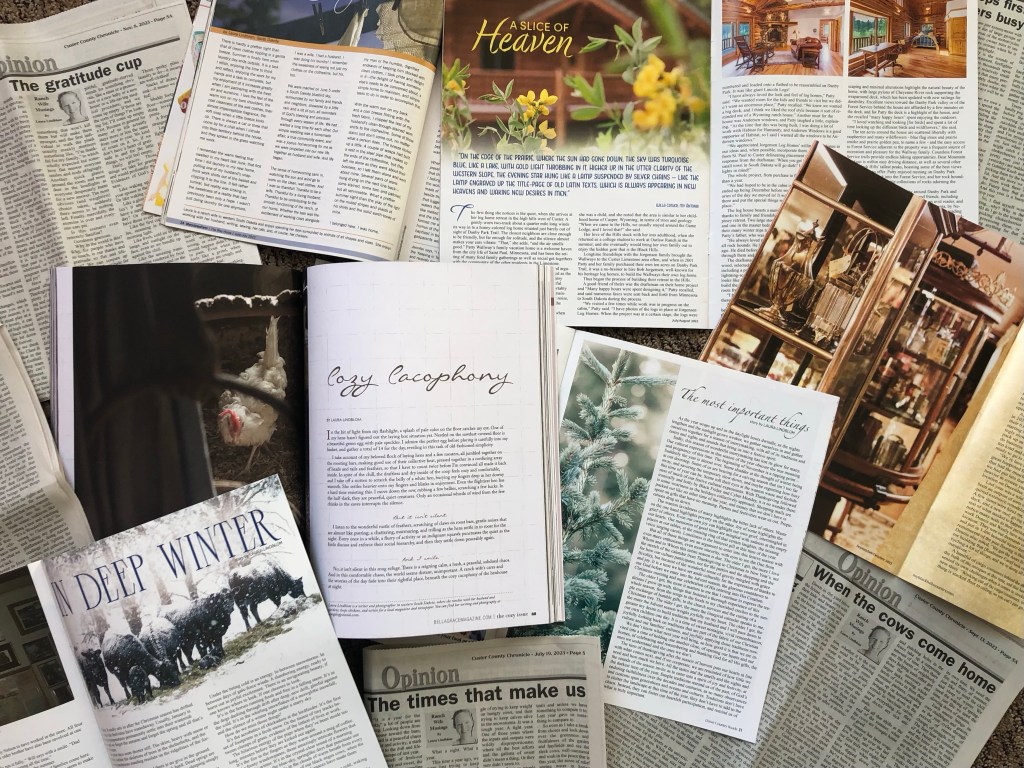
At the beginning of a new year, I always look back at the old year. So I pulled out the box in which I keep the hard copies of articles I’ve written. God is so good.

Taking this simple photo brought a happy lump to my throat. It is so surreal to see my words and photographs in print, and this isn’t even everything that was printed last year.

Looking back at the old year, it is natural to look back even further, and it is truly delightful to see the ways that God has prepared me and opened doors and answered prayers and to see the seeds of dreams as far back as 20 years ago. I fell in love with the written word as a youngster, at about the age of 12, and the writer’s dream is (almost) the first dream I can remember from childhood. The other dream I remember was that I would grow up and live in South Dakota and have horses. Little did my 9-year-old self living in Illinois know how that would turn out…

But these photos of magazines, magazine articles, and newspaper columns represent years of hoping, praying, waiting, and even forgetting. Until the time was right. And then God opened doors.

It just makes me think…how much can happen in such a short span of time. A year ago, writing was still a dream. How much can change in how little time. How different life can look in just a year, or five years. We can get so caught up in things that aren’t going right, or disappointments, or failures, and yet God can and does use those things to build our courage and our trust in His goodness and provision, and when He chooses, He can make things happen.

These little articles aren’t anything spectacular. They sure aren’t particularly prestigious. Other than two articles last year published in MaryJane’s Farm and Bella Grace, which are nationally distributed magazines, my other articles are in local papers and magazines with limited readership. And do you want to know something? I love it. I love that it is my friends and family and community that I am writing to and for. I love hearing from neighbors that they read my column, and I love interviewing locals and friends and having the privilege of telling their stories. And I love how God has given me an outlet for something I have loved for so long.

How humbling.