Ranch Wife Musings | Never the Same Again

Originally printed in the Custer County Chronicle on 9-9-2026

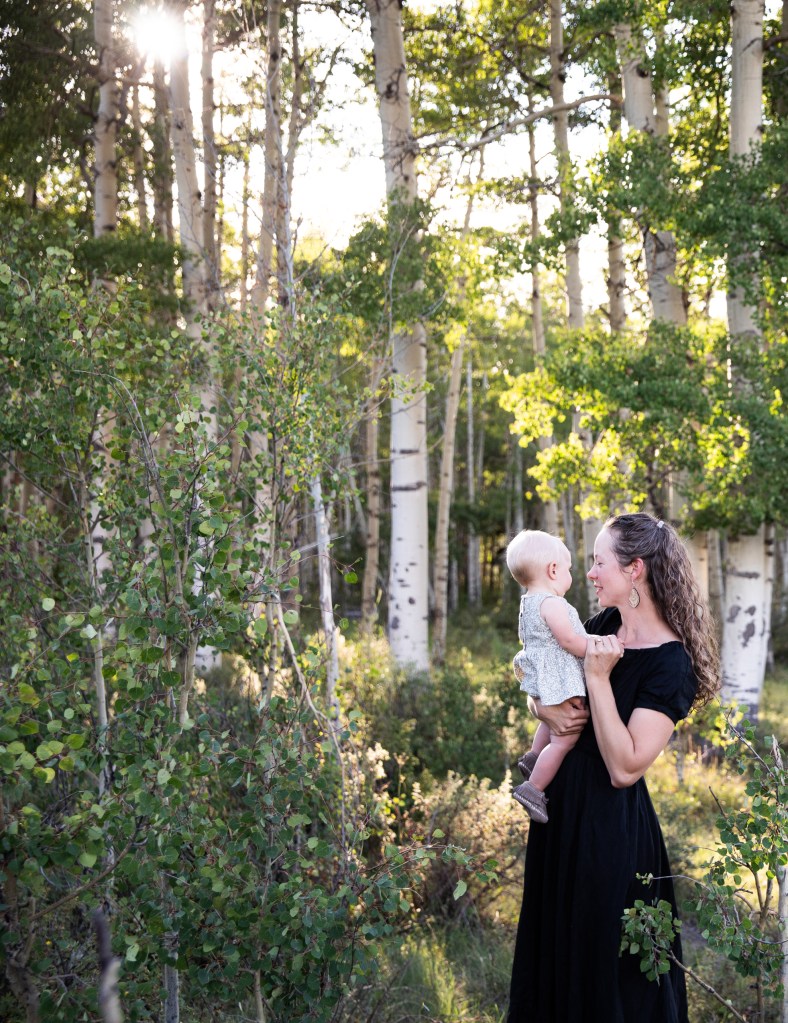
If you know cows, you likely are familiar with the rather bored expression a mother cow has while her 5-month-old calf is headbutting her udder. It is eloquent. In fact, it is an expression I’m pretty sure I’ve gotten good at myself. Who knew babies could nurse standing on their heads? Or that they would wake you up in the middle of the night grabbing your teeth? The sweet infant stage is over. The exact circumstance that prompted it escapes me at the moment, but last week the sentence “Life will never be the same again” ruefully escaped my lips. I will hastily add that it was humorously rueful and not bitterly so, having something to do with suddenly having a 10-month-old toddler who is now walking, signing, expressing opinions, and getting into trouble, all while flashing me a completely toothless, very gummy smile. The meek and mild infant stage is over. Very over. Life will never be the same again.

But would I want it to be?
I’ve been struck by how much of our life we spend wishing for something different than what we have, and banking on change. Better pay, a more fulfilling job, more friends, deeper friendships, a spouse, a bigger house, a new paint job, a car with better gas mileage, more opportunities to travel or recreate. So much emotional effort is spent wishing for things we don’t have, and trying to bring about very specific change, sometimes manipulating our circumstances to ensure change.

And then I’ve also been struck by how much of our life we spend pining for what we used to have (always through rose-colored glasses, I might add), bemoaning the changes we’ve been subject to. A smaller mortgage, or no mortgage, a less-demanding job that leaves more time for other things, the emotions of dating, the emotions of the honeymoon stage, more time to ourselves, more freedom, less demands on our time and effort, quieter evenings, or whatever.

Sometimes, we waste precious effort trying to prevent change that is inevitable. Sometimes, the change we are willing to receive will come only through embracing the change we are resisting.

We are comfortable with change that is convenient. We are uncomfortable with change that is not. We are comfortable with change that doesn’t ask anything more than we are willing to give up. We are uncomfortable with change that does ask more than we are willing to give up. We are comfortable with change that is comfortable. We are uncomfortable with change that is not. Comfortable change is the kind that comes with very little demand from us. Uncomfortable change sometimes requires a whole paradigm shift. It requires bending and even breaking, healing and growing, so that ten years from now you look back and say, “I’m not who I was.”

And the difference between the two? A lot of times? Our attitude.

Do we want to change? Or are we so in love with the present version of ourselves and our lives that we can’t bear to allow change to inconvenience us?

The complaints people tend to have about marriage and family generally boil down to self. You get married and suddenly another person can place demands on your time and energy. You no longer are at liberty to do what you want when you want, or fill your schedule without considering your spouse, and then you add children to the mix? Oh, boy.

We live in a self-obsessed culture. It makes sense, then, that marriage and family, institutions that are inherently inconvenient and wonderfully change-bringing, would be at an all-time low in popularity. The marriage rate has plummeted 60% in the last 60 years, the birth rate has plummeted, and the most dangerous place in the United States right now is inside a mother’s womb. Clearly, we have a crisis in the marriage and family department.

We may be obsessed with certain types of self-improvement (i.e. comfortable change), but we don’t readily commit ourselves to things that actually change us, deep inside. If something requires sacrifice, a change of priorities, a reordering of life, a giving up of self-interest, we balk.

A challenging child? A painful season of marriage? Seemingly endless sleepless nights nursing a baby? A schedule turned topsy-turvy by the needs of a wee little one? A season of want or scarcity? Years of loneliness? Disappointment? Pain or grief?

It is exactly those circumstances we tend to do our utmost to avoid. And it is exactly those circumstances that have the ability to bring about incredible change in us at a fundamental level.

A challenging child can make you a more patient person. A difficult season of marriage can create deeper love and commitment. Sleepless nights instruct you in the preciousness of someone else’s needs. Want and scarcity can drive us to a depth of gratitude we never knew before. Years of loneliness can teach the true value of friendship. Even the pain of betrayal can teach the sweetness of loyalty. Disappointment can help us learn contentment. Pain or grief can teach compassion.

I want to be a more patient person. A more loving and committed wife. I want to have a deep appreciation for the needs of others. I desire greater gratitude in my own heart. I want to be more compassionate. And I don’t want to be the same person 10 years from now that I am today.

I watch Felicity toddle around the house, watch her explore and learn and experience delight at every turn. That toothless smile, her funny little gestures and mannerisms, her baby babble, and her bubbling laughter. Her precious love. Her sense of humor. Watching her face light up when Daddy comes home. Seeing her giggle hilariously at the dogs and other animals. It is absolutely delightful.

This isn’t the life we had a year ago, or four years ago. Our schedules have shifted, our evenings look different, my routines and productivity have changed. Can you relate?

And no, life will never be the same again. But, friend…would you want it to be?
Ranch Wife Musings | Beautifully Unfinished

Originally printed in the Custer County Chronicle on August 12, 2026

Carefully kept in my possession is a nondescript box which I have jealously guarded for the better part of a decade. Possibly longer. My grandma, Loretta, was an avid quilter and the supreme domestic, having honed her skills of homemaking and handcrafts over a lifetime of peaceful industry and quiet usefulness to her husband, her five children, and her community. The beds in her house were clothed with quilts she had pieced, and knit afghans graced the arms of the chairs in the living room.

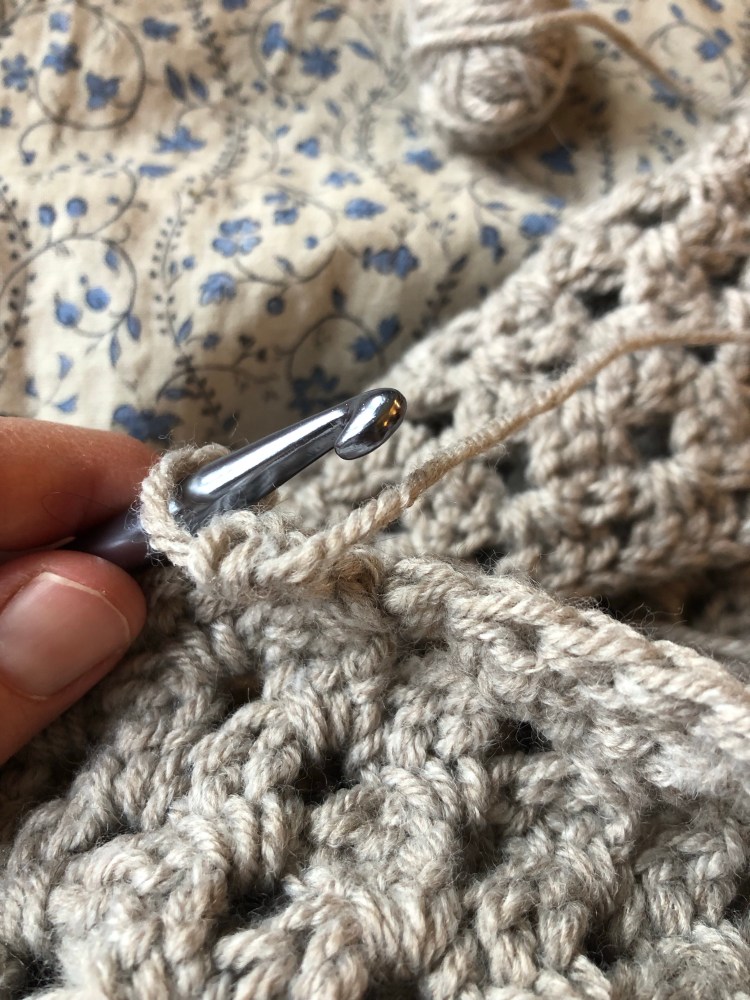
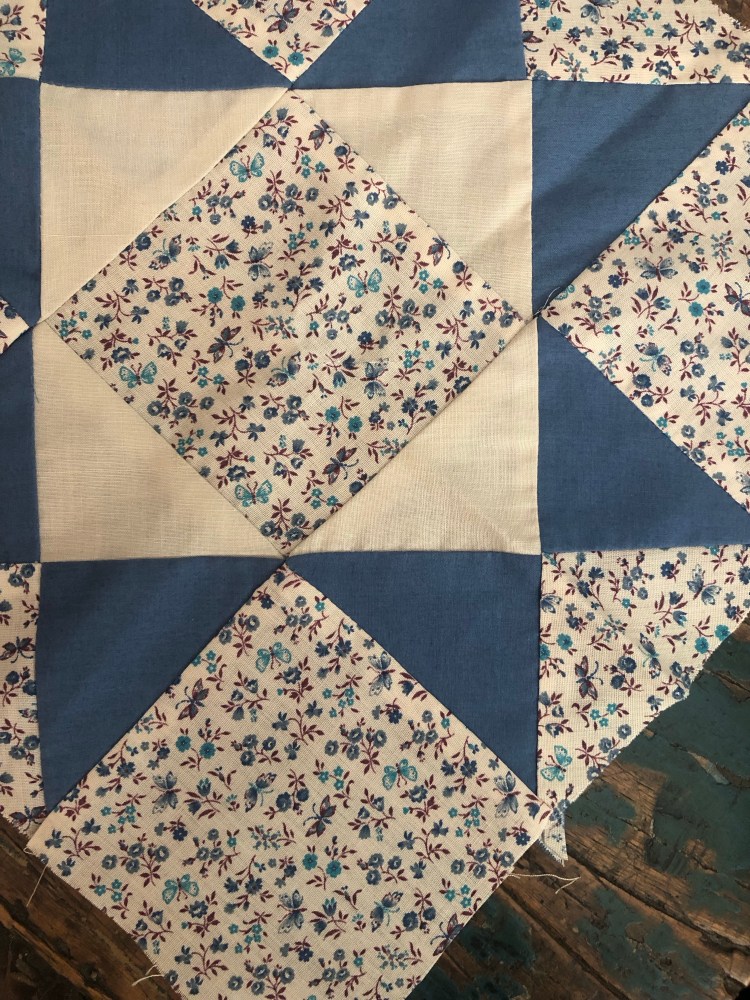
Each of her grandkids was gifted a quilt at one time or another, but my prize was the box of unfinished projects: a finished quilt top, hundreds of squares and triangles cut from old-fashioned floral cotton in a rainbow of colors, a stack of dozens of Sunbonnet Sue appliques, and three beautifully-pieced blue and white patchwork blocks, with enough extra squares to piece several more. For years, I’ve pondered what to do with all of these unfinished pieces. I’m not a quilter and genuinely dislike piecing. I’ve had plenty of ideas, though never executed any of them. Until now. I finally picked up where my grandma left off.

My old-fashioned heart has always longed for a slower way of life in a world that moves too quickly, and tangible forms of industriousness in a world that is ever less tangible. Ever since I was a child, I’ve gravitated towards those old-fashioned skills and handcrafts, from sewing to crocheting to drawing and painting to music to writing and more, taking delight in putting my hands to something and watching it take shape over hours, days, or even years. I remember entering all manner of handmade items in county fairs and in 4-H as a teenager, and having that yearly boost of excitement and competition that was fuel for the next year’s industry.

Societally, we have been conditioned to give preference to the easy way. If there is an easier way to do something, we are conditioned to assume the easy way is the best way. We avoid inconvenience. If there is a more convenient choice, we are conditioned to assume the more convenient choice is the best choice. We are a fast-food society, a next-day-Amazon-delivery society (well, not in rural Custer County, but you get the idea). In this fast-paced, convenience culture, we have seen handcrafts and homemaking go by the wayside. The shrinking entries in the open class exhibits at the Custer County Fair are suggestive of this. Why spend hours upon hours crocheting a blanket when you can buy one for a fraction of the price? Why learn to sew? Why make anything by hand when Amazon always has a cheaper option available? Why learn to paint when you can just insert a command into Chat GPT and have it spit out something that sort of looks like a painting? The gods of convenience and cheapness have led to a dearth of quality and enduringness, and a dearth in the learning and sharing of skills.

Some of my favorite childhood memories are wrapped up in this sharing and learning. I remember sitting cross-legged, knee-to-knee with a friend, crochet hooks in hand. She was righthanded, I’m lefthanded, so I learned by mirroring her. I remember the sewing class I took as a 10- or 12-year-old, sewing nothing but straight lines, the afternoon spent with a lady from my church who helped me sew clothes for an American Girl doll, and the hours my mom coached me as well, before the skill almost took on a life of its own. I remember the art class, and the writing club I started with a bunch of friends in highschool.

Unlike our digital alternate reality, which invites people into isolation disguised as connection with nothing material or real or tangible to show for it, these old skills thrive in community and are inherently social. Even if you’re learning a crochet stitch or leatherworking technique from a video tutorial, and bypassing that initial social context of the teacher and the learner, there still tends to be a very human context for that skill, as handmade items are gifted, bought and sold, passed down, or simply used to beautify one’s own home. They are real, and used, and delighted in. 

After a few scattered hours of cutting and stitching and ironing, contending with my 9-month-old’s innate desire to be held and played with, I tied a blue and white patchwork bonnet on her blonde head and the sweetness was impossible not to ponder. When Grandma was piecing those blocks, she had no way of truly knowing what they would become, or what completion would look like. But I can’t help but think she would be touched to know that her handiwork was picked up by her granddaughter and will be used by her great-granddaughter and, perhaps, a great-great-granddaughter someday. How neat is that?

What in our digital age will be enduring? What relationships are forged? What generational continuity is fostered? What will be passed down to children and grandchildren? Who is invited in?

I get it, everyone is busy. With our stupid smartphones in hand, we convince ourselves we’re busier than we truly are. Are there skills we opt not to learn or share, because of a perceived lack of time? Do we opt not to start something because we are afraid we won’t finish it, or even because we know we won’t? Maybe it isn’t for us to finish. It might be that our grandchildren or great-grandchildren will be the ones to complete or enjoy what we began. And there is something incredibly sweet and poignant about that.

I wish we were more accustomed to thinking this way. I wish we could think of more than the next month or year. I wish that when faced with a choice or an inconvenience, we could have eyes to see down the road further than the easy way out. I wish we could think more fervently of our children and our children’s children, and what we will one day leave behind. Will we be so absorbed in our own pursuits that we don’t leave room in the future for others? Or will we be so absorbed with others that we invite people in, that we invite our children and grandchildren in, and those things that we leave unfinished can be theirs to complete? I hope to leave some things, many things, unfinished. Beautifully unfinished.

Ranch Wife Musings | Bearing Burdens

Originally printed in the Custer County Chronicle on May 20, 2026

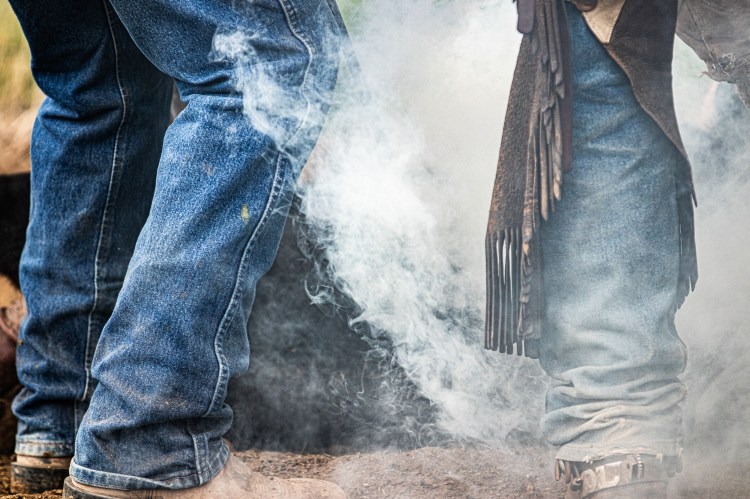
Branding season is that yearly reminder of how thankful I am for the community we are blessed to live in. A lot of prep work goes into a branding, from sorting, vaccinating, and moving all the pairs to the branding pasture ahead of time, to gathering up the irons and stoves and more vaccine, to rounding up a crew of our friends and neighbors, cooking for a small army, and more. We start early and work hard, running like clockwork to get several hundred pairs gathered, sorted, and the calves vaccinated, branded, and cut, swapping stories and laughs in passing. Shoulder-to-shoulder with our neighbors we accomplish a massive task.

This year, there was a different tone, a little heavier than usual, as dry as it is, as little grass as there is, and as many cow-calf pairs are already moving. If you see cattle pots on the road, they’re loaded, and sale barns are full. It is a tough spring, record-breaking in the worst of ways. Conversation returned, again and again – how could it not? – to the drought, the lack of rain, the storms missing us, the beaten down pastures, the price of hay, the price of trucking, what to sell and when. Again and again, there was the shrug and the weary smile, and the understood “we’ll figure it out, one way or another.”  

I don’t think it is a coincidence that as we have gotten more efficient as a society, we have also gotten lonelier. As we have replaced one another with machines, we’ve suffered for fellowship. As we’ve enabled ourselves to travel further for work and church and daily life, we’ve gotten less connected with the people in our immediate vicinity. We connect with hundreds of people superficially and fail to connect meaningfully with anyone. When you remove need, connection suffers. When connection is a luxury, it tends to fall to the wayside.

There are more efficient ways to do things. Some ranches have gone to utilizing a calf table to brand, instead of ropers and wrestlers, which cuts the needed manpower substantially. Ranches in this region are still largely rope-and-drag outfits, included ours, and for that I’m thankful. And a year like this brings that into focus.

It is years like this where we need each other more, not less. In some ways, that’s counterintuitive. We branded fewer calves, and there will likely be less work to do this summer and fall, and fewer cattle to work or preg test. But when you’re facing uncertainty, it really does help to face it with other people who are also facing similar uncertainty. Knowing that you’re not the only one really does help. Knowing that other people are just as stumped over what to do next alleviates some of the stress of having to figure it all out.

We truly do need each other.

The Bible is full of commands that my former pastor called the “one anothers.” In case it isn’t painfully obvious, the “one anothers” only work if you are with one another. They are hard to accomplish in solitude.

Love one another. Serve one another. Pray for one another. Be kind to one another. Forgive one another. Submit to one another. Encourage one another. Build one another up. Seek to do good to one another. Show hospitality to one another. Can any of those commands truly be obeyed without relationships, in solitude?

And one of my favorites: Bear one another’s burdens.

The mental image is that of taking a heavy load from someone else’s shoulders so they can have reprieve, or shouldering their load with them and then carrying it together. Shoulder to shoulder, both can stand a little straighter and walk longer and carry it further.

Bear one another’s burdens. Burdens of work. Burdens of uncertainty. Burdens of care. Burdens of sorrow. Burdens of worry. Burdens of fear.

Burdens like the task of branding hundreds of calves. Burdens like wondering when and how to continue ranching when the weather seems set against it. Burdens like if and when and what to sell. Burdens like how to feed the animals you keep, and whether to try to hold out for a weather change.

Bear one another’s burdens.

This whole season is one long opportunity for burden-bearing. Ranch after ranch brands their calves, starting in late April or early May, trusting in their friends and neighbors to help bear the burden of the branding itself, but this year there is more than usual of the other kinds of burdens, the burdens of uncertainty and worry and the rest. And I’m thankful for a community that can come together around a shared task, puzzle over a shared struggle, smile, shrug, and say, “We’ll figure it out, one way or another.”

Branding day this year brought that into focus.

Ranch Wife Musings | What’s in Your Cup?

Originally printed in the Custer County Chronicle on 1-1-2026

As you sit and enjoy a hot cup of coffee on this first day of 2026, poring over the contents of this wonderful, small-town paper, your dog, whom you generally love, comes up next to you and sticks her nose under your elbow in a friendly bid for affection. Up goes her nose, up goes your elbow, and everywhere goes the scalding hot coffee. 

Why?

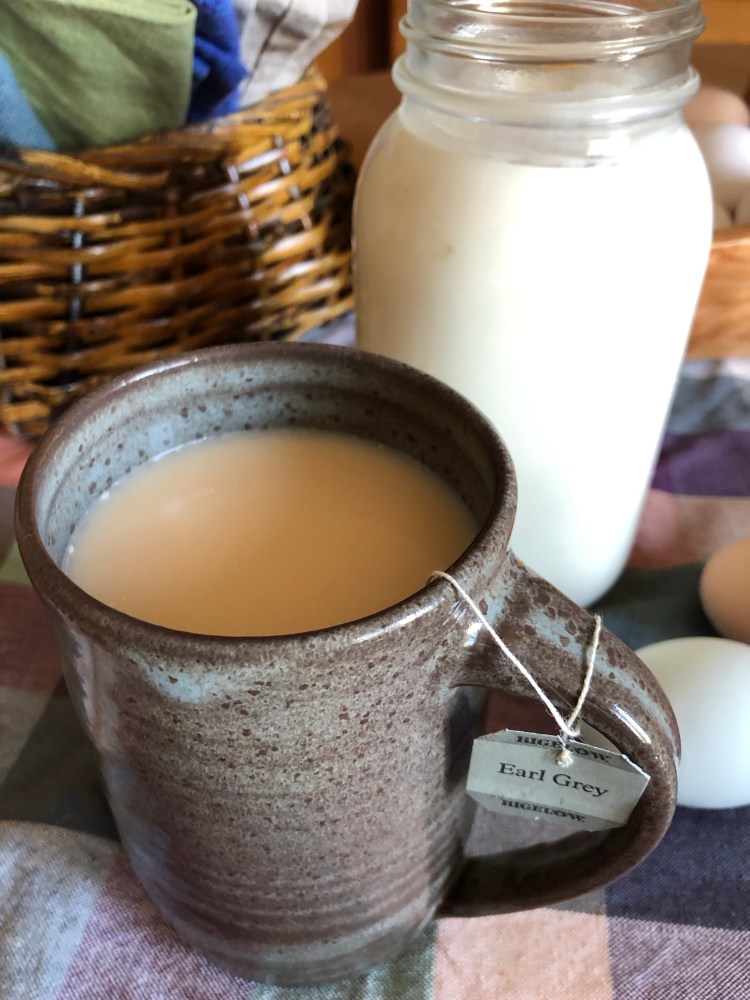
Our first instinct, of course, is to blame the jostle (or whoever or whatever caused it) for the coffee excitement. But the fundamental reason coffee came out of the cup is because coffee is what was in the cup. If you had been sticking to your New Year’s resolutions and drinking water first thing in the morning, water would have spilled out. Tea, and tea would have spilled out. Less coffee, and maybe nothing would have spilled or only a few drops.

The problem really isn’t the jostle. The problem is the contents of the cup.

Every time an old year fades away in the rearview and a New Year approaches, unfolding before us with all of its newness and freshness, life begs to be assessed, and although some scoff at New Year’s resolutions, I think we miss a wonderful opportunity for change if we fail to at least do some self-reflection, taking stock of the old year and making some goals for the new one.

We’re pretty good at a cursory, surface-level assessment, tending to zero in on things like a number on the scale or a dollar amount in a savings account, things that are pretty non-threatening, not overly challenging, and not overly crushing if we fail. We tend to focus on things that inflate our own egos, reinforce our sense of self-importance, and have no real lasting benefit for anyone.

So I’m going to assist us in this meaningful self-reflection by posing a question: What is in your cup? When you get jostled, what comes out?

Because the jostling doesn’t lie. Whether the jostle is someone who cuts you off in traffic, or hitting every red light on the way to church, getting stuck in the longest checkout line at the store, or clumsily dropping something and making a mess.

Oh, you don’t relate to any of those? How about your crying baby at midnight after three hours of walking the floor, or the spouse who fails to respond to you in just the right way, or the cow that cuts back and jumps over a fence and spoils the gather?

Still nothing? Okay, the boss that patronized you in front of your coworkers, the morning alarm that had the audacity to go off, the wrong man in political office, the toothpaste you got on your shirt as you’re running late to an appointment, the chair that stubbed your toe, or the dog that got into the garbage.

If somehow none of these ring a bell, I promise you’re not exempt. Use a little creativity and come up with a few jostles just for you.

We call those jostles, those circumstances that provoke a response, “stressors.” Annoyances. Provocations. Some of them wouldn’t annoy everyone. Some are just sort of innately annoying or inconvenient. But it is the response that is key, not the stressor. If a stressor is applied and something ugly spills out, the issue isn’t the stressor. The issue is that something ugly was in there to be spilled out in the first place. All of us have those stressors, because ultimately all of us have ugliness in us that, given the right provocation, will spill out.

So I ask again, what is in your cup? When you get jostled, what comes out of you? Is it ugliness and spite? Or is it goodness and graciousness? Is it profanity and vulgarity? Or is it tempered words? Is it anger or gentleness? Is it bitterness or forgiveness? Is it hate or love? Is it stinginess or generosity?

In Paul’s letter to the Galatians, he gives them this list that he calls the Fruit of the Spirit: Love, joy, peace, patience, kindness, goodness, faithfulness, gentleness, and self-control. Self-control rounds out the list of virtues, reminding me that with all the virtues the precede it, there are still parts of us requiring restraint. There is still something there needing to be controlled. There is an ugliness needing to be rooted out.

So, when you get jostled, what comes out? When you get cut off in traffic, does your heartrate spike and you see a little red, and do you yell into your windshield? When a cow acts like a cow when you’re working cows, do you respond with anger and vulgarity, maybe even taking it out on those around you? When your spouse fails to respond just so, do you respond with bitterness and resentment? When you stub your toe, do you spew profanity? When your alarm goes off and you weren’t ready for the day, do you grumble and grouse as you leave the house? What comes out? If it came out, it is fundamentally because it was in there, not because you got jostled.

What would it look like if we all examined the contents of our cups, and then did something about those contents? The contents of our cups are often a direct reflection of what we are actively (or passively, without thinking) pouring into them, in the form of social media, entertainment, and the company we keep, for instance. Sometimes the contents reflect not so much what we’ve poured in, but what we’ve failed to root out.

What if we determined to change what we poured in? What if we poured in so much goodness that there wasn’t room for anything else? What if we were so bathed in the goodness of God and His Word, what if we were so filled with the Fruit of the Spirit, what if we so filled our minds and hearts with good words, kind words, true words, loving words, that when jostled that is what came out?

Would the end of 2026 look any different than the end of 2025 if you were to fill your cup differently? How would it change your relationships? The peace in your home? The dynamic in your family? The strength of your marriage? Your performance at work?

What’s in your cup?

Room for Peace

Originally printed in the Nov/Dec issue of Down Country Roads Magazine

The coffee percolator perks to life in the sleeping house. A little ribbon of red streaks the eastern horizon, and a handful of scattered stars gleam coldly in the pale, colorless sky, above the leafless trees. There are gentle sounds of waking, throughout the house and from the yard. A horse whinnying as the geldings come in for their breakfast. The first call from the roosters down in the chickencoop. Distant yipping from a pack of coyotes, and sleepy howls from the black-and-whites, not quite ready to get up.

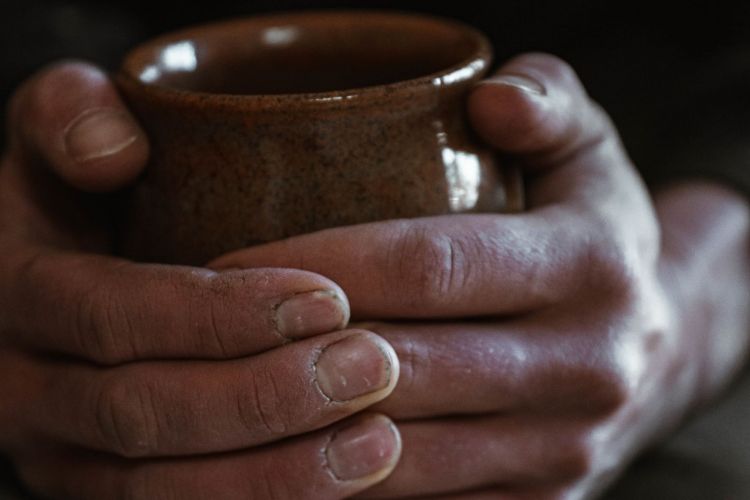
Fingers wrap tight around steaming cups of coffee while the waking sun, reluctant to rise, comes to grip with the morning at hand. We sip a little slower, savoring the slowness. And in that lingering a little longer over the ritual of coffee, waiting for first light and the day to begin, there is peace. Quiet. Tranquility. Watching as the sky gradually brightens and lightens and the day begins.

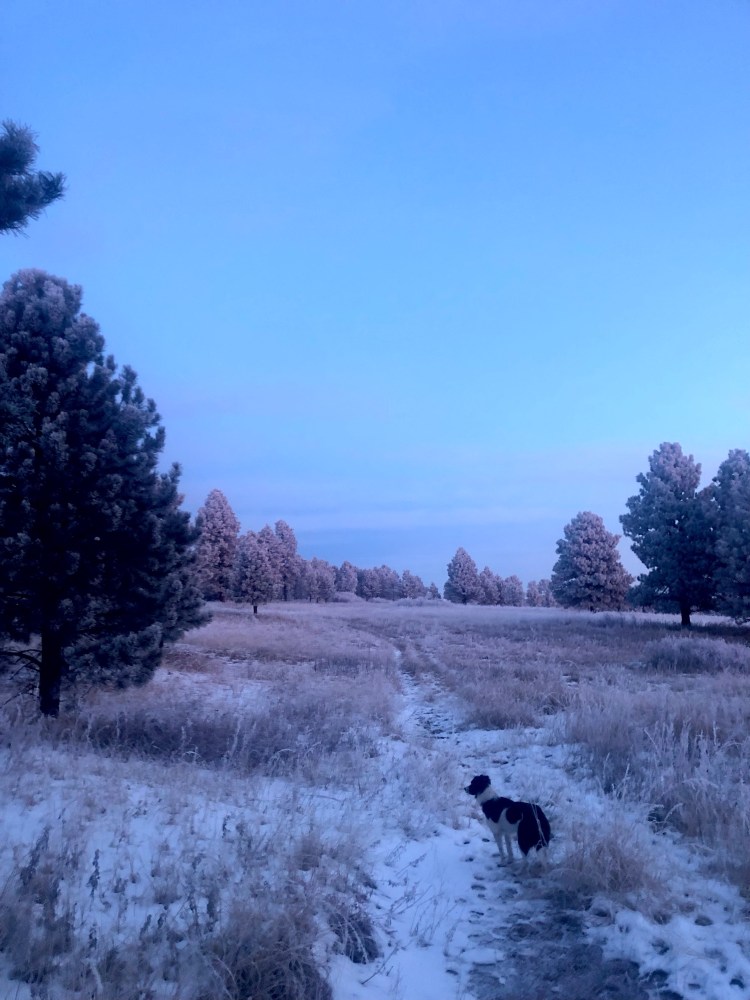
In those first frosty mornings of the early winter when every breath is a cloud of white, in those last showers of golden-brown leaves, late to fall and carpeting underfoot, in the first skim of ice on the watertanks, or the first snow, there is peace, a hush and a feeling of reverence and bursting joy, as those first warming rays of daylight stream across the silvered or snowed-over landscape. Winter is on its way. Winter is here.

With the happy chaos of autumn behind us, with the fall calf crop weaned and sold, with heavy cows out to pasture and the garden put to bed, there settles in another sort of peace, and I guard it jealously. It is the peace of belonging, of nostalgic remembrances, of the past colliding with the present. A different kind of peace. I guard it, in customs my husband and I have built, for the two of us and our growing family, in the simple Thanksgiving gatherings and the quiet search for the perfect Christmas tree, in the songs and carols, the Advent observances, and the handful of choice festivities that punctuate this season with rejoicing. I guard it, in the traditions passed down generation to generation, in the worn recipe cards and the tastes and smells of the season. We turn for sweet refuge to the familiar, cherishing the dear faces gathered close around the feast-day tables, family and friends dear as family, hearing the beloved voices mingle together in their tale-telling and laughter. There is peace. Sweet peace.

The setting sun, earlier and swifter, sinks below the ridge behind our house, sinking into the pines as the sky above flames red, lighting for one intense and rosy moment the Badlands and Sheep Mountain Table miles and miles away to the east. The settling chill, first harbinger of true winter, bites a little. The shorter days and the crisper evenings chase us inside sooner, and we flee to the warmth and golden light, to the peace of comfort, a hot meal, and love of family, and the pastimes that sweeten the long winter evenings. And as the day draws to a close, in peace we lay our heads down. 

A midnight wakeup and a gaze at the winter sky fills the mind with wonder – Crisp and cold, the inky sky above dazzles with a million stars, brighter than they ever are in the spring and summer, when the slightest haze dulls their brilliance. They are reflected back in glittering frost. What splendor, and only for those awake when everyone else is asleep. And in that awestruck gaze, there is room for peace, the peace of beholding brilliance and knowing to Whom the wonder is due, and from Whom the peace comes.

And in the hush of midnight, or the wee hours of snowy morning, there is the peace of safety and security, in the slow breathing of spouse nearby, the sleepy whimper of a dog dreaming a good dream, and soft infant sounds of needs met and sleep embraced.

In that hush, there is room for peace.

Ranch Wife Musings | Welcome to the World

Originally printed in the Custer County Chronicle on Nov. 5, 2025

When I struggled into my once-baggy sweatpants on Wednesday last week, the only thing left that was comfortable at 9 months pregnant and warm enough for working cows on a cold morning, I heard a seam pop and may have almost cried. Baby wasn’t due for another week and a half, and I knew that could mean three or three and a half weeks, and frankly I was just over it. Everything hurt, nothing fit, and I couldn’t reach down to tie my shoes. Heck, I couldn’t even see my toes if I looked down.

“Do you think you’ll make your due date?” Brad would ask occasionally over the last few weeks.

“Absolutely,” I’d reply with just maybe an edge of frustration, or disgruntled resignation. “One hundred percent, yes.” The last month of pregnancy really is as long as the first eight, with the shortness of breath and fatigue and back pain and everything else that is just a part of the miracle of knitting together a life, a little tiny human. I’d think about another four or three weeks and balk. But then I’d feel the kicks and the jabs and the rolls, all the sweet little movements that help bond a mama with her unborn baby long before they get to meet face-to-face. What sweetness. What a special time.

Part of me really wasn’t ready for that to be over. However, it isn’t like I had a choice, one way or the other.

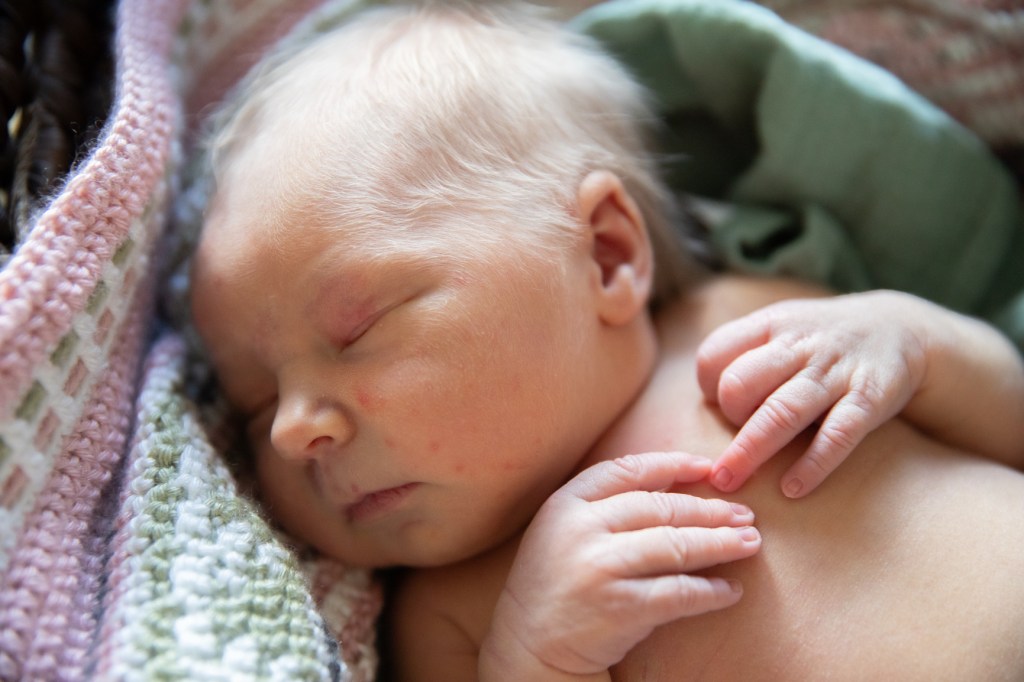
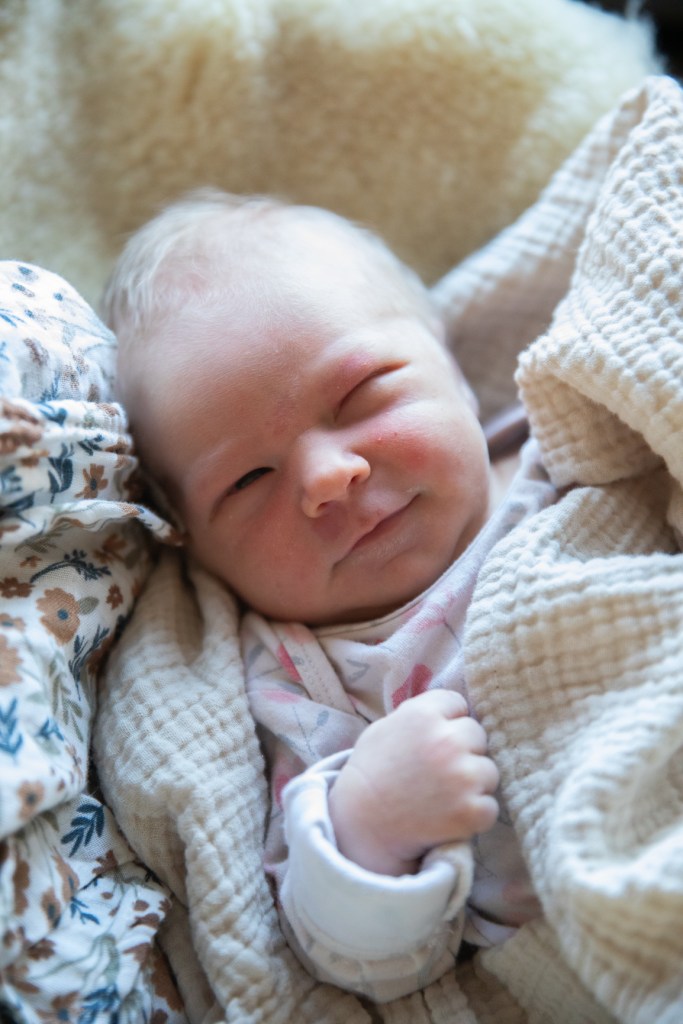
Well, not even 72 hours after the sweatpants incident, in the peace and comfort of our home, I was handed a slippery, sleepy little baby with a head full of blond hair, the same baby that had been kicking and jabbing and sitting on my bladder for the last number of months, the same baby that had left me with sore ribs and a body image crisis, and I fell in love. Felicity Mae arrived a week early, and has stolen our hearts.

Those first few days are funny, and confusing. The sleepy, slippery baby that you’re supposed to just know how to care for transforms into a sneezing, pooping, crying, hiccupping, burping little package, and just when you think you’re at your wits’ end, you fall even deeper in love. And somehow there is God-given instinct that rises up and you do, you really do, know what to do.

We’ve been sold a bill of goods, women have. And men, too, honestly. We’ve been told that an unborn baby isn’t a baby, for starters, or at least isn’t human, and that their humanhood depends upon the desires of his or her parents. We’ve been told that children are an inconvenience worth sacrificing on the altar of self. We’ve been told to intentionally postpone children until the important, fun stuff has been accomplished, like that random dream vacation to Antarctica. We’ve been told that choosing to have children will destroy your life, or everything that makes your life worth living, like your career and your body and hot dates and good sex and your own personality, and social media is rife with influencers trying to convince others that self-centered loneliness is superior to self-sacrificial love, and that getting to have brunch with your friends and pamper your pet or your houseplant will bring more happiness than seeing the purest form of trust reflected in the eyes of a 48-hour-old infant, who is half you and half your faithful spouse and wholly a unique person created by their loving Heavenly Father. Mind blowing.

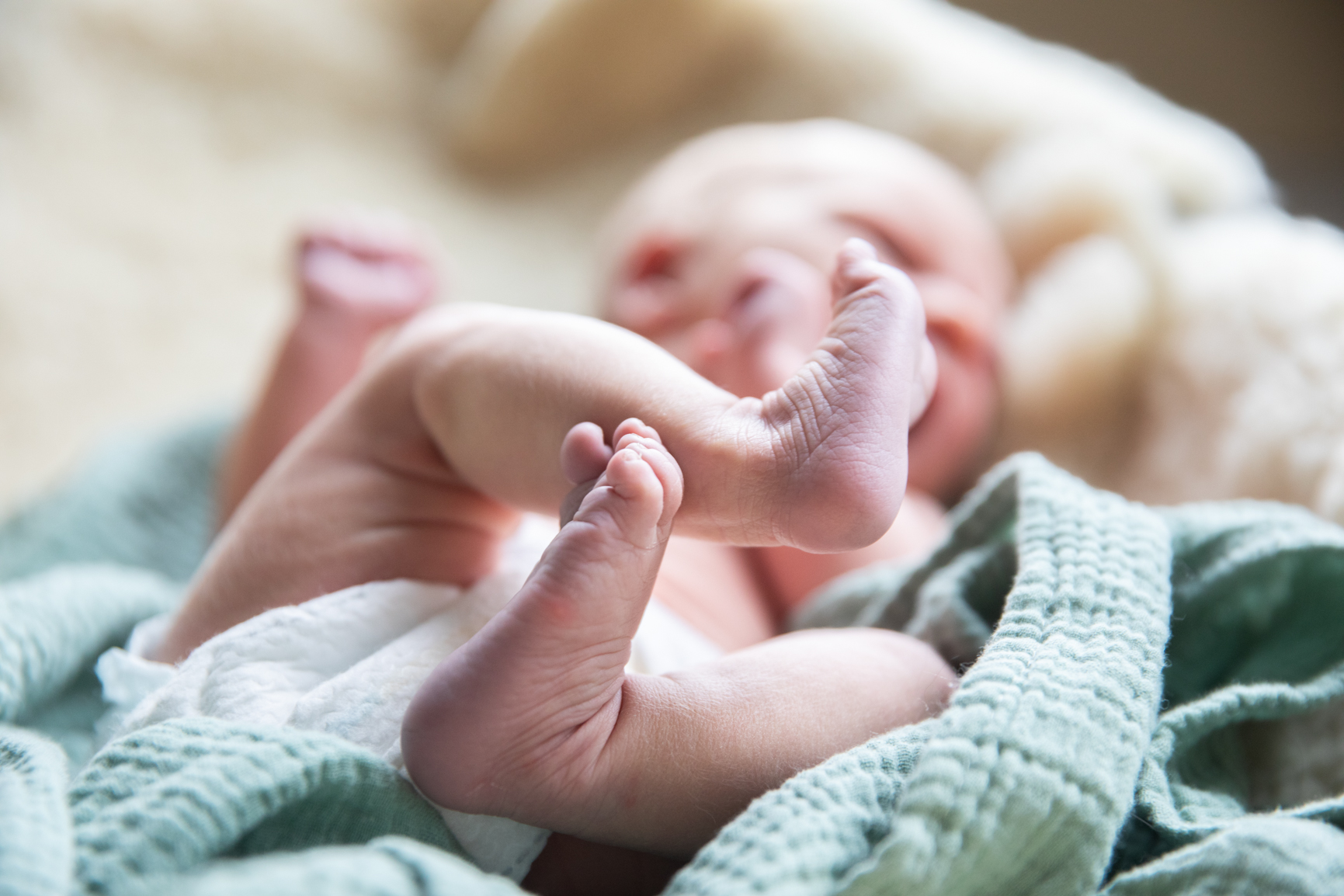
I can’t tell you how many times I have counted her tiny fingers and toes and gazed at her little blossom of a mouth, and then looked up at Brad and said wonderingly, “She’s mine…This is MY baby!” Honestly, I’ve never really cared about babies. Just being brutally honest. I could be excited about them in a very general way, and very happy for the very happy parents, but I never felt inclined to hold all the babies or found myself pining for baby snuggles. Older children, I could enjoy, but someone else’s crying, pooping, angry baby that I had no idea how to soothe because it wasn’t mine? No, thank you, you can keep it, it’s yours.

But this is like absolutely nothing I’ve ever experienced, and nothing could have prepared me for the sweetness and the wonder.

Oh, I know all the negative “yeah, but’s”, insinuated in the wealth of comments told to expectant parents beginning with the words “just wait until.” I know the tendency to focus on the frustrations and the challenges and the outright pain and discomfort of children and family and life in general. Is there some truth there? Of course there is.

But I wouldn’t trade this for the world. Any of it. Not the popping seams or the back pain or hobbling around in a postpartum daze wondering if I remembered to eat, or deciding whether I have the energy to walk from one end of the house to the other. I wouldn’t trade any of it.

Welcome to our family, baby girl.