Originally printed in the Custer County Chronicle on July 15, 2026
I didn’t see a single firework this year. Is that crazy? Our country celebrates her 250th birthday and I don’t see a single firework? But we are in a season of family life where naps and bedtime are pretty important, and bedtime is well before sunset. Hence, no fireworks. We did, however, enjoy some excellent smoked beef brisket and cheesecake and in our own way fully reveled in patriotic festivity. After all, it is good to live in a country so great that even the people who hate her refuse to leave.
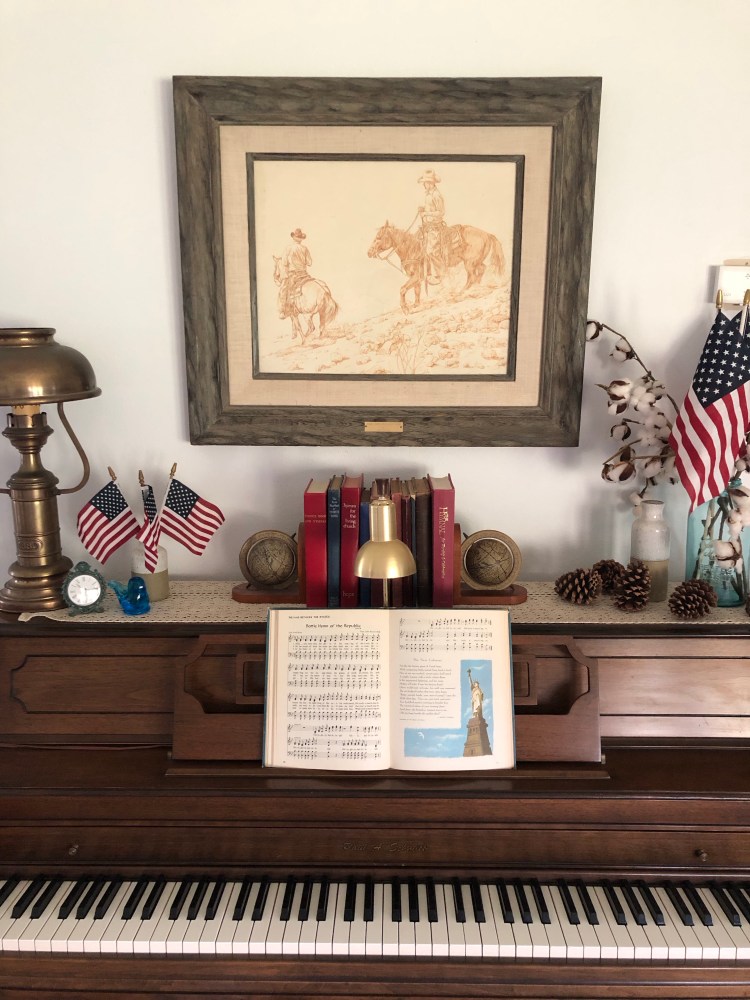
“We hold these truths to be self-evident,” the Declaration of Independence reads, “that all men are created equal, and that they are endowed by their Creator with certain unalienable rights, that among these are life, liberty, and the pursuit of happiness.”
The pursuit of happiness. I wonder, can we even define happiness? Is it possible to define something that is so personal? What makes me happy might not make you happy. Yet, in spite of the difficulty in definition, happiness (and not just the pursuit of it) has become more or less the pinnacle right focused on in our oh-so-wise modern day, the key metric used to determine the rightness of something. Whether it is a single decision or an entire lifestyle choice, we look at it through the lens of our own self-gratification, our own comfort. Will it make me happy? If someone or something spoils my happiness, that someone or something is trampling all over my pinnacle right.
One’s definition of happiness is very much dependent on what one believes to be valuable at a core level. If you value ease, you will not value things that are hard. If you value convenience, you will not value things that are inconvenient. If you value maximizing your potential, you will not value things that stand in the way of upward progress. If you value pleasure, you will not value things that require self-denial. If you believe that that which is valuable doesn’t extend beyond the grave, you will live in a way that reflects that. If you believe that there is meaning and purpose in eternity, you will live in a way that reflects that.
On the one hand, we have those whose values propel them to get married and be faithful spouses, to have children, work hard, live within their means and be productive members of their communities. On the other hand, we have those whose values propel them to move through serial relationships without commitment, to avoid children at any and all costs, to follow any and all sexual proclivities, and to live wildly lavish lifestyles disconnected from the good of those around them. We have those whose values propel them to live generously with the long-term good of others in view, and those whose values propel them to live greedily with only their gain in view. All in the name of happiness. It shouldn’t be controversial to state that those value sets aren’t inherently equal, but alas, we live in confusing times.
If our cultural obsession with recreation, entertainment, and convenience is any indicator of the extent to which we pursue happiness, we should be seeing incredible degrees of resulting happiness. Yet loneliness is epidemic, drug use is rampant, marriages fall apart at record rates, many Americans suffer with anxiety and depression, and multiple millions plan or attempt suicide each year. Is our pursuit of happiness working?
It seems to me that perhaps our cultural definition of happiness is toxic. Because maybe, just maybe, that’s what happens when we cherry pick parts of our founding documents and leave out the inconvenient and politically incorrect parts. We don’t have the rights of life, liberty, and the pursuit of happiness randomly and by chance, or without context. We have been given them by our Creator, and that Creator has laws which compel, constrain, inform and shape society and individual morality and virtue, a broad topic with which our Founders were very concerned.
They recognized that for a nation to truly enjoy life, liberty, and happiness, private virtue had to exist within individuals. John Adams famously wrote: “We have no government armed with power capable of contending with human passions unbridled by morality and religion….Our constitution was made only for a moral and religious people.” Try saying that in the public sphere today without getting tarred and feathered.
So many of the societal milestones of the last 20 to 50 years have been precisely the throwing off of the bondage of morality and religion. In some of the key moments in our history, the culture-changers really were seeing and reacting to real problems in our society that were, ironically, the result of the degradation of virtue. But rather than promote virtue, the solution was to try to remove all consequences. That’s rather backwards.
According to our cultural definition of happiness, I should be feeling very sorry for myself right now. I set aside an exciting career to be “just a wife,” and currently spend my days in a repetitive haze of changing diapers, sweeping floors, doing dishes, and folding laundry. Some days, all I have to show for my efforts is that the baby is still alive, and the house didn’t burn down. My needs and desires, whether it is eating or showering or sleeping or social in nature, come after the needs of a tiny person who is very needy and has very specific desires. My pursuits have taken a back seat, my comfort is challenged. My. My. My. And that is the problem with so much of our cultural perspective on happiness. I am the problem. You are the problem. We are unable to see beyond ourselves.
Happiness, true happiness, cannot be separated from the “Laws of Nature and of Nature’s God,” who gave us the capacity to experience happiness in the first place, and then by rights put boundaries in place by which we are to live and which are to shape our desires and pursuits. Rather than asking, “Will this make me happy?”, the question becomes, “Will this be for my eternal good and the glory of God? Will this make me more like Jesus?”
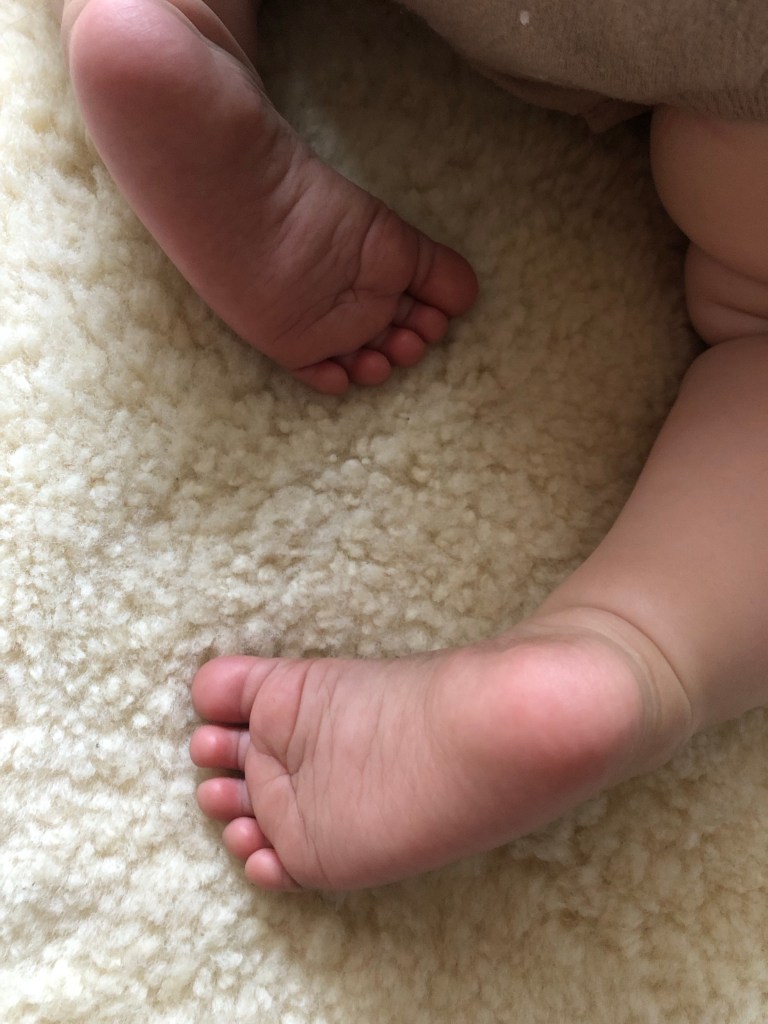
After long nights that are anything but restful, when I find myself wondering if I’ll ever sleep again, I open my eyes to sunlight streaming in the window and my baby’s big blue eyes and round, rosy cheeks, and she plants sloppy kisses all over my face. In a moment of heart-melting sweetness and heavenly clarity that makes me a better woman and a better human and a stronger Christian with a more deeply-felt purpose, I realize that this is life. This is liberty. This is happiness.









 Christmas Eve is a good time to remember – and to reflect. On Christmas Day, Christians celebrate the miraculous birth of a Savior, God Incarnate, who humbled Himself to come to earth as a baby, as the frailest form of humanity. But I think we often make the mistake of forgetting that the Christmas story doesn’t start in the book of Matthew, but it starts back in the book of Genesis. Throughout the Old Testament, a Savior was waited for – The entire Old Testament leads us to Christ.
 In Genesis 49, the last days of Jacob, Abraham’s grandson, are recorded. Jacob was nearing the end of his life, and he gave a blessing to each of his sons. This wasn’t a blessing of earthly proportions, but was prophetic in nature and from the hand of God. In his blessing to Judah, he says, “Judah, your brothers shall praise you…The scepter shall not depart from Judah, nor the ruler’s staff from between his feet, until tribute comes to him; and to him shall be the obedience of the peoples.”
 And it continues today! The scepter hasn’t left the house of Judah. The never-ending throne of King David is still being ruled from today, because Jesus, the Son of David, is reigning in Heaven, risen and glorious, and will one day return to finish His battle with Satan. The king the Israelites expected was a king who would wipe out their earthly enemies, restore earthly peace, and give earthly justice. But the King that God had planned would be a King who would wipe away our sins, our tears, our spiritual enemies, who would provide the Gift of Salvation, who would come to earth as a Man, someone we can try to comprehend with our finite minds, someone who can sympathize with us in our weakness, someone to demonstrate a life of righteousness, love, faith, purity, joy, servanthood, humility, and sacrifice. A King who would restore Spiritual Peace, and give Spiritual Justice and Mercy. A King who would adopt us into His household and call us His children, His brothers and sisters, His family.