Garden planning has been underway basically since the last tomato was harvested in the fall–Anticipation for the spring begins well in advance of springtime, and even in advance of winter. Gardening is an inherently optimistic and forward-thinking occupation.
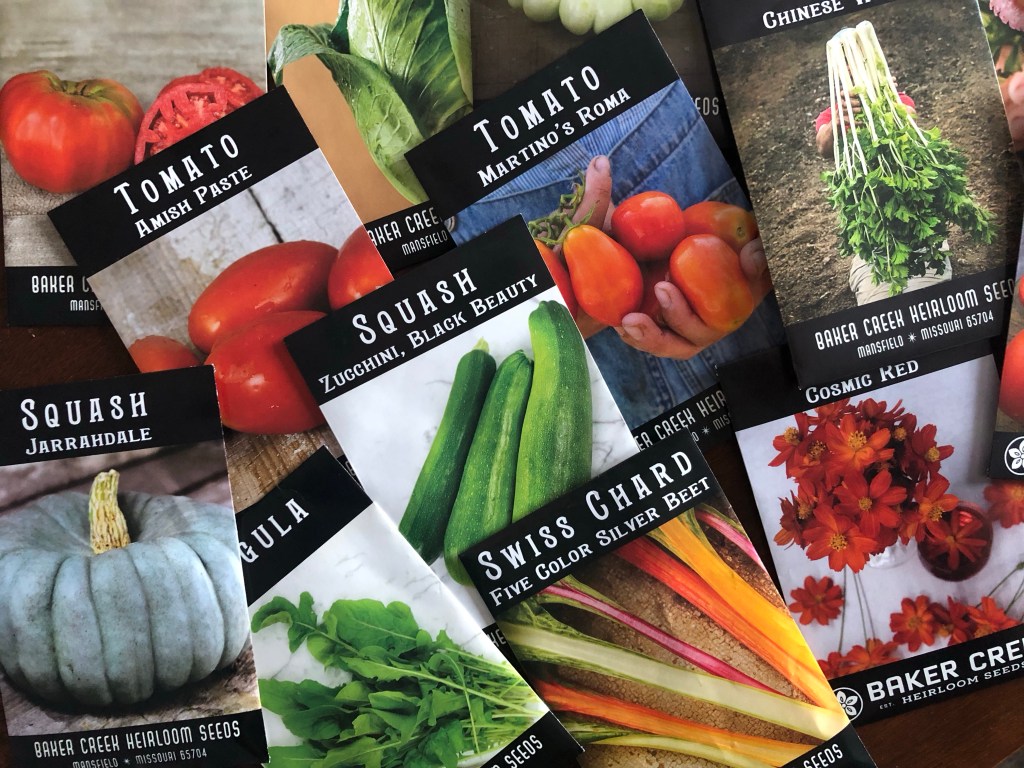
I began ordering seeds in January, sticking with primarily (actually exclusively, I believe) heirloom varieties of vegetables. I’ve never quite had the wherewithal to really save seeds and I intend to change that this year! Consequently the selection was made for varieties I wished to continue to cultivate!

My absolutely favorite tomato varieties are the paste tomatoes, Amish Paste and Roma, both for flavor and texture as well as use. I love the meatier texture and honestly eat a lot of them straight off the plant! I actually have successfully started a lot of tomatoes from seeds left from last year that were wildly incorrectly stored, and I’ve still seen about an 80% germination rate, which seems really spectacular, given how poorly the seeds were stored. I also started a handful of Black Krim tomatoes, leftover from last year, though I wasn’t overly impressed with how they performed. They weren’t great producers by any stretch of the imagination, and it was actually really hard to tell if the fruit were ripe, because of their odd color. They were delicious, though. I’ve started some Mortgage Lifters, Comstock, Amish Paste, Roma, and a few varieties of cherry/grape tomatoes for fresh eating. Some herbs are going as well, with more to come.

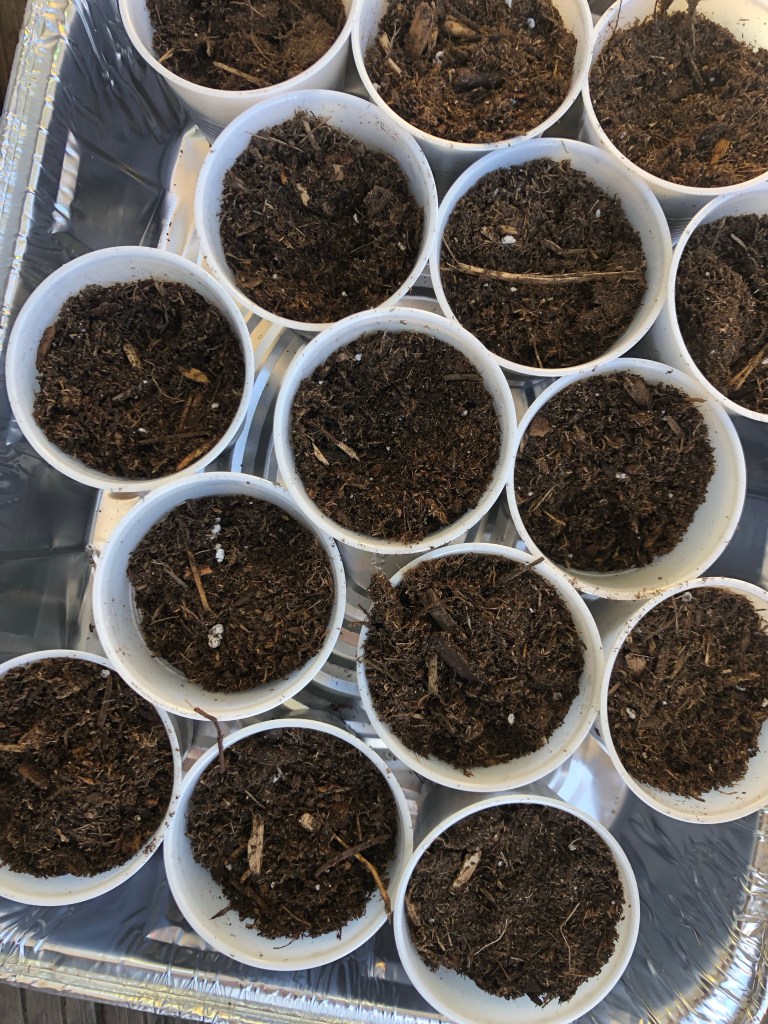
This year, I opted to use dixie cups and solo cups instead of paper pots for seed starting and, boy, it has made things easier. I may roll some paper pots as I get more herbs going, things that will grow quickly and be transplanted quickly, but I’ve been happy with the switch. They hold up much better to jostling and watering, are much easily to fill with dirt, and they’ll provide a deeper base for root development, especially on things like tomatoes. A drill works great to make drain holes in the bottom, easily putting holes in 100 cups in, oh, three minutes. It really speeds up the planting. I’ll be able to save them this year and reuse for next, so that’ll be a nice time-saver.
The grow lights and seed starting heat mats I bought last year are working great still, and I actually bought two more lights and another set of four mats for this year. Tomato seeds have been germinating in 5 days! If you’re wanting to start seeds indoors, I’d definitely recommend these.
Remember the elderberry cuttings I got in January? They have absolutely flourished, and all but one rooted. They’re in dirt now and doing great. This will be the continuation of the little orchard we started in 2022, our “wedding trees.” Hopefully that will see an expansion as well. Menards has great prices on fruit trees, so I’ve been eyeing those.

I’ve been out in the greenhouse and garden a fair bit, getting some walking onions divided and put in the ground in the greenhouse, cleaning up, pulling weeds, and turning the dirt in all my tomato pots. As soon as we’re past this cold snap, I hope to get some greens and root veggies going. It has been gratifying and exciting to see what survived over the winter–Strawberries, rhubarb, chives, garlic, walking onions, and lots of perennials are already emerging. A peony I planted from bareroot last year has come up, catmint and verbena and English daisy and bee balm, yarrow and black eyed Susan…It is so good to see green!


 Song Dog Journal