Pasques and Pines

Originally printed in the May/June issue of Down Country Roads Magazine

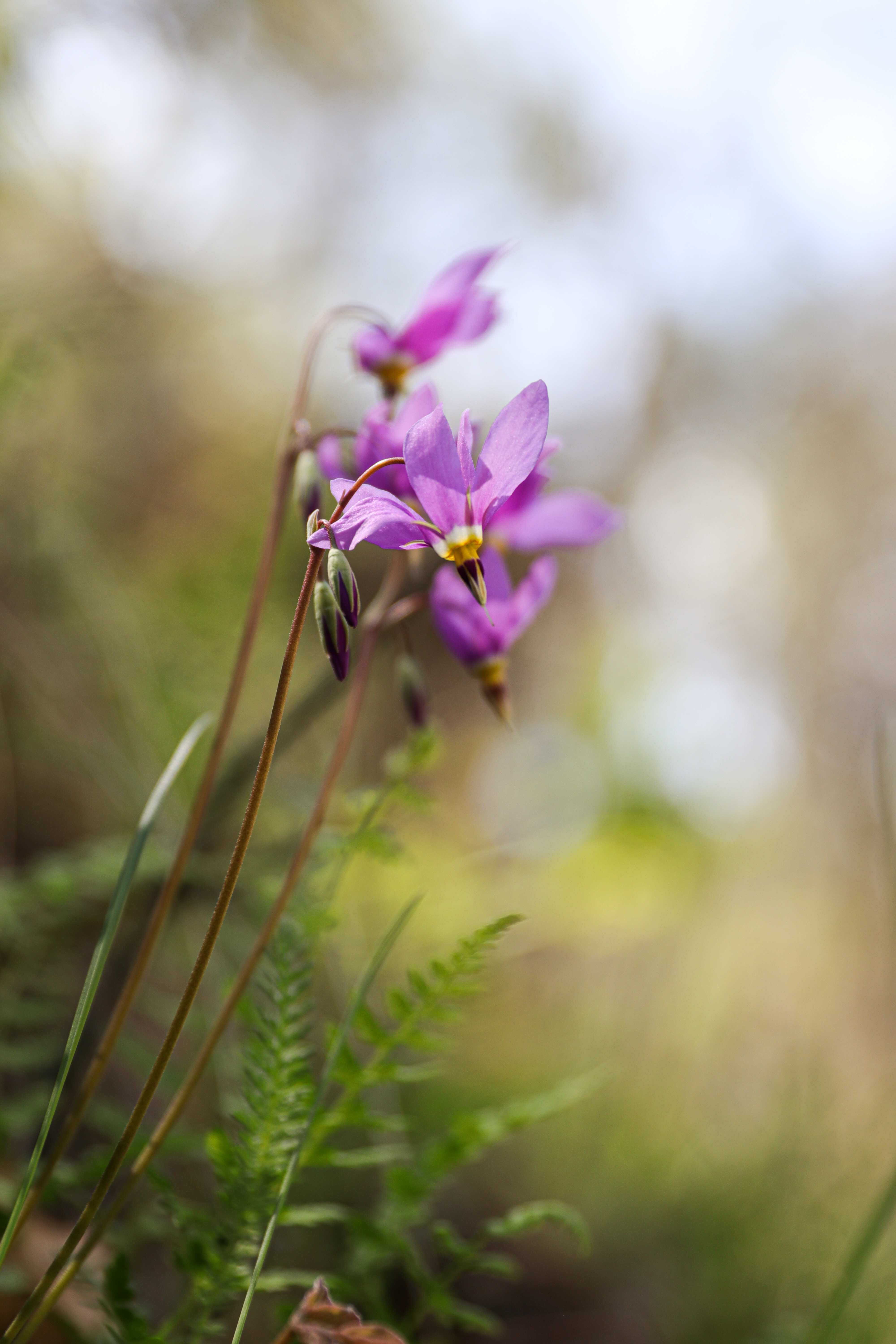
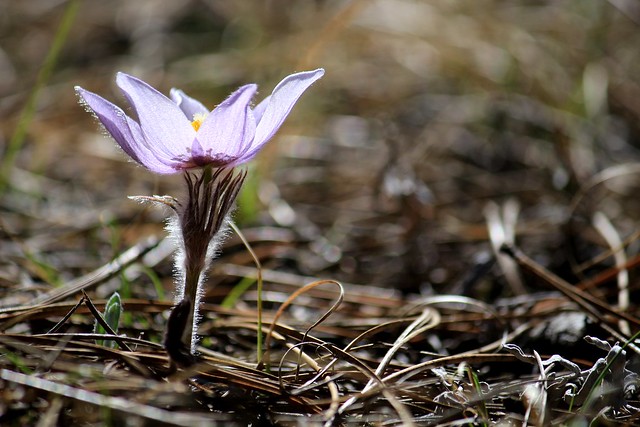
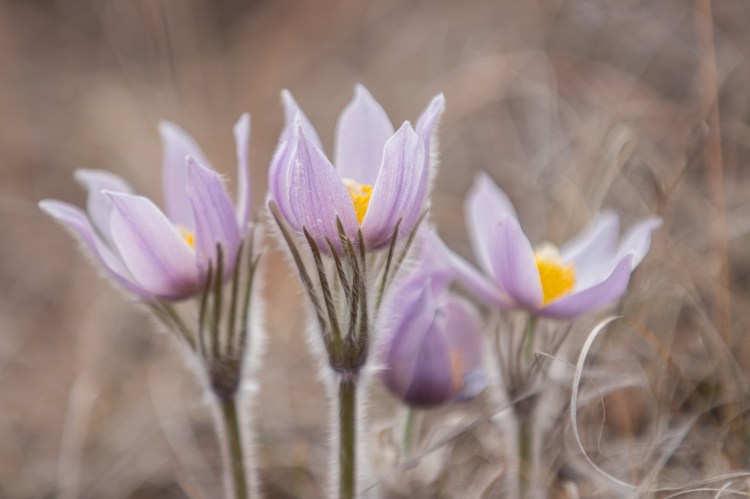
The pasqueflowers bloomed early this year. Perhaps they were tricked by the unseasonable weather, like the plums and the crabapples. Dandelions have tried to spring up, but haven’t been overly successful. But the pasques! How could they bloom with no moisture over the winter? So delicate-appearing, so insignificant visually, the first to bloom and the first to fade, but incredibly resilient. They thrive in disturbed areas, like recently logged terrain, and some of the best I’ve seen have been in old wildfire scars. The ones on our place bloom on the north slope of Potato Butte, a rather rugged and blighted prominence, and in the draws around it, where the wind blows the worst. They fight their way up through the rocky ground, rivalling yucca in toughness, spreading their little leaves and opening their petals in a tangle of old grass and bracken. They survive frosty days and wretched conditions no other wildflower is brave enough to face. When the sun is just right, they light up, their transparent petals like stained glass, and the silky hairs catching the sun. Little beacons of hope they become. They don’t bloom when and where it is easy. And they aren’t easy to cultivate. They thrive in adversity.
Fire is on our doorstep. From the burning of the Sandhills, to the fires that have lit the skies and eaten up pasture as near as two miles away, the drought is oppressive. Most have never seen it this bleak this early. There is no telling how the next weeks and months will play out, no telling how much harder things will get, or how beautifully they may turn around. They’ve done so before. The uncertainty makes us feel so very small. But a recent drive took me through an area burned by a devastating fire a few years back and my heart, heavy right now, lifted and soared. The entire forest floor was green. Not the green of grass, but the green of hundreds and thousands of seedling pines. So very small. Little beacons of hope. Thanks to the flames of the fire, the forest is reseeding itself. They thrive in hardship.

A few weeks ago, the sandhill cranes flew overhead like they do each spring, without fail. I love watching them fly together, wing to wing, and their wonderful wild call pierces the heart. “Fly on! Fly on!” they seem to cry, one to one another, in chorus.

Perhaps the bleakness isn’t so all-consuming after all.

The meadowlarks have returned, sitting on fence wires and the tops of fence posts, and they still have things to sing about, raising their melodious voices in solo song.

Perhaps we do, too.

The bluebirds are homemaking as always and the Eurasian collared doves are romancing in the pine trees, cooing lovingly together, laughing and trilling. A lusty little starling, drab and unimpressive, sat outside our window, somehow managing to whistle a glorious ditty around the blade of grass in her beak, singing while she built a nest for her family. What a delightful sound!

If the birds can go about their mundane tasks and their quiet little lives with a song in their hearts, perhaps we can, too. We can tend our homes, we can break bread with our families and neighbors, we can bear one another’s burdens, and hold our loved ones tight and tighter. We can find joy in a smile or a warm embrace, in the bubbling laugh and sloppy kisses of a baby.

And like the pasqueflowers, perhaps we, too, can thrive even in hard frosts and snowless winters and rainless springs. Perhaps we can thrive in churned up earth and on rocky, windblown hillsides, or in the ashy, deadened landscape after a rangeland fire. Like the pine woods, perhaps we can weather a fire and the heat that burns and clears and cleanses, and in its aftermath a whole new forest will grow.

The birds, the flowers, the forest – They were not made for ease. Are we so different?  
Ranch Wife Musings | A Worthwhile Pursuit

Originally printed in the Custer County Chronicle on Aug. 13, 2025

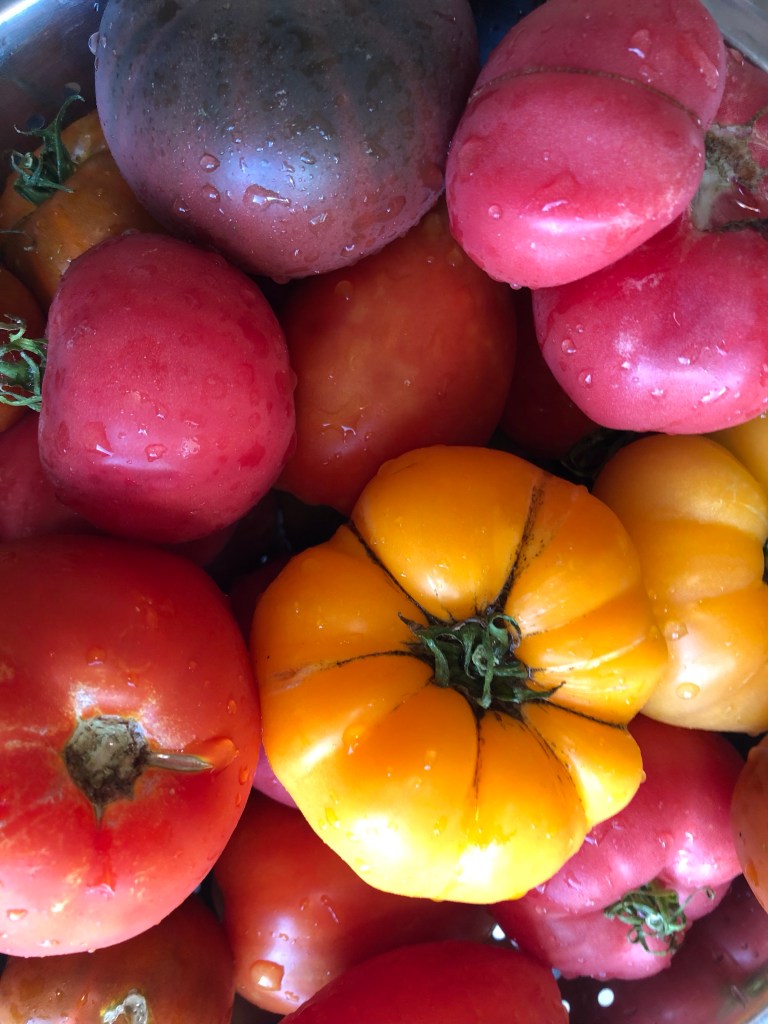
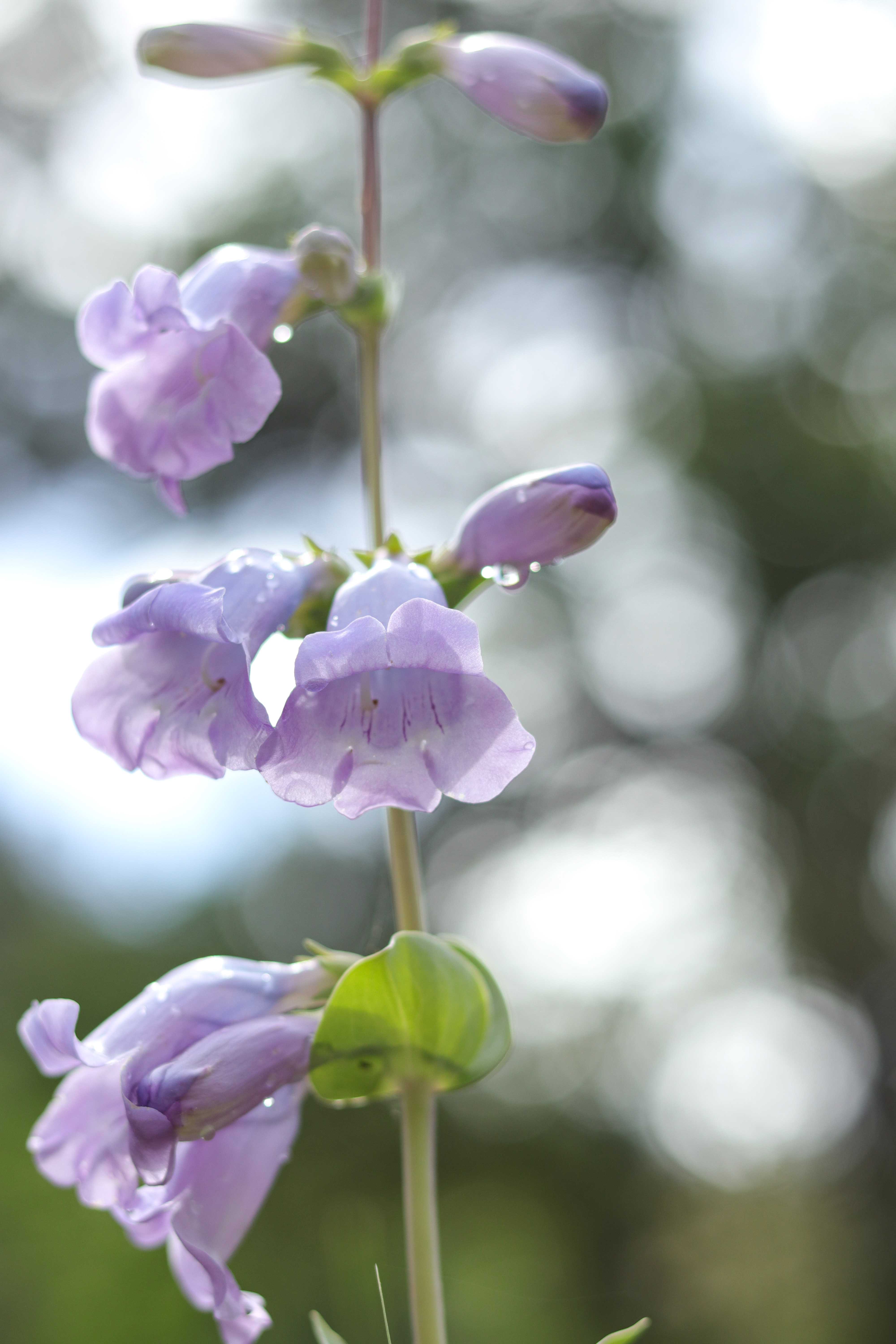
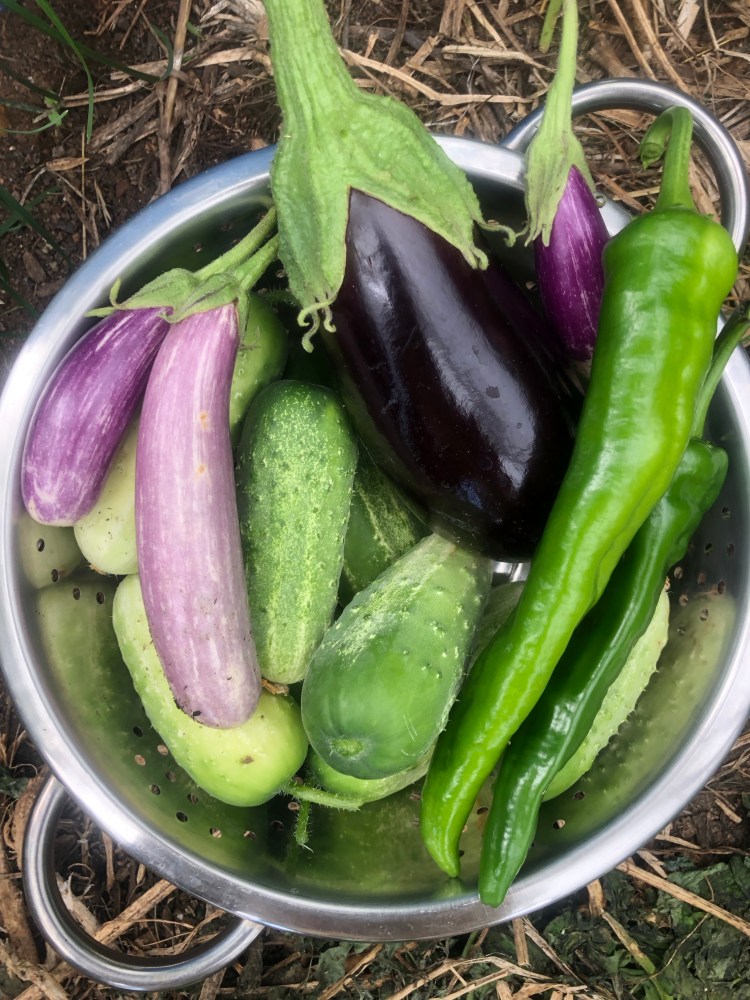
After months of tending and cultivating, my garden is beginning to release all the vibrance of its bounty. Peppers nearly a foot long (really!), cucumbers and beans, herbs, tomatoes, squash and a little sweet corn. After months of watering and weeding, picking bugs and pruning, my countertops, crowded with bowls of fresh produce, are finally starting to show evidence of the work that came first. Mason jars of fresh cut flowers, dahlias and zinnias and black eyed Susans and bright pink penstemon, grace the tables and the corners of counters not covered in produce in rambunctious if not exactly artistic displays.

We live in a culture that tends to idolize two things: money and leisure. Granted, money can be the means to leisure, but oftentimes people will run themselves into the ground working a job they don’t even really like in order to have money to have leisure later.

There is an overarching idea implicit in this: It is that work is only a means to an end. A necessary evil. Work and toil are means to status, or money, or future leisure, or power, but have no inherent value in and of themselves. Our culture sees the end as the goal, not the process, or the journey, or the growth and even failures that come before the goal is met. Culturally, we value the result, but often we fail to see the value in the inputs, whatever those inputs are. They are only seen as valuable inasmuch as they are the means to the coveted end.

That bouquet of flowers on the countertop, then, or the bowl of fresh cucumbers, those are the end in sight. Everything else, culturally speaking, holds no significance. The weeding and tending and watering? Simply a means to the end, which is the fresh cut bouquet or the bowl of produce. So, we devalue the bulb or the tiny seed, the hands that planted and worked the dirt, the process of nurture required to achieve the flower. The time and effort are just necessary evils. If we could, we’d rather skip right to the flower, and leave aside the care and tending, the watering and pruning and weeding. We fixate on the end result, rather than enjoying the process as the flowers sprout and grow, set buds, and bloom a rainbow in the garden.
This thought process permeates so much of how we view life. Relationships, families, health, vocation, all fall victim to this mentality that wants the results without placing value on and appreciating the work itself.

We want to experience good health and longevity, but would rather forego the necessary work and dedication and self-sacrifice and discipline, the sacrificing of convenience and personal gratification. If we could have the health and longevity without personal discipline, I think many people would take it. But isn’t there value in the discipline, in suspending instant and constant gratification?  

We want the fulfilling marriage, but we would rather leave aside the relationship-building, the cultivating and tending, the intentional growing together spiritually and emotionally and relationally, experiencing failures and setbacks, learning each other, asking forgiveness, and purposely seeking oneness. If we could have the fulfilling marriage without the work, I think many or most would take it. But isn’t there value and sweetness in the process of growing a healthy marriage?

We want to feel part of a community, a sense of belonging, without doing any communing, without sharing and meeting needs, without working shoulder to shoulder and sharing in fellowship. We want the blessings of community without the beautiful burdens that make up community. If we could have the sense of belonging and the sense of being known without the sweat and the work, I think many or most would take it. But isn’t there value in the sweat and the work, the sharing and meeting needs?

What twisted sort of thinking got us here?

Would my satisfaction in a vase of home-grown, fresh-cut flowers be greater if I hadn’t spent weeks and months nurturing the plants?

Would my marriage be sweeter or my happiness in it be more complete if there was never any need for growth, asking forgiveness, and making changes, in a process that lasts a lifetime?

Would contentment in community be greater without all the messy sharing of burdens and life and sweaty work shoulder to shoulder?

I think the answer is pretty clear.

Because the value is not just in the bloomed flower, or the sweet marriage, or the health and longevity, or the vibrant community. The value is in the work itself, the process of growing and changing.

Some of it might be cultural laziness or human nature, wanting the benefits or results without the work. Some of it might be the helter-skelter life we’ve conned ourselves into, where we see any ask on our time as impinging on the “important things.” Maybe it is our social media saturated culture, where we see and share successes and goals achieved, and live in and perpetuate a delusion of thinking that everyone else is accomplishing that coveted end result, whatever it is, without months and years of work and sweat and tears.

But you don’t get to enjoy the fruits of a healthy community without work put into that community.

You don’t get to enjoy the sweetness of a healthy marriage without work put into that marriage.

You don’t get to enjoy the satisfaction of homegrown flowers or fresh tomatoes without time spent tending the soil, replenishing nutrients, planting the seeds, cultivating the little plants, and tending to them through the growing season until harvest.

So, plant the garden. Cultivate your marriage. Build relationships in your community. And buckle down and do the work.

Don’t lose your love of the process in chasing after the end result. Don’t short circuit the benefit of what is happening now for what you hope will happen in two years or ten years. Don’t fixate on the goal such that the process itself goes by in an unrecognizable blur. Because it isn’t just the end result. The pursuit itself is worth it.

A Partnership with Sun and Sky

Originally printed in the July/August 2025 issue of Down Country Roads Magazine

A gentle breath of wind stirs the laundry hanging on the line – A row of snap-front shirts and faded jeans, a row of quilts and sheets. Hung out wet and cool, taken in warm and dry, bringing that clean smell of sunshine into the house. And what a privilege to complete that task in partnership with sun and sky. Such a small thing. Yet it isn’t small at all.

They tell us we don’t belong. From their remote offices of steel and glass, shaded from the sun and unable to see the sky, they wag their so-knowing fingers at the rancher, whose father’s grandfather made a living in cooperation with the natural world. But here we are, and here we’ll stay, continuing in that partnership with sun and sky, wind and weather.

In the first summer days of scorching heat, the hayfields change, slowly, then not so slowly. Alfalfa turns from green to purple, and the brome grass turns from green to golden-brown as the feathered heads cure out. The vivid colors fade. That first swath is cut. That first windrow raked. That first bale rolled. “Chasing hay,” it is called, and one by one the area ranchers and farmers take to the fields. Cutting and raking and baling and yarding it up, timing the activity to the perfect streak of weather, partnering with the sun and the sky.

The flower garden is a riot of color, and constant activity. Countless numbers of bees drone comfortably, bending flower after flower under their slight weight, little wings stirring leaves, little legs weighed heavy with golden dust, in a mesmerizing dance of industry and grace. How something as small as a bee can have such a vital role to play is humbling. And how sweet it is to partner with those tiny workers, with something as ordinary as a homey flower garden, to help them feed their young as they help us grow our own gardens. What a sweet partnership, with sun and sky and flying thing.

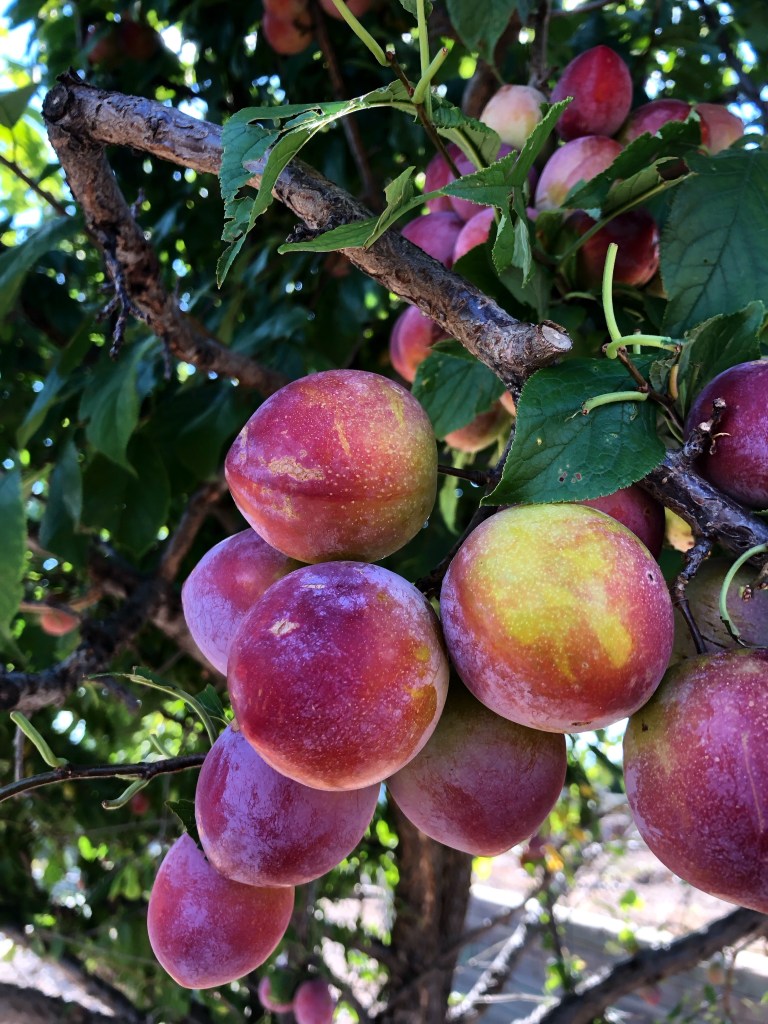
Our little yard is rimmed with young fruit trees, planted as memorials to important days and as an investment in tomorrow. We have our wedding trees, and our-family-is-growing trees, trees that mark days and loves and in future years we’ll taste again those sweetnesses, fruit in hand. What simpler stewardship than to plant a tree? The apples begin to swell and blush as the days shorten, and in the woods across the ranch chokecherries hang like clusters of grapes on every side hill, it seems, and in every ravine. Many feed the birds, but many find their way into the kitchen and in this form or that they will grace tables in the months ahead. It is stewardship, partnership, cooperation with the world around us to wisely use the bounty.

From ivory towers come criticisms and accusations, rules and regulations, suggestions and mandates – But what do they know? And how could they know? Have they planted a tree? Or harvested a crop? Or watched a calf take its first suckle of mama’s milk? Have they stumbled across a sleeping bull elk in a high meadow, and watched in awe as he shook off slumber and disappeared into the woods? Have they watched the antelope raise their young? Have they welcomed the sun and the wind and the natural order of things?

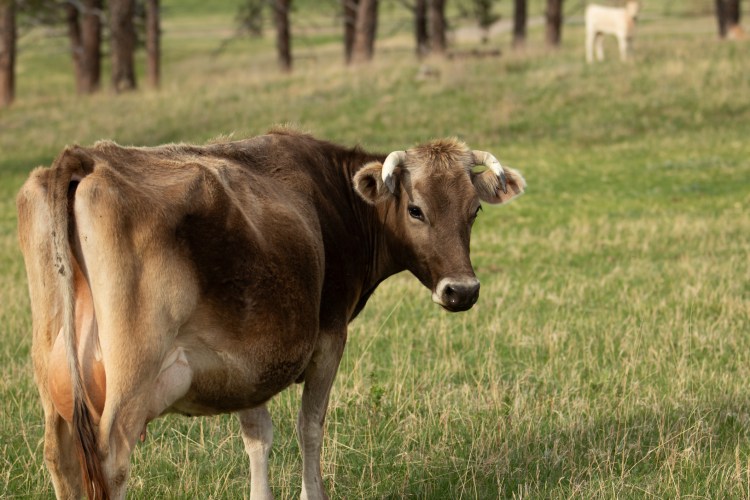
Feasting on native forage, the milk cow is well-fleshed, her lean frame filled out beautifully under a healthful layer of summer plenty. Her milk is rich and sweet and abundant on sunlight-turned-to-grass – No wonder her calves are as stout as they are. Their summer coats are sleek and glossy, their gentle eyes bright and content as they seek out shade on a warm day and chew their cud. They truly haven’t a care. The beef herd is out to summer pasture, thriving in their self-sufficiency. What a life they live, gently handled, carefully tended, in this partnership with sun and sky and beast of the field.

The hens dart to and fro in the barn yard, sometimes making it up as far as the house and the garden. They are gorgeous this time of year, feathers full and flawless, and their eggs are a marvel as well – Hard symmetry cracks open to reveal a golden heart, the darkest of yolks, dark with summer’s vegetation and the insects the chickens consume, golden like at no other time of the year. The egg basket runs over, and the bounty overtakes the kitchen. Another simple partnership, with sun and sky and barnyard fowl.

How simple, each of these partnerships, each of these stewardships. How intuitive and instinctive to want to be a part of this world we live in, to care for it, to help it to thrive. To live in and amongst, not apart from. To take what we need with gratitude, to cultivate and invest, and to leave our little corner of this green earth better than it was when we came to it. And finally, to leave something for the next generation, something beautiful and beloved.

It isn’t we who have invaded, carving up the landscape to suit our whims and ways. It isn’t we who have razed the woods and hidden the hills beneath asphalt and high-rises, chiseling away at the contours of the land to favor buildings of cinderblock and stone. It isn’t we who have divided and subdivided, trading the warmth of the living land for the coldness of a dollar. It isn’t we who have rerouted waterways and planted lawns where native grass once grew. It isn’t we who have buried fertile ground beneath roads and infrastructure, slowly erasing the beautiful asymmetry of rolling hills and prairies.   

We are stewards. We exist with and alongside the birds and beasts, the land and trees, the wind and the weather; not bending nature to suit our wills but submitting ourselves to nature’s order, partnering, not subjugating, working with, not against. We live here. In partnership with sun and sky.

Old Friends

Originally published in the May/June 2024 issue of Down Country Roads Magazine

First, I fell in love with violets. I called them wildflowers, but Dad called them weeds, and to his chagrin they grew in abundance in the yard of my childhood home. I can remember picking them handful by fragrant handful, stuffing them into tiny vases with pride and delight. Their sweet faces were enchanting, the sleepy-eyed, quiet little things, all shades of dark blue-purple to white, with the delicate striping at their throats and their whimsical heart-shaped leaves.

Then I learned their names. They weren’t just violets, but some were common blue violets, some were dog violets. It is one thing to know a flower by sight, to recognize it in a distant sort of a way. It is another thing to know its name. It is like the difference between an acquaintance and a companion.

Thus began a lifelong friendship with the flowers.

Field guides became a favorite and treasured part of my personal library. I learned many names. Each hike or rambling walk was a treasure hunt, every parting of the grasses a discovery. For each new flower I found, I learned a new name, like meeting a new friend.

And meet them I did, learning to see the uniqueness of the flowers, not just nature’s wild and wonderful bouquet.

As my friendship with them deepened and their names became familiar, wooded rambles no longer were blind treasure hunts, but reunions, each time I wandered into their domain and sought their company. My photographs of them were no longer just photographs, but portraits. Their familiar faces became as familiar as a friend’s face, their presence was eagerly anticipated, the blooming of different flowers marking milestones throughout the year. I learned their quirks and preferences, to know where each little blossoming beauty likes to be, what hollows they haunt, what hillsides they adorn, and when they adorn them. A well-traveled trail is always new, week to week transformed by the adorning flowers, and sometimes day to day.

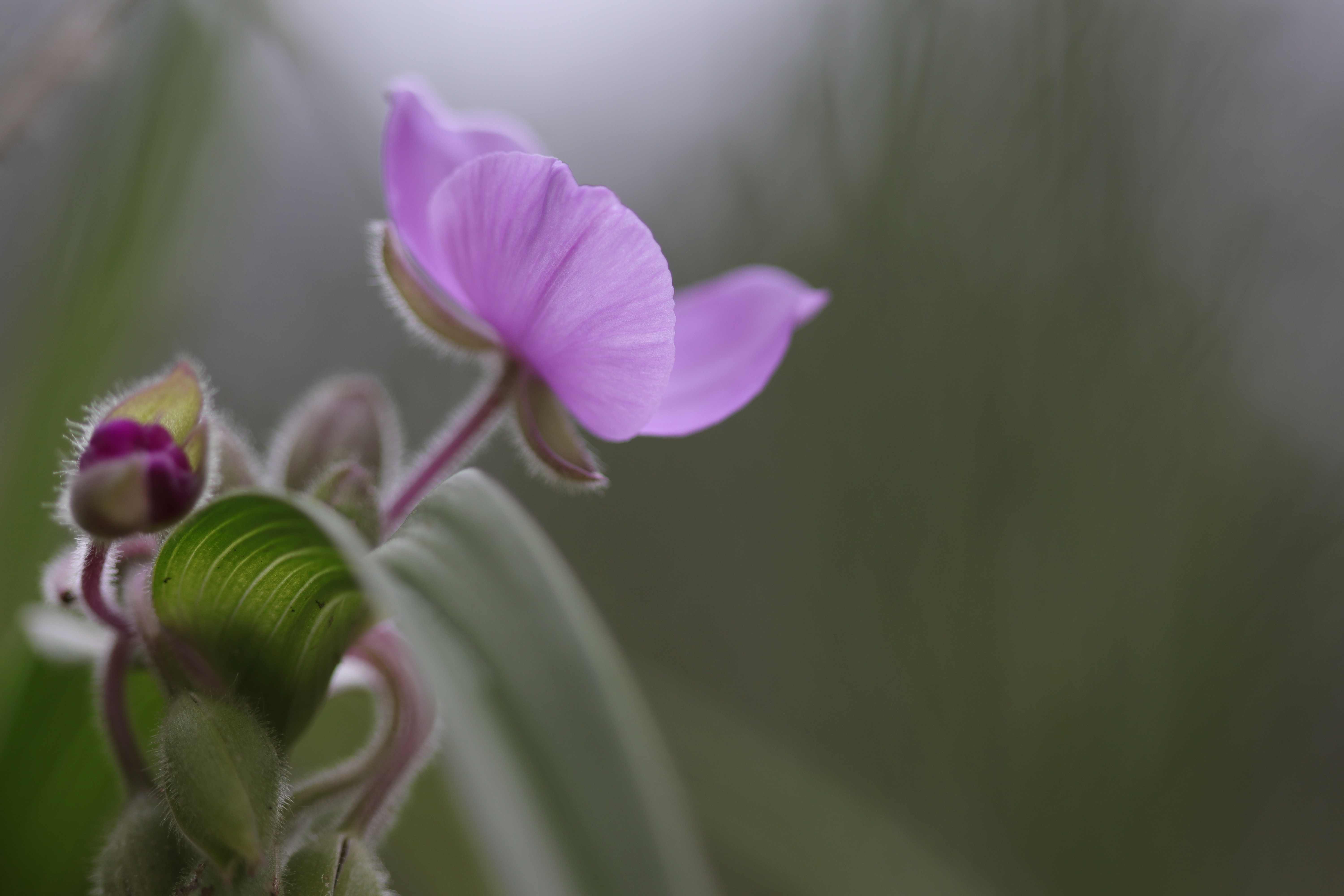
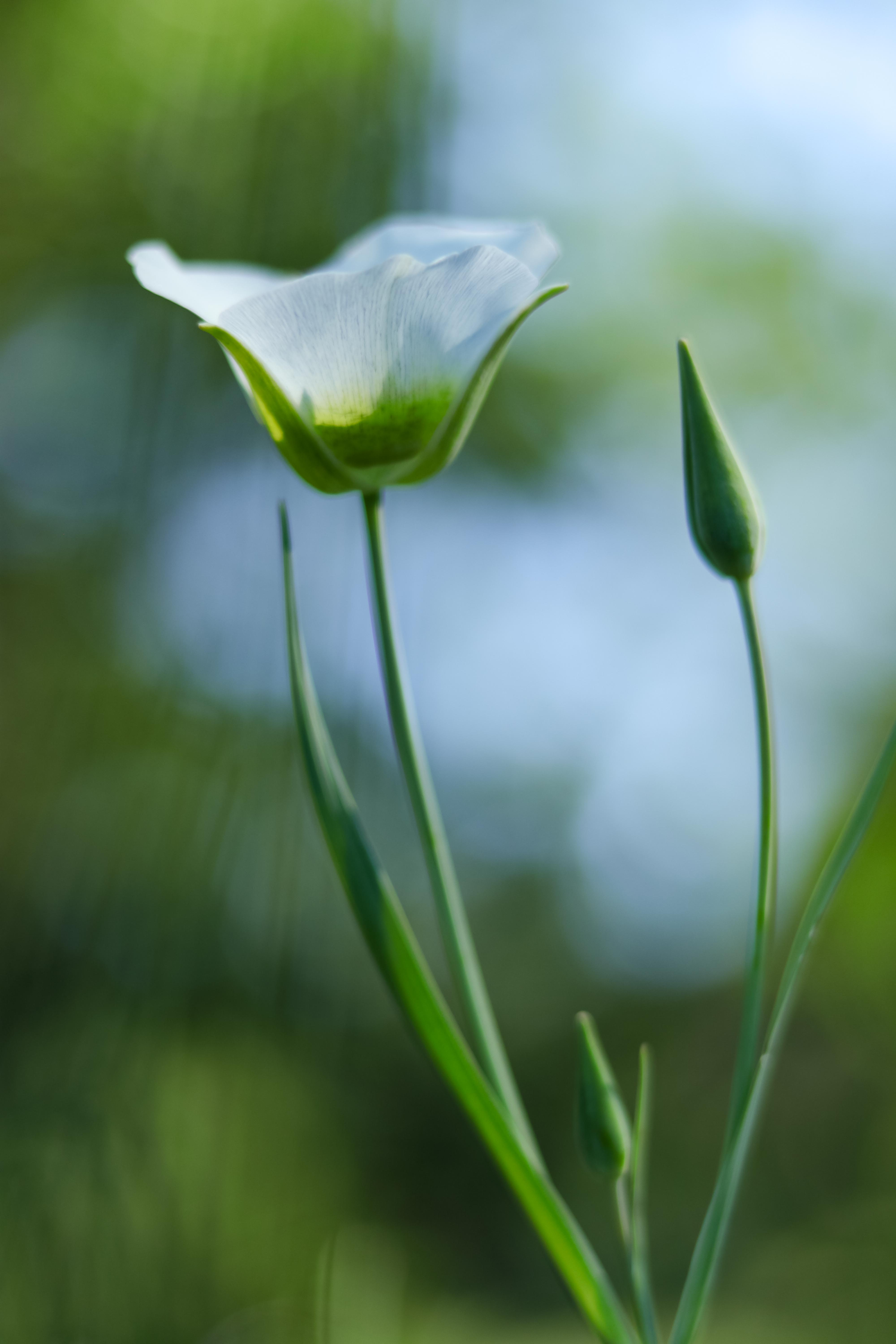
Columbine blooms quickly in the early summer and is easily missed, tucked away in the cool, damp hollows and ravines, her salmon and yellow blossoms hanging like pendants from her slender stem. A lucky person might chance upon a blue columbine, rare in the Hills, or even a white morph. Lanceleaf bluebells grow on the hill trail above our house, drinking up the splashes of midsummer sunlight from between the spreading ponderosa pines. Finding the hiding place of the sego lily is a reward in itself, reclusive as she is, and rather shy, maiden-white with a heart of gold. Spiderwort, not overly finicky about where he grows, sometimes in the pines, sometimes on the prairie, boasts his clusters of brightest pink and vivid purple, the local varieties almost impossible to differentiate, as they cross-pollinate with ease. Longspur violets grow in the higher elevations west of us, while their sisters, the pale-lavender larkspur violet and dainty yellow Nuttall’s violet, inhabit the more arid country around my home, flourishing on the grass-covered slopes of the foothills. And then there is the magenta gem of the summer, shooting star, thriving in the shelter of trees and ferny slopes, lighting up like her namesake when the sun is just right. Beebalm, almost a weed but not quite, spreads a mist of color over entire hillsides in the later summer, fragrant and robust. Wild roses, sweet and feisty, grow in the sandiest, hardest-packed ruts of trails, forming rollicking banks of brambles when they are undisturbed, leaving behind crimson jewels at summer’s end which, when harvested, make the most wonderful honey-colored jelly.

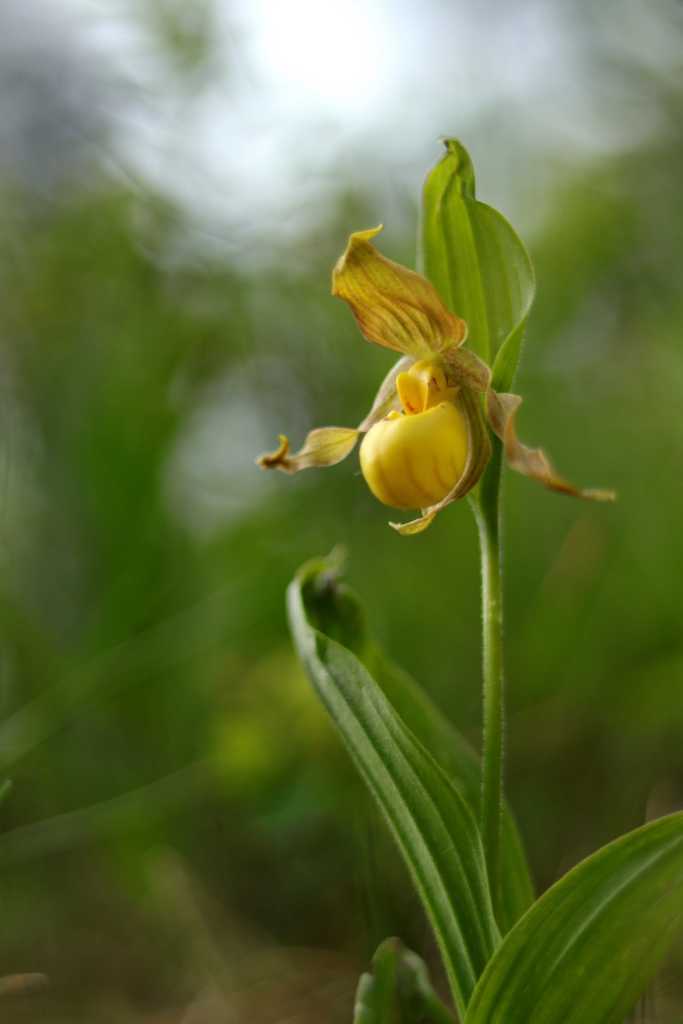
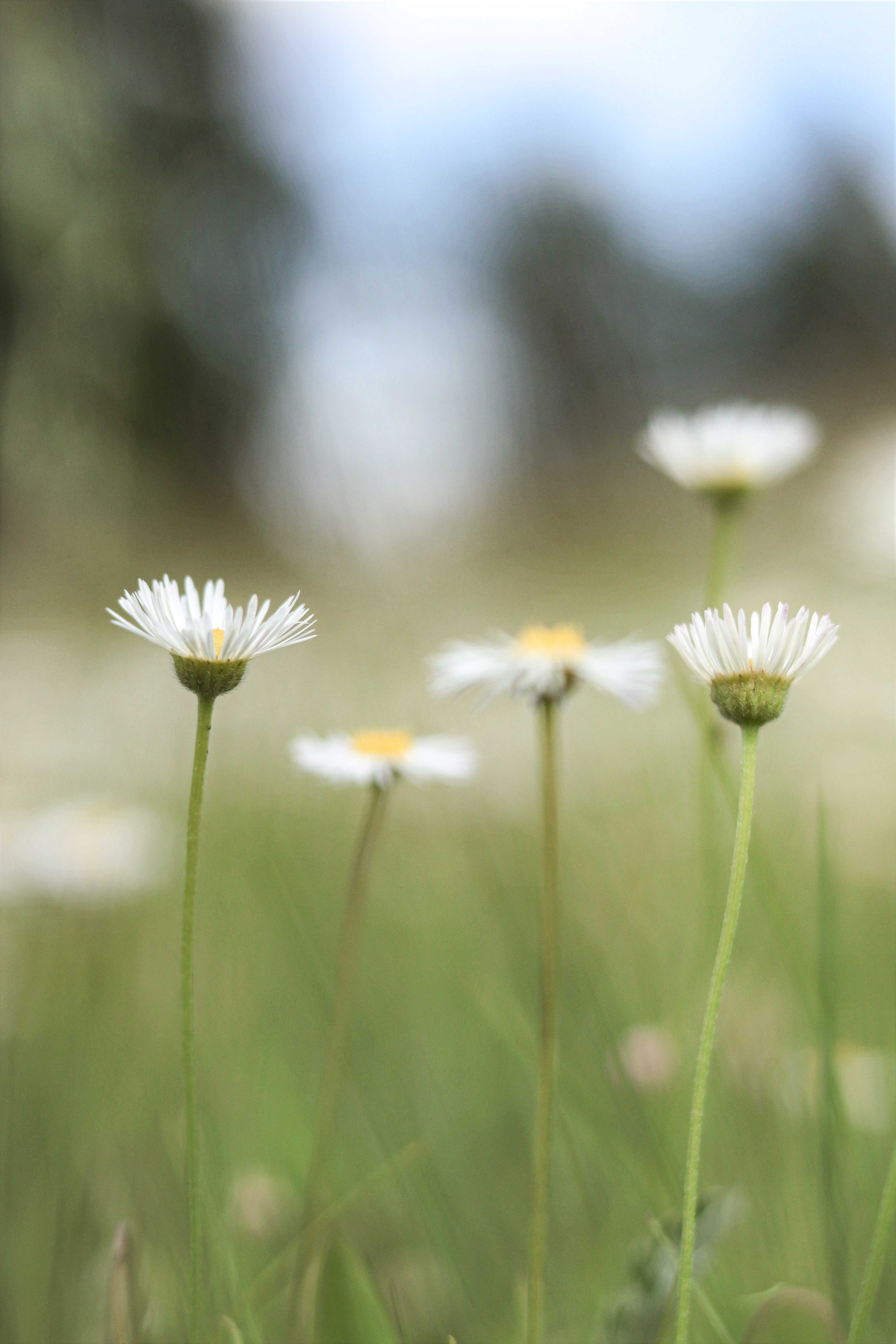
So many names! Names familiar and enchanting and delightful. Prairie chickweed. Purple virgin’s bower. Prairie smoke. Blue flag. Dame’s rocket. Wild buckwheat. Yellow ladyslipper. Pussytoes. Shell-leaf penstemon. Cutleaf anemone. Harebells and asters and fleabane.

How sweet it is, to be surrounded by familiar, beautiful faces. To peer into the underbrush, to part the tall grasses, to look beyond what many choose to see, to seek and find and learn. To ramble in the woods in the company of so many old friends.  

God’s Garden

Wildflower hunting was one of the stated intentions of this hike. Nevertheless, I was overwhelmed by the number of little gems that we saw and had never expected to see this many. It seemed as if my whole field guide was spread out and blooming. Flowers I’d never seen before, except in my field guide, were in full bloom, and others that I did know grew in quantities I’d never seen! It was truly stunning. There was absolutely no shortage of wildflowers in the burn area of the Legion Lake Fire. Rather, they were particularly abundant and spectacular. Prickly pear and barrel cacti were also quite abundant, which was some cause for concern: I’ve been accused of “crawling around on the ground” to take pictures of wildflowers. But one encounter with spines today was enough to make me much more cautious, so after that I was careful to look before kneeling down.

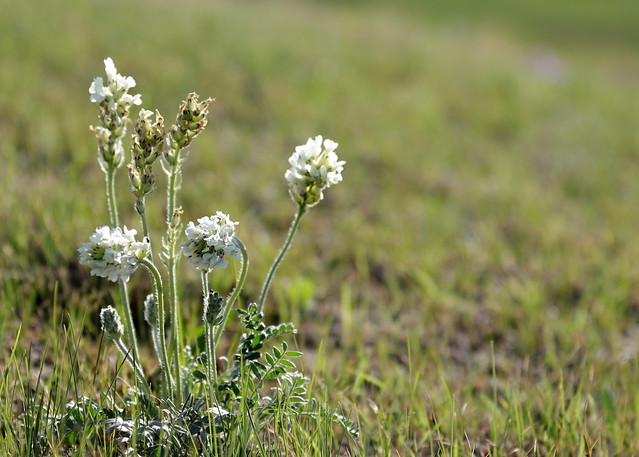
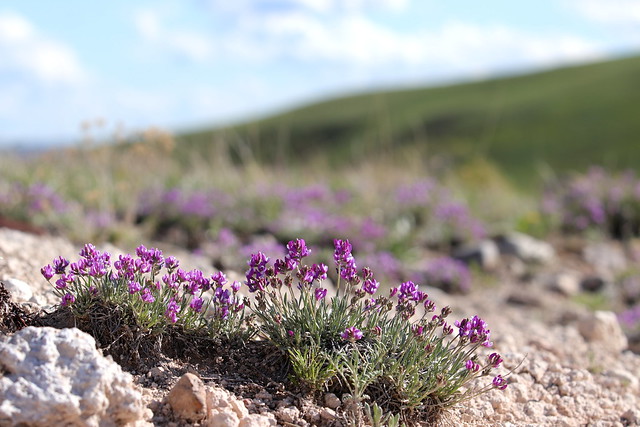
IMG_6433eWhite crazyweed – Oxytropis sericea

IMG_6415eTufted milkvetch – Astragalus spatulatus

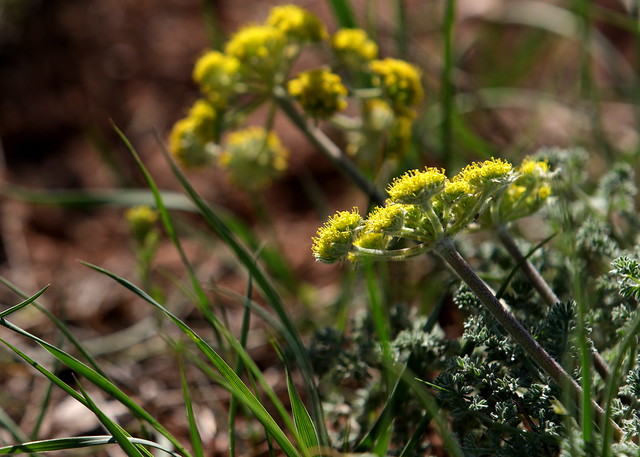
IMG_6394eDesert biscuitroot – Lomatium foeniculaceum

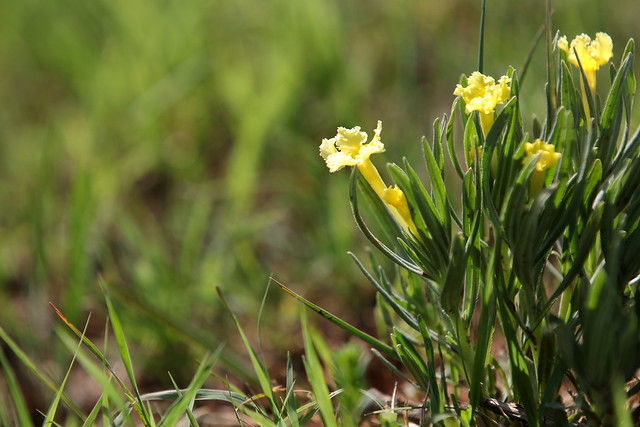
IMG_6384eNarrowleaf gromwell – Lithospermum incisum

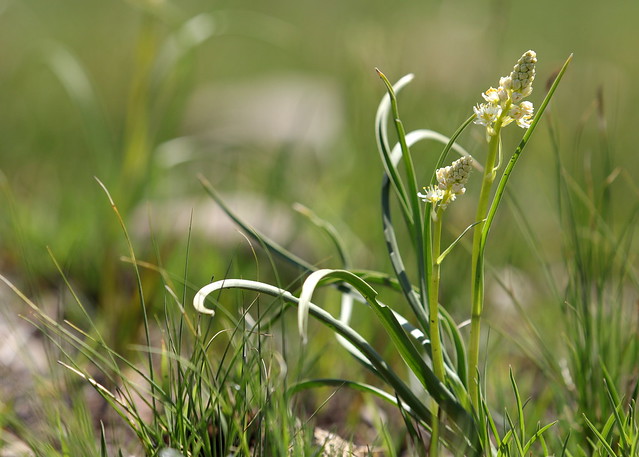
IMG_6380eMeadow deathcamas – Zigadenum venenosus

IMG_6377eMissouri pincushion – Coryphantha missouriensis

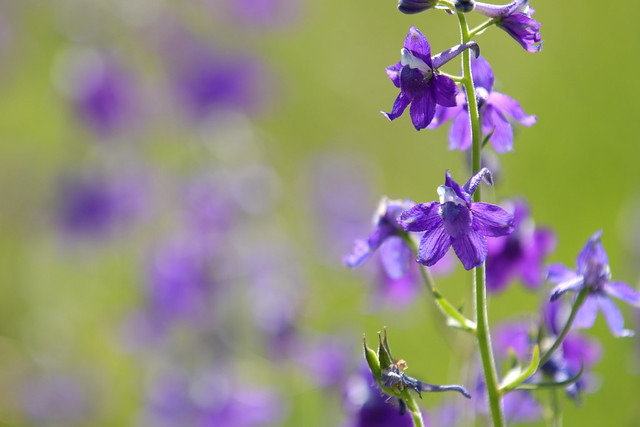
IMG_6354eLow larkspur – Delphinium bicolor

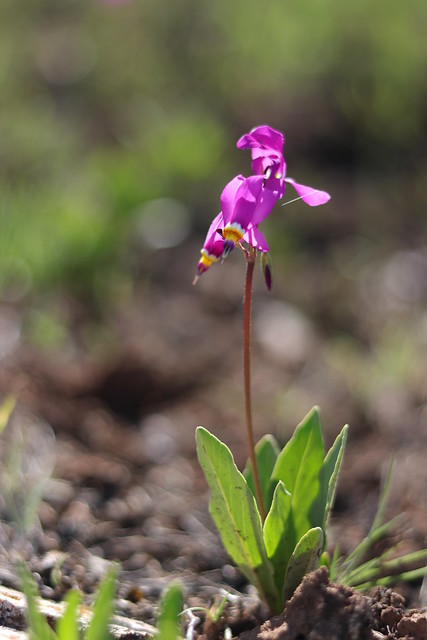
IMG_6323eDarkthroat shootingstar – Dodecatheon pulchellum

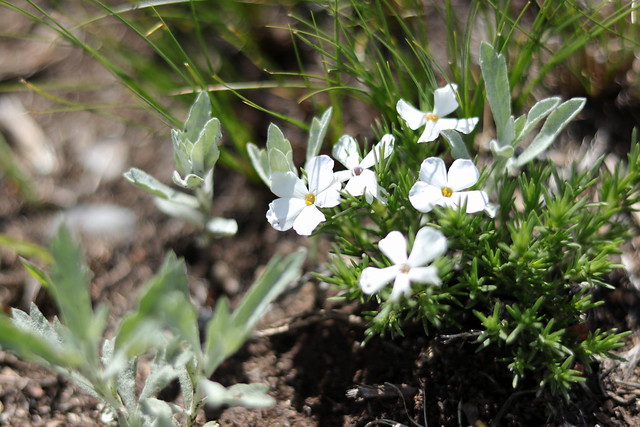
IMG_6315eHood’s phlox – Phlox hoodii

IMG_6314eDowny paintbrush – Castilleja sessiliflora

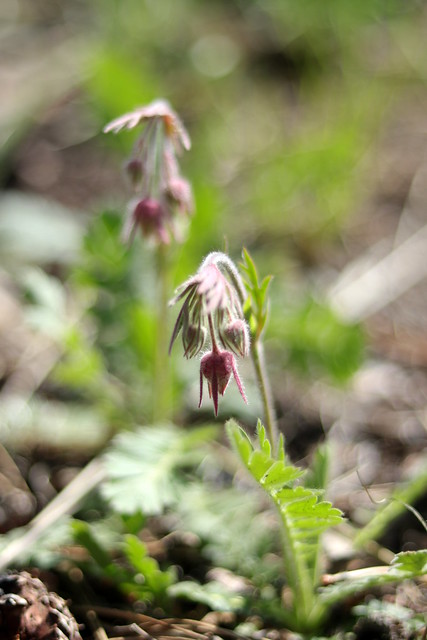
IMG_6304ePrairie smoke – Geum triflorum

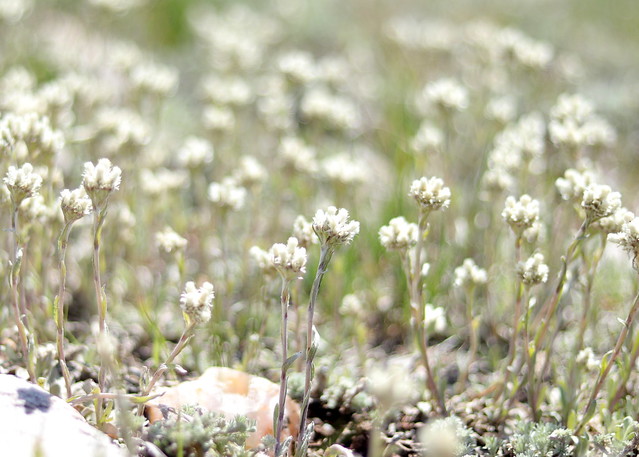
IMG_6299eSmall-leaf pussytoes – Antennaria parvifolia

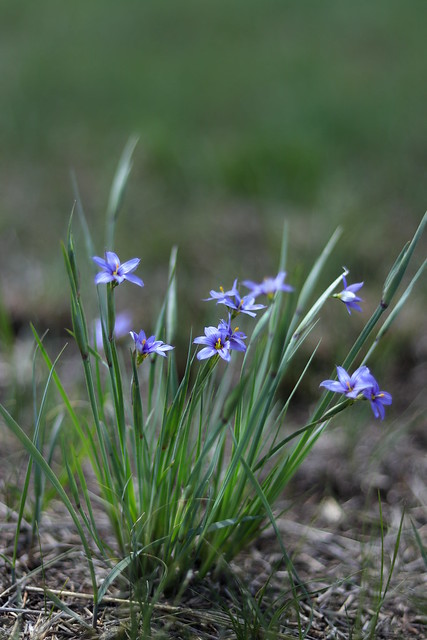
IMG_6293eeMountain blue-eyed grass – Sisyrinchium montanum

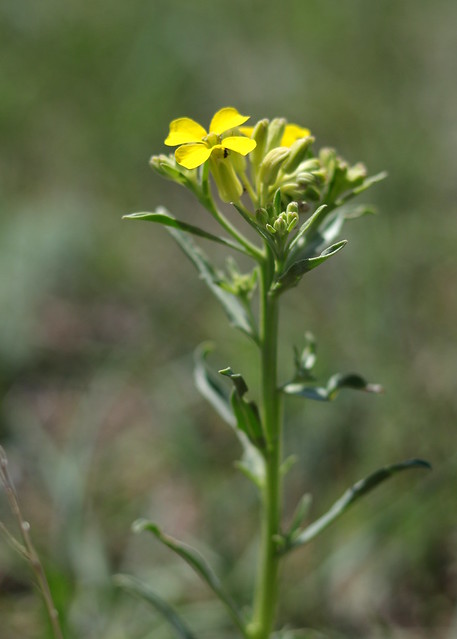
IMG_6283eWestern wallflower – Erysimum asperum

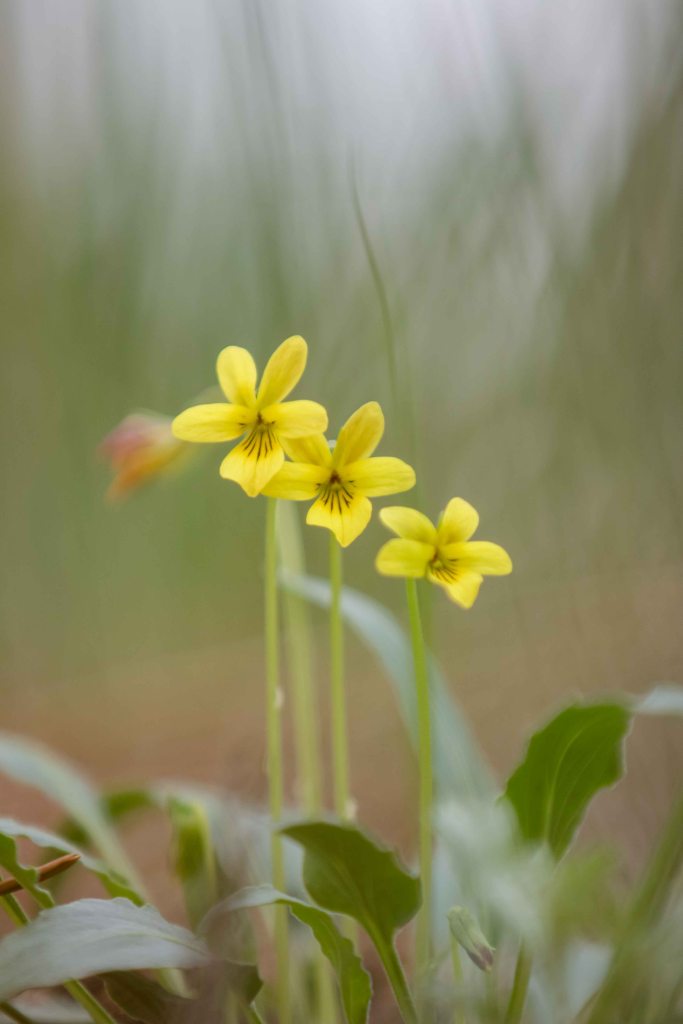
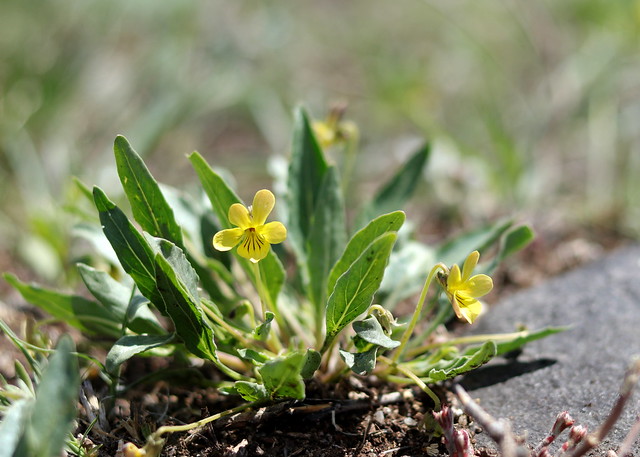
IMG_6278eNuttall’s violet – Viola nuttallii

Other flowers not shown here were the star lily, leafy phlox, prairie golden pea, various milkvetches and legumes, including the groundplum milkvetch (a favorite of mine, with an edible bean), yellow salsify, and a number of others. A beautiful afternoon to stroll in God’s Garden.


Happy April!

How suddenly the winter retreats peacefully into the shadows, places where the snow lingers a little longer and the chill hovers, while springtime appears with vigor and color and sweetness. Everywhere, new life is appearing. Tiny calves speckle the pastures, birds are singing lustily, and branches and twigs are showing green. Underfoot, flower life is waking, spreading their petals to the sunlight, drinking in the rain, little gems in the layers of pine needles and dead grass. First is the pasque, and then the rest follow.
IMG_5006eI’m reminded of these verses from Song of Solomon:

The flowers appear in the earth: the time of the singing of birds is come, and the voice of the turtledove is heard in our land.”

The signs of spring are plainly written. We smell the clean, rain-washed air, hear the droplets pattering on the roof, feel them on our faces, hear the birds singing in the trees. We have the pasque flowers on the sunlit hills. Flocks of sandhill cranes in the sky mark the beginning of April, a new sight for me. Spring is here.

Happy April!