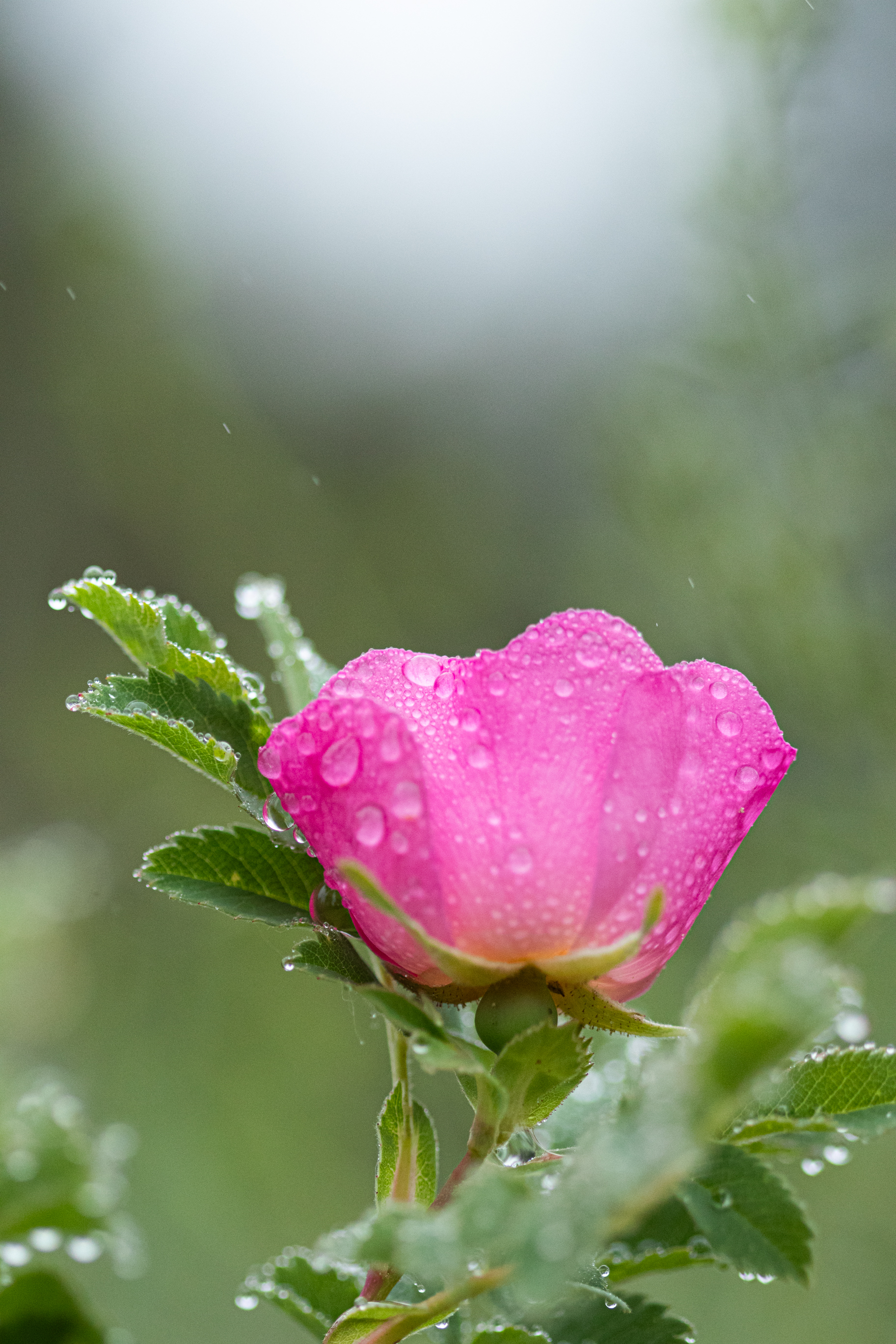
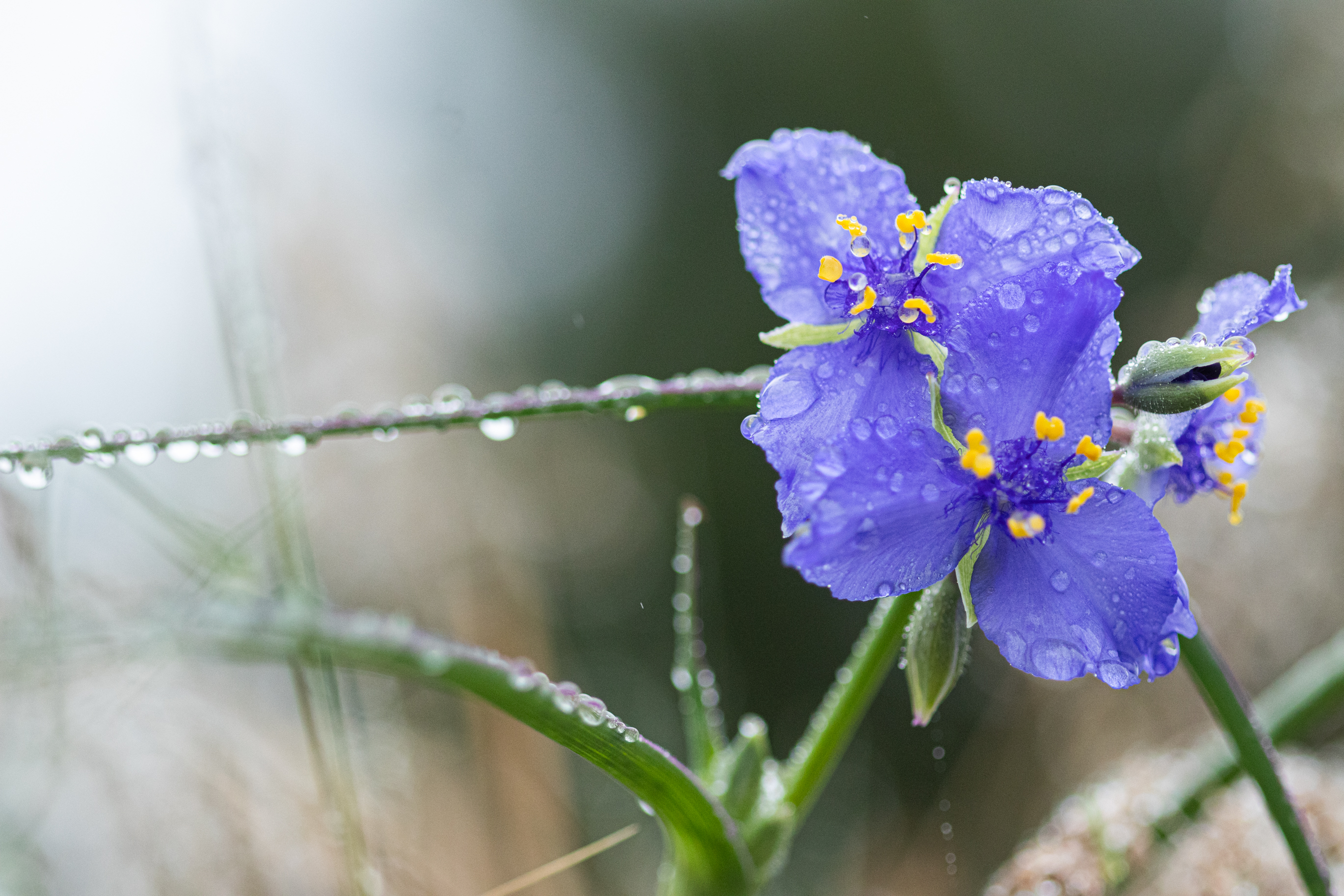
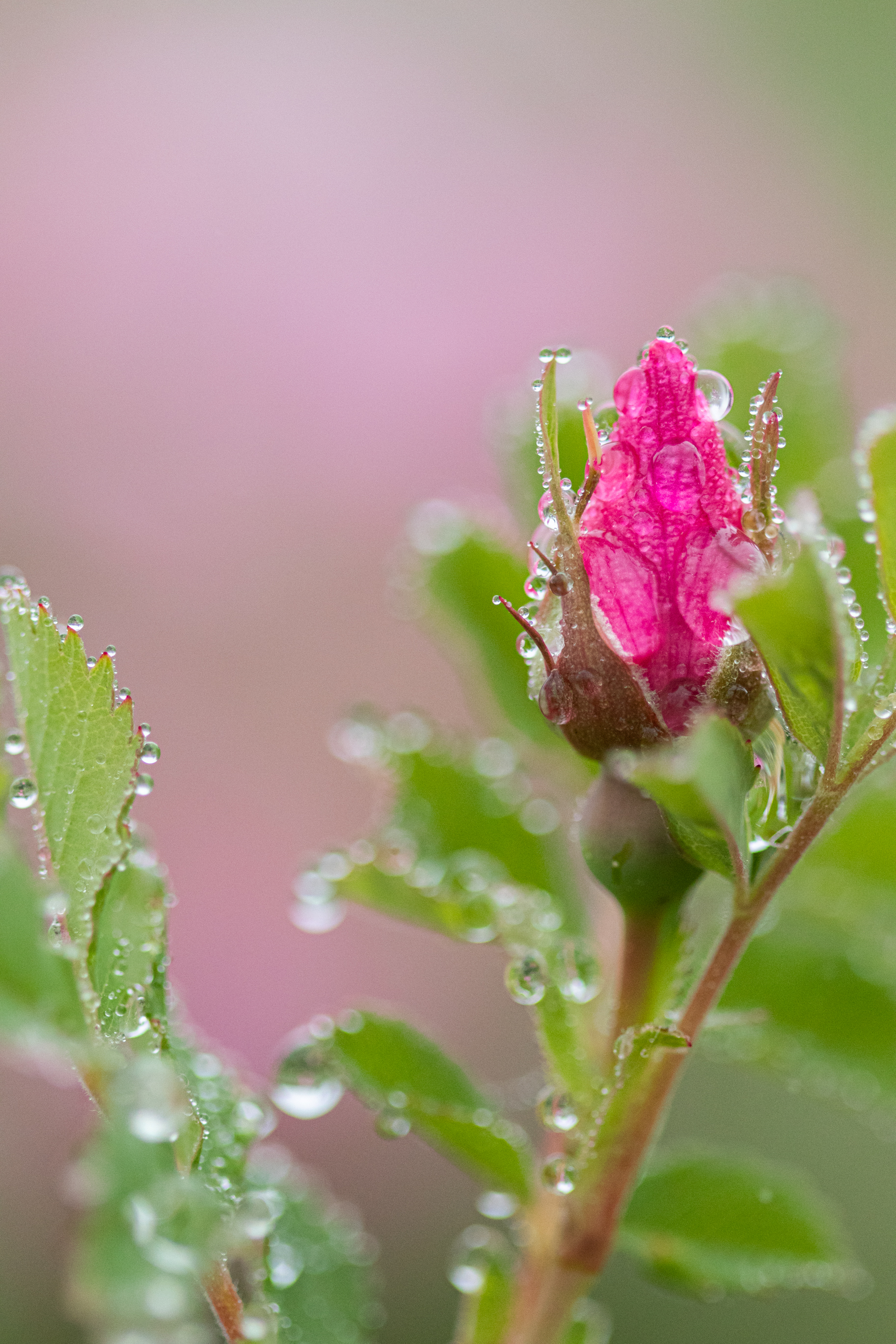
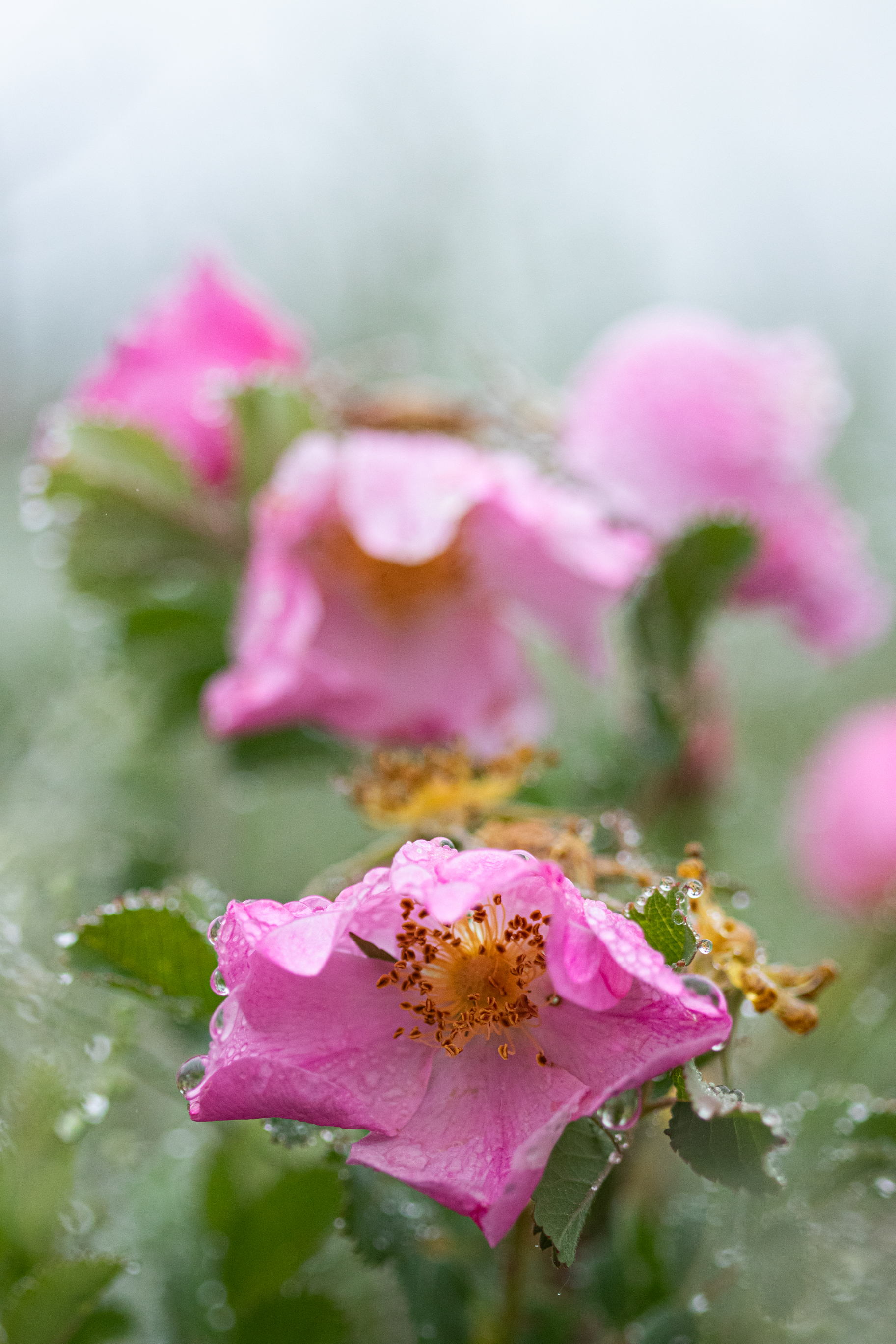
Yesterday was wet. Just wet. Wonderfully so. We got a little actual rain, but most of the day was just heavy mist, and we basically were inside a cloud. We couldn’t see the highway down past the hayfield, and the tops of trees were obscured, and the drops settled, all silvery, on everything. It almost looked like frost, everything was so spangled.
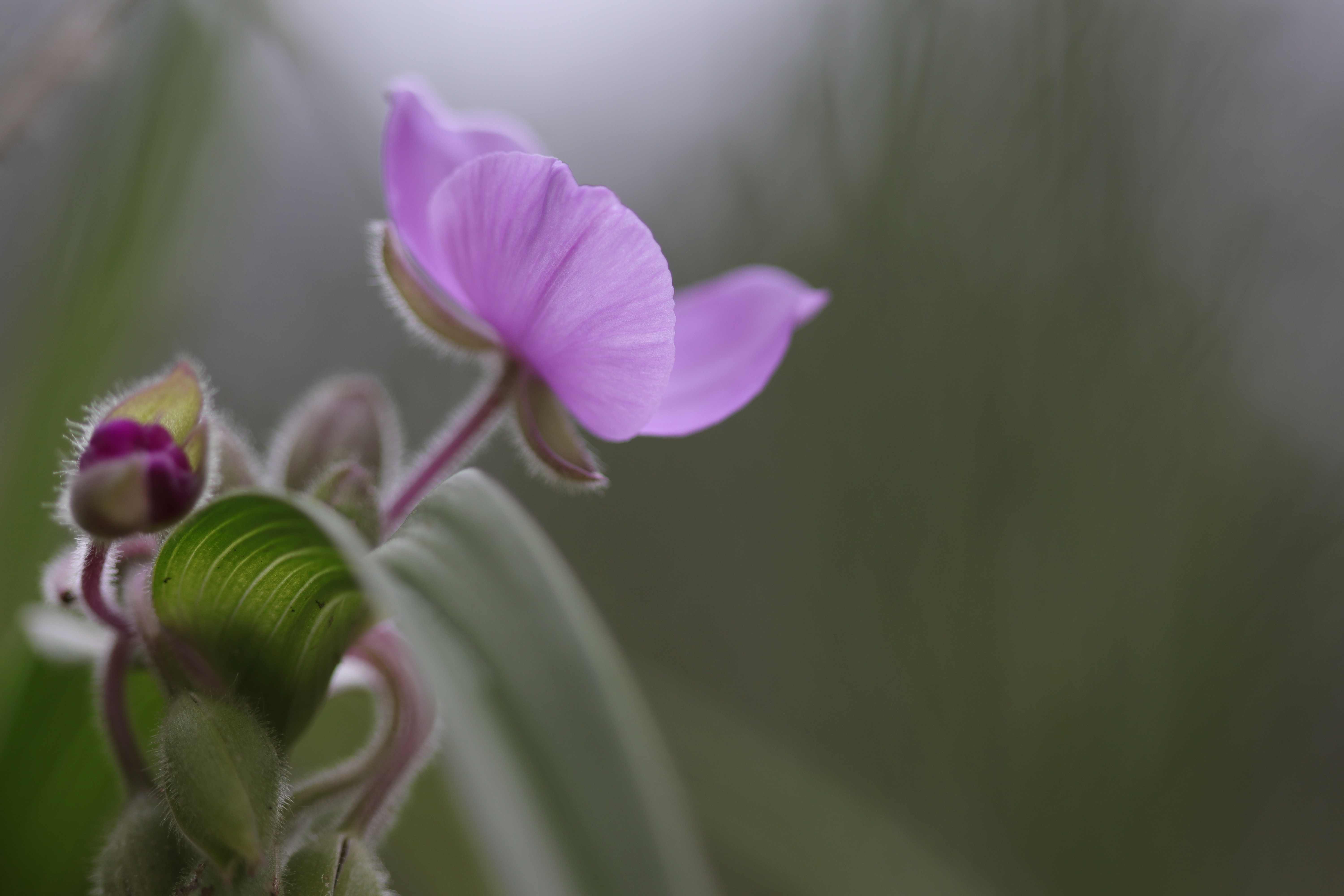
Spiderwebs and blades of grass, mundane on other days but be-jeweled in the mist, drops of water hanging like jewels on the fine threads of the spiderwebs. Roses and rosebuds, and spiderwort, gathering the mist, holding it on leaves and petals and stamens. And then, if you looked closely enough, the whole world reflected upside down in the drops of water, the sky, the flowers, the grass. It was dazzling.
Right now, our society is weighed down with all sorts of mental ills, and the self-care “movement,” if you will, is thriving…It would appear that the best solution anyone can suggest for the chronic anxieties and depressions and just generally not getting along well with life is that people need to love themselves more. For as long as the self-care solution has been being promoted, it is obvious that that isn’t the problem. We don’t have a problem with people not loving themselves enough. The problem is that we as human creatures are tuned to love ourselves, and to love ourselves too much. We don’t need encouragement in that vein.
We need, rather, encouragement to look up from all of our – in the big scheme of things – petty problems and look to the Creator God who loves us. Sometimes we find reminders of that in the tiniest, most mundane yet spectacular ways. Like taking a walk in a cloud. Gazing on the littlest, least-important things that God clearly cares deeply about. And then realizing that if He cares about the flowers of the field, the birds of the air, the mists on the meadows, He must care that much more about His human creatures.
Support Song Dog Journal and share to social media!
We have had some stunning early summer weather this year, the kind that makes one loath to come inside at the end of the day. A few nights ago, the light was perfect so I took off with my camera and Josie, and who would follow but my three not-kittens-anymore, Elsa (the white one), Portia (the true yellow one), and Buttercup (the creamy looking one). They kept up on the whole walk. Just about all of my cats will accompany me on walks from time to time.
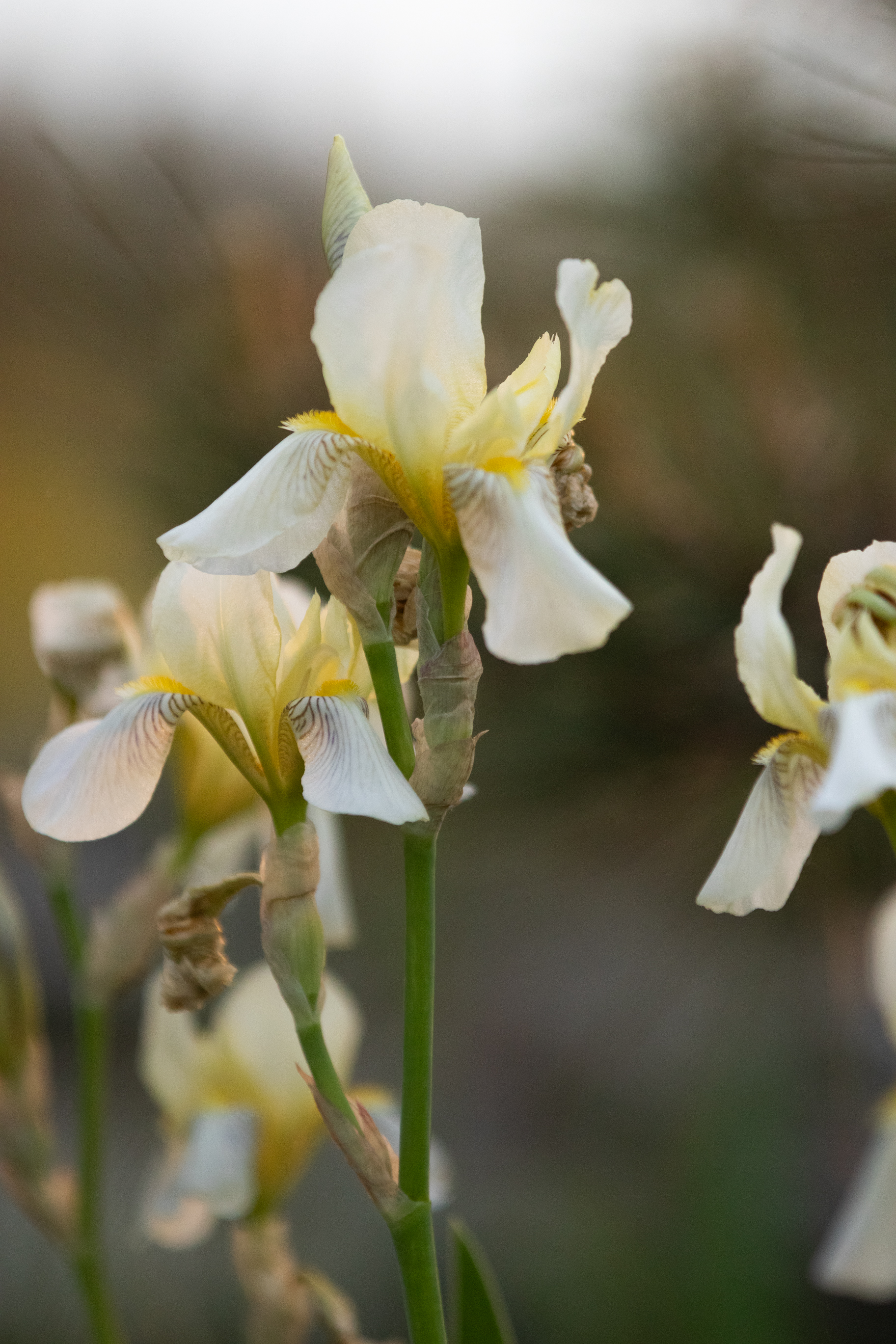
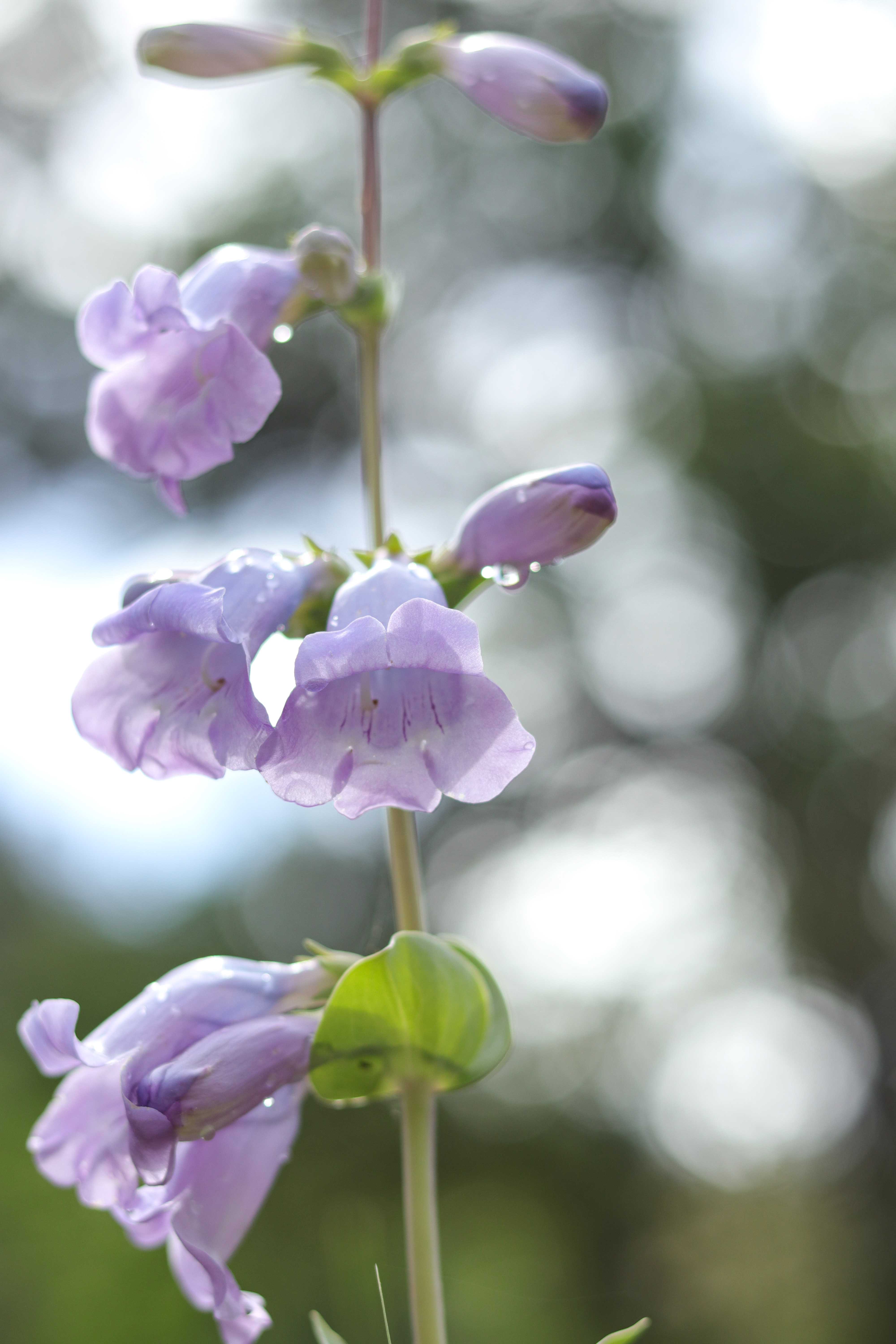
The shell-leafed penstemon was blooming everywhere, and I was tickled to discover a little patch of white irises. We don’t have wild white irises, so who knows how these got there, but they were lovely. Whether a bird planted them, or a homesteader’s wife years ago, who knows, but no one else knew about them when I asked Brad and my in-laws. It has been such a wonderfully wet spring, a lot of things that have bloomed that were somewhat dormant in previous years, so it may have been years since these white beauties bloomed.
Wonderful golden evening.
Support Song Dog Journal and share to social media!
Originally published in the May/June 2024 issue of Down Country Roads Magazine
First, I fell in love with violets. I called them wildflowers, but Dad called them weeds, and to his chagrin they grew in abundance in the yard of my childhood home. I can remember picking them handful by fragrant handful, stuffing them into tiny vases with pride and delight. Their sweet faces were enchanting, the sleepy-eyed, quiet little things, all shades of dark blue-purple to white, with the delicate striping at their throats and their whimsical heart-shaped leaves.
Then I learned their names. They weren’t just violets, but some were common blue violets, some were dog violets. It is one thing to know a flower by sight, to recognize it in a distant sort of a way. It is another thing to know its name. It is like the difference between an acquaintance and a companion.
Thus began a lifelong friendship with the flowers.
Field guides became a favorite and treasured part of my personal library. I learned many names. Each hike or rambling walk was a treasure hunt, every parting of the grasses a discovery. For each new flower I found, I learned a new name, like meeting a new friend.
And meet them I did, learning to see the uniqueness of the flowers, not just nature’s wild and wonderful bouquet.
As my friendship with them deepened and their names became familiar, wooded rambles no longer were blind treasure hunts, but reunions, each time I wandered into their domain and sought their company. My photographs of them were no longer just photographs, but portraits. Their familiar faces became as familiar as a friend’s face, their presence was eagerly anticipated, the blooming of different flowers marking milestones throughout the year. I learned their quirks and preferences, to know where each little blossoming beauty likes to be, what hollows they haunt, what hillsides they adorn, and when they adorn them. A well-traveled trail is always new, week to week transformed by the adorning flowers, and sometimes day to day.
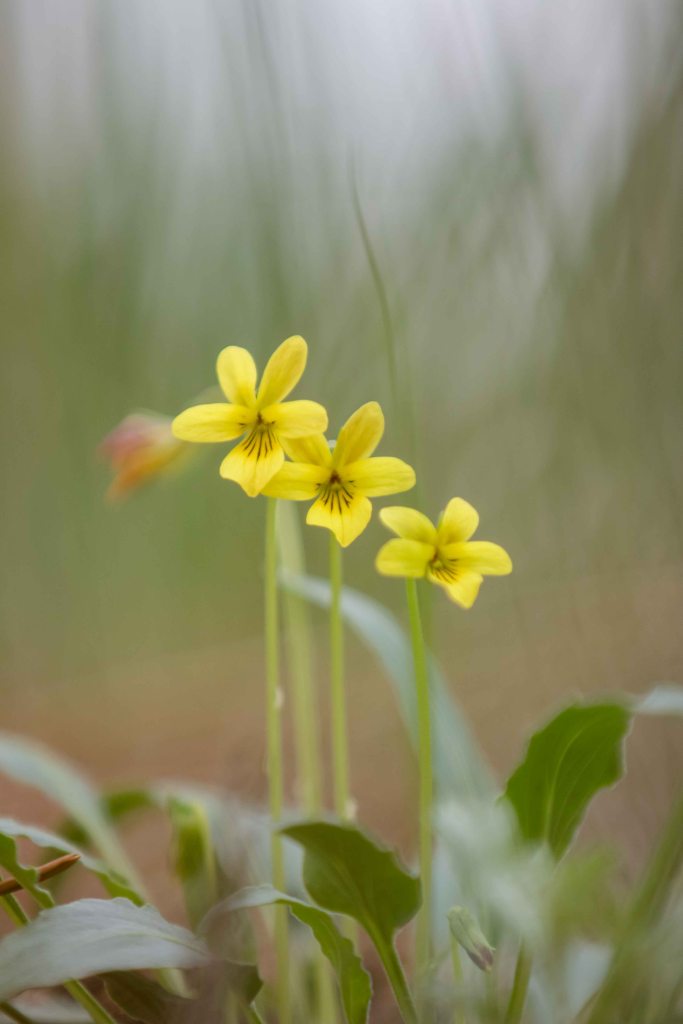
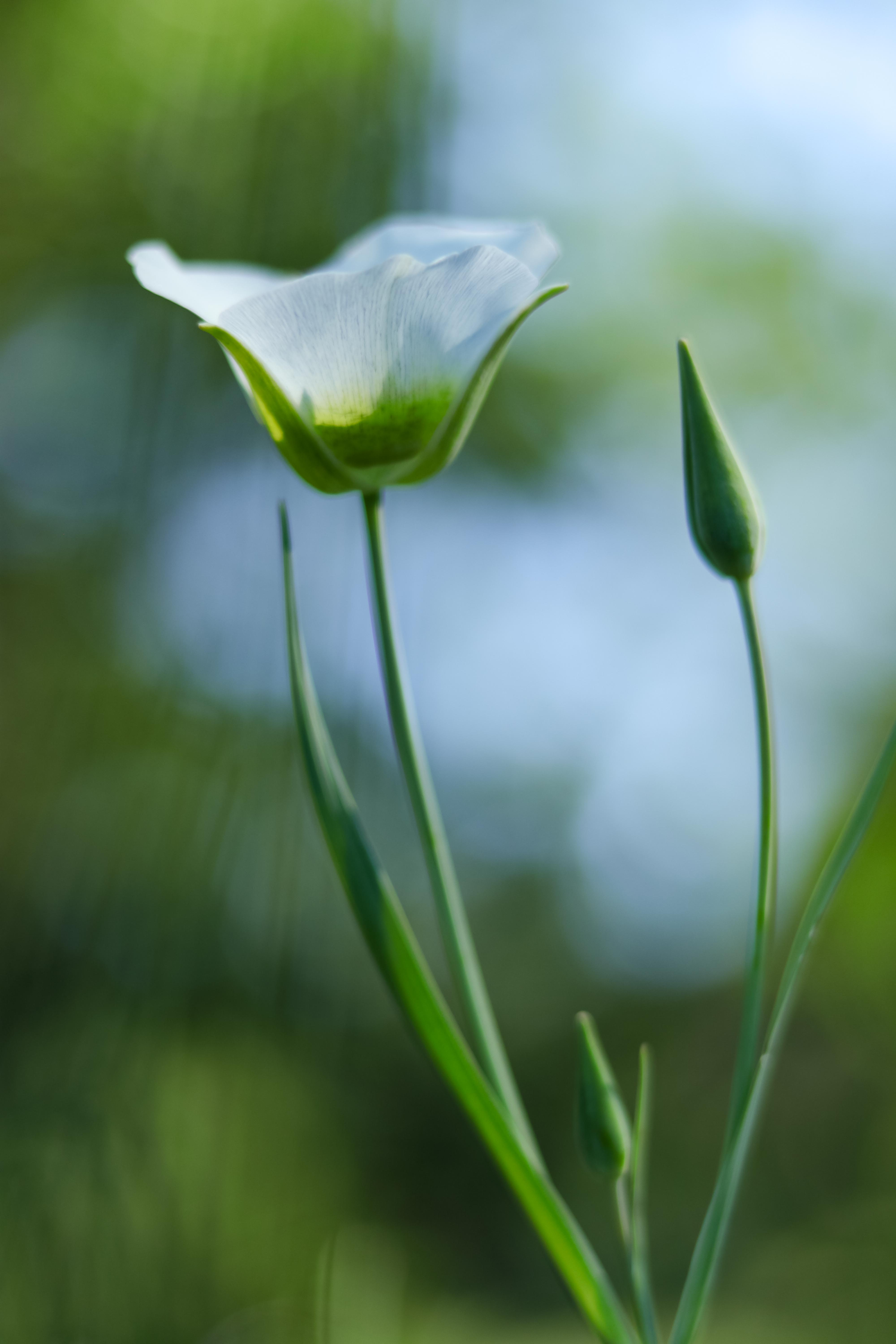
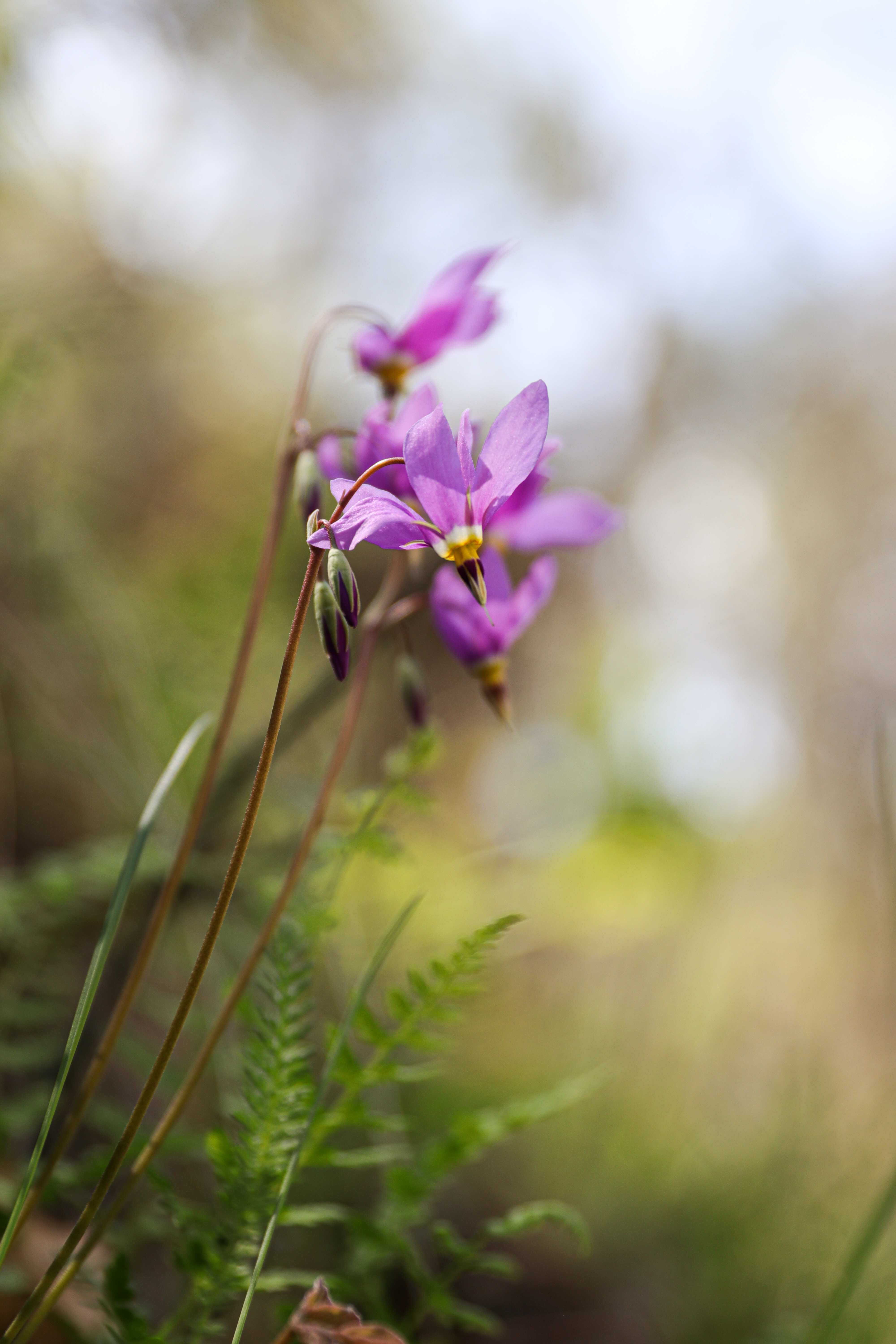
Columbine blooms quickly in the early summer and is easily missed, tucked away in the cool, damp hollows and ravines, her salmon and yellow blossoms hanging like pendants from her slender stem. A lucky person might chance upon a blue columbine, rare in the Hills, or even a white morph. Lanceleaf bluebells grow on the hill trail above our house, drinking up the splashes of midsummer sunlight from between the spreading ponderosa pines. Finding the hiding place of the sego lily is a reward in itself, reclusive as she is, and rather shy, maiden-white with a heart of gold. Spiderwort, not overly finicky about where he grows, sometimes in the pines, sometimes on the prairie, boasts his clusters of brightest pink and vivid purple, the local varieties almost impossible to differentiate, as they cross-pollinate with ease. Longspur violets grow in the higher elevations west of us, while their sisters, the pale-lavender larkspur violet and dainty yellow Nuttall’s violet, inhabit the more arid country around my home, flourishing on the grass-covered slopes of the foothills. And then there is the magenta gem of the summer, shooting star, thriving in the shelter of trees and ferny slopes, lighting up like her namesake when the sun is just right. Beebalm, almost a weed but not quite, spreads a mist of color over entire hillsides in the later summer, fragrant and robust. Wild roses, sweet and feisty, grow in the sandiest, hardest-packed ruts of trails, forming rollicking banks of brambles when they are undisturbed, leaving behind crimson jewels at summer’s end which, when harvested, make the most wonderful honey-colored jelly.
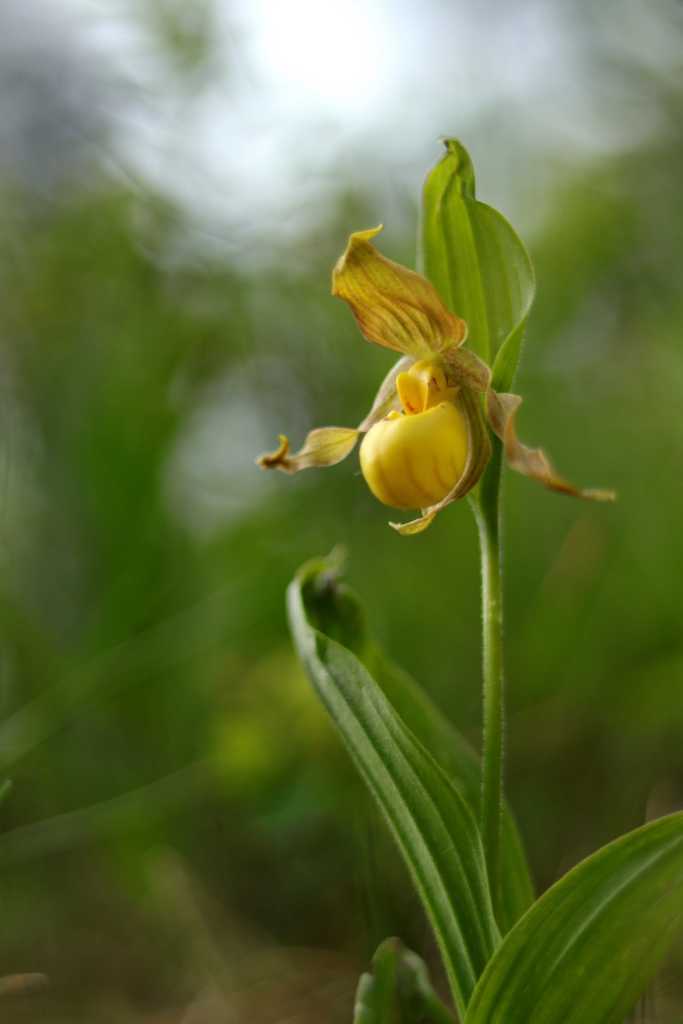
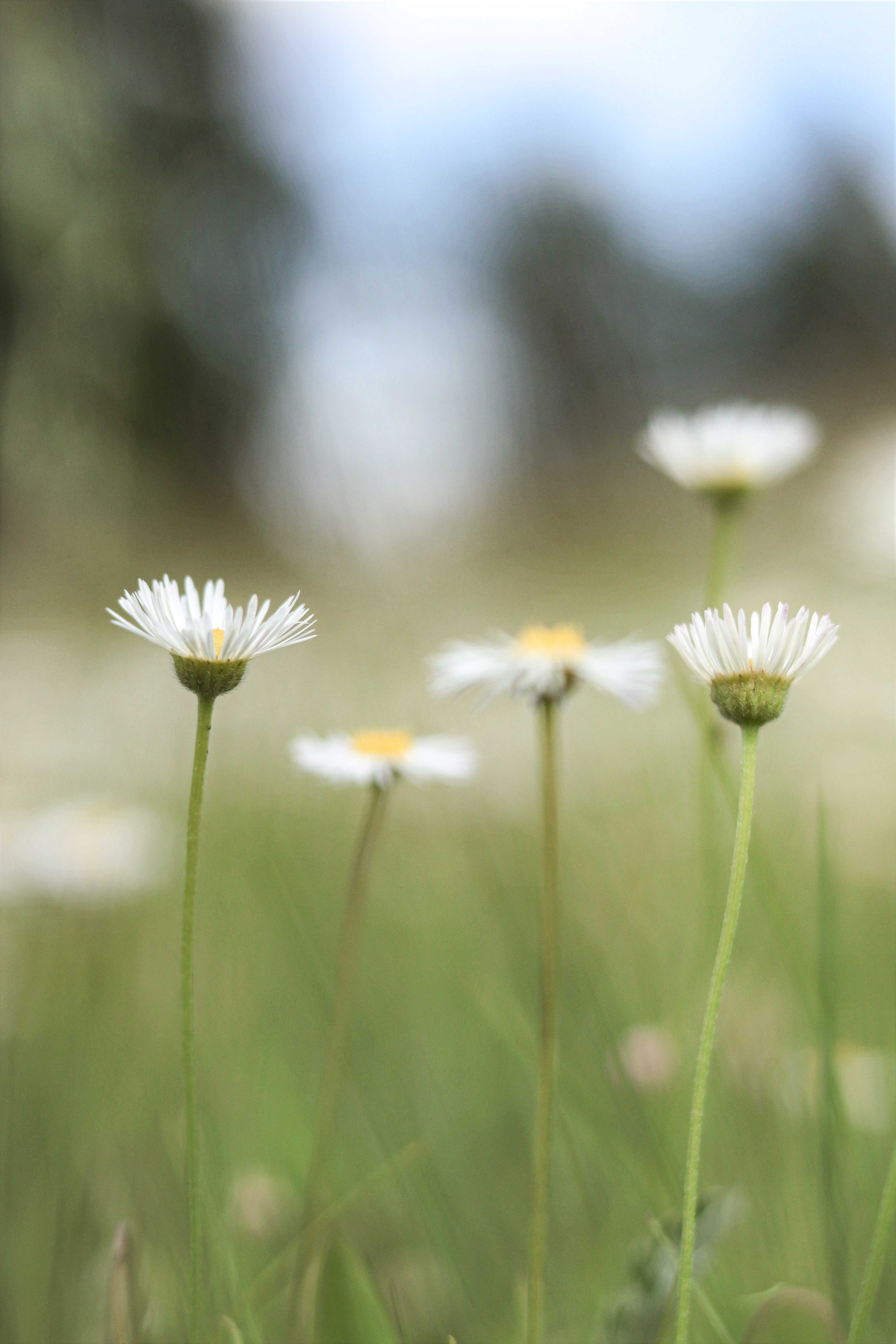
So many names! Names familiar and enchanting and delightful. Prairie chickweed. Purple virgin’s bower. Prairie smoke. Blue flag. Dame’s rocket. Wild buckwheat. Yellow ladyslipper. Pussytoes. Shell-leaf penstemon. Cutleaf anemone. Harebells and asters and fleabane.
How sweet it is, to be surrounded by familiar, beautiful faces. To peer into the underbrush, to part the tall grasses, to look beyond what many choose to see, to seek and find and learn. To ramble in the woods in the company of so many old friends.
Support Song Dog Journal and share to social media!
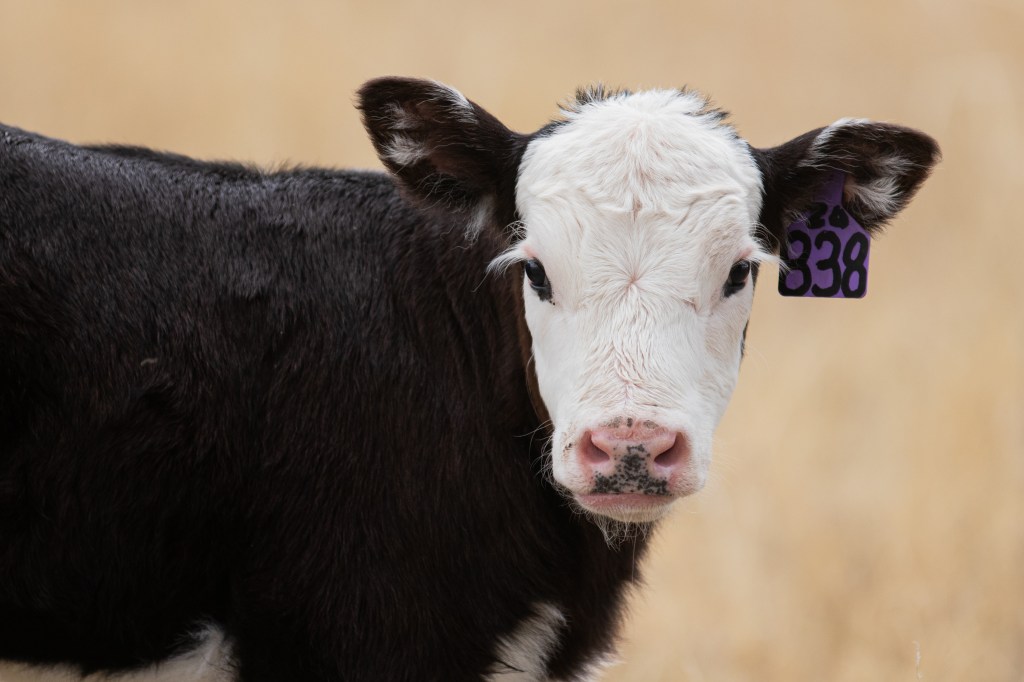
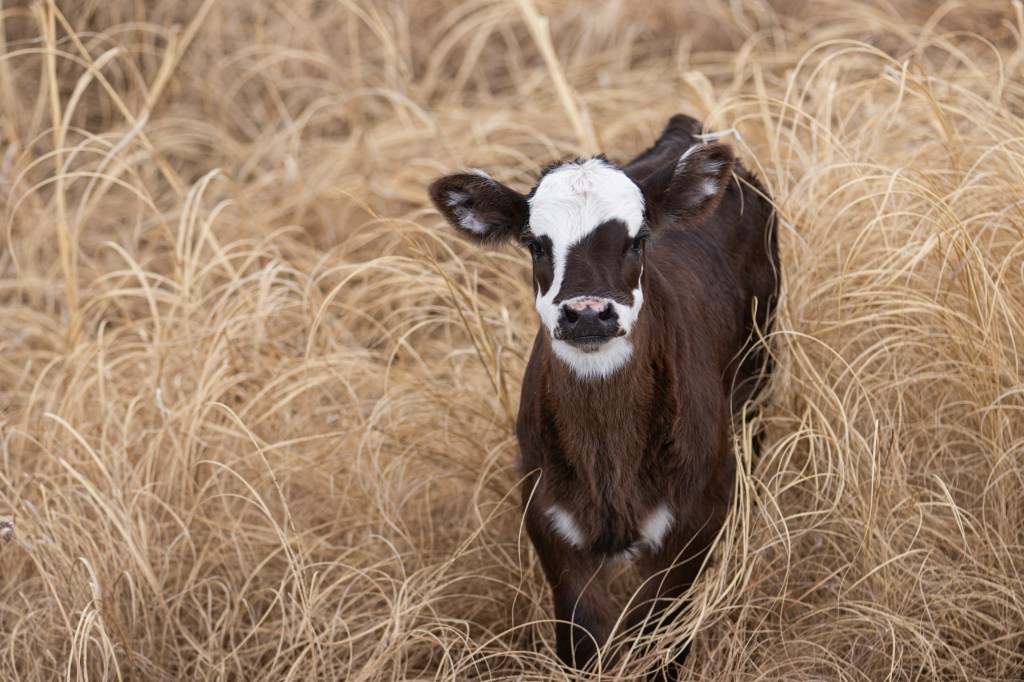
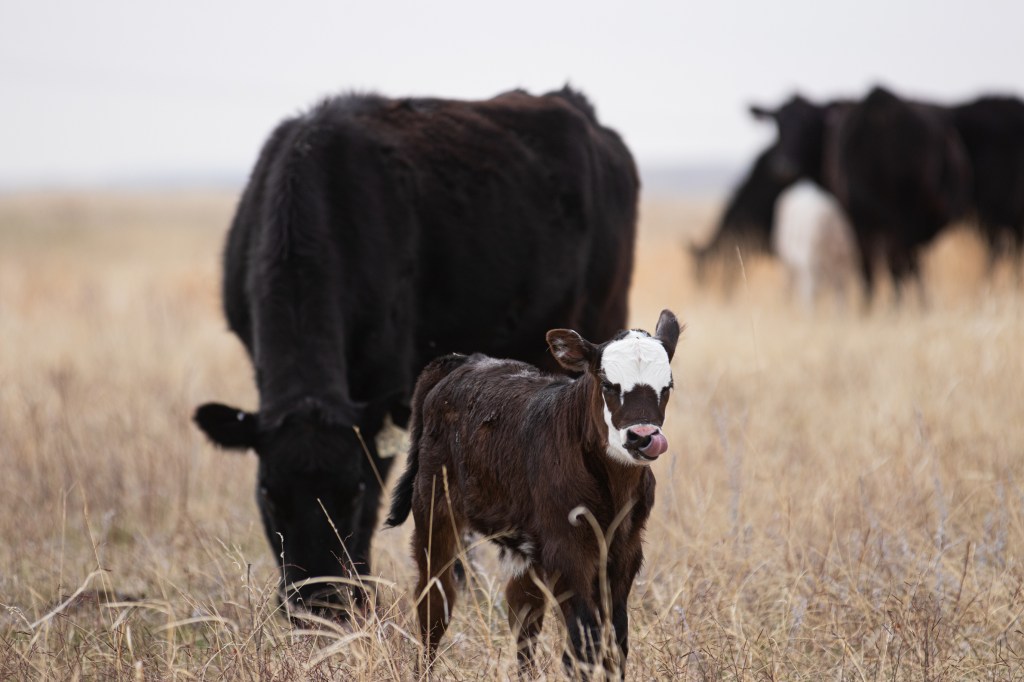
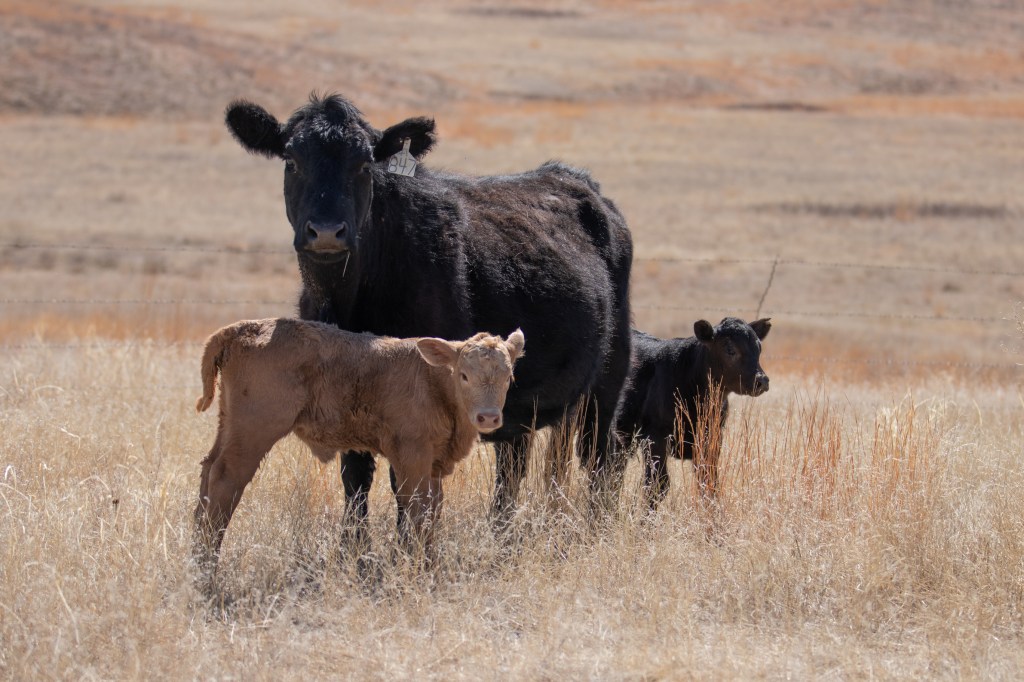
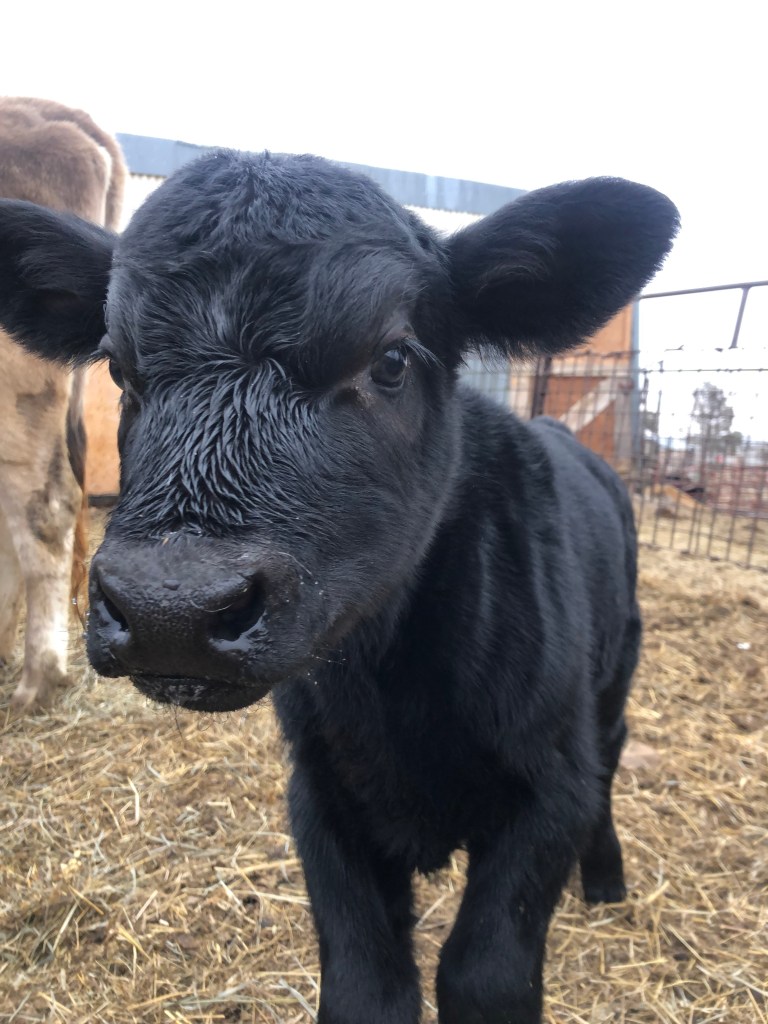
Can we just take a moment to appreciate the incredible beauty and diversity of these little baby baldy faces? I have been riding along with Brad when he checks the calving pasture, when I have the time, and it is just too fun to see all the variety and the cuteness overload. I think it drives my father-in-law nuts, how much I love these calves, but that’s just fine.
Support Song Dog Journal and share to social media!
Originally printed in the Custer County Chronicle on April 3, 2024
The miracle of life is front and center during calving season. It is amazing to watch a heifer birth her first baby, looking in vague confusion at the squirming, slimy creature that made its sudden, un-asked-for appearance, and then, prompted by God-given instinct, begin to clean the baby off. The baby is up off the ground in a matter of minutes, his little legs wobbly and knock-kneed, and then he finds the life-giving udder and his little tail goes to wagging, just like a dog. What a sight to see.
The excitement of the first calf of the season is followed by weeks and weeks of chaos, confused young mother cows learning the ropes, babies everywhere, unmixing mixups, and the satisfaction of watching maternal older cows do everything on their own.
It isn’t just instinct that drives a cow, but a fascinating melding of instinct and education, and the first-time mamas are kept under pretty close watch for the first few days, and kept in the nearest pasture for the first month or so. These first-time mamas are prone to wandering off and leaving their calves, forgetting they have calves, forgetting which calf is theirs, forgetting where they left their calves, and can often be seen chasing helplessly after a sprightly baby, entirely unsure how to control the unruly child.
The second-time mamas are a little less helpless, instinct and education both more fully developed, but there still is a tendency towards some of those pitfalls of early motherhood. They are given a little more freedom than the first-timers, but are still able to be supervised. Eventually, cows figure out the concept of nursery groups, where one or three mothers are left in charge of a dozen or so babies, giving the other mothers a chance to go in to water or eat. I don’t know how they figure out shifts, but somehow they do, but early on they forget about the need for a babysitter and just wander off, until something jogs their bovine memories.
And nothing jogs the bovine memory like the sound of a calf bawling. Nothing reminds a mama cow of her maternal responsibility like the sound of the baby she forgot about or misplaced. Some calves are obliging, squealing like stuck pigs if you just look at them wrong, let alone if they are being sat on by a wiry rancher, but other calves are stoics, and won’t make a peep, which is inconvenient if you’re trying to identify them.
Thus, the necessity of the fine art of cow-calling. Although ranching is a lot of science, there are a number of things that definitely fall into the “art” category, and cow-calling is one of those things.
I remember being seated behind my now husband, bundled up against the cold, enjoying the view as we bounced around the hayfield on the ATV, looking for unmarked calves to ear tag and vaccinate. The ear tag given matches the one in the mother’s ear, so they can be easily paired up later on and a good inventory kept. The frozen hayfield wasn’t much fun to drive over, but I was having a dandy time, my arms wrapped snugly around my handsome not-quite-husband, and having been granted the official role of keeper of the vaccine gun and ear tagger. Without warning, an absolutely uncanny sound issued from my not-quite-husband’s lips. Seated as I was right behind him, arms wrapped around him as stated, I experienced the full force of this incredible and unearthly sound. It was truly awe-inspiring, unlike anything I had ever heard before.
And I burst out laughing.
I honestly thought the demonstration was for comic effect. Until I saw fifteen mother cows practically stand to attention, heads flying up from complacent grazing like they’d been stung by wasps, then leave their breakfast and take off in all different directions, whichever direction they thought they remembered having left their calves. For the record, they don’t always remember, the telltale sign being a mother cow walking around bawling until she stumbles across her baby, which is (almost) always right where she had left it.
Anyway, the cow-calling had the intended effect and the mother of the baby in question presented herself, the calf was identified, tagged and vaccinated, and we went on our merry way.
Such was my introduction to the fine art of cow-calling.
I have since had my education on this topic broadened and have learned that this useful skill can be employed not only to quickly identify an unmarked calf, but to mostly accurately separate the cows that have calved from those that have not, to bluff a cow into looking around for the purpose of reading her ear tag, or to keep a flighty cow from running off without her young baby. I’m sure there are other uses for it, but those are the main ones I have identified.
Calving season. By turns hilarious or heartbreaking. Life and death are often juxtaposed. It is the sweetness of new life and baby animals that know no fear, the enjoyment of watching them learn to play and take their first running steps in the wide open, crow-hopping on their spindly legs. It is incredible to see a cow looking for somewhere to calve, and twenty minutes later to find not only that she has had the calf but that it is up and nursing already. It is miracle after miracle after miracle.
But cow-calling still makes me laugh.
Support Song Dog Journal and share to social media!
So I really don’t know what March Madness is, other than it has something to do with sports, I think. But March is a crazy month. The winter sleepiness is shaken off and everything wakes up. All at the same time. The garden, the cows, the weather, the schedule, the chickens, everything.
There are babies everywhere, and I mean everywhere.
A little cold snap over this last weekend accentuated that, with little baby calves and their irritable mamas stuffed in every corner of the yard, with all available indoor space occupied by doubles and triples, and cows with slightly older calves getting shuffled into sheltered corners of the yard to keep them out of the wind and driving snow.
So far there have been two sets of twins, and both extra babies were shuffled successfully onto two cows who had lost calves–Good saves, on both counts, and the two lost calves were just part of the percentage of unavoidable losses, rather than the rather staggering losses of last spring, due to a collision of weather and luck of the draw. Posey got to try being a nurse cow for a week with one of the extra twins, until a mother needing a calf turned up. Posey was not impressed. Some nurse cow. We’ll see how she does when she calves, I guess.
Seedlings are going nuts in the brightest window in the house, around 120 tomato seedlings, some herbs and greens, and of course my elderberry cuttings. Bread baking and some jelly making and some sewing projects and some continuing ed for my paramedic license and a dive into spring cleaning have kept the days full. They seem to end as quickly as they start. And yes, that is a seed starting mat under that bowl of dough! Another use for those handy things, especially when you keep the temps low in the house!
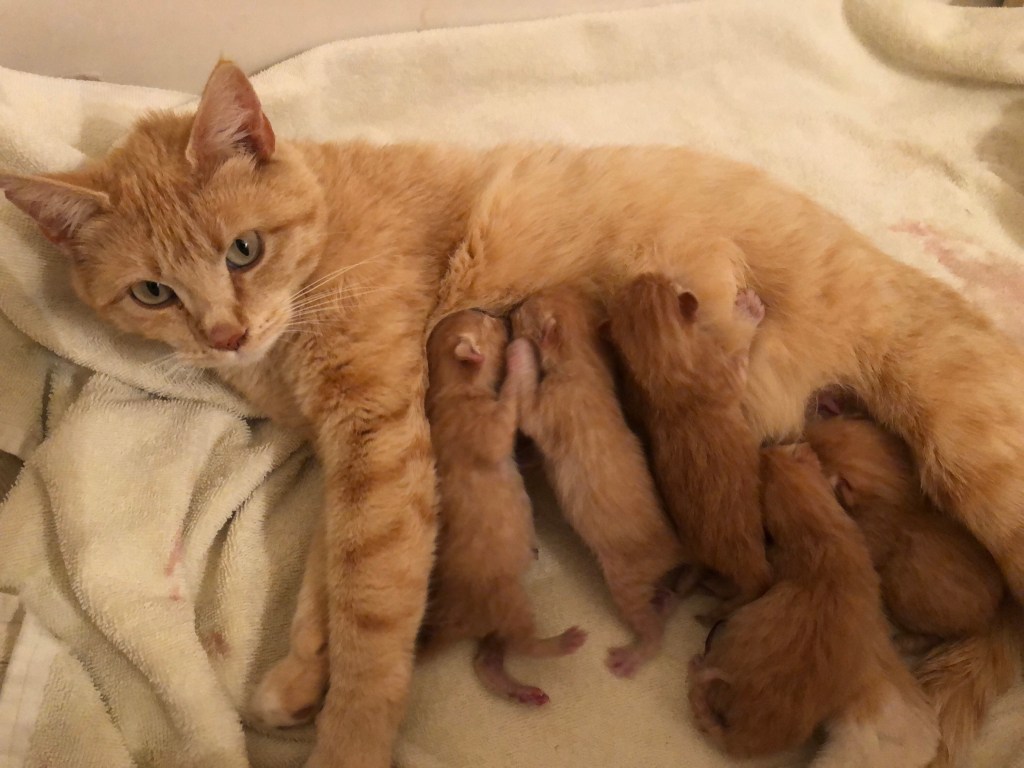
And then yesterday happened. Or rather, Yellow Cat happened yesterday. We knew she was ready to have kittens at any time, and I complacently assumed, this being her second litter, that she would be competent. Boy, was I wrong. I went down to do chores yesterday morning and found a pile of three kittens that appeared dead, in just about the worst place Yellow Cat could have had them. She was unconcerned. I honestly thought they were dead and rigored, and when I picked up the two that looked the most dead, they were unresponsive and stiff and cold to the touch. She didn’t appear to have really cleaned them, their fur was matted down, and I really mean it when I say they appeared dead, and I have seen plenty of dead animals to know what I’m talking about. This isn’t an “I’ve never had chicks before and one is stretched out luxuriously under the heat lamp and I think it is dead” situation. They looked dead. Very dead. One of the kittens, though, moved a little and made the tiniest sound. It looked pretty hopeless, but I can’t stand to walk away from something like that. I almost left the two most dead looking, but gathered all three up, stuffed them inside my vest and ran up to the house with them. In the back of my mind was the paramedic mantra, “They aren’t dead until they are warm and dead,” and after a mere few minutes under a heat lamp and on top of a (you guessed it) seed starting mat, they came alive.
Baby animals are incredibly resilient but also incredibly fragile, a strange dichotomy, and even as they warmed up I felt that it was probably futile, but I gave them a little milk replacer laced with corn syrup, enough to wet their dried mouths, and two of them did try sucking it off the cloth I was using. I finally rounded up Yellow Cat from down by the barn, who was sauntering around like she hadn’t a care in the world, and locked her up with them. Long story short, the three kittens all nursed, she had two more, and all five survived the night with their mother in the bathtub and are doing just fine. I am still pretty mad at that cat, though.
It is hard to believe that April is just around the corner. April, the first month of long days in the saddle pairing out the calving pasture, the first real month of springtime although snow is always a possibility. There is always something going on!
Support Song Dog Journal and share to social media!




















 Song Dog Journal