In the Kitchen | Pfeffernusse

As the Advent season rolls into Christmas, the tastes and smells of the season bring back so many memories. A handful of chicken-scratch recipe cards foster a connection with my heritage, and remind me of the many family Christmases crowded on hand-built benches around my grandparents’ long hand-built table. After supper was over and we all were stuffed, a tin of little round cookies would be passed around, tasting mildly of pepper and licorice. The adults always went for these more enthusiastically than the kids, but as I’ve gotten older this recipe has become very nostalgic for me, and I love to make these in bulk to gift at Christmastime!

Pfeffernusse are spicy, crunchy cookies that are a traditional German and ethnic Mennonite favorite, and translate to “pepper nuts” – they do contain black pepper, but add a little extra for a little extra kick! Molasses, black coffee, and anise extract add to the warmth of the flavors in this simply little cookie.

Ingredients

1 c. sugar
1 c. shortening (can be replaced with 1 c. butter)
1/2 c. dark syrup (can be replaced with 1/2 c. molasses)
1/2 c. molasses
1/2 c. cooled black coffee with 1 tsp. baking soda
3 T. anise seed extract
*can also add 1 tsp or more of ground anise seed for additional flavor

6 c. white flour (or half and half white and whole wheat)
1/2 tsp. salt
1/4 tsp. nutmeg (double this!)
1 tsp. cinnamon (double this!)
1/2 tsp. cloves
1/2 tsp. black pepper (double this! Or triple…or more! How spicy do you want it?)
1 tsp. allspice

To Make

Cream together the first 7 ingredients; add flour and spices. Chill for an hour or so to make the dough easier to work with. Roll in 1/2 inch rolls and chill (or freeze). Slice into quarter-inch thick discs, place on cookie sheets with not much space between them (they don’t spread too much), and then press your thumb gently into each cookie to flatten a little. Bake at 350 degrees for 8-10 minutes.

Notes

I noted most of my substitutions in the above recipe. I ALWAYS add extra anise. My uncle has actually used anise oil from NOW Foods, but I think it affects the crunch of the cookies. I just use plenty of anise extract. You can also add anise seed if you want a little extra bite, though I do recommend grinding them for better flavor, as well as better texture. Also, the quantity of the spices is on the mild side, so be brave and play with the quantities to get the bite you want! I don’t generally double the cloves, since cloves are such a distinct flavor and I don’t want to interfere with the anise, which is the star spice in this cookie. Grandma’s original recipe calls for shortening and corn syrup, as noted above, but I prefer to cook without those things, so I noted my substitutions. But sometimes faithfulness to Grandma’s recipe means something.

The dough should be chilled or frozen before slicing, as stated above, and I recommend freezing, since the dough is a lot easier to work with. This makes it incredibly easy to make a bunch of dough, roll into snakes, freeze, and then bake whenever you get a chance! They also freeze really well after they are baked. Brad and I have enjoyed pfeffernusse months after they were baked, which is great since the first time we made these together we had Covid and couldn’t taste anything.

And there really is something special about baking cookies that have been so traditional for my family. How about you? What are some favorite family recipes you grew up with, and are there any you continue to bake or cook for the holidays?


Advent | The Joy Candle

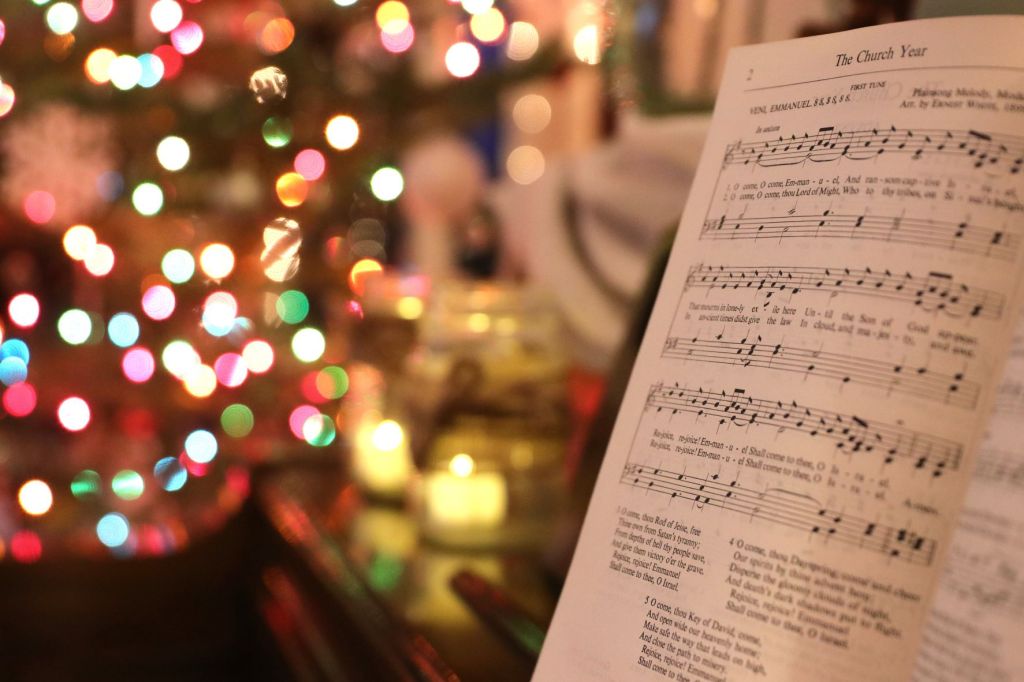
O come, O come, Emmanuel,
And ransom captive Israel,
That mourns in lonely exile here,
Until the Son of God appear.
Rejoice! Rejoice! Emmanuel
Shall come to thee, O Israel.

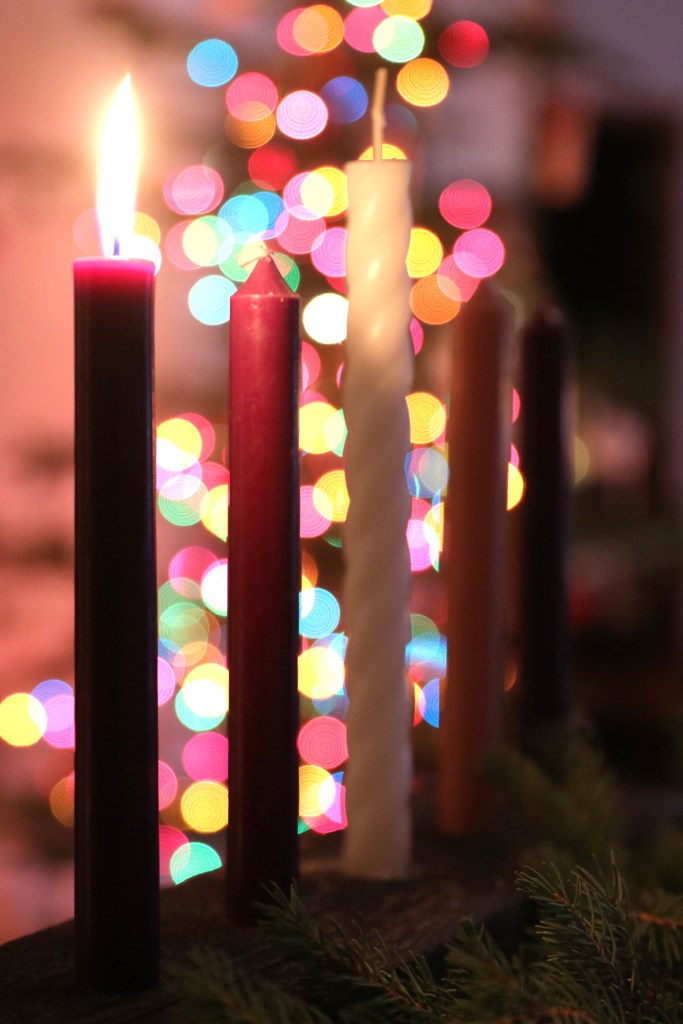
Joy. It is impossible to read the Christmas story without being struck by the response to the birth of the long-awaited Messiah. He was looked forward to with joy. He was awaited with joy. And for many, he was received with joy. The third candle of Advent, pale pink, is the Joy Candle.

Built right into the fabric of our culture is this pursuit of happiness, this reckless chasing after pleasant emotions, and it might be that Christmastime is the biggest evidence of that in our culture. The December full of parties and gift giving and entertainment and good food and vacation and this, that, and the other thing, all with the excuse of “celebrating Christmas,” or maybe just celebrating “the holidays” in general.

People tend to conflate joy and happiness, and also to lean on happiness (and so in their minds, joy) as the end result, as the thing to be pursued. But the sad fact of the matter is, happiness is fleeting in this life. If we make that our goal in life, we are going to fail, and fail miserably. We may be able to conjure up happiness that lasts for days or weeks or even a year, but something will happen that will shatter that sense of happiness, and then what?

For Believers, we need to have a more robust understanding of this all-too-misunderstood word. We need to understand that joy, Biblical joy, isn’t the flat and fleeting emotion of mere happiness, but it also isn’t a forced smile when the world is falling apart around us. Joy isn’t conjuring up fluffy, giddy emotions in the face of horror. While there is nothing innately wrong with happiness, happiness is circumstantial, an emotional response to something, whereas joy is a heart-level contentment and peace and gladness and so much more. It is unrelated to circumstances.

For the Believer, it also is worth stating, joy shouldn’t be the goal. If joy becomes the aim, joy will be ever evasive. The goal is Christ. The goal is the pursuit of righteousness and holiness. The old catechisms nailed this from the outset of their questioning: “What is the chief end of man?” they ask. “To glorify God and to love Him forever,” is the reply.

For the Christian, joy comes when we are viewing God, ourselves, and our life correctly. “Count it all joy, my brothers,” James writes, “when you meet trials of various kinds. For you know that the testing of your faith produces steadfastness.” (James 1:2-3) Joy is independent of and contrary to circumstance. Joy happens in the hearts of those who can look beyond the painful circumstances they are in, and see the expected result. Steadfastness. Greater faith. Ultimately, perfect fellowship in Heaven. A joyful heart is a hopeful heart. And a hopeful heart is a joyful one.

Biblically, we see joy as a response to God, to His blessings, and to His salvation in our lives, and we see it paired again and again with thanksgiving to and worship of God. We see joy as a gift, given by God to those He loves. The Psalmist credits the LORD with the joy in his heart: “You have put more joy in my heart than they have when their grain and wine abound.” (Ps. 4:7) And we also see joy as a fruit, a natural result of faith. “The fruit of the Spirit is love, joy, peace, patience, kindness, goodness, faithfulness, gentleness, self-control; against such things there is no law.” (Gal. 5:22-23)

But I think there are two facets we fail to really understand.

First, that joy, while it is a gift and a fruit and a natural response, is also a command. Throughout Scripture, God’s people aren’t asked or recommended to rejoice. They are commanded to do so!

Rejoice in the Lord always; again I will say, rejoice! (Phil. 4:4)

Rejoice in the Lord, O you righteous, and give thanks to his holy name! (Ps. 97:12)

Be glad in the Lord, and rejoice, O righteous, and shout for joy, all you upright in heart! (Ps. 32:11)

“You shall rejoice. You shall rejoice. You shall rejoice!” echoes through the Old Testament Law.

The command to rejoice is similar in tone to the command to give thanks, sometimes happening simultaneously, but both overflowing with a sense of overflowing wonder and awe and exuberance: “Give thanks to the LORD, for He is good and His steadfast love endures forever!” is a refrain that occurs numerous times in Scripture and should be the refrain of the Believing heart.

A joyful heart is a thankful heart. And a thankful heart is a joyful one.

The second facet I believe we miss is that while it is a gift, a fruit, a response, and a command, it is a decision. Sure, there are times in our life when the joy just comes naturally. There are times when we are joyful and the only reason we can give is that God put that joy in our hearts and it is just overflowing. But more often than not, in my experience, we aren’t just bubbling over with joy we can’t explain. I love this passage from Habakkuk:

Though the fig tree should not blossom,
    nor fruit be on the vines,
the produce of the olive fail
    and the fields yield no food,
the flock be cut off from the fold
    and there be no herd in the stalls,
yet I will rejoice in the Lord;
    I will take joy in the God of my salvation.
God, the Lord, is my strength;
    he makes my feet like the deer’s;
    he makes me tread on my high places. (Hab. 3:17-19)

I can just hear him saying, “I will. I will. I will rejoice. I will take joy. Though everything around me should turn to dust and ashes, I will rejoice. God is good.” This is a decision we make with intention, starting when life is going well, but to the end that we are tuned to rejoice so when life gets hard, as it will. “Come thou fount of every blessing,” the song goes, “tune my heart to sing thy grace.” We make a decision to rejoice, and over time we can tune our hearts to a song of rejoicing that holds its sweetness even in the midst of the worst of circumstances.

But how? How do we do that? How do we listen to the command to rejoice and then truly rejoice? And why do we fail?

All too often when we fail to accept the gift of joy, or fail to produce the fruit of joy, when we fail to respond with joy to our Heavenly Father, and fail to accept His gift of joyfulness…it is specifically because we are failing to lift our eyes above our petty circumstances, failing to see beyond our own fickle emotions, failing to look above these circumstances that are so temporary to something sure and certain. We let our gaze be pulled out of Heaven’s glory and into the mire and muck of this world that can be by turns so ugly and so beautiful, and we fail to count it all as filthy rags in comparison with beholding Christ the King in His beauty.

Whatever is true, honorable, right, pure, lovely, whatever is commendable and excellent, let your mind dwell on THOSE things! (Phil. 4:8) Christ is true! He is honorable and right and pure and lovely! He is excellent and commendable! We must set our minds on Heavenly things, not earthly (Col. 3:2), “looking to Jesus, the founder and perfecter of our faith, who for the joy that was set before him endured the cross, despising the shame, and is seated at the right hand of the throne of God.” (Heb 12:2)

Because joy isn’t about circumstances. It isn’t about persuading ourselves to feel happy. It is about a Person. It is about that king, humble, bringing salvation, the one who rode into Jerusalem on a donkey’s foal. It is about that king, not yet born, whom Mary was carrying when she rode the donkey to Bethlehem and there gave birth in a stable. It is about answers to prophesy and longing hearts restored, it is about God choosing to redeem a broken world for His glory. It is about that God, who humbled Himself to be born our Savior. It is about that Savior, that Baby, that angels proclaimed and shepherds rejoiced to see, whom Magi worshipped with kingly gifts, rejoicing that they had found Him. It is about receiving a gift, and responding in praise and thanksgiving, and growing in our contentment and confidence in our King. It is about obedience, it is about choosing to wake up every morning with these words on our lips: “This is the day that the Lord has made; let us rejoice and be glad in it!” (Ps. 118:24)

Rejoice greatly, O daughter of Zion! Shout aloud, O daughter of Jerusalem! Behold, your king is coming to you; righteous and having salvation is he, humble and mounted on a donkey, on a colt, the foal of a donkey. (Zech 9:9)

So look to Jesus, friends. If your heart is heavy, look to Jesus. If your soul needs comforting, look to Jesus. If joy seems fleeting, look to Jesus. The same King who numbers the stars and knows their names is the same who heals the brokenhearted and binds up their wounds. (Psalm 147:3-4) He is the same King who taught that those who mourn are blessed, because they will be comforted. (Matt. 5:4) And as we approach Christmas Day, look to the Child in the manger. Marvel with the shepherds. Rejoice with the Magi. And then look forward confidently to a Second Advent, when

the ransomed of the Lord shall return
    and come to Zion with singing;
everlasting joy shall be upon their heads;
    they shall obtain gladness and joy,
    and sorrow and sighing shall flee away. (Isaiah 35:10)

Advent | The Peace Candle

The Advent season is coming to a close next week, but I still wanted to share some thoughts I’ve been musing on the last couple of weeks. Two Sundays ago, we lit the second purple candle, the Peace Candle. What a word for this year. What a desperate need. What a hunger. People long for peace. I long for peace.

Internal, personal peace.

Relational peace.

Peace within my family.

My community.

My state.

My country.

The world.

So much of the brokenness I see around me can be described as a lack of peace. People experience brokenness in their relationships and instead of mending the relationships they shut people out. People turn to “spirituality,” or “mindfulness,” or “self-care” for some sort of peace. People turn to drugs and alcohol. People turn to disordered sexual relationships. Countries try to legislate peace by quenching dissenting voices. Churches try to have peace with the world by compromising on God’s standards. Wars are fought in an effort to find some sort of peace internationally. Treaties are made and broken. Relationships are cut off and destroyed. Where is the peace we so desperately want and need? And why can’t people find it?

Jeremiah 6:13-15 reads:

“For from the least to the greatest of them,
    everyone is greedy for unjust gain;
and from prophet to priest,
    everyone deals falsely.
They have healed the wound of my people lightly,
    saying, ‘Peace, peace,’
    when there is no peace.
Were they ashamed when they committed abomination?
    No, they were not at all ashamed;
    they did not know how to blush.
Therefore they shall fall among those who fall;
    at the time that I punish them, they shall be overthrown,”
says the Lord.

This lack of peace is thousands of years in the making. When Adam and Eve sinned, when they listened to the lies of Satan and took forbidden fruit in the Garden, spitting in the face of God, their Creator, Master, and Friend, they ushered sin and unrest into this world. Their peace with God was destroyed. Their peace with one another was destroyed. The most perfect marriage of all became fraught with blame-shifting, anger, and unrest. How they would have longed for peace. And ever since then, we as the human race have experienced the peace-killing effects of sin, both our own sin and the sin of others.

This passage in James sums it up succintly:

What causes quarrels and what causes fights among you? Is it not this, that your passions are at war within you? You desire and do not have, so you murder. You covet and cannot obtain, so you fight and quarrel. You do not have, because you do not ask.  You ask and do not receive, because you ask wrongly, to spend it on your passions. You adulterous people! Do you not know that friendship with the world is enmity with God? Therefore whoever wishes to be a friend of the world makes himself an enemy of God. (James 4:1-4)

We cannot have peace if we are at enmity with God. Period. And without peace with God, we won’t have peace within our own hearts. And enmity with God can look as unremarkable as unrepentant sins in our lives or as horrifying as mass-murder. Sin, our own sin regardless how “big” we deem it, causes our lack of peace.

Ultimately, the peace we need is peace with our Creator.

People look at our world and the chaos contained in it and imagine that we can just pull ourselves together to muster up peace, or that we can legislate it, or evolve into it. But we are so broken, we don’t just need an attitude adjustment. We need a radical change in our very nature. The peace that we need is a peace that can only come through the Holy Spirit’s work in our hearts, regenerating, restoring, and renewing.

Over and over in the New Testament, we see peace as a work of the Holy Spirit, as a fruit of faith in our lives, and we see it paired with love, with joy and thanksgiving, with a “putting on” of righteousness and a “putting off” of those things which displease God. Look at the following passages:

Rejoice in the Lord always; again I will say, rejoice.  Let your reasonableness be known to everyone. The Lord is at hand;  do not be anxious about anything, but in everything by prayer and supplication with thanksgiving let your requests be made known to God. And the peace of God, which surpasses all understanding, will guard your hearts and your minds in Christ Jesus. Finally, brothers, whatever is true, whatever is honorable, whatever is just, whatever is pure, whatever is lovely, whatever is commendable, if there is any excellence, if there is anything worthy of praise, think about these things. What you have learned and received and heard and seen in me—practice these things, and the God of peace will be with you. (Philippians 4:4-9)

For where jealousy and selfish ambition exist, there will be disorder and every vile practice. But the wisdom from above is first pure, then peaceable, gentle, open to reason, full of mercy and good fruits, impartial and sincere.  And a harvest of righteousness is sown in peace by those who make peace. (James 3:16-18)

I love that passage. “A harvest of righteousness is sown in peace by those who make peace.” What a beautiful picture! Righteousness and peace being sown and harvested.

Put on then, as God’s chosen ones, holy and beloved, compassionate hearts, kindness, humility, meekness, and patience, bearing with one another and, if one has a complaint against another, forgiving each other; as the Lord has forgiven you, so you also must forgive.  And above all these put on love, which binds everything together in perfect harmony.  And let the peace of Christ rule in your hearts, to which indeed you were called in one body. And be thankful. (Colossians 3:12-15)

Through Jesus’s redeeming life and death, we can experience peace with God, and so we can, through God’s work in our hearts, experience peace in this life. As Believers, we are called to peace, to live peacefully with one another, to love one another and care for one another, in a beautiful earthly picture pointing forward to a permanent, perfect peace.

The wolf shall dwell with the lamb,
    and the leopard shall lie down with the young goat,
and the calf and the lion and the fattened calf together;
    and a little child shall lead them.
 The cow and the bear shall graze;
    their young shall lie down together;
    and the lion shall eat straw like the ox.
 The nursing child shall play over the hole of the cobra,
    and the weaned child shall put his hand on the adder’s den.
 They shall not hurt or destroy
    in all my holy mountain;
for the earth shall be full of the knowledge of the Lord
    as the waters cover the sea.

In that day the root of Jesse, who shall stand as a signal for the peoples—of him shall the nations inquire, and his resting place shall be glorious.

This passage in Isaiah 11 looks ahead to Jesus’s second coming, to His second Advent, and the picture it paints is one of the glorious, perfect harmony of Eden, perfect, unblemished peace, before Adam and Eve destroyed the peace that God had created. If you are feeling the effects of your sin this season, look to Jesus, who alone is able to reconcile you to your Heavenly Father. If you are feeling the effects of relational strains, look to Jesus, who perfectly bore and forgave the sins of those around Him. If you are fearful of the future, look to Jesus, who is your Friend and Brother and will not lose any of His own. If you are despondent at the sin of this country and this world, rest in Jesus, who will be the King we long for, upon Whose shoulders the government one day will perfectly rest. Let the peace of Christ rule in your hearts as we look forward to Christmas, and look a little further to a second Advent. For behold, He is coming soon!

Advent | Celebrations and Stones

This time of the year is possibly my favorite. Admittedly, I love this whole season, from Thanksgiving to the New Year and experience what some might term a childish excitement as the festivities begin to take place. So many of my fondest memories take place in the period of time between Thanksgiving and Christmas, and so many of my favorite family times have been interwoven with the traditions and customs that became part of the fabric of my family. Even though the world around us goes crazy with all the frivolous and self-centered consumerism that has become the unfortunate hallmark of the American Thanksgiving-to-Christmas season, there is so much to embrace and to firmly fix in our lives. We set aside a day to remember God’s goodness and thank Him for His blessings, and then we intentionally fix our eyes on the hope, love, joy, and peace that the Advent season remembers.

In a culture that increasingly tries to erase all evidence of the Christian faith from public expressions during these historically overtly Christian holidays, I think it is more important than ever that families rally themselves around traditions that draw their eyes Heavenward.

I think of the traditions my family had growing up…We had our big family Thanksgiving, usually shared with someone from our church, and in the next few days afterwards, we would usher in the Advent season by putting up our tree. Out would come all the old decorations, the lights, and the treasured Advent books we would read year after year as a family. I think of the Christmas programs at church, the traditional songs and hymns, the somber and joyful candlelight services we would attend at my grandparents church, The Little White Church in Hill City. I think of our Christmas morning Bible reading, reading through Luke’s account of the birth of Christ.

Unfortunately, America in general but even many branches of the Protestant church have either given up on Christian tradition altogether, or given up on fully appreciating and applying the traditions of the past. In the culture at large, I think it is pretty obvious why…The “old ways” have been systematically devalued and the church and expressions of faith have been essentially removed from the culture. For two religious holidays, what’s left for a culture that hates God? Nothing, really.

In the church, though, this forsaking of tradition is more complicated. It is sad to me that a lot of people find the Christmas season just another part of the year, the traditions are just kind of boring and old hat, and there’s sort of a collective eye-roll at the traditional Christmas hymns. One facet, I think, is a rather poorly-reasoned idea that too much tradition and it might become meaningless and rote.

What a loss of such a gift! How silly, to avoid a good thing because it might become less than what it should be. And can’t we having meaninglessness and roteness just as easily without our “traditional practices?” Maybe we should work on our heart attitudes instead.

Traditions of the faith join us with other Christians across the globe, through the centuries and millennia even, since we don’t just find our spiritual origin in the Christ of Christmas, but in God’s covenants with the Nation of Israel, thousands of years ago. I look at how God’s people committed His works to their memory for future generations, two big ways come to mind: Celebration and stones. Feasts and monuments.

When the Israelites were instructed on the keeping of the Passover Feast after God’s delivered them from Egypt, this was why:

And when your children say to you, ‘What do you mean by this service?’ you shall say, ‘It is the sacrifice of the Lord’s Passover, for he passed over the houses of the people of Israel in Egypt, when he struck the Egyptians but spared our houses.’” And the people bowed their heads and worshiped. (Exodus 12:26-27)

And when years later the Israelites were under the command of Joshua, God brought them over the River Jordan, rolling back the flood-swollen river waters so that the whole nation could cross in safety. Joshua, instructed by God, directed the Israelites to take twelve stones out of the riverbed of the Jordan as they crossed over and to construct a memorial, so future generations might not forget the Lord’s power and His goodness.

And those twelve stones, which they took out of the Jordan, Joshua set up at Gilgal. And he said to the people of Israel, “When your children ask their fathers in times to come, ‘What do these stones mean?’  then you shall let your children know, ‘Israel passed over this Jordan on dry ground.’  For the Lord your God dried up the waters of the Jordan for you until you passed over, as the Lord your God did to the Red Sea, which he dried up for us until we passed over,  so that all the peoples of the earth may know that the hand of the Lord is mighty, that you may fear the Lord your God forever.” (Joshua 4:20-24)

Christmas and the Advent season should be a time of celebration for the Christian. A time when we can proclaim the joy we have in Christ to a world walking in darkness. And a half-hearted participation hardly communicates joy. So set up your family monuments to the goodness of God and celebrate with friends and family. Celebrate Advent. Find a live Nativity to attend. Cultivate traditions in your family. Set up your cherished Creche and ponder its significance. Sing the old songs and really taste the words. Don’t just “make memories” for the sake of the memories, but counteract the temptation to be passive at this time of year and make memories to the glory of God!

We need our celebrations and we need our stones. Celebrations to bring us into a heart-posture of thanks and praise to God, and stones to be a visual reminder of Who it is we celebrate.

Advent | The Hope Candle

Yesterday marked the first Sunday of the Advent season. Christians across the globe and through the years have observed this period of time leading up to Christmas, and I love joining together with them to prepare my heart for a proper celebration of the coming of the Baby Jesus two thousand years ago in a stable in a little-known town called Bethlehem.

I love Advent. When I was a child and a teenager, my family enjoyed observing Advent with various family devotions, the lighting of the candles, Advent calendars, and a series of family devotional books by Arnold Ytreeide, beginning with Jotham’s Journey, and over the years reading Tabitha’s Travels, and Bartholomew’s Passage. Far from being meaningless, or silly, or frivolous, the yearly observance touched my heart and drew us closer as a family to each other and to our Savior.

Last Christmas, Brad and I read an Advent book together in December, and this year we are continuing our tradition as husband and wife. Brad made me a beautiful and simple – just what I love – candle holder out of a length of weathered lumber from when the power company replaced the power lines. It is a section of one of the square-cut cross pieces, and is the same wood my father-in-law used to build the cross that served as the backdrop for our wedding. Yesterday evening, we lit the first candle – the Hope Candle.

Hope.

What a misunderstood word.

What a beautiful word.

Hope is something everyone could use right now.

“I sure hope so.” We’ve all heard someone growl those words almost as a veiled sort of threat, or maybe we’ve uttered them that way ourselves. We’ve heard those words spoken wistfully, or with ironic hopelessness. Looking around at the culture, at so many people I know, at the job field I used to work in, I see a world rife with hopelessness.

People need hope. I need hope.

I look around and see war, death, pain, suffering. I see a culture that has turned its back on God and His Law, I see rampant immorality and acceptance of things that would have been considered wrong even just a few years ago. I see illnesses that even the most elite scientists can’t figure out how to cure. I see the butchering of children in the womb, the desecrating of the beauty of marriage, the destruction of countless innocent lives for the greedy schemes of the very people who should be the protectors, the guardians. People running to drugs, alcohol, sex, pornography, anything that can numb the pain of meaninglessness. Because without Biblical hope…life truly is meaningless.

Over the years, I’ve heard pastors talk about how Biblical hope is so contrary to how we so often use the word. Biblical hope is not an “I hope so” sort of hope. It is a confident expectation.

Which immediately begs the question…Where does our hope come from and for what are we hoping?

Hope without something or Someone to hope in is meaningless.

The Psalms are full to bursting with verses reminding us of where our hope is found, and in Whom we can have that confident expectation.

Lamentations 3: 24-25 reads:

“The Lord is my portion,” says my soul,     “therefore I will hope in him.” The Lord is good to those who wait for him,     to the soul who seeks him.

And 1 Peter 1: 3-4 rejoices:

Blessed be the God and Father of our Lord Jesus Christ! According to his great mercy, he has caused us to be born again to a living hope though the resurrection of Jesus Christ from the dead, to an inheritance that is imperishable, undefiled, and unfading, kept in Heaven for you.

We hope in God. We confidently look to Jesus’s perfect life and death as the means to being forgiven, justified before God. We look forward to an eternal easing of suffering, we confidently wait for the day when the difficulties of this life will be comforted. We hope in our Savior, the God-Man Christ Jesus. The Jews waited for His coming, hoped in the promises of a faithful Heavenly Father, fulfilled two thousand years ago, and we remember that coming and now we wait for His Second Coming, when “[God] will wipe away every tear from their eyes, and death shall be no more, neither shall there be mourning, nor crying, nor pain anymore, for the former things have passed away.” (Revelation 21:4)

And it just gets better. Revelation 22 reads:

Then the angel showed me the river of the water of life, bright as crystal, flowing from the throne of God and of the Lamb through the middle of the street of the city; also, on either side of the river, the tree of life with its twelve kinds of fruit, yielding its fruit each month. The leaves of the tree were for the healing of the nations.  No longer will there be anything accursed, but the throne of God and of the Lamb will be in it, and his servants will worship him.  They will see his face, and his name will be on their foreheads.  And night will be no more. They will need no light of lamp or sun, for the Lord God will be their light, and they will reign forever and ever.

And he said to me, “These words are trustworthy and true. And the Lord, the God of the spirits of the prophets, has sent his angel to show his servants what must soon take place. And behold, I am coming soon.”

That, friends, is our hope. Jesus is coming soon. We enjoy this Advent seasons, reveling in God’s plan brought about in the person of Christ, born as a Baby in a manger in Bethlehem, but without the future hope, that living hope, that hope of something more, this season is meaningless. The Baby Jesus means nothing without the hope that comes from Jesus’s death and resurrection. And His death and resurrection mean nothing to us if there isn’t the hope of a future resurrection.

Hope. What a beautiful word.

A Merry Little Christmas

This Christmas wasn’t been “as planned” in any way, shape, or form. Initially, I was quite disappointed that I’d be having to work on Christmas Day, especially with a new fiance, a sister about to get married, and almost-inlaws to spend time with. I’ve been feeling pretty worn out and run down with work lately, and I wasn’t looking forward to a holiday week, during which I would be exhaustedly trying to keep up the energy to see people and share in the fun and joy of Christmastime while recovering from 24 hour shifts on an ambulance.

Well, a week ago I started feeling puny and got tested for Covid, at the request of my work. Sure enough, I had Covid and was promptly put on quarantine. My family wanted nothing to do with me, since there’s a wedding in two weeks, but my fiance also came down with Covid, and in God’s graciousness it was mild for both of us. We spent our first Christmas together after all.

We’ve already begun making traditions that we will carry into what we trust and pray will be a Christ-honoring marriage. We have been reading an Advent devotional since December 1, which I’m sure will become a tradition for us. We cut and decorated a beautiful spruce tree. We’ve watched It’s a Wonderful Life, and listened to a radio theatre adaptation of Charles’ Dickens beloved Christmas Carol. We’ve baked, and cooked, and worked on a wintry puzzle, a birthday gift to me from his mom. And our Christmas Day, though not what either of us would have chosen, was likewise delightful.

We made crepes for brunch, with homemade yogurt and the last jar of my homemade plum jam from a few summers ago. We also had homemade ricotta cheese and sausage that my rancher man and his brother-in-law made. It was a lovely start to the day. We finished our puzzle, drank coffee, exchanged gifts, went on a walk, made wedding plans, and ate a wonderful dinner of pork roast, grilled cabbage and sweet potatoes, and rice pilaf. We finished the day watching Murder on the Orient Express, an excellent movie for a winter evening.

This Christmas and holiday season is challenging for a lot of people right now. So many people are sick, and beloved Christmas plans and traditions have gotten sidelined in an effort to keep people as healthy as possible. But if those temporary disturbances distract us from the truth of Christmastime and steal our joy, we have repenting to do. The fact of the matter is that the God of the Universe willingly gave up the comfort and perfection of Heaven to stoop to become a mortal man, for the express purpose of dying a grusome death on our behalf, to give us a salvation we could never earn. Don’t let either the enjoyment of this time of year, or the disappointment either, distract you from that.

In spite of everything, this was indeed a Merry Little Christmas.