The early part of my morning had already become a favorite part of my day. Catching the sunrise and maybe even the last stars, smelling the warm smell of cow and the sweet smell of warm milk, listening to the creamy streams singing into my bucket, and the low sounds of Posey munching grain.
We had an escalating battle of wills last week that resulted in a kicking battle, which I won, after a delightful time milking punctuated by dodging kicks and kicking Posey right back. The look of vague and unconcerned surprise on her face was deceptive, because the next morning she was a new animal. She has been an angel ever since.
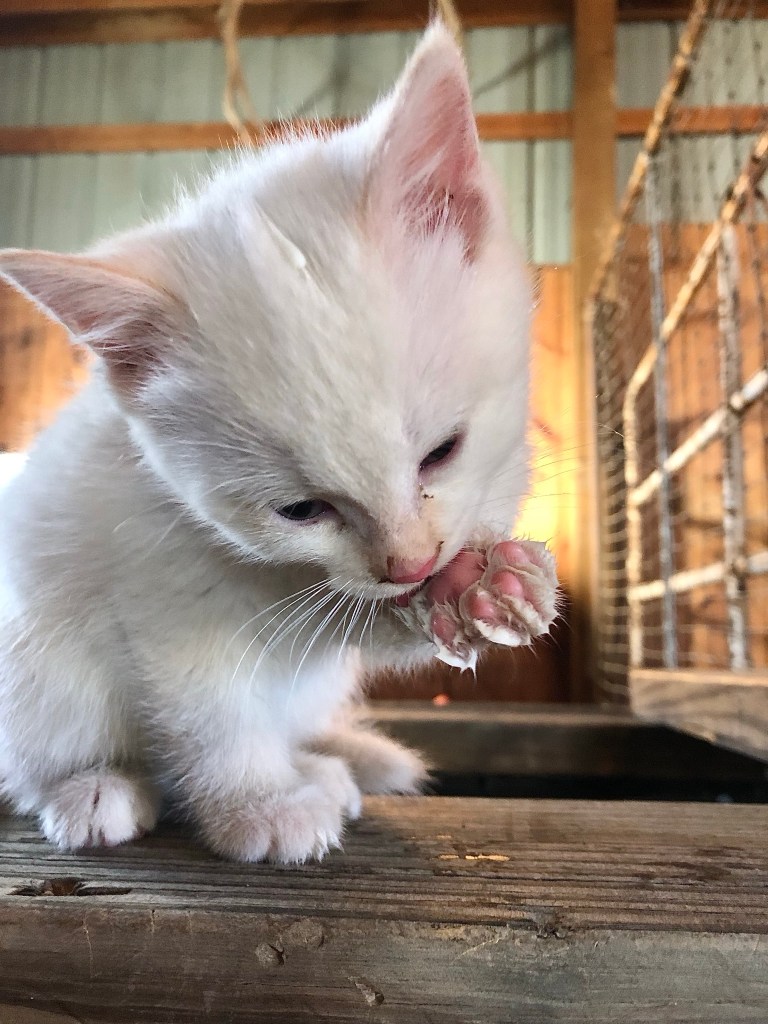
And the kittens have learned to recognize the milk pail. I’m not sure there’s anything sweeter than Little Elsa with milk all over her face and paws.
Little, mundane moments truly are what make life so beautiful and pleasant.
Support Song Dog Journal and share to social media!
In a culture that wants fast and easy, cheap and replaceable, instant gratification and consumerism, convenience and mass-produced, it makes no sense to walk away to something totally different. It makes no sense to do for oneself. To take the long way around. To do it the slow way. To accept and embrace inconveniences.
If you had told me how satisfying it would be to eat eggs from my chickens, milk and cream and butter from my own milk cow, our own meat and vegetables and fresh baked bread, I would have believed you, but I wouldn’t have understood. Five years ago and ten years ago, my heart wanted that. But I had no idea.
No idea how satisfying it would be. How inconvenient and simple and hard and beautiful and growing it would be. How frustrating and elevating. It has moments of romance and sheer hilarity and humbling. And I wouldn’t want to change a thing.
Push back against a consumer mentality and become a producer. In small ways. Learn to make bread. Cook from scratch. Grow a few veggies on your deck. Keep an herb garden. Learn a few skills to do things yourself. Dust off your sewing machine. It doesn’t have to be complicated and baby steps are beautiful.
Because there is nothing like serving a home cooked meal, picking veggies from the garden, or pulling a loaf of fresh baked bread from the oven, or handing a neighbor a dozen fresh eggs, or a gallon of fresh milk. There’s nothing like knowing you made that. A factory in China didn’t make that. A computer didn’t execute that. You did that. You did the cultivating and the picking and the mixing and kneading and milking and stitching.
So go make something.
Support Song Dog Journal and share to social media!
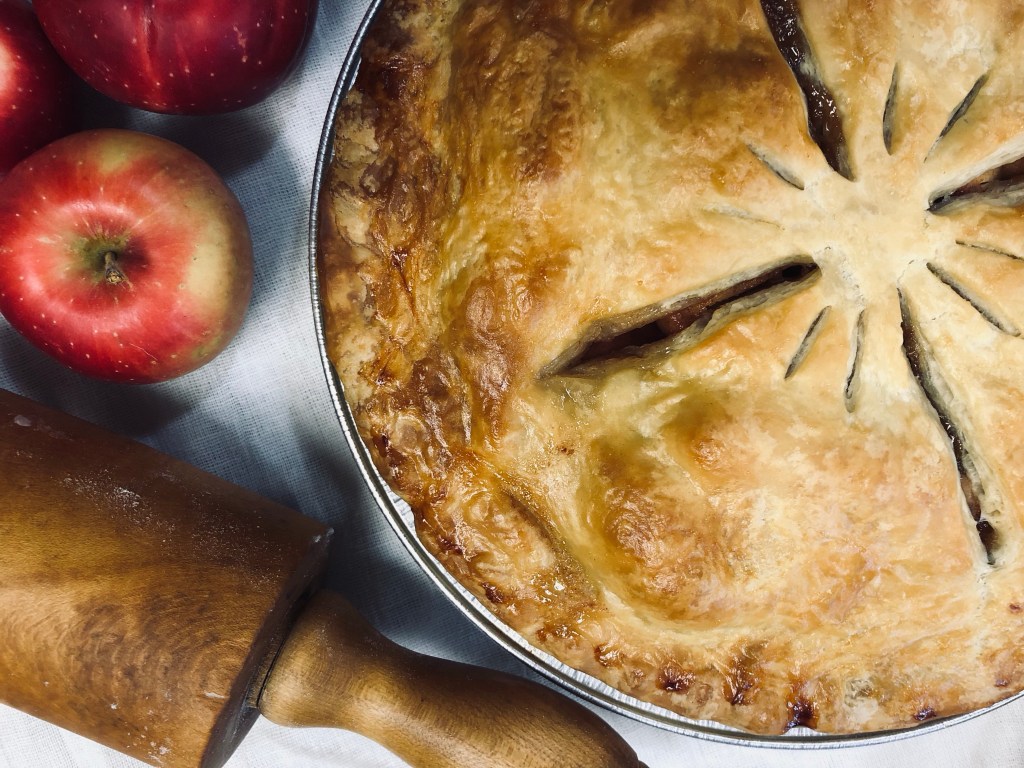
As the Advent season rolls into Christmas, the tastes and smells of the season bring back so many memories. A handful of chicken-scratch recipe cards foster a connection with my heritage, and remind me of the many family Christmases crowded on hand-built benches around my grandparents’ long hand-built table. After supper was over and we all were stuffed, a tin of little round cookies would be passed around, tasting mildly of pepper and licorice. The adults always went for these more enthusiastically than the kids, but as I’ve gotten older this recipe has become very nostalgic for me, and I love to make these in bulk to gift at Christmastime!
Pfeffernusse are spicy, crunchy cookies that are a traditional German and ethnic Mennonite favorite, and translate to “pepper nuts” – they do contain black pepper, but add a little extra for a little extra kick! Molasses, black coffee, and anise extract add to the warmth of the flavors in this simply little cookie.
Ingredients
1 c. sugar 1 c. shortening (can be replaced with 1 c. butter) 1/2 c. dark syrup (can be replaced with 1/2 c. molasses) 1/2 c. molasses 1/2 c. cooled black coffee with 1 tsp. baking soda 3 T. anise seed extract *can also add 1 tsp or more of ground anise seed for additional flavor
6 c. white flour (or half and half white and whole wheat) 1/2 tsp. salt 1/4 tsp. nutmeg (double this!) 1 tsp. cinnamon (double this!) 1/2 tsp. cloves 1/2 tsp. black pepper (double this! Or triple…or more! How spicy do you want it?) 1 tsp. allspice
To Make
Cream together the first 7 ingredients; add flour and spices. Chill for an hour or so to make the dough easier to work with. Roll in 1/2 inch rolls and chill (or freeze). Slice into quarter-inch thick discs, place on cookie sheets with not much space between them (they don’t spread too much), and then press your thumb gently into each cookie to flatten a little. Bake at 350 degrees for 8-10 minutes.
Notes
I noted most of my substitutions in the above recipe. I ALWAYS add extra anise. My uncle has actually used anise oil from NOW Foods, but I think it affects the crunch of the cookies. I just use plenty of anise extract. You can also add anise seed if you want a little extra bite, though I do recommend grinding them for better flavor, as well as better texture. Also, the quantity of the spices is on the mild side, so be brave and play with the quantities to get the bite you want! I don’t generally double the cloves, since cloves are such a distinct flavor and I don’t want to interfere with the anise, which is the star spice in this cookie. Grandma’s original recipe calls for shortening and corn syrup, as noted above, but I prefer to cook without those things, so I noted my substitutions. But sometimes faithfulness to Grandma’s recipe means something.
The dough should be chilled or frozen before slicing, as stated above, and I recommend freezing, since the dough is a lot easier to work with. This makes it incredibly easy to make a bunch of dough, roll into snakes, freeze, and then bake whenever you get a chance! They also freeze really well after they are baked. Brad and I have enjoyed pfeffernusse months after they were baked, which is great since the first time we made these together we had Covid and couldn’t taste anything.
And there really is something special about baking cookies that have been so traditional for my family. How about you? What are some favorite family recipes you grew up with, and are there any you continue to bake or cook for the holidays?
Support Song Dog Journal and share to social media!
“Want to sit right here, honey?” Brad patted next to his leg.
What a beautiful late November afternoon. Blue skies overhead, a gentle breeze, the sun still warm and making the tall grass glow.
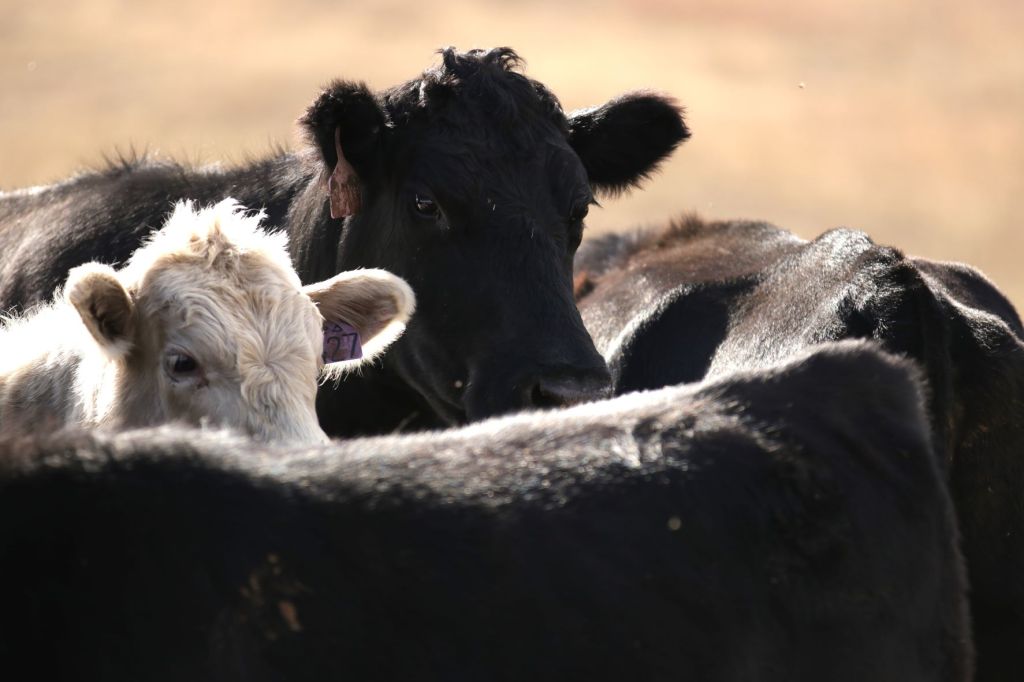
I looked down at the heaving, black-haired flank of a steer calf we had choked down on the ground behind the trailer. He weighed all of 650 pounds, maybe more, and had put up a fight for the last 20 minutes, dragging Brad’s little roping horse all over the pasture, while I tried to haze the stupid animal on Henry, a giant black gelding who rides like a truck without power steering. Ten minutes ago, we had worked the calf over to the trailer and were trying without success to haul the ridiculous creature inside when he took off with two lariats around his neck. Dirty darn.
Brad spurred Rocket after him and piled off, managing to catch one of the ropes as it snaked through the grass behind the calf. I don’t really know what the plan was after that, but honestly it was pretty impressive to watch, in a strange sort of a way. The calf charging ahead like a bucking bull with a chip on his shoulder, Brad hanging on to the end of that rope and somehow managing to stay standing. It was all going along swimmingly until Brad yelled, “He’s getting mad!” and took off running as fast as his slick-bottomed cowboy boots would let him. It really was a sight to behold. I kept expecting the fun to be over and a word to that effect to slip out of Brad’s mouth, but he was grinning. The whole time.
Fast-forward, and here we were, back at the trailer with the calf, who had (finally) choked himself out and was laying on the ground temporarily, sides heaving, eyes rolled back in their sockets. Brad was kneeling on his flank, tying his front legs together. He patted the calf and looked up at me. “Want to sit right here, honey?”
I looked uneasily at the calf, not at all trusting that it was really out. And here’s my husband asking me to take a seat on the calf’s back end. All 120 pounds of me. Sure, yeah, whatever you want, dear. I did as asked, not at all enthusiastically, gingerly taking an uncommitted knee on the calf’s flank.
“And here, you can grab the tail, too,” Brad added, handing me the end of the manure-covered tail which was pulled tautly between the calf’s legs. Oh yeah, sure, that’ll help. I took it, obediently, but really, what good would that do, when 650 pounds of calf wakes up, catches his breath, and realizes there’s only 120 pounds of person on his rear? Not much.
“Can we at least tie his back legs or something?” I asked meekly. We did (kind of) and Brad bounded off.
We successfully loaded the calf, and uneventfully dropped him off at the main corrals to be worked the next day with the rest of the critters, arriving home some few hours after we were supposed to be home. I was tired. Maybe a little grouchy, since my to-do list for the evening (cooking and baking for the next day) hadn’t gotten any shorter.
But then I’d see Brad patting the calf and saying, “Want to sit right here, honey?” and I would just start giggling.
“Well, you said you wanted to spend more time together,” Brad quipped.
Support Song Dog Journal and share to social media!
Originally published in Down Country Roads Magazine, Nov-Dec 2023
As the year wraps up and as the daylight hours dwindle, as the nights lengthen and the sunlight grows weaker, we gather ourselves in and gather ourselves together for a season of merrymaking, with all of its traditions and tastes and sights and sounds that bring us into a festive spirit.
Sadly, this season of wonderful merrymaking has lost its glow for many. Our cultural expressions in this season of the year obscure the true meaning and poignancy of this time. The beginning of November is a tipping point – Suddenly the year is almost over. Some shudder at the thought of winter being at our doorstep. Some of us are bracing for a calving season that isn’t too far away, and savoring the temporary slow-down, and maybe regretting how busy this time of year can be. Some roll their eyes at the wanton waste and foolishness of much of our festive cultural expressions. With Thanksgiving followed ironically and hotly by Black Friday and Cyber Monday, it is no wonder there is some weariness as the holidays collectively approach. Shopping malls are packed out like no other time of the year, and money that we don’t have is spent on gifts that have no meaning. Parties and festivities wear us out. Preparations drag us down.
The wanton lavishness of many highlights the bitter lack of others. Waste on the one hand highlights poverty on the other. Joy of some highlights the grief of others. Even our own joy can highlight our own grief, intermingled in our hearts. Our memories of good times are mingled with sadness at the empty places at our tables, at the missing ring of that certain laughter, the missing voice singing carols. Loneliness is the bitterest pill at this time of the year.
But all of those things are an argument to enter into this festive season with even more enthusiasm, even more sincerity, with eyes to see the One from Whom and to Whom this entire season is due.
The the older I get, the more I love the stretch of the calendar from Thanksgiving to Christmas to New Year’s, not for how our culture participates, not for the parties and the shopping and the frivolity, but because of the wonderful sense of gravity mingled with grace and joy. It is a time we have set aside culturally for the expression of thanks to our God before we enter into the Advent season, the glorious countdown to Christmas morning and our celebration of His entering into His Creation.
The older I get, the more it matters to me that I continue to express the traditions I grew up with, things that fostered a thorough experience of this whole season, from the songs to the foods to my cherished creches to the simple exchange of humble gifts, to the church services and the cutting of a Christmas tree. The older I get, the more the liturgical calendar speaks to me, the more the Advent season weighs joyfully on my heart. The older I get, the greater my desire to build traditions that my husband and I will pass down to our own children one day. It is a time of sweet nostalgia, vivid remembrances, joyfully looking back on traditions that are part of the fabric of our Christian culture and our families’ cultures, and joyfully applying those traditions now.
We don’t know what next year will bring, so how good it is that we are invited into a time of holding one another close, of opening our hearts and our homes, of celebrating and remembering and thanking God for all His gifts, the ones we understand and the ones we don’t. The time of thanksgiving after the season of harvest puts our hearts in line with what comes next, and if we cooperate, we are reminded of how little we need and how much we have. All the tastes and the smells and the sights and the sounds of the season invite us to enter into a spirit of joy and festivity, at the darkest time of the year. Simple traditions remind us of the past, of God’s enduring faithfulness over the decades and centuries, as so many observances and customs span generations and oceans and cultures. Traditions don’t have to clutter the landscape at this time of the year, they don’t have to add to the chaos. Instead, they can foster our heartfelt participation, and remind us of what is truly important.
Support Song Dog Journal and share to social media!
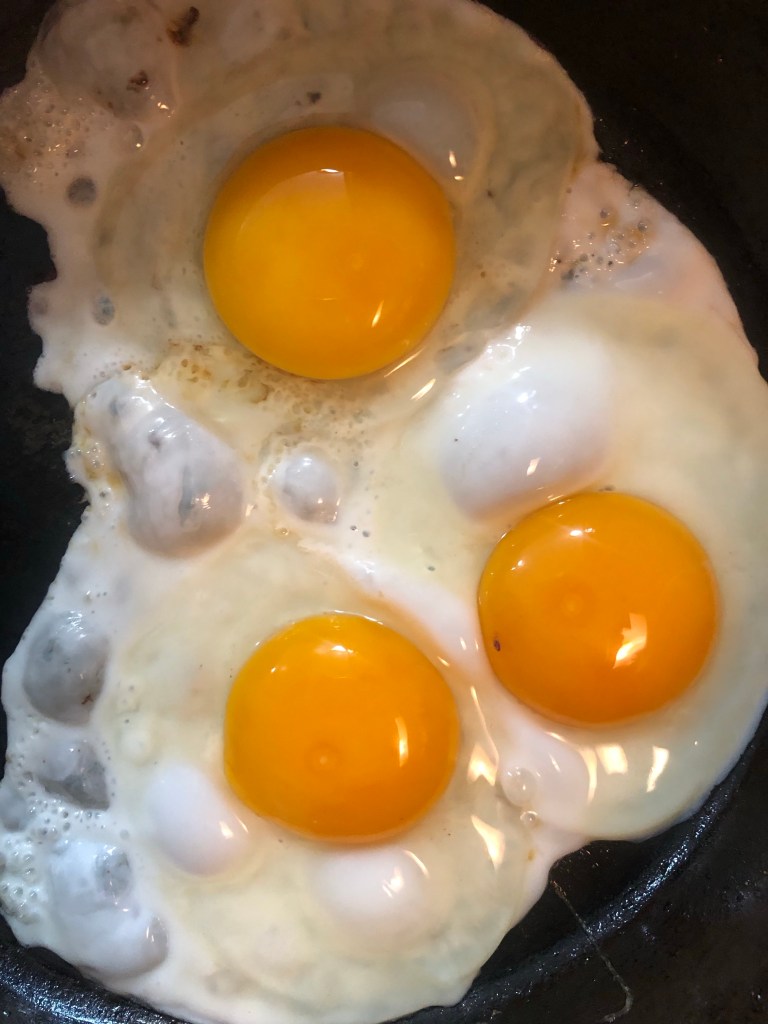
It’s the little things. Truly. My own cow’s cream in my coffee. My own chickens’ eggs for breakfast. Sunlight through the open barn door while milking Posey.
It’s the little things. That really aren’t so little after all.
Support Song Dog Journal and share to social media!





 Song Dog Journal