Botanicals | White Milkwort

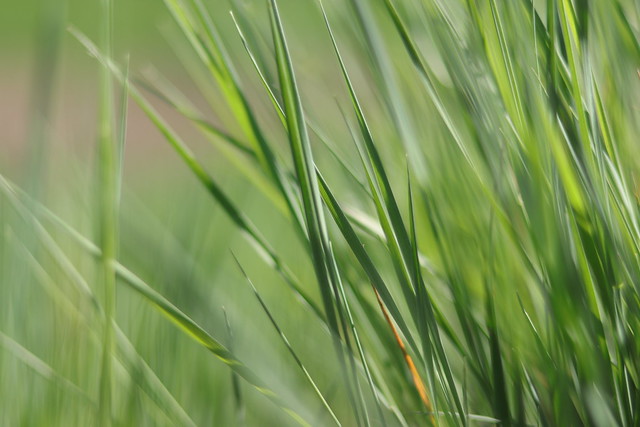
This understated little plant, polygala alba, blends in with the grasses and can be difficult to spot.  I found a few clusters this morning in some open, sparse areas alongside a road. Don’t confuse it with its relative, seneca snakeroot (polygala senega). For a year or so, I had seneca snakeroot identified as white milkwort, until I finally decided both couldn’t be milkwort and needed to just figure it out. Thanks to the book Plants of the Black Hills and Bear Lodge Mountains, the mystery was solved.

Rain and High Water

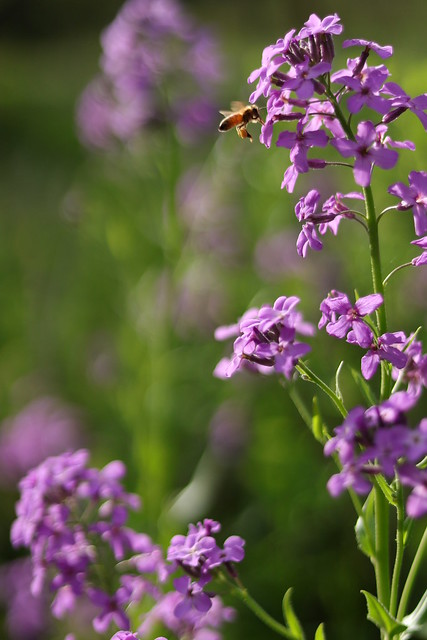
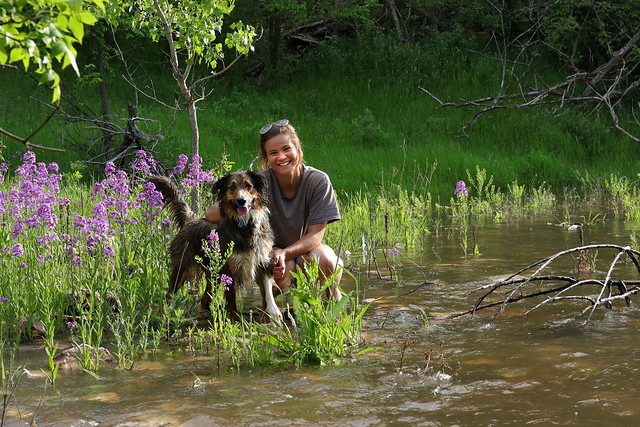
High water for us means that Battle Creek is actually flowing across the southern end of our property, and when it does, we’ve had a lot of rain! God blessed us with more than 3 inches of moisture in the last couple of weeks, which sure gave every growing thing a needed boost! There is a favorite spot along Battle Creek, fondly referenced by a small cave we found which we dubbed “the Mountain Lion Cave,” where the creekbed winds its way through a ravine, with high canyon sides bordering the creek from one side or the other, and clear green meadows opposite, scattered with oak trees and adorned with dame’s rocket. Even when the creek is dry in that stretch, it is a favorite place to explore and rock hound and scramble, but with water running the fun level goes up drastically. We took the dogs down there so they could run and play in the water. I love watching delight play out on an animal’s face. Those two goofy dogs loved the water! Sarah did, too, and went wading in the creek with the crazy canines. I don’t think our pups wanted to leave! Poor Trixie is such a snow dog, the summer heat really gets to her. She becomes a water dog out of necessity!
IMG_7172eIMG_7195eIMG_7180eRain – what a blessing.

Botanicals | Yellow Wood Violet

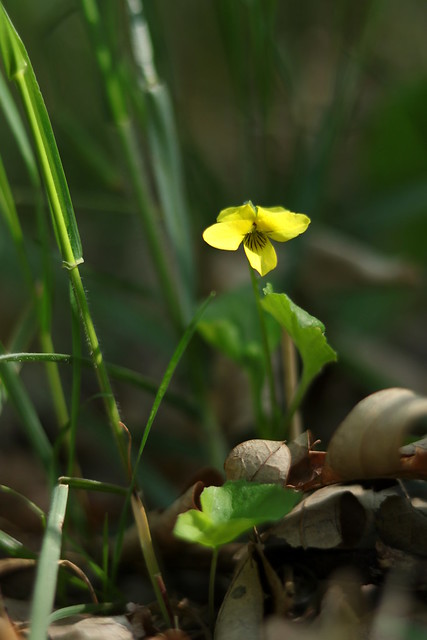
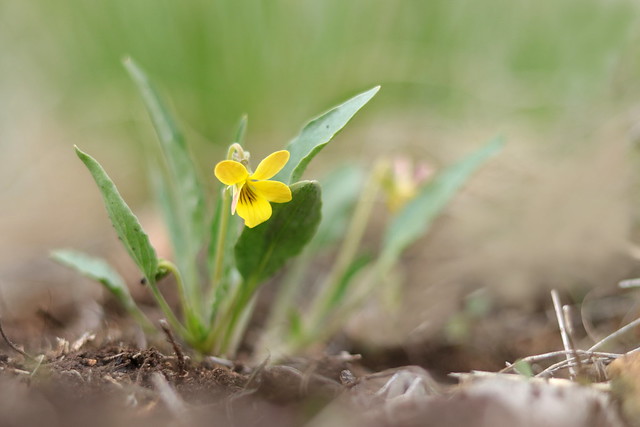
Every time I find a flower that I don’t see every day, it constitutes a “favorite find.” And as I mentioned regarding Nuttall’s Violet, I’ve always had a soft spot in my botanical heart for the violet family. This little beauty is one I’ve only seen one other time in the Black Hills, and that was down near Little Falls. It definitely loves moisture, and this one I found near Battle Creek recently.
IMG_6482eSome violets can be difficult to distinguish, but the yellow wood violet is unmistakable in the Hills, with a growth habit and structure distinctly different from all the other violets, except the Canada violet, which is white. As I said, unmistakable.


A Million Invisible Choristers

I love the sweet sounds of springtime. Especially the sounds prompted by a good, wet rain. Over the past week, we’ve been blessed with more than 3 inches of rainfall, and a chorus has burst into song out in our stock dam. We hear them at at night, singing heartily with the insects, and even during the day their song is tireless. It is amazing how beautiful the ruckus is when a million frogs start singing.
IMG_7254eBut as beautiful and joyful as the song is from a short distance, up close it is stunningly deafening! I was amazed and delighted. I poked around along the banks of the giant mud puddle searching the tufts of grass and smooth brown water for any sign of the little creatures. Not a one was to be seen. Not the smallest plop or telltale rippling of the warm water. I tossed a pebble or two, trying to disturb one enough to make him hop, but they kept right on singing and paid absolutely no attention to me. I could hear them, mere feet away from me, but I couldn’t catch even a glimpse of them. It baffled me, that creatures so tiny and so invisible could be so utterly deafening.
IMG_7251eOne of my favorite springtime sounds.

Botanicals | Blue Columbine

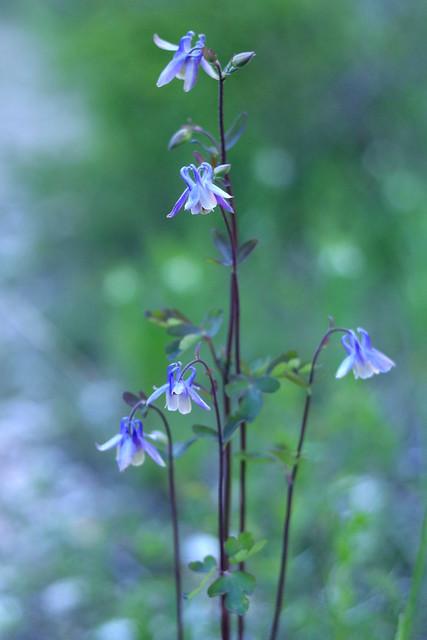
This must be one of my favorite finds to date. We have wild columbine, or red columbine, in abundance all over the Hills, but blue columbine, aquilegia brevistyla, is one I’ve never had the delight of finding. We hiked Hell Canyon this afternoon (one of my favorite hikes to date), and this little gem was growing prolifically in the canyon itself. My wonderful, handy field guide, Plants of the Black Hills and Bear Lodge Mountains, states, “Blue columbine….is much less common than [wild columbine, aquilegia canadensis] and is never abundant where it is found.” Well. Today it was abundant.
IMG_7028eI had never seen one before and sort of figured I was unlikely to ever see one, but I can now put a check mark next to its entry in my field guide, and revel in the pleasure of a rare find.

Botanicals | Nuttall’s Violet

For years, this little flower has been one of my favorites. Nuttall’s violets are diminutive, as far as violets go, and are the only species with lance-shaped leaves – thus, they are impossible to misidentify. IMG_6150eViolets have always intrigued me, and I can probably credit the violet family for first getting me interested in wildflowers. Their little faces are so shy and cheerful, and each species is so unique. I remember the first time I found a Nuttall’s violet, up behind my grandparents’ house, and I came back to their house and looked it up in a decades-old fieldguide of South Dakota wildflowers. I’ve since rejected this book in favor of a much more complete Black Hills and Bear Lodge Mountains fieldguide, which is a fantastic book I highly recommend for anyone looking to grow their knowledge of regional plants! Anyway, this first find was probably 15 years ago, and I have only managed to find any a few times since. Just a few each summer. But this year I have seen more Nuttall’s violets than ever before – they are having a wonderful year!