
Findings | Here and there
 The roses that bloomed profusely this summer faded long ago, and in their place is a bounty of red rose hips. A friend, Hannah, and I found them a week ago while we were hiking on a logging trail on forest service land. I immediately started making plans to harvest some, which Anna and I did yesterday afternoon.
 Rose hips, if you didn’t know this already, are the fruit of the rose plant. The hips are edible, but not raw–they have large seeds and a hairy pulp that need to be removed before the fruit can be consumed. But they can be made into jelly, or dried for use in teas. I’ve never harvested them before, since wild roses weren’t profuse enough in Illinois for any sort of meaningful gathering. Like with any small fruit, it takes a lot of plant to produce enough to logically and practically harvest from it!
 But here, wild roses grow with abandon, as do raspberries, sunflowers, and any other number of wildflowers which lavish their abundant color and life onto an otherwise often hash landscape. There is a beautiful paradox in the presence of a fragile flower beneath the shadow of a towering granite peak. The delicacy of a flower or the perfection of its fruit highlight the grandeur and power of towering peaks and granite spires, just as their magnificence highlights the delicate beauty and diminutive intricacy of the wildflowers. Can they really belong to the same world? Yes, and the same God created them all! What goodness.
 Anna and I spent two hours out on that forest service trail. A lot of it we spent walking, but the weather was perfect and the 5:00 sun soon hid itself behind trees and hills. We found one particularly good patch of rose hips, and gleaned from there for quite some time before moving on. Next summer, I’ll have to remember that rose hips come into season earlier. There were a few places where the rose hips were much overripe, considerably past pickable ripeness. Notes for next year. But we ended up with enough hips to make some jelly (I’m thinking rose-rhubarb sounds good…) and dry some for tea. Not as much as we’d like, but enough for the first year.
 Birch and aspen trees have been catching my eye lately, and more yesterday, it would seem. There is something haunting and sylph-like about their white trunks and branching limbs, more noticeable against a backdrop of ponderosa pine and grey granite than perhaps they would be otherwise. Perhaps it is C.S. Lewis’ references to birch trees and dryads in his wonderful Narnia series that have haunted my imagination and still do. They’ve always seemed different to me, otherworldly, enchanted. Along the forest service road, they clustered in hollows and lined meadowland, stark and beautiful and dreamlike.
 Little things can be so profound–The gentle cup of a harebell, or the golden glow of a head of grass. Profound and captivating, if you let yourself look hard enough and without any other expectation than to see something beautiful. How common a harebell is! How common a head of grass is! Yet how uncommon, how wonderful, how full of meaning. And how temporal, how fragile, how short-lived, soon to be struck away by the first hard frosts and the winter snow.
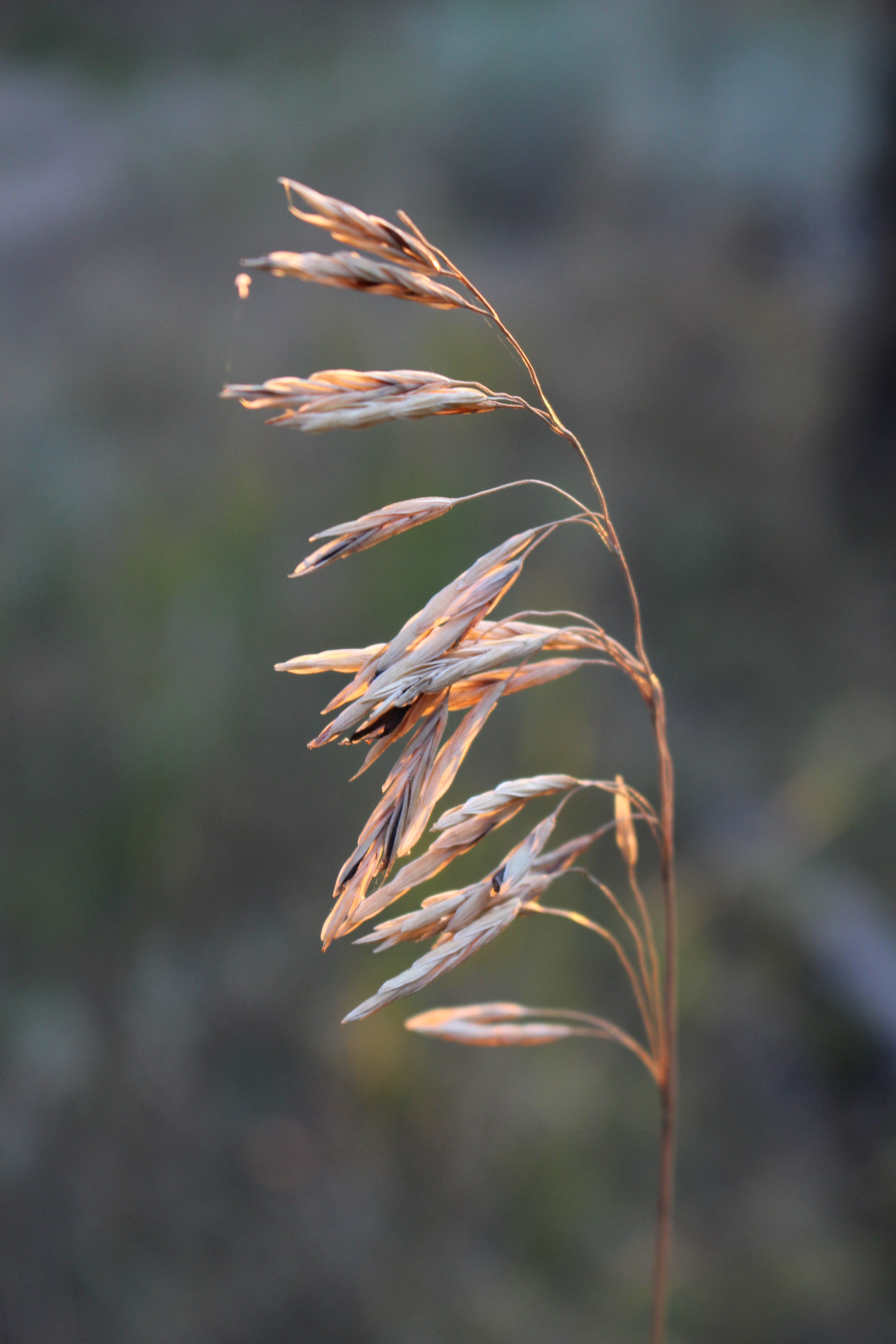 What a joy it is to have the sense of sight, the sense of smell, of touch, taste, of perception, the ability to recognize color, the permission to experience the joys of this world. Sometimes we go so quickly through life that we miss much, we miss the meaning in a harebell, or in ripe and golden grass. We miss the meaning in a towering peak, or in the racing openness of a prairie, open to the skyline. We look right past everything, missing those gifts that God has given us, the gifts we never had to work for, the gifts that demand nothing of us except the expectation of joy.
 Some gifts we do have to work for, and those give even greater pleasure. One of those would be the joy of family, whether it be spiritual family or earthly. Yesterday, I got to experience some of the joy that comes from earthly family, the joy of cultivating healthy and loving relationships before God. I’ve got some pretty wonderful sisters. And hopefully they’ll help me with the rose-rhubarb jelly.

 Given that my portfolio of wildflower photographs is growing in leaps and bounds, I thought it was time to start a wildflower identification project, partly for my own reference, partly for anyone else who is interested in wildflowers. These will be mostly flowers from the Black Hills, but I have a fair number of Illinois flowers in my portfolio as well that I’ll probably include in this project.
So my new page on this website is called Botanical Reference, and will be precisely that: a reference for wildflowers and, as I expand my photographic portfolio, pictures of their leaves, fruits, and notes on their growing locations, etc. This might be a little ambitious, but it is worth being a long-term project.
Enjoy!
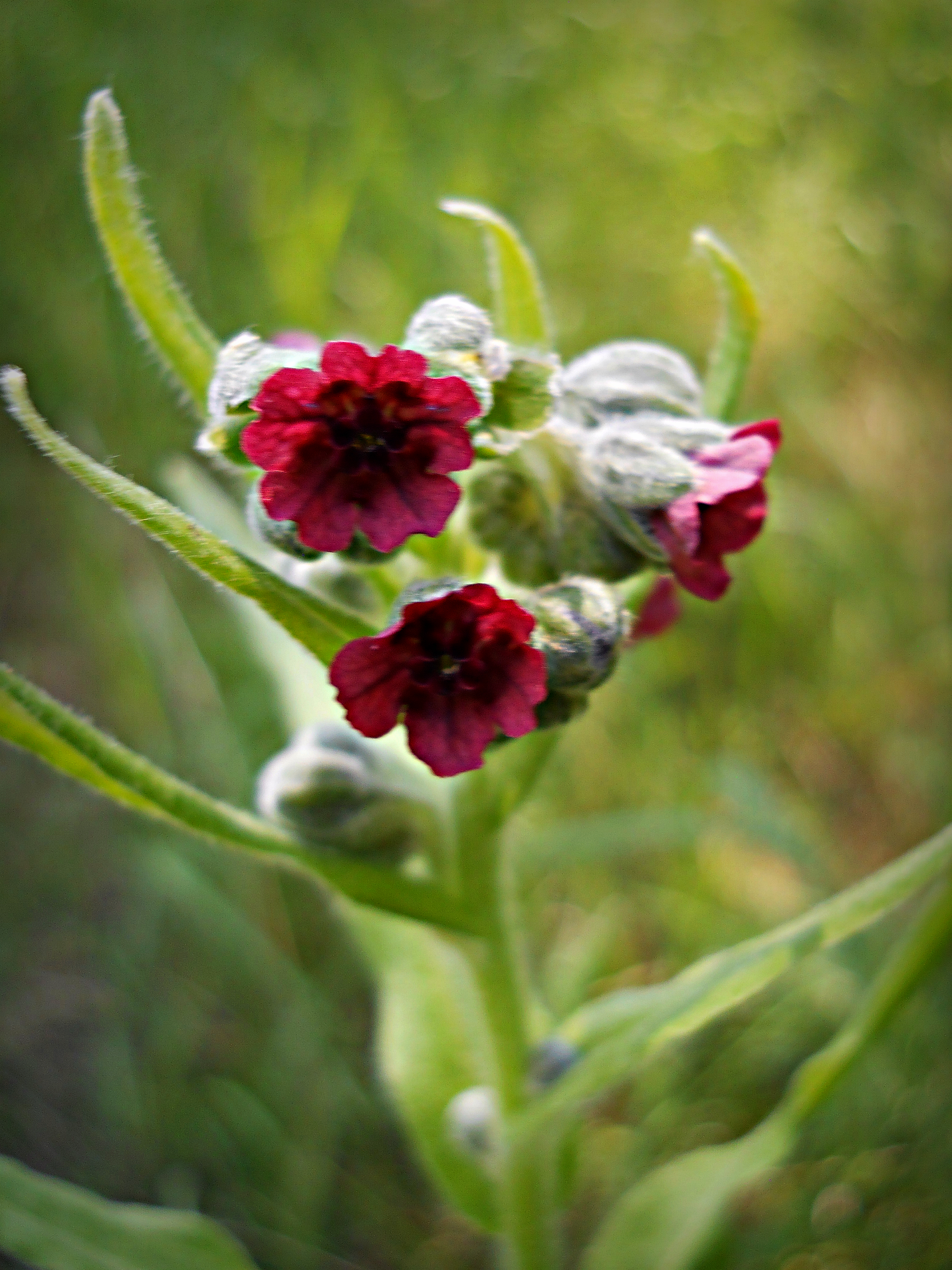 The Black Hills are dressed in their best and most glorious finery. Wildflowers are sprinkled, sometimes lavishly, on hillsides and in valleys, the creeks are full to overflowing, and everything is green and lush and fragrant. It is always fun to see the Black Hills through the eyes of a visitor. Even though I’ve only lived here for four months, this has always been our home away from home, and consequently seeing it sometimes becomes, well, daily life. There is nothing like a new pair of eyes to renew my own love of this region.
Mom’s cousin Russel, his wife, and their three daughters have been staying with us since Sunday. I’d never met any of them, so it was fun to get to know my second-cousins from Texas! We all went down to the Mountain Lion Cave last night (or as close as we could get without crossing Battle Creek), and this morning my second cousin Julie and I headed out on an excursion. The rest of her family and Anna were going to Reptile Gardens and, as fascinating as I am sure it is, neither of us was particularly interested in spending hours there.
 So out we went to Spokane and haunted the ghost town for a few hours, drove Iron Mountain Road, and visited Little Falls. The flowers were beautiful, and any little hollows or depressions were full of water, frogs, and mosquitoes. The thistles were becoming the prize-winning sort, and mushrooms were in abundance.
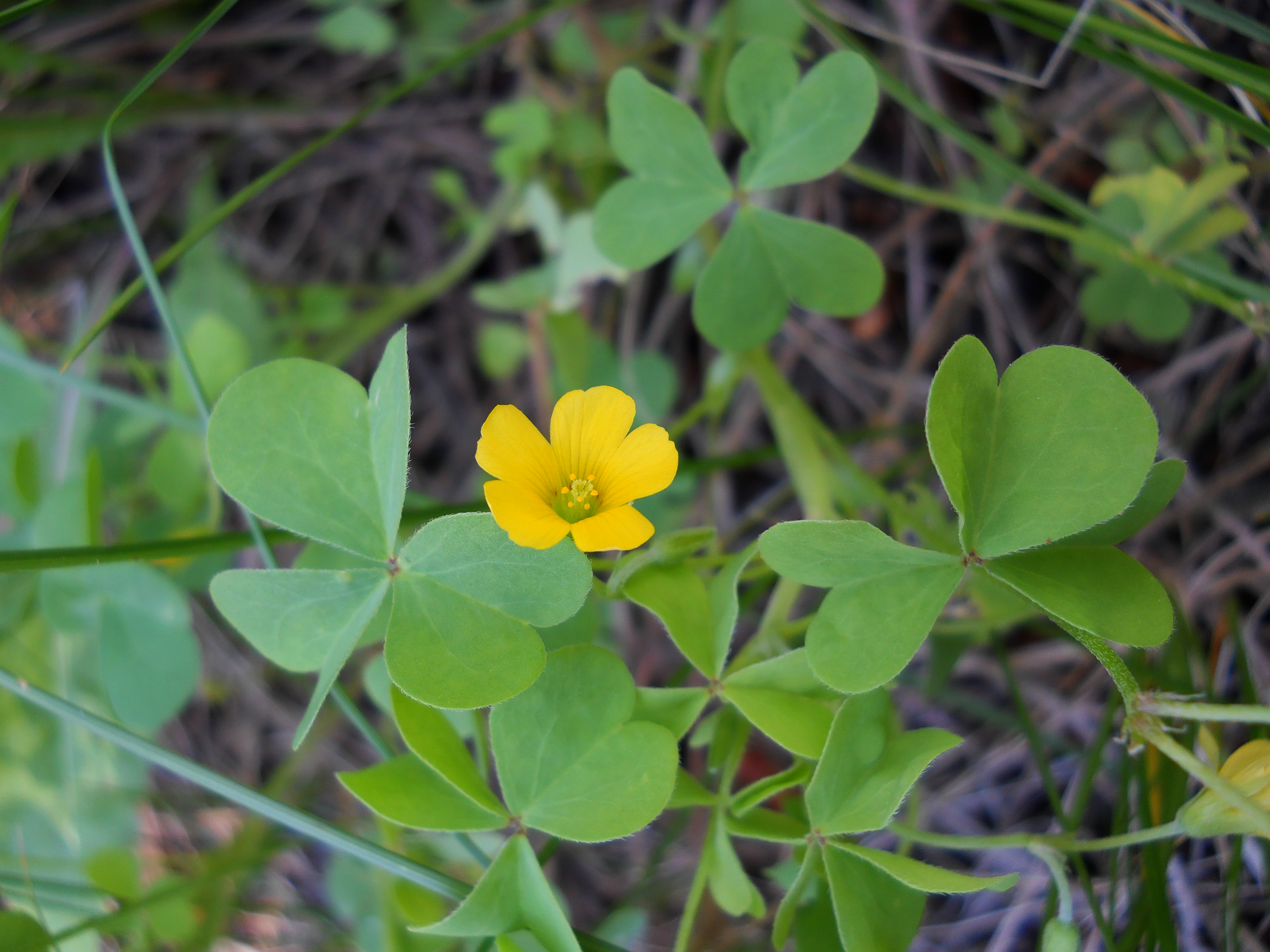

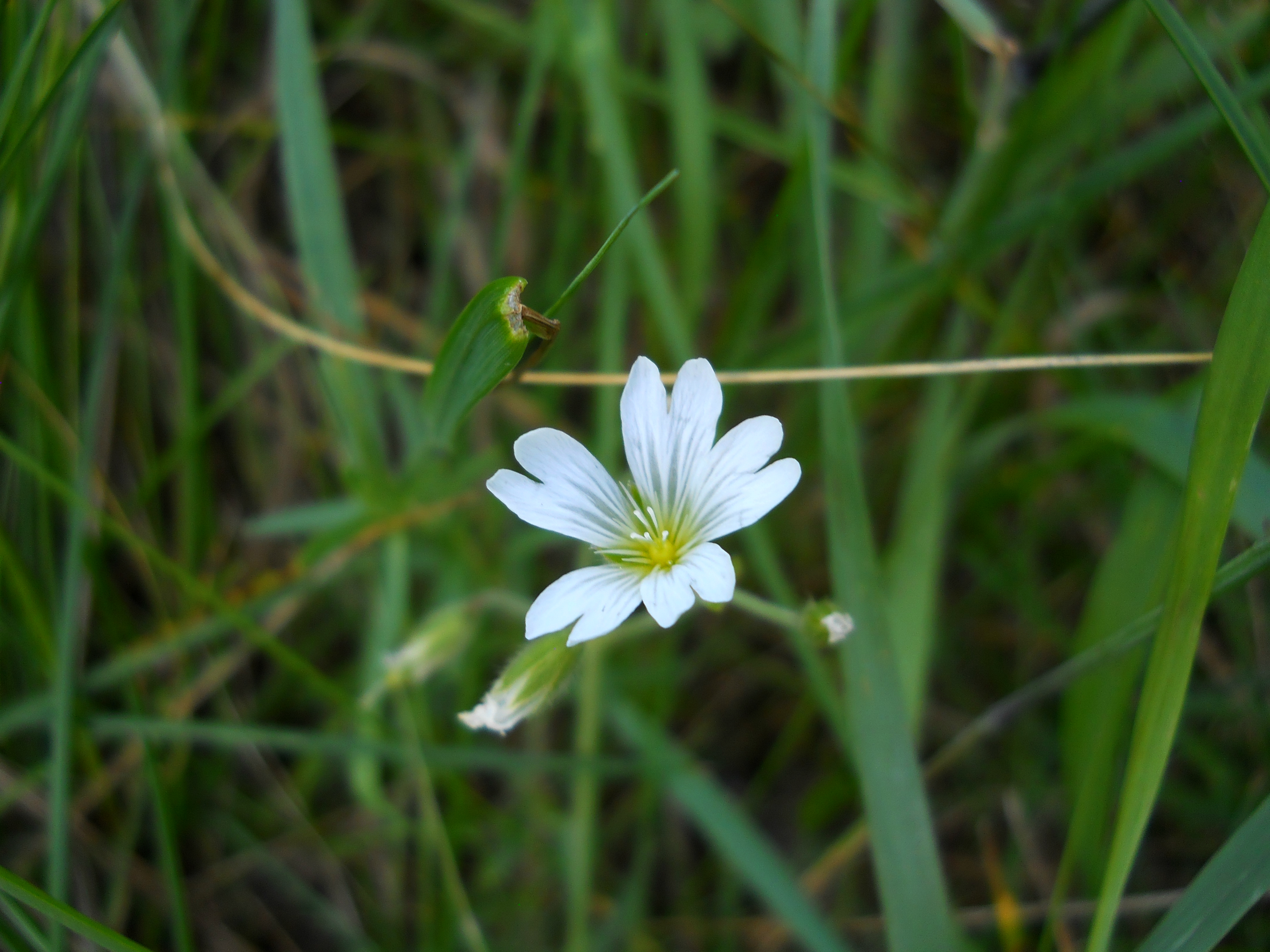
Violet and creeping wood sorrels flashed little glints of color in the shorter grass, their heart-shaped leaves green and moist and plentiful. Wild roses and geranium, blue-eyed grass and purple clover, asters and dandelions, all were tucked under trees and nestled into hillsides, along paths, thriving. The flowers and berries were peeking daintily from the Solomon’s Seal, and the lichen was thick on fallen branches and damp wood.

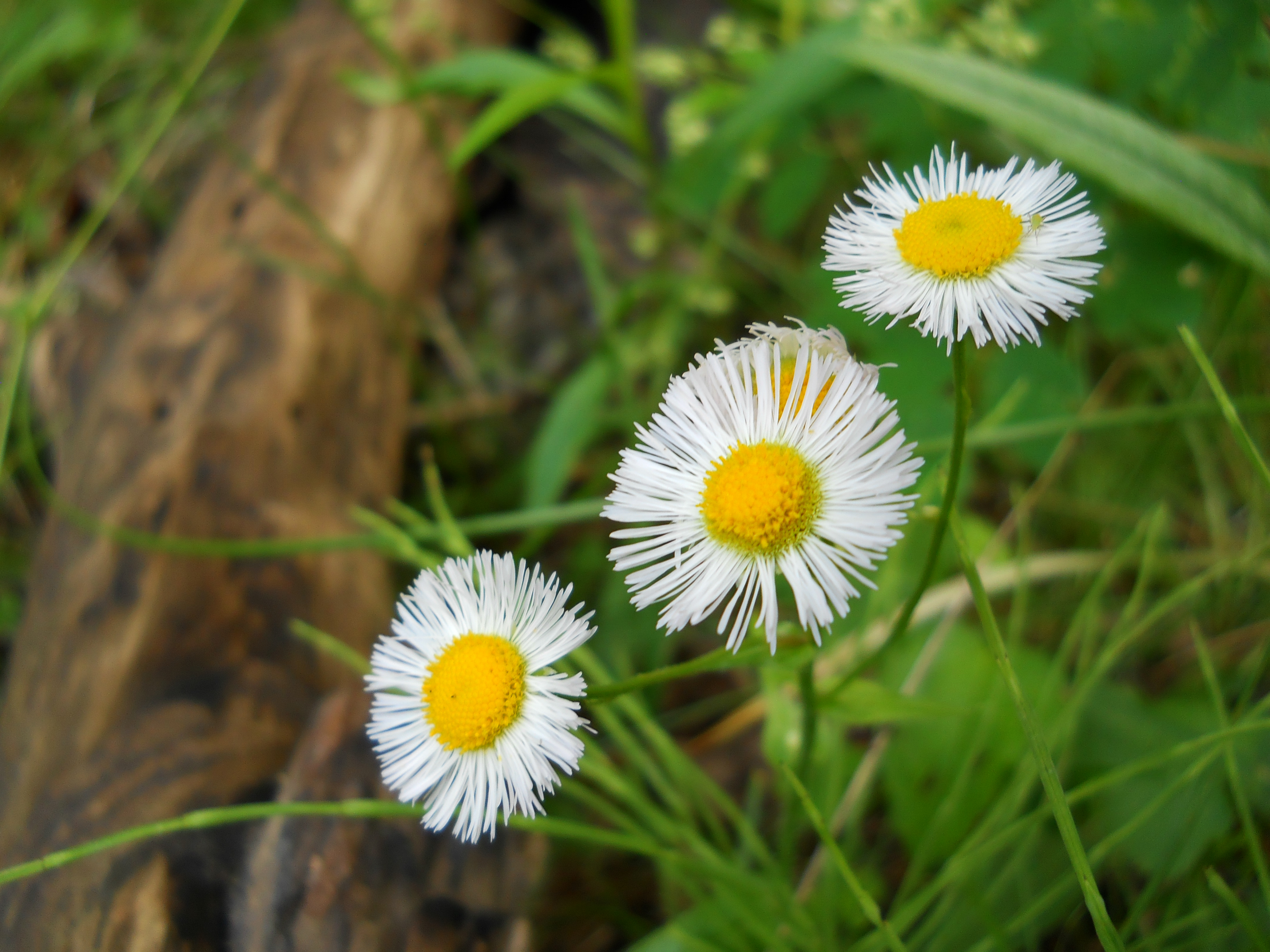
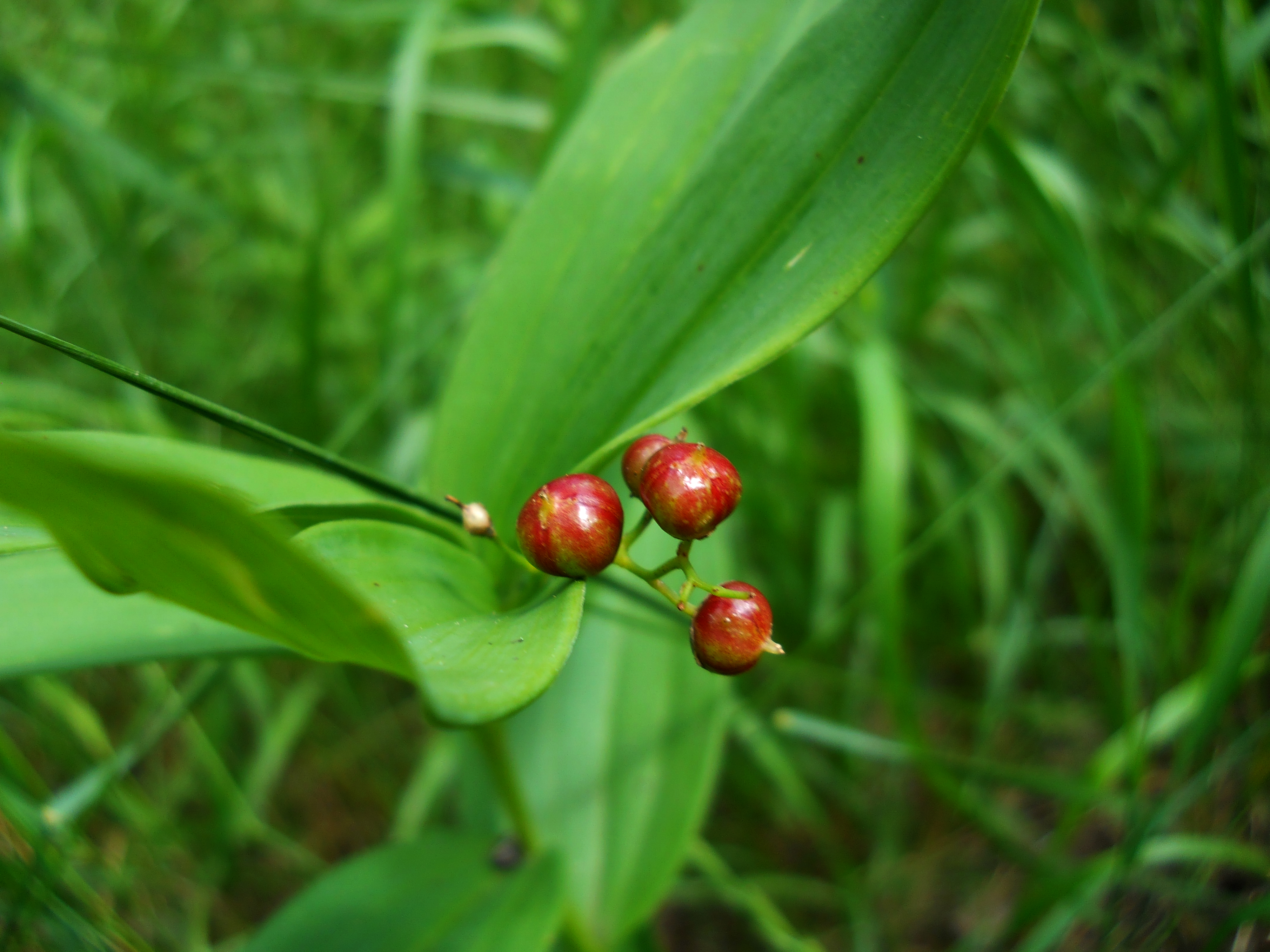
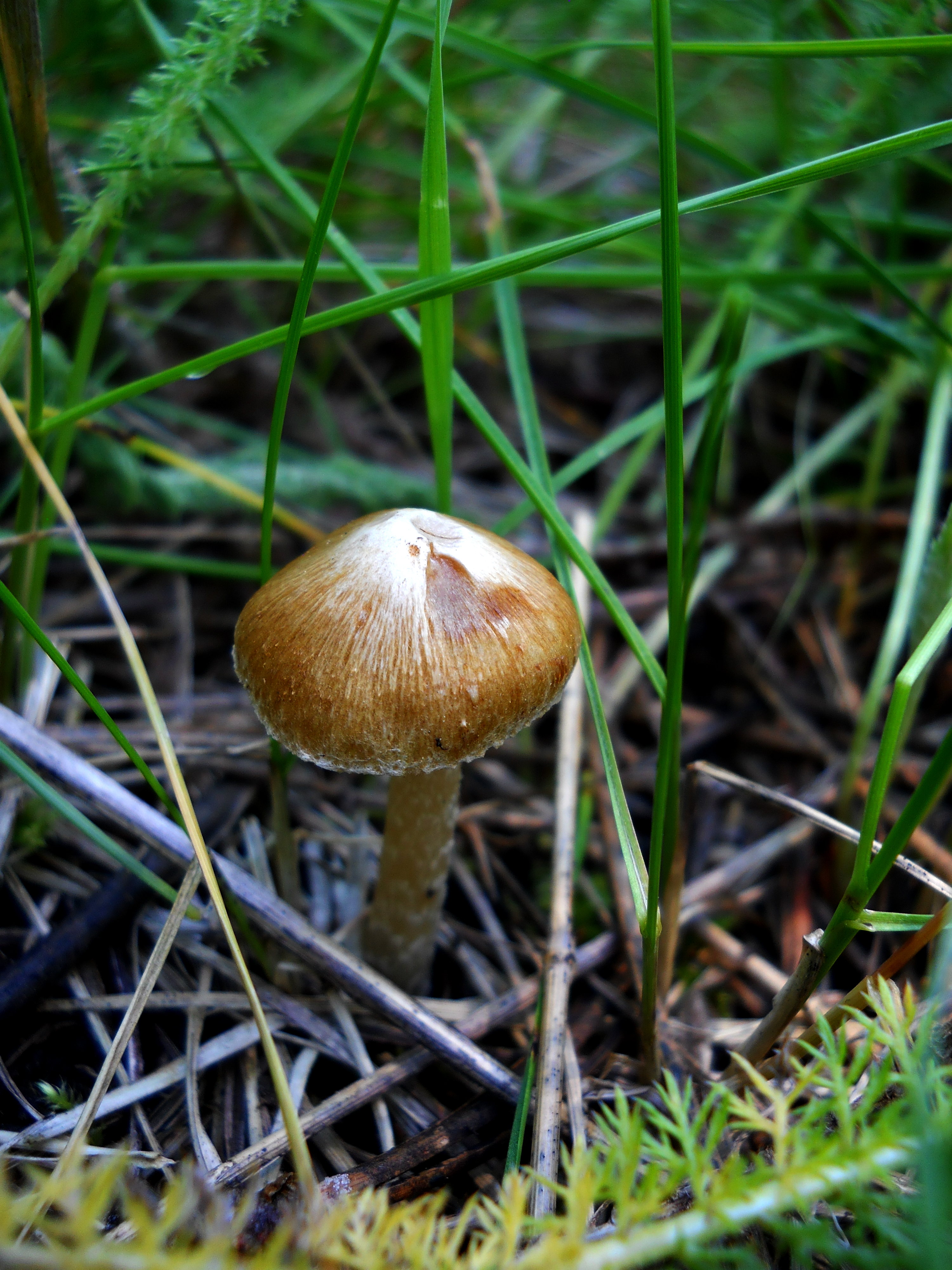 While on first glance not much had changed (it is a ghost town, after all…), when I looked closer there were dozens of new forms of botanical life, flowers that hadn’t been in bloom on our first visit, overgrown and flooded paths, and new clusters of mushrooms growing in the rich layer of decaying leaves and pine needles.
 The house looked pretty much the same as before–the broken windows, rusted hinges, rotted floorboards, and the swallow’s nest in the stovepipe–but when on the hunt for details, I suddenly noticed many things that had escaped my eye before, such as the remnants of wallpaper in the house, or the lichen-encrusted nails on the windowsill, or the broken blue Mason jar and the scrap of blue and white wallpaper.
  The nest had a swallow in it this time, and little plants were growing in the moist earth where floorboards were missing. I noticed “love notices”, where boys and girls had written their names together on the walls. What an old-fashioned and romantic little spot.
Outside one of the windows, there was a layer of shattered glass. My camera is a bit finicky, and after taking one properly-focused picture, it suddenly stopped focusing on the glass. Instead, it was focusing on the reflections of the trees in the glass. The effect was enchanting! 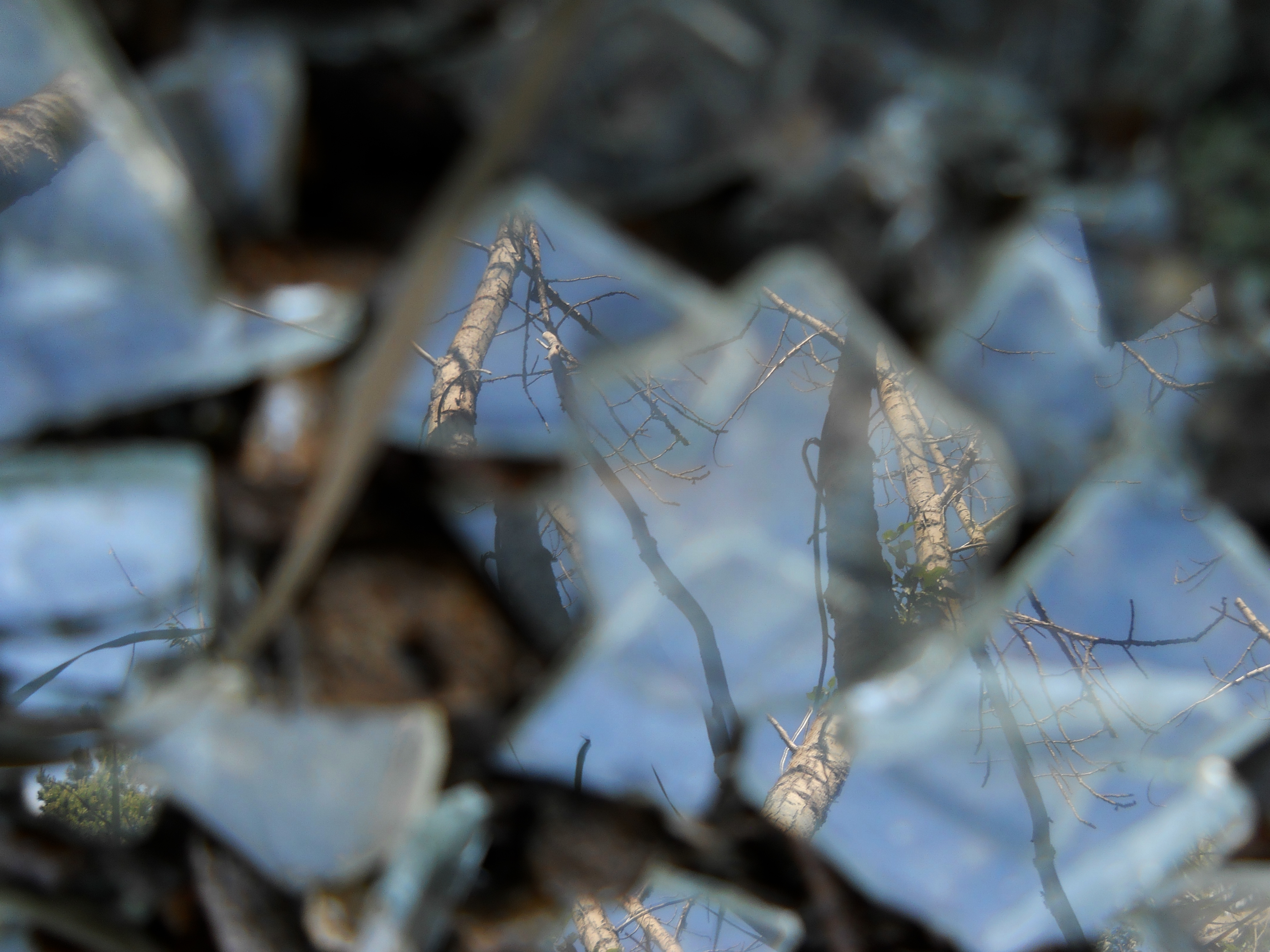
 Beauty may be subtle and well-hidden, even when in plain sight. It is hard to see beauty in the mundane when one is only looking for the mundane, or when one is overburdened with the world. A certain optimism is required for seeing exquisite beauty in the drabness of rotting wood or broken glass. Optimism is not my natural state, but I find it exceedingly difficult to be pessimistic when I am surrounded by God’s beauty, and his little gifts. I passionately think we should nourish the vision to see those beautiful details. The world is a bleak place, but there are so many tiny joys and gifts given to us each day by a loving Creator, if we have the eyes to see them.
 Song Dog Journal