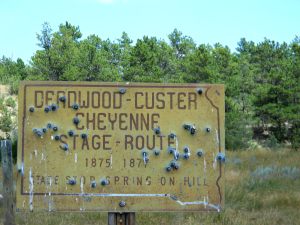
 Within minutes of scrambling out of the pickup trucks at stage stop Spring-on-Hill, we were suddenly treading very carefully at the sight of a rattlesnake retreating into the old dugout stage stop, and the warning rattle of at least one other in the grass nearby.
  We tread carefully and put a safe distance between ourselves and the hidden snakes, but we also tossed small stones gingerly in their general direction, just to hear the fascinating sound of the rattle. Finally, it was clear that Mr. Rattlesnake inoffensively wanted to be left alone, so we very obligingly left the serpents to their lair. There was more to see.
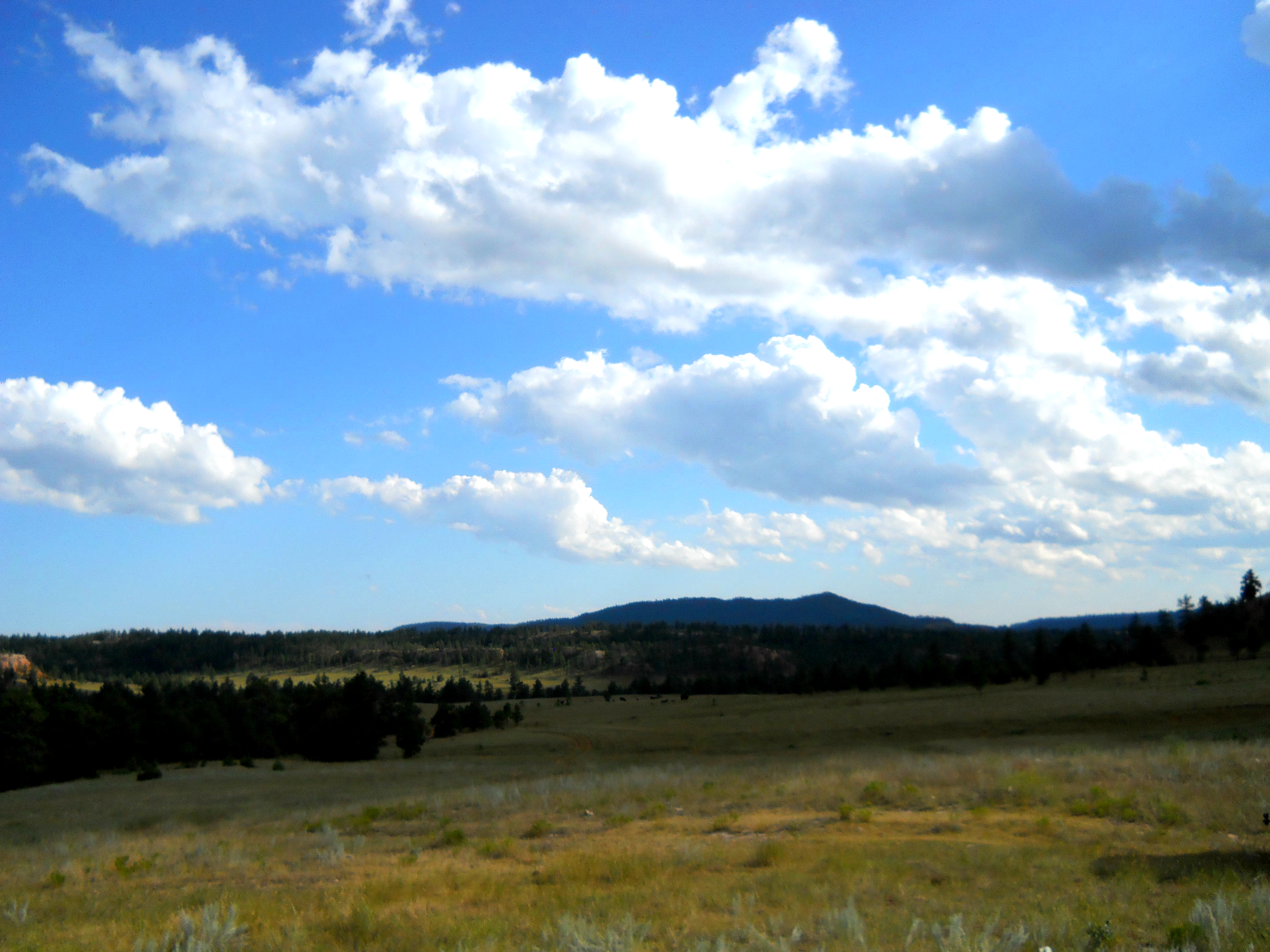
 This particular stage stop has its own legend of lost gold, and Custer himself in crossing this land wrote of it as a desolate, barren wasteland. Hardly flattering, but barren as it may be in some regards, it is simply teeming with life in others. While drier than the more northerly Hills, there was still water in the ravines and canyons, and Spring-on-Hill itself, the Spring, was actually feeding a small creek, instead of simply soaking into the dry, thirsty gumbo.
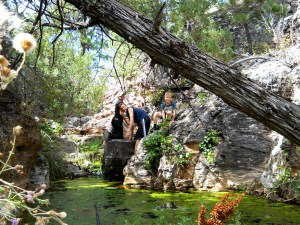 We scrambled up the ravine towards the Spring, up and down the bank, over rock ledges, through briars and a stand of juniper, and came to the source, which bubbles up out of a concrete housing. Pipes used to run from the Spring, carrying the water further than it could flow itself, dry as it is out here. Now, it just pours from a crack in the housing, feeding a muddy, mossy pool. Some of the water makes it further down, due to the wet spring and summer we’ve had.
 The grass, rented by a local rancher woman, is sufficient to support a small herd of cattle. The cattle were skittish and suspicious, but the heifer calves were beautiful. So delicate. When we marched through part of the herd, one of the cows, probably a younger mama, couldn’t get far enough away from us. As we approached, she’d move away, watching us, and move away again as we moved closer. Finally, with a frisk and a snort, she took off, taking with her a couple of calves and a spotted old steer. Off they ran, not content to just move out of our way, but with a need to be once-for-all out of our sight. Never saw them again.
We stopped for a few minutes by a little piece of red, muddy stream and watched the tadpoles. The sun was warm, and the air was quiet. On the other side of the trees and up a bank, we could hear the cows munching on the grass.
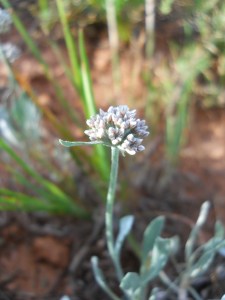
 Out on the Spring-on-Hill ranch, the grass is scrubby and sparse, but the low-growing scrub was fragrant in the warm summer air. From time to time, the heady perfume would make me stand up and look around for the source of the perfume. It was a minty fragrance, and we finally figured out which of the scrubby plants it was coming from. It must be some sort of a sage, but I haven’t yet identified it.
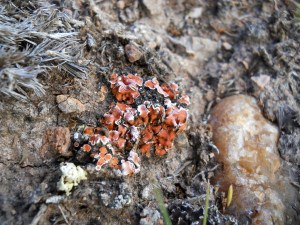 Growing fast to the gumbo, lichen clung, flourishing in the barren region. I read once that lichen growth is a sign of a healthy climate or ecosystem. It must be a healthy region out here, then, because lichen grows in subtle abundance. The low-growing, rootless things are almost invisible against the rock and red soil. If you didn’t stop to crouch down and just look, you’d miss them altogether. But they are there, in their reds and greens and whites, defying the harshest of weather.
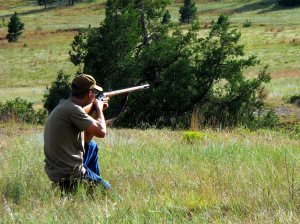 After our fill of hiking, rock hunting, and exploring, the men brought out the guns and did some target shooting. The women got in on it, too, but it was fun just watching the enthusiasm and expertise of the men in the group. Always eager to learn more, to improve their marksmanship, and to exercise our 2nd Amendment rights. Don’t mess with this crew, I’m tellin’ you!
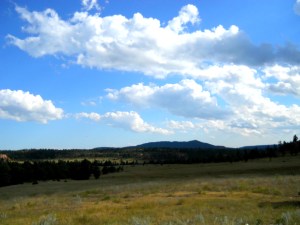 It was hard to leave–Such a beautiful place, so much to marvel at, to wonder at, to revel in, to savor. God is a God of beauty, goodness, and creativity. Who can look at this landscape and think it happened by chance? I can’t. Someone high and wonderful must have thought out this landscape and planned the intricate details. They’re too exquisite to have been a mere accident. And I’m glad He gave us the chance to enjoy and experience His handiwork. He could have landed us in a colorless, shapeless world. He could have made us see in black-and-white. But He didn’t.

Support Song Dog Journal and share to social media!
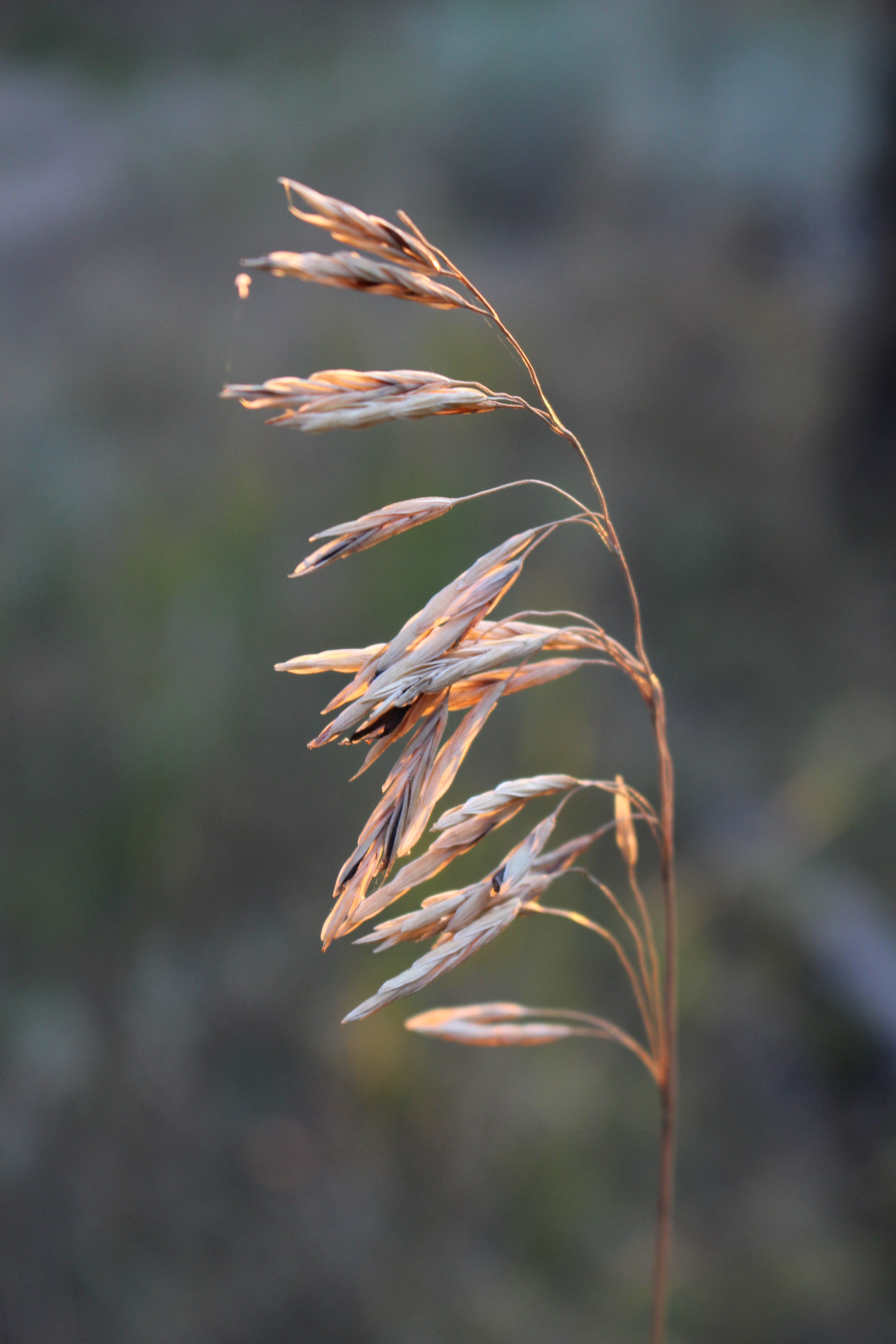
 Even after the flowers fade, in what is left there is so much variety of texture, so many shades of brown and tan and silver and gold, such strange symmetry and asymmetry, such a spectrum of design. Winter bouquets are the perfect way to showcase the subtle beauty of the season. Sarah and I headed this morning towards the mines where we were hiking yesterday, armed with scissors and sacks and our cameras, to go a-gathering.
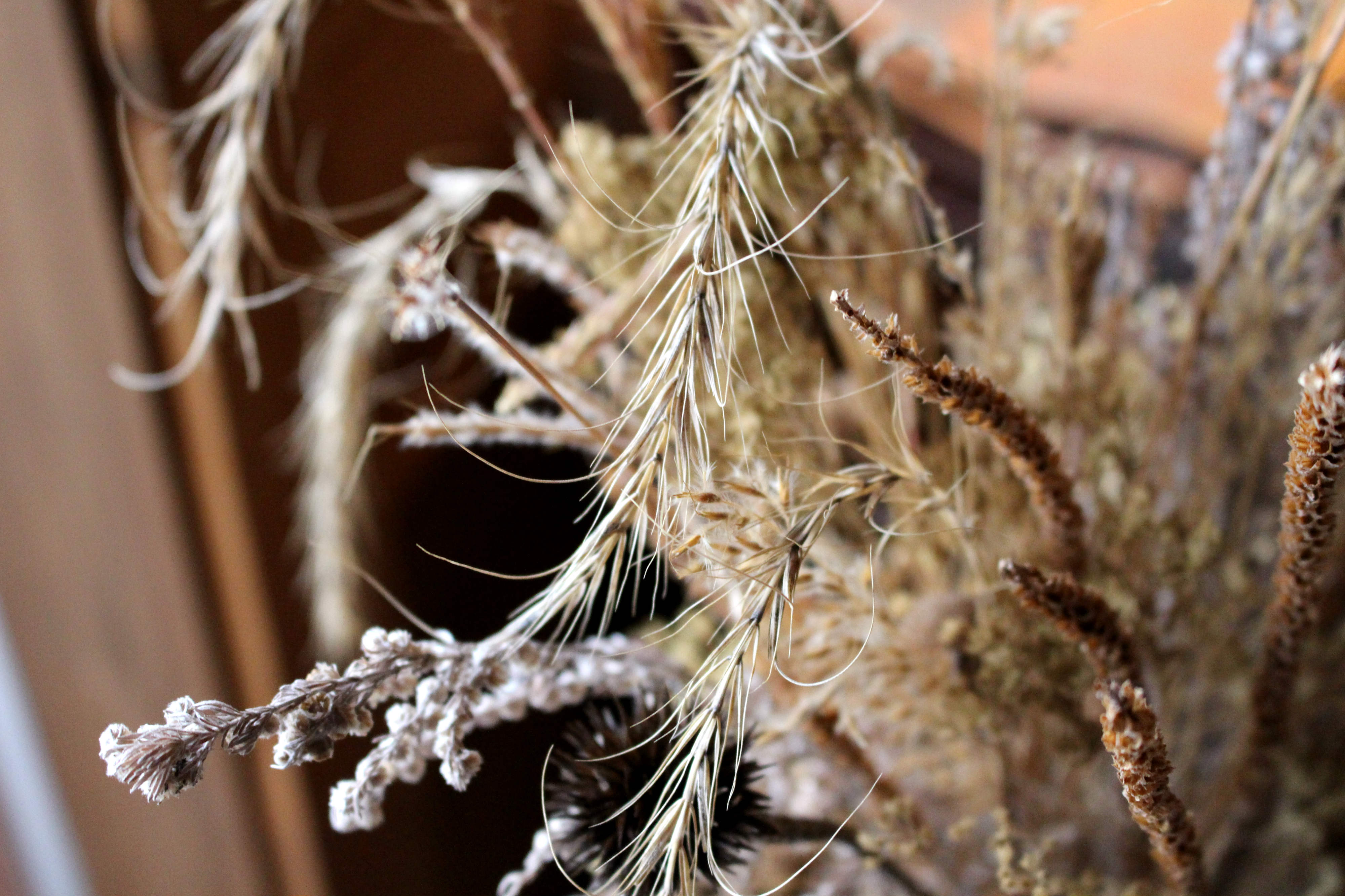 It didn’t take long for us to fill our sacks, and it took less time than that for us to be already running late to help with Christmas dinner. Nevertheless, we gathered plenty – Heads of bee balm, little blue stem, coneflower tops, dead spikes of hairy verbena, and other grasses. We stopped once or twice on the way back to cut some yellow rabbitbrush, which seems to grow more on the open hill sides and hill tops, than in ravines.
 Mason jars are perfect as vases, and heaven knows we have plenty of Mason jars all over the place! I thought about using some of the old blue jars, but I think the clear glass ones are less obtrusive, for this sort of bouquet. I filled the bottom of the larger jar with pieces of lichen and moss-covered bark. Adding a jute bow, they became festive centerpieces. Jute is like burlap – Rustic, serviceable, and delicately beautiful in its drabness.
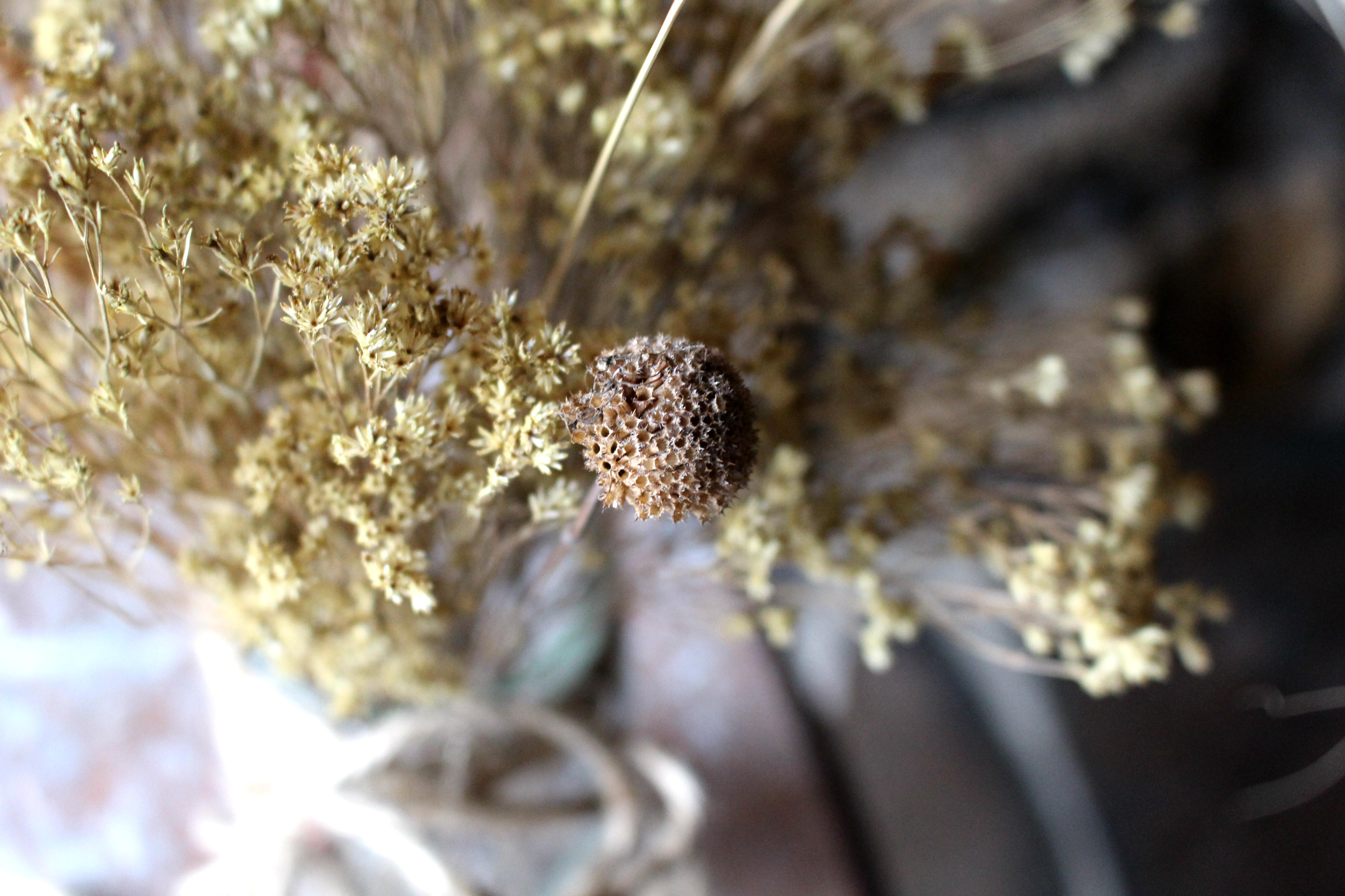 It is something of an exercise in simplicity.








 Song Dog Journal