Ranch Wife Musings | Bearing Burdens

Originally printed in the Custer County Chronicle on May 20, 2026

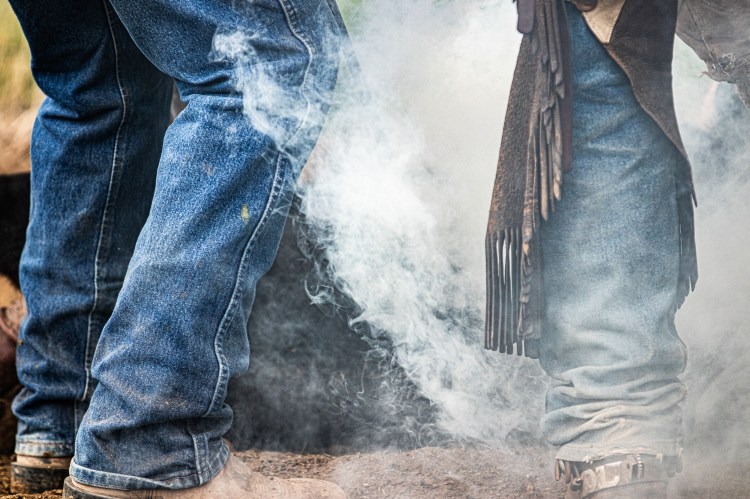
Branding season is that yearly reminder of how thankful I am for the community we are blessed to live in. A lot of prep work goes into a branding, from sorting, vaccinating, and moving all the pairs to the branding pasture ahead of time, to gathering up the irons and stoves and more vaccine, to rounding up a crew of our friends and neighbors, cooking for a small army, and more. We start early and work hard, running like clockwork to get several hundred pairs gathered, sorted, and the calves vaccinated, branded, and cut, swapping stories and laughs in passing. Shoulder-to-shoulder with our neighbors we accomplish a massive task.

This year, there was a different tone, a little heavier than usual, as dry as it is, as little grass as there is, and as many cow-calf pairs are already moving. If you see cattle pots on the road, they’re loaded, and sale barns are full. It is a tough spring, record-breaking in the worst of ways. Conversation returned, again and again – how could it not? – to the drought, the lack of rain, the storms missing us, the beaten down pastures, the price of hay, the price of trucking, what to sell and when. Again and again, there was the shrug and the weary smile, and the understood “we’ll figure it out, one way or another.”  

I don’t think it is a coincidence that as we have gotten more efficient as a society, we have also gotten lonelier. As we have replaced one another with machines, we’ve suffered for fellowship. As we’ve enabled ourselves to travel further for work and church and daily life, we’ve gotten less connected with the people in our immediate vicinity. We connect with hundreds of people superficially and fail to connect meaningfully with anyone. When you remove need, connection suffers. When connection is a luxury, it tends to fall to the wayside.

There are more efficient ways to do things. Some ranches have gone to utilizing a calf table to brand, instead of ropers and wrestlers, which cuts the needed manpower substantially. Ranches in this region are still largely rope-and-drag outfits, included ours, and for that I’m thankful. And a year like this brings that into focus.

It is years like this where we need each other more, not less. In some ways, that’s counterintuitive. We branded fewer calves, and there will likely be less work to do this summer and fall, and fewer cattle to work or preg test. But when you’re facing uncertainty, it really does help to face it with other people who are also facing similar uncertainty. Knowing that you’re not the only one really does help. Knowing that other people are just as stumped over what to do next alleviates some of the stress of having to figure it all out.

We truly do need each other.

The Bible is full of commands that my former pastor called the “one anothers.” In case it isn’t painfully obvious, the “one anothers” only work if you are with one another. They are hard to accomplish in solitude.

Love one another. Serve one another. Pray for one another. Be kind to one another. Forgive one another. Submit to one another. Encourage one another. Build one another up. Seek to do good to one another. Show hospitality to one another. Can any of those commands truly be obeyed without relationships, in solitude?

And one of my favorites: Bear one another’s burdens.

The mental image is that of taking a heavy load from someone else’s shoulders so they can have reprieve, or shouldering their load with them and then carrying it together. Shoulder to shoulder, both can stand a little straighter and walk longer and carry it further.

Bear one another’s burdens. Burdens of work. Burdens of uncertainty. Burdens of care. Burdens of sorrow. Burdens of worry. Burdens of fear.

Burdens like the task of branding hundreds of calves. Burdens like wondering when and how to continue ranching when the weather seems set against it. Burdens like if and when and what to sell. Burdens like how to feed the animals you keep, and whether to try to hold out for a weather change.

Bear one another’s burdens.

This whole season is one long opportunity for burden-bearing. Ranch after ranch brands their calves, starting in late April or early May, trusting in their friends and neighbors to help bear the burden of the branding itself, but this year there is more than usual of the other kinds of burdens, the burdens of uncertainty and worry and the rest. And I’m thankful for a community that can come together around a shared task, puzzle over a shared struggle, smile, shrug, and say, “We’ll figure it out, one way or another.”

Branding day this year brought that into focus.

Ranch Wife Musings | The Cute Factor

Originally printed in the Custer County Chronicle on 3-25-26

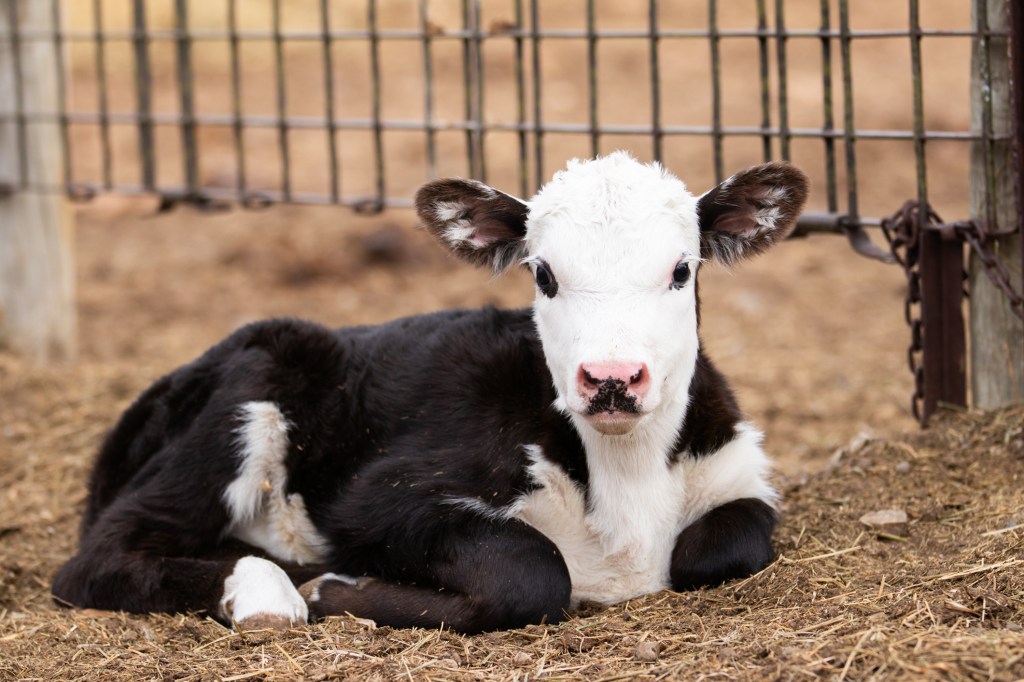
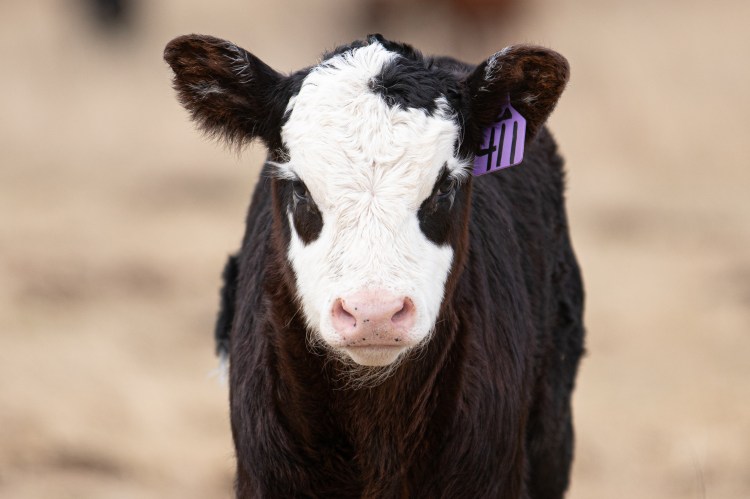
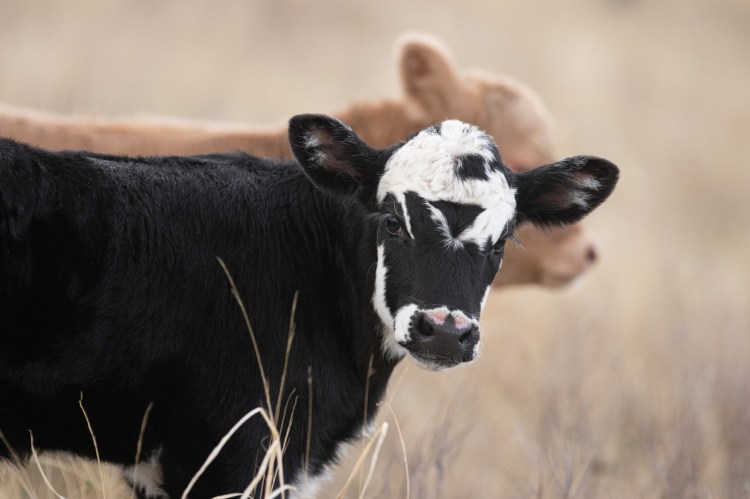
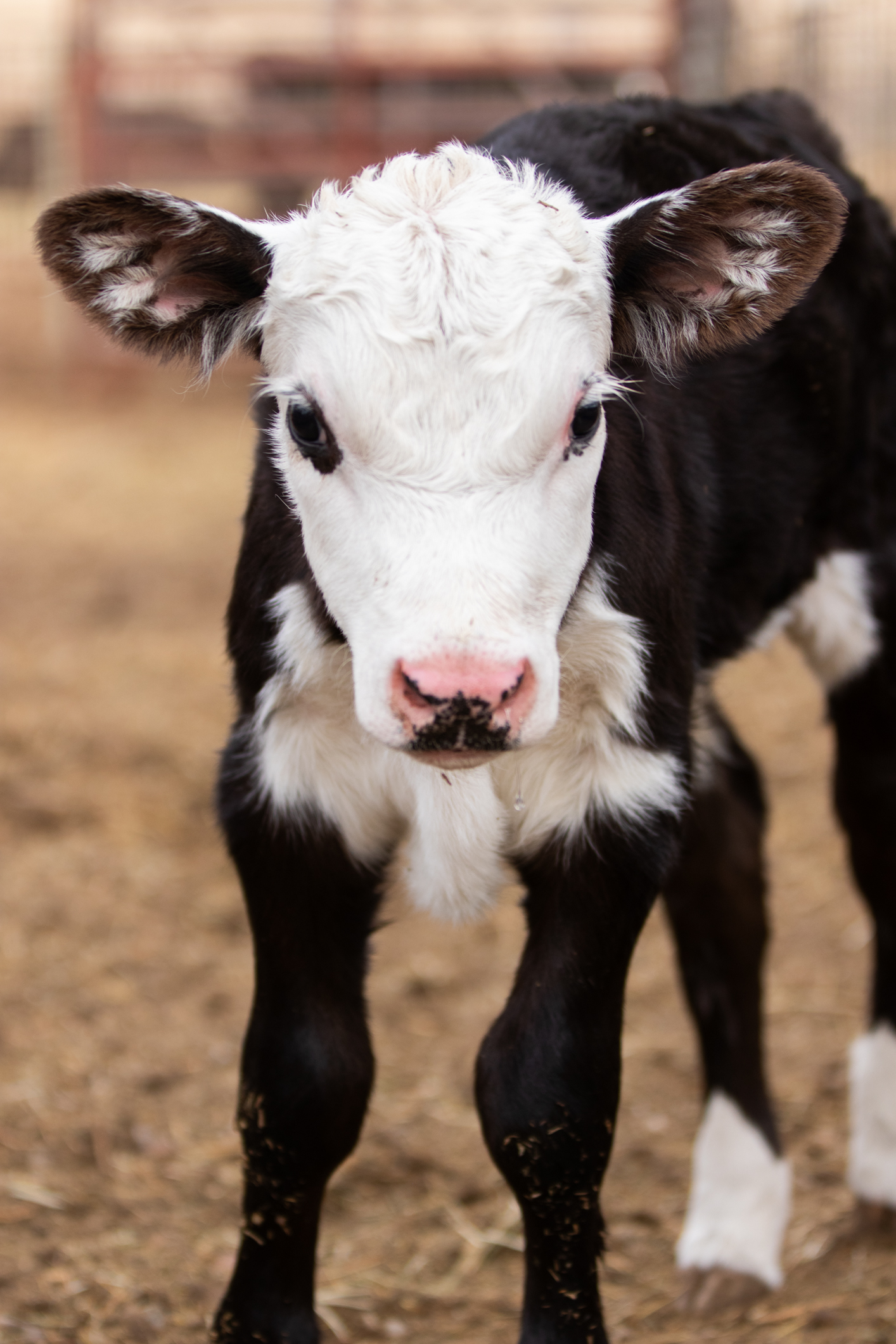
The calving season is well underway and we have an official Cutest Calf of 2026 nomination, and so far I haven’t seen anything that comes close to rivaling him for looks. His mama is a pretty little black baldy heifer, with a delicate white face, not blocky like some can be, and cute black eye patches. And her calf? Oh, man. He’s got so much white on his face that it extends to the backs of his ears, which are frosted white on the insides. He’s got a pink nose with black freckles, four white socks, a white belly, and a white tip on his tail. And you just have to look at him and laugh, he’s so cute. Most years, he’d look pretty out of place. So would his mother, for that matter. Because we are an Angus outfit, running Angus cows and about 50/50 Angus and Charolais bulls.

Anyone in the cattle business has preferences. Some of those preferences are based off of verifiable facts, and others of those preferences are based off stubbornness disguised as fact. Baxter Black knew something about this reality.

If you talk to an Angus rancher, the choice to run an Angus herd is supported by rattling off a list of the benefits of Angus cows, including things like mothering instinct and calving ease, over, say, Hereford cows which are known to be poor mothers and have terrible calving ability. However, if you talk to a Hereford rancher, their preference list includes things like mothering instinct and calving ease, over, say, Angus cattle, which are known to be poor mothers and have terrible calving ability.

Ranchers tend to like the cows that do well for them on their own ranch. Which happen to be the cows that they have bred to that ranch. There are strengths and weaknesses of different breeds, absolutely, but if we’re being quite transparent many of those strengths and weaknesses have less to do with the breed itself and more with the line of genetics that have proliferated, regardless of the breed. Poor feet, poor udders, unfavorable birthweight, poor temperament, risk of prolapse, all can be bred into or out of a herd, regardless of the breed of cattle being run. A healthy herd program includes an aggressive cull program.

If you ask me, though, a lot of it (but certainly not all of it) boils down to this: the cute factor.

Of course, a crusty and stoic rancher wouldn’t call it that, but basically Angus ranchers like what Angus cows look like, Hereford ranchers like what Hereford cows look like, and so on. Pretty obvious. But what do I know?

What I do know is this: if you talk to enough rancher’s wives, you’ll find that the cute factor (which also accounts for general endearing-ness) is super important. Super important. Good thing ranchers are stubborn and opinionated, because their wives are, too, and if it were up to us, western South Dakota would eventually be overrun with odd and adorable crosses for which there is currently no market. If I was forced to pick between two cows, one of which had that loveable little tuft of hair sticking straight up between her ears? That one would stay every time, even if she was a bit of an airhead.  The cuter the better. We’re just willing to unapologetically say it out loud, even if it gets us teased.  

But you know how teasing often says more about the one doing the teasing than the one being teased? Yeah.

So, let’s circle back to the Cutest Calf of 2026.

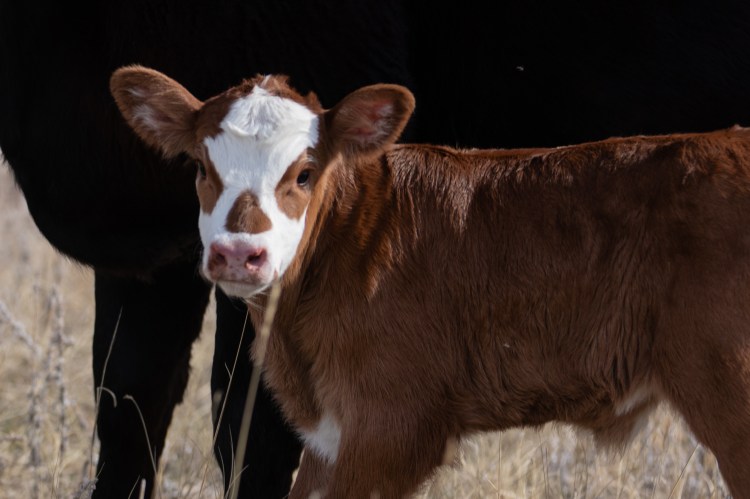
My father-in-law had a friendly little daily routine with the neighbor’s bull three years ago, who’d pay our cows a daily visit before being escorted back home. Everyone tries to keep this sort of thing from happening, but sometimes it just happens because of the logistics of pasture and water and whatnot. It got to the point that the bull would see Dave coming on the fourwheeler and just head himself back home. Suffice it to say he was a fertile animal, because the next spring, there was an impressive number of his progeny popping up all over the calving pasture, little baldy babies, brockle-faced babies, and a handful that looked straight Hereford. Boy, you knew who their dad was. Boy, they were cute. Boy, was there grousing. But it was mostly bluster, and I know this because of the number of baldy replacement heifers – and two that look straight Hereford – that were kept out of that calf crop by none other than my crusty father-in-law (don’t let him fool you; he’s really a big softie).

When my father-in-law teases me and pokes fun at me for my enjoyment of all the little baldy babies and brockle babies and the ones that look straight Hereford? I’m pretty sure I found the chink in his armor. He thinks they’re as cute as I do.

But it gets funnier.

This spring, we weren’t at all surprised when those same baldy replacement heifers calved baldy calves. That was pretty expected. But then one day a black heifer calved a baldy calf. We scratched our heads. Odd. Then another black heifer calved a baldy calf. And another. And another. We scratched our heads and racked our brains, and finally think we remembered the neighbor’s bull getting in with the heifers. One time. Once. Talk about getting it done.

But it gets funnier. They’re basically all my father-in-law’s. Including the Cutest Calf of 2026.

So, if you see my father-in-law, be sure to ask him about his Hereford-influenced breeding program. Rumor has it he’ll be starting to scope out Hereford bull sales in the near future.

Ranch Wife Musings | The Things that Never Change

Originally printed in the Custer County Chronicle 12-3-2025

At possibly no other time of the year than now does the whole of society seem to move faster, more frantically, with hardly the time to stop and catch a breath. Shopping malls are a zoo, parking lots are packed, and the post office is drowning in an endless stream of packages shipping to people who don’t like shopping malls and packed parking lots. There is constant pressure to fill the schedule, to overspend, to one-up last year’s festivities with something new and exciting.

No sooner do we finish bowing our head in gratitude on Thanksgiving Day than a frenzy of consumerism takes over – not just material consumerism, but consumerism with regards to entertainment, food, anything that tickles our fickle fancies. We are pressured by advertisements and billboards and social media influencers and the comparison game to chase after those things that are novel and new, that next dopamine hit, the next picture to share on social media, the next experience to boast about.

None of which can infuse meaning into life, or a season, or a holiday. But we try, don’t we? And where does it get us?

Not that there is anything wrong with new experiences, and I enjoy Christmas shopping and wrapping gifts, and gifting to loved ones things that are special or needed. But in my experience, it is never the “new” that makes the season memorable. It is the same things, again and again, that make the season memorable and special. We are indeed creatures of habit, and something in us needs that sweet sameness.

The sound of a bell ringing and the red kettle at the door of the grocery store.

The same outing to cut a Christmas tree.

The same ornaments as last year, familiar and comforting, maybe a little worn and faded.

The same Christmas songs we’ve been singing for decades, generations, and longer.

The Advent candles, the same ones that we burned last year, and the year before, and the year before.

The same handful of traditional gatherings, whether it is caroling or that certain Christmas party, or a live Nativity, or a candlelight service.

The same hodge-podge, maybe even shabby, costumes in the children’s Christmas pageant.

The same foods as every year, traditions handed down generation to generation – pfeffernusse, pickled herring, oyster stew, turkey, gingerbread.

The same faces around the table.

The same enchanting stories, the same handful of favorite Christmas movies.

And of course, last but certainly not least, the same Story. The story of the greatest rescue ever launched, the greatest love story ever told, with those wonderful details that can become mundane and overlooked if we aren’t careful. The obedience of Mary. The faithfulness of Joseph. The humility of the birth of the Savior. The excitement of the Shepherds. The wonder of the Magi.

In a season of chasing new and different, it is the steady and same that keeps us grounded, connected to reality, and connected to truth.

This last month has been something of a time warp for me, with a fresh newborn and life already going faster than I want it to, in a slow mornings and baby snuggles kind of a way. This Christmas and Advent season will look a little different than it has in the past. It will be simpler. Quieter. Softer. Fewer bells and whistles. But the things that stay will be the things that truly matter, the things that point us Heavenward, and pull us closer together as a family, but also closer to our community and church.

It takes intention. It takes deliberate thought and action. But this time of year doesn’t have to be an overwhelming whirlwind.

So find those things that help you to slow down and savor the time, rather than simply surviving it. If you don’t have family traditions, make a few, carefully and with thought. Read a book for Advent. Let Christmas music play in the background throughout the day. Find a live Nativity to go to, or a Christmas Eve service. Bake cookies for your neighbors. Call your aunt and get that favorite recipe from your younger years. Read Luke’s account of the birth of Christ.

It isn’t the newness that makes Christmastime special. It is the sameness. The steadiness. The unchangingness of it all. Dig in to that sweet sameness.

We need those things that never change.

Ranch Wife Musings | Welcome to the World

Originally printed in the Custer County Chronicle on Nov. 5, 2025

When I struggled into my once-baggy sweatpants on Wednesday last week, the only thing left that was comfortable at 9 months pregnant and warm enough for working cows on a cold morning, I heard a seam pop and may have almost cried. Baby wasn’t due for another week and a half, and I knew that could mean three or three and a half weeks, and frankly I was just over it. Everything hurt, nothing fit, and I couldn’t reach down to tie my shoes. Heck, I couldn’t even see my toes if I looked down.

“Do you think you’ll make your due date?” Brad would ask occasionally over the last few weeks.

“Absolutely,” I’d reply with just maybe an edge of frustration, or disgruntled resignation. “One hundred percent, yes.” The last month of pregnancy really is as long as the first eight, with the shortness of breath and fatigue and back pain and everything else that is just a part of the miracle of knitting together a life, a little tiny human. I’d think about another four or three weeks and balk. But then I’d feel the kicks and the jabs and the rolls, all the sweet little movements that help bond a mama with her unborn baby long before they get to meet face-to-face. What sweetness. What a special time.

Part of me really wasn’t ready for that to be over. However, it isn’t like I had a choice, one way or the other.

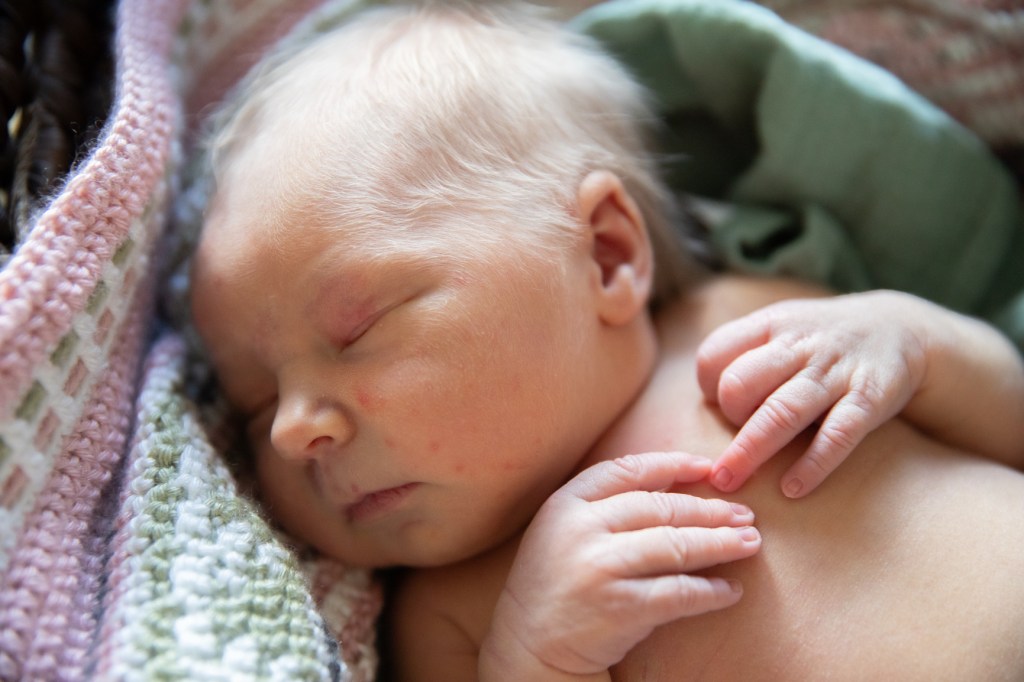
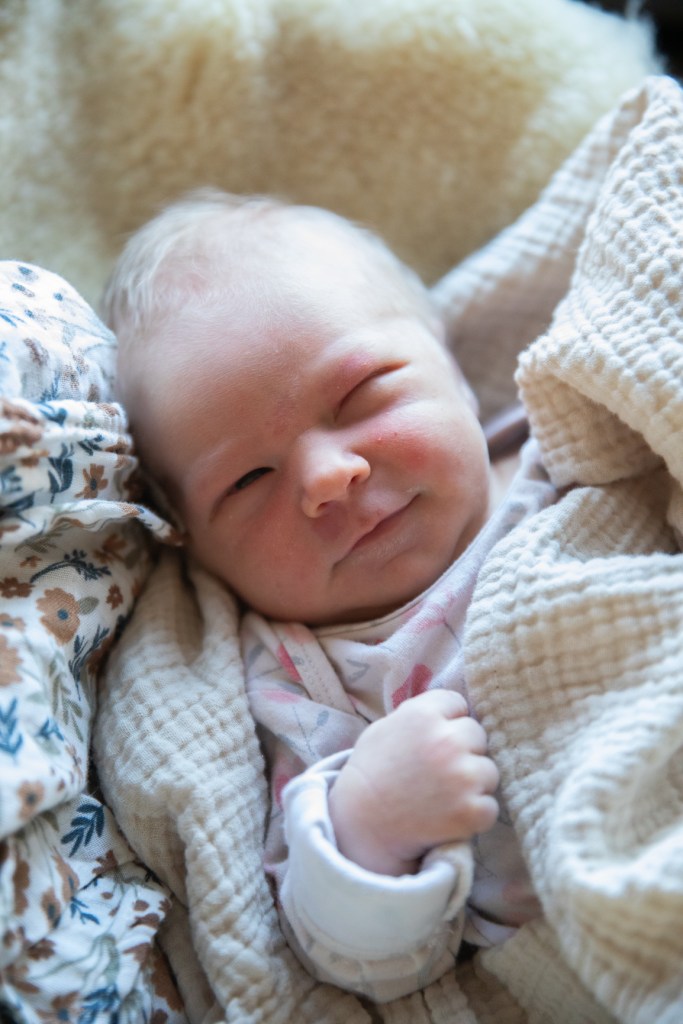
Well, not even 72 hours after the sweatpants incident, in the peace and comfort of our home, I was handed a slippery, sleepy little baby with a head full of blond hair, the same baby that had been kicking and jabbing and sitting on my bladder for the last number of months, the same baby that had left me with sore ribs and a body image crisis, and I fell in love. Felicity Mae arrived a week early, and has stolen our hearts.

Those first few days are funny, and confusing. The sleepy, slippery baby that you’re supposed to just know how to care for transforms into a sneezing, pooping, crying, hiccupping, burping little package, and just when you think you’re at your wits’ end, you fall even deeper in love. And somehow there is God-given instinct that rises up and you do, you really do, know what to do.

We’ve been sold a bill of goods, women have. And men, too, honestly. We’ve been told that an unborn baby isn’t a baby, for starters, or at least isn’t human, and that their humanhood depends upon the desires of his or her parents. We’ve been told that children are an inconvenience worth sacrificing on the altar of self. We’ve been told to intentionally postpone children until the important, fun stuff has been accomplished, like that random dream vacation to Antarctica. We’ve been told that choosing to have children will destroy your life, or everything that makes your life worth living, like your career and your body and hot dates and good sex and your own personality, and social media is rife with influencers trying to convince others that self-centered loneliness is superior to self-sacrificial love, and that getting to have brunch with your friends and pamper your pet or your houseplant will bring more happiness than seeing the purest form of trust reflected in the eyes of a 48-hour-old infant, who is half you and half your faithful spouse and wholly a unique person created by their loving Heavenly Father. Mind blowing.

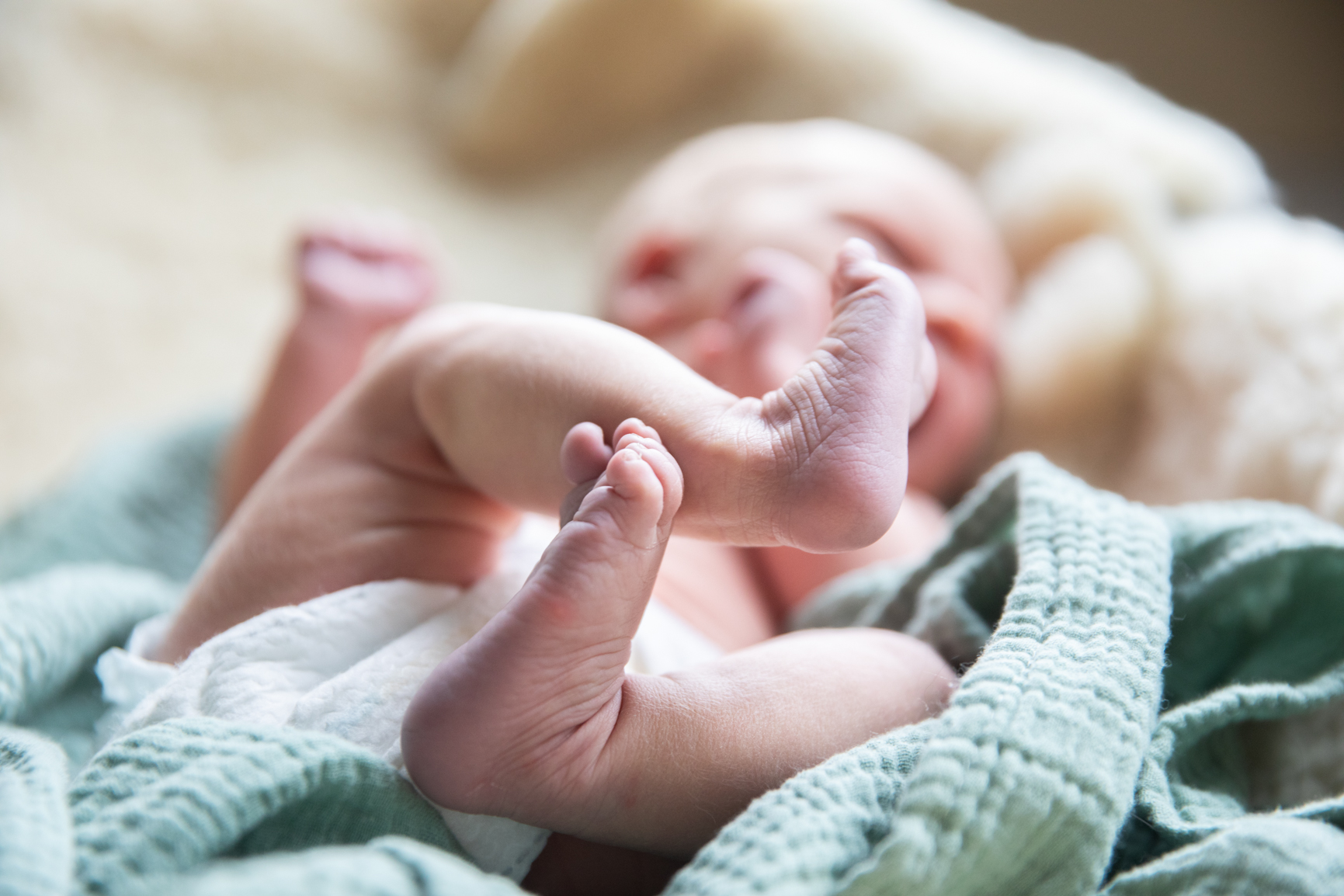
I can’t tell you how many times I have counted her tiny fingers and toes and gazed at her little blossom of a mouth, and then looked up at Brad and said wonderingly, “She’s mine…This is MY baby!” Honestly, I’ve never really cared about babies. Just being brutally honest. I could be excited about them in a very general way, and very happy for the very happy parents, but I never felt inclined to hold all the babies or found myself pining for baby snuggles. Older children, I could enjoy, but someone else’s crying, pooping, angry baby that I had no idea how to soothe because it wasn’t mine? No, thank you, you can keep it, it’s yours.

But this is like absolutely nothing I’ve ever experienced, and nothing could have prepared me for the sweetness and the wonder.

Oh, I know all the negative “yeah, but’s”, insinuated in the wealth of comments told to expectant parents beginning with the words “just wait until.” I know the tendency to focus on the frustrations and the challenges and the outright pain and discomfort of children and family and life in general. Is there some truth there? Of course there is.

But I wouldn’t trade this for the world. Any of it. Not the popping seams or the back pain or hobbling around in a postpartum daze wondering if I remembered to eat, or deciding whether I have the energy to walk from one end of the house to the other. I wouldn’t trade any of it.

Welcome to our family, baby girl.

Ranch Wife Musings | Getting Heavy

Originally printed in the Custer County Chronicle on Sep. 3, 2025

When you live and work on a cattle ranch, pregnancy and birth and mothering are just part of a way of life. Baby animals are nearly always underfoot, from the litter of kittens down in the barn to the pile of cowpuppies birthed in our mudroom, to the comical confusion of a handful of broody hens all trying to raise the same chick.

And of course, last but not least, there is the cowherd itself. At any given time, minus approximately 3 months in the spring, there are several hundred pregnant animals on the ranch relying on us for their wellbeing. Their prenatal care consists of ultrasounds and good feed, and their obstetrical care is based on age and risk factors. The heifer herd is watched vigilantly and with much anticipation in the days leading up to calving, while the older, maternal herd is allowed to calve on their own, unbothered and untouched unless absolutely needed, where instinct, nature, and nurture results in a wonderful success rate for live births and healthy babies. You get used to observing and remarking upon a cow’s mothering abilities, the state of her udder, and her maternal instincts. Pregnancy and birth are just a part of life on the ranch.

And it is fun, truly, to watch the cows put on a layer of winter fat over their round, pregnant bellies, as their due dates approach. A cow late in gestation is referred to as “heavy bred,” or, for short, “heavy.” So, you might observe a cow that has that giveaway waddle and maybe even a bit of an uncomfortable look on her bovine face, the cow with a spherical aspect if she is facing you head-on, and remark to yourself or your general audience, “Boy, she’s getting heavy.” 

I suppose everyone’s perspectives are shaped by what we know and what we see in our day-to-day lives, but I do recall being vaguely shocked when I first heard my husband refer to one of my expectant friends as “getting heavy.” This was a few years ago, and was one of those pivotal, eye-opening moments as to what sort of situation I’d married into.

It wasn’t long afterwards that I cornered the dear man and informed him in no uncertain terms that, if I ever was pregnant, if he ever had the absence of mind to refer to me as “heavy,” I wouldn’t be speaking to him for a very long time.

Yet another time, again keeping in mind that our perspectives are shaped by what we know, I was sitting in church next to my father-in-law, bless his heart, at a time when somehow just about every female at church between the ages of 20 and 40 was pregnant, and I heard that man mutter to himself not quietly enough, “Gosh, it’s like being at a bred heifer sale!” My eyes popped wide open and my jaw must have hit the floor. We had words.

So, let’s just say that by the time I found out this spring that I was pregnant, I wasn’t at all blindsided by the commentary I would be personally subject to, from not-vague-enough references to getting the calving shed ready or saving money on the ultrasound, or any other similar sort of comments that are accompanied by a provocative, irritating million-dollar grin from my husband and met with a narrow-eyed glare from me. So, I wasn’t blindsided.

Early on, though, I discovered what I refer to as “selective chivalry.” Pretty quickly I was grounded and not permitted on horseback anymore (a wise decision, I admit), and I found myself watched like a hawk, every move oh-so-chivalrously scrutinized, and hearing a warning or stern, “Laura…” if I did something that was deemed risky or “too much” for my “delicate condition,” as my father-in-law likes to say. He has a way with words. “Laura….” I can’t tell you how many times I heard my name uttered in that tone. “Laura…..”

However, if I was putzing along cautiously on a four-wheeler behind a bunch of cows, staying carefully on the flat and taking absolutely no risks, and the front of the herd got a wild hair and started running? Then I’d hear yelling and tune in to realize it was my name being hollered, very different from the cautionary “Laura…..”, and see some less-than-chivalrous flapping of arms way off to the side, that sent me zipping across the rock-strewn pasture like a skipped stone on a pond, to reach the front of the herd in time to turn them in, muttering to myself, “Sure, right, this feels WAY safer than being on horseback.”

Over the last few months, my husband has learned very personally and poignantly the reality of what happens when your best ranch hand gets pregnant, as tasks have been removed from my repertoire, one-by-one, starting with horseback work, and then close-quarters ground work with cattle, then certain vaccines, then all vaccines, and pour-on fly sprays and pesticides. Perhaps I resented or resisted the bubble wrap a little at the beginning, but I’m realizing it is actually kind of a nice gig, being the pregnant lady, poking cows into the chute for a couple hours (the only job remaining to me when we work cows), and then getting to eat snacks and call it a day. Not bad. Not bad at all.

But the more weeks roll by, the more I sympathize with that heavy-bred cow who has the telltale waddle and that bland, unimpressed, slightly-pained look on her face. “She’s getting heavy.” I feel it, deep in my cells.

But I’ll never tell my husband that. And he’d better not say it either. 

Sweet Fullness

When Brad and I got married, I knew I needed to do some soul-searching when it came to having children. I had been single a long time, and I honestly think it was God’s kindness to me that He sort of lifted the desire for children away from my heart for those 10-plus years of being a single woman. I remember as a highschooler and college-aged young woman dreaming of having 10 kids, picking names out, and truly having an active desire to be a mother. But as the single years wore on, it was a struggle enough to grow in contentment and confidence that God would provide a husband if and when He chose to do so; I believe it was God’s kindness that temporarily and gently suspended the desire for children and kept it from being another stumbling block.

So when I found myself married to a good man, I knew I wanted to be the mother to his children, but I also had this strange sense of neutrality. Some of it is temperament – I’ve never been the baby-chasing sort. As sweet as new babies are, I never feel compelled to hold and cuddle other people’s babies, and am perfectly content to admire from a distance. But now that I was married? I knew this was something I needed to wrestle with. It wasn’t that I didn’t desire children, in an active sense, but rather that passively there was no active longing. Does that make sense? I wasn’t opposed to children, but I wasn’t actively experiencing a desire for them either. It was as if my years of singleness had sort of muffled the sense of that desire. And as I pondered that, I realized how empty that was.

Too often, I see women on social media or elsewhere, professing to be Believers and proclaiming confidently that they have absolutely no desire for children and that should be fine. Granted, I don’t know their situations, but a common thread in the Bible is God’s love of the family, and His desire for His people to raise families to His glory, beginning in the Garden of Eden, with the command to “be fruitful and multiply and fill the earth and subdue it.” Procreation is obviously part of that. And my personal conviction is that if God says something is good, we should think so, too. If God commands something to His people, we should take that seriously. We are not victims of our desires.

So I began to pray and ask that God would give me right desires, desires that pleased Him, and that if it was His will that we have children that He would open my heart to children, and remove the fears that gnawed at the margins of my heart.

And it is wonderful how God answers prayers. Before too long, I found I was no longer praying that God would give me a desire for children (because He had answered that prayer and had given me the desires I had prayed for!) but I was praying that He would make me fruitful, and would give me contentment and peace if He didn’t open my womb. Because I also knew that, although I am responsible to cultivate right desires, God doesn’t always satisfy those desires the way we want or expect, and He owes me nothing.

Well, it took my breath away when I saw the two red lines, and took my breath away again when I heard the heartbeat for the first time and saw the baby on ultrasound at 19 weeks. I’ve been living in a state of constant flux between incredible reality and surreality. Nothing had prepared me for how sweet it would be to feel the first quickenings, or how comforting it is to feel the baby move at all hours of the day or night. Nothing had prepared me for the sweet fullness of expectant motherhood. Fears have slipped further and further away.

And I can’t wait to meet our baby girl in November.

P.S. I took these photos for us with a tripod and shutter timer while we were camping in the Bighorns this weekend. Brad was great, and even consented to push the shutter button for me a few times. 🙂