Ranch Wife Musings | Welcome to the World

Originally printed in the Custer County Chronicle on Nov. 5, 2025

When I struggled into my once-baggy sweatpants on Wednesday last week, the only thing left that was comfortable at 9 months pregnant and warm enough for working cows on a cold morning, I heard a seam pop and may have almost cried. Baby wasn’t due for another week and a half, and I knew that could mean three or three and a half weeks, and frankly I was just over it. Everything hurt, nothing fit, and I couldn’t reach down to tie my shoes. Heck, I couldn’t even see my toes if I looked down.

“Do you think you’ll make your due date?” Brad would ask occasionally over the last few weeks.

“Absolutely,” I’d reply with just maybe an edge of frustration, or disgruntled resignation. “One hundred percent, yes.” The last month of pregnancy really is as long as the first eight, with the shortness of breath and fatigue and back pain and everything else that is just a part of the miracle of knitting together a life, a little tiny human. I’d think about another four or three weeks and balk. But then I’d feel the kicks and the jabs and the rolls, all the sweet little movements that help bond a mama with her unborn baby long before they get to meet face-to-face. What sweetness. What a special time.

Part of me really wasn’t ready for that to be over. However, it isn’t like I had a choice, one way or the other.

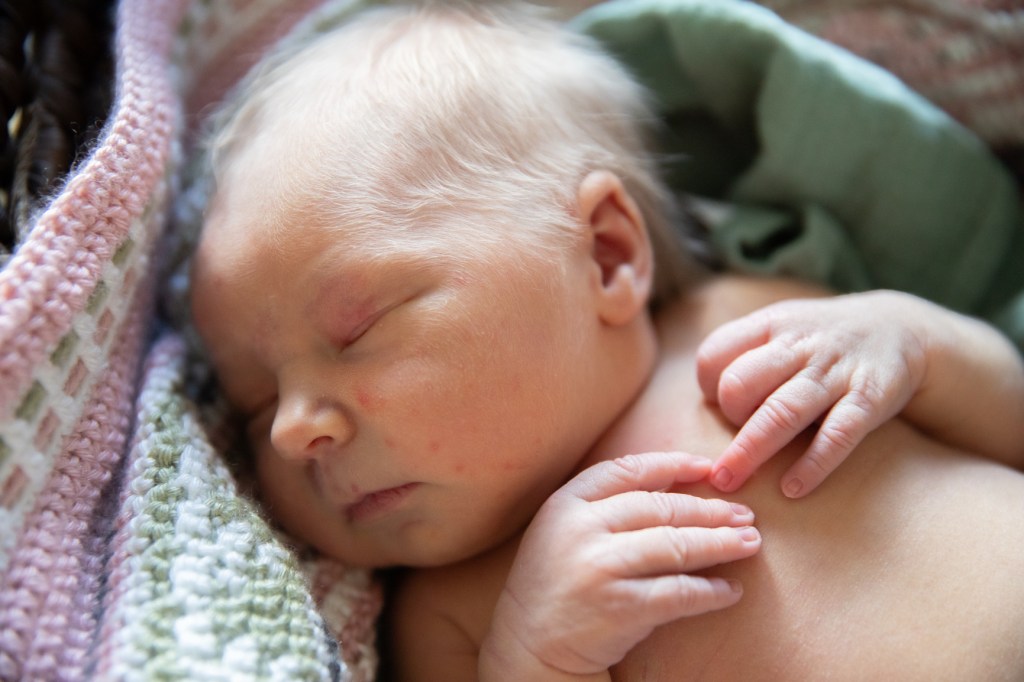
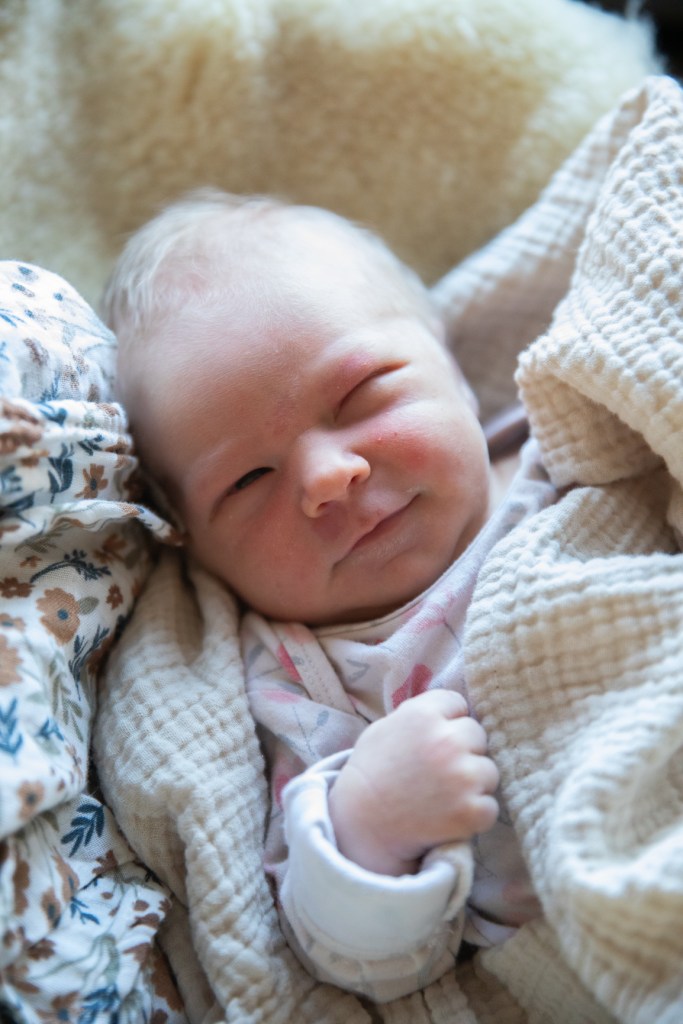
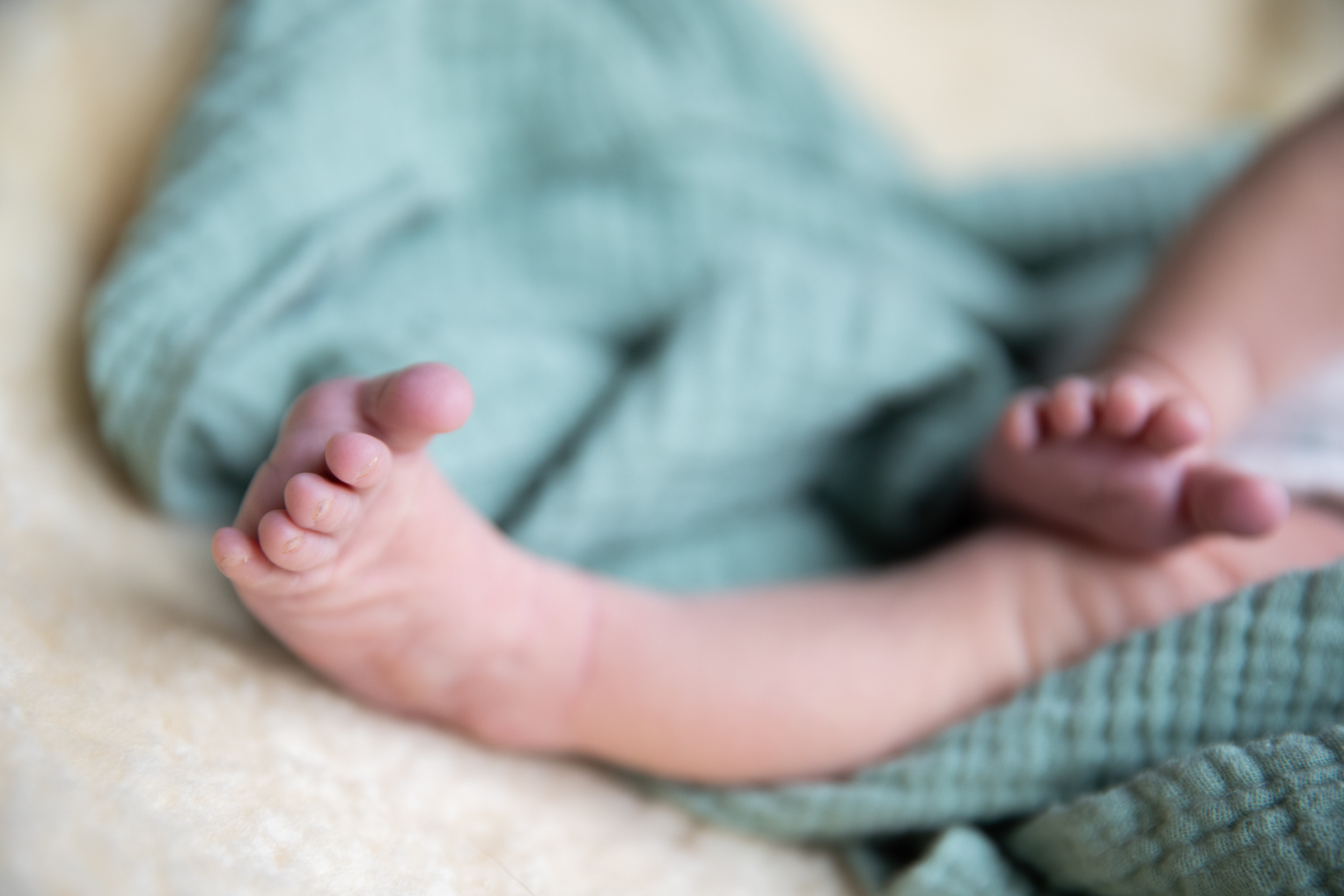
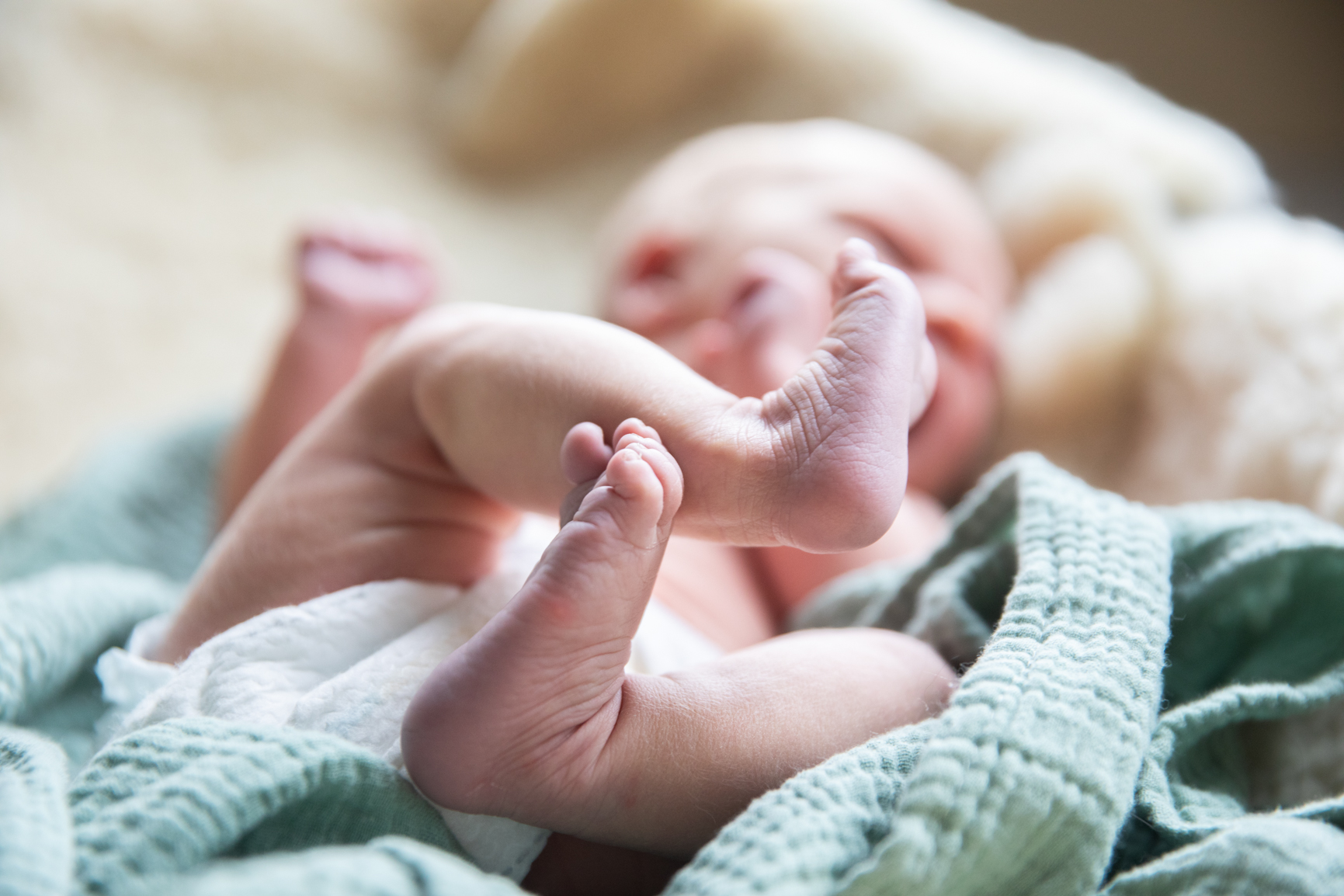
Well, not even 72 hours after the sweatpants incident, in the peace and comfort of our home, I was handed a slippery, sleepy little baby with a head full of blond hair, the same baby that had been kicking and jabbing and sitting on my bladder for the last number of months, the same baby that had left me with sore ribs and a body image crisis, and I fell in love. Felicity Mae arrived a week early, and has stolen our hearts.

Those first few days are funny, and confusing. The sleepy, slippery baby that you’re supposed to just know how to care for transforms into a sneezing, pooping, crying, hiccupping, burping little package, and just when you think you’re at your wits’ end, you fall even deeper in love. And somehow there is God-given instinct that rises up and you do, you really do, know what to do.

We’ve been sold a bill of goods, women have. And men, too, honestly. We’ve been told that an unborn baby isn’t a baby, for starters, or at least isn’t human, and that their humanhood depends upon the desires of his or her parents. We’ve been told that children are an inconvenience worth sacrificing on the altar of self. We’ve been told to intentionally postpone children until the important, fun stuff has been accomplished, like that random dream vacation to Antarctica. We’ve been told that choosing to have children will destroy your life, or everything that makes your life worth living, like your career and your body and hot dates and good sex and your own personality, and social media is rife with influencers trying to convince others that self-centered loneliness is superior to self-sacrificial love, and that getting to have brunch with your friends and pamper your pet or your houseplant will bring more happiness than seeing the purest form of trust reflected in the eyes of a 48-hour-old infant, who is half you and half your faithful spouse and wholly a unique person created by their loving Heavenly Father. Mind blowing.

I can’t tell you how many times I have counted her tiny fingers and toes and gazed at her little blossom of a mouth, and then looked up at Brad and said wonderingly, “She’s mine…This is MY baby!” Honestly, I’ve never really cared about babies. Just being brutally honest. I could be excited about them in a very general way, and very happy for the very happy parents, but I never felt inclined to hold all the babies or found myself pining for baby snuggles. Older children, I could enjoy, but someone else’s crying, pooping, angry baby that I had no idea how to soothe because it wasn’t mine? No, thank you, you can keep it, it’s yours.

But this is like absolutely nothing I’ve ever experienced, and nothing could have prepared me for the sweetness and the wonder.

Oh, I know all the negative “yeah, but’s”, insinuated in the wealth of comments told to expectant parents beginning with the words “just wait until.” I know the tendency to focus on the frustrations and the challenges and the outright pain and discomfort of children and family and life in general. Is there some truth there? Of course there is.

But I wouldn’t trade this for the world. Any of it. Not the popping seams or the back pain or hobbling around in a postpartum daze wondering if I remembered to eat, or deciding whether I have the energy to walk from one end of the house to the other. I wouldn’t trade any of it.

Welcome to our family, baby girl.

Ranch Wife Musings | Getting Heavy

Originally printed in the Custer County Chronicle on Sep. 3, 2025

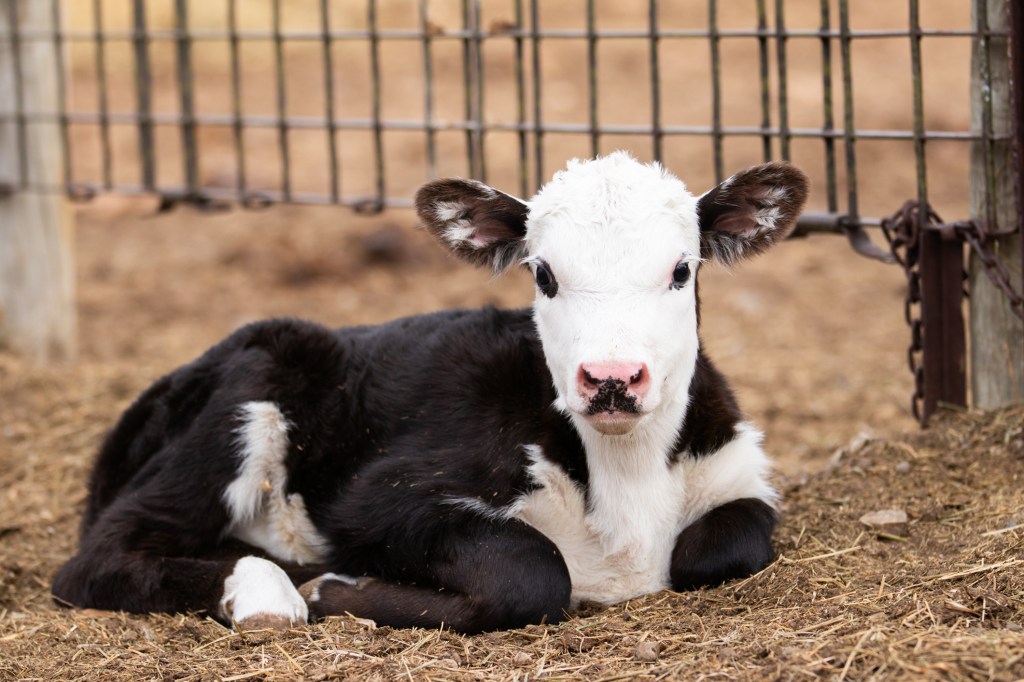
When you live and work on a cattle ranch, pregnancy and birth and mothering are just part of a way of life. Baby animals are nearly always underfoot, from the litter of kittens down in the barn to the pile of cowpuppies birthed in our mudroom, to the comical confusion of a handful of broody hens all trying to raise the same chick.

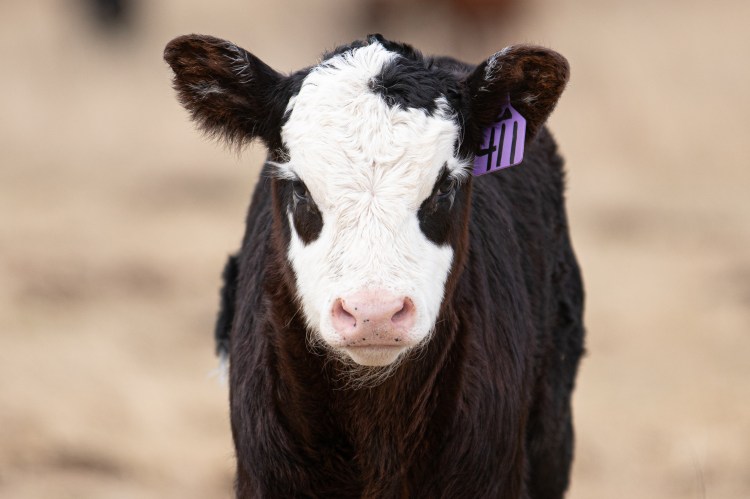
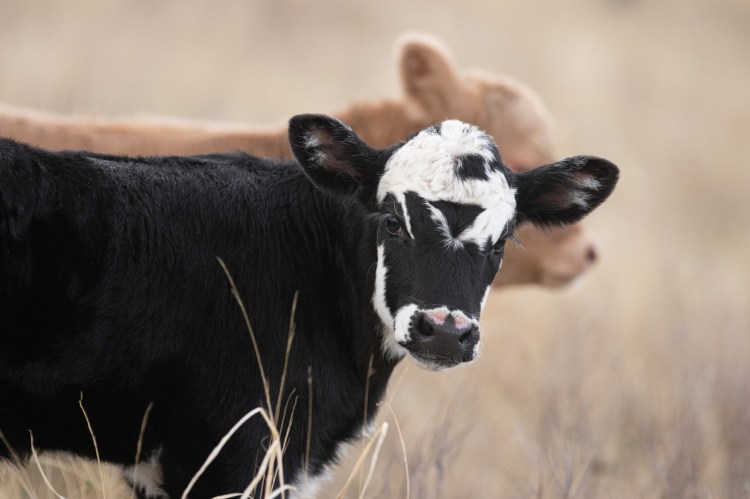
And of course, last but not least, there is the cowherd itself. At any given time, minus approximately 3 months in the spring, there are several hundred pregnant animals on the ranch relying on us for their wellbeing. Their prenatal care consists of ultrasounds and good feed, and their obstetrical care is based on age and risk factors. The heifer herd is watched vigilantly and with much anticipation in the days leading up to calving, while the older, maternal herd is allowed to calve on their own, unbothered and untouched unless absolutely needed, where instinct, nature, and nurture results in a wonderful success rate for live births and healthy babies. You get used to observing and remarking upon a cow’s mothering abilities, the state of her udder, and her maternal instincts. Pregnancy and birth are just a part of life on the ranch.

And it is fun, truly, to watch the cows put on a layer of winter fat over their round, pregnant bellies, as their due dates approach. A cow late in gestation is referred to as “heavy bred,” or, for short, “heavy.” So, you might observe a cow that has that giveaway waddle and maybe even a bit of an uncomfortable look on her bovine face, the cow with a spherical aspect if she is facing you head-on, and remark to yourself or your general audience, “Boy, she’s getting heavy.” 

I suppose everyone’s perspectives are shaped by what we know and what we see in our day-to-day lives, but I do recall being vaguely shocked when I first heard my husband refer to one of my expectant friends as “getting heavy.” This was a few years ago, and was one of those pivotal, eye-opening moments as to what sort of situation I’d married into.

It wasn’t long afterwards that I cornered the dear man and informed him in no uncertain terms that, if I ever was pregnant, if he ever had the absence of mind to refer to me as “heavy,” I wouldn’t be speaking to him for a very long time.

Yet another time, again keeping in mind that our perspectives are shaped by what we know, I was sitting in church next to my father-in-law, bless his heart, at a time when somehow just about every female at church between the ages of 20 and 40 was pregnant, and I heard that man mutter to himself not quietly enough, “Gosh, it’s like being at a bred heifer sale!” My eyes popped wide open and my jaw must have hit the floor. We had words.

So, let’s just say that by the time I found out this spring that I was pregnant, I wasn’t at all blindsided by the commentary I would be personally subject to, from not-vague-enough references to getting the calving shed ready or saving money on the ultrasound, or any other similar sort of comments that are accompanied by a provocative, irritating million-dollar grin from my husband and met with a narrow-eyed glare from me. So, I wasn’t blindsided.

Early on, though, I discovered what I refer to as “selective chivalry.” Pretty quickly I was grounded and not permitted on horseback anymore (a wise decision, I admit), and I found myself watched like a hawk, every move oh-so-chivalrously scrutinized, and hearing a warning or stern, “Laura…” if I did something that was deemed risky or “too much” for my “delicate condition,” as my father-in-law likes to say. He has a way with words. “Laura….” I can’t tell you how many times I heard my name uttered in that tone. “Laura…..”

However, if I was putzing along cautiously on a four-wheeler behind a bunch of cows, staying carefully on the flat and taking absolutely no risks, and the front of the herd got a wild hair and started running? Then I’d hear yelling and tune in to realize it was my name being hollered, very different from the cautionary “Laura…..”, and see some less-than-chivalrous flapping of arms way off to the side, that sent me zipping across the rock-strewn pasture like a skipped stone on a pond, to reach the front of the herd in time to turn them in, muttering to myself, “Sure, right, this feels WAY safer than being on horseback.”

Over the last few months, my husband has learned very personally and poignantly the reality of what happens when your best ranch hand gets pregnant, as tasks have been removed from my repertoire, one-by-one, starting with horseback work, and then close-quarters ground work with cattle, then certain vaccines, then all vaccines, and pour-on fly sprays and pesticides. Perhaps I resented or resisted the bubble wrap a little at the beginning, but I’m realizing it is actually kind of a nice gig, being the pregnant lady, poking cows into the chute for a couple hours (the only job remaining to me when we work cows), and then getting to eat snacks and call it a day. Not bad. Not bad at all.

But the more weeks roll by, the more I sympathize with that heavy-bred cow who has the telltale waddle and that bland, unimpressed, slightly-pained look on her face. “She’s getting heavy.” I feel it, deep in my cells.

But I’ll never tell my husband that. And he’d better not say it either. 

Sweet Fullness

When Brad and I got married, I knew I needed to do some soul-searching when it came to having children. I had been single a long time, and I honestly think it was God’s kindness to me that He sort of lifted the desire for children away from my heart for those 10-plus years of being a single woman. I remember as a highschooler and college-aged young woman dreaming of having 10 kids, picking names out, and truly having an active desire to be a mother. But as the single years wore on, it was a struggle enough to grow in contentment and confidence that God would provide a husband if and when He chose to do so; I believe it was God’s kindness that temporarily and gently suspended the desire for children and kept it from being another stumbling block.

So when I found myself married to a good man, I knew I wanted to be the mother to his children, but I also had this strange sense of neutrality. Some of it is temperament – I’ve never been the baby-chasing sort. As sweet as new babies are, I never feel compelled to hold and cuddle other people’s babies, and am perfectly content to admire from a distance. But now that I was married? I knew this was something I needed to wrestle with. It wasn’t that I didn’t desire children, in an active sense, but rather that passively there was no active longing. Does that make sense? I wasn’t opposed to children, but I wasn’t actively experiencing a desire for them either. It was as if my years of singleness had sort of muffled the sense of that desire. And as I pondered that, I realized how empty that was.

Too often, I see women on social media or elsewhere, professing to be Believers and proclaiming confidently that they have absolutely no desire for children and that should be fine. Granted, I don’t know their situations, but a common thread in the Bible is God’s love of the family, and His desire for His people to raise families to His glory, beginning in the Garden of Eden, with the command to “be fruitful and multiply and fill the earth and subdue it.” Procreation is obviously part of that. And my personal conviction is that if God says something is good, we should think so, too. If God commands something to His people, we should take that seriously. We are not victims of our desires.

So I began to pray and ask that God would give me right desires, desires that pleased Him, and that if it was His will that we have children that He would open my heart to children, and remove the fears that gnawed at the margins of my heart.

And it is wonderful how God answers prayers. Before too long, I found I was no longer praying that God would give me a desire for children (because He had answered that prayer and had given me the desires I had prayed for!) but I was praying that He would make me fruitful, and would give me contentment and peace if He didn’t open my womb. Because I also knew that, although I am responsible to cultivate right desires, God doesn’t always satisfy those desires the way we want or expect, and He owes me nothing.

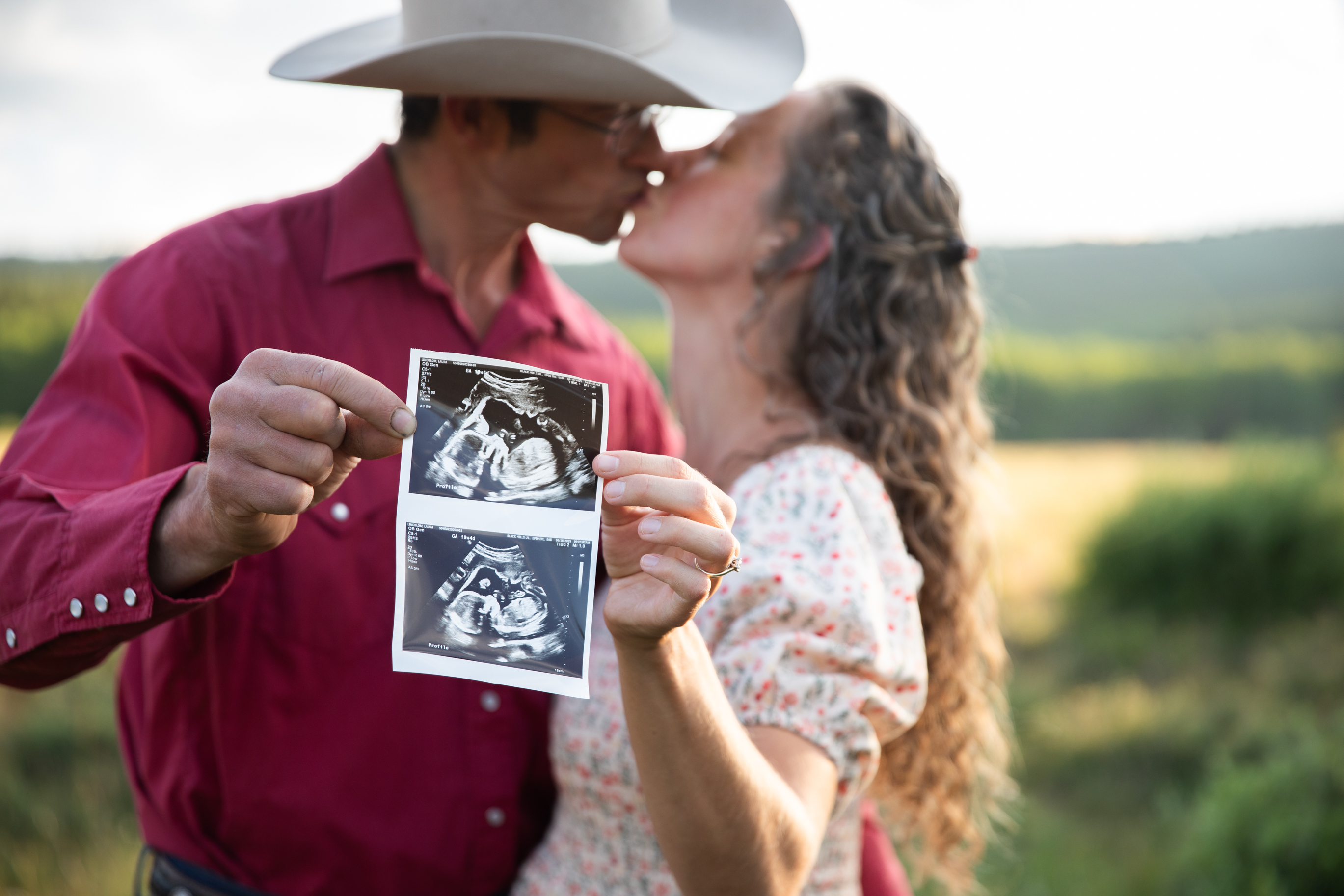
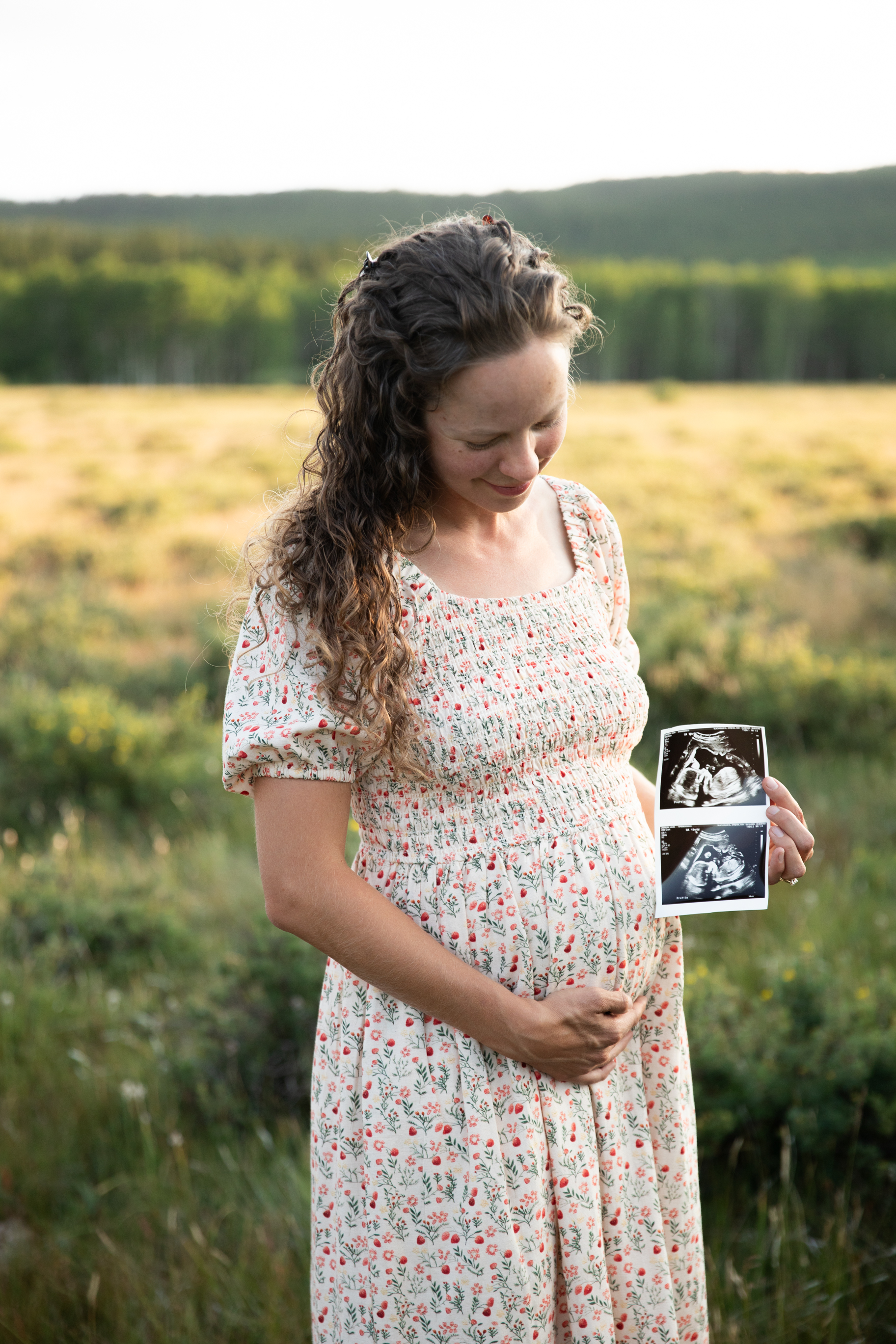
Well, it took my breath away when I saw the two red lines, and took my breath away again when I heard the heartbeat for the first time and saw the baby on ultrasound at 19 weeks. I’ve been living in a state of constant flux between incredible reality and surreality. Nothing had prepared me for how sweet it would be to feel the first quickenings, or how comforting it is to feel the baby move at all hours of the day or night. Nothing had prepared me for the sweet fullness of expectant motherhood. Fears have slipped further and further away.

And I can’t wait to meet our baby girl in November.

P.S. I took these photos for us with a tripod and shutter timer while we were camping in the Bighorns this weekend. Brad was great, and even consented to push the shutter button for me a few times. 🙂

Ranch Wife Musings | On Whose Shoulders We Stand

Originally printed in the Custer County Chronicle on June 18, 2025

Have you ever noticed the following contrast?

When Mother’s Day comes around, in sweeps the sappy sentimentality from all quarters, religious and secular alike. Church sermons laud the important role mothers play, encouraging mothers to embrace their God-given status and find joy in the motherhood journey. Ushers hand out $5 gift cards for ice cream or flowers to all the mothers. Mothers are showered with admiration and gifts, treated to lunch, and generally doted upon. All the wrongs mothers can commit are overlooked, and motherhood is suddenly elevated to frank heroism by a culture that at all other times actively discourages women from having children and decries motherhood as being demeaning and bowing to the patriarchy (but can’t even define “mother” anyway), while memes circulate social media saying that Mother’s Day isn’t just for mothers, but for anyone who wants to be considered a mother – cat moms, dog moms, anyone. I find it all very confusing.

Father’s Day rolls around, though, and it is a different dynamic altogether. Church services might give a tiny nod to the day itself, might offer a brief prayer of thanks for all the fathers in our lives, but any sermon that takes place is generally not a celebration of God’s gift of fathers but a warning to fathers that they had better shape up, and here’s how to do it. Fathers aren’t lavished with gifts, and social media takes no break from the campaign against toxic masculinity (which really is usually just a campaign against masculinity, period). Fathers are often the butt of sarcastic jokes, and many run-of-the-mill issues full-grown adults wrestle with are tacitly or explicitly blamed on fathers and mistakes that were made during childhood. 

The dichotomy is striking, if nothing else.

It seems to be a daily thing on the news, hearing about violent crimes, abuses, tyrannies, behind each of which is a man being dragged through the mud, sometimes justifiably, sometimes not. But for every single one of those events that dominate the news cycle, I would guess there are 10,000 men, invisible to all but their families, standing in the gap for their wives and children, for their communities, and for their faith. Men who rightly set the standard for manhood, for virtue and morality, for right and wrong, willing to hold the line against those who threaten the spiritual and physical wellbeing of those they love.

And we need that. We need those men. Desperately.

In a society where many social ills truly can be traced to fatherlessness and abuse by fathers, what we need is more strong, masculine figures, not fewer. More men who take the privilege of their strength seriously. And those men who are exemplary in their roles as husbands and fathers should never be in doubt about their value or importance.

We are who we are because of our fathers. Good fathers give us an example to follow. Poor fathers give a warning about what to avoid. But our fathers make us, and that trickles down through the generations, for better or for worse. Men learn how to treat their wives by watching how their fathers treat their mothers, for better or for worse. Women learn how they should be treated by watching how their fathers treat their mothers, for better or for worse. The importance of fatherhood – for better or for worse – absolutely cannot be overstated.

My dad set the standard of manhood for me. He was a steady, dependable, wise, Godly force in my life through all of my growing up years (and still is), and so much of the woman I became is a direct result of the example set by my own father. His living out of his masculinity gave so much context for my living out of my femininity. So much of what characterizes my faith and my thoughts and my loves and interests are because of my dad. How I view life, how I process information, decisions I’ve made – because of my dad. As an adult, he became the standard for what I ought to pray and look for in a husband, and his example of a loving and kind father and husband set the bar when I was dating. He demonstrated devotion to God, faithfulness to wife, love of children, gentle but firm in his expectations and corrections of us, and always pointing us back to Christ. He, with all of his imperfections and flaws notwithstanding, was my standard of masculinity and manhood.

Then there is my father-in-law, who has been a constant presence in my life for the last 7 years, as the first person on the volunteer fire department to take me under his wing and show me the ropes, and, more importantly, as the man who helped make my husband the man that he is. And I’m so thankful for that. I’m thankful for the honesty and integrity that my father-in-law has modeled to his son, for the instinct to generosity, the work ethic and ingenuity (it is amazing what can be done with wire and willpower), the commitment to family and community, the importance of being a capable and compassionate leader, and that there are more important things in life than the money in one’s bank account. I’m even thankful for the somewhat twisted sense of humor that I now have to suffer with on a daily basis.

And it isn’t too long before I get to watch husband step into his own role as father. Who we are because of our fathers will shape and mold the next generation.

We stand on the shoulders of the men who made us.

Ranch Wife Musings | The Need to be Needed

Originally published in the Custer County Chronicle on May 21, 2025

The month of May goes by in a whirlwind of fun and hard work, and there is much rejoicing when the last cow calves and the last calf is branded. The nonstop chaos of calving and branding is followed by the shortest of lulls, before the summer settles into its routine. A thousand prayers for rain have been followed up by a thousand thanks, as we’ve emptied the rain gauge not of tenths or hundredths of an inch, but inches. Whole inches. Inches of slow rain that was actually able to soak into the ground where it will do the most good. We aren’t likely to get a hay crop this year, or not much of one, but we should be able to grow grass, and that is huge.

One season blends and blurs into the next, but it is this spring season that is the highlight for many. After months of winter solitude, branding season feels like a family reunion but without the drama, with all the hugs and handshakes, laughter and jokes, stories and community gossip, finding out all the goings on and the comings up, the graduations and babies and engagements and lives well-lived.

And it is in the chaos of spring work that the ranching community shines as exactly that – a community. We branded our main herd on Saturday, an endeavor that is humbling in its scope, humbling in how many people it takes to actually get the job done, humbling to see how many are willing to help in any way they can. Brandings are like that.

As I handed out hot coffee at our mid-morning break, I was able to study the faces, some smiling, some serious, and all the different walks of life they represent. There are the cowboy ranchers, the true-blue, western-through-and-through, how-my-grandpa-did-it type. There are the dirt bikes and four-wheelers, we-can-do-this-faster type. There are the button-front shirt and cowboy-hat-wearing crowd, and the sweatshirt and ballcap wearing crowd. There are the ones with spurs jingling on costly boots, and those wearing comfortable and well-worn tennis shoes. There are the tobacco chewing ones and the straighter-than-straight-laced ones. There are the beer drinkers and the tea totallers. The coffee drinkers and the water drinkers. There are the ones who know cows as well as they know their kids, and ones who know horses and ropes but cows, not so much. There are those who grew up doing this, and those who learned along the way, and those who simply show up for the work, for the fun and the challenge and the sense of community.

And with all the differences, all the variety, the work is seamless. The fellowship is sweet. And none of those categories matter to anyone. It doesn’t matter if you’re wrestling or roping, branding or cutting, vaccinating or watching the gate, everyone jumps in to get the work done. Although some who come do get help in return with their brandings or cow work, the only repayment many want is a good meal at the end – and we do a good meal, if I do say so myself – and the satisfaction of a job well done, stories swapped, laughs shared, and for them that is plenty. And they’d do it again in a heartbeat.

What is it about agriculture, ranching in particular, that invites this? Or creates this? What is it about ranch work that brings out the best in so many, and fosters an enthusiasm for someone else’s work? When I look at other sectors of society, I’m puzzled and even disenchanted. Even sectors of society where lip service is paid to the importance of community are lacking significantly in this department. I see organizations struggling to recruit involvement from more than the barest percentage of people, and their lack of community reflects this.

I think one factor, maybe the most important factor, is need. Genuine need. Acknowledged need. Ranching families know that they can’t do it alone. They don’t have the luxury to hand-pick those who agree with them or look just like them or never irritate or annoy. They need this neighbor and that neighbor, even the neighbor who might think differently about this issue or that issue, or the neighbor who does things differently, or the neighbor who occasionally pushes some buttons and grates on some nerves. And that neighbor needs them right back.

Could it be that we need to be needed? And we need to need others? It might be that simple.

Our culture tells us, all of us, that we’re good on our own, autonomy is the ultimate state, blaze your own trail, follow your own heart, chase your dreams with no thought to anyone else, and you don’t need anyone but yourself. And too many people have bought into this in one way or another. Connections become optional. Connections become a matter of convenience or personal preference.

Real, genuine need erases so many of those devastating societal luxuries, where connections are based on pet interests and shared hobbies, curating one’s community like a museum curator curating art. When we handpick our community, we tend to reap surface-level connections, clique-like interactions based on emotions and how well we slept and what we ate for breakfast.

But, when community is picked for you, by proximity and history and shared needs, something much deeper forms and something much more lasting is reaped, something that extends beyond brandings and cow work, something that forms the family-like structure of a resilient community.

We need to be needed. And we need to need others.

Ranch Wife Musings | A baby milk cow named Marigold

Originally published in the Custer County Chronicle on March 26, 2025

“So, will your column be about a certain baby milk cow named Marigold?”

Brad has a way of poking fun through the most innocent of questions. And he knew the answer a week ago, when Marigold was born. Of course the column would feature the newest addition to Laura’s dairy operation. Silly question.

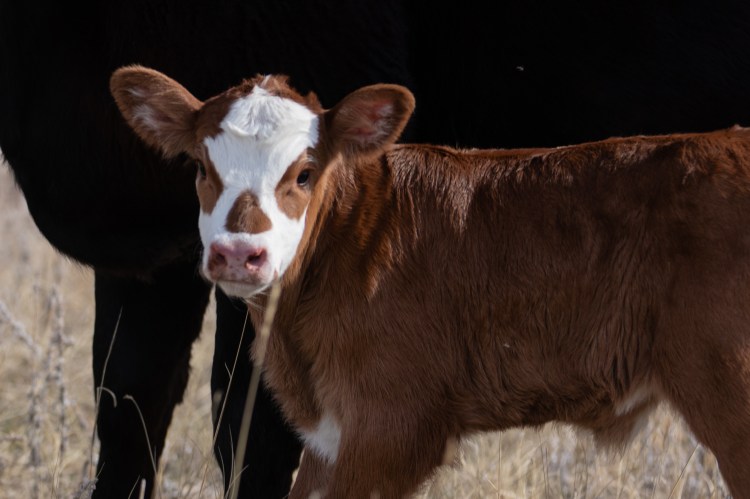
Posey calved last Wednesday, producing the prettiest little Jersey x Brown Swiss heifer, all golden brown, and rosy pink wherever her skin shows through parted hair, like along her back or the little spot on her nose. Some calves are sort of knock-kneed when they’re born, or their proportions are just a tick off. Not Marigold. She has the sweetest, brown-rimmed doe eyes, the curliest eyelashes, the floppiest ears all pink inside, and the straightest, slenderest white legs with dainty little deer-like hooves. And she’s happy! So happy. She comes literally skipping into the shed when I’m milking in the morning, prancing around merrily until she decides to nap, quite the contrast to Posey’s calf last year, a big bull calf, who just wandered around headbutting everything and knocking stuff over. This delicate critter is rather captivating.

I’ve spent a shameless amount of time sitting down on the stoop of the shed, soaking in all the springtime pleasantness and the satisfaction of seeing that beautiful little baby milk cow skip around the corrals or curl up in a puddle of sunshine. The last 9 months were spent hoping that the sexed Jersey semen would do its job, and I am basking in the exceptional outcome. And she is perfect. For me, any baby cow is cute, even the funny looking ones or the less proportionate ones. But you know a calf is particularly cute when a seasoned rancher is willing to say so. I felt very gratified and validated when it took no coaxing to get such an admission from my husband or my father-in-law.

But it isn’t just about Marigold, as much joy as she brings me. It is about community. Connection. It is about generational relationships that I feel so blessed and fortunate and humbled to have married into. And those complex topics are represented by the simple existence of this little baby milk cow.

Her mother, Posey, was a gift to me from Brad a year and a half ago, purchased from dear friends and neighbors that Brad practically grew up with. She was born on their ranch, and her mother was their long-time nurse cow, raising who knows how many bum calves. This same neighbor’s brother, the dad of one of Brad’s best childhood friends, AI’ed Posey for me last year as a belated wedding present. What a gift!

We are not islands unto ourselves, as the saying goes. Our modern, industrialized, efficient, corporatized society creates the sense of islands, isolated groups and individuals seemingly disconnected from their neighbors. We’ve created a society where we rely most heavily on people we never will know, where person is separated from person by space and perspective and interests in ways that only deepen the sense of isolation. And technology, as much benefit as it brings, as much potential for good as it has, in many ways has driven this divide, as we are no longer forced to rely on those closest to us.

But peer into the inner workings of the agricultural community and you’ll see something very different. I’m continually amazed and blessed by the interconnectedness, and it begins within the four walls of each home. I rely on Brad. He relies on me. We rely on our families. They rely on us. We all rely on our neighbors. They in turn rely on us. And on it goes.

It is especially apparent going into branding season, where the all-hands-on-deck, neighbor-helping-neighbor work is accomplished to the benefit of the whole community, as everyone sees to it that everyone’s work gets done, but it shows up more subtly as well. As the stories fly, the community gets wonderfully smaller. The excellent cattle dog that you find out was out of So-and-so’s dog. The roping horse you’re told was trained by this person. The truck bought from that person. The chaps made by this person. The saddle crafted by that person. The branding stove made by So-and-so. The barn built by So-and-so. Adventures, mishaps, and memories shared across generations, binding family to family and neighbor to neighbor.

So, I look at my rosy-golden little calf and her mama and I see a distilled-down representation of community. I see the gift of a husband to his wife in Posey. I see the connection of friend to friend, neighbor to neighbor, in Marigold herself. I see family integration and affection represented by a nurse cow who generates no pasture bill and who raises whatever calf needs a mama, regardless of its brand, in a small way benefitting everyone.

Lots of thoughts prompted by a critter so tiny.

So, I will continue to shamelessly sit and watch the sweet interactions of a mama cow and her baby, listening to the noisy nursing sounds, watching that little white-splotched tail whip back and forth, watching the bony little head thump the shapely udder, watching the merry creature skipping around in play. And be thankful for the community I get to call my own.