Ranch Wife Musings | Bearing Burdens

Originally printed in the Custer County Chronicle on May 20, 2026

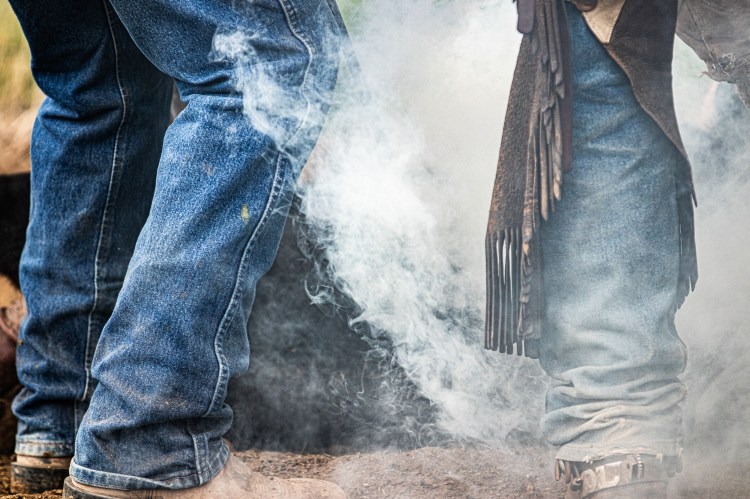
Branding season is that yearly reminder of how thankful I am for the community we are blessed to live in. A lot of prep work goes into a branding, from sorting, vaccinating, and moving all the pairs to the branding pasture ahead of time, to gathering up the irons and stoves and more vaccine, to rounding up a crew of our friends and neighbors, cooking for a small army, and more. We start early and work hard, running like clockwork to get several hundred pairs gathered, sorted, and the calves vaccinated, branded, and cut, swapping stories and laughs in passing. Shoulder-to-shoulder with our neighbors we accomplish a massive task.

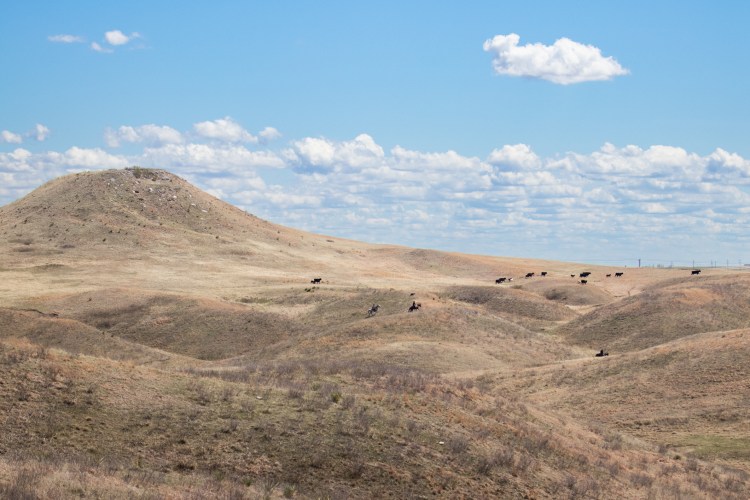
This year, there was a different tone, a little heavier than usual, as dry as it is, as little grass as there is, and as many cow-calf pairs are already moving. If you see cattle pots on the road, they’re loaded, and sale barns are full. It is a tough spring, record-breaking in the worst of ways. Conversation returned, again and again – how could it not? – to the drought, the lack of rain, the storms missing us, the beaten down pastures, the price of hay, the price of trucking, what to sell and when. Again and again, there was the shrug and the weary smile, and the understood “we’ll figure it out, one way or another.”  

I don’t think it is a coincidence that as we have gotten more efficient as a society, we have also gotten lonelier. As we have replaced one another with machines, we’ve suffered for fellowship. As we’ve enabled ourselves to travel further for work and church and daily life, we’ve gotten less connected with the people in our immediate vicinity. We connect with hundreds of people superficially and fail to connect meaningfully with anyone. When you remove need, connection suffers. When connection is a luxury, it tends to fall to the wayside.

There are more efficient ways to do things. Some ranches have gone to utilizing a calf table to brand, instead of ropers and wrestlers, which cuts the needed manpower substantially. Ranches in this region are still largely rope-and-drag outfits, included ours, and for that I’m thankful. And a year like this brings that into focus.

It is years like this where we need each other more, not less. In some ways, that’s counterintuitive. We branded fewer calves, and there will likely be less work to do this summer and fall, and fewer cattle to work or preg test. But when you’re facing uncertainty, it really does help to face it with other people who are also facing similar uncertainty. Knowing that you’re not the only one really does help. Knowing that other people are just as stumped over what to do next alleviates some of the stress of having to figure it all out.

We truly do need each other.

The Bible is full of commands that my former pastor called the “one anothers.” In case it isn’t painfully obvious, the “one anothers” only work if you are with one another. They are hard to accomplish in solitude.

Love one another. Serve one another. Pray for one another. Be kind to one another. Forgive one another. Submit to one another. Encourage one another. Build one another up. Seek to do good to one another. Show hospitality to one another. Can any of those commands truly be obeyed without relationships, in solitude?

And one of my favorites: Bear one another’s burdens.

The mental image is that of taking a heavy load from someone else’s shoulders so they can have reprieve, or shouldering their load with them and then carrying it together. Shoulder to shoulder, both can stand a little straighter and walk longer and carry it further.

Bear one another’s burdens. Burdens of work. Burdens of uncertainty. Burdens of care. Burdens of sorrow. Burdens of worry. Burdens of fear.

Burdens like the task of branding hundreds of calves. Burdens like wondering when and how to continue ranching when the weather seems set against it. Burdens like if and when and what to sell. Burdens like how to feed the animals you keep, and whether to try to hold out for a weather change.

Bear one another’s burdens.

This whole season is one long opportunity for burden-bearing. Ranch after ranch brands their calves, starting in late April or early May, trusting in their friends and neighbors to help bear the burden of the branding itself, but this year there is more than usual of the other kinds of burdens, the burdens of uncertainty and worry and the rest. And I’m thankful for a community that can come together around a shared task, puzzle over a shared struggle, smile, shrug, and say, “We’ll figure it out, one way or another.”

Branding day this year brought that into focus.

Ranch Wife Musings | Hard Times

Originally printed in the Custer County Chronicle on April 22, 2026

It is the same look on everyone’s faces, the same careworn expression. I would guess the same pit sits in everyone’s stomachs right about now. Mornings should smell damp and fresh. We should be wearing muck boots and watching mists and fog drift across pastures at first light. Those lacy spiderwebs that appear overnight should be studded with dewdrops. We should be seeing the start of green grass. But there is no grass.

The corrals and calving lot are 6 inches of dust, and the pastures are bone dry and chewed down. It hurts your heart to look at them. Every little movement of every living thing, every breath of wind, kicks up dust. And goodness knows we’ve had our share of wind.

Calving season should wrap up with the eager anticipation of what comes next, but right now the “next” is uncertain.

All winter long, we remind ourselves that December and January, and even February, tend to be dry here, and that’s fine and normal. We remind ourselves that there’s plenty of time for the needed moisture. Plenty of time. Then March rolls through bringing no snow and we look to April, saying to ourselves, “We’ve gotten great snowstorms in April.”

And then April passes by. “It always rains. Eventually,” we remind ourselves. And then when cynicism creeps in and you think, “Well, at least there’s nothing to burn,” a spark lights off a 5000-acre grassfire. Apparently, there was something to burn.

“Please, God, make it rain.”

The inner monologue changes as the situation worsens, and as optimism gives way to reality.

There is no grass. Dams are dry pits. We haven’t really had measurable precipitation since October. The greenest spot on the whole ranch is the patch of lush grass around the septic tank in the yard.

Tough questions are being asked. Questions regarding the best interest of the livestock and the best use of the land. At this point, any answer will be a tough answer, most likely.

What do we do now? That seems to be the question everyone is asking.

You can’t ranch without grass. You can only feed so much hay, and where does the hay come from? You can only truck it so far, with the price of fuel. And fundamentally, regardless of how the media and four-letter organizations like to characterize those in agriculture, ranchers want what is best for the livestock and the land.

It is times of uncertainty that force us to acknowledge God. It is hard times that drive us to our knees in prayer. They are a reminder that we don’t live in a perfect world. They remind us that we don’t in fact govern the weather. Generally, in agriculture, that’s a pretty easy fact to grasp, but bad years are an extra dose of reality, that the weather is not subject whatsoever to our whims or desires. Hard times invite us to revisit God’s Word, and to be comforted in His sovereignty, and His purposes, which are always greater than ours. Uncertainty invites us to be reminded of His promise in Genesis that, “While the earth remains, seedtime and harvest, cold and heat, summer and winter, day and night, shall not cease.” Hard times invite us to marvel at His created order. God built incredible resilience into this world.

There are so many extremes of thought when it comes to the environment. There is the extreme to one side that seems to think we are constantly teetering on the brink of total annihilation, with a fixed date of destruction that surreptitiously gets moved, again and again, when the annihilation doesn’t happen. Then there is the extreme of exploitation without concern for the future, a using up of resources without concern for the next five years, let alone the next generation. There is the incredible arrogance and short-sightedness of weather manipulation, as if we actually can, or have any business trying, and truly could without making a total mess of things. And then there is a whole host of varied viewpoints somewhere in the middle of the mess, who can at least agree to the overarching idea of stewardship, if not the fine points. Stewardship being a caretaking of nature and our natural resources, neither the abandonment demanded on one side or the exploitation of the other, neither harnessing nor manipulating, but a partnering with and stewarding of the world around us.

And stewardship as mandated and defined by the Bible leads us to acknowledge that God as Creator has put in place an incredible created order, that allows regions to suffer drought and heat and natural disasters, and somehow, beautifully, amazingly rebound. The fresh green grass in recent burn scars evidences this, as well as the wonderful biodiversity in places like Hell Canyon, in the area of the Jasper Fire. It is a kind of stewardship that recognizes our responsibility but also God’s control.

If not even a sparrow falls to the ground apart from the knowledge of God, then not a raindrop falls, or doesn’t, without God’s permission either. If He clothed the fields then, 2000 years ago when the Gospel writer recorded the words of Jesus, He who is the same today clothes the fields today.

Pray for a miracle. Please, do. Pray for the skies to open and for rain upon a dry, parched earth. Pray for fruitfulness and life and safety.  I know I am. But my greater prayer, the prayer growing in volume, is for faithfulness. That we would have eyes to see God’s faithfulness displayed, and that we would be faithful to Him.

Because God is not primarily about the business of our comfort. In fact, our comfort doesn’t even make the priority list of eternity. God is about the business of fitting saints for Heaven, and fitness for Heaven rarely is accomplished through comfort and ease. It is accomplished through difficulty, testing, trials.

When we reach a point of breaking and holy mending, or breaking and holy sustaining.

When our best-laid plans and our smug self-sufficiency wilt away like last season’s grasses, and we are forced to actually wait for the rain of God’s providence.

Oftentimes, God’s most poignant and lasting work in us is done in hard times when we are brought to the utter end of ourselves.

Ranch Wife Musings | The Things that Never Change

Originally printed in the Custer County Chronicle 12-3-2025

At possibly no other time of the year than now does the whole of society seem to move faster, more frantically, with hardly the time to stop and catch a breath. Shopping malls are a zoo, parking lots are packed, and the post office is drowning in an endless stream of packages shipping to people who don’t like shopping malls and packed parking lots. There is constant pressure to fill the schedule, to overspend, to one-up last year’s festivities with something new and exciting.

No sooner do we finish bowing our head in gratitude on Thanksgiving Day than a frenzy of consumerism takes over – not just material consumerism, but consumerism with regards to entertainment, food, anything that tickles our fickle fancies. We are pressured by advertisements and billboards and social media influencers and the comparison game to chase after those things that are novel and new, that next dopamine hit, the next picture to share on social media, the next experience to boast about.

None of which can infuse meaning into life, or a season, or a holiday. But we try, don’t we? And where does it get us?

Not that there is anything wrong with new experiences, and I enjoy Christmas shopping and wrapping gifts, and gifting to loved ones things that are special or needed. But in my experience, it is never the “new” that makes the season memorable. It is the same things, again and again, that make the season memorable and special. We are indeed creatures of habit, and something in us needs that sweet sameness.

The sound of a bell ringing and the red kettle at the door of the grocery store.

The same outing to cut a Christmas tree.

The same ornaments as last year, familiar and comforting, maybe a little worn and faded.

The same Christmas songs we’ve been singing for decades, generations, and longer.

The Advent candles, the same ones that we burned last year, and the year before, and the year before.

The same handful of traditional gatherings, whether it is caroling or that certain Christmas party, or a live Nativity, or a candlelight service.

The same hodge-podge, maybe even shabby, costumes in the children’s Christmas pageant.

The same foods as every year, traditions handed down generation to generation – pfeffernusse, pickled herring, oyster stew, turkey, gingerbread.

The same faces around the table.

The same enchanting stories, the same handful of favorite Christmas movies.

And of course, last but certainly not least, the same Story. The story of the greatest rescue ever launched, the greatest love story ever told, with those wonderful details that can become mundane and overlooked if we aren’t careful. The obedience of Mary. The faithfulness of Joseph. The humility of the birth of the Savior. The excitement of the Shepherds. The wonder of the Magi.

In a season of chasing new and different, it is the steady and same that keeps us grounded, connected to reality, and connected to truth.

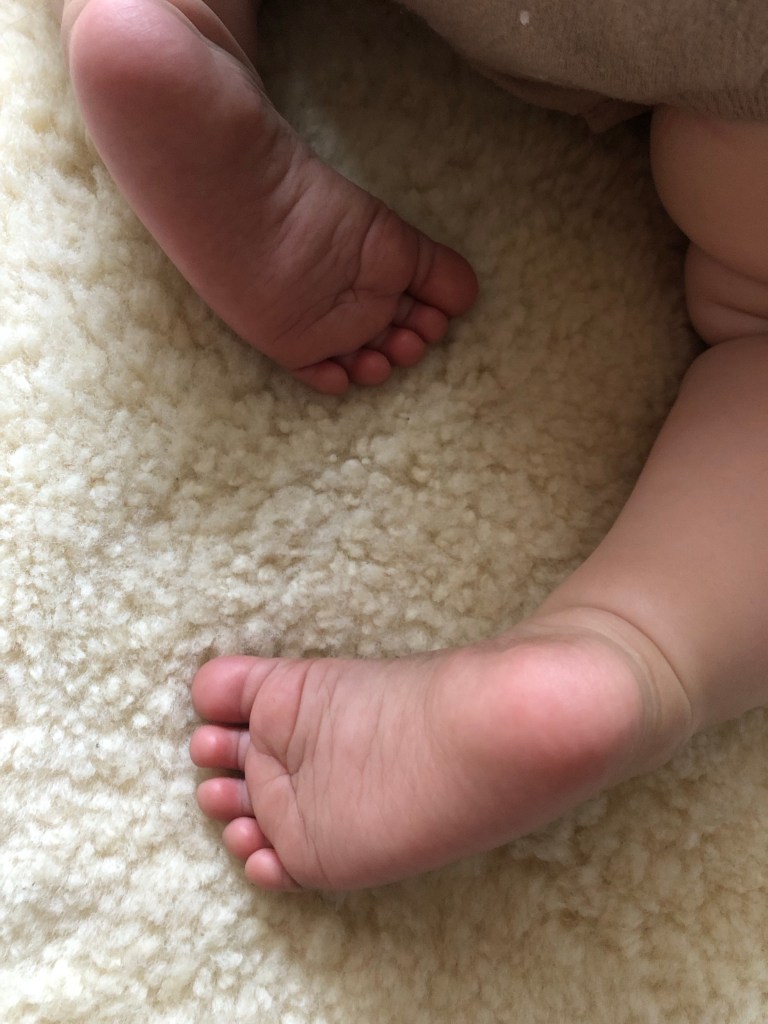
This last month has been something of a time warp for me, with a fresh newborn and life already going faster than I want it to, in a slow mornings and baby snuggles kind of a way. This Christmas and Advent season will look a little different than it has in the past. It will be simpler. Quieter. Softer. Fewer bells and whistles. But the things that stay will be the things that truly matter, the things that point us Heavenward, and pull us closer together as a family, but also closer to our community and church.

It takes intention. It takes deliberate thought and action. But this time of year doesn’t have to be an overwhelming whirlwind.

So find those things that help you to slow down and savor the time, rather than simply surviving it. If you don’t have family traditions, make a few, carefully and with thought. Read a book for Advent. Let Christmas music play in the background throughout the day. Find a live Nativity to go to, or a Christmas Eve service. Bake cookies for your neighbors. Call your aunt and get that favorite recipe from your younger years. Read Luke’s account of the birth of Christ.

It isn’t the newness that makes Christmastime special. It is the sameness. The steadiness. The unchangingness of it all. Dig in to that sweet sameness.

We need those things that never change.

Ranch Wife Musings | Tangled Lives

Originally printed in the Custer County Chronicle on October 8, 2025

Recently I had the blessed opportunity to revel in the company of some two dozen other women, fellowshipping together in a sweet time of encouragement and camaraderie. As I looked around the room at all of their faces, old and young, all walks of life, I reflected on how we had met. How long ago. Our shared histories. How our lives had intertwined over the years. How God weaves individuals together into an amazing tapestry called community.

Community. History. Belonging. Friendship. Isolation. Loneliness. As seemingly connected as we have become as a society, with easy access to hundreds or thousands of acquaintances through a handheld device, with the ability to communicate instantly and share bits and pieces of our lives with the world, you’d think that loneliness would be a thing of the past. The past – you know, back when communication was slow and travel was slower. Yet today we are more disconnected than ever. At no other time in history have we been able to converse with people across the globe with the mere tapping of our fingers on a keyboard, and yet the cultural sense of a local community is anemic at best. Phrases like “epidemic of loneliness” are tossed around almost with nonchalance, and who is in the least surprised by high percentages of people, young and old, experiencing the pain of loneliness?

But how did we get here? And what are we doing now to perpetuate it?

We can look back 200 years and see the slow degradation of the family unit, in the name of efficiency and modernism and industrialism, that removed families from their farms, fathers from their homes, and children from the care and instruction of their parents.

We can’t change what happened 200 years ago or 50 years ago, but we can recognize unhealthy patterns that are being perpetuated through choices made today.

Choices such as relegating to second or tenth place the things that used to give life meaning, like faith and family and marriage and civic responsibility, in favor of financial stability and a coveted career. Those second or tenth place things are seen now as the icing on the cake, nice but wholly optional. Professional development takes precedence over personal relationships any day of the week.

Choices such as separating life from work. We no longer live where we work or work where we live, to give a nod to author Wendell Berry. We have separated work and life, and give most of our best energy to our work, leaving little for life, and wonder why our relationships struggle. Few people live in one place long term, let alone for life, oftentimes choosing career paths that move them hundreds or thousands of miles, then struggling to engage and put down roots.

We have chosen for church to only inconvenience us on Sunday mornings, if that, preferably demanding no more than 45-60 minutes of our time, and we’ve slowly chiseled away at the many ways that church life and daily life would intersect and interact, allowing recreation, sports, and misapplied “rest” to rise in importance and priority.

Granted, there are nuances to this broad topic that simply couldn’t be fully explored in a book, let alone in a newspaper column, but I see patterns of choices that our society encourages people to make, and the breakdown of community ceases to be a mystery. It is a series of little choices that led to and perpetuates the breakdown, and I honestly believe that a series of little choices could help us to reclaim much of what has been lost.

Choices, like intentionally instilling in our children the importance of marriage and family. Instilling in them and cultivating in ourselves the importance of faith and civic responsibility. Committing ourselves to our local churches, more than just on Sunday mornings. Choosing to be a neighbor to our neighbors. Choosing to sacrifice financially for the sake of relationships and long-term effects on family and community. Choosing a simpler life. A less lavish life. A life that allows for greater flexibility and time outside the office.

I have experienced loneliness over the years. Deep loneliness, feelings of isolation and depression. And I can look back and see how my choices were perpetuating those things, how my career and life choices were hindering, not helping, my ability to form meaningful relationships and connections. And then I look at where God has brought me, at where I am now.

As I looked around the room at all of those dear ladies’ faces, representing several different occupations and vocations of wildly different sorts, two different church congregations, and other delightful chance encounters over the last 10 years, I was blown away. Blown away at how God brings people together, allowing them to bless one another, allowing relationships to form and strengthen. Blown away at the happenstance crossings of paths that have led to years-long friendships, the role models of childhood who have become dear friends in adulthood, women who cared about me and took me under their motherly wings.

And it made me so very thankful for the tangling of lives that creates a strong and vibrant community.

Sweet Fullness

When Brad and I got married, I knew I needed to do some soul-searching when it came to having children. I had been single a long time, and I honestly think it was God’s kindness to me that He sort of lifted the desire for children away from my heart for those 10-plus years of being a single woman. I remember as a highschooler and college-aged young woman dreaming of having 10 kids, picking names out, and truly having an active desire to be a mother. But as the single years wore on, it was a struggle enough to grow in contentment and confidence that God would provide a husband if and when He chose to do so; I believe it was God’s kindness that temporarily and gently suspended the desire for children and kept it from being another stumbling block.

So when I found myself married to a good man, I knew I wanted to be the mother to his children, but I also had this strange sense of neutrality. Some of it is temperament – I’ve never been the baby-chasing sort. As sweet as new babies are, I never feel compelled to hold and cuddle other people’s babies, and am perfectly content to admire from a distance. But now that I was married? I knew this was something I needed to wrestle with. It wasn’t that I didn’t desire children, in an active sense, but rather that passively there was no active longing. Does that make sense? I wasn’t opposed to children, but I wasn’t actively experiencing a desire for them either. It was as if my years of singleness had sort of muffled the sense of that desire. And as I pondered that, I realized how empty that was.

Too often, I see women on social media or elsewhere, professing to be Believers and proclaiming confidently that they have absolutely no desire for children and that should be fine. Granted, I don’t know their situations, but a common thread in the Bible is God’s love of the family, and His desire for His people to raise families to His glory, beginning in the Garden of Eden, with the command to “be fruitful and multiply and fill the earth and subdue it.” Procreation is obviously part of that. And my personal conviction is that if God says something is good, we should think so, too. If God commands something to His people, we should take that seriously. We are not victims of our desires.

So I began to pray and ask that God would give me right desires, desires that pleased Him, and that if it was His will that we have children that He would open my heart to children, and remove the fears that gnawed at the margins of my heart.

And it is wonderful how God answers prayers. Before too long, I found I was no longer praying that God would give me a desire for children (because He had answered that prayer and had given me the desires I had prayed for!) but I was praying that He would make me fruitful, and would give me contentment and peace if He didn’t open my womb. Because I also knew that, although I am responsible to cultivate right desires, God doesn’t always satisfy those desires the way we want or expect, and He owes me nothing.

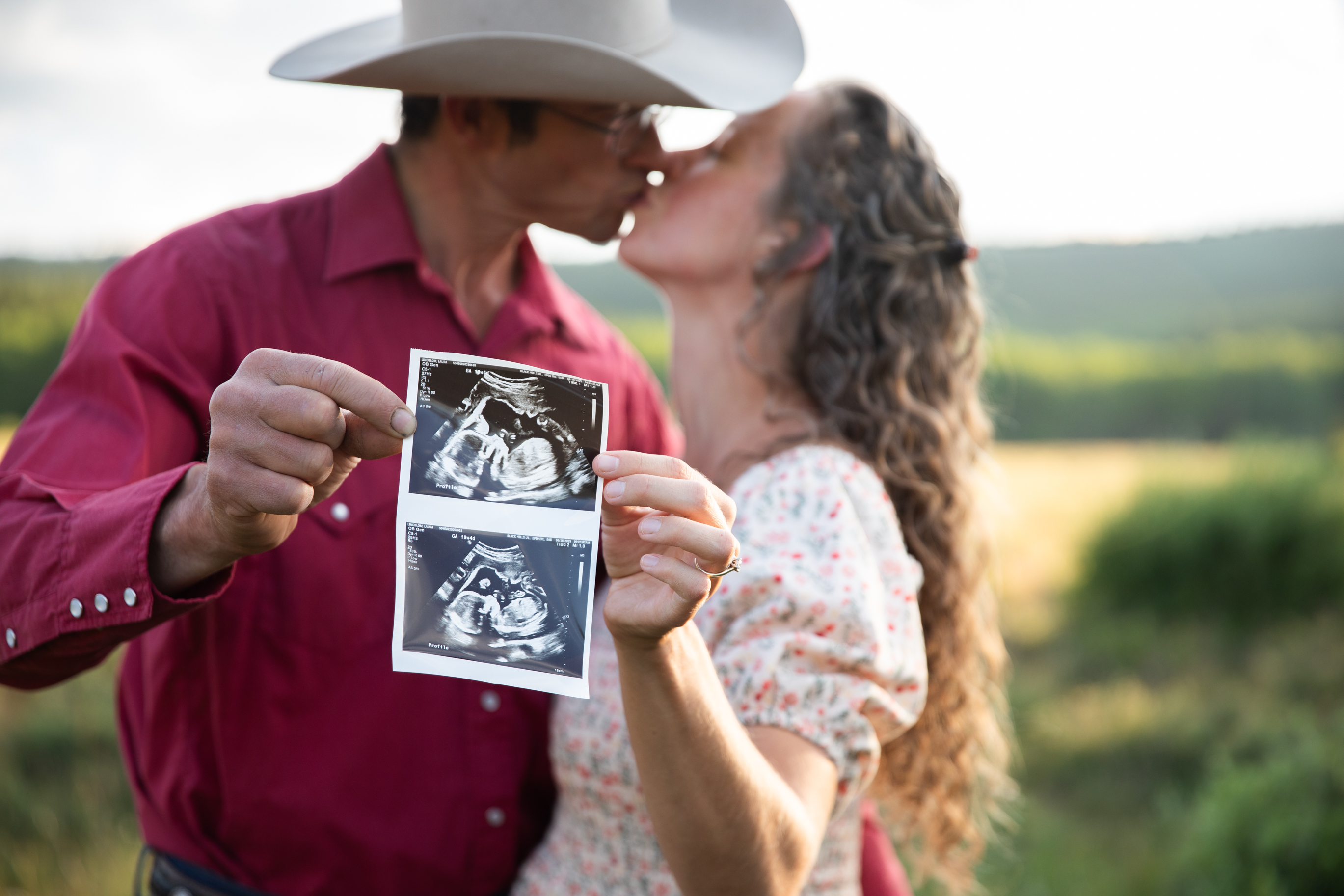
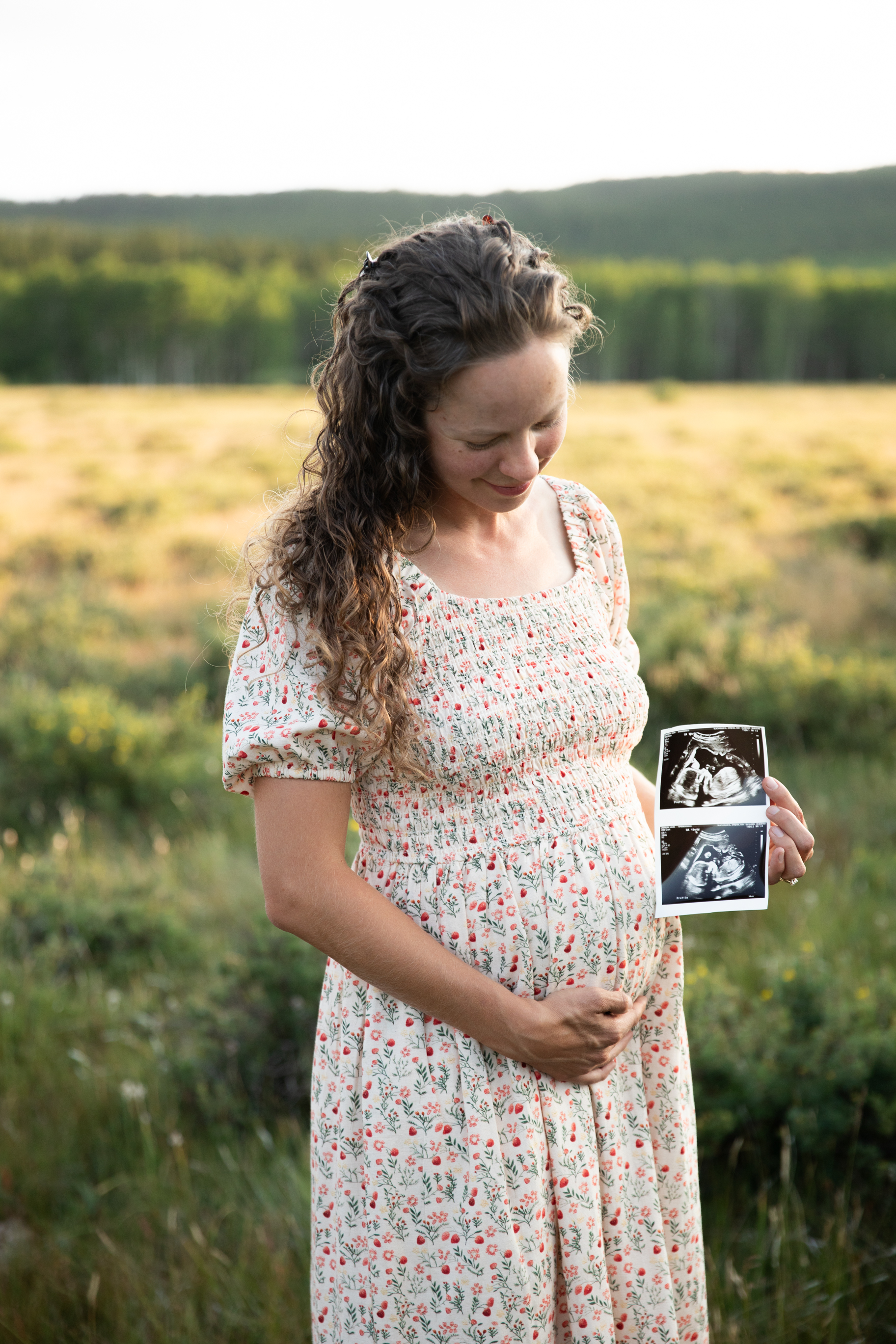
Well, it took my breath away when I saw the two red lines, and took my breath away again when I heard the heartbeat for the first time and saw the baby on ultrasound at 19 weeks. I’ve been living in a state of constant flux between incredible reality and surreality. Nothing had prepared me for how sweet it would be to feel the first quickenings, or how comforting it is to feel the baby move at all hours of the day or night. Nothing had prepared me for the sweet fullness of expectant motherhood. Fears have slipped further and further away.

And I can’t wait to meet our baby girl in November.

P.S. I took these photos for us with a tripod and shutter timer while we were camping in the Bighorns this weekend. Brad was great, and even consented to push the shutter button for me a few times. 🙂

Ranch Wife Musings | On Whose Shoulders We Stand

Originally printed in the Custer County Chronicle on June 18, 2025

Have you ever noticed the following contrast?

When Mother’s Day comes around, in sweeps the sappy sentimentality from all quarters, religious and secular alike. Church sermons laud the important role mothers play, encouraging mothers to embrace their God-given status and find joy in the motherhood journey. Ushers hand out $5 gift cards for ice cream or flowers to all the mothers. Mothers are showered with admiration and gifts, treated to lunch, and generally doted upon. All the wrongs mothers can commit are overlooked, and motherhood is suddenly elevated to frank heroism by a culture that at all other times actively discourages women from having children and decries motherhood as being demeaning and bowing to the patriarchy (but can’t even define “mother” anyway), while memes circulate social media saying that Mother’s Day isn’t just for mothers, but for anyone who wants to be considered a mother – cat moms, dog moms, anyone. I find it all very confusing.

Father’s Day rolls around, though, and it is a different dynamic altogether. Church services might give a tiny nod to the day itself, might offer a brief prayer of thanks for all the fathers in our lives, but any sermon that takes place is generally not a celebration of God’s gift of fathers but a warning to fathers that they had better shape up, and here’s how to do it. Fathers aren’t lavished with gifts, and social media takes no break from the campaign against toxic masculinity (which really is usually just a campaign against masculinity, period). Fathers are often the butt of sarcastic jokes, and many run-of-the-mill issues full-grown adults wrestle with are tacitly or explicitly blamed on fathers and mistakes that were made during childhood. 

The dichotomy is striking, if nothing else.

It seems to be a daily thing on the news, hearing about violent crimes, abuses, tyrannies, behind each of which is a man being dragged through the mud, sometimes justifiably, sometimes not. But for every single one of those events that dominate the news cycle, I would guess there are 10,000 men, invisible to all but their families, standing in the gap for their wives and children, for their communities, and for their faith. Men who rightly set the standard for manhood, for virtue and morality, for right and wrong, willing to hold the line against those who threaten the spiritual and physical wellbeing of those they love.

And we need that. We need those men. Desperately.

In a society where many social ills truly can be traced to fatherlessness and abuse by fathers, what we need is more strong, masculine figures, not fewer. More men who take the privilege of their strength seriously. And those men who are exemplary in their roles as husbands and fathers should never be in doubt about their value or importance.

We are who we are because of our fathers. Good fathers give us an example to follow. Poor fathers give a warning about what to avoid. But our fathers make us, and that trickles down through the generations, for better or for worse. Men learn how to treat their wives by watching how their fathers treat their mothers, for better or for worse. Women learn how they should be treated by watching how their fathers treat their mothers, for better or for worse. The importance of fatherhood – for better or for worse – absolutely cannot be overstated.

My dad set the standard of manhood for me. He was a steady, dependable, wise, Godly force in my life through all of my growing up years (and still is), and so much of the woman I became is a direct result of the example set by my own father. His living out of his masculinity gave so much context for my living out of my femininity. So much of what characterizes my faith and my thoughts and my loves and interests are because of my dad. How I view life, how I process information, decisions I’ve made – because of my dad. As an adult, he became the standard for what I ought to pray and look for in a husband, and his example of a loving and kind father and husband set the bar when I was dating. He demonstrated devotion to God, faithfulness to wife, love of children, gentle but firm in his expectations and corrections of us, and always pointing us back to Christ. He, with all of his imperfections and flaws notwithstanding, was my standard of masculinity and manhood.

Then there is my father-in-law, who has been a constant presence in my life for the last 7 years, as the first person on the volunteer fire department to take me under his wing and show me the ropes, and, more importantly, as the man who helped make my husband the man that he is. And I’m so thankful for that. I’m thankful for the honesty and integrity that my father-in-law has modeled to his son, for the instinct to generosity, the work ethic and ingenuity (it is amazing what can be done with wire and willpower), the commitment to family and community, the importance of being a capable and compassionate leader, and that there are more important things in life than the money in one’s bank account. I’m even thankful for the somewhat twisted sense of humor that I now have to suffer with on a daily basis.

And it isn’t too long before I get to watch husband step into his own role as father. Who we are because of our fathers will shape and mold the next generation.

We stand on the shoulders of the men who made us.