Ranch Wife Musings | Tangled Lives

Originally printed in the Custer County Chronicle on October 8, 2025

Recently I had the blessed opportunity to revel in the company of some two dozen other women, fellowshipping together in a sweet time of encouragement and camaraderie. As I looked around the room at all of their faces, old and young, all walks of life, I reflected on how we had met. How long ago. Our shared histories. How our lives had intertwined over the years. How God weaves individuals together into an amazing tapestry called community.

Community. History. Belonging. Friendship. Isolation. Loneliness. As seemingly connected as we have become as a society, with easy access to hundreds or thousands of acquaintances through a handheld device, with the ability to communicate instantly and share bits and pieces of our lives with the world, you’d think that loneliness would be a thing of the past. The past – you know, back when communication was slow and travel was slower. Yet today we are more disconnected than ever. At no other time in history have we been able to converse with people across the globe with the mere tapping of our fingers on a keyboard, and yet the cultural sense of a local community is anemic at best. Phrases like “epidemic of loneliness” are tossed around almost with nonchalance, and who is in the least surprised by high percentages of people, young and old, experiencing the pain of loneliness?

But how did we get here? And what are we doing now to perpetuate it?

We can look back 200 years and see the slow degradation of the family unit, in the name of efficiency and modernism and industrialism, that removed families from their farms, fathers from their homes, and children from the care and instruction of their parents.

We can’t change what happened 200 years ago or 50 years ago, but we can recognize unhealthy patterns that are being perpetuated through choices made today.

Choices such as relegating to second or tenth place the things that used to give life meaning, like faith and family and marriage and civic responsibility, in favor of financial stability and a coveted career. Those second or tenth place things are seen now as the icing on the cake, nice but wholly optional. Professional development takes precedence over personal relationships any day of the week.

Choices such as separating life from work. We no longer live where we work or work where we live, to give a nod to author Wendell Berry. We have separated work and life, and give most of our best energy to our work, leaving little for life, and wonder why our relationships struggle. Few people live in one place long term, let alone for life, oftentimes choosing career paths that move them hundreds or thousands of miles, then struggling to engage and put down roots.

We have chosen for church to only inconvenience us on Sunday mornings, if that, preferably demanding no more than 45-60 minutes of our time, and we’ve slowly chiseled away at the many ways that church life and daily life would intersect and interact, allowing recreation, sports, and misapplied “rest” to rise in importance and priority.

Granted, there are nuances to this broad topic that simply couldn’t be fully explored in a book, let alone in a newspaper column, but I see patterns of choices that our society encourages people to make, and the breakdown of community ceases to be a mystery. It is a series of little choices that led to and perpetuates the breakdown, and I honestly believe that a series of little choices could help us to reclaim much of what has been lost.

Choices, like intentionally instilling in our children the importance of marriage and family. Instilling in them and cultivating in ourselves the importance of faith and civic responsibility. Committing ourselves to our local churches, more than just on Sunday mornings. Choosing to be a neighbor to our neighbors. Choosing to sacrifice financially for the sake of relationships and long-term effects on family and community. Choosing a simpler life. A less lavish life. A life that allows for greater flexibility and time outside the office.

I have experienced loneliness over the years. Deep loneliness, feelings of isolation and depression. And I can look back and see how my choices were perpetuating those things, how my career and life choices were hindering, not helping, my ability to form meaningful relationships and connections. And then I look at where God has brought me, at where I am now.

As I looked around the room at all of those dear ladies’ faces, representing several different occupations and vocations of wildly different sorts, two different church congregations, and other delightful chance encounters over the last 10 years, I was blown away. Blown away at how God brings people together, allowing them to bless one another, allowing relationships to form and strengthen. Blown away at the happenstance crossings of paths that have led to years-long friendships, the role models of childhood who have become dear friends in adulthood, women who cared about me and took me under their motherly wings.

And it made me so very thankful for the tangling of lives that creates a strong and vibrant community.

Sweet Fullness

When Brad and I got married, I knew I needed to do some soul-searching when it came to having children. I had been single a long time, and I honestly think it was God’s kindness to me that He sort of lifted the desire for children away from my heart for those 10-plus years of being a single woman. I remember as a highschooler and college-aged young woman dreaming of having 10 kids, picking names out, and truly having an active desire to be a mother. But as the single years wore on, it was a struggle enough to grow in contentment and confidence that God would provide a husband if and when He chose to do so; I believe it was God’s kindness that temporarily and gently suspended the desire for children and kept it from being another stumbling block.

So when I found myself married to a good man, I knew I wanted to be the mother to his children, but I also had this strange sense of neutrality. Some of it is temperament – I’ve never been the baby-chasing sort. As sweet as new babies are, I never feel compelled to hold and cuddle other people’s babies, and am perfectly content to admire from a distance. But now that I was married? I knew this was something I needed to wrestle with. It wasn’t that I didn’t desire children, in an active sense, but rather that passively there was no active longing. Does that make sense? I wasn’t opposed to children, but I wasn’t actively experiencing a desire for them either. It was as if my years of singleness had sort of muffled the sense of that desire. And as I pondered that, I realized how empty that was.

Too often, I see women on social media or elsewhere, professing to be Believers and proclaiming confidently that they have absolutely no desire for children and that should be fine. Granted, I don’t know their situations, but a common thread in the Bible is God’s love of the family, and His desire for His people to raise families to His glory, beginning in the Garden of Eden, with the command to “be fruitful and multiply and fill the earth and subdue it.” Procreation is obviously part of that. And my personal conviction is that if God says something is good, we should think so, too. If God commands something to His people, we should take that seriously. We are not victims of our desires.

So I began to pray and ask that God would give me right desires, desires that pleased Him, and that if it was His will that we have children that He would open my heart to children, and remove the fears that gnawed at the margins of my heart.

And it is wonderful how God answers prayers. Before too long, I found I was no longer praying that God would give me a desire for children (because He had answered that prayer and had given me the desires I had prayed for!) but I was praying that He would make me fruitful, and would give me contentment and peace if He didn’t open my womb. Because I also knew that, although I am responsible to cultivate right desires, God doesn’t always satisfy those desires the way we want or expect, and He owes me nothing.

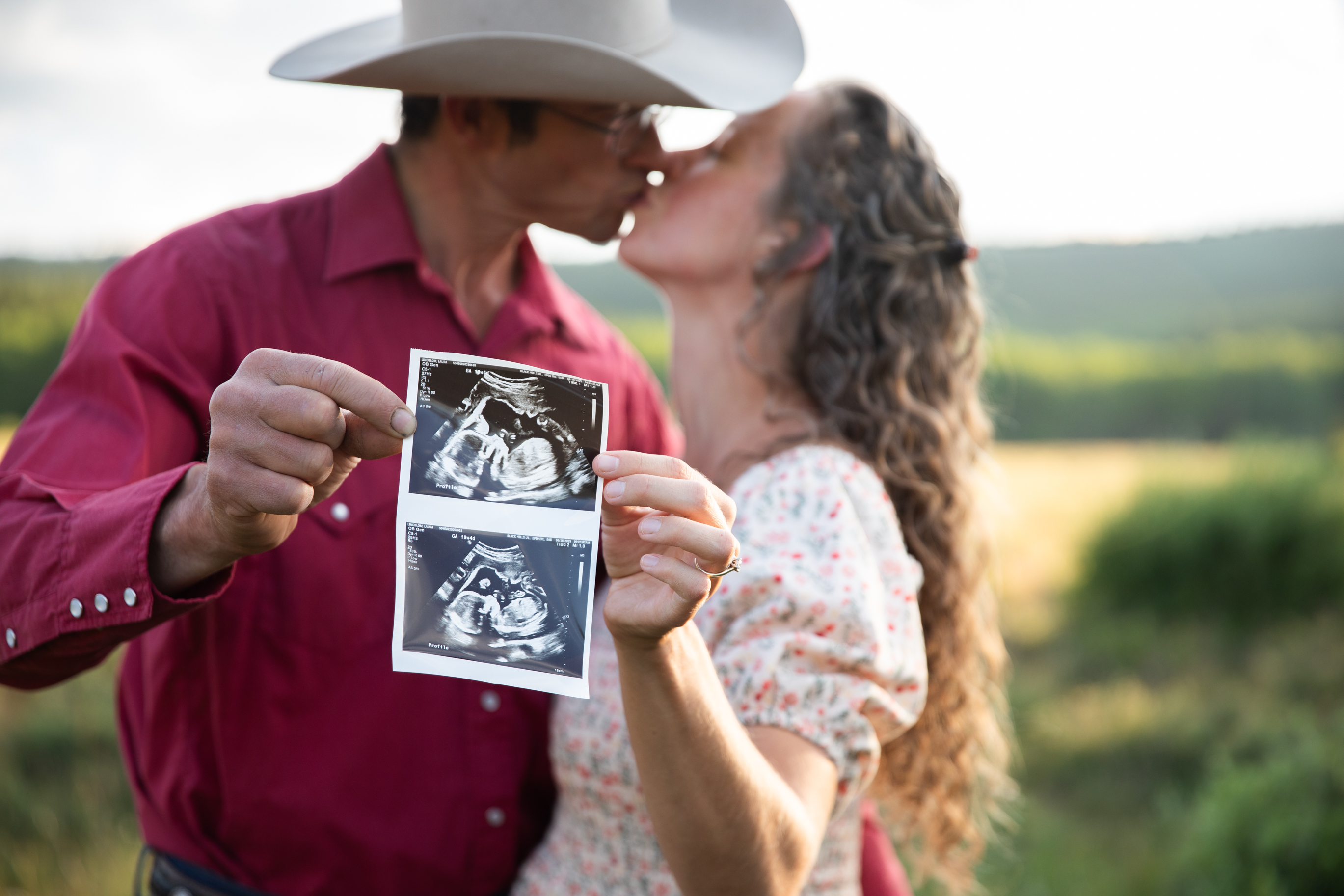
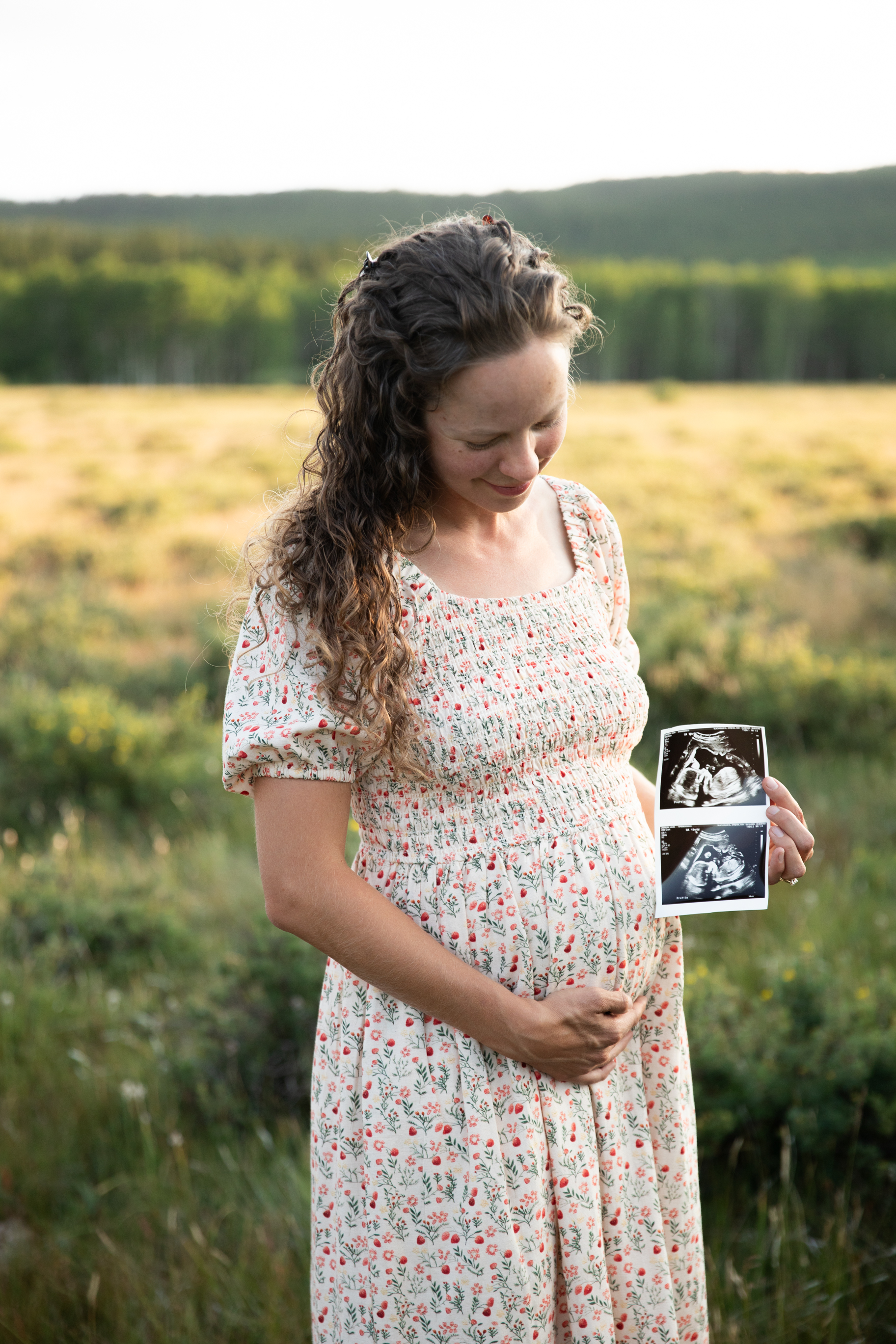
Well, it took my breath away when I saw the two red lines, and took my breath away again when I heard the heartbeat for the first time and saw the baby on ultrasound at 19 weeks. I’ve been living in a state of constant flux between incredible reality and surreality. Nothing had prepared me for how sweet it would be to feel the first quickenings, or how comforting it is to feel the baby move at all hours of the day or night. Nothing had prepared me for the sweet fullness of expectant motherhood. Fears have slipped further and further away.

And I can’t wait to meet our baby girl in November.

P.S. I took these photos for us with a tripod and shutter timer while we were camping in the Bighorns this weekend. Brad was great, and even consented to push the shutter button for me a few times. 🙂

Ranch Wife Musings | On Whose Shoulders We Stand

Originally printed in the Custer County Chronicle on June 18, 2025

Have you ever noticed the following contrast?

When Mother’s Day comes around, in sweeps the sappy sentimentality from all quarters, religious and secular alike. Church sermons laud the important role mothers play, encouraging mothers to embrace their God-given status and find joy in the motherhood journey. Ushers hand out $5 gift cards for ice cream or flowers to all the mothers. Mothers are showered with admiration and gifts, treated to lunch, and generally doted upon. All the wrongs mothers can commit are overlooked, and motherhood is suddenly elevated to frank heroism by a culture that at all other times actively discourages women from having children and decries motherhood as being demeaning and bowing to the patriarchy (but can’t even define “mother” anyway), while memes circulate social media saying that Mother’s Day isn’t just for mothers, but for anyone who wants to be considered a mother – cat moms, dog moms, anyone. I find it all very confusing.

Father’s Day rolls around, though, and it is a different dynamic altogether. Church services might give a tiny nod to the day itself, might offer a brief prayer of thanks for all the fathers in our lives, but any sermon that takes place is generally not a celebration of God’s gift of fathers but a warning to fathers that they had better shape up, and here’s how to do it. Fathers aren’t lavished with gifts, and social media takes no break from the campaign against toxic masculinity (which really is usually just a campaign against masculinity, period). Fathers are often the butt of sarcastic jokes, and many run-of-the-mill issues full-grown adults wrestle with are tacitly or explicitly blamed on fathers and mistakes that were made during childhood. 

The dichotomy is striking, if nothing else.

It seems to be a daily thing on the news, hearing about violent crimes, abuses, tyrannies, behind each of which is a man being dragged through the mud, sometimes justifiably, sometimes not. But for every single one of those events that dominate the news cycle, I would guess there are 10,000 men, invisible to all but their families, standing in the gap for their wives and children, for their communities, and for their faith. Men who rightly set the standard for manhood, for virtue and morality, for right and wrong, willing to hold the line against those who threaten the spiritual and physical wellbeing of those they love.

And we need that. We need those men. Desperately.

In a society where many social ills truly can be traced to fatherlessness and abuse by fathers, what we need is more strong, masculine figures, not fewer. More men who take the privilege of their strength seriously. And those men who are exemplary in their roles as husbands and fathers should never be in doubt about their value or importance.

We are who we are because of our fathers. Good fathers give us an example to follow. Poor fathers give a warning about what to avoid. But our fathers make us, and that trickles down through the generations, for better or for worse. Men learn how to treat their wives by watching how their fathers treat their mothers, for better or for worse. Women learn how they should be treated by watching how their fathers treat their mothers, for better or for worse. The importance of fatherhood – for better or for worse – absolutely cannot be overstated.

My dad set the standard of manhood for me. He was a steady, dependable, wise, Godly force in my life through all of my growing up years (and still is), and so much of the woman I became is a direct result of the example set by my own father. His living out of his masculinity gave so much context for my living out of my femininity. So much of what characterizes my faith and my thoughts and my loves and interests are because of my dad. How I view life, how I process information, decisions I’ve made – because of my dad. As an adult, he became the standard for what I ought to pray and look for in a husband, and his example of a loving and kind father and husband set the bar when I was dating. He demonstrated devotion to God, faithfulness to wife, love of children, gentle but firm in his expectations and corrections of us, and always pointing us back to Christ. He, with all of his imperfections and flaws notwithstanding, was my standard of masculinity and manhood.

Then there is my father-in-law, who has been a constant presence in my life for the last 7 years, as the first person on the volunteer fire department to take me under his wing and show me the ropes, and, more importantly, as the man who helped make my husband the man that he is. And I’m so thankful for that. I’m thankful for the honesty and integrity that my father-in-law has modeled to his son, for the instinct to generosity, the work ethic and ingenuity (it is amazing what can be done with wire and willpower), the commitment to family and community, the importance of being a capable and compassionate leader, and that there are more important things in life than the money in one’s bank account. I’m even thankful for the somewhat twisted sense of humor that I now have to suffer with on a daily basis.

And it isn’t too long before I get to watch husband step into his own role as father. Who we are because of our fathers will shape and mold the next generation.

We stand on the shoulders of the men who made us.

Ranch Wife Musings | The Best Life We Can Give Them

Originally published in the Custer County Chronicle on January 29, 2025

Calving season on the ranch is a period of stark contrasts, a time of seeing some of the best of the best of God’s Creation alongside some of the saddest of the saddest. On the one hand, we revel in seeing mother cows birth and nourish and protect their young with such incredible maternal instincts, showcasing the best of God’s design for them; we search the pastures for newborn calves tucked away safely like little Easter eggs in long grass and sheltered places, waiting while their mamas graze or go to water; we see the fascinating natural formation of nursery groups by the busy mamas, so all calves are watched and all mother cows are fed and watered. But there is also the too-frequent reminder that we live in a broken world, the effects of which trickle down to the creatures we steward as well. Calves are stillborn or die afterwards, weather events challenge the best of our efforts, calving complications end tragically, and Nature takes its toll indiscriminately and sometimes it feels randomly.

Sometimes the bitterness and sweetness come by turns, first one and then the other. Sometimes they are mixed, inseparable. Sometimes they mix in the strangest sort of tragicomedy called a bottle calf that sticks around for weeks and months.

Granted, calving season for us isn’t supposed to start until the end of February, although neighbors of ours are already in the thick of it, or even are wrapping up. But we had a few, shall we say, incidents last year perpetrated by a yearling bull that was supposed to be a steer and wasn’t, and some dozen or so yearling heifers that he apparently found very attractive and which were not intended to be breeding animals. One calf showed up right before Christmas, and a few more showed up over the next month, one of which was orphaned more or less immediately. Of course, I had just dried up the milk cow.

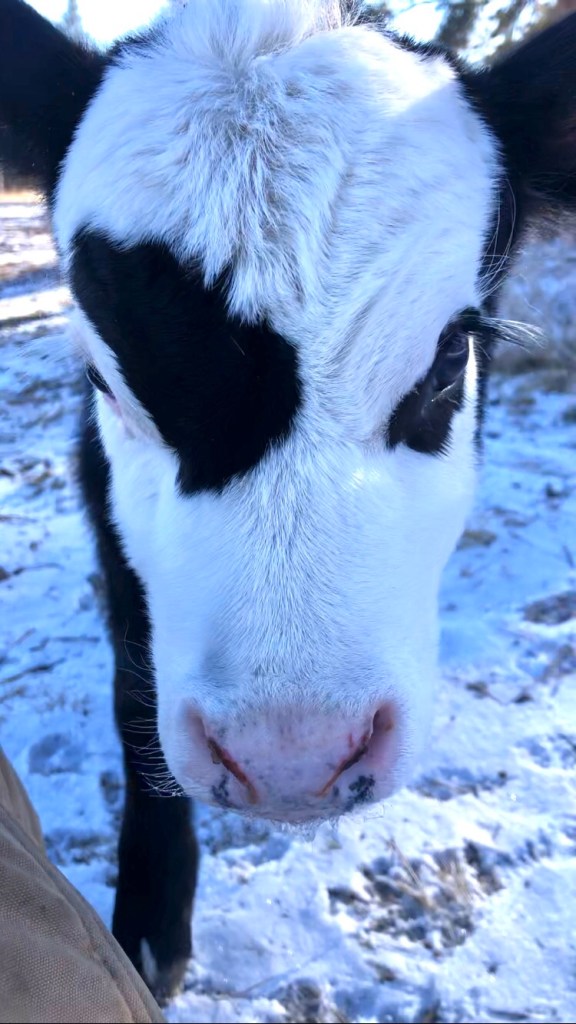
Bottle calves are supposed to be a nuisance. They’re supposed to be a hassle and, given the cost of a bag of powdered milk replacer, they are a financial nuisance, if nothing else. But clearly I’m not as wise and mature as other members of my family, because I’m afraid I don’t consider the three-times-daily feedings a nuisance, and really don’t object to calf bottles and pitchers for mixing the milk taking over the bathroom, or even the faint but persistent odor of soured milk. I don’t even mind trotting down in the dark to give Beckybell (my endearing husband named the calf after his mother-in-law – isn’t he charming?) her suppertime bottle. I’m afraid I don’t mind having my toes trampled by tiny hooves or my knees butted by the bony little head, or even the milky mess she somehow leaves all over my clothes. In fact, I thoroughly enjoy being mama cow. A few days ago, Beckybell managed to escape the nursery pen and was waiting for me and her evening bottle at the house when we got back from our walk. During the cold snap last week, her little ears froze, so she’s been wearing various ridiculous iterations of ear muffs to keep them from re-freezing, and I think we saved the ears.

But as much as I enjoy this critter and having close interactions with an animal that usually is only handled from a distance, it leaves a little sore pang in my heart. She is lacking her mama. God designed her to need her mama.

 As much bad press as ranchers get from climate activists, as much as the FDA and the CDC and whatever other three- and four-letter organizations there are that vilify cows as being a blight upon the earth and an alleged contributor to global warming (or is it global cooling, I can’t remember?), or as much as PETA has gone after ranchers for “cruel treatment” of livestock, there is so incredibly much that people in those organizations do not see. Good things. Wholesome things. The best things. As agriculture as an industry has increased in size, and as the number of people engaged in it has dwindled, people have lost their understanding, yet continue to pass judgements.

They don’t see the ranchers intently watching the weather ahead of a winter snow event, heading out on ATVs with sleet biting their faces to move 100 cows into a more sheltered pasture. They don’t see the heroic and futile efforts in sub-zero weather to save a calving cow. They don’t see the careful tending during a cold snap, keeping water open and food on the ground. They don’t see the desperate attempt to warm a nearly-frozen calf downed during a snowstorm. They don’t see the careful tending of a newborn calf and the new mother. They don’t feel the defeat when a young calf dies and the cow won’t leave its side. They don’t see the bleary-eyed rancher getting up every two hours to check heifers, and they don’t hear the pre-dawn phone call up to the house to ask his little wife to bundle up and come down to the calving shed to help turn a backward calf, since she has smaller hands. They don’t see the tears shed over a failed save or the teary-eyed laughter at a success. They don’t see the miracle of a calf taking its first steps with a sleep-deprived ranching couple looking on smiling, or chuckling as an overzealous mama cow knocks it over with her aggressive licking. They don’t see the ranch wife on the umpteenth feeding of a little white-faced bottle baby, tucking the calf in for the night, sorry in her heart that there isn’t a mama cow for the little orphan.

Because we care for the livestock that God has give us to steward. We hate seeing them suffer, we love seeing them thrive, and we do everything in our power to give them the best life we can give them. At no time is that more apparent than in that sweet moment when a newborn calf hits the ground, floppy eared and wet and sneezing up fluid, and mama cow turns and sees the little intruder. As she goes to work cleaning it off, instinct overriding her surprise, we watch in quiet awe, full of pleasant warmth on the coldest of days.

Ranch Wife Musings | Look Higher

Originally published in the Custer County Chronicle on January 1, 2025

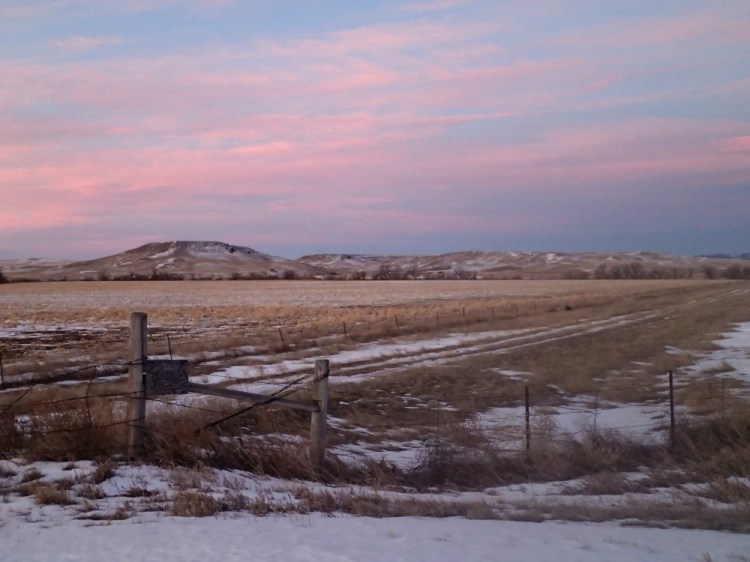
There is something extra special about the first day of a new year. From the first delicious moments of the first sunrise, to the sweet last glow as the sun sets, there is something poignant and sacred about the start of a new year, and all the associated firsts. The world feels clean and unsullied. Winter is fresh upon us. The color that fades from the earth seems to infuse into the sky and the eyes are drawn up, up. Just after sunset is the most mesmerizing, when the southwesterly expanse gleams like an opal, clear and dazzling, from the brilliant scarlet and pale rose in the west, to lavender and blue above, and the sweetest green to the south, a whole watercolor rainbow. The first stars are breathtaking. It is impossible not to gaze, impossible not to look higher. Higher than the withered grasses and bare limbs of trees. Higher, to that ephemeral perfection of the new sky.

January 1, 2025. Really, no different than December 31, 2024.

And yet, it is. The new year opens up like the pages of an unread book, or an unwritten one, depending on your perspective. The old year is gone, like a book finished, and hopefully we remember what stories were told in it, the lessons learned, the joys had, the tears shed, the successes and failures, and look forward to the New Year with hope and eagerness.

So often, though, we squander this annual opportunity. The New Year and the making of resolutions is often merely an excuse to settle ourselves deeper in our own self-centeredness. (There, I said it. A little on the nose perhaps, but I said it.) A quick Google search of the top New Year’s resolutions yields a list rife with such goals as losing weight, eating healthier, money management, time management, improved sleep hygiene, improved work-life balance, reducing alcohol consumption, quitting smoking, drinking more water, and pursuing a new hobby, to name a few of the many things that fall into the broad category of self-care, that snake-oil remedy peddled for all our ills, whether physical, spiritual, relational or emotional, and which has wreaked havoc on our relationships and families.

Because do you notice what’s missing? The people are missing. And just maybe that is why so many resolutions and goals fail in about 22 days flat. Without a “why” that extends beyond self, I think goals and resolutions are generally destined to fail.

But here’s the thing about those sorts of goals and resolutions: they are 100% safe. They fuel our smugness as we pursue them, but our self-satisfaction can comfortably accept our failure. With the bar practically set upon the ground, success is semi-sweet, and reaps a few benefits, surely, but if we fail, it isn’t overly painful and no one really notices or cares too much. We set our sights so low! It is a lot easier to reflect at the end of the year with a shrug that I failed to start a new hobby, than to realize and truly acknowledge that I failed to grow in my love of my spouse, my neighbor, or God.

So, what if we looked higher? What if we took the chance, each New Year, to evaluate our habits and goals and ambitions in light of Someone besides ourself? Perhaps, the Person Whose birth we just celebrated?

The Bible teaches that we are to do all things for the glory of God. The Bible teaches that followers of Jesus are known by their love. We are instructed to set our minds on things above, not on earthly things, and to dwell on those things which are “true, honorable, right, pure, lovely, and of good repute, anything that is excellent or worthy of praise.” We are to seek to outdo one another in showing love, the only time I can think of where the Bible instructs competition. We are to forgive wrongs done. We are to show love, joy, peace, patience, kindness, goodness, faithfulness, gentleness, and self-control. We are to live peaceably with one another. We are to be submissive one to another. We are to have order within ourselves and within our families.

What would happen if we set goals and made resolutions that were inherently others-oriented? What if we were as determined to cut out biting words spoken to a family member as we were to cut out alcohol or smoking? What if we strove to shed that certain contentious habit with the same eagerness that we strive to shed 5 pounds? What if 52 hikes in a year became 52 encouraging cards or letters? What if we were as intent upon a half hour or hour in God’s Word as we are intent upon our physical improvement? What if we opened our homes regularly? Loved our spouses specifically? Strove to bless our neighbor intentionally?

And what if we actually invited accountability? What amazing transformation could happen.

The end of the year can be bittersweet. I am a year older, but am I a year wiser? A year more kind? A year more selfless, or a year more generous? A year more patient? Compassionate? Slow to anger? Abounding in love? Willing to go out of my way to bless another, particularly those closest to me? Because those things have the capacity to cause a ripple effect of goodness.

So go ahead and drink more water, lose some weight, and quit smoking. Your body will thank you for it. But do it to be of greater service to others and to God. Look higher, friend. Look higher.

Spangled Afternoon

Yesterday was wet. Just wet. Wonderfully so. We got a little actual rain, but most of the day was just heavy mist, and we basically were inside a cloud. We couldn’t see the highway down past the hayfield, and the tops of trees were obscured, and the drops settled, all silvery, on everything. It almost looked like frost, everything was so spangled.

Spiderwebs and blades of grass, mundane on other days but be-jeweled in the mist, drops of water hanging like jewels on the fine threads of the spiderwebs. Roses and rosebuds, and spiderwort, gathering the mist, holding it on leaves and petals and stamens. And then, if you looked closely enough, the whole world reflected upside down in the drops of water, the sky, the flowers, the grass. It was dazzling.

Right now, our society is weighed down with all sorts of mental ills, and the self-care “movement,” if you will, is thriving…It would appear that the best solution anyone can suggest for the chronic anxieties and depressions and just generally not getting along well with life is that people need to love themselves more. For as long as the self-care solution has been being promoted, it is obvious that that isn’t the problem. We don’t have a problem with people not loving themselves enough. The problem is that we as human creatures are tuned to love ourselves, and to love ourselves too much. We don’t need encouragement in that vein.

We need, rather, encouragement to look up from all of our – in the big scheme of things – petty problems and look to the Creator God who loves us. Sometimes we find reminders of that in the tiniest, most mundane yet spectacular ways. Like taking a walk in a cloud. Gazing on the littlest, least-important things that God clearly cares deeply about. And then realizing that if He cares about the flowers of the field, the birds of the air, the mists on the meadows, He must care that much more about His human creatures.