 Even in the last minute Christmas bustle, baking, cleaning house, wrapping presents, doing laundry, the beautiful weather couldn’t be wasted. We finally got out the door around 3:30. The sun had dipped below the hills. Our Hole-in-the-Wall excursion became a Mountain Lion Cave excursion, since the former takes considerably longer than the latter, and we can drive the Jeep almost all the way to the ravine the cave is in.
 We have a trail going from the driveway all the way to the cave, but the last hill down into the ravine is about a 40 degree grade and, while possible in the Jeep, gets a little dicey. So we generally park at the top and walk the rest of the way down the trail. Today, though, Sarah and I decided to walk down through the mining pits, since we’d never gotten into the ravine that way before. It was a lovely little walk down the mine, over deadfall, through briars and waist-high dried grasses, in and out of cutaway places where water probably ran during the mining days.
 Clumps of woodsorrel and tufts of lush moss clung close to the earth, as green as springtime, glinting through pine needles and scrubby grasses, like emeralds in an antique brooch. Pale grey lichens crusted rocks, subtle and unremarkable, until you look closer. The moss clinging to rocks, like a tiny carpet of ferns, and the lichen crusting rocks, like strange, oceanic life. What variety of textures and color in Creation!
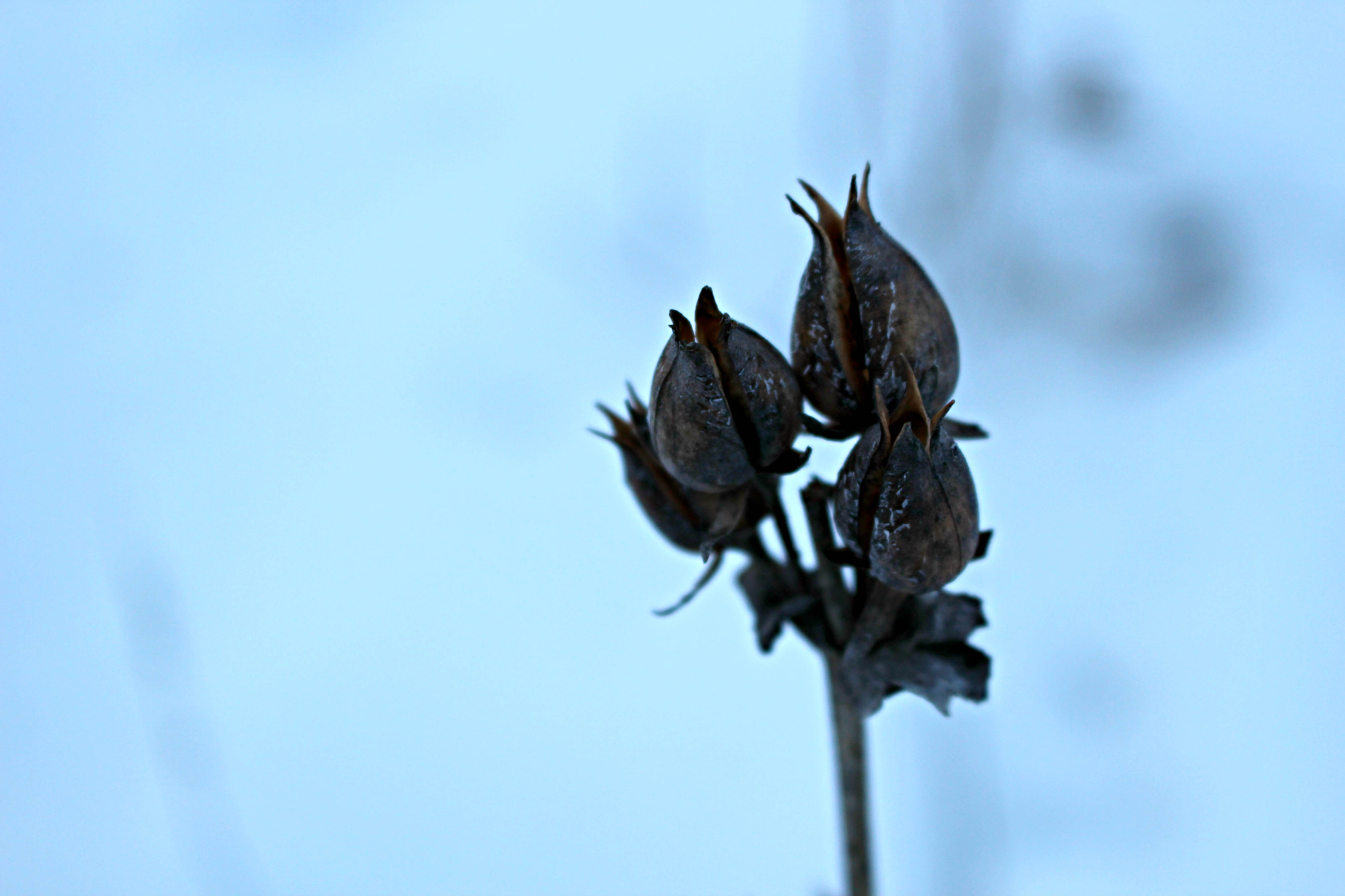 Even in the winter, even when nearly everything has gone to sleep, dormant, and won’t wake until March or April or May, even with all the flowers dead, the petals faded and fallen, nothing but stems, sepals, dried leaves left, there is still a mysterious, ephemeral beauty. Flowers are common to life, something we are used to looking and wondering at. But what about what is left when the flower is gone? That is something we don’t generally take the time to marvel at. But those things that are left are the means of propagating next year’s flowers – In a sense, they are the beginning of the new flowers.
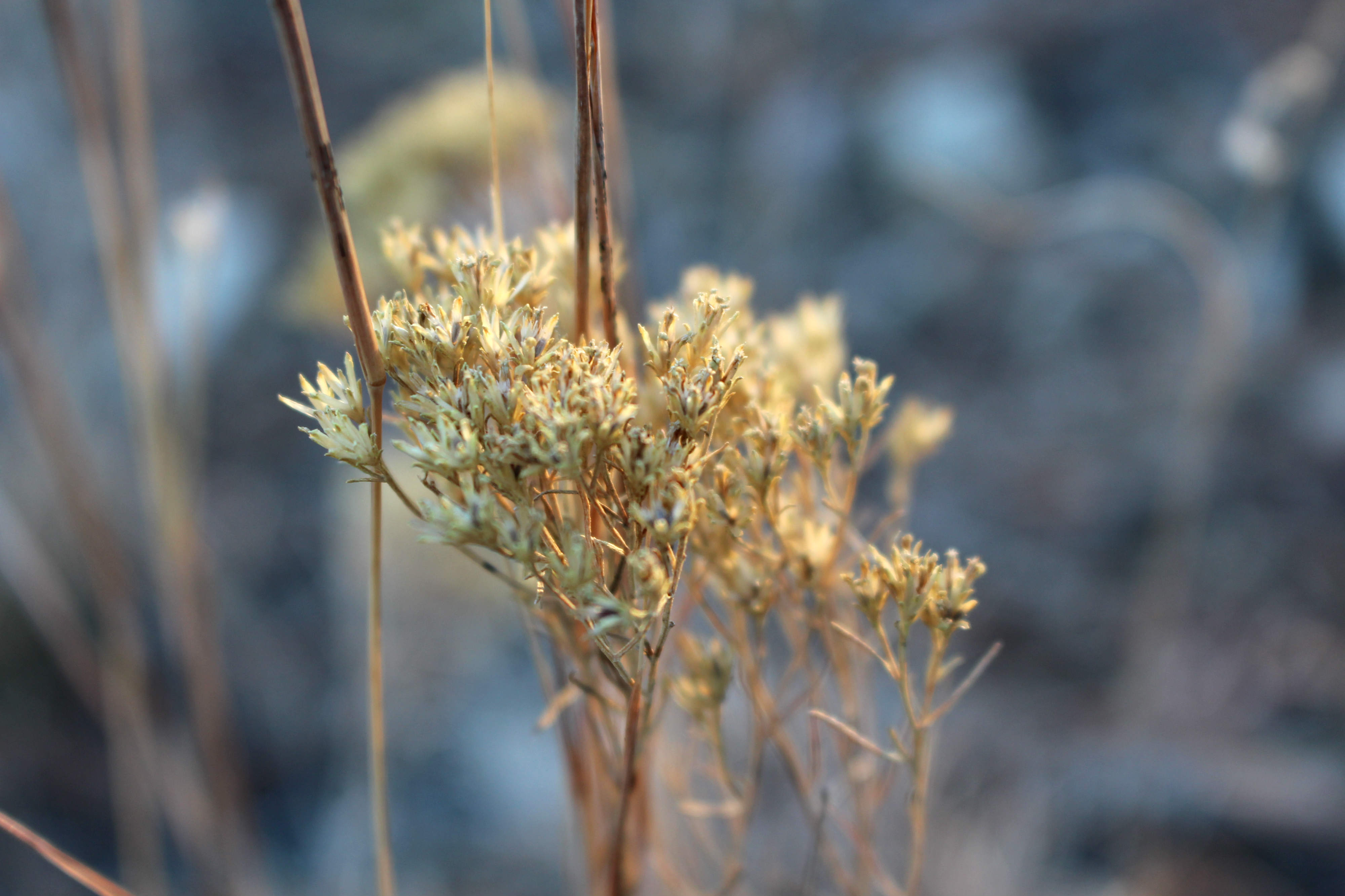
 On the way to the ravine, we stopped to get some pictures on a sun-bathed hillside. These silvery stars were fresh and bright in a bed a fallen pine needles and red earth, one of the only living plants still unbitten by the frost. As many flowers as I’ve photographed and identified, I can’t put my finger on this one – I have a few ideas, including Eriogonum pauciflorum, but I don’t think I’ll know until I check on it this spring. Tomorrow, or sometime soon, I’d like to go back to mark the area so I can be sure to identify the correct plant!
 The stems of dried grasses and flowers would make a lovely winter bouquet – We’ll have some time before our Christmas festivities begin tomorrow, so I’m hoping to get out to pick a bouquet. Dressed up with some jute and put in a Mason jar, it will make a rustic, festive centerpiece! I forgot to bring a sack on our walk, or I would have picked some things today.
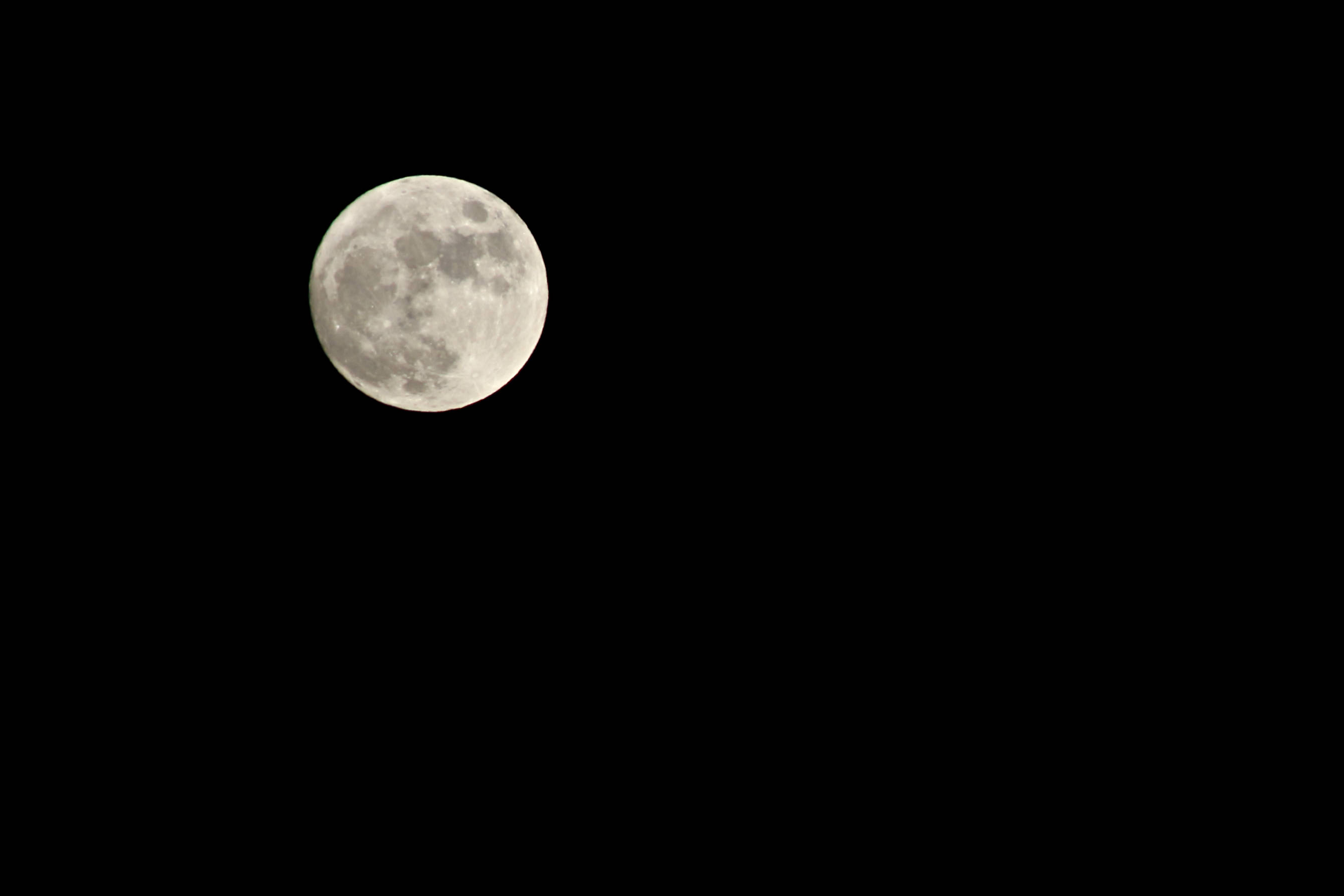 The moon was rising as we drove east towards home. Giant and golden, fading to silver as it got higher. I didn’t have a tripod with me, but as soon as we were home, I grabbed the tripod and Sarah and I headed out again. It will be a full moon tomorrow, a full moon on Christmas. This evening, it was fitting that we listened to the 1968 Apollo 8 Christmas message, a reading from the first chapter of the book of Genesis. What a wonderful world God created, and what a gift to live here.
Tomorrow is Christmas. I’d hoped for a moonlit hike on Christmas night, but we’re expecting snow. So Sarah and I are about to bundle up and head out for a stroll in the moonlight. The frost is thick and diamond bright in the light from the almost-full moon. A perfect night.

 Christmas Eve is a good time to remember – and to reflect. On Christmas Day, Christians celebrate the miraculous birth of a Savior, God Incarnate, who humbled Himself to come to earth as a baby, as the frailest form of humanity. But I think we often make the mistake of forgetting that the Christmas story doesn’t start in the book of Matthew, but it starts back in the book of Genesis. Throughout the Old Testament, a Savior was waited for – The entire Old Testament leads us to Christ.
 In Genesis 49, the last days of Jacob, Abraham’s grandson, are recorded. Jacob was nearing the end of his life, and he gave a blessing to each of his sons. This wasn’t a blessing of earthly proportions, but was prophetic in nature and from the hand of God. In his blessing to Judah, he says, “Judah, your brothers shall praise you…The scepter shall not depart from Judah, nor the ruler’s staff from between his feet, until tribute comes to him; and to him shall be the obedience of the peoples.”
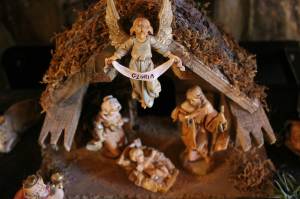 And it continues today! The scepter hasn’t left the house of Judah. The never-ending throne of King David is still being ruled from today, because Jesus, the Son of David, is reigning in Heaven, risen and glorious, and will one day return to finish His battle with Satan. The king the Israelites expected was a king who would wipe out their earthly enemies, restore earthly peace, and give earthly justice. But the King that God had planned would be a King who would wipe away our sins, our tears, our spiritual enemies, who would provide the Gift of Salvation, who would come to earth as a Man, someone we can try to comprehend with our finite minds, someone who can sympathize with us in our weakness, someone to demonstrate a life of righteousness, love, faith, purity, joy, servanthood, humility, and sacrifice. A King who would restore Spiritual Peace, and give Spiritual Justice and Mercy. A King who would adopt us into His household and call us His children, His brothers and sisters, His family.
 After a morning of cleaning the church with Roy, Anna and I went over to make gingerbread houses with Hannah and Jacob, who also go to our church. They take their gingerbread house making very seriously – They’re pros. It turns out a number of people at Southern Hills take gingerbread house making very seriously. We might need to have a church gingerbread house making party and contest sometime.

 Song Dog Journal