Ranch Wife Musings | Life, Liberty, Happiness

Originally printed in the Custer County Chronicle on July 15, 2026

I didn’t see a single firework this year. Is that crazy? Our country celebrates her 250th birthday and I don’t see a single firework? But we are in a season of family life where naps and bedtime are pretty important, and bedtime is well before sunset. Hence, no fireworks. We did, however, enjoy some excellent smoked beef brisket and cheesecake and in our own way fully reveled in patriotic festivity. After all, it is good to live in a country so great that even the people who hate her refuse to leave.
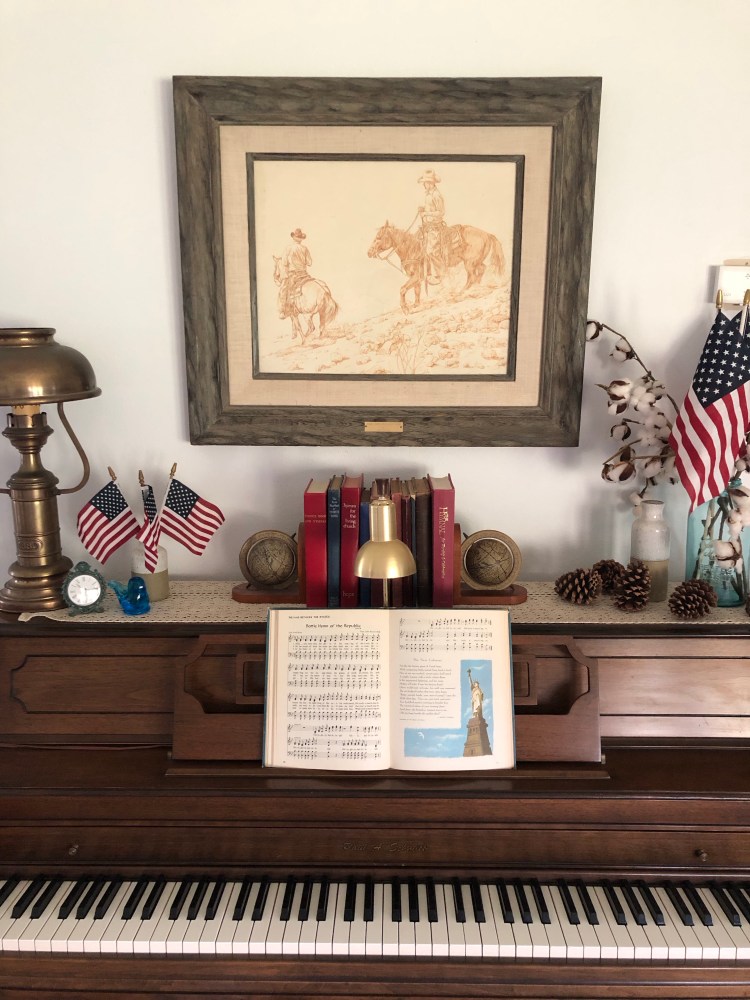
“We hold these truths to be self-evident,” the Declaration of Independence reads, “that all men are created equal, and that they are endowed by their Creator with certain unalienable rights, that among these are life, liberty, and the pursuit of happiness.”

The pursuit of happiness. I wonder, can we even define happiness? Is it possible to define something that is so personal? What makes me happy might not make you happy. Yet, in spite of the difficulty in definition, happiness (and not just the pursuit of it) has become more or less the pinnacle right focused on in our oh-so-wise modern day, the key metric used to determine the rightness of something. Whether it is a single decision or an entire lifestyle choice, we look at it through the lens of our own self-gratification, our own comfort. Will it make me happy? If someone or something spoils my happiness, that someone or something is trampling all over my pinnacle right.

One’s definition of happiness is very much dependent on what one believes to be valuable at a core level. If you value ease, you will not value things that are hard. If you value convenience, you will not value things that are inconvenient. If you value maximizing your potential, you will not value things that stand in the way of upward progress. If you value pleasure, you will not value things that require self-denial. If you believe that that which is valuable doesn’t extend beyond the grave, you will live in a way that reflects that. If you believe that there is meaning and purpose in eternity, you will live in a way that reflects that.

On the one hand, we have those whose values propel them to get married and be faithful spouses, to have children, work hard, live within their means and be productive members of their communities. On the other hand, we have those whose values propel them to move through serial relationships without commitment, to avoid children at any and all costs, to follow any and all sexual proclivities, and to live wildly lavish lifestyles disconnected from the good of those around them. We have those whose values propel them to live generously with the long-term good of others in view, and those whose values propel them to live greedily with only their gain in view. All in the name of happiness. It shouldn’t be controversial to state that those value sets aren’t inherently equal, but alas, we live in confusing times.

If our cultural obsession with recreation, entertainment, and convenience is any indicator of the extent to which we pursue happiness, we should be seeing incredible degrees of resulting happiness. Yet loneliness is epidemic, drug use is rampant, marriages fall apart at record rates, many Americans suffer with anxiety and depression, and multiple millions plan or attempt suicide each year. Is our pursuit of happiness working? 

It seems to me that perhaps our cultural definition of happiness is toxic. Because maybe, just maybe, that’s what happens when we cherry pick parts of our founding documents and leave out the inconvenient and politically incorrect parts. We don’t have the rights of life, liberty, and the pursuit of happiness randomly and by chance, or without context. We have been given them by our Creator, and that Creator has laws which compel, constrain, inform and shape society and individual morality and virtue, a broad topic with which our Founders were very concerned.

They recognized that for a nation to truly enjoy life, liberty, and happiness, private virtue had to exist within individuals. John Adams famously wrote: “We have no government armed with power capable of contending with human passions unbridled by morality and religion….Our constitution was made only for a moral and religious people.” Try saying that in the public sphere today without getting tarred and feathered.

So many of the societal milestones of the last 20 to 50 years have been precisely the throwing off of the bondage of morality and religion. In some of the key moments in our history, the culture-changers really were seeing and reacting to real problems in our society that were, ironically, the result of the degradation of virtue. But rather than promote virtue, the solution was to try to remove all consequences. That’s rather backwards.  

According to our cultural definition of happiness, I should be feeling very sorry for myself right now. I set aside an exciting career to be “just a wife,” and currently spend my days in a repetitive haze of changing diapers, sweeping floors, doing dishes, and folding laundry. Some days, all I have to show for my efforts is that the baby is still alive, and the house didn’t burn down. My needs and desires, whether it is eating or showering or sleeping or social in nature, come after the needs of a tiny person who is very needy and has very specific desires. My pursuits have taken a back seat, my comfort is challenged. My. My. My. And that is the problem with so much of our cultural perspective on happiness. I am the problem. You are the problem. We are unable to see beyond ourselves.

Happiness, true happiness, cannot be separated from the “Laws of Nature and of Nature’s God,” who gave us the capacity to experience happiness in the first place, and then by rights put boundaries in place by which we are to live and which are to shape our desires and pursuits. Rather than asking, “Will this make me happy?”, the question becomes, “Will this be for my eternal good and the glory of God? Will this make me more like Jesus?”
img_2592

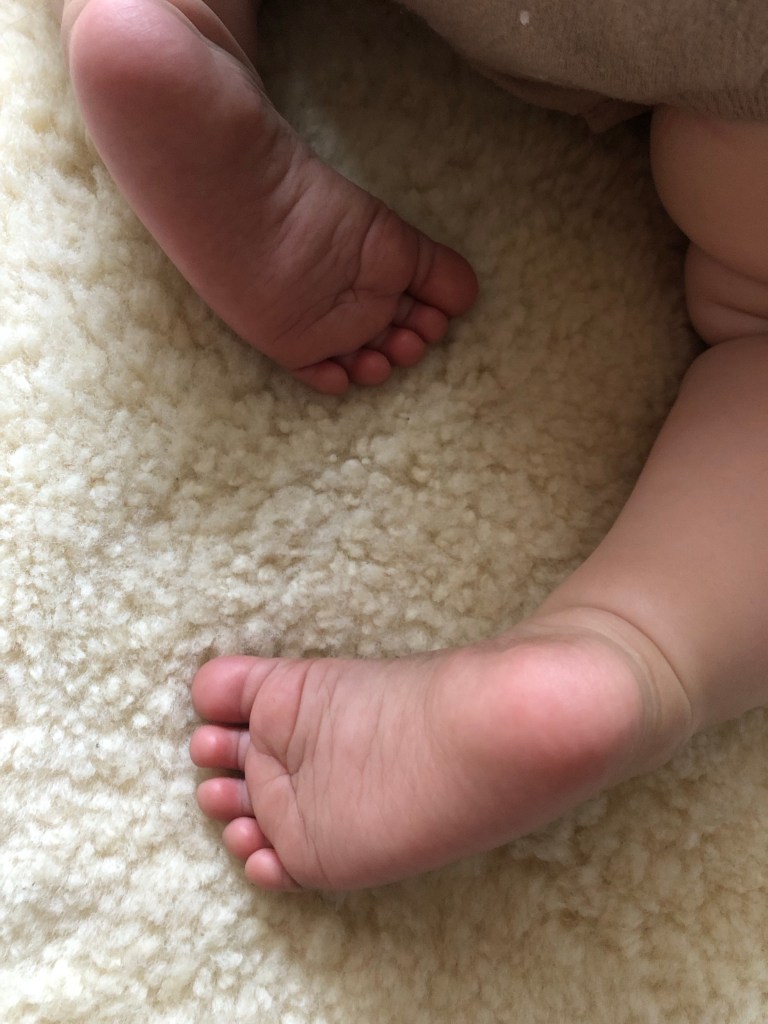
After long nights that are anything but restful, when I find myself wondering if I’ll ever sleep again, I open my eyes to sunlight streaming in the window and my baby’s big blue eyes and round, rosy cheeks, and she plants sloppy kisses all over my face. In a moment of heart-melting sweetness and heavenly clarity that makes me a better woman and a better human and a stronger Christian with a more deeply-felt purpose, I realize that this is life. This is liberty. This is happiness.

Sweet Fullness

When Brad and I got married, I knew I needed to do some soul-searching when it came to having children. I had been single a long time, and I honestly think it was God’s kindness to me that He sort of lifted the desire for children away from my heart for those 10-plus years of being a single woman. I remember as a highschooler and college-aged young woman dreaming of having 10 kids, picking names out, and truly having an active desire to be a mother. But as the single years wore on, it was a struggle enough to grow in contentment and confidence that God would provide a husband if and when He chose to do so; I believe it was God’s kindness that temporarily and gently suspended the desire for children and kept it from being another stumbling block.

So when I found myself married to a good man, I knew I wanted to be the mother to his children, but I also had this strange sense of neutrality. Some of it is temperament – I’ve never been the baby-chasing sort. As sweet as new babies are, I never feel compelled to hold and cuddle other people’s babies, and am perfectly content to admire from a distance. But now that I was married? I knew this was something I needed to wrestle with. It wasn’t that I didn’t desire children, in an active sense, but rather that passively there was no active longing. Does that make sense? I wasn’t opposed to children, but I wasn’t actively experiencing a desire for them either. It was as if my years of singleness had sort of muffled the sense of that desire. And as I pondered that, I realized how empty that was.

Too often, I see women on social media or elsewhere, professing to be Believers and proclaiming confidently that they have absolutely no desire for children and that should be fine. Granted, I don’t know their situations, but a common thread in the Bible is God’s love of the family, and His desire for His people to raise families to His glory, beginning in the Garden of Eden, with the command to “be fruitful and multiply and fill the earth and subdue it.” Procreation is obviously part of that. And my personal conviction is that if God says something is good, we should think so, too. If God commands something to His people, we should take that seriously. We are not victims of our desires.

So I began to pray and ask that God would give me right desires, desires that pleased Him, and that if it was His will that we have children that He would open my heart to children, and remove the fears that gnawed at the margins of my heart.

And it is wonderful how God answers prayers. Before too long, I found I was no longer praying that God would give me a desire for children (because He had answered that prayer and had given me the desires I had prayed for!) but I was praying that He would make me fruitful, and would give me contentment and peace if He didn’t open my womb. Because I also knew that, although I am responsible to cultivate right desires, God doesn’t always satisfy those desires the way we want or expect, and He owes me nothing.

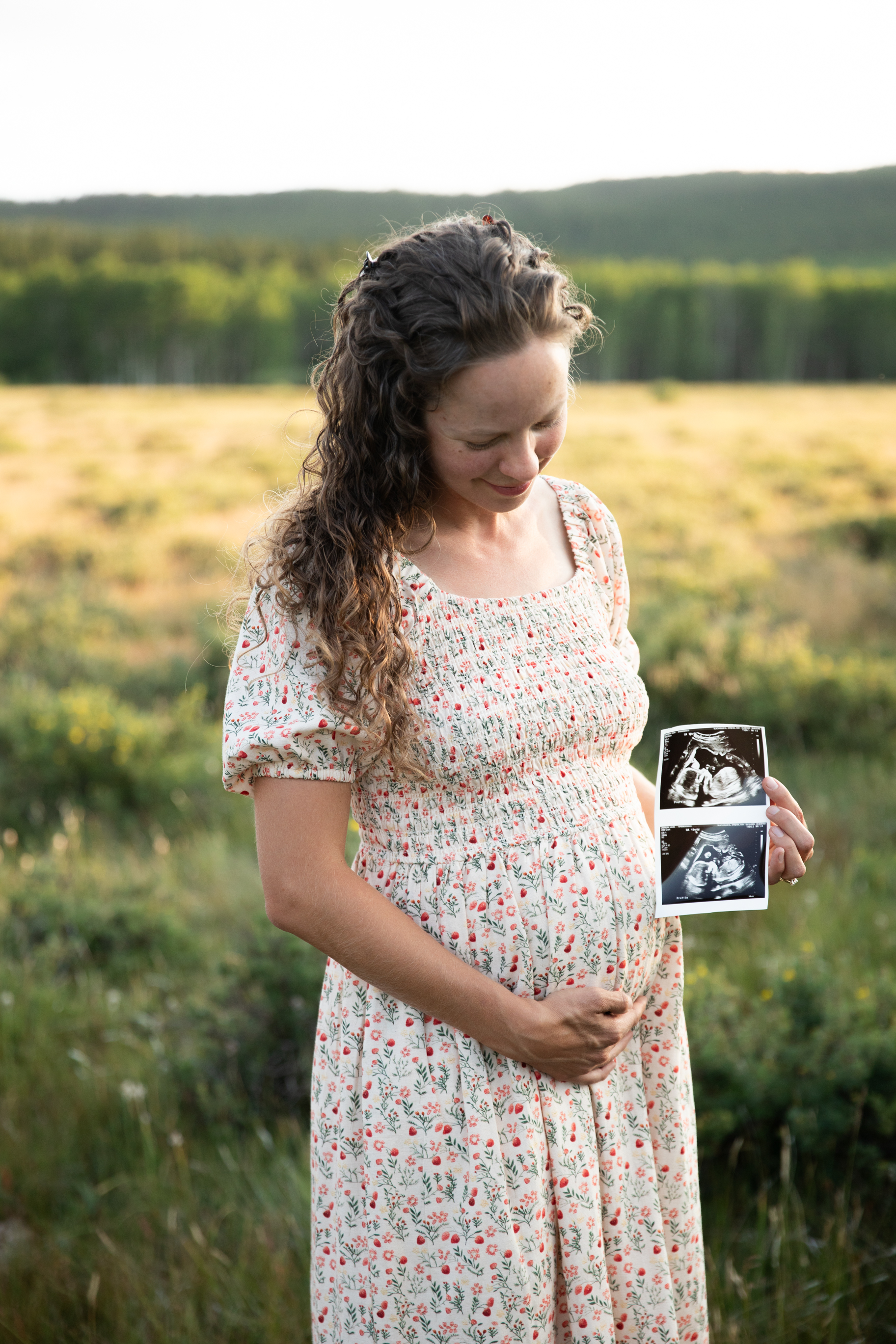
Well, it took my breath away when I saw the two red lines, and took my breath away again when I heard the heartbeat for the first time and saw the baby on ultrasound at 19 weeks. I’ve been living in a state of constant flux between incredible reality and surreality. Nothing had prepared me for how sweet it would be to feel the first quickenings, or how comforting it is to feel the baby move at all hours of the day or night. Nothing had prepared me for the sweet fullness of expectant motherhood. Fears have slipped further and further away.

And I can’t wait to meet our baby girl in November.

P.S. I took these photos for us with a tripod and shutter timer while we were camping in the Bighorns this weekend. Brad was great, and even consented to push the shutter button for me a few times. 🙂

Ranch Wife Musings | Look Higher

Originally published in the Custer County Chronicle on January 1, 2025

There is something extra special about the first day of a new year. From the first delicious moments of the first sunrise, to the sweet last glow as the sun sets, there is something poignant and sacred about the start of a new year, and all the associated firsts. The world feels clean and unsullied. Winter is fresh upon us. The color that fades from the earth seems to infuse into the sky and the eyes are drawn up, up. Just after sunset is the most mesmerizing, when the southwesterly expanse gleams like an opal, clear and dazzling, from the brilliant scarlet and pale rose in the west, to lavender and blue above, and the sweetest green to the south, a whole watercolor rainbow. The first stars are breathtaking. It is impossible not to gaze, impossible not to look higher. Higher than the withered grasses and bare limbs of trees. Higher, to that ephemeral perfection of the new sky.

January 1, 2025. Really, no different than December 31, 2024.

And yet, it is. The new year opens up like the pages of an unread book, or an unwritten one, depending on your perspective. The old year is gone, like a book finished, and hopefully we remember what stories were told in it, the lessons learned, the joys had, the tears shed, the successes and failures, and look forward to the New Year with hope and eagerness.

So often, though, we squander this annual opportunity. The New Year and the making of resolutions is often merely an excuse to settle ourselves deeper in our own self-centeredness. (There, I said it. A little on the nose perhaps, but I said it.) A quick Google search of the top New Year’s resolutions yields a list rife with such goals as losing weight, eating healthier, money management, time management, improved sleep hygiene, improved work-life balance, reducing alcohol consumption, quitting smoking, drinking more water, and pursuing a new hobby, to name a few of the many things that fall into the broad category of self-care, that snake-oil remedy peddled for all our ills, whether physical, spiritual, relational or emotional, and which has wreaked havoc on our relationships and families.

Because do you notice what’s missing? The people are missing. And just maybe that is why so many resolutions and goals fail in about 22 days flat. Without a “why” that extends beyond self, I think goals and resolutions are generally destined to fail.

But here’s the thing about those sorts of goals and resolutions: they are 100% safe. They fuel our smugness as we pursue them, but our self-satisfaction can comfortably accept our failure. With the bar practically set upon the ground, success is semi-sweet, and reaps a few benefits, surely, but if we fail, it isn’t overly painful and no one really notices or cares too much. We set our sights so low! It is a lot easier to reflect at the end of the year with a shrug that I failed to start a new hobby, than to realize and truly acknowledge that I failed to grow in my love of my spouse, my neighbor, or God.

So, what if we looked higher? What if we took the chance, each New Year, to evaluate our habits and goals and ambitions in light of Someone besides ourself? Perhaps, the Person Whose birth we just celebrated?

The Bible teaches that we are to do all things for the glory of God. The Bible teaches that followers of Jesus are known by their love. We are instructed to set our minds on things above, not on earthly things, and to dwell on those things which are “true, honorable, right, pure, lovely, and of good repute, anything that is excellent or worthy of praise.” We are to seek to outdo one another in showing love, the only time I can think of where the Bible instructs competition. We are to forgive wrongs done. We are to show love, joy, peace, patience, kindness, goodness, faithfulness, gentleness, and self-control. We are to live peaceably with one another. We are to be submissive one to another. We are to have order within ourselves and within our families.

What would happen if we set goals and made resolutions that were inherently others-oriented? What if we were as determined to cut out biting words spoken to a family member as we were to cut out alcohol or smoking? What if we strove to shed that certain contentious habit with the same eagerness that we strive to shed 5 pounds? What if 52 hikes in a year became 52 encouraging cards or letters? What if we were as intent upon a half hour or hour in God’s Word as we are intent upon our physical improvement? What if we opened our homes regularly? Loved our spouses specifically? Strove to bless our neighbor intentionally?

And what if we actually invited accountability? What amazing transformation could happen.

The end of the year can be bittersweet. I am a year older, but am I a year wiser? A year more kind? A year more selfless, or a year more generous? A year more patient? Compassionate? Slow to anger? Abounding in love? Willing to go out of my way to bless another, particularly those closest to me? Because those things have the capacity to cause a ripple effect of goodness.

So go ahead and drink more water, lose some weight, and quit smoking. Your body will thank you for it. But do it to be of greater service to others and to God. Look higher, friend. Look higher.