Ranch Wife Musings | The Cute Factor

Originally printed in the Custer County Chronicle on 3-25-26

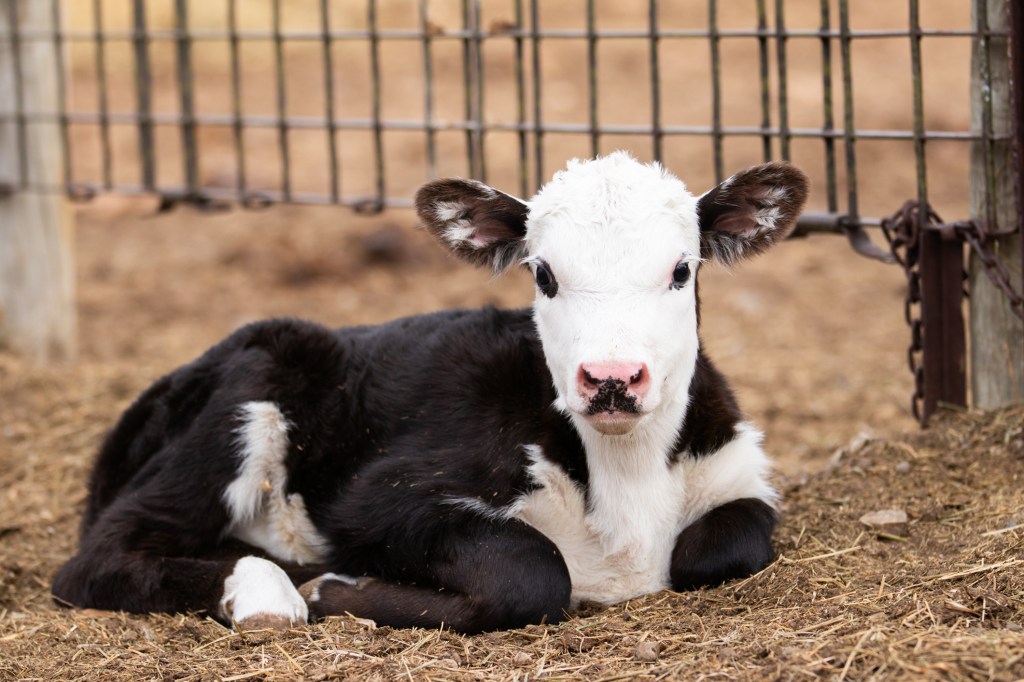
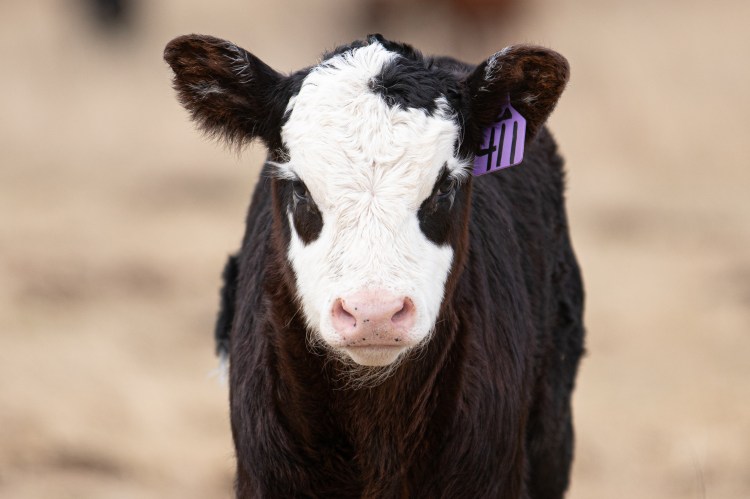
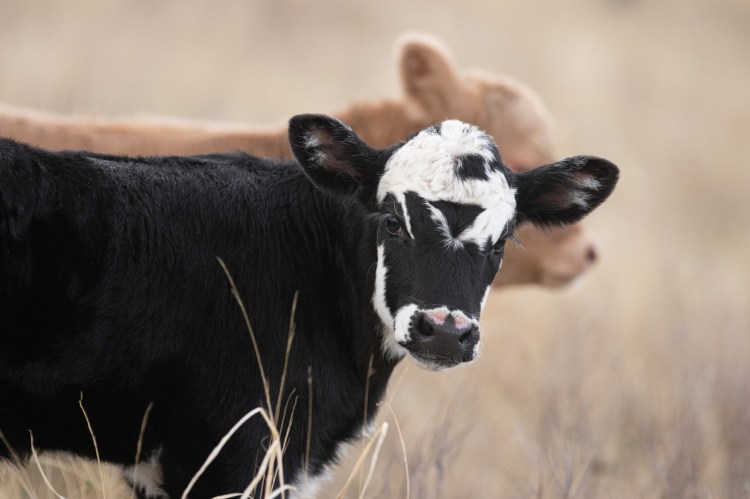
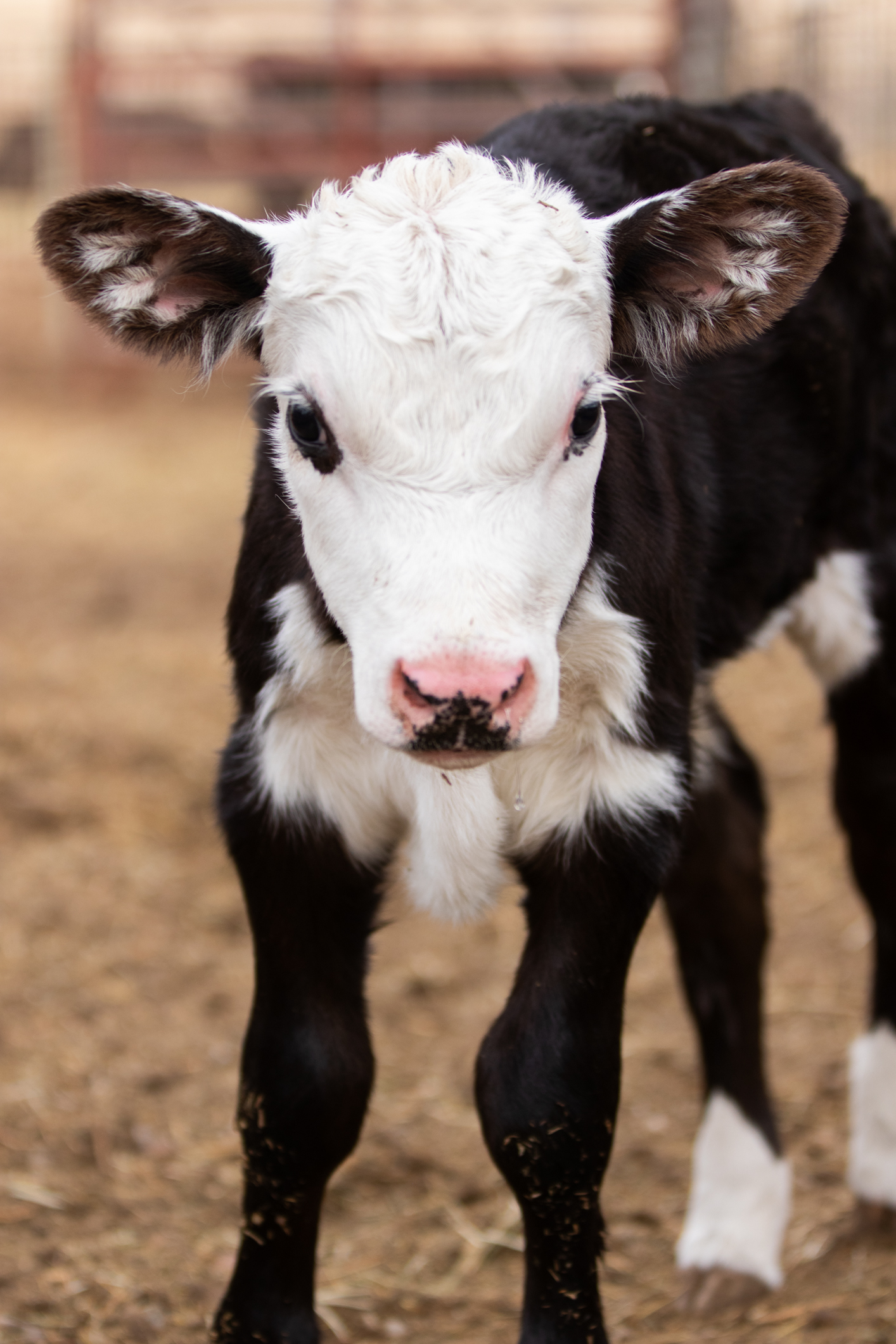
The calving season is well underway and we have an official Cutest Calf of 2026 nomination, and so far I haven’t seen anything that comes close to rivaling him for looks. His mama is a pretty little black baldy heifer, with a delicate white face, not blocky like some can be, and cute black eye patches. And her calf? Oh, man. He’s got so much white on his face that it extends to the backs of his ears, which are frosted white on the insides. He’s got a pink nose with black freckles, four white socks, a white belly, and a white tip on his tail. And you just have to look at him and laugh, he’s so cute. Most years, he’d look pretty out of place. So would his mother, for that matter. Because we are an Angus outfit, running Angus cows and about 50/50 Angus and Charolais bulls.
Anyone in the cattle business has preferences. Some of those preferences are based off of verifiable facts, and others of those preferences are based off stubbornness disguised as fact. Baxter Black knew something about this reality.

If you talk to an Angus rancher, the choice to run an Angus herd is supported by rattling off a list of the benefits of Angus cows, including things like mothering instinct and calving ease, over, say, Hereford cows which are known to be poor mothers and have terrible calving ability. However, if you talk to a Hereford rancher, their preference list includes things like mothering instinct and calving ease, over, say, Angus cattle, which are known to be poor mothers and have terrible calving ability.

Ranchers tend to like the cows that do well for them on their own ranch. Which happen to be the cows that they have bred to that ranch. There are strengths and weaknesses of different breeds, absolutely, but if we’re being quite transparent many of those strengths and weaknesses have less to do with the breed itself and more with the line of genetics that have proliferated, regardless of the breed. Poor feet, poor udders, unfavorable birthweight, poor temperament, risk of prolapse, all can be bred into or out of a herd, regardless of the breed of cattle being run. A healthy herd program includes an aggressive cull program.
If you ask me, though, a lot of it (but certainly not all of it) boils down to this: the cute factor.

Of course, a crusty and stoic rancher wouldn’t call it that, but basically Angus ranchers like what Angus cows look like, Hereford ranchers like what Hereford cows look like, and so on. Pretty obvious. But what do I know?

What I do know is this: if you talk to enough rancher’s wives, you’ll find that the cute factor (which also accounts for general endearing-ness) is super important. Super important. Good thing ranchers are stubborn and opinionated, because their wives are, too, and if it were up to us, western South Dakota would eventually be overrun with odd and adorable crosses for which there is currently no market. If I was forced to pick between two cows, one of which had that loveable little tuft of hair sticking straight up between her ears? That one would stay every time, even if she was a bit of an airhead.  The cuter the better. We’re just willing to unapologetically say it out loud, even if it gets us teased.  
But you know how teasing often says more about the one doing the teasing than the one being teased? Yeah.

So, let’s circle back to the Cutest Calf of 2026.

My father-in-law had a friendly little daily routine with the neighbor’s bull three years ago, who’d pay our cows a daily visit before being escorted back home. Everyone tries to keep this sort of thing from happening, but sometimes it just happens because of the logistics of pasture and water and whatnot. It got to the point that the bull would see Dave coming on the fourwheeler and just head himself back home. Suffice it to say he was a fertile animal, because the next spring, there was an impressive number of his progeny popping up all over the calving pasture, little baldy babies, brockle-faced babies, and a handful that looked straight Hereford. Boy, you knew who their dad was. Boy, they were cute. Boy, was there grousing. But it was mostly bluster, and I know this because of the number of baldy replacement heifers – and two that look straight Hereford – that were kept out of that calf crop by none other than my crusty father-in-law (don’t let him fool you; he’s really a big softie).
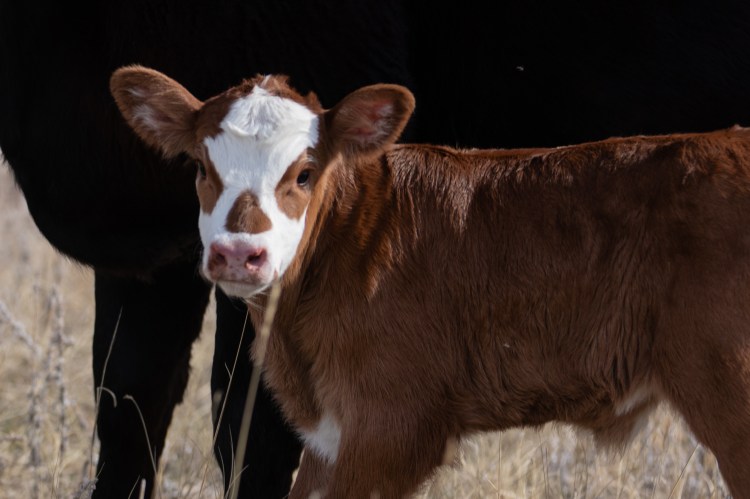
When my father-in-law teases me and pokes fun at me for my enjoyment of all the little baldy babies and brockle babies and the ones that look straight Hereford? I’m pretty sure I found the chink in his armor. He thinks they’re as cute as I do.

But it gets funnier.

This spring, we weren’t at all surprised when those same baldy replacement heifers calved baldy calves. That was pretty expected. But then one day a black heifer calved a baldy calf. We scratched our heads. Odd. Then another black heifer calved a baldy calf. And another. And another. We scratched our heads and racked our brains, and finally think we remembered the neighbor’s bull getting in with the heifers. One time. Once. Talk about getting it done.

But it gets funnier. They’re basically all my father-in-law’s. Including the Cutest Calf of 2026.
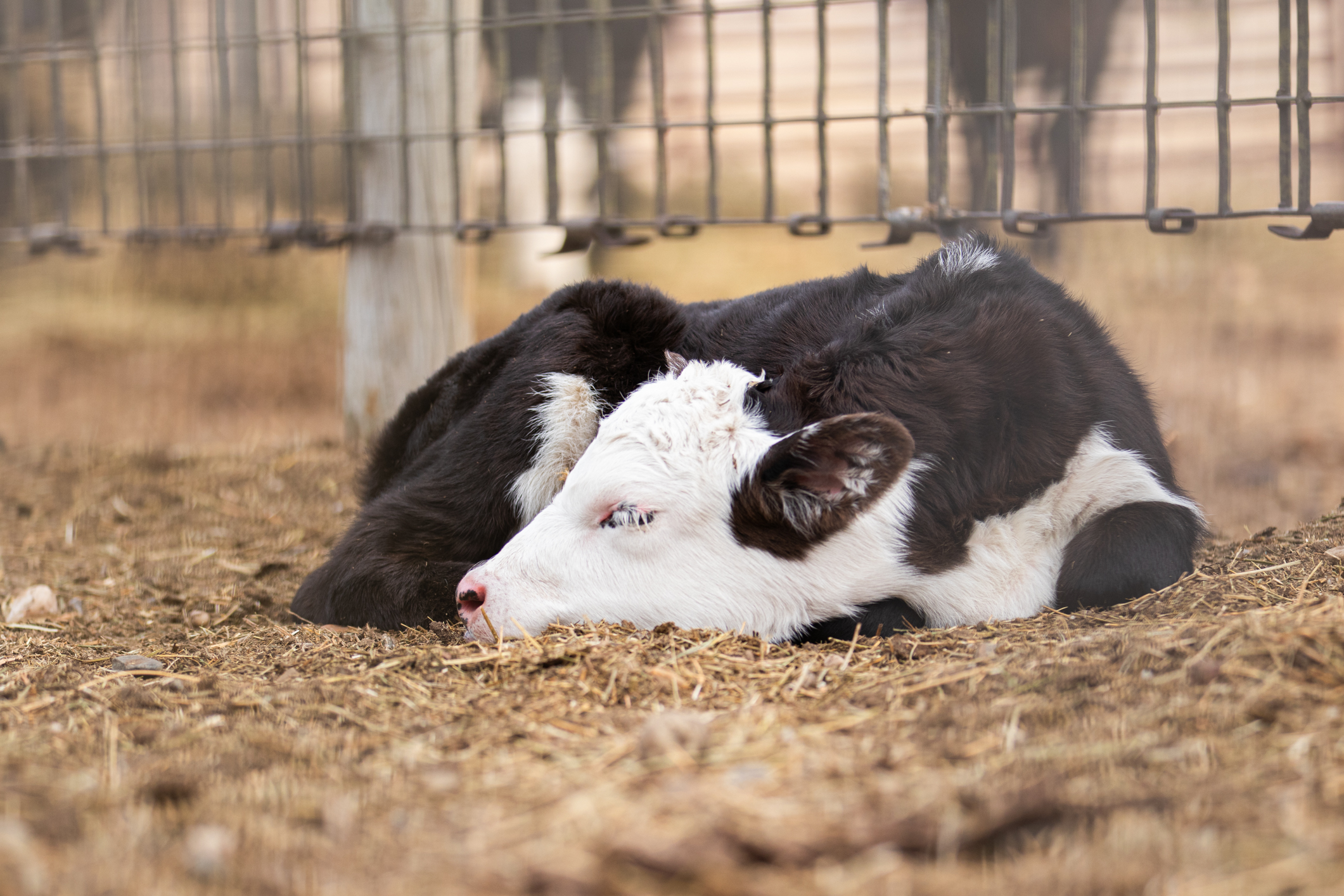
So, if you see my father-in-law, be sure to ask him about his Hereford-influenced breeding program. Rumor has it he’ll be starting to scope out Hereford bull sales in the near future.

Ranch Wife Musings | Choose Wisely

Originally printed in the Custer County Chronicle on Feb. 25, 2026

We bought bulls recently, part of the yearly refresh on the bull herd, to replace those culled due to age, injury, or lack of get-er-done-ness (technical terminology). Purchasing bulls is one of those yearly high-stakes decisions – costly, and with potential significant cascading effects. A bull with good temperament and genetics leaves a good lasting effect on the cowherd over time. A bull with poor temperament and genetic defects can have a poor lasting effect. So it is a decision that is approached carefully, and the bulls are chosen with intentionality and wisdom.

But quality bulls and that associated cost are only a part of the equation when it comes to the long-term thriving of the herd. A million smaller decisions have arguably a greater impact, as important as it is to maintain a quality bull herd. Nutritional inputs, whether it is good feed, healthy pastures, or appropriate mineral supplementation, play a huge role in the health of the cows and, consequently, the health of the babies, and we will see that in spades over the next weeks and months as we wade into calving season. How far they have to walk to water, how rocky the pastures are, how the cattle are handled, just to name a few examples, can affect their demeanor, their stress levels, can cause injury or physical breakdown, and I could go on. The little decisions, cumulatively, over time, aren’t so little after all.

There are a handful of decisions that most people make in the course of their lives that are understood to have long-ranging effects – college, career path, employment, spouse, where to live, things that will have some impact on everything downstream. We approach those big decisions with gravity, and not a little trepidation much of the time.

But I can’t help but wonder what would happen if we approached our little decisions with the same gravity. We may only make a half dozen big decisions in the course of our life, but we make countless little decisions. Might the million little decisions, cumulatively, not have as big – or bigger? – of an impact than the half dozen weightier ones? Might the management of our daily energy expenditures have, cumulatively, as great an influence as those high-stakes ones? 

Everything we do requires energy expenditure of some kind and will have some effect on our health – physically, mentally, emotionally, or spiritually, or the health of our family and those closest to us. Work costs energy, obviously, whether it is the kind of work that results in a paycheck or the kind of work that keeps a house running smoothly. Recreation takes energy, both immediately but also often tapping past efforts in the form of money spent. Mindlessly scrolling social media costs time and energy, giving nothing in return. Sharp words are thieves of the energy that could go towards building a marriage or relationship. Kindness often takes energy but is life giving to both the giver and the receiver. Even the act of resting requires an input, in a way, and in certain situations can almost feel like work.

So many times over the last 4 months, I’ve been faced with choices that ultimately are a question of short-term versus long-term benefits. For instance, the choice between setting my sleeping infant down while she sleeps so I can get something done, or continuing to hold her because that’s what she needs, and cherish the time. I’ve been faced with the choice to rock her to sleep and savor being needed, or let her cry it out and learn to “self-soothe” and sleep on her own faster. I’ve been faced with whether to hand her off to someone else so I can do X, Y, or Z, or be content with less productivity with her close by knowing that this season is short. I’ll let you guess which I have chosen in each of those situations.

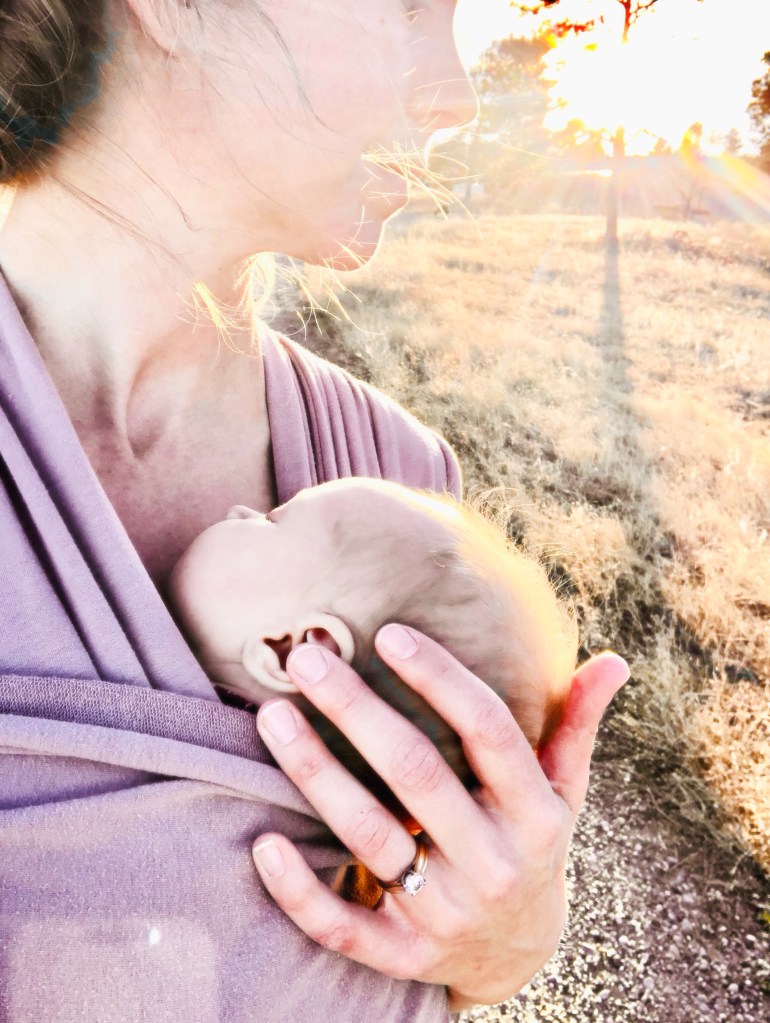
Sometimes I feel the need to apologize for or justify my lack of things accomplished in a day. Sometimes I wonder what it would have taken to have “bounced back,” to look just like I did before or accomplish the same to-do list or not sacrificed some income. But then I think of where my energy has gone, and what downstream impact there might be for a child who has been nurtured and cherished and given as much of a sense of love and belonging and safety as I can give. And I can tell you something certain: I haven’t regretted a moment holding her. I haven’t regretted a single morning snuggle to soothe her back to sleep or the cold coffee that I come back to afterwards. I haven’t regretted rocking her and wearing her and carrying her everywhere, even if it means a little less of what some might consider “productivity,” or having to sit on the sidelines for some things. Because in each of those instances, one of those choices would have longer-reaching impact than the other.

A spotless floor or crumb-free countertops or an always-empty sink demand time and effort, and only last for so long. I doubt I’ll ever wish I’d redirected my energy expenditures and set my baby down more often so I could wash the dishes more faithfully. I doubt I’ll ever regret the less-thorough job vacuuming the house because I was hampered by wearing my baby. I doubt I’ll ever regret setting some personal projects aside in favor of nurturing this new endeavor.

And how many choices like that we are faced with, day to day!

Whether to speak impatiently or with forbearance to a spouse or a child? Choose wisely.

Whether to flounder in your failures or give thanks for God’s grace? Choose wisely.

Whether to rehearse your spouse’s shortcomings or rejoice over their successes? Choose wisely.

Whether to respond eagerly or with reluctance to meet the needs of your child? Choose wisely.

How to spend the cumulative hours made up of spare minutes of the day? Choose wisely.

Whether to pick up a book or pick up your phone? Choose wisely.

Whether to doom scroll the misery plaguing our world, or fill your mind with good things? Choose wisely.

Whether to wallow in the mire of the evil that is done upon the most vulnerable, or pour out your energy in protecting your most vulnerable? Choose wisely.

God only gives us so much time – Each day, and in our life. Every day we live is one day less that we have left. Every ounce of energy spent is one less ounce we have to spend between now and eternity. How will you spend that time? How will you expend that energy? It goes somewhere. Every choice we make demands certain inputs. Might we choose those things that have the best lasting effects, the greatest impact for good, and are the best stewardship of the time we’ve been given. May we choose wisely.

Waiting

Originally printed in the March/April 2026 issue of Down Country Roads Magazine

As February fades behind us, with hardly a day that could really be called winter, and March unfolds before us, springtime seems immediately inevitable. We’ve had stretches of wonderful warmth, so unseasonal that one worried the trees and early spring garden plants might become disoriented and bud out too soon. We’ve had the T-shirt days, the sitting outside and soaking up the sun days, the productive days of outdoor projects. But each little cold snap, whether it is a day or a week, jars us back to the reality that springtime, true springtime, could be weeks away. Gardeners might be itching to get their hands in some good black dirt, seeds might be germinating on windowsills, fresh calves might be tumbling about the calving lot, all the telltale signs of spring – but here in western South Dakota, spring is still a ways away.

So we count down the days, waiting.

Waiting for warmth.

Waiting for blue-sky springtime.

Waiting for the longer days and the feel of earth softening underfoot.

Waiting for the perfume of sap flowing, the unmistakable signature of the pines.

Waiting for the smell of good clean dirt dampened and warmed.

Waiting for greenness and life.

Waiting for moisture. Rain or snow. Either will do.

And that really is what we’re waiting for. Moisture. Some years, the earth is hard with cold right about now, maybe beginning to thaw, maybe even buried under a blanket of white, waking slowly from a long winter. This year, there isn’t enough moisture to freeze or thaw. Passing snow flurries or a smattering of precipitation dampens the dry dirt for a fleeting few hours, but doesn’t heal the wide cracks in the ground, the dryness that drills down, and further down. Everyone gets a little jittery at the smell of smoke. Whirlwinds skim across the pastures, winter-barren, drought-dry, twisting what’s left of last year’s grasses. Not a hint of green is showing yet, in spite of the unseasonal weather.

But we know from experience how fast all of that can change, in these in-between months of almost-but-not-yet springtime. How quickly the skies can build and bring moisture in from elsewhere, blessed moisture, blessed relief. We know how fast a heavy snow can pile up drifts and replenish dams and change the trajectory of the coming months. How quickly the landscape can soften with the first shoots of green.

Moisture means hope. It means grass for the cattle and water in the dams and the promise of a harvest. It means life and fruitfulness and safety. And not just for this year, but for the next. Green or dry, one year affects the next. Good water in the dams, good grass in the pastures, and well-summered cattle handle winter better, handle calving better, and the next year’s calf crop fares better as well. And this year’s calves are the mamas two years from now. When a rancher worries over lack of rain, it isn’t just right now that he’s concerned about.

But springtime is a promise. And a reminder of a promise. A promise made nearly at the beginning of time, in the book of Genesis, that “while the earth remains, seedtime and harvest, cold and heat, summer and winter, day and night, shall not cease.” Because of the One who made the promise, year after year, springtime comes. Year after year, the seasons shift and change, and without fail each season comes as it should. Not always in the exact manner we would prefer, if we had the power to ordain snowfall and rainfall. Sometimes we wait and pray and wait some more. But the seasons persist because God the Creator says that they should.

This isn’t the first drought. This isn’t the first dry winter. This isn’t the first uncertain springtime. And yet, there continue to be cattle on these hills and prairies. There continues to be fruitful life and harvest. The springtime always comes, and the summer after.

And so we watch the skies, and wait.

Ranch Wife Musings | No One Warned Me

Originally printed in the Custer County Chronicle on 1-28-26

No one ever warned me about this part. It is a part of marriage I never really pictured, didn’t think much about, and for sure no one warned me about. The glow of lamplight in the dark before the sun has come up, when the horizon is just a thread of red in the distance. The steam rising from a hot cup of coffee, and my husband sitting next to me on the sofa. The companionable silence or soft conversation, finishing waking up, sometimes Brad reading aloud from a western memoir, or doing our morning Bible reading together. Sometimes I pick up my crocheting for a few minutes before Little Miss Felicity needs me. These mornings are sweet, and they’re a part of life I never really imagined. The pleasant mundane, the companionship, the not-alone-ness of what it means to be in a faithful marriage. No one ever warned me about this part.

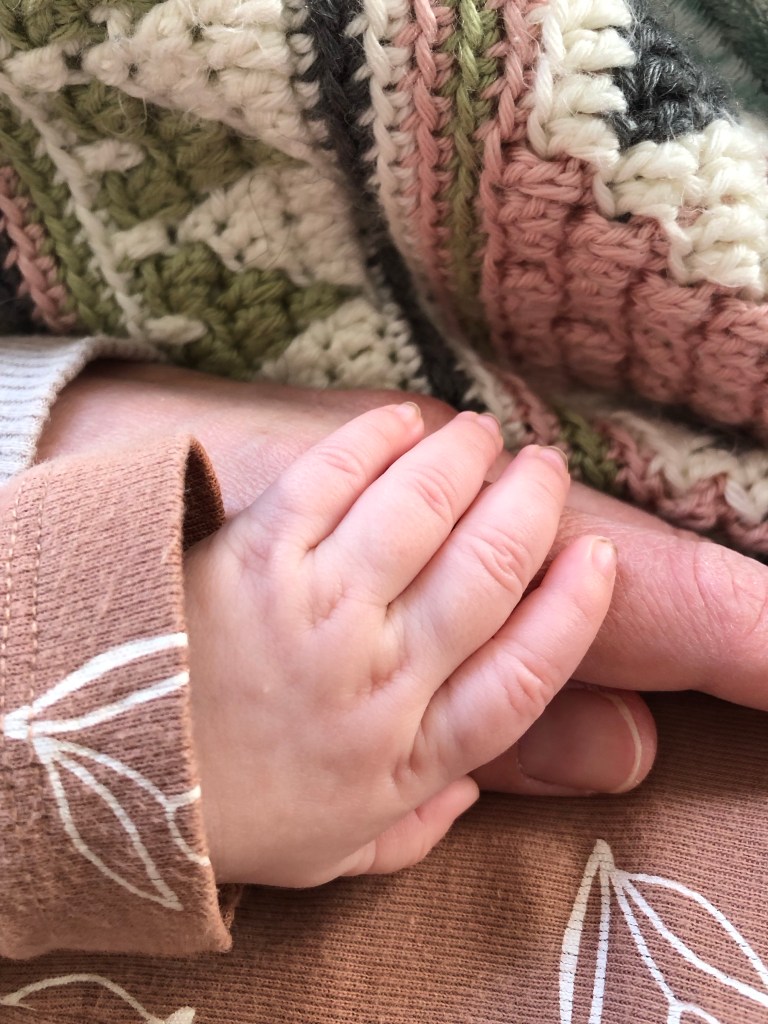
Then the day begins, Brad off to do chores with a parting peck on the cheek and an “I love you”, and for me a daily blur of nursing and diaper changes and naps, on repeat. Somewhere in there is housework, and baking, and writing, and some piano teaching and the occasional morning working cows, and starting to get the garden planned. Little Miss Felicity is no longer a newborn, her little personality starting to bubble up, and it is a delight to watch her discover the world around her. First it was her fists, and she’d stare at them cross-eyed, not sure what to do with them or how to control them. Then it was her voice, and she has been perfecting her repertoire of baby noises and babbling. Then it was her tongue, and she sits with her little tongue poking out, trying to babble around it, sometimes just blowing bubbles, and it melts this mama’s heart every time. There’s a lot of laughter in our house these days.

No one ever warned me about the laughter, or how sweet it would be. No one warned me how many times in a day my heart would melt. No one warned me how fulfilling it is to be needed so deeply. Oh, I heard plenty of warnings, plenty of “just wait untils,” but no one ever warned me how good it was. How good it could be. How good it would get.

“Just wait.” I can’t recall ever hearing that phrase relating to a work pursuit or a hobby, a volunteer endeavor or recreation of any kind. Who in the world ever sees professional enthusiasm or excitement dashes it with the cold water of “Just wait”?  

“Just wait until reality sets in and you realize you’re replaceable at your job!” “Just wait until you’ve been a part of _____ for a few years and realize it is the same as any other organization!” “Just wait until you’re taken for granted by your boss!” “Just wait until your job just becomes a job!” “Just wait!”

We don’t do that. No one does that.

But the “just waits” that flow freely and abundantly and reflexively?   

“Just wait until the honeymoon phase is over!”

“You think you’re tired now? Just wait until you have a newborn!”

“You’d better do ____ now, because you’ll never have any time once the baby gets here!”

“Enjoy feeling good now, because it’s the last time you’ll feel good for another 18 years!”

“Juuuuust wait.”

Hidden behind every “just wait…” is the not-so-subtle insinuation that hard is bad. That uncertainty is bad. That struggle is bad. That change is bad. That’s it’s all downhill from here, sadly, unfortunately, I hope you’re ready for it but I know you’re not!

To be fair, some of those “just waits” are said with little bent of humor, but generally speaking our humor betrays the tilt of our opinions, and we also tend to find what we are primed to see. When I hear numbers about the high divorce rate, the declining marriage rate, and the plummeting birth rate, I can’t help but wonder…what would happen if we talked more about the good stuff? If we primed ourselves and others to look for the best instead of anticipating the worst? Would fewer young people settle, if we talked about how good marriage could be? Would fewer couples throw in the towel if they knew there was hope on the other side of the hard? Would fewer young people put off the joy of having children for the sake of career, only to realize too late that they waited too long? Because on the other side of a struggle, there is growth and strength and peace and the richest of hindsights.

What if we saw the fire of young love and said, “Just wait until the sweet frenzy of honeymoon emotions settles into a state of wonderful steadiness and peace. It is even more amazing.”

That is a “just wait” that gives hope and reinforces joy. And joy multiplies. Hope propels. And the good truly can and does get even better.

Just wait until you wake up next to your spouse for the 100th time, or the 1000th time, and realize you almost can’t remember what it was like to wake up alone.

Just wait until you work through this struggle or that struggle and find your marriage is even stronger.

Just wait until the pregnancy aches and pains disappear miraculously after the baby is born, every single one of them.

Just wait until the sleepless nights fade gently into better sleep and you feel human again.

Just wait until you look down into the gazing eyes of an infant and you realize you’re her whole world.

Just wait until the moment she fusses and you know exactly what it is she needs, and you can respond smiling instead of stressing.  

Just wait until your heart melts watching your husband fall in love with his baby.

Just wait until you smile at your husband across the corrals and he flashes a smile back, working cows with your baby snugged to your chest.

Just wait until you are nap trapped in the rocking chair, with a cup of tea and a favorite book. It’s a pretty sweet gig.

No one warned me about all of that.

Let it Snow

Originally printed in the Jan/Feb 2026 issue of Down Country Roads Magazine

In the dreary midwinter months, I can’t ever quite put my finger on it, on what makes it so special, but there is something about a snowfall day that feels like a holiday. Having left the brightness of December behind, the series of festivities that leave the heart merry, January and February can stretch on eternally into an expansive dreariness, hard on the eyes and heavy on the heart. But at the first light sight of a fresh, heavy snow sifting down, gently swirling in a lightening sky, something in me lightens as well.

Yes, there can be the dreaded storms that are termed “calf killers,” particularly in March and April (which also happen to be the storms that fill dams, and ready the ground for growing grass, and do a world of good on a ranch), and there can be the similarly deadly or just plain miserable cold snaps, where temperatures plummet for days or weeks on end.

But then there are those midwinter storms, with the grey, heavy sky, clouds seeming to rest in the tops of the trees, and the million flakes tumbling, floating, whirling earth-ward, like downy feathers or falling stars, without wind, with a friendly sort of cold. The settling peace is almost overwhelming, the whiteness dazzling, as a transformation happens to the dreary, midwinter world.

Maybe it is simply the welcome interruption to the daily, winter routine – From dusting the vehicles off to shoveling the deck to stomping a trail down to the barnyard to do chores, snow creates an interruption, and jars us out of routine.

Maybe it is the complete and utter transformation of a bleak midwinterscape – Brown hillsides are beautified, with snow to soften the contours; dirty corrals and calving lot are made momentarily clean, with snow to keep the dust down; barren branches of oaks and cottonwoods, piled with snow to hide their barrenness – All is made gentler, softer by a fresh layer of gleaming white.

Maybe it is the heightened awareness of the otherwise invisible – Winding ribbons of a deer trail that appear in that first dusting; drab little birds dipping and diving around the feeder, feathered acrobats that normally fade into a weary, winter backdrop; the tiniest trails of tracks in the snow, from clump of grass to stump to rockpile, evidence of the invisible lives of field mice and rabbits and other mundane critters; bright blue of a jay, cheerful against the white; shreds of threads of the autumn’s last spider webs under the eaves, gathering flurries.

Maybe it is the recollection of the enchantment of childhood, hours spent outside as the snow piled up, snow angels and snowball fights, snow forts and snowmen, until fingers and toes were numb and nose was red.

Whatever it is, whatever the cause, there is magic in a midwinter snow.

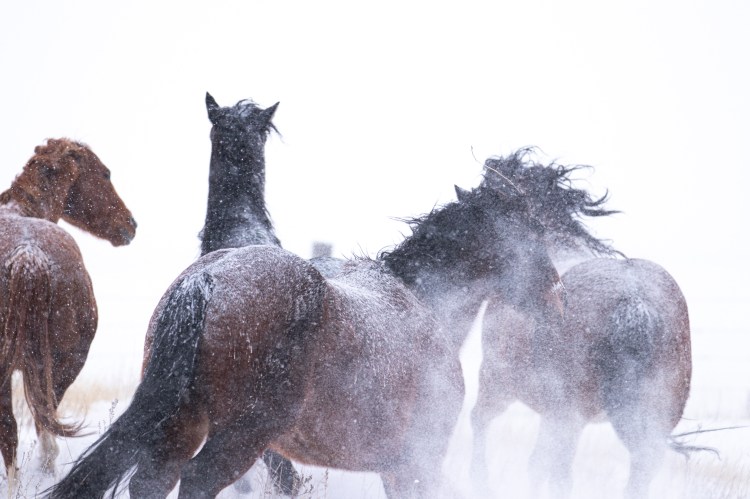
Swirling eddies dance against the barn and the shop and the chicken coop, depositing drift upon drift upon drift, and heavy chore boots swish softly through the fresh-fallen snow. Chickens wade comically through the snow as it deepens, breaking their own little path to the water tank down below, or their favorite spots around the yard. The geldings kick up their hooves and create a ground blizzard, dashing through the snowy pasture, a little extra vim and vigor, a little extra fire smoldering cheerfully in the mild-mannered critters. Such a snow transforms everything.

And from the indoors looking out, at the snowglobe world, shaken and all stirred up? Warmth feels warmer, coziness feels cozier, and an hour with a book is sheer delight.

Spring will come soon enough. So, let it snow!

Ranch Wife Musings | What’s in Your Cup?

Originally printed in the Custer County Chronicle on 1-1-2026

As you sit and enjoy a hot cup of coffee on this first day of 2026, poring over the contents of this wonderful, small-town paper, your dog, whom you generally love, comes up next to you and sticks her nose under your elbow in a friendly bid for affection. Up goes her nose, up goes your elbow, and everywhere goes the scalding hot coffee. 

Why?

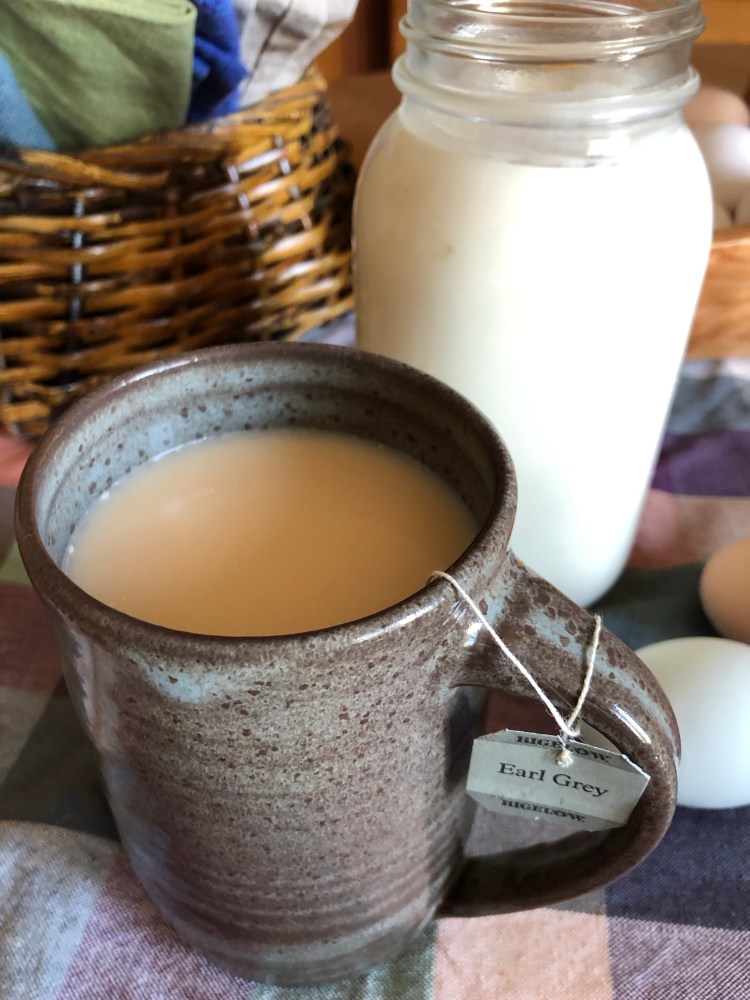
Our first instinct, of course, is to blame the jostle (or whoever or whatever caused it) for the coffee excitement. But the fundamental reason coffee came out of the cup is because coffee is what was in the cup. If you had been sticking to your New Year’s resolutions and drinking water first thing in the morning, water would have spilled out. Tea, and tea would have spilled out. Less coffee, and maybe nothing would have spilled or only a few drops.

The problem really isn’t the jostle. The problem is the contents of the cup.

Every time an old year fades away in the rearview and a New Year approaches, unfolding before us with all of its newness and freshness, life begs to be assessed, and although some scoff at New Year’s resolutions, I think we miss a wonderful opportunity for change if we fail to at least do some self-reflection, taking stock of the old year and making some goals for the new one.

We’re pretty good at a cursory, surface-level assessment, tending to zero in on things like a number on the scale or a dollar amount in a savings account, things that are pretty non-threatening, not overly challenging, and not overly crushing if we fail. We tend to focus on things that inflate our own egos, reinforce our sense of self-importance, and have no real lasting benefit for anyone.

So I’m going to assist us in this meaningful self-reflection by posing a question: What is in your cup? When you get jostled, what comes out?

Because the jostling doesn’t lie. Whether the jostle is someone who cuts you off in traffic, or hitting every red light on the way to church, getting stuck in the longest checkout line at the store, or clumsily dropping something and making a mess.

Oh, you don’t relate to any of those? How about your crying baby at midnight after three hours of walking the floor, or the spouse who fails to respond to you in just the right way, or the cow that cuts back and jumps over a fence and spoils the gather?

Still nothing? Okay, the boss that patronized you in front of your coworkers, the morning alarm that had the audacity to go off, the wrong man in political office, the toothpaste you got on your shirt as you’re running late to an appointment, the chair that stubbed your toe, or the dog that got into the garbage.

If somehow none of these ring a bell, I promise you’re not exempt. Use a little creativity and come up with a few jostles just for you.

We call those jostles, those circumstances that provoke a response, “stressors.” Annoyances. Provocations. Some of them wouldn’t annoy everyone. Some are just sort of innately annoying or inconvenient. But it is the response that is key, not the stressor. If a stressor is applied and something ugly spills out, the issue isn’t the stressor. The issue is that something ugly was in there to be spilled out in the first place. All of us have those stressors, because ultimately all of us have ugliness in us that, given the right provocation, will spill out.

So I ask again, what is in your cup? When you get jostled, what comes out of you? Is it ugliness and spite? Or is it goodness and graciousness? Is it profanity and vulgarity? Or is it tempered words? Is it anger or gentleness? Is it bitterness or forgiveness? Is it hate or love? Is it stinginess or generosity?

In Paul’s letter to the Galatians, he gives them this list that he calls the Fruit of the Spirit: Love, joy, peace, patience, kindness, goodness, faithfulness, gentleness, and self-control. Self-control rounds out the list of virtues, reminding me that with all the virtues the precede it, there are still parts of us requiring restraint. There is still something there needing to be controlled. There is an ugliness needing to be rooted out.

So, when you get jostled, what comes out? When you get cut off in traffic, does your heartrate spike and you see a little red, and do you yell into your windshield? When a cow acts like a cow when you’re working cows, do you respond with anger and vulgarity, maybe even taking it out on those around you? When your spouse fails to respond just so, do you respond with bitterness and resentment? When you stub your toe, do you spew profanity? When your alarm goes off and you weren’t ready for the day, do you grumble and grouse as you leave the house? What comes out? If it came out, it is fundamentally because it was in there, not because you got jostled.

What would it look like if we all examined the contents of our cups, and then did something about those contents? The contents of our cups are often a direct reflection of what we are actively (or passively, without thinking) pouring into them, in the form of social media, entertainment, and the company we keep, for instance. Sometimes the contents reflect not so much what we’ve poured in, but what we’ve failed to root out.

What if we determined to change what we poured in? What if we poured in so much goodness that there wasn’t room for anything else? What if we were so bathed in the goodness of God and His Word, what if we were so filled with the Fruit of the Spirit, what if we so filled our minds and hearts with good words, kind words, true words, loving words, that when jostled that is what came out?

Would the end of 2026 look any different than the end of 2025 if you were to fill your cup differently? How would it change your relationships? The peace in your home? The dynamic in your family? The strength of your marriage? Your performance at work?

What’s in your cup?