We are Young Here

Originally published in the May/June 2025 issue of Down Country Roads Magazine

Summer clouds before a summer storm skate across a wild sky, and the rusty, dusty, weather-beaten sides of a barn rise up, like a slab of Black Hills granite, from the prairie grasses and strewn rocks. It grows there, somehow belonging as much as the antelope that scatter and settle and fawn in the summer, or the meadowlarks singing on a fence wire. Somehow a part of the land, not an intruder, and a reminder of a simpler time, when men and women, sturdy of mind and stout of heart, cooperated with the land, submitting themselves to the wind and the weather and the natural order rather than seeking to bend nature to suit their wills.

And how recent this was. How young we are here.

A tumbledown cabin is tucked into a remote hollow.

In a steep ravine, a pump handle rusts away, leaning against a tree, the only evidence remaining of what had been.

An abandoned schoolhouse in a pasture, cows looking out the door, chewing their cud.

Hewn fenceposts scattered under old grasses.

A collapsing roof over a dugout, and some broken jars and coffee cans, all that’s left of an old root cellar.

People lived here, learned here, loved here, built lives here. And we are young here.

Once, not so very long ago, that barn door opened at evening and warm lantern light streamed out. A farmer and his wife or children milked their cows, and cats waited for what they knew was coming. Soft singing or humming, or scraps of conversation, or gentle mutterings to the cattle flew about inside like gentle birds, like the barn swallows that nested in the eaves.
Once, not so very long ago, children sat and learned at benches and desks in that old schoolhouse. Bare feet swung and chalk tapped slates. Horses and ponies were tied outside, a ball and bat and a jump rope waited for recess, and laughter rang out during rambunctious games.

Once, not so very long ago, a homesteader’s wife carefully tended a hedge of roses, hauling water for them to drink, perhaps plucking a blossom for her hair, beautifying her life in a rugged place.

There is an ache in my heart at these glimpses into the past. It isn’t an ache of grief, though there is sorrow there. But it is a sweet ache, almost a homesickness, at the reminders, however small, of the lives lived before we were here, those reminders of the callused, hardened hands, of minds steeled against an uncertain future.

It is the twists of wire patching an age-old barbed wire fence, coaxed and muscled by a cowboy sometime long ago, or not so long ago. The odd-shaped nails in the doorframe of a tumbledown building. Farming implements, long since left to rust. Walls of stone, remnants of industry, of mining days and flume-building, intricate, painstaking work, masculine work, reminders of the hard work done by tough men in tough times.

And then there are the shards of blue glass from old canning jars, a woman’s skill and offering. Little glimpses of domesticity in a wild age. Bright colors, somehow still crisp, of a scrap of wallpaper in a pile of plaster. Lace curtains like cobwebs, blown by a breeze streaming through a broken windowpane. White irises on the ridge above our house, not wild ones, and no one now knows where they came from or who planted them, but someone did. Lilacs flourishing on a remote hill in the middle of the ranch, the only evidence of an optimistic hope for a future life, optimism that still thrives, solitary and beautiful. Oregon Trail roses, those yellow roses of Texas, homesteaders’ roses, along a stone foundation of an old stagecoach stop. Simple, sweet, womanly reminders of a softer side to a rougher age, and that the softer side mattered, even in a rougher age.

You can’t help but pause, and think, when you stumble across these relics, whatever they may be. There is a life behind them. And was it so very different from now?

How many sunny days just like this one have shined down on this spot? How many years were the roses or lilacs or irises enjoyed in a vase by the window, before the hands that planted them disappeared into the past? How many boots kicked mud off on the now crumbling doorsill as a welcome home rang out? How many beloved cows were milked in the old dairy barn? How many work-worn hands have mended this fence? How many times have cattle have been herded across these hills, the very ones I’m walking? How many families have earned their living from the dirt beneath my feet?

I love when the grass grows tall in the summer months and I can imagine in my mind’s eye how it must have looked, back then. I can imagine fresh lumber without the weather-age and paint without chips and scratches; I can imagine cinderblock walls still standing, and panes of glass instead of empty space. There is an illusion of time standing still, or the past converging with the present. A summer storm rolls by, unable to shake the strength of those ancient walls that have weathered so many – how many? – storms and gales. But one day, those walls, that roof, will collapse and molder and fade away.

There’s a temptation, in this modern age, to live as if we live alone, to forget our context, our origin, our heritage, our traditions. To breeze past these little hints of the past, these gifts left by our predecessors, evidence of lives and hopes and dreams and hard work and sweat and tears. As far-removed as the past can feel, it is a mere few generations behind us, and wonderfully near, and beautifully dear.

We are, in fact, young here.

Ranch Wife Musings | Praying for Rain

Originally published in the Custer County Chronicle on April 23, 2025

I don’t know if there’s a better time of year on the ranch than the tail end of calving season, those first summerish days, when the mornings are still crisp and cool, and the warming earth is fragrant and greening up. The abundance of baby animal life, the springing up of flowers in the garden, the first wildflowers, the blossoming of the fruit trees, and the lilac bush heavy with dark purple buds are reminders of the order woven into this world. Spring always follows winter, summer always follows spring, and after a good calving season optimism runs high, especially when the cattle market is where it is at today. We are looking forward to some of the best of the year’s ranch work, the sorting and pairing out of the cows and calves, long days in the open air, the brandings, and getting bulls out.

But behind it is a glimmer of uncertainty. When a dry winter leads into a dry spring, when we watch spring storm system after spring storm system fail to materialize, and little shots of rain barely manage to wet the ground, when dams are bone dry and the window for growing grass gets narrower and narrower, it is easy for that optimism to take a back seat to negativity, or what some of us might simply call “being realistic.”

It is hard to watch as the grass springs up in the warm summer-like temps, but stops growing for lack of moisture. It leaves a little pit in your stomach to see the dust devils blow down in the stubble of the hayfield, and to feel the unyielding, cracking ground beneath each step. If the dry conditions continue, the grass will head out early and essentially be done, and no amount of rain can cause a finished blade of grass to finish growing.

Grasses grow and mature in different seasons, so even if we miss the window for the early spring grasses, we can still grow later season grasses, but those early rains are incredibly important for healthy summer pastures and growing enough for winter forage. Healthy summer pastures make for cattle that are well-summered, and well-summered cattle have better conception rates and lower rates of disease, and then handle the winter well. Cattle that are well-wintered, with good winter forage, handle calving well, and produce plenty of milk for their calves, who are vibrant and healthy. And on it goes.

What happens now has ripple effects long into the distance. A rancher worrying over a lack of rain now is never thinking just about right now, but about 2 or 12 months down the road.

It can be worrisome. It is easy to become discouraged or to feel helpless in the face of things over which we have no control. A spring without rain provides ample opportunity for our complaints, for bitterness or resentment to spring up, or for us to wallow in uncertainty and take it out on those closest to us. All those are unconstructive and even deconstructive reactions, over which we absolutely have control. We can choose to wallow, or we can look higher.

We may not have control over the rain, or over other situations in which we find ourselves. But there is Someone who does.

And so we pray for rain, trusting that He hears, and that He cares.  

We pray for the moisture needed to grow grass.

We pray for the ability to steward our livestock well, to give them what they need to thrive.

We pray for fruitfulness in our endeavors, to the glory of God.

We reflect on His faithfulness over the years and over the generations.

We acknowledge His ability to provide exactly what we need, with eternity in mind, even if it isn’t what we think we need, or what we want at this moment.

We acknowledge that what we perceive to be our needs can be extremely short-sighted, and that our Heavenly Father has purposes that are much higher than merely the health of the pasture grass or the conception rates on our heifers.

There will be hard years. There have been plenty of hard years before, plenty of uncertainty, plenty of downturns in the market and years the grasshoppers ate everything. We have no trouble remembering those things, and tend to have a harder time remembering the good years, the years of rain and plenty and full dams, or the surprising ways needs were met against all expectations.

A spring without rain is a reminder that nowhere have we been promised everything we hope for in life and, more importantly, all those details are actually in the loving and perfect care of the same Someone who orders the seasons and keeps the earth spinning on her axis, the same Someone that has brought rain in its season for millennia, and Who has promised that, ”While the earth remains, seedtime and harvest, cold and heat, summer and winter, day and night, shall not cease.”

We can worry about the balance in our bank account, the food on our plates, the clothes on our backs, the cars we drive, the houses we inhabit – But our Heavenly Father knows what we need, and if He feeds the sparrows and clothes the fields, He also cares about our needs.

So, we pray for rain. And leave it safely in God’s hands.

Nurse Cow Drama

Posey’s job description is “nurse cow.” Nurse cows, ideally, will take any calf offered to them without much of a fight, but Posey isn’t most cows. And frankly, that’s pretty idealistic – Most cows are maternal enough that they really do only want their own calf, and aren’t happy with freeloaders, but Posey, Posey, Posey, it’s your job.

My father-in-law insists cows recognize their calves by smell, and the science behind grafting a bum calf on a cow that lost her calf is that after a few days of nursing her milk, the calf will smell like her own. The same principle should apply to Posey, but I pointed out to my father-in-law that it couldn’t be this cut and dry. Posey, last summer, would only ever let her adopted calf nurse if her own calf was nursing, so clearly there was some recognition there that went beyond smell. And this year, with two extra babies on her, she always knows which calf is Marigold. Marigold gets extra loving and grooming that the other two never get, and even though Posey has settled down and is content with all three, the two grafts never get the extra attention. Pretty fascinating.

However, even with the lack of maternal affection, the char and the black are doing well. It took a couple weeks of persistence, of separating all three calves from Posey and letting them nurse as a group twice a day and supervising Posey while she fed them, for things to settle into a routine, but it worked, and all parties are thriving and enjoying pasture freedom. The little black angus calf always nurses off the back, which are the largest quarters, and she is stout!

But it sure is satisfying to sit and watch those little tails whip back and forth.

Sweet Spring

The end of winter comes as a relief. I love the change in seasons, and each one is dear to me for different reasons, but winter does get long, even mild winters like we had this year. I start craving the sight of greenness, and blooming things, and the frolicking of happy baby animals, and long walks in the sunshine, and actually breaking a sweat. So spring comes as a relief.

Back in November, I planted nearly 100 tulip and daffodil bulbs in my perennial garden, in front of the lilac bush. I cheered them on, over the last month or so, hoping and praying that they’d survive, since they had been a little hoodwinked by the warm weather into coming up a little extra early. I covered them with frost cloth on a number of nights, and warily checked them the following days, always glad to see minimal to no frost damage in spite of temps in the 20s. The first daffodil bloomed a few days ago, and the first tulips bloomed Easter Sunday. So worth the wait, and the work!

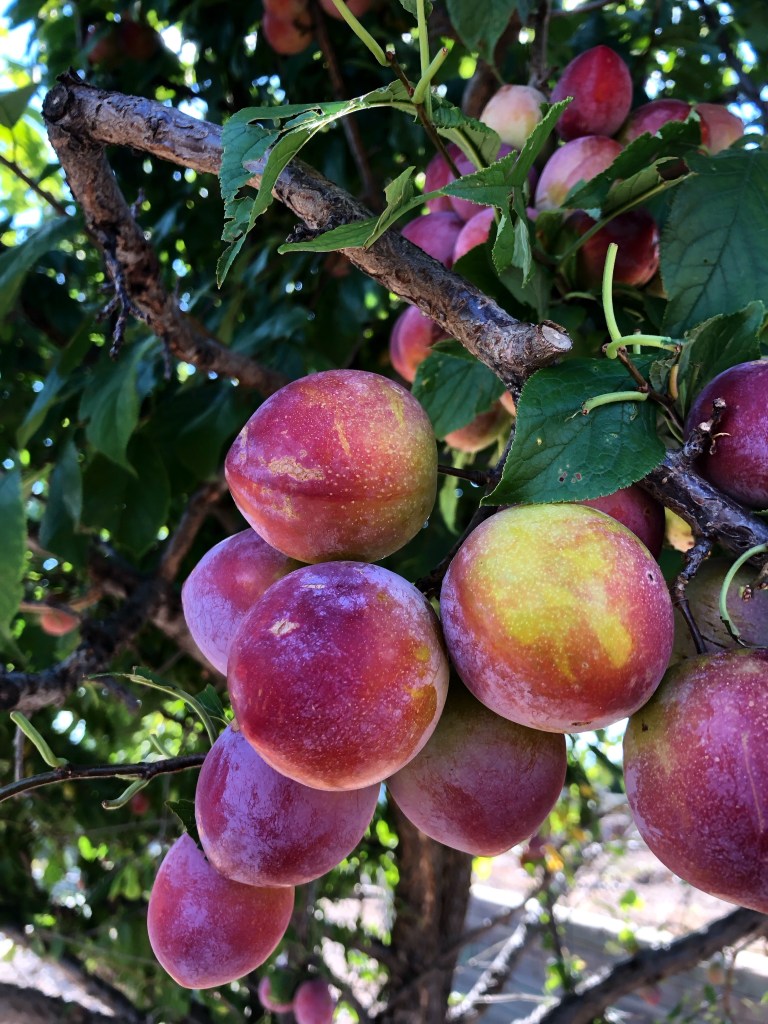
The plum and crabapple trees are blooming, the asparagus and strawberries have poked up through the soil, the lilac is heavy with dark buds, and the first pasques and bluebells are lurking on the hillsides in sunny places. Spring is well on her way.

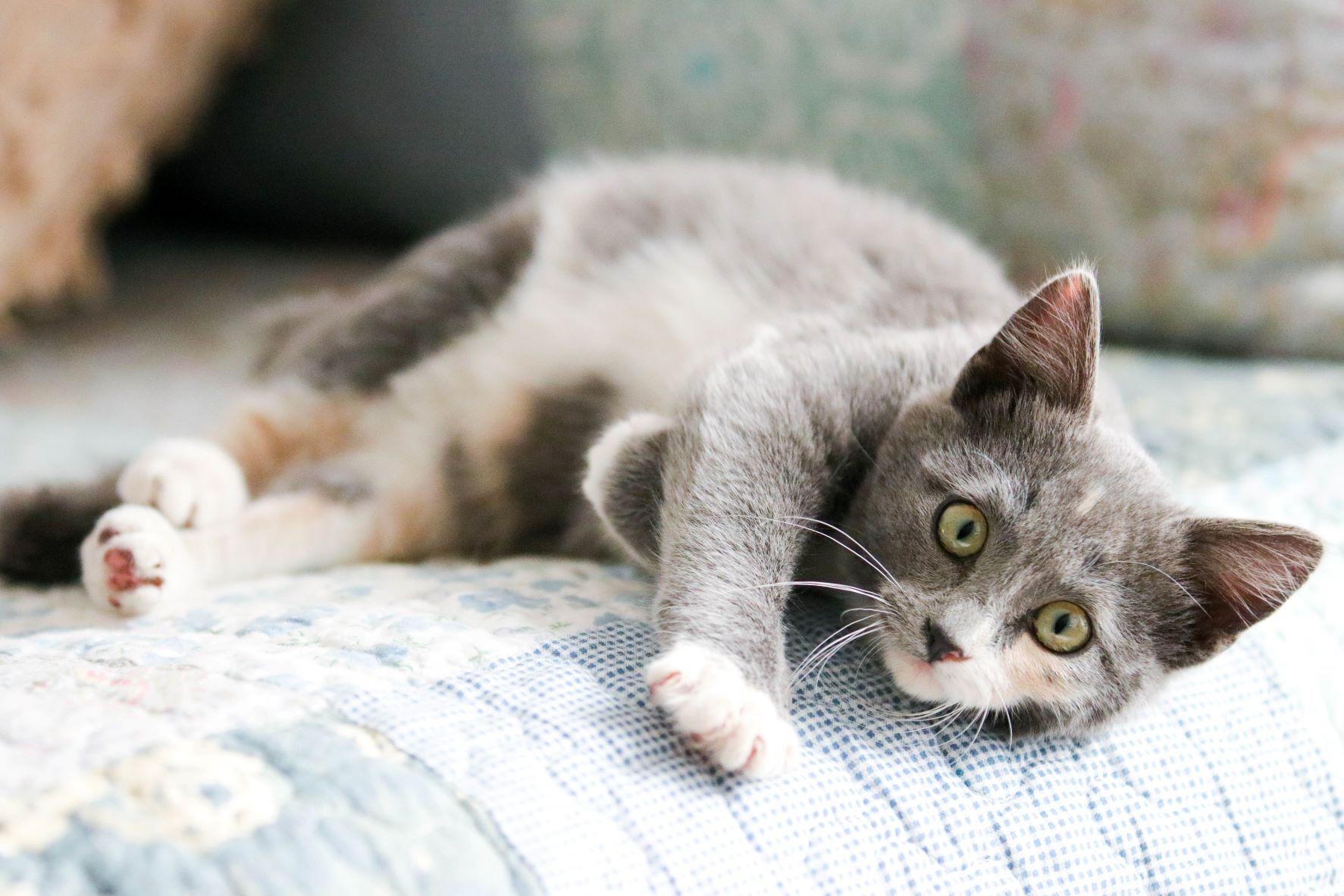
After a few weeks of moderate turmoil, Posey and her three calves are thriving. The calves make the cutest little multicolored threesome, lazing around or playing together, napping while Posey grazes nearby. When the calves are close to the barn, I often find my cat, Spicy, curled up with them, enjoying their warmth.

It is a sweetness I just can’t get enough of.

Breakfast in the Barn

So on the one hand, I feel very spoiled. Not only do I have a husband who loves me, but he actually tolerates my love of milk cows and my huge garden and the chickens and the projects overflowing the kitchen. I get to mosey down to the barn after having coffee with him, milk what I want from my cow, and then have breakfast with her and her babies.

I do feel spoiled. But then there are the days when I am reminded of how much hard work it is. Wonderful work. Oftentimes enjoyable work. Sometimes miserable work. Work I wouldn’t trade. Hard work. It isn’t all sweet, slow mornings and a pint of warm milk.

So when there are mornings that I can leisurely have breakfast in the barn with my cows and my cats, I will, and I will savor them, because not every day is like this.

The Milk Business

I’d say I’m back in the milk business, but that really isn’t quite accurate. Posey is, and I steal a little here and there. After a somewhat tumultuous couple of weeks shuffling bum calves around, during which time she has fed four different calves and for 36 hours fed all four (she wasn’t impressed), we have her little family established and Marigold now has competition that isn’t me.

I have to say, I love standing down there watching three happy little tails whip back and forth, and their fuzzy little heads get wet from nursing, and their little bellies turn round and tight like little drums. They come up for air, standing there with their tongues stuck out before going back for more, and finally waffle off to sleep. They sure aren’t malnourished.

And I do occasionally snag some of that wonderful, rich, creamy milk. The perks of having a nurse cow.