Ranch Wife Musings | Welcome to the World

Originally printed in the Custer County Chronicle on Nov. 5, 2025

When I struggled into my once-baggy sweatpants on Wednesday last week, the only thing left that was comfortable at 9 months pregnant and warm enough for working cows on a cold morning, I heard a seam pop and may have almost cried. Baby wasn’t due for another week and a half, and I knew that could mean three or three and a half weeks, and frankly I was just over it. Everything hurt, nothing fit, and I couldn’t reach down to tie my shoes. Heck, I couldn’t even see my toes if I looked down.

“Do you think you’ll make your due date?” Brad would ask occasionally over the last few weeks.

“Absolutely,” I’d reply with just maybe an edge of frustration, or disgruntled resignation. “One hundred percent, yes.” The last month of pregnancy really is as long as the first eight, with the shortness of breath and fatigue and back pain and everything else that is just a part of the miracle of knitting together a life, a little tiny human. I’d think about another four or three weeks and balk. But then I’d feel the kicks and the jabs and the rolls, all the sweet little movements that help bond a mama with her unborn baby long before they get to meet face-to-face. What sweetness. What a special time.

Part of me really wasn’t ready for that to be over. However, it isn’t like I had a choice, one way or the other.

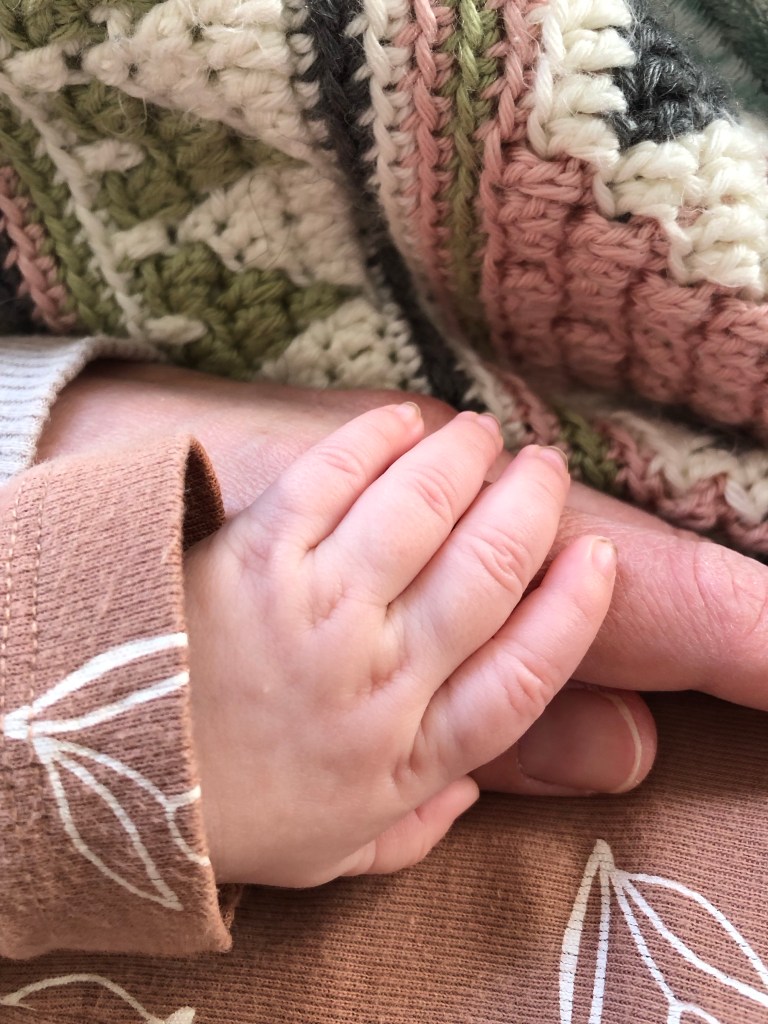
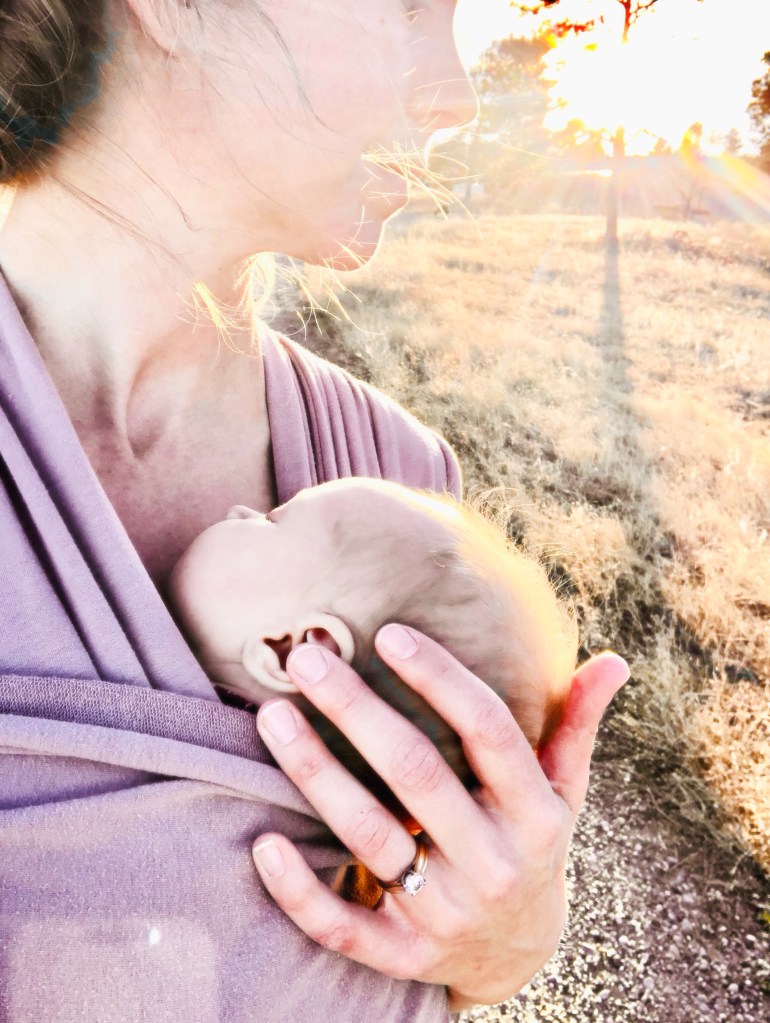
Well, not even 72 hours after the sweatpants incident, in the peace and comfort of our home, I was handed a slippery, sleepy little baby with a head full of blond hair, the same baby that had been kicking and jabbing and sitting on my bladder for the last number of months, the same baby that had left me with sore ribs and a body image crisis, and I fell in love. Felicity Mae arrived a week early, and has stolen our hearts.

Those first few days are funny, and confusing. The sleepy, slippery baby that you’re supposed to just know how to care for transforms into a sneezing, pooping, crying, hiccupping, burping little package, and just when you think you’re at your wits’ end, you fall even deeper in love. And somehow there is God-given instinct that rises up and you do, you really do, know what to do.

We’ve been sold a bill of goods, women have. And men, too, honestly. We’ve been told that an unborn baby isn’t a baby, for starters, or at least isn’t human, and that their humanhood depends upon the desires of his or her parents. We’ve been told that children are an inconvenience worth sacrificing on the altar of self. We’ve been told to intentionally postpone children until the important, fun stuff has been accomplished, like that random dream vacation to Antarctica. We’ve been told that choosing to have children will destroy your life, or everything that makes your life worth living, like your career and your body and hot dates and good sex and your own personality, and social media is rife with influencers trying to convince others that self-centered loneliness is superior to self-sacrificial love, and that getting to have brunch with your friends and pamper your pet or your houseplant will bring more happiness than seeing the purest form of trust reflected in the eyes of a 48-hour-old infant, who is half you and half your faithful spouse and wholly a unique person created by their loving Heavenly Father. Mind blowing.

I can’t tell you how many times I have counted her tiny fingers and toes and gazed at her little blossom of a mouth, and then looked up at Brad and said wonderingly, “She’s mine…This is MY baby!” Honestly, I’ve never really cared about babies. Just being brutally honest. I could be excited about them in a very general way, and very happy for the very happy parents, but I never felt inclined to hold all the babies or found myself pining for baby snuggles. Older children, I could enjoy, but someone else’s crying, pooping, angry baby that I had no idea how to soothe because it wasn’t mine? No, thank you, you can keep it, it’s yours.

But this is like absolutely nothing I’ve ever experienced, and nothing could have prepared me for the sweetness and the wonder.

Oh, I know all the negative “yeah, but’s”, insinuated in the wealth of comments told to expectant parents beginning with the words “just wait until.” I know the tendency to focus on the frustrations and the challenges and the outright pain and discomfort of children and family and life in general. Is there some truth there? Of course there is.

But I wouldn’t trade this for the world. Any of it. Not the popping seams or the back pain or hobbling around in a postpartum daze wondering if I remembered to eat, or deciding whether I have the energy to walk from one end of the house to the other. I wouldn’t trade any of it.

Welcome to our family, baby girl.

Ranch Wife Musings | Tangled Lives

Originally printed in the Custer County Chronicle on October 8, 2025

Recently I had the blessed opportunity to revel in the company of some two dozen other women, fellowshipping together in a sweet time of encouragement and camaraderie. As I looked around the room at all of their faces, old and young, all walks of life, I reflected on how we had met. How long ago. Our shared histories. How our lives had intertwined over the years. How God weaves individuals together into an amazing tapestry called community.

Community. History. Belonging. Friendship. Isolation. Loneliness. As seemingly connected as we have become as a society, with easy access to hundreds or thousands of acquaintances through a handheld device, with the ability to communicate instantly and share bits and pieces of our lives with the world, you’d think that loneliness would be a thing of the past. The past – you know, back when communication was slow and travel was slower. Yet today we are more disconnected than ever. At no other time in history have we been able to converse with people across the globe with the mere tapping of our fingers on a keyboard, and yet the cultural sense of a local community is anemic at best. Phrases like “epidemic of loneliness” are tossed around almost with nonchalance, and who is in the least surprised by high percentages of people, young and old, experiencing the pain of loneliness?

But how did we get here? And what are we doing now to perpetuate it?

We can look back 200 years and see the slow degradation of the family unit, in the name of efficiency and modernism and industrialism, that removed families from their farms, fathers from their homes, and children from the care and instruction of their parents.

We can’t change what happened 200 years ago or 50 years ago, but we can recognize unhealthy patterns that are being perpetuated through choices made today.

Choices such as relegating to second or tenth place the things that used to give life meaning, like faith and family and marriage and civic responsibility, in favor of financial stability and a coveted career. Those second or tenth place things are seen now as the icing on the cake, nice but wholly optional. Professional development takes precedence over personal relationships any day of the week.

Choices such as separating life from work. We no longer live where we work or work where we live, to give a nod to author Wendell Berry. We have separated work and life, and give most of our best energy to our work, leaving little for life, and wonder why our relationships struggle. Few people live in one place long term, let alone for life, oftentimes choosing career paths that move them hundreds or thousands of miles, then struggling to engage and put down roots.

We have chosen for church to only inconvenience us on Sunday mornings, if that, preferably demanding no more than 45-60 minutes of our time, and we’ve slowly chiseled away at the many ways that church life and daily life would intersect and interact, allowing recreation, sports, and misapplied “rest” to rise in importance and priority.

Granted, there are nuances to this broad topic that simply couldn’t be fully explored in a book, let alone in a newspaper column, but I see patterns of choices that our society encourages people to make, and the breakdown of community ceases to be a mystery. It is a series of little choices that led to and perpetuates the breakdown, and I honestly believe that a series of little choices could help us to reclaim much of what has been lost.

Choices, like intentionally instilling in our children the importance of marriage and family. Instilling in them and cultivating in ourselves the importance of faith and civic responsibility. Committing ourselves to our local churches, more than just on Sunday mornings. Choosing to be a neighbor to our neighbors. Choosing to sacrifice financially for the sake of relationships and long-term effects on family and community. Choosing a simpler life. A less lavish life. A life that allows for greater flexibility and time outside the office.

I have experienced loneliness over the years. Deep loneliness, feelings of isolation and depression. And I can look back and see how my choices were perpetuating those things, how my career and life choices were hindering, not helping, my ability to form meaningful relationships and connections. And then I look at where God has brought me, at where I am now.

As I looked around the room at all of those dear ladies’ faces, representing several different occupations and vocations of wildly different sorts, two different church congregations, and other delightful chance encounters over the last 10 years, I was blown away. Blown away at how God brings people together, allowing them to bless one another, allowing relationships to form and strengthen. Blown away at the happenstance crossings of paths that have led to years-long friendships, the role models of childhood who have become dear friends in adulthood, women who cared about me and took me under their motherly wings.

And it made me so very thankful for the tangling of lives that creates a strong and vibrant community.

Ranch Wife Musings | Getting Heavy

Originally printed in the Custer County Chronicle on Sep. 3, 2025

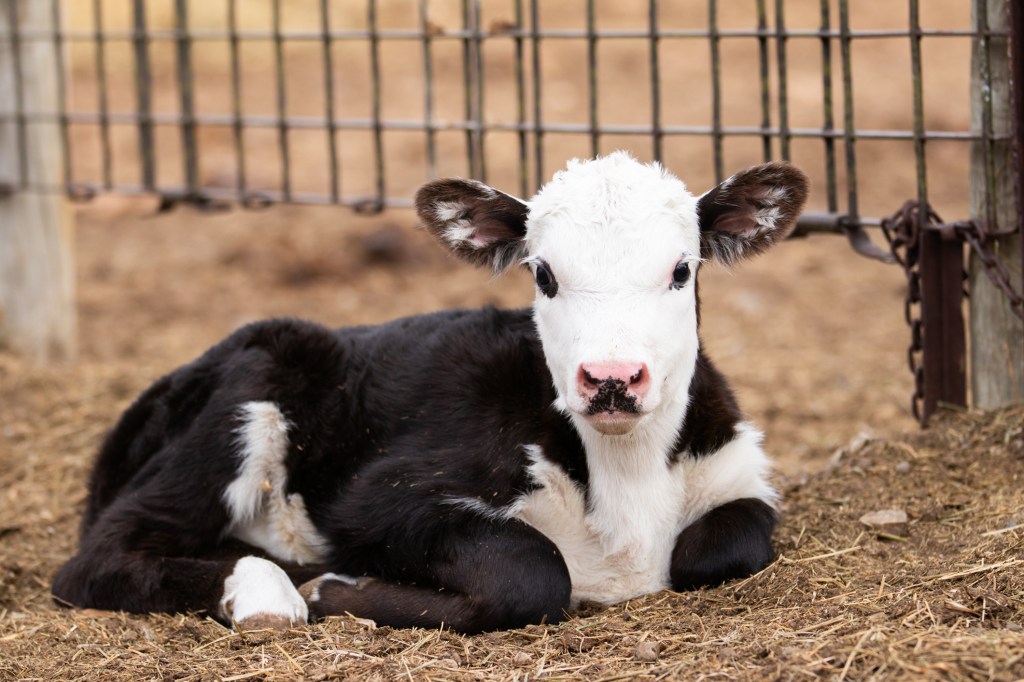
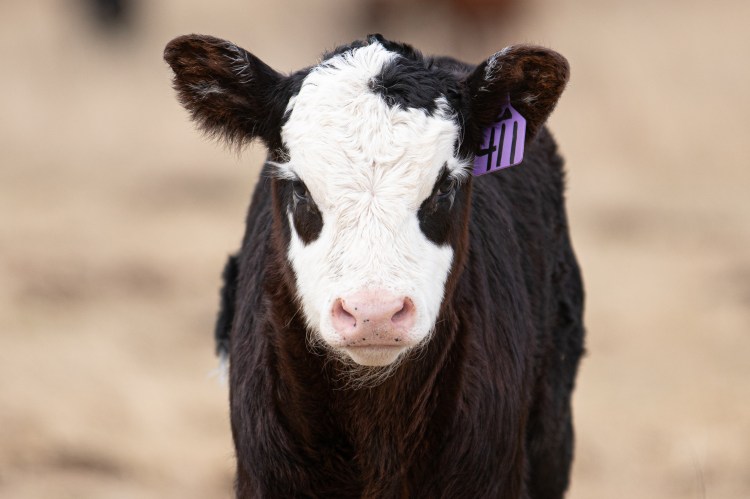
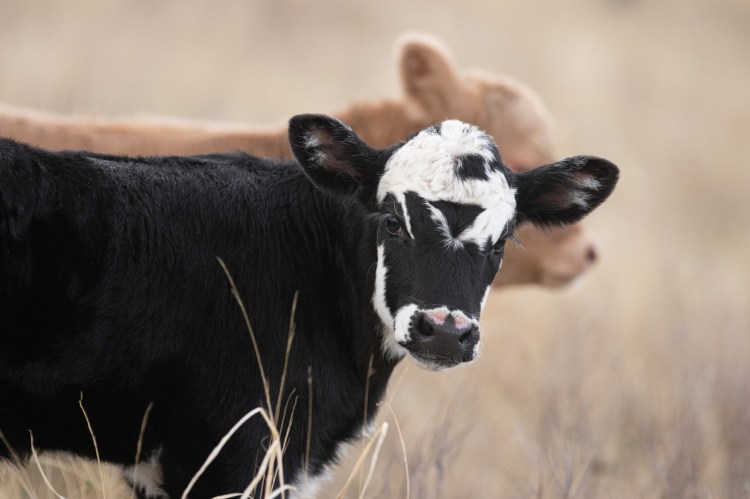
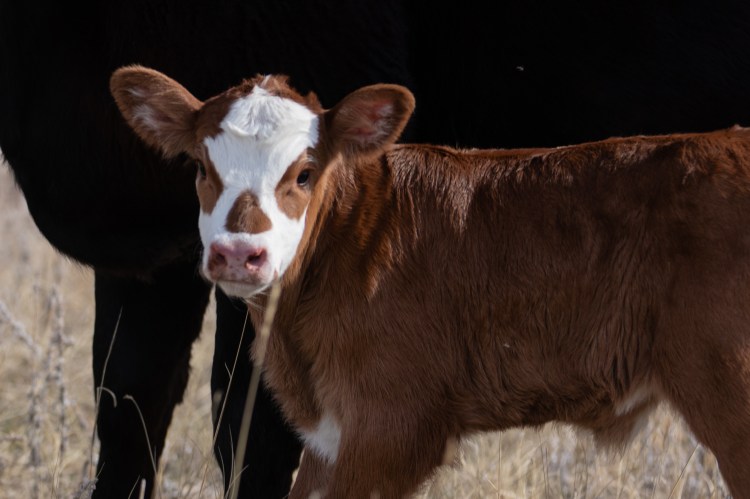
When you live and work on a cattle ranch, pregnancy and birth and mothering are just part of a way of life. Baby animals are nearly always underfoot, from the litter of kittens down in the barn to the pile of cowpuppies birthed in our mudroom, to the comical confusion of a handful of broody hens all trying to raise the same chick.

And of course, last but not least, there is the cowherd itself. At any given time, minus approximately 3 months in the spring, there are several hundred pregnant animals on the ranch relying on us for their wellbeing. Their prenatal care consists of ultrasounds and good feed, and their obstetrical care is based on age and risk factors. The heifer herd is watched vigilantly and with much anticipation in the days leading up to calving, while the older, maternal herd is allowed to calve on their own, unbothered and untouched unless absolutely needed, where instinct, nature, and nurture results in a wonderful success rate for live births and healthy babies. You get used to observing and remarking upon a cow’s mothering abilities, the state of her udder, and her maternal instincts. Pregnancy and birth are just a part of life on the ranch.

And it is fun, truly, to watch the cows put on a layer of winter fat over their round, pregnant bellies, as their due dates approach. A cow late in gestation is referred to as “heavy bred,” or, for short, “heavy.” So, you might observe a cow that has that giveaway waddle and maybe even a bit of an uncomfortable look on her bovine face, the cow with a spherical aspect if she is facing you head-on, and remark to yourself or your general audience, “Boy, she’s getting heavy.” 

I suppose everyone’s perspectives are shaped by what we know and what we see in our day-to-day lives, but I do recall being vaguely shocked when I first heard my husband refer to one of my expectant friends as “getting heavy.” This was a few years ago, and was one of those pivotal, eye-opening moments as to what sort of situation I’d married into.

It wasn’t long afterwards that I cornered the dear man and informed him in no uncertain terms that, if I ever was pregnant, if he ever had the absence of mind to refer to me as “heavy,” I wouldn’t be speaking to him for a very long time.

Yet another time, again keeping in mind that our perspectives are shaped by what we know, I was sitting in church next to my father-in-law, bless his heart, at a time when somehow just about every female at church between the ages of 20 and 40 was pregnant, and I heard that man mutter to himself not quietly enough, “Gosh, it’s like being at a bred heifer sale!” My eyes popped wide open and my jaw must have hit the floor. We had words.

So, let’s just say that by the time I found out this spring that I was pregnant, I wasn’t at all blindsided by the commentary I would be personally subject to, from not-vague-enough references to getting the calving shed ready or saving money on the ultrasound, or any other similar sort of comments that are accompanied by a provocative, irritating million-dollar grin from my husband and met with a narrow-eyed glare from me. So, I wasn’t blindsided.

Early on, though, I discovered what I refer to as “selective chivalry.” Pretty quickly I was grounded and not permitted on horseback anymore (a wise decision, I admit), and I found myself watched like a hawk, every move oh-so-chivalrously scrutinized, and hearing a warning or stern, “Laura…” if I did something that was deemed risky or “too much” for my “delicate condition,” as my father-in-law likes to say. He has a way with words. “Laura….” I can’t tell you how many times I heard my name uttered in that tone. “Laura…..”

However, if I was putzing along cautiously on a four-wheeler behind a bunch of cows, staying carefully on the flat and taking absolutely no risks, and the front of the herd got a wild hair and started running? Then I’d hear yelling and tune in to realize it was my name being hollered, very different from the cautionary “Laura…..”, and see some less-than-chivalrous flapping of arms way off to the side, that sent me zipping across the rock-strewn pasture like a skipped stone on a pond, to reach the front of the herd in time to turn them in, muttering to myself, “Sure, right, this feels WAY safer than being on horseback.”

Over the last few months, my husband has learned very personally and poignantly the reality of what happens when your best ranch hand gets pregnant, as tasks have been removed from my repertoire, one-by-one, starting with horseback work, and then close-quarters ground work with cattle, then certain vaccines, then all vaccines, and pour-on fly sprays and pesticides. Perhaps I resented or resisted the bubble wrap a little at the beginning, but I’m realizing it is actually kind of a nice gig, being the pregnant lady, poking cows into the chute for a couple hours (the only job remaining to me when we work cows), and then getting to eat snacks and call it a day. Not bad. Not bad at all.

But the more weeks roll by, the more I sympathize with that heavy-bred cow who has the telltale waddle and that bland, unimpressed, slightly-pained look on her face. “She’s getting heavy.” I feel it, deep in my cells.

But I’ll never tell my husband that. And he’d better not say it either. 

Ranch Wife Musings | A Worthwhile Pursuit

Originally printed in the Custer County Chronicle on Aug. 13, 2025

After months of tending and cultivating, my garden is beginning to release all the vibrance of its bounty. Peppers nearly a foot long (really!), cucumbers and beans, herbs, tomatoes, squash and a little sweet corn. After months of watering and weeding, picking bugs and pruning, my countertops, crowded with bowls of fresh produce, are finally starting to show evidence of the work that came first. Mason jars of fresh cut flowers, dahlias and zinnias and black eyed Susans and bright pink penstemon, grace the tables and the corners of counters not covered in produce in rambunctious if not exactly artistic displays.

We live in a culture that tends to idolize two things: money and leisure. Granted, money can be the means to leisure, but oftentimes people will run themselves into the ground working a job they don’t even really like in order to have money to have leisure later.

There is an overarching idea implicit in this: It is that work is only a means to an end. A necessary evil. Work and toil are means to status, or money, or future leisure, or power, but have no inherent value in and of themselves. Our culture sees the end as the goal, not the process, or the journey, or the growth and even failures that come before the goal is met. Culturally, we value the result, but often we fail to see the value in the inputs, whatever those inputs are. They are only seen as valuable inasmuch as they are the means to the coveted end.

That bouquet of flowers on the countertop, then, or the bowl of fresh cucumbers, those are the end in sight. Everything else, culturally speaking, holds no significance. The weeding and tending and watering? Simply a means to the end, which is the fresh cut bouquet or the bowl of produce. So, we devalue the bulb or the tiny seed, the hands that planted and worked the dirt, the process of nurture required to achieve the flower. The time and effort are just necessary evils. If we could, we’d rather skip right to the flower, and leave aside the care and tending, the watering and pruning and weeding. We fixate on the end result, rather than enjoying the process as the flowers sprout and grow, set buds, and bloom a rainbow in the garden.

This thought process permeates so much of how we view life. Relationships, families, health, vocation, all fall victim to this mentality that wants the results without placing value on and appreciating the work itself.

We want to experience good health and longevity, but would rather forego the necessary work and dedication and self-sacrifice and discipline, the sacrificing of convenience and personal gratification. If we could have the health and longevity without personal discipline, I think many people would take it. But isn’t there value in the discipline, in suspending instant and constant gratification?  

We want the fulfilling marriage, but we would rather leave aside the relationship-building, the cultivating and tending, the intentional growing together spiritually and emotionally and relationally, experiencing failures and setbacks, learning each other, asking forgiveness, and purposely seeking oneness. If we could have the fulfilling marriage without the work, I think many or most would take it. But isn’t there value and sweetness in the process of growing a healthy marriage?

We want to feel part of a community, a sense of belonging, without doing any communing, without sharing and meeting needs, without working shoulder to shoulder and sharing in fellowship. We want the blessings of community without the beautiful burdens that make up community. If we could have the sense of belonging and the sense of being known without the sweat and the work, I think many or most would take it. But isn’t there value in the sweat and the work, the sharing and meeting needs?

What twisted sort of thinking got us here?

Would my satisfaction in a vase of home-grown, fresh-cut flowers be greater if I hadn’t spent weeks and months nurturing the plants?

Would my marriage be sweeter or my happiness in it be more complete if there was never any need for growth, asking forgiveness, and making changes, in a process that lasts a lifetime?

Would contentment in community be greater without all the messy sharing of burdens and life and sweaty work shoulder to shoulder?

I think the answer is pretty clear.

Because the value is not just in the bloomed flower, or the sweet marriage, or the health and longevity, or the vibrant community. The value is in the work itself, the process of growing and changing.

Some of it might be cultural laziness or human nature, wanting the benefits or results without the work. Some of it might be the helter-skelter life we’ve conned ourselves into, where we see any ask on our time as impinging on the “important things.” Maybe it is our social media saturated culture, where we see and share successes and goals achieved, and live in and perpetuate a delusion of thinking that everyone else is accomplishing that coveted end result, whatever it is, without months and years of work and sweat and tears.

But you don’t get to enjoy the fruits of a healthy community without work put into that community.

You don’t get to enjoy the sweetness of a healthy marriage without work put into that marriage.

You don’t get to enjoy the satisfaction of homegrown flowers or fresh tomatoes without time spent tending the soil, replenishing nutrients, planting the seeds, cultivating the little plants, and tending to them through the growing season until harvest.

So, plant the garden. Cultivate your marriage. Build relationships in your community. And buckle down and do the work.

Don’t lose your love of the process in chasing after the end result. Don’t short circuit the benefit of what is happening now for what you hope will happen in two years or ten years. Don’t fixate on the goal such that the process itself goes by in an unrecognizable blur. Because it isn’t just the end result. The pursuit itself is worth it.

Sweet Fullness

When Brad and I got married, I knew I needed to do some soul-searching when it came to having children. I had been single a long time, and I honestly think it was God’s kindness to me that He sort of lifted the desire for children away from my heart for those 10-plus years of being a single woman. I remember as a highschooler and college-aged young woman dreaming of having 10 kids, picking names out, and truly having an active desire to be a mother. But as the single years wore on, it was a struggle enough to grow in contentment and confidence that God would provide a husband if and when He chose to do so; I believe it was God’s kindness that temporarily and gently suspended the desire for children and kept it from being another stumbling block.

So when I found myself married to a good man, I knew I wanted to be the mother to his children, but I also had this strange sense of neutrality. Some of it is temperament – I’ve never been the baby-chasing sort. As sweet as new babies are, I never feel compelled to hold and cuddle other people’s babies, and am perfectly content to admire from a distance. But now that I was married? I knew this was something I needed to wrestle with. It wasn’t that I didn’t desire children, in an active sense, but rather that passively there was no active longing. Does that make sense? I wasn’t opposed to children, but I wasn’t actively experiencing a desire for them either. It was as if my years of singleness had sort of muffled the sense of that desire. And as I pondered that, I realized how empty that was.

Too often, I see women on social media or elsewhere, professing to be Believers and proclaiming confidently that they have absolutely no desire for children and that should be fine. Granted, I don’t know their situations, but a common thread in the Bible is God’s love of the family, and His desire for His people to raise families to His glory, beginning in the Garden of Eden, with the command to “be fruitful and multiply and fill the earth and subdue it.” Procreation is obviously part of that. And my personal conviction is that if God says something is good, we should think so, too. If God commands something to His people, we should take that seriously. We are not victims of our desires.

So I began to pray and ask that God would give me right desires, desires that pleased Him, and that if it was His will that we have children that He would open my heart to children, and remove the fears that gnawed at the margins of my heart.

And it is wonderful how God answers prayers. Before too long, I found I was no longer praying that God would give me a desire for children (because He had answered that prayer and had given me the desires I had prayed for!) but I was praying that He would make me fruitful, and would give me contentment and peace if He didn’t open my womb. Because I also knew that, although I am responsible to cultivate right desires, God doesn’t always satisfy those desires the way we want or expect, and He owes me nothing.

Well, it took my breath away when I saw the two red lines, and took my breath away again when I heard the heartbeat for the first time and saw the baby on ultrasound at 19 weeks. I’ve been living in a state of constant flux between incredible reality and surreality. Nothing had prepared me for how sweet it would be to feel the first quickenings, or how comforting it is to feel the baby move at all hours of the day or night. Nothing had prepared me for the sweet fullness of expectant motherhood. Fears have slipped further and further away.

And I can’t wait to meet our baby girl in November.

P.S. I took these photos for us with a tripod and shutter timer while we were camping in the Bighorns this weekend. Brad was great, and even consented to push the shutter button for me a few times. 🙂

Ranch Wife Musings | No Place Like Home

Originally printed in the Custer County Chronicle on July 16, 2025

In college, I fancied myself a traveler. I have since realized I am much too much of a homebody for that, and conveniently I married a man who “never left the farm,” as they say.

But I was much younger then, and I fantasized about being a world explorer. I had a penchant for foreign languages, and spent 6 weeks in France the summer before my junior studying French at a university in Dijon, gaining confidence in conversational French, and exploring southern France, soaking up all the Mediterranean sun and eating all the fresh (and wonderfully cheap and delicious) produce that could be found at the open-air markets throughout France. It really was a wonderful experience.

I’ve spent extended time with family in Alaska on a number of occasions, spent several days in Whitehorse, Canada, working on a project (another story for another time), and made a southwest road trip a few years back primarily to do a one-day Rim-to-Rim hike at the Grand Canyon. I’ve certainly not not travelled.

Brad and I do enjoy the chance to take our camper out once or twice in a summer, see some new scenery (or old scenery with new eyes), hike, and unplug, stepping away for a short time to be rejuvenated, coming back home refreshed and ready to get back to it with energy and vigor.

If one has the inclination and the financial and lifestyle flexibility to be able to travel, go for it. But I most certainly do not think travel is inherently beneficial. A lot of traveling is extremely consumeristic, shaped around lack of activity, too much food, and copious quantities of alcohol, all of which are objectively not great for you or your bank account. Done the wrong way, travel is a form of escapism, and can become the means by which the daily grind is reinforced as something to need a vacation from (as opposed to recognizing a need to occasionally recharge and seeing a vacation as the means to that end). The mentality around “vacationing” can promote discontent and dissatisfaction with reality. Social media doesn’t help, as people splash their luxury-appearing vacations all over Facebook and Instagram, making expensive getaways appear as if they are and should be the norm. If that’s how you’re going to travel, I’d probably suggest staying home. It might be temporarily enjoyable, but it won’t make your life – your real life – better in the long run.

But that isn’t the only option. The other option requires discipline in the daily mundane, determining to be content and thankful with the real life you are living.

Because traveling in order to see another culture, international or regional, with your own eyes? Absolutely that can be a great thing! Traveling in order to get glimpses of the beauty of God’s creation in another area of the country or the world? Absolutely. Traveling so that your eyes are drawn in wonder around a landscape or a cityscape that boggles the mind and makes you praise God for His creativity or the creativity with which He has blessed the human race? Yes!

And then, maybe most importantly, traveling so that your heart strings are tugged back to the beauty of the life God has given you? Yes. A thousand times, yes.

Don’t use travel as an escape, a drug to cope with “real life.”

Travel so that your life, in all of its normalness and mundanity, comes into focus in the best of ways. Travel so that your heart longs for home. Travel so that you are forced to remember the little things you take for granted. Travel so that you have no other option but gratitude.

And that takes work, truly. It takes work every day to cultivate a grateful heart, and eyes that see the beauty in the things that you have become accustomed to. It takes work some days to say with genuineness, “Thank you, God”, in a culture that preaches a gospel of restless discontent. If life is hard, whether related to work or family or marriage or something else altogether, we can be tempted to see escape as the best solution. 

But where you are, right now? You’re there for a reason.

While I was out of town last week, I couldn’t stop remembering home, and all those little things I take for granted every day. Our freezing-cold well water. The way the sunrise looks in summer. The chaos of my garden. The refreshment of an early morning walk. The musical creak of a gate. Posey and her calves sneaking in to water. My husband’s lanky form swinging down to the barn, and his “Boys! Boys!” to call the horses in for breakfast. The puppies terrorizing the barn cats.

The day I got back, I sat down by my chicken coop and just watched and listened. The quiet was like music. It wasn’t silence. It was much, much better. It was all the sounds that make up this life I live. The chickens scratching, or clucking to themselves while dust bathing. A couple hens squabbling when a mother hen felt it necessary to defend her half-grown chick. The cats trilling contentedly. A horse stomping in the corral. The breeze stirring the limbs of the pines.

I was home.

And there is no place like it.