Originally printed in the Custer County Chronicle on October 16, 2024
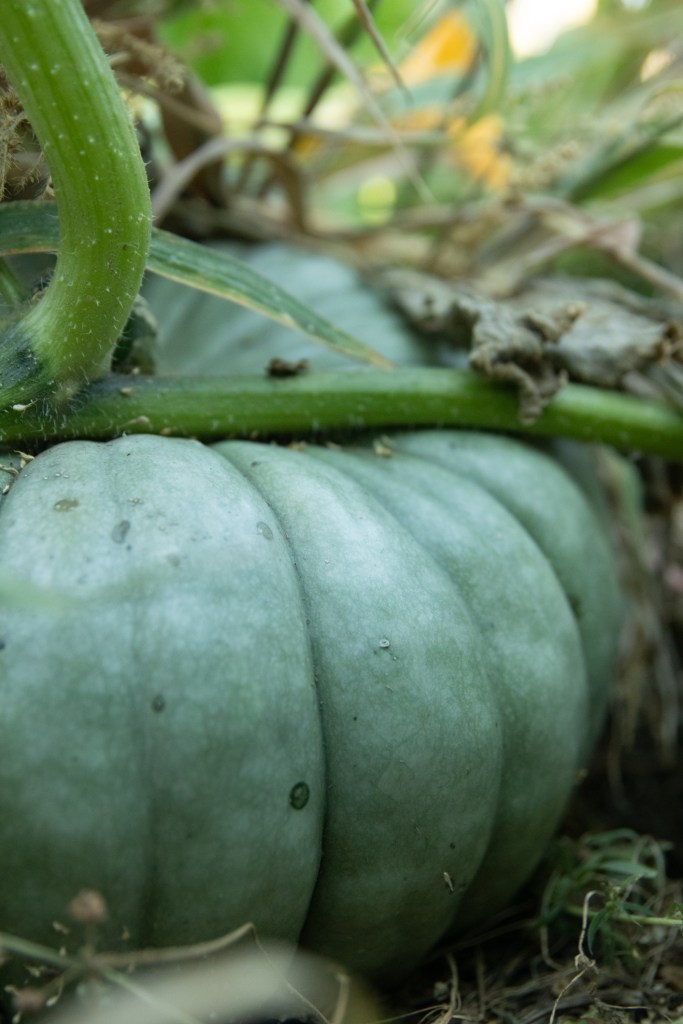
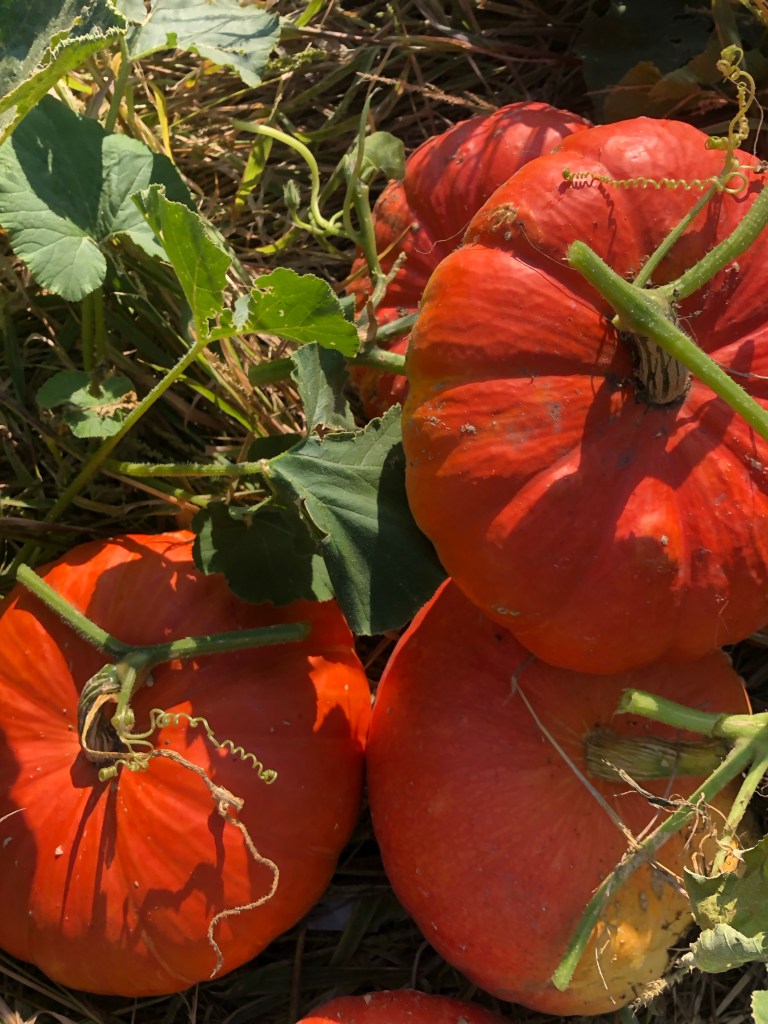
A nearly-failed pumpkin patch was the crowning glory of my gardening endeavors this year, saved by my chickens and a good turn of the weather sometime mid-August, and finally – finally! – the overgrown tangle has lit up with all shades of scarlet and orange and gold and blue, with a couple green ones I’m still cheering on. Irksomely, incidentally, but maybe not surprisingly, for about the last month a song has been going through my head on repeat: “Hello, country bumpkin! Fresh as frost out on the pumpkin! Somethin’, somethin’, somethin’, somethin’! La-la, hello, country bumpkin!” That’s all I know of that song. The rhymes are distressing and the tune insufferable, but it gets into my head, somehow, and it stays there.
Anyway, Brad came into the kitchen last week and found me sitting at the table with a notebook and pen in hand. He glanced at my scrawlings and rightly surmised that I was making gardening plans for next year, arguably one of the highlights of any gardening season.
A simple “Yeppers” would have sufficed as a reply, but I started giggling and turned red. “Well, actually I’m brainstorming how to turn ‘Lindblom Livestock’ into ‘Lindblom Livestock and Pumpkin Patch.’” I’m honestly not sure why I felt compelled to so thoroughly unburden my soul, but I did.
He loves it when I make plans like that, especially when I follow it up with, “For when the bottom falls out of the cattle market…” Over the two and a half years that we’ve been married, I’ve shared with him a number of these strokes of staggering genius: Lindblom Livestock and Poultry Farm or, better yet, Lindblom Poultry and Cattle (its especially fun to put “livestock” or “cattle” at the end of the name; he really gets a charge out of that), Lindblom Livestock and Dairy, and of course the latest, Lindblom Livestock and Pumpkin Patch.
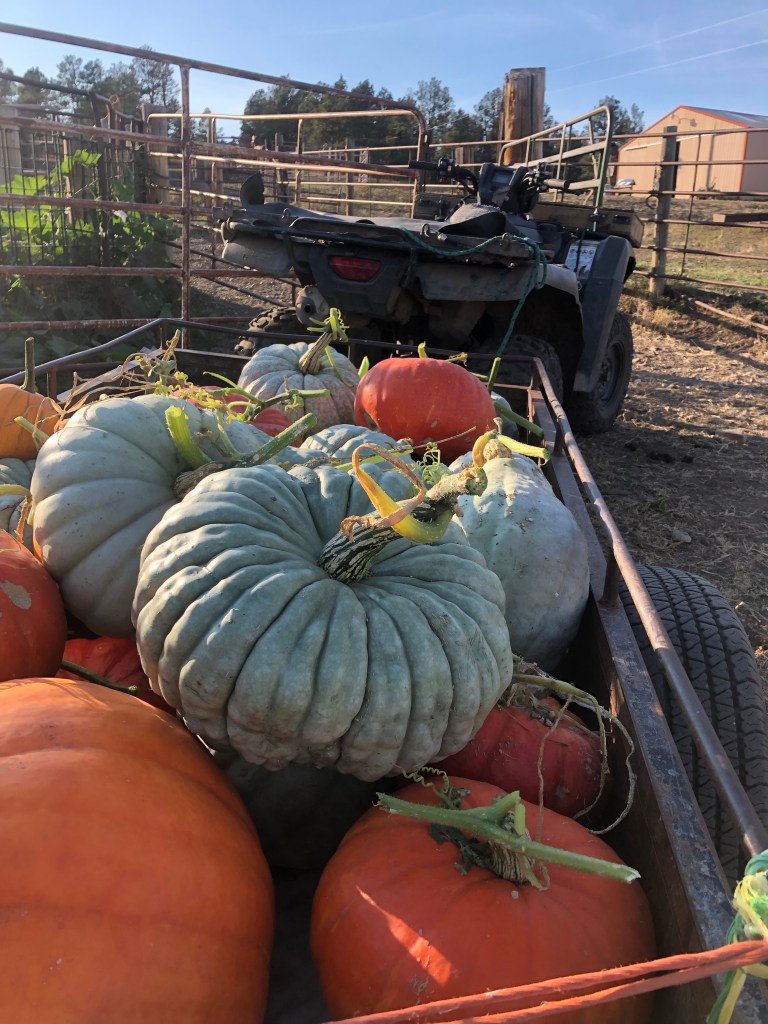
Scrawled on the paper were four Latin names, and names of heirloom pumpkin varieties in columns underneath for careful seed selection and planting logistics in order to facilitate selective pollination. Beneath that was a list of the garden areas I employ, namely the yard garden up by the house, which comprises the greenhouse/hoophouse, two large raised beds made of old stock tanks, and the environs; and then the nursery garden, a pen in the corral that doesn’t get used in the summer but is freshly fertilized and naturally tilled each spring, which was the pumpkin and sweetcorn patch this year. And in spite of an epic summer-long battle against invading grasshoppers, squash bugs, and even my over-zealous chickens, after dodging summer hail and contending with the usual drought conditions, during all of which I nearly threw up my hands and walked away, after spending a lovely fall afternoon harvesting pumpkin after beautiful pumpkin, the trials of the growing season were thoroughly forgotten. As I set pumpkins out to cure on the south end of the house, delighting my eyes in the variety of the harvest, my optimism cup was filled back up and I was ready to take it up a few notches by going full-scale commercial pumpkin farmer with my own specially-cultivated varieties of pumpkins. Because if 50 pumpkins is good, 500 pumpkins would be amazing.
Hence, Lindblom Livestock and Pumpkin Patch.
Amazing how fast the near-failure is forgotten in one season of semi-success. But isn’t that just part of the nature of gardening, or even of agriculture in general? As frustrating as the task can be, it is inherently optimistic, and half the fun is in the planning (grasshoppers and hail are blissfully absent in the planning stage). My practical dad used to say, “So why not just plan it twice?” but that’s kind of missing the point. Even to take a seed the size of a grain of sand and careful tuck it into some dirt, putting it in the little bit of sun from a west-facing window, to carefully water it and tend it while there is still snow outside, requires a level of optimism. And then to take that carefully-tended seedling and plant it outside, entrusting it to the wiles of the weather, is yet again an act of optimism. To persevere in a gardening season where there are more things working against you than for you, or to do it again the next year, even after a failure, requires a heart-level optimism, a vision of life where the value of something goes far deeper than simply what can or can’t be added up at the end. It requires a conviction that there is value in the work itself. Value in the process. Value in lessons learned, value in the sweat, value in the work of cultivating and tending and nurturing, and even value in the failures.
In general, I don’t consider myself a true optimist, but the very nature of gardening requires a hefty dose of that virtue, and it is a virtue that is in short supply these days.
But what is optimism, real optimism, but a trust in the order that our Sovereign God has established, the order that causes seedtime to follow harvest, summer to follow winter, day to follow night? A trust in the character of this Creator, Who brings order out of chaos, peace out of strife, something from nothing, life from death, and ultimately has ordered and is ordering all things, without fail, to His glory.
So, it isn’t just pumpkins that grow down in that pumpkin patch. Optimism isn’t just required. It is cultivated, and harvested, too.

 Song Dog Journal